Terry Mattingly

Story worth covering? Life and death challenges tested faith of Suns coach Monty Williams

Story worth covering? Life and death challenges tested faith of Suns coach Monty Williams

A reporter tossed a standard question at coach Monty Williams after the Phoenix Suns won the Western Conference finals, asking how he managed to be a tough NBA coach and a sympathetic mentor.

"I tell every new player … that the essence of my coaching is to serve," said Williams, the National Basketball Coaches Association's 2021 coach of the year. "As a believer in Christ, that's what I'm here for. … I tell them all the time, if I get on you, I'm not calling you out -- I'm calling you up."

That message meshes well with what superstar Chris Paul writes on his sneakers game after game: "Can't Give Up Now." That's a popular Gospel song with this chorus: "I just can't give up now. I've come too far from where I started from. Nobody told me the road would be easy and I don't believe He's brought me this far to leave me."

Williams and Paul have known each other for a decade, with professional and personal ties strengthened by pain and frustration. While Paul's on-court struggles are well documented, it's impossible to understand their bond without knowing the details of his coach's life as a Christian, husband and father of five children.

"The real reason to watch" the playoffs this year, said former ESPN commentator Jason Whitlock, in his "Fearless" podcast, is "that God has placed a messenger inside the NBA's secular madness. Monty Williams might be the most important man in sports. The 49-year-old former Notre Dame and NBA player is the leader and example that America needs right now."

The coach's story, he added, "belongs in a new Bible. Five years ago, a 52-year-old White woman high on meth drove her car headfirst into the car driven by Williams' wife Ingrid. Three of Williams' children were also in the car. The White woman died at the scene. … Ingrid Williams died a day later. Williams' children survived."

Williams was a promising Notre Dame freshman when Ingrid -- before their marriage -- stood by him after doctors said he had hypertrophic cardiomyopathy. Long before experts cleared him to play, Ingrid kept praying and offered this message: "Jesus can heal your heart."

Drafted by the New York Knicks, Williams began -- with a defibrillator courtside -- a nine-year NBA career that led into coaching. He quickly became known for his ability to inspire hope and teach leadership.



Please respect our Commenting Policy

New podcast: Spot any 'ghosts' in New York Times story about aid for (large) U.S. families?

New podcast: Spot any 'ghosts' in New York Times story about aid for (large) U.S. families?

At first glance, it looks like another New York Times story about all those public policy debates between the entrenched Republicans and White House, along with the narrow Democratic majorities on Capitol Hill.

But if you look carefully, there is a reason that this Gray Lady update about the arrival of the expanded Child Tax Credit was, to use a turn of phrase from “Crossroads” host Todd Wilken, a “haunted house” of religion-news ghosts. He was riffing on a term your GetReligionistas have used since Day 1 at this blog. (Click here to tune in this week’s GetReligion podcast.)

OK, let’s play “spot the religion ghost.” First, here is the double-decker headline on this report:

Monthly Payments to Families With Children to Begin

The Biden administration will send up to $300 per child a month to most American families thanks to a temporary increase in the child tax credit that advocates hope to extend.

Nine out of 10 children in the United States will be eligible for these payments, which are linked to the COVID-19 crisis, but call back memories of policies from the old War on Poverty. The program will expire in a year, at which point the debates over its effectiveness will crank into a higher gear. Here’s the Times overture:

WASHINGTON — If all goes as planned, the Treasury Department will begin making a series of monthly payments in coming days to families with children, setting a milestone in social policy and intensifying a debate over whether to make the subsidies a permanent part of the American safety net.

With all but the most affluent families eligible to receive up to $300 a month per child, the United States will join many other rich countries that provide a guaranteed income for children, a goal that has long animated progressives. Experts estimate the payments will cut child poverty by nearly half, an achievement with no precedent. …

While the government has increased many aid programs during the coronavirus pandemic, supporters say the payments from an expanded Child Tax Credit, at a one-year cost of about $105 billion, are unique in their potential to stabilize both poor and middle-class families.

As you would expect, many Republicans oppose what they consider a return to old-style “welfare” payments of this kind.

That’s many Republicans, but not all.


Please respect our Commenting Policy

Scripture, faith, race, politics: Mississippi Today on the story behind the state's new flag

Scripture, faith, race, politics: Mississippi Today on the story behind the state's new flag

Every newsroom in which I worked kept a large hardback Bible in the copy desk’s collection of reference books (this was pre-Internet, of course).

I often wondered why this was true, since almost every time I used long quotes in a news story or column in which believers talked about the specifics of their beliefs — because the material was directly linked to crucial facts or their motivations — most newsroom pros rolled their eyes. Those quotes tended to get shortened and, sometimes, edited out. This was especially true when politicians talked about their religious beliefs, for whatever reason.

I thought of this recently when I read a strong Mississippi Today feature — part one of a five-story series — about the role that Speaker of the House Philip Gunn played in changing that state’s controversial flag.

This was a story that centered on a public action, as seen in the headline: “Why Philip Gunn became the first prominent Republican to call for changing the state flag.”

Yes, the word “Republican” is important. But the key word there is “why.” Here is block of material early on that begins to link the political action with the beliefs behind it.

Less than a week before in South Carolina, a young white man walked into a Black church in Charleston and brutally murdered nine worshippers. Because the gunman had publicly documented his obsession with the Confederate battle emblem, the murders inspired debate across the country about the government-sanctioned use of the Confederate symbol.

The TV reporter asked Gunn about the Mississippi state flag, which was the last in the nation containing the Confederate battle emblem. While the camera rolled, Gunn advocated for a new flag.

As soon as Gunn left the fundraiser, he called Nathan Wells, his then-chief of staff and longtime top political adviser. The two had been privately talking for years about their shared disdain of the state flag and how they could work to change it.

“He said, ‘Nathan, uh, I think we need to release a statement,’ ” Wells recounted to Mississippi Today in an interview earlier this year.

That official statement in 2015 said:


Please respect our Commenting Policy

Think about it: Southern Baptist tweetstorm spotlights an important issue for religion-beat pros

Think about it: Southern Baptist tweetstorm spotlights an important issue for religion-beat pros

How many times have you read a story that said something like, “Southern Baptists are expected to do so-and-so or such-and such”?

I’m not talking about coverage of the actual annual meeting when “messengers” from autonomous SBC churches actually get together and vote on this-and-that and make statements and changes in the mechanisms that affect their common work. I am referring to news stories that seem to assume that Southern Baptists can be summed up with one set of cultural or political images or a set of data points.

You know: I’m talking about news coverage of Southern Baptists that assumes that Sunbelt suburban megachurches are the only reality. It’s so easy, when trying to write news reports of 666 words or so, to settle into language that attempts to make the blurry real world snap into super-sharp focus.

The same is true of all big religious movements, of course. We all know that the singular “Catholic vote” doesn’t exist, now or ever. We know that rural United Methodists are not the same folks as blue zip-code urbanites (and there are complexities inside those two groups). We know that many Episcopalians in north Texas are not the same as those in northern California. But there’s only so much space (even in today’s online world) and editors always want snappy phrases and punchy conclusions, usually with a political hook or two.

Anyway, Nathan A. Finn — provost at North Greenville University, a campus in South Carolina with strong Southern Baptist ties — recently rolled out a tweetstorm in the wake of all the news coverage of the SBC annual meeting in Nashville.

This is not a news story. It isn’t even a conventional “think piece,” although Finn could have turned it into one quite easily. It’s “just” a long chain of tweets. Nevertheless, there is much to learn here. Let us attend.

The chain opened with the tweet at the top of this post. Here’s the rest of the “storm” (sorry about the repeats, but it’s the best way to keep the URLs clear).


Please respect our Commenting Policy

Once again, U.S. Supreme Court chooses to punt on a major religious liberty case

Once again, U.S. Supreme Court chooses to punt on a major religious liberty case

Florist Barronelle Stutzman and Robert Ingersoll have shared many details from the 2013 conversation that changed their lives and, perhaps, trends in First Amendment law.

For nine years, Ingersoll was a loyal customer at Arlene's Flowers in Richland, Wash., and that included special work Stutzman did for Valentine's Day and anniversaries with his partner Curt Freed. Then, a year after the state legalized same-sex marriages, Ingersoll asked her to design the flower arrangements for his wedding.

Stutzman took his hand, Ingersoll recalled, and said: "You know I love you dearly. I think you are a wonderful person, but my religion doesn't allow me to do this."

In a written statement to the Christian Science Monitor, Ingersoll wrote: "While trying to remain composed, I was … flooded with emotions and disbelief of what just happened." He knew many Christians rejected gay marriage but was stunned to learn this was true for Stutzman.

As stated in recent U.S. Supreme Court documents: "Barronelle Stutzman is a Christian artist who imagines, designs and creates floral art. … She cannot take part in or create custom art that celebrates sacred ceremonies that violate her faith."

This legal drama appears to have ended with Stutzman's second trip to the high court and its July 2 refusal to review a Washington Supreme Court decision the drew a red line between a citizen's right to hold religious beliefs and the right to freely exercise these beliefs in public life. Supreme Court justices Clarence Thomas, Samuel Alito and Neil Gorsuch backed a review, but lacked a fourth vote.

"This was shocking" to religious conservatives "because Barronelle seemed to have so many favorable facts on her side," said Andrew T. Walker, who teaches ethics at Southern Baptist Theological Seminary.

Stutzman is a 76-year-old grandmother and great-grandmother who faces the loss of her small business and her retirement savings. She has employed gay staffers. She helped Ingersoll find another designer for his wedding flowers. In the progressive Northwest, her Southern Baptist faith clearly makes her part of a religious minority.

"Barronelle is a heretic because she has clashed with today's version of progressivism," said Walker.


Please respect our Commenting Policy

Jimmy and Rosalynn Carter: Why did some journalists bury the faith tie that binds them?

Jimmy and Rosalynn Carter: Why did some journalists bury the faith tie that binds them?

If it’s been said once it’s been said a thousand times: Jimmy Carter may have been a very unsuccessful U.S. president, but his life after the White House has been top-notch.

In fact, according to a 2015 poll, the American public thinks he’s No. 1 among the nation’s post-presidents.

Obviously, there was that Nobel Peace Prize in 2002, which was awarded for “his decades of untiring effort to find peaceful solutions to international conflicts, to advance democracy and human rights, and to promote economic and social development." But if you ask average Americans what they admire about Carter’s life post-White House, I think most of them would mention two, or maybe three, parts of his life.

First, there is his record in volunteer work and public service, symbolized by decades of work with Habitat For Humanity building homes for the working poor. If you have followed that story at all, you know that Carter doesn’t just show up with a hammer for the photo-ops. Second, there is the remarkable marriage-partnership between Jimmy and Rosalynn Carter. I have heard Southerners refer to them as the “anti-Clintons,” as in Bill and Hillary Rodham.

Finally, there is — as Jerry Falwell, Jr., of all people, once put it — Carter’s many decades of work as the “world’s most famous Sunday school teacher.” Ths smiling Baptist did that work week after week whether there were TV cameras present or not.

That faith element was the subject of this week’s “Crossroads” podcast (click here to tune that in) in which host Todd Wilken and I looked at three mainstream-press features about Jimmy and Rosalynn Carter celebrating their 75th wedding anniversary. If readers are interested in the faith tie that binds in this marriage, they should start with this fine Washington Post feature, with it’s one-word headline: “Inseparable.” Here’s the overture:

PLAINS, Ga. — When they arrived, they strolled hand-in-hand toward their pond with a graceful willow at its edge.

“We’re going to be buried right there, on that little hill,” Jimmy Carter said, motioning toward the lawn sloping up from the pond.


Please respect our Commenting Policy

That New Yorker #FreeBritany feature: It's all about a Baptist daddy and his wild daughter?

That New Yorker #FreeBritany feature: It's all about a Baptist daddy and his wild daughter?

One thing is clear, when you read the long, sad (but buzz-worthy) feature in The New Yorker entitled “Britney Spears’s Conservatorship Nightmare.”

Britney is a celebrity.

When she goes to court, she is a celebrity. When she escapes to a pub, she is a celebrity. When she fights to see her children, she is a celebrity. When she has a nervous breakdown (especially in public), she is a celebrity.

If and when she ever returns to church (there are rumors), she will do so as a celebrity. Ditto for any return to celebrity friendly Kabbalah classes.

But you get what you expect in this feature, written by Ronan Farrow and Jia Tolentino. There’s a huge cast of characters, some who speak on the record and some who do not. There are waves of details from court documents and testimony. There’s an endless survey of public scenes and paparazzi chases.

But the second line of the double-decker headline points to the heart of the story: “How the pop star’s father and a team of lawyers seized control of her life — and have held on to it for thirteen years.”

This is a story about a fight between a Baptist father (simply “Jamie” in most of the story) and his wild daughter — who has lived her entire teen and adult life in the glare of a media spotlight that burned her, even as it poured wealth on everyone around her, including members of her immediate family.

What about faith issues? There are fleeting glimpses of religion “ghosts” throughout this story. However, there is evidence that The New Yorker team realizes that, behind all of the talk about Britney’s mental health, the father and daughter are fighting about the moral choices she has made in her private life. Meanwhile, the daughter keeps trying to break free from this noose, in part through sex, love, marriage and children.

Consider the implications of this passage, referring to the legal drama that pulled the #FreeBritney social-media world back into the headlines:


Please respect our Commenting Policy

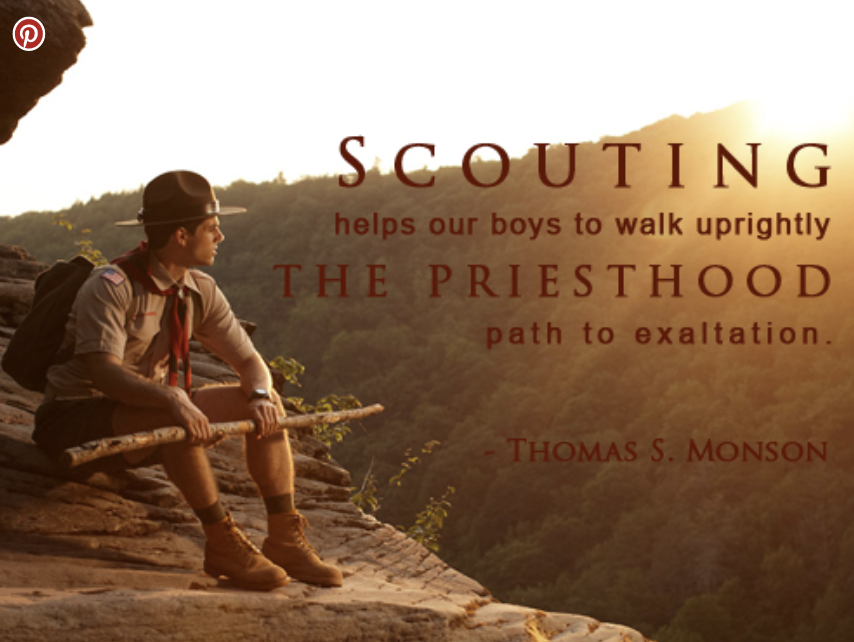
Scouting membership numbers collapse: AP totally ignores role of religion in this drama

Scouting membership numbers collapse: AP totally ignores role of religion in this drama

It’s the question that I have been trying to answer for 40 years or so: Why do news organizations ignore basic religion facts and trends when it is clear they are relevant in a major news story?

Ever since the first GetReligion post, back in 2004, we’ve been talking about religion “ghosts” in mainstream news coverage. Some “ghosts” are rather subtle and, frankly, it’s easy to understand why journalists with zero religion-beat experience would miss some facts and trends linked to religious law, history or doctrine.

But then you have “ghosts” — super ghosts, maybe — that are much, much more obvious and harder to explain. Consider, for example, the Associated Press story that came out the other day with this headline: “Boy Scouts, Girl Scouts suffer huge declines in membership.” Here’s the overture:

America’s most iconic youth organizations — the Boy Scouts of America and the Girl Scouts of the USA — have been jolted by unprecedented one-year drops in membership, due partly to the pandemic, and partly to social trends that have been shrinking their ranks for decades.

While both organizations insist they’ll survive, the dramatic declines raise questions about how effectively they’ll be able to carry out their time-honored missions. … Membership for the BSA’s flagship Cub Scouts and Scouts BSA programs dropped from 1.97 million in 2019 to 1.12 million in 2020, a 43% plunge, according to figures provided to The Associated Press. Court records show membership has fallen further since then, to about 762,000.

Other than the COVID-19 crisis, what else caused this massive drop?

Reasons for the drop include competition from sports leagues, a perception by some families that they are old-fashioned, and busy family schedules. The pandemic brought a particular challenge.

Wait a minute. Parents were worried that the Scouts are “old-fashioned,” which implies that Scouting would be growing if its leaders made more efforts to modernize their methods and beliefs?

Then again, maybe it would help if the story mentioned decisions by leaders of the Church of Jesus Christ of Latter-Day Saints to cut ties to the Boy Scouts (click here for AP story on that bombshell) because of changes linked to gender and sexuality in the name of becoming more modern and, well, woke? Not that long ago, LDS congregations hosted 37% of all Scout troops. At the same time, many — perhaps most — Southern Baptist Convention churches have dropped out of Scouting for the same reasons.


Please respect our Commenting Policy

Catholic bishops, politicos and Holy Communion: Little has changed in this old debate

Catholic bishops, politicos and Holy Communion: Little has changed in this old debate

The questions that haunted the Pontifical Academy for Life conference were familiar, controversial and exhausting, since Catholics and their bishops had been arguing about them for years.

The year was 2006, but little has changed in 2021.

What should bishops do when prominent Catholics -- even presidential candidates -- defended and promoted abortion rights? What if they said they accepted churched teachings on the sanctity of human life, while their actions suggested otherwise?

Would it violate the "separation of church and state" if bishops denied them access to Holy Communion? What if bishops asked these politicos to go to Confession?

"This is silly," said scholar Robert P. George, addressing that Vatican gathering. A Catholic shepherd "acting on his authority as a bishop to discipline members of his flock, who commit what the Church teaches are grave injustices against innocent human beings" would be "exercising his own constitutional right to the free exercise of religion. …

"Freedom is a two-way street. No one is compelled by law to accept ecclesiastical authority," stressed George, an outspoken Catholic layman and professor of jurisprudence at Princeton University. Thus, a bishop has "every right to exercise spiritual authority over anyone who chooses to accept it. There is a name for people who do accept the authority of Catholic bishops. They are called 'Catholics.' "

At that time, most debates centered on Sen. John Kerry, the Democratic Party's presidential nominee in 2004.

Cracks inside the U.S. Conference of Catholic Bishops widened with the election of President Joe Biden, a rosary-carrying Catholic who -- in word and deed -- has evolved into a fierce defender of abortion and LGBTQ rights. Biden quickly dropped his longstanding opposition to the federal funding of abortion, after criticism from the left in the 2019 primaries.


Please respect our Commenting Policy