Terry Mattingly

Annual AP report on 'holy fire' ritual offers same old mistakes, raises one big question

Annual AP report on 'holy fire' ritual offers same old mistakes, raises one big question

It would appear that the Associated Press has a computer hard drive somewhere full of stories about annual religion events that the editors don’t care that much about. Maybe it’s just a folder up in an AP data cloud.

Anyway, when this unworthy event rolls around on the calendar someone goes into the files and copies language from old stories to save time. Apparently, it isn’t important whether some of the file language is tired, inaccurate or assumes the worst of religious believers involved in this ritual.

Do you believe in miracles? Hold that thought.

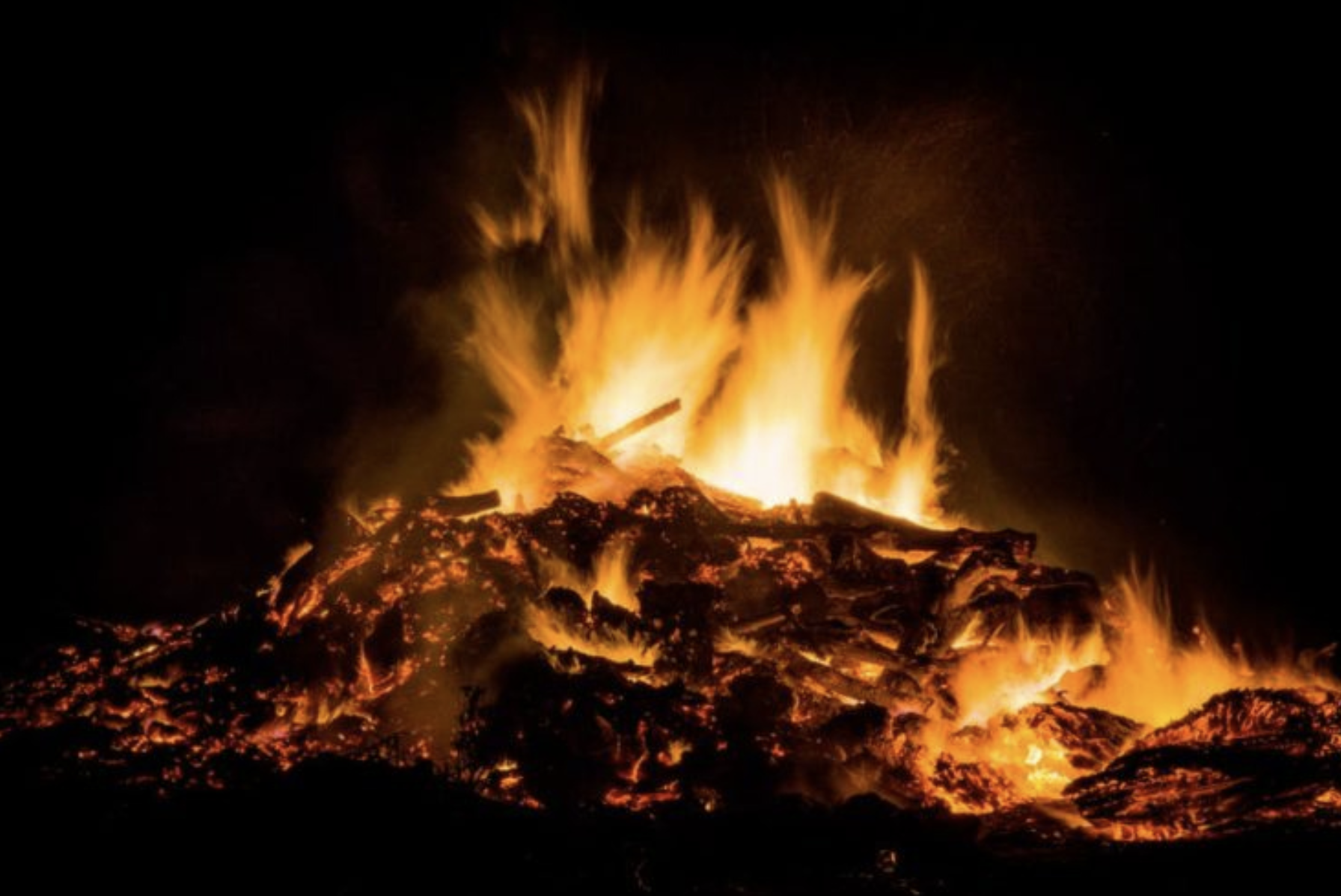
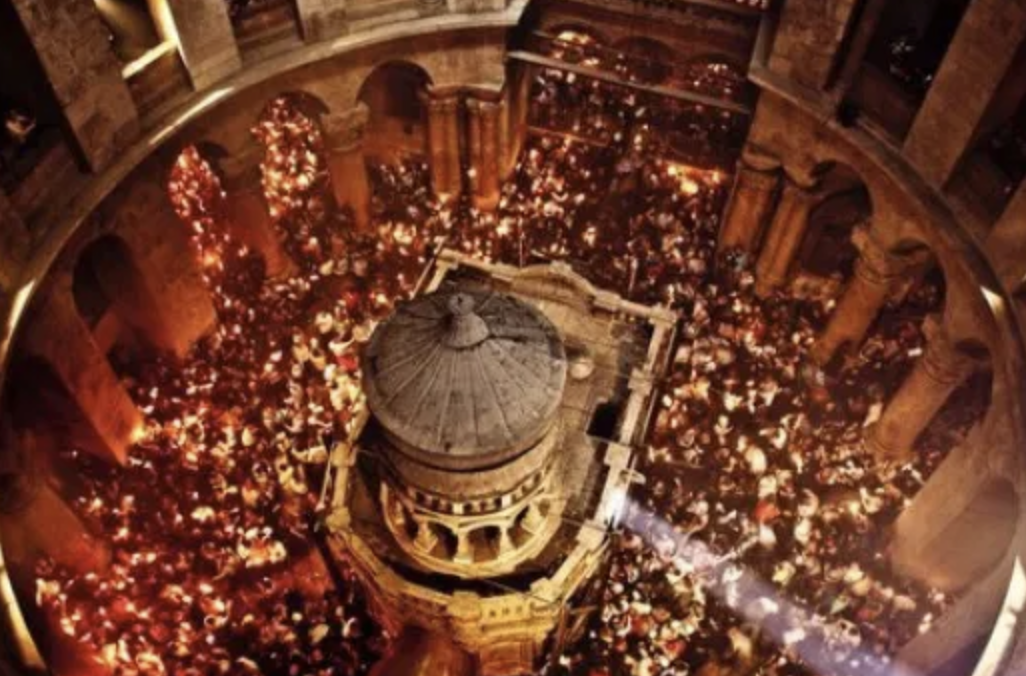
This brings us to one of the most interesting, inspiring (for millions) and controversial moments linked to the holiest day on the liturgical calendar of Eastern Orthodox Christianity — Pascha.

In most churches of the West, Pascha is known by another name — Easter. To further complicate things, Christians in the East and West use different calendars that, on most years, put Easter and Pascha on different dates. Click here for more on that old story.

With all that in mind, consider this paragraph in this year’s AP and Religion News Service story about a key Pascha rite in Jerusalem.

Many countries will be restricting normal Orthodox Easter celebrations. Neighboring Lebanon for example went into a round-the-clock curfew to curb the spread of coronavirus, from Saturday until Tuesday morning. Churches will be allowed to hold Easter mass and prayers only at 30% capacity, and require special permits.

What is “Orthodox Easter”? That is Pascha, of course. It would only take a few words to say that.

Then look at this reference — “Easter mass.” Actually, the Orthodox do not have “Mass.” Our ancient Eucharistic rite is called the Divine Liturgy. Also, the “M” in “Mass” is upper case. Thus, an AP copyeditor managed to allow three mistakes in a mere TWO WORDS. That’s a hard trick hard to pull off!


Please respect our Commenting Policy

Sports Illustrated almost asks: Is Trevor Lawrence too serious about his faith to be a great QB?

Sports Illustrated almost asks: Is Trevor Lawrence too serious about his faith to be a great QB?

If you’re into sports, you know that the National Football League player draft took place a few days ago. And if you’re into football — college or professional — you know that the name called as the first pick in this draft was a foregone conclusion.

The Jacksonville Jaguars won the race to the bottom of the 2020 standings, which allowed them to select one of the most highly rated quarterback prospects ever — Trevor Lawrence of Clemson, a 6-foot-6, 220-pound superstar who lost a total of two games in college.

The assumption was that Lawrence had everything that any NFL executive or coach would want.

Then again, maybe not. Shortly before the crowning ceremony, Sports Illustrated published an eyebrow-raising feature on the quarterback with this double-decker headline:

The Unrivaled Arrival of Trevor Lawrence

The best quarterback to come into the draft in nearly a decade, Lawrence will enter the NFL with the billing of a generational signal-caller, a keen sense of self and a burning desire to prove absolutely nothing.

Now, what did that final phrase mean, the statement that Lawrence had a “burning desire to prove absolutely nothing”?

Maybe it had something to do with his father saying that he told his gifted son: “God has given you a great gift. But you know, at some point when the game’s taken more from you than it’s giving to you, you need to step away.” Or maybe it was this statement by his high-school coach in Georgia: “[Trevor] will play as long as God wants him to.”

Clearly religious faith was a problematic part of this young man’s mental and emotional make-up.


Please respect our Commenting Policy

Ministry after 2020? The year when COVID-19 caused clergy stress to zoom to a new level

Ministry after 2020? The year when COVID-19 caused clergy stress to zoom to a new level

When training pastors and chaplains, educators frequently stress the need for "boundaries" between work and home.

Clergy need -- somehow -- to find "personal" time, along with face-to-face contact with loved ones. That challenge became more difficult in the age of smartphones, texting and emails, noted Marlon C. Robinson, pastoral care director at AdventHealth in Manchester, Ky., and a specialist in marriage and family therapy.

Then came the COVID-19 lockdowns and the pressures on clergy zoomed to a whole new level.

"Everything came home, all at once," said Robinson, reached by telephone. "Pastors were spending more and more time with their families -- jammed into one space. But this wasn't quality time. Everyone was at home, but they were staring at their own phones and computer screens. There was no intimacy, and all the pressures of ministry grew even more intense."

To make matters worse, the usual struggles with church leadership and finances were complicated by political warfare and conspiracy theories that, literally, began to shape how congregations handled worship, pastoral care, education and even efforts to keep sanctuaries clean and safe.

Instead of arguing -- to cite church clichés -- about the color of new carpet or outdated hymnals, the faithful were fighting about whether masks were necessary to save lives or merely "politically correct" virtue signals.

Meanwhile, people were sick, and some died, with their pastors and families on the other side of locked hospital or nursing-home doors. And it was illegal to have funerals? Attendance dropped, along with offerings. More than a few members vanished.

Ministers "are inundated with phone calls, emails, text and WhatsApp messages, and communications through a host of other platforms," wrote Robinson, in Ministry Magazine.

While it's impossible to know how many will flee the ministry, early research indicates pastors are "experiencing intensified stress levels that … put them at increased risk for developing a mental illness. …


Please respect our Commenting Policy

New podcast: Should religious leaders and the cultural right applaud lousy Oscar ratings?

New podcast: Should religious leaders and the cultural right applaud lousy Oscar ratings?

Pick a headline, just about any Oscar headline.

The ratings for the 2021 Academy Awards were bad. How bad? Here’s the take from the world-weary folks at Entertainment Weekly: “Oscars hit another historic low in ratings.”

The New York Post has been known to produce blunt headlines. Thus: “Oscar ratings drop to an all-time low with unwatchable show.”

But what matters, of course, is what runs in prestige settings such as The New York Times. The big business-desk headline there provided some extra, rather acidic, context:

Oscars Ratings Plummet, With Fewer Than 10 Million Tuning In

Sunday night’s pandemic-restricted telecast drew 58 percent fewer viewers than last year’s record low.

Wait, there’s more bad news:

Among adults 18 to 49, the demographic that many advertisers pay a premium to reach, the Oscars suffered an even steeper 64 percent decline, according to preliminary data from Nielsen. …

[The] Oscars have been on a slide since 1998, when 57.2 million people tuned in to see “Titanic” sweep to best-picture victory.

What’s the religion-news hook in this story, other than the semi-religious role that the Oscar rites play in the cult of Hollywood? That was the subject of this week’s “Crossroads” podcast. Click here to tune that in or head over to Apple Podcasts to sign up for a weekly feed.

Let’s walk through this.


Please respect our Commenting Policy

Ira Rifkin offers Jewish (and Buddhist) thoughts as he lives with the ashes of his son

Ira Rifkin offers Jewish (and Buddhist) thoughts as he lives with the ashes of his son

I shared the following story a year ago, but I thought of it again when reading a stunning piece in the Forward by my GetReligion colleague Ira Rifkin. The headline there is simple, but unforgettable: “The day my son’s ashes arrived in the mail.

Journalists who cover the religion beat know that it includes everything from national politics to local-church politics, from sports to the arts, from fights over ancient doctrines to the latest trends in digital worship. But it’s important to remember the degree to which religious rites, traditions, doubts and questions help define many of the gateway moments in human life.

Before I share a few passages from Ira’s must-read essay, let me return to something that happened in the early 1980s when I was working for the now-deceased Charlotte News. I was writing a story about the last local church that was resisting the use of a hymnal prepared for the merger that created the Evangelical Lutheran Church in America.

It was a battle between the “red book” and the modernized “green book.” Here is a flashback:

At this Charlotte church, I met with an older man who led the fight to retain the “red book.” He had a long list of reasons — historical and theological — for why the old hymnal and prayer book was superior to the new. …

When the interview was over, we walked the center aisle toward the foyer and main exit. At the last pew, he stopped and picked up a battered red hymnal. Tears began running down his cheeks.

“I married my wife with this book,” he said. “Our children were baptized with this book. I buried my wife with this book. … They are not going to take it away from me.”

This man was wrestling with issues that transcended logic. He was dealing with the basic building blocks of his own life and faith, his past and his present. This was an issue that involved both head and heart.

This brings us to overture of Ira’s piece for the Forward:

The ashes came to my home in Maryland from Southern California, shipped via special delivery by the aptly named funeral home Ashes to Ashes. They arrived encased in a rectangular, polished, dark wood box about the size of a loaf of artisan bread. I immediately opened it to make sure it was not empty. It was not.


Please respect our Commenting Policy

What do you know? Doctrinal-covenant fights can occur on an Orthodox Jewish campus

What do you know? Doctrinal-covenant fights can occur on an Orthodox Jewish campus

By now, GetReligion readers are probably aware that some journalists have their doubts about whether the First Amendment actually protects religious doctrines and the “free exercise thereof” by believers.

The problem is that the old-liberal defense of “religious liberty” — inside the usual “scare quotes” — now clashes with the evolving doctrines of the Sexual Revolution. This leads to fights on religious campuses in which journalists pit bad religious believers who defend ancient doctrines against good believers who want those bad doctrines to evolve to mesh with the good teachings of the New York Times and other sacred texts.

The key in most of these clashes is whether students, faculty and staff sign a “doctrinal covenant” when they choose to work or study at one of these private schools. Private schools — liberal and conservative — have a right to defend the doctrines of the religious groups that founded them. As GetReligion readers know (explore this file), journalists often ignore the content of these covenants and fail to ask progressive activists whether they read these covenants before signing them.

Most of these stories focus on disputes at evangelical and Catholic schools. If you ever wondered how an education-beat newsroom would handle one of these stories in an Orthodox Jewish context, now you know — care of an Inside Higher Education report under this double-decker headline:

Students Sue Over Denial of LGBTQ+ Club Recognition

A lawsuit accuses Yeshiva University of violating New York City human rights law in its long-standing refusal to recognize an LGBTQ+ student group

The reader who forwarded this URL was rather blunt, stating that the article is “a mess. Journalistically speaking, it's biased, lopsided, and incurious.”

As usual, there is no way to know whether the school’s admission documents include a doctrinal covenant, since the reporting is sketchy, at best, on that subject.


Please respect our Commenting Policy

Stunning AP photos of mass cremations in India: But what about religious traditions?

Stunning AP photos of mass cremations in India: But what about religious traditions?

Draw up a list of the world’s most religious nations and India (population 1.4 billion) will almost always be somewhere near the top — especially if you focus on the world’s largest nations, in terms of population.

What makes India unique, however, is its incredible religious complexity. While Hindu believers make up about 80% of the population, 15% of the population is Muslim. In terms of sheer numbers, India has the world’s second largest Muslim population (after Indonesia). India has small, but historically important, Christian communities, mostly Catholic and Anglican.

The tensions between India’s various traditions are quite stunning and complex. But so are they way that the major faith groups overlap and blend into a larger whole. The bottom line: There are very few issues in this amazing land that are not, to some degree, touched by religious traditions — even if people struggle to describe the details.

This brings me to a stunning Associated Press photo feature that ran with this headline: “Mass funeral pyres reflect India’s COVID crisis.

Pause for a minute and ponder this question: How many story angles — some of them quite controversial — can you imagine that are linked to funeral pyres and Hindu traditions? Now, imagine the complex issues that waves of COVID-19 deaths would create in India’s faith communities, with their unique traditions linked to death and dying.

Now imagine dedicating a mere one sentence to only one of those angles. Here is the overture, describing the larger crisis:

NEW DELHI (AP) — Delhi has been cremating so many bodies of COVID-19 victims that authorities are getting requests to start cutting down trees in city parks for kindling, as a record surge of illness is collapsing India’s tattered health care system.

Outside graveyards in cities like Delhi, which currently has the highest daily cases, ambulance after ambulance waits in line to cremate the dead. Burial grounds are running out of space in many cities as glowing funeral pyres blaze through the night.


Please respect our Commenting Policy

The complicated, often painful, Orthodox roots of Prince Philip's faith journey

The complicated, often painful, Orthodox roots of Prince Philip's faith journey

The first nun the Bolsheviks threw into the abandoned mineshaft was best known as the Grand Duchess Elizabeth Feodorovna, the sister of the Russian Empress Alexandra.

After the 1905 assassination of her Grand Duke husband, Elizabeth became an Orthodox nun, giving away her wealth to build hospitals and orphanages. She was executed, in 1918, along with others linked to her doomed brother-in-law, Tsar Nicholas II.

When the nuns didn't drown, a soldier used a grenade. He later testified that "we heard talking and a barely audible groan. I threw another grenade. And what do you think -- from beneath the ground we heard singing! … They were singing the prayer: 'Lord, save your people!' "

Finally, there was silence. The body of St. Elizabeth the New Martyr was buried in 1920 at the Church of St. Mary Magdalene on the Mount of Olives in Jerusalem. Her life inspired many, including her grieving niece, the Greek Princess Alice of Battenberg. Alice was the great-granddaughter of Queen Victoria of England and the mother of Prince Philip, Duke of Edinburgh and for 73 years the husband of Queen Elizabeth II.

The complicated history of the royals, past and present, loomed over the short, dignified funeral for Prince Philip in St. George's Chapel, Windsor -- with only 30 mourners due to COVID restrictions. The prince's liturgical choices shaped an Anglican rite that stressed images of service, eternal hope and the beauties of God's creation.

The man many Brits called the "grandfather of the nation," was born on the Greek island of Corfu in 1921, the fifth child and only son of Prince Andrew of Greece and Princess Alice. He was baptized Greek Orthodox, before his life was rocked by wars and revolutions that shattered his family.


Please respect our Commenting Policy

Thinking about 'Uncle Ted' McCarrick's rise and fall: Did Catholic leaders learn anything?

Thinking about 'Uncle Ted' McCarrick's rise and fall: Did Catholic leaders learn anything?

If you have followed the career of fallen cardinal Theodore “Uncle Ted” McCarrick, you know that for a decade or two he was probably the most influential Catholic leader in the United States — especially with journalists (think “Team Ted”) and gatekeepers in the church hierarchy.

With McCarrick, it wasn’t enough to discuss his evil deeds. That was a tragic, hellish story, but it wasn’t the most important story.

The big question was how he managed to land a cardinal’s “red hat” and a throne in Washington, D.C. — even while, behind closed doors, warning lights were flashing and sirens were sounding in America and in the power centers of Rome.

Once journalists have asked that question, they need to ask (a) who promoted McCarrick, (b) who protected him and (c) who were the McCarrick disciples who used their connections with him to climb the ladders of Catholic power?

This brings us to a think piece at The Catholic Herald in England that received some attention in social media and probably deserved more. The headline: “How McCarricks Happen.”

The big idea: Are we talking about a “bad apple” or about multiple “bad barrels” that consistently produce rotten apples? Thus:

Barrels influence apples, sure: how big the barrel, how tightly packed, one’s position within it, who one’s neighbors are, how regularly the apples get mixed, removed, or replenished. But the apples themselves, good or bad, influence both each other, and collectively, the barrel environment as a whole. Furthermore, while barrels come in different shapes, sizes and materials – as whisky connoisseurs know, outwardly indistinguishable single casks can produce subtly different drops – there are significant commonalities between them.

This is precisely why, to leave barrels behind for a bit, when reading exposés of high-profile sexual predators (and we’ve read more over the past several years than is probably mentally healthy) they start to feel a little samey.


Please respect our Commenting Policy