Terry Mattingly

New podcast: Tensions with NCAA and Christian schools? That issue will not go away

New podcast: Tensions with NCAA and Christian schools? That issue will not go away

A decade or so ago, I had a chance to speak to journalism students at Oral Roberts University. My strongest memories — other than visions of the shiny modernist architecture — center on an unusual moment during a campus chapel service.

There’s nothing unusual about a Christian university having a full-house chapel service. There’s nothing unusual about a student-led praise-rock band blasting out Contemporary Christian Music songs that inspired lots of people to do their share of swaying and dancing.

But here’s the memory. My visit to the campus took place during a meeting of ORU’s board of trustees, who sat together near the front of the auditorium during chapel. Looking down from the balcony, I was surprised to see that (a) many of the trustees were rather young, (b) a much higher than normal number of them were Black or Latino and (c) several were enthusiastically dancing with the students, including at least one in an aisle (the current board doesn’t look quite as young).

All of this was a reminder that much of the racial and cultural diversity at ORU — a major factor in campus life — was and is linked to the school’s roots in charismatic and Pentecostal Christianity, a movement that as been highly multiracial since its birth. Founder Oral Roberts was a famous, and often controversial, leader among charismatic Christians, even though, as an adult, he aligned with the United Methodist Church (which is more conservative in Oklahoma than, let’s say, parts of Illinois and other blue zip codes).

I bring this up because of a recent USA TodayFor the Win” column that served as the hook for this week’s “Crossroads” podcast (click here to tune that in). Here’s the headline for that piece, which was written by the “race and inclusion editor” at USA Today sports: “Oral Roberts University isn't the feel good March Madness story we need.” Here is a crucial passage:

… As the spotlight grows on Oral Roberts and it reaps the good will, publicity and revenue of a national title run, the university’s deeply bigoted anti-LGBTQ+ polices can’t and shouldn’t be ignored.

Founded by televangelist Oral Roberts in 1963, the Christian school upholds the values and beliefs of its fundamentalist namesake, making it not just a relic of the past, but wholly incompatible with the NCAA’s own stated values of equality and inclusion.

Please respect our Commenting Policy

A police officer's calling and sacrifice: What about that sanctuary across from King Soopers?

A police officer's calling and sacrifice: What about that sanctuary across from King Soopers?

If you have lived in the Denver area, you know that King Soopers grocery stores are a familiar part of the urban and suburban landscape.

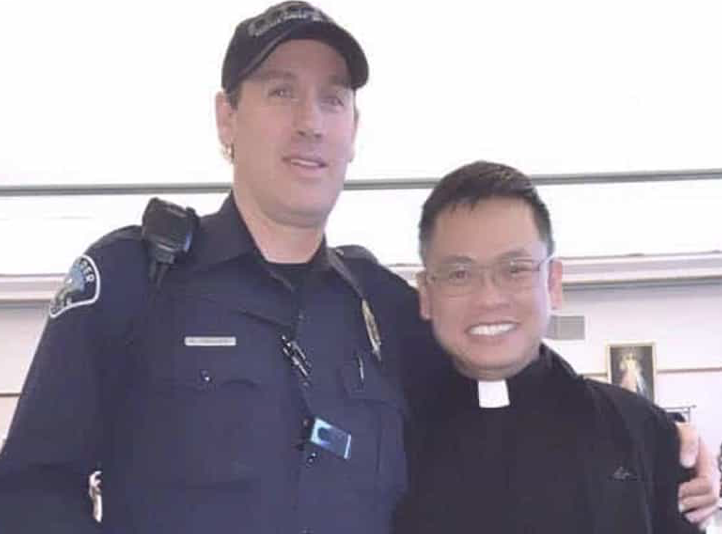
As the details emerged from the hellish shootings in Boulder that claimed 10 lives, it was clear that the fallen first responder — 51-year-old Officer Eric Talley — was an unusual man whose career in law enforcement had unusual roots. He came to the job, people said over and over, with a sense of “calling.” That is, of course, a word with strong faith overtones.

There were many pieces of information to assemble, in portraits of Talley. He was the father of seven children — ages 7 to 20 — who were being homeschooled by his wife. He bought a 15-passenger van to make family travel easier. Another officer told the Denver Post that Talley was a “devout Catholic.” This is a case where that all-too-common adjective fits the evidence.

Some news-media reports mentioned Talley’s faith, others did not. It was hard to miss this quotation, picked up by Washington Post:

His father, Homer Talley, told Denver TV station KMGH in a statement that his son was working to become a drone operator, a job he thought would be safer.

“He loved his kids and his family more than anything,” his father wrote. “ …He didn’t want to put his family through something like this and he believed in Jesus Christ.”

However, I was struck by another detail in a statement from Archbishop Samuel J. Aquila of the Archdiocese of Denver. As it turns out, there was a reason that Talley was familiar with this particular King Soopers location.

We do know that Officer Eric Talley was Catholic, and has been described as a man of character and strong faith, a loving father to seven children, a husband who cared deeply for his family, and a soldier for Christ. …

We also know that Officer Talley regularly stopped by St. Martin de Porres in Boulder and participated in its events, even though he wasn’t a parishioner there. For those unfamiliar with the area where the shooting occurred, St. Martin de Porres is just across the street from King Soopers.


Please respect our Commenting Policy

Wait a minute: How is a sermon on the Second Coming linked to shootings in Atlanta?

Wait a minute: How is a sermon on the Second Coming linked to shootings in Atlanta?

The hellish shootings in Atlanta have unleashed fierce debates combining questions about sex, sin, salvation, repentance, race and various combinations of all of those hot-button topics.

The debates center, of course, of statements by Robert Aaron Long — the suspect in the killing of eight people, including six Asian women — and his complicated and troubled history as a young member of Crabapple First Baptist Church in Milton, Ga., a Southern Baptist congregation.

Eventually, court testimony will provide hard facts about this case. At this point, all the evidence is that Long was raised as a conservative Christian, was active in his church youth group and that he abandoned his faith and then, quite literally, all hell broke loose in his personal and family life. Long has said that a “sex addiction” drove him to frequent massage parlors and his family, apparently, sent him to a Christian counseling center for treatment. His conservative Christian parents “threw him out of the house” the night before the shootings, according to reports in the Washington Post and elsewhere.

Like I said, on-the-record details will emerge. Right now, I want to raise a journalism question or two about coverage of the SBC congregation that is involved in this story. What do we know about this church and, well, how do we know what we know? One Post story notes the following, quoting a solid, factual source:

The evangelical congregation’s minister, the Rev. Jerry Dockery, is an energetic preacher who advocated for a socially conservative brand of Christianity that, as the church bylaws put it, views “adultery, fornication, homosexuality, bisexual conduct, bestiality, incest, polygamy, pedophilia, pornography, or any attempt to change one’s sex, or disagreement with one’s biological sex” as “sinful and offensive to God.”

This isn’t shocking material, if you know anything about traditional forms of Christianity. It would be easy to find specific quotations from recent Catholic popes — including Pope Francis — condemning behaviors such as these, and more.

This congregation is also connected to several doctrinally conservative organizations or movements linked to SBC life, such as the Founders Ministries. All of this leads me to a specific sermon reference discussing the end of the world and Christian teachings about the second coming of Jesus Christ. Oh, and if you stop and think about it, this includes the church’s pastor — indirectly — offering a warning about Christians worshipping political leaders such as Donald Trump.

Say what?


Please respect our Commenting Policy

Prayers and bloodshed during Lent: Catholic bishops cry out for help in Nigeria

Prayers and bloodshed during Lent: Catholic bishops cry out for help in Nigeria

Another day, with yet another funeral.

Catholics in Nigeria had buried many priests and believers killed in their country's brutal wars over land, cattle, honor and religion. But this was the first time Bishop Matthew Hassan Kukah of the Sokoto Diocese had preached at the funeral of a seminarian.

A suspect in the crime said 18-year-old Michael Nnadi died urging his attackers to repent and forsake their evil ways.

"We are being told that this situation has nothing to do with religion," said Kukah, in remarks distributed across Nigeria in 2020. "Really? … Are we to believe that simply because Boko Haram kills Muslims too, they wear no religious garb? Are we to deny the evidence before us, of kidnappers separating Muslims from infidels or compelling Christians to convert or die?"

The bishop was referring to fierce debates -- in Nigeria and worldwide -- about attacks by Muslim Fulani herders on Christian and Muslim farmers in northern and central Nigeria. The question is whether these gangs have been cooperating with Boko Haram, Al-Qaeda and the Islamic State.

The conflict has claimed Catholics, Anglicans, Pentecostal Christians and many others, including Muslims opposed to the violence. Prominent Muslim leaders have condemned Boko Haram and church leaders have condemned counterattacks by Christians. In recent years it has become next to impossible to keep track of the number of victims, including mass kidnappings of school children and the murders of clergy and laypeople, including beheadings.

"Religion is not the only driver of the mass atrocities," said Nina Shea of the Hudson Institute's Center for Religious Freedom, in December testimony before members of the House Foreign Affairs Committee. "Not all 40 million members of the Fulani ethnic group in the region are Islamic extremists. However, there is evidence that some fraction of the Fulani have an explicit jihadist agenda. …

"A mounting number of attacks in this region also evidence deep religious hatred, an implacable intolerance of Christians, and an intent to eradicate their presence by violently driving them out, killing them or forcing them to convert."

In a sobering Feb. 23 statement (.pdf here), the Catholic Bishop's Conference of Nigeria warned that the "nation is falling apart."


Please respect our Commenting Policy

Thinking about J.S. Bach: As it turns out, it's hard to ignore the composer's views on doctrine

Thinking about J.S. Bach: As it turns out, it's hard to ignore the composer's views on doctrine

Sometimes we forget how strange the Internet is, in terms of providing an environment for reading and sharing news stories and other features.

Readers used to be able to flip through their daily newspaper and know that they had a chance, in an orderly manner, to look at “everything” that was in those pages. Today, there is no way to know — for a variety of technical reasons — if you’ve looked at everything in the “daily” New York Times or any other news product . It all exists in a vast digital cloud of material that is always evolving and being updated. There is no logical sequence or form.

People find “news stories” with a search engine, they run into them on Facebook or people end them URLs in emails or texts. Often these articles are stripped of context — news or editorial, for example — and often the publication dates vanish, as well.

Thus, every now and then, GetReligion readers ship us a story that they think deserves praise or criticism. Sure enough, I’ll find that it’s amazing and start work on a post and then notice — oh no — that it’s actually several years old.

This happened to me the other day with a “feature” story from the Times with this headline: “Johann Sebastian Bach Was More Religious Than You Might Think.” Well, I love Bach. As far as I am concerned, the stunningly productive and brilliant Bach is either (a) evidence of intelligent life elsewhere in the universe, (b) the most important artist in the history of Western civilization or (c) both.

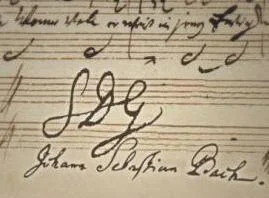
I dug into the piece and quickly realized that this essay by Michael Marissen, author of “Bach & God,” wasn’t a news feature and, on top of that, it ran in 2018. I’m sharing it as a weekend “think piece” because it is fascinating stuff and contains an interesting example of modern thinkers reaching conclusions about a historical figure — even though there is hard evidence that directly contradicts their views. This feature focuses on a piece of Bach material (not a piece of music) that I didn’t know about — with incredible implications for discussions of this cultural giant’s faith. Here is the overture:

Bach biographers don’t have it easy. Has there ever been a composer who wrote so much extraordinary music and left so little documentation of his personal life?


Please respect our Commenting Policy

New podcast: Early clue that Liberty may return to being a 'normal' Christian university?

New podcast: Early clue that Liberty may return to being a 'normal' Christian university?

Here’s a question for journalists and news consumers who remain interested in the future of the complicated, complex world of evangelical Protestantism: Now that Donald Trump is out of office, does it matter who becomes the next president of Liberty University?

Note that this question assumes that the future of Liberty is important — as a mainstream news story — if it is linked to politics, as opposed to questions about the future of Christian higher education.

There is another way to state this question: Would it be important if Liberty returned to the conservative Christian style and image of its founder, the late Rev. Jerry Falwell, instead of the high-energy, openly political agenda of Jerry Falwell, Jr.? In other words, the focus would be on conservative Christian beliefs and education, as opposed to political clout. That’s the question that was at the heart of this week’s “Crossroads” podcast (click here to tune that in).

If you followed the life and work of Jerry Falwell, Sr., you know that he was (#DUH) quite political. But this wasn’t an agenda that dominated the daily life and academic priorities of his university. Liberty was a conservative Baptist university and, for the most part, acted like one.

That changed under Jerry Falwell, Jr., of course. Consider this chunk of an “On Religion” column about that:

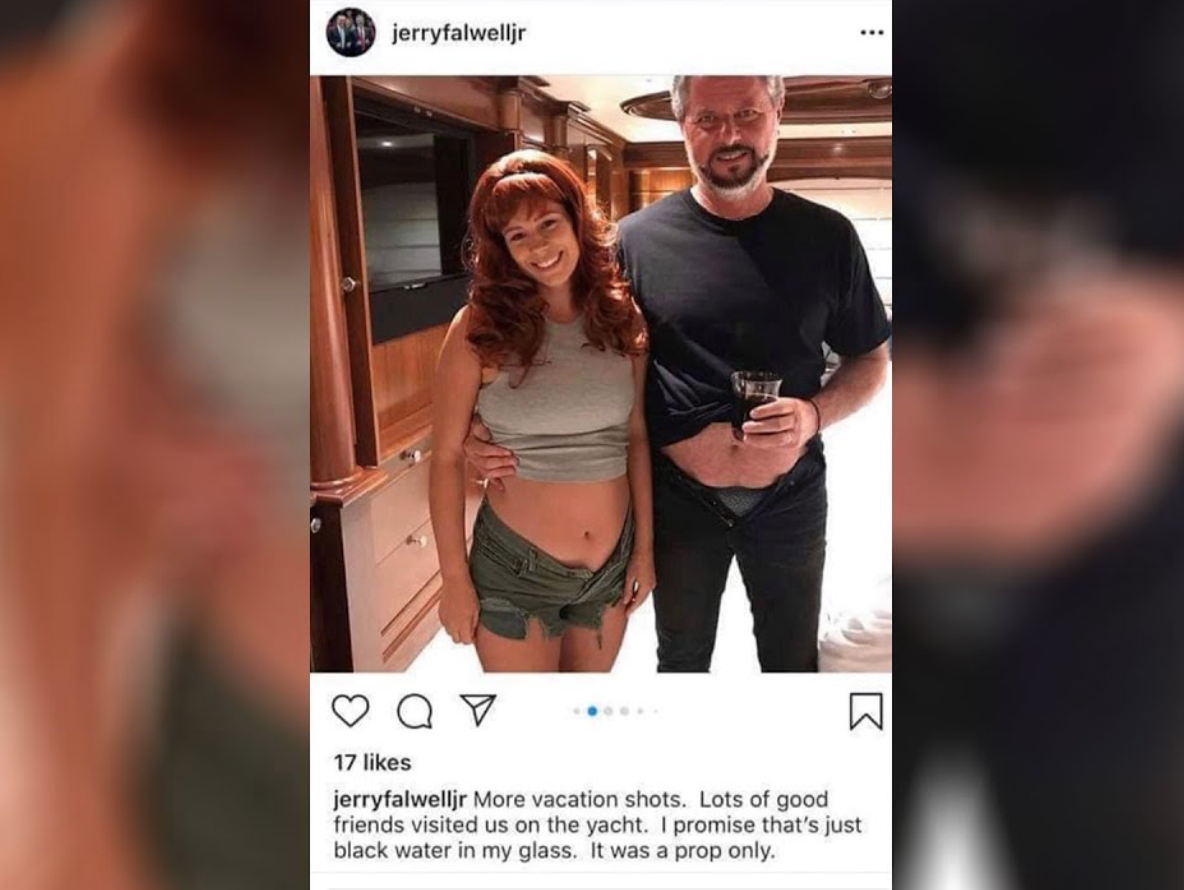
… Falwell Jr. developed a swashbuckling style that caused heat, especially when linked to race, guns, jets, politics, yachts and his specialty – real estate. Controversies about his de facto partnership with President Donald Trump thrilled many Liberty donors, alumni, parents and students, while deeply troubling others.

Many Christian college presidents are super-pastors who provide ties that bind to denominations, churches and networks of believers. Falwell Jr. — a lawyer — turned into a dynamic entrepreneur who courted powerful conservative politicos.

On regular Christian campuses, there "are higher expectations for presidents than members of the faculty, and members of the faculty live with greater expectations than students," noted religious-liberty activist David French, writing at The Dispatch.

"Liberty flipped this script. The president lived life with greater freedom than his students or his faculty. …”

This brings me to a fascinating news feature that ran the other day in The New York Times under this double-decker headline:

Conservative Activist Charlie Kirk Leaves Liberty University Think Tank

The Falkirk Center, named for its founders, Jerry Falwell Jr. and Charlie Kirk, was the center of evangelical Trumpism. Now, both are gone.


Please respect our Commenting Policy

Luis Palau: New York Times dug deeper than the 'Billy Graham of Latin America' label

Luis Palau: New York Times dug deeper than the 'Billy Graham of Latin America' label

It was the kind of question that general-assignment television reporters asked Billy Graham, since they didn’t realize that it had become a cliche: Who will be the “next Billy Graham?”

I heard Graham answer this question several times (and discussed it in depth with him in a 1987 one-on-one interview) and his response almost always included three key points.

First of all, he would say that he really didn’t know how or why he became “Billy Graham,” as in the world’s most famous evangelist (click here for his famous “turtle on a fencepost analogy). Second, Graham thought it was strange that reporters seemed to assume that he would know who the “next Billy Graham” would be. And finally, why did evangelists in other parts of the world need to be compared to him?

Take Luis Palau, for example. Graham said he didn’t consider him the “Billy Graham” of Latin America or anywhere else. Luis Palau, Graham told me, was Luis Palau, and that was who God wanted him to be.

I bring this subject up, of course, because of the double-decker headline that ran atop the recent New York Times obituary for this singular figure in modern evangelical history: “

Luis Palau, the ‘Billy Graham of Latin America,’ Dies at 86

He rose from preaching on street corners in Argentina to ministering to millions around the world, then focused his ministry on liberal corners of the U.S.

I’m not blaming the Times for using that image, since it appeared — to one degree or another — in almost every major news feature about his passing. In fact, the key to the Times feature is that dug deeper than that cliche and showed why Palau was a major player, in his own right, in global evangelicalism.

Still, everyone knows where this story will begin. But note the transition in this key summary passage near the top of the Times obit:

Though his headquarters were in Oregon, Mr. Palau was often called “the Billy Graham of Latin America.” He addressed that region’s 120 million evangelicals through three daily radio shows (two in Spanish, one in English), shelves of Spanish-language books and scores of revival crusades, in which he might spend a week, and millions of dollars, preaching in a single city. The Luis Palau Association estimates that he preached to 30 million people in 75 countries.


Please respect our Commenting Policy

3D chess in Rome? Pope Francis approves Vatican decree affirming doctrines on marriage

3D chess in Rome? Pope Francis approves Vatican decree affirming doctrines on marriage

All together now: Is the pope Catholic?

Actually, in this age of conspiracy theories — on right and left — the question of the day appears to be: Is THIS pope Catholic? I am referring, of course, to the Vatican’s decision to affirm centuries of Christian doctrine stating that sex outside of marriage is (trigger warning) “sin” and that the sacrament of marriage is limited to the union of a man and a woman.

But, but, but, clearly Pope Francis must be playing some kind of three-dimensional chess with this action, moving the doctrinal pieces in some subtle way that will become clear in “reforms” at a later date? This was a case in which one could catch whiffs of disappointment and even conspiracy thinking on both the Catholic left and right (and in the press).

To see this in print, check out the overture in this Washington Post report: “Pope Francis says priests cannot bless same-sex unions, dashing hopes of gay Catholics.” The headline assumes, of course, that all gay Catholics oppose the church’s teachings on this matter but, well, nevermind.

ROME — Pope Francis has invited LGBT advocates to the Vatican. He has spoken warmly about the place of gay people in the church. He has called for national laws for same-sex civil unions.

But Monday, Francis definitively signaled the limits to his reformist intentions, signing off on a Vatican decree that reaffirms old church teaching and bars priests from blessing same-sex unions.

The pronouncement, issued at a time when some clerics were interested in performing such blessings, leans on the kind of language that LGBT Catholics have long found alienating — and that they had hoped Francis might change. It says that same-sex unions are “not ordered to the Creator’s plan.” It says acknowledging those unions is “illicit.” It says that God “cannot bless sin.”

The decree shows how Francis, rather than revolutionizing the church’s stance toward gays, has taken a far more complicated approach, speaking in welcoming terms while maintaining the official teaching. That leaves gay Catholics wondering about their place within the faith, when the catechism calls homosexual acts “disordered” but the pontiff says, “Who am I to judge?”

Let’s see. We have the standard use of the word “reform” to prejudge this matter. We have a sense of yearning that Pope Francis is taking a “more complicated approach” to this doctrinal issue.


Please respect our Commenting Policy

Spot the theology issue: Top hymns of a year in which COVID-19 touched everything

Spot the theology issue: Top hymns of a year in which COVID-19 touched everything

It's a hymn that the faithful start singing whenever a Baptist church organist plays the opening chords -- because everyone knows it by heart.

All together now: "When peace like a river attendeth my way. When sorrows like sea billows roll. Whatever my lot, Thou hast taught me to say. … It is well, it is well, with my soul."

Chicago attorney Horatio Spafford wrote those words after losing his son to scarlet fever and then, a few years later, all four of his daughters in an 1873 shipwreck. His wife, Anna, survived and her telegram home from England began: "Saved alone. What shall I do?"

No one should be surprised that worship leaders frequently turned to "It Is Well With My Soul" as their people wrestled with the coronavirus pandemic, said the Rev. Roger O'Neel, who teaches in the worship and music program at Cedarville University in Ohio.

"People were feeling their way in 2020," he said. "It wasn't just the pandemic and people being locked down worshipping in (online) streamed services. We were also facing all the bitter political conflicts in our nation and the racial divisions that we were experiencing. …

"People were trying to find hymns that would speak to all of that, to the pain that everyone felt last year."

Faithlife, a Bellingham, Wash., company that publishes online worship and Bible study tools, recently released a report covering 2020 trends spotted in its Proclaim software. "It Is Well With My Soul" topped the hymns list, with usage increasing 68% after the pandemic hit.

The classic hymn "Great Is They Faithfulness" came next, with a 64% increase. It begins: "Great is Thy faithfulness, O God my Father, there is no shadow of turning with Thee; Thou changest not, Thy compassions, they fail not. As Thou hast been, Thou forever wilt be. Great is Thy faithfulness! … Morning by morning new mercies I see; All I have needed Thy hand hath provided -- great is Thy faithfulness, Lord, unto me."


Please respect our Commenting Policy