TV-Radio

Concerning evangelical elites, Donald Trump and the press: The great crack-up continues

Concerning evangelical elites, Donald Trump and the press: The great crack-up continues

Ah, yes, those omnipresent American evangelical Protestants.

Love ‘em or hate ‘em, the media can't avoid ‘em. And in case anyone doubts media fascination, consider last Sunday's episode of NBC's influential, anachronistically-named gabfest "Meet the Press."

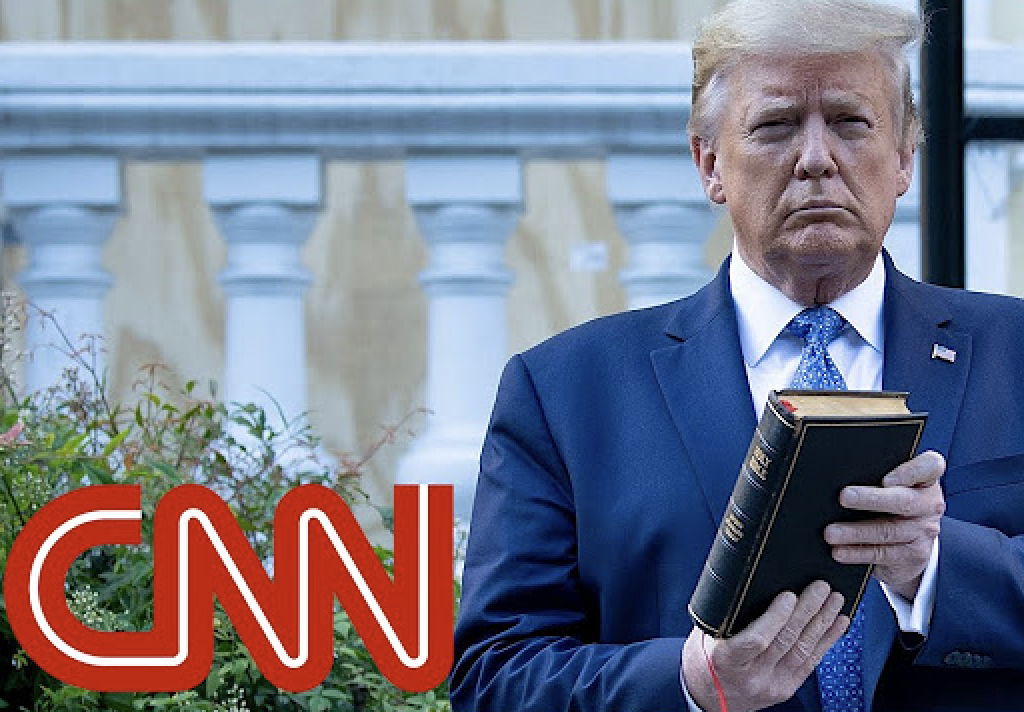
In the midst of a hyper-clogged October political agenda, the show devoted a major segment to what host Chuck Todd called "the debate among evangelicals about Donald Trump and whether he represents their values." Click here for the transcript. This was excerpted from a 30-minute piece that's streaming on Peacock.

The segment led off with a visit to the nondenominational, independent Patriot Church outside Knoxville, where the Ken Peters averred: "I think President Trump is a miracle. I think God picked Donald Trump, an imperfect vessel, to be the champion of His people." This is a congregation that has inspired almost as many headlines as it has members.

Yes, Pew Research tells us Trump scored 84% with white evangelical voters in 2020. But politicized preacher Peters is hardly representative of the sprawling and diverse network of evangelical clergy, churches, denominations, campuses and agencies.

An older-style evangelical pastor, the Rev. Phil Nordstrom of Knoxville's Life Church, told NBC that "we're trying to not fight the culture wars from the pulpit." Todd then interviewed the Rev. Russell Moore, former Southern Baptist social-issues spokesman turned "public theologian" at Christianity Today magazine, who fretted over Trump-era politicization of the evangelical image.

A prior Guy Memo weighed the possibility that a newsworthy evangelical crack-up is upon us, while another Memo focused on the related Donald Trump political angle. Now there are further developments.

In case journalists are gathering string for a broad state-of-the-evangelical-union article, The Guy looked for perspective in a real period piece from 1977, our Time magazine Christmas cover story, "That Old Time Religion: The Evangelical Empire."

Now this feature was written just before the advent of Jerry Falwell's Moral Majority, Ronald Reagan's presidency, Pat Robertson's Christian Coalition and presidential run, the rightward doctrinal lurch by the Southern Baptist Convention, the rise of anti-abortion militancy and all the rest that would gobble up headlines in succeeding decades.

Please respect our Commenting Policy

New podcast: Did the mainstream press ever figure out why Pat Robertson was important?

New podcast: Did the mainstream press ever figure out why Pat Robertson was important?

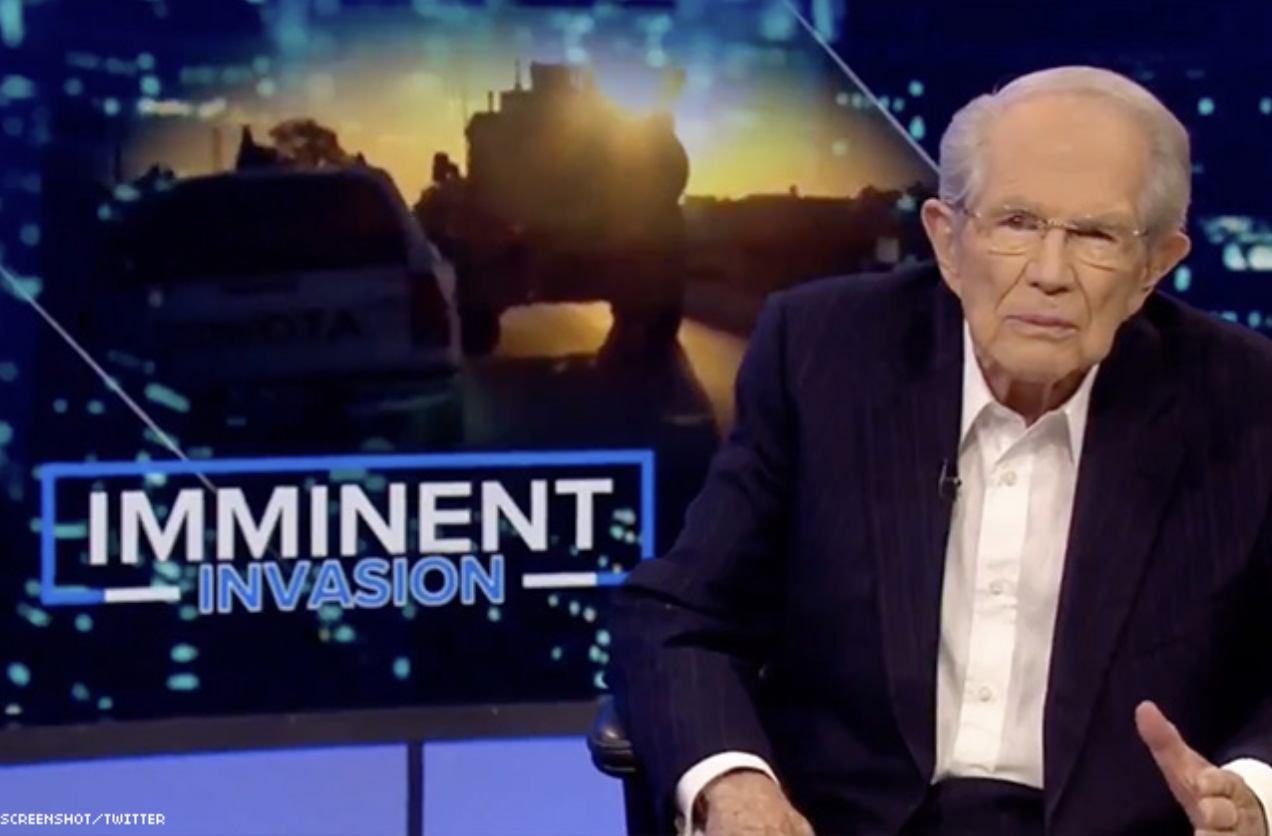
If you look at the headline and the art for this post, it’s obvious that this week’s “Crossroads” podcast (click here to tune that in) focused on media coverage of the Rev. Pat Robertson’s retirement as host of the “700 Club.”

Try to forget that. Work with me here, for a moment.

What if I told you that the man at the heart of this story grew up in Washington, D.C., as the son of a U.S. Senator. Then he did his undergraduate work at a quality school known for its academic rigor, graduating magna cum laude while studying history at Washington and Lee University.

Later, he earned a Yale Law School degree. After that — think low New York bar exam scores and a big religious conversion — he earned an MDiv degree from New York Theological Seminary.

Somewhere in that mix, he served in the U.S. Marines. Later, he founded a multi-million-dollar broadcasting empire and started a graduate-school university and a law school.

Does it sound like someone with a pretty good shot at having an impact on American life and culture?

Well, that’s Pat Robertson — sort of. It's clear that, for most journalists, this resume doesn’t have much to do with the man’s life and work. This is, after all, the religious broadcaster (as opposed to televangelist) who, for decades, served up “spew your coffee” soundbites that launched waves of embarrassing headlines and late-night TV jokes. He was important because this was the kind of wild man who helped lead the Religious Right further into the heart of Republican Party politics.

The minute anything crazy or scary happened in the world — from politics and pop culture to hurricanes and earthquakes — the press turned to Robertson for what was billed as semi-official “evangelical” reactions, even as his words frequently left mainstream evangelical leaders sad, puzzled or furious.

Robertson was one of the official alpha-male media voices of evangelicalism, even after he women and men had emerged who had more clout and connections in the movement.

I was never a Robertson fan. However, it was always clear to me — thinking in terms of church history — that he wasn’t really an “evangelical,” strictly defined, even though he was an ordained Southern Baptist minister. The key is that he was a leader in the rising tide of charismatic and Pentecostal Christianity in America and the world at large (see this Pew Research Center resource page).

Does that matter? Well, Pentecostal Christianity very diverse, in terms of race and class, and is the fastest growing for of religious faith on the planet.


Please respect our Commenting Policy

Plug-In: Big winners, and some surprises, in Religion News Association's annual awards

Plug-In: Big winners, and some surprises, in Religion News Association's annual awards

For the second year in a row, the Religion News Association’s annual awards were presented in virtual fashion because of the COVID-19 pandemic.

Kudos once again to Jeff Diamant, RNA’s contest guru, for a fun and informative presentation of winners Thursday night. You can watch it all here.

For regular Weekend Plug-in readers, many of the first-place recipients’ names will be familiar, including the New York Times’ Elizabeth Dias, the Pittsburgh Post-Gazette’s Peter Smith, The Atlantic’s Emma Green, The Tennessean’s Holly Meyer and the Chattanooga Times Free Press’ Wyatt Massey. (By the way, Smith and Meyer now work for The Associated Press.)

But there were surprises, too, in some of the major categories.

Britta Lokting and Sam Adler-Bell of Jewish Currents won the Story of the Year prize for “Welcome to Lammville: How the Hasidic housing crisis led to the largest case of federal voter fraud in modern American history.”

Dan Stockman of the Global Sisters Report earned top honors for reporting at online-only outlets for a series on Catholic women. And Peter Clowney, John DeLore, Abigail Keel, Ash Sanders, Sarah Ventre and Amy Westervelt received the Gerald A. Renner Award for Excellence in Enterprise Religion Reporting for their podcast "Unfinished: Short Creek."

Congrats to ReligionUnplugged.com’s own honorees: Alexandra Radu took first place for a photo from Malaysia, and the “God and Guns” project by Paul Glader and Michael Ray Smith (with videos by Micah Danney) received third place both for Story of the Year and online-only reporting.

Check out the full list of winners here.


Please respect our Commenting Policy

Death of a post-theist shepherd: The unorthodox faith of Bishop John Shelby Spong

Death of a post-theist shepherd: The unorthodox faith of Bishop John Shelby Spong

Newark Bishop John Shelby Spong never stuck "Why Christianity Must Change or Die" on the doors of Canterbury Cathedral, since it was easier to post a talking-points version of his manifesto on the Internet.

"Theism, as a way of defining God is dead," he proclaimed, in 1998. "Since God can no longer be conceived in theistic terms, it becomes nonsensical to seek to understand Jesus as the incarnation of the theistic deity."

Lacking a personal God, he added, it was logical to add: "Prayer cannot be a request made to a theistic deity to act in human history in a particular way."

Spong's 12-point take on post-theism faith emerged after spending years on the road, giving hundreds of speeches and appearing on broadcasts such as "The Oprah Winfrey Show" and "Larry King Live." While leading the Episcopal Diocese of Newark, within shouting range of New York City, he did everything he could to become the news-media face of liberal Christianity.

By the time of his death at the age of 90, on Sept. 12 at his home in Richmond, Va., Spong had seen many of his once-heretical beliefs -- especially on sex and marriage -- normalized in most Episcopal pulpits and institutions. However, his doctrinal approach was too blunt for many in the mainline establishment, where a quieter "spiritual but not religious" approach has become the norm.

Spong called himself a "doubting believer" and said he had no problem reciting traditional rites and creeds because, in his own mind, he had already redefined the words and images to fit his own doctrines. He also knew when to be cautious, such as during Denver visit in the late 1980s -- an era in which the Diocese of Colorado remained a center for evangelical and charismatic Episcopalians.

After a lecture at the liberal St. Thomas Episcopal Church, I asked Spong if he believed the resurrection of Jesus was an "historic event that took place in real time."

"I don't think that I can say what the disciples believed they experienced. I'll have to think about that some more," he said, moving on to another question.


Please respect our Commenting Policy

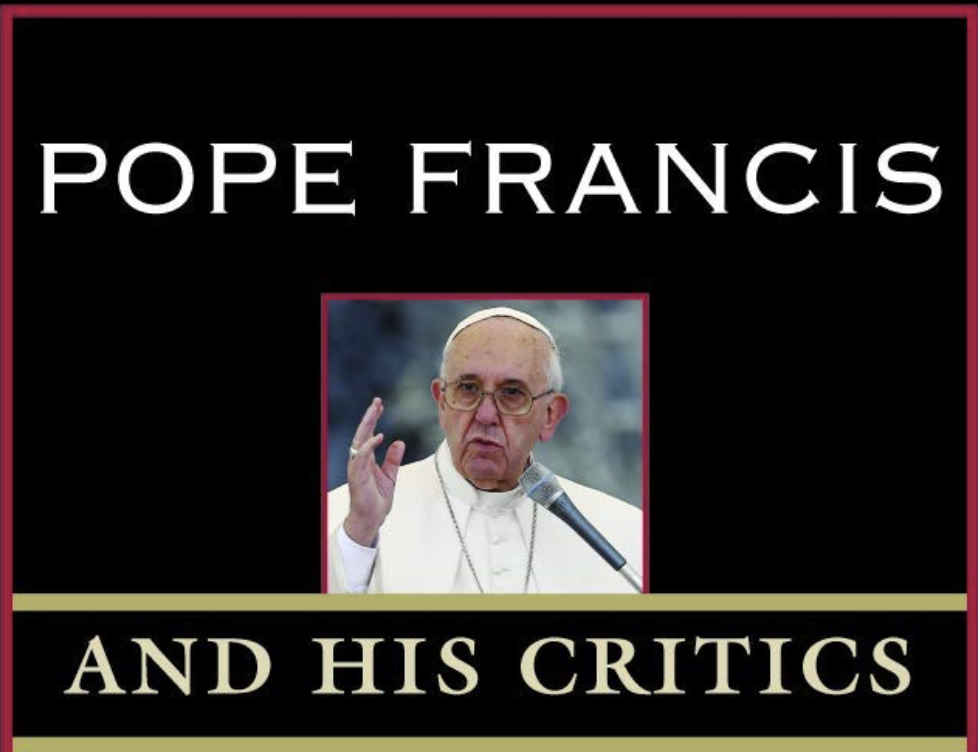
Pope Francis lashes out at conservative Catholic press, calls its criticism 'work of the Devil'

Pope Francis lashes out at conservative Catholic press, calls its criticism 'work of the Devil'

Pope Francis is no fan of press criticism — especially when it comes from Roman Catholic news outlets on the doctrinal right.

So here we go again, with another round of tensions in the growing world of Catholic media.

The 84-year-old Argentinian-born pontiff was caught in a candid moment during his recent trip to Slovakia when he was asked about his health after a recent operation.

“Still alive,” the pope replied, “even though some people wanted me to die.”

The shocking statement came in a meeting the pope had with 53 Jesuits from Slovakia on Sept. 12 in Bratislava. Antonio Spadaro, a priest and editor-in-chief of the Rome-based Jesuit magazine La Civiltà Cattolica, was present at the meeting and on Sept. 21 published the full transcript of the conversation.

The comments immediately sparked a Catholic media war that again highlighted how polarized Catholics have become during Francis’ papacy, as have the official and independent church media that a large swarth of parishioners choose to read.

Asked by another Jesuit at the same gathering how he felt by those who view him with suspicion, Francis replied:

There is, for example, a large Catholic television channel that has no hesitation in continually speaking ill of the pope. I personally deserve attacks and insults because I am a sinner, but the church does not deserve them. They are the work of the devil. I have also said this to some of them.

The TV channel to which he referred is EWTN, according to the National Catholic Reporter.

The Eternal World Television Network was founded in 1980 by a nun named Mother Angelica and began broadcasting a year later from a garage at the Our Lady of the Angels Monastery in Irondale, Alabama. Since then, it has grown to become one of the largest and most influential Catholic news organizations in North America and around the world.


Please respect our Commenting Policy

Norm Macdonald: Theological mysteries, a red-brick wall, a spotlight and a microphone

Norm Macdonald: Theological mysteries, a red-brick wall, a spotlight and a microphone

While debating heretics, early Christians used the Greek term "hypostasis" -- meaning "substance" and "subsistence" -- to help define their belief in the Incarnation of Jesus as one person, yet with divine and human natures.

This "hypostatic union" is not the kind of subject a comedian typically raises on a TV talk show while chatting about mortality with a Hollywood legend. Then again, Norm Macdonald -- who died on September 14 after a secret nine-year fight with cancer -- wasn't a typical funny man. He openly identified as a Christian, while making it clear that he didn't consider himself a very good one.

During an episode of "Norm Macdonald has a Show," the former Saturday Night Live star asked Jane Fonda -- who at one point briefly embraced evangelical Christianity -- this question: "Are you a religious person?"

"I have faith," said Fonda. The host quickly asked, "In Jesus Christ?" Hesitating, Fonda called herself "a work in process," saying she accepted "the historical Jesus."

Macdonald responded: "But do you believe in the hypostatic Jesus?"

When Fonda said "no," he added, "So, you're not a Christian. But you believe, you believe in something."

Raised vaguely Protestant in Canada, Macdonald didn't discuss the brand-name specifics of his faith, even as he wrestled with his own demons -- such as habitual gambling. Yet he could be stunningly specific when addressing criticisms of Christian beliefs. As a judge on NBC's "Last Comic Standing," he quietly shot down a contestant who trashed the Bible, before praising the Harry Potter series.

"I think if you're going to take on an entire religion, you should maybe know what you're talking about," said Macdonald. "J.K. Rowling is a Christian, and J.K. Rowling famously said that if you're familiar with the scriptures, you could easily guess the ending of her book."

The result was a public persona laced with paradoxes, an edgy, courageous comic who often seemed unconcerned if his work pleased the public or his employers.


Please respect our Commenting Policy

New podcast: Did a religious search help shape Norm Macdonald's haunting humor?

New podcast: Did a religious search help shape Norm Macdonald's haunting humor?

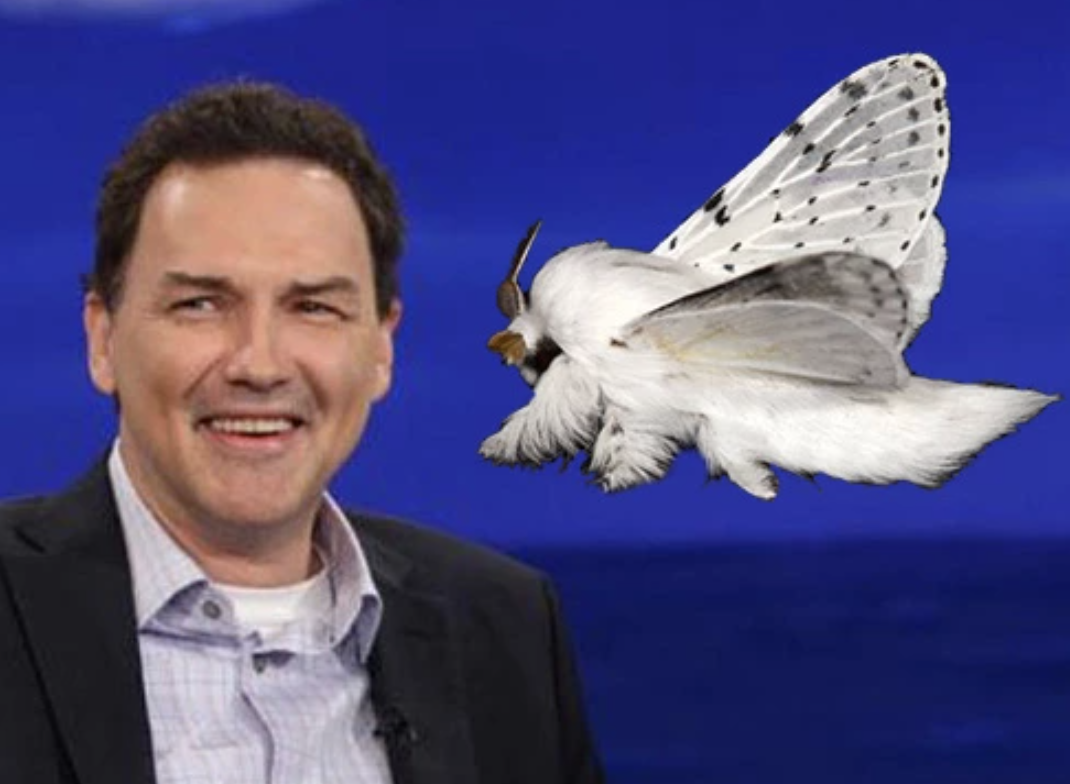
While it may sound strange, I would argue that there are theological “ghosts” hiding inside the great comic Norm Macdonald’s most famous joke. This was the “moth” story, of course.

Right. This joke wasn’t a Saturday Night Live shot at O.J. Simpson or Bill Clinton. It was a long, twisting, bizarre story about a nihilistic moth who was afraid of eternity. It was the kind of joke that fit with the summary of Macdonald’s life and work that opened this Ricochet tribute by Jon Gabriel: “Norm Macdonald — Dostoyevsky in Front of a Red Brick Wall.

The smartest comedians portray themselves as the dumbest; Norm Macdonald was the best at this sleight of hand. He graduated high school at 14, read Russian literature in his downtime, and had long philosophical discussions with clergy. … Macdonald was a student of human nature first, comedy second.

Macdonald was also a self-identified Christian, yet he made it clear that he didn’t consider himself a very good one.

The question raised during this week’s “Crossroads” episode (click here to tune that in) was whether news consumers had any right to expect journalists to mention that reality in their obits of this brilliant, courageous, edgy, mysterious comedian.

The more I read about him — following some really simple online searches — the more I hoped that someone would spot the religion “ghost” in his death-and-virtue haunted work. It also, at least to me, became obvious that many of his spiritual and religious questions were linked to his secret 10-year battle with the cancer that took his life. Cue up these two YouTube clips (here and here).

So this brings us to a crucial text: The actual “moth story” as it unfolded on on Conan.

Read carefully and keep thinking — Russian literature and maybe even a glimpse of a sacred icon.

Yes, I know that this is long. That’s the point:


Please respect our Commenting Policy

Here's a flashback into religion-beat history, with the help of the legendary Lou Grant

Here's a flashback into religion-beat history, with the help of the legendary Lou Grant

If anyone ever writes a book about the history of religion news in the mainstream press it will need to include a photo of the glowering, and often smirking, mug of Lou Grant.

Lou Grant was a TV character, of course, played by the Emmy-winning actor Ed Asner, who died on Sunday (August 29) at age 91. But for millions of Americans, he provided -- in "The Mary Tyler Moore Show" and the sequel "Lou Grant" -- an archetypal image of what old-school journalism was all about.

One 1977 "Lou Grant" episode certainly captured some of the attitudes I encountered while interviewing journalists for my 1982 graduate project at the University of Illinois in Urbana-Champaign, which focused on why few newsrooms made serious attempts to cover religion events and trends -- unless they were linked to politics.

Quite a few editors sounded like Lou Grant.

In this episode, entitled "Sect," the city editor of the mythical Los Angeles Tribune was wrestling with two problems at the same time. The problems seemed to be unrelated.

First, the Trib had lost its veteran religion editor. Grant searched and searched, but no one was interested in filling that empty desk. After all, what self-respecting journalist wanted to be stuck with the religion beat?

Problem number two was how to get rid of lazy, often-drunk, no-good reporter Mal Cavanaugh. All through this episode the newsroom's leaders had been searching for a way to get Cavanaugh to resign. Then came a spark of inspiration. The printed script is simple:

LOU: Well, Mal, you've been with this paper a mighty long time. As you say, this is your family.

CAVANAUGH: (All that humility) Aw, well, it's nice to be appreciated.

LOU: And I think I've found a place where we'll be able to use that special, sweet style that is Mal Cavanaugh.

CAVANAUGH: (Those eyes are getting moist; he sees himself getting a column) What's that, Lou?

LOU: Congratulations, Mal. You're the Trib's new religion editor.


Please respect our Commenting Policy

Unidentified Aerial Phenomena, aliens and the quest for an alternative creator

Unidentified Aerial Phenomena, aliens and the quest for an alternative creator

The first episode of the "Ancient Aliens" cable-TV series promised to show that the growth of intelligent life on this planet had help that came from the stars.

The Prometheus Entertainment summary in 2010 asked: "If ancient aliens visited Earth, what was their legacy, and did they leave behind clues" that still exist?

The bigger question, nearly 200 episodes later, is whether aliens provided the building blocks of life itself. That's the kind of subject -- both theological and scientific -- that surfaces whenever there are debates about whether extraterrestrial life exists.

It's one thing for a recent U.S. national intelligence report -- "Preliminary Assessment: Unidentified Aerial Phenomena"-- to discuss incomplete technical data and the possibility of hostile spy drones. It was something else to say that experts had no scientific explanations for 140-plus reported "UAP" episodes.

The summary noted that 18 mysterious objects "appeared to remain stationary in winds aloft, move against the wind, maneuver abruptly or move at considerable speed, without discernable means of propulsion."

This raised familiar questions for those who have followed decades, even centuries, of debates about these mysteries: Who created these objects? Who created the beings who created them? Should this planet's religious leaders worry?

"The logic is that many people assume life is special, that human beings are uniquely purposed and created in God's image and that this life -- life made in God's image -- cannot exist anywhere else," said Stephen C. Meyer, who has a doctorate in the philosophy of science from Cambridge University.


Please respect our Commenting Policy