TV-Radio

New podcast: What could go wrong? NYTimes explores Facebook's religious ambitions

New podcast: What could go wrong? NYTimes explores Facebook's religious ambitions

Truth be told, I am not prone to flashbacks — even though I did come of age in the late 1960s and early 1970s.

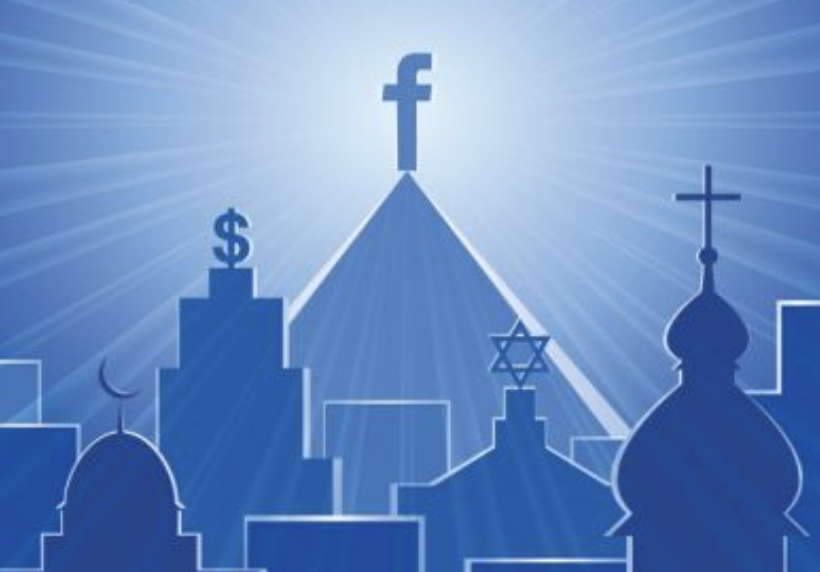
Anyway, I had a big flashback recently while reading a very interesting New York Times feature that ran with this headline: “Facebook’s Next Target: The Religious Experience.” In this case, the subhead is also crucial:The company is intensifying formal partnerships with faith groups across the United States and shaping the future of religious experience.”

Whoa. What does “shaping the future of religious experience” mean? I imagine that to learn details, readers would have to hear from some of the participants in this trailblazing online work. But there’s a problem with that. When asked about some specifics, an official with the Atlanta branch of the trendy Hillsong Church couldn’t answer, because “he had signed a nondisclosure agreement.”

Don’t you hate it when that happens?

Anyway, here’s the passage the stirred up lots of conversation, and my multi-decade flashback, during the recording of this week’s “Crossroads” podcast (click here to tune that in).

A Facebook spokeswoman said the data it collected from religious communities would be handled the same way as that of other users, and that nondisclosure agreements were standard process for all partners involved in product development.

Many of Facebook’s partnerships involve asking religious organizations to test or brainstorm new products, and those groups seem undeterred by Facebook’s larger controversies. This year Facebook tested a prayer feature, where members of some Facebook groups can post prayer requests and others can respond. The creator of YouVersion, the popular Bible app, worked with the company to test it.

Now, combine that mind-spinning information with this passage, which very gently raises the issue that millions of Americans — on the cultural right and left — are convinced that the Facebook gods have lost control of much of the information that is located on their platform:

The company’s effort to court faith groups comes as it is trying to repair its image among Americans who have lost confidence in the platform, especially on issues of privacy. Facebook has faced scrutiny for its role in the country’s growing disinformation crisis and breakdown of societal trust, especially around politics, and regulators have grown concerned about its outsize power.

This brings me to my flashback to a graduate-school class at the University of Illinois in Urbana-Champaign that changed my life.
Please respect our Commenting Policy

Story worth covering? Life and death challenges tested faith of Suns coach Monty Williams

Story worth covering? Life and death challenges tested faith of Suns coach Monty Williams

A reporter tossed a standard question at coach Monty Williams after the Phoenix Suns won the Western Conference finals, asking how he managed to be a tough NBA coach and a sympathetic mentor.

"I tell every new player … that the essence of my coaching is to serve," said Williams, the National Basketball Coaches Association's 2021 coach of the year. "As a believer in Christ, that's what I'm here for. … I tell them all the time, if I get on you, I'm not calling you out -- I'm calling you up."

That message meshes well with what superstar Chris Paul writes on his sneakers game after game: "Can't Give Up Now." That's a popular Gospel song with this chorus: "I just can't give up now. I've come too far from where I started from. Nobody told me the road would be easy and I don't believe He's brought me this far to leave me."

Williams and Paul have known each other for a decade, with professional and personal ties strengthened by pain and frustration. While Paul's on-court struggles are well documented, it's impossible to understand their bond without knowing the details of his coach's life as a Christian, husband and father of five children.

"The real reason to watch" the playoffs this year, said former ESPN commentator Jason Whitlock, in his "Fearless" podcast, is "that God has placed a messenger inside the NBA's secular madness. Monty Williams might be the most important man in sports. The 49-year-old former Notre Dame and NBA player is the leader and example that America needs right now."

The coach's story, he added, "belongs in a new Bible. Five years ago, a 52-year-old White woman high on meth drove her car headfirst into the car driven by Williams' wife Ingrid. Three of Williams' children were also in the car. The White woman died at the scene. … Ingrid Williams died a day later. Williams' children survived."

Williams was a promising Notre Dame freshman when Ingrid -- before their marriage -- stood by him after doctors said he had hypertrophic cardiomyopathy. Long before experts cleared him to play, Ingrid kept praying and offered this message: "Jesus can heal your heart."

Drafted by the New York Knicks, Williams began -- with a defibrillator courtside -- a nine-year NBA career that led into coaching. He quickly became known for his ability to inspire hope and teach leadership.


Please respect our Commenting Policy

That New Yorker #FreeBritany feature: It's all about a Baptist daddy and his wild daughter?

That New Yorker #FreeBritany feature: It's all about a Baptist daddy and his wild daughter?

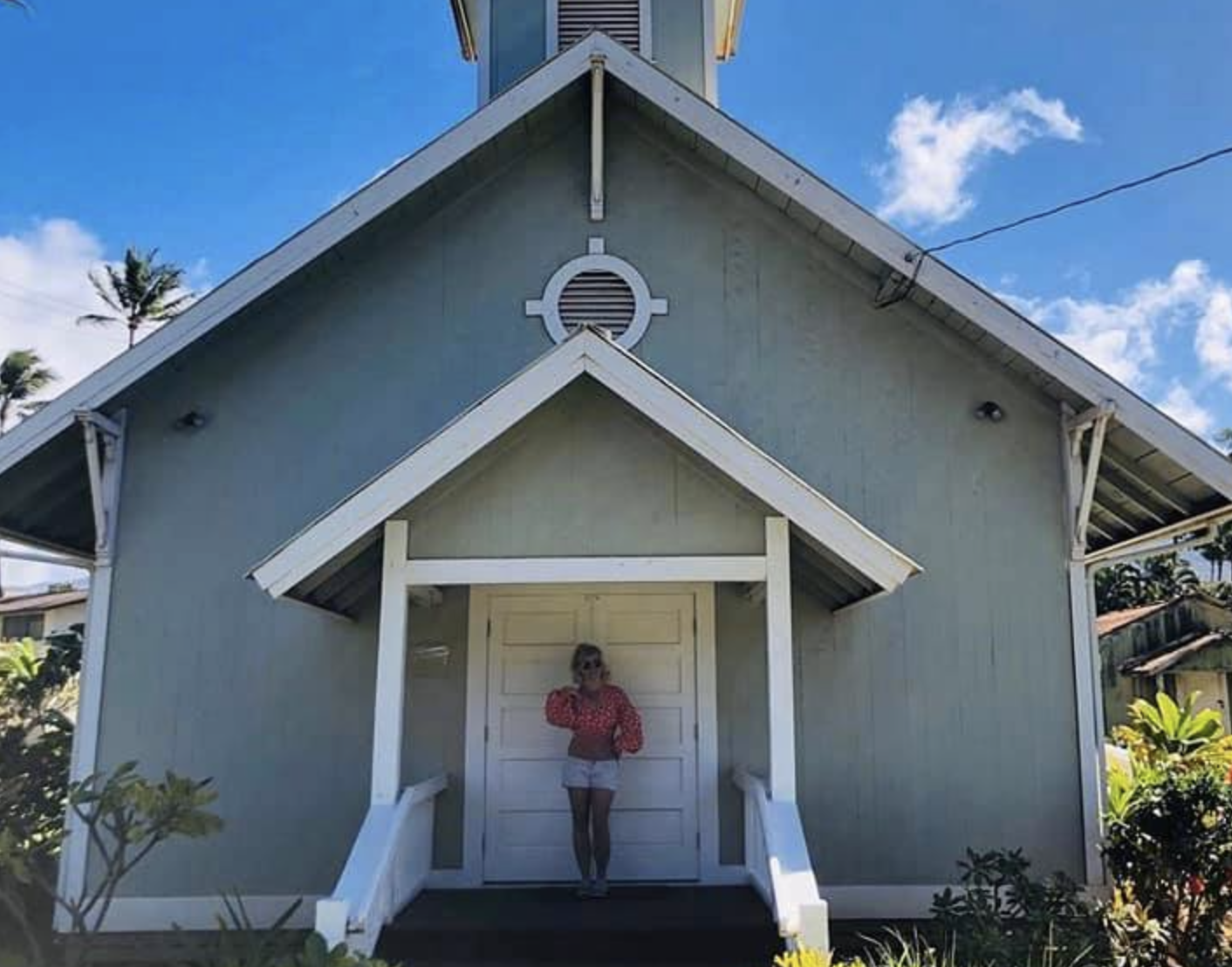
One thing is clear, when you read the long, sad (but buzz-worthy) feature in The New Yorker entitled “Britney Spears’s Conservatorship Nightmare.”

Britney is a celebrity.

When she goes to court, she is a celebrity. When she escapes to a pub, she is a celebrity. When she fights to see her children, she is a celebrity. When she has a nervous breakdown (especially in public), she is a celebrity.

If and when she ever returns to church (there are rumors), she will do so as a celebrity. Ditto for any return to celebrity friendly Kabbalah classes.

But you get what you expect in this feature, written by Ronan Farrow and Jia Tolentino. There’s a huge cast of characters, some who speak on the record and some who do not. There are waves of details from court documents and testimony. There’s an endless survey of public scenes and paparazzi chases.

But the second line of the double-decker headline points to the heart of the story: “How the pop star’s father and a team of lawyers seized control of her life — and have held on to it for thirteen years.”

This is a story about a fight between a Baptist father (simply “Jamie” in most of the story) and his wild daughter — who has lived her entire teen and adult life in the glare of a media spotlight that burned her, even as it poured wealth on everyone around her, including members of her immediate family.

What about faith issues? There are fleeting glimpses of religion “ghosts” throughout this story. However, there is evidence that The New Yorker team realizes that, behind all of the talk about Britney’s mental health, the father and daughter are fighting about the moral choices she has made in her private life. Meanwhile, the daughter keeps trying to break free from this noose, in part through sex, love, marriage and children.

Consider the implications of this passage, referring to the legal drama that pulled the #FreeBritney social-media world back into the headlines:


Please respect our Commenting Policy

Chris Hillman of the Byrds on fame, faith and the roots-music ties that bind

Chris Hillman of the Byrds on fame, faith and the roots-music ties that bind

The Byrds' classic "Turn! Turn! Turn!" didn't sound like anything on the radio when it hit No. 1 on the Billboard charts in 1965.

For starters, the lyrics came from the Book of Ecclesiastes, noting "there is a season, and a time for every purpose, under Heaven. A time to be born, a time to die. A time to plant, a time to reap. A time to kill, a time to heal. A time to laugh, a time to weep."

What critics failed to realize, said Byrds co-founder Chris Hillman, was that covering the late Pete Seeger's classic was a logical move for musicians steeped in American roots music. Songs about struggle, glory, sacrifice and faith were common in early '60s folk concerts.

"Where did all of our music come from? Blues and Gospel. … White church, black church, the music all came from church," said Hillman, in a recent interview. "With the Byrds, we went right to that well. We didn't think twice about it. We didn't say, 'We can't do a Christian song.' "

Hillman's musical roots became more obvious as the Byrds ventured into what many started calling "country rock," especially with the landmark "Sweetheart of the Rodeo" album in 1968. Bluegrass, country and Gospel themes played a larger role as Hillman began writing songs for the Byrds and his later bands.

While the Byrds put him in the Rock & Roll Hall of Fame, it was Hillman's grassroots connections that made history, according to the legend who produced his "Bidin' My Time" solo project in 2017. The late Tom Petty said: "Chris was a true innovator -- the man who invented country rock. Every time the Eagles board their private jet, Chris at least paid for the fuel."

That musical and spiritual journey is clear in Hillman's recent autobiography, "Time Between," with its mix of rock lore and personal reflections. Rather than offering a tell-all about sex, drugs and rock 'n' roll, Hillman focuses on lessons he learned along the way and his love for the musicians who, flaws and all, helped him.


Please respect our Commenting Policy

What is valid journalism? America's racial debates spotlight concerns about bias

What is valid journalism? America's racial debates spotlight concerns about bias

Begin with the "Statement of Core Values" chiseled into stone at the Hussman School of Journalism and Media on the University of North Carolina-Chapel Hill campus. The school declares these values will "help rebuild the bond between the public and the media" -- a desperate need considering the unprecedented popular distrust of news outlets lamented in this earlier GetReligion post.

Read the UNC credo for yourself. But let's summarize key J-school principles at the nation's third-best public university, per the latest Wall Street Journal ranking (behind Michigan and UCLA, edging U-Cal Berkeley).

* "Impartiality," defined as "delivering the news honestly, fairly, objectively, and without personal opinion or bias," the news media's "greatest source of credibility."

* "The pursuit of truth," journalism's "noble goal," though the truth "is not always apparent or known immediately." Thus journalists must not decide in advance what's true but "report as completely and impartially as possible all verifiable facts" so audience members can discern what to think.

* Some journalism presents viewpoints, but to protect this impartiality and credibility the media and their consumers need "a sharp and clear distinction between news and opinion."

Think of it this way. How far should American newspapering drift toward the contrary -- and successful -- business model of cable TV "news"? (Alongside conservative Fox News, the once-centrist CNN moved leftward though its imitation of MSNBC's partisanship and that produces third-place audience ratings).

Walter Hussman Jr., whose name graces this J-school, donated $25 million in 2019 to foster the above credo, which appears daily in Little Rock's Arkansas Democrat-Gazette and other papers owned by his WEHCO Media. This company operates 10 dailies, eight weeklies, seven regional magazines, nine cable TV systems and broadband and digital services, all in six states.

Now his credo is swept into the culture-war convulsions emanating from the nation's troubled racial past and present, Black Lives Matter, "Critical Race Theory," the murder of George Floyd and especially The New York Times Magazine's "1619 Project," launched in 2019 and coming soon to a school near you.


Please respect our Commenting Policy

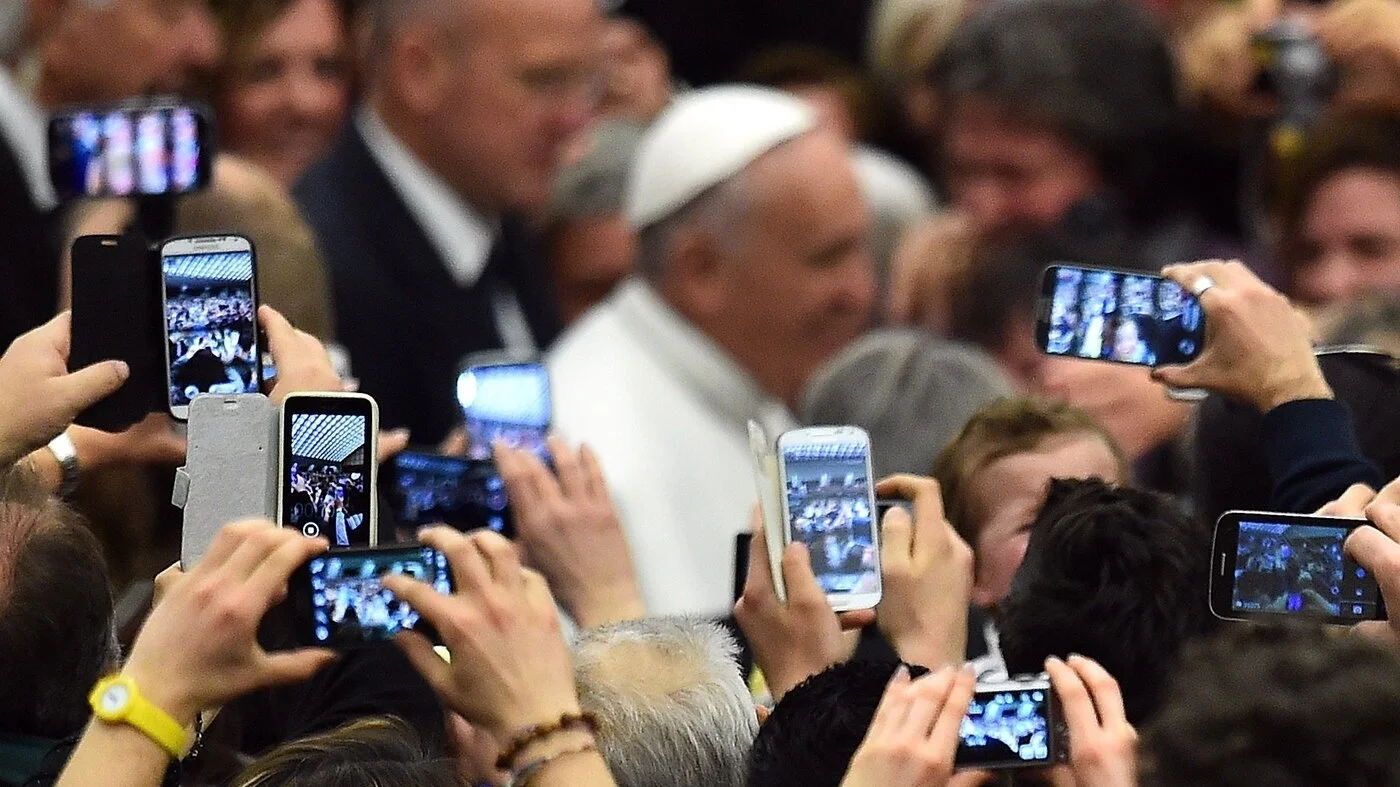
Pope Francis questions the purpose of official Vatican media: Does he have a point?

Pope Francis questions the purpose of official Vatican media: Does he have a point?

The year was 2012 and then-Pope Benedict XVI, yearning to “encounter men and women wherever they are, and begin dialogue with them” sent out his first tweet.

The papal Twitter account in English — and associated accounts in different languages — continue to this day under Pope Francis. For the leader of the world’s 1.3 billion Roman Catholics, it remains a way to evangelize through the computer, especially during the pandemic.

It did not go unnoticed when Francis — paying a visit on May 24 to the Dicastery of Communications to mark the 90th anniversary of Vatican Radio and the 160th anniversary of the Vatican’s newspaper L’Osservatore Romano — used the occasion to call the Vatican’s in-house media to stay relevant during a challenging media landscape.

The Associated Press, in its news story, noted the following:

Francis has vowed not to fire anyone to offset the economic crisis created by COVID-19 and the pandemic-related shuttering of one of the Holy See’s main sources of revenue, ticket sales from the Vatican Museums.

But in a warning of sorts to the Vatican communications staff, he opened his unscripted remarks Monday with a pointed question.

“There are a lot of reasons to be worried about the Radio, L’Osservatore, but one that touches my heart: How many people listen to the Radio? How many people read L’Osservatore Romano?” Francis asked.

He said their work was good, their offices nice and organized, but that there was a “danger” that their work doesn’t arrive where it is supposed to. He warned them against falling prey to a “lethal” functionality where they go through the motions but don’t actually achieve anything.

In dealing with Vatican-run media, journalists need to ask several questions:

* Why has Pope Francis questioned his own media?


Please respect our Commenting Policy

New podcast: Yes, election of first trans/queer/gender fluid ELCA bishop was a big story

New podcast: Yes, election of first trans/queer/gender fluid ELCA bishop was a big story

Imagine that you are a pastor or a layperson in the Lutheran Church-Missouri Synod, the Wisconsin Evangelical Lutheran Synod or one of the other conservative Lutheran bodies in the United States.

So you sit down with your morning coffee and pop open your email and you see that friends and family have sent you emails enquiring about a headline that they saw on Twitter or somewhere else in today’s complicated news marketplace.

In this case, the headline is from the New York Times and it states: “U.S. Lutheran Church Elects Its First Openly Transgender Bishop.

The problem, of course, is that the “U.S. Lutheran Church” doesn’t exist There is no one denomination that fits that description. Or perhaps the person sending you the email saw, somewhere, the Religion News Service headline that ran with this headline: “Lutherans elect Megan Rohrer first transgender bishop.” Second verse, same as the first.

When it comes to Lutheranism, many journalists continue to struggle when describing who is who and what is what. This brand-name problem was the first layer of the complex issues — in terms of church doctrine and journalism style — that we explored in this week’s “Crossroads” podcast. Click here to tune that in.

The denomination that elected Bishop-elect Rohrer was, of course, the Evangelical Lutheran Church in America, one of the “Seven Sisters” — we may need to make that “Seven Siblings” — of liberal Protestantism.

But what happens if you put that denominational brand name in a headline (besides the fact that it’s way too long for most newspaper layouts)? If you do that, you have to explain the presence of “evangelical,” which has become a near curse word in a news context. And, hey, “Lutheran” by itself sounds more important. Damn the accuracy, full speed ahead.

This brings us to the key hook for this podcast: There was little or nothing surprising about the progressive ELCA electing a trans (if that is the best term, in this case) bishop.


Please respect our Commenting Policy

Movie mogul Tyler Perry preaches tolerance to the woke flock at Oscars 2021

Movie mogul Tyler Perry preaches tolerance to the woke flock at Oscars 2021

It was just like one of those inspiring Tyler Perry movie scenes when a believer does the right thing and helps a struggler have a come-to-Jesus epiphany.

Perry was walking to his car after some Los Angeles production work when he was approached by homeless woman.

"I wish I had time to talk about judgment," said Tyler, after receiving the Jean Hersholt Humanitarian Award during the 93rd Academy Awards. "Anyway, I reach in my pocket and I'm about to give her the money and she says: 'Excuse me sir, do you have any shoes?'

"It stopped me cold because I remember being homeless and having one pair of shoes," he added. "So, I took her into the studio. … We're standing there [in] wardrobe and we find her these shoes and I help her put them on. I'm waiting for her to look up and all this time she's looking down. She finally looks up and she's got tears in her eyes. She says: 'Thank you Jesus. My feet are off the ground.' "

Perry, of course, is a movie mogul who has built a 330-acre studio facility in Atlanta used for all kinds of work, including parts of the Marvel epic "The Black Panther." He has created many profitable films of this own, such as "Diary of a Mad Black Woman," "The Family that Preys" and "Madea's Family Reunion," part of a series in which Perry, in drag, plays a pistol-packing, Bible-quoting matriarch at the heart of Black-family melodramas.

It was logical for Perry to receive the Jean Hersholt award, in part because of his rags-to-riches life and his efforts to help churches and nonprofits help the needy. At the same time, it's unlikely that he could ever win a regular Oscar statue since critics and Hollywood elites have long mocked his movies as soapy parables crafted to appeal to ordinary church folks -- Black and White. It isn't unusual, in the final act of Perry movies, for weeping sinners to pull their lives together during Gospel-music altar calls.

Thus, Perry's sermonette was an unusual twist in an Oscar rite packed with political messages and wins by films that few American moviegoers saw or even knew existed.


Please respect our Commenting Policy

New podcast: Should religious leaders and the cultural right applaud lousy Oscar ratings?

New podcast: Should religious leaders and the cultural right applaud lousy Oscar ratings?

Pick a headline, just about any Oscar headline.

The ratings for the 2021 Academy Awards were bad. How bad? Here’s the take from the world-weary folks at Entertainment Weekly: “Oscars hit another historic low in ratings.”

The New York Post has been known to produce blunt headlines. Thus: “Oscar ratings drop to an all-time low with unwatchable show.”

But what matters, of course, is what runs in prestige settings such as The New York Times. The big business-desk headline there provided some extra, rather acidic, context:

Oscars Ratings Plummet, With Fewer Than 10 Million Tuning In

Sunday night’s pandemic-restricted telecast drew 58 percent fewer viewers than last year’s record low.

Wait, there’s more bad news:

Among adults 18 to 49, the demographic that many advertisers pay a premium to reach, the Oscars suffered an even steeper 64 percent decline, according to preliminary data from Nielsen. …

[The] Oscars have been on a slide since 1998, when 57.2 million people tuned in to see “Titanic” sweep to best-picture victory.

What’s the religion-news hook in this story, other than the semi-religious role that the Oscar rites play in the cult of Hollywood? That was the subject of this week’s “Crossroads” podcast. Click here to tune that in or head over to Apple Podcasts to sign up for a weekly feed.

Let’s walk through this.


Please respect our Commenting Policy