Surveys & polls

Hey! The Gray Lady noticed the Christmas on Sunday debates. Let's dig into that (again)

Hey! The Gray Lady noticed the Christmas on Sunday debates. Let's dig into that (again)

It’s almost Christmas.

At least, it’s almost Christmas if you are one of those strange people who think “Christmas” is the same thing as the feast of the Nativity of Our Lord Jesus Christ. However, thinking about this holy day in those terms requires negotiating a maze created by school calendars, travel, office parties, family traditions and, yes, worship services. And then there is the cultural steamroller called “The Holidays,” led by the powers that be in government, shopping malls and mass media.

I bring this up because of that New York Times story that ran a few days ago: “O Come All Ye Faithful, Except When Christmas Falls on a Sunday.” It’s a story well worth reading and we will get to it shortly.

However, if you follow the GetReligion podcast, you know that I’ve been expecting the hot social-media debates about the whole “Christmas on Sunday” kerfuffle to eventually bleed over into the mainstream press. Check out this “Crossroads” episode: “Is Christmas 'news'? Not really, unless it is a case of 'Christmas AND ...'

Before that, I wrote an “On Religion” column hooked to a new study by Lifeway Research. Here’s that headline: “When is Christmas? That depends on the person asking.” If you dig into those numbers, you’ll see a bright red line running between two different brands of Protestantism — those with roots in traditions that include some form of liturgical calendar and those that do not, especially the rapidly growing world of nondenominational evangelical and charismatic/Pentecostal churches. He’s a key chunk of that column:

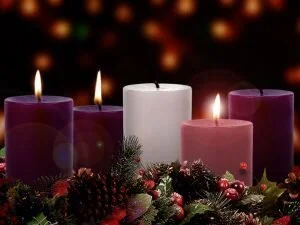
In churches with centuries of liturgical traditions, the Nativity of Our Lord Jesus Christ is Dec. 25, following the quiet season of Advent (Latin for "toward the coming"). This year, Christmas falls on Sunday and, for Catholics, Anglicans and others, the Christmas Eve Midnight Mass is one of the year's most popular rites. This opens a festive season that continues through Jan. 6, the Feast of the Epiphany. Many Eastern Orthodox Christians follow the ancient Julian calendar and celebrate Christmas on Jan. 7, after Nativity Lent.

In the United States, some kind of Christmas Eve service remains the big draw, according to almost half (48%) of Protestant pastors contacted in a new study by Lifeway Research. The frequency of high-attendance church events builds until Christmas Eve, then declines sharply.

Please respect our Commenting Policy

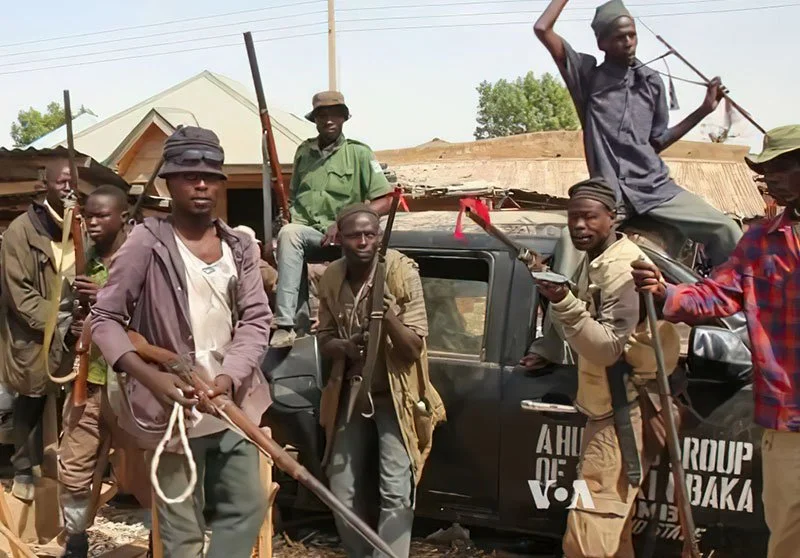
Buried story of 2022? The persecution of Christians keeps surging around the world

Buried story of 2022? The persecution of Christians keeps surging around the world

You want news?

The 2022 report from the Open Doors organization (CLICK HERE) says “persecution of Christians has reached the highest levels” since it began accumulating data for its annual “World Watch List” three decades ago. Hostile incidents have increased by 20% since just 2014, and some 360 million Christians, or 14% of the worldwide total, are said to have faced persecution, harassment, or discrimination.

Open Doors reports that it has documented the murders in one year’s time of 5,898 Christians for their faith (up 24% from the prior year); attacks on 5,110 local churches (up 14%); 3,829 abductions (a new high, up 124%); 6,175 victims held without trial; 24,678 subjected to beatings, death threats and other abuse; 6,449 with homes or businesses attacked; and 3,147 women targeted for rape or sexual harassment. 

Since that report was issued, the Nigeria-based civil rights group Intersociety reports that in just that one nation 4,020 additional killings and 2,315 abductions occurred from January through October, 2022.

The Memo therefore proclaims this international upsurge the Buried Story of the Year, a major, newsworthy global scourge widely featured by religious media — yet all but ignored by much of the “Mainstream Media.”

Journalists will have another peg for remedying this sin of omission when Open Doors issues its 2023 report early in the new year.

One noteworthy media exception, timed for Christmas a year ago, was a thorough New York Times survey of widespread harassment of Christians in India. Also, Reuters this month produced a massive investigation of 10,000 forced abortions conducted by the military in chaotic Nigeria, indicating rape is a widespread tactic used to terrorize Christian women.

On a broader time frame, the Center for the Study of Global Christianity estimates that 1 million Christian martyrs were killed in the first 10 years of the 21st Century.


Please respect our Commenting Policy

NBC News is all over an icky COVID-19 cash scam linked to, well, some kind of 'pastor'

NBC News is all over an icky COVID-19 cash scam linked to, well, some kind of 'pastor'

In the past decade of so, your GetReligionistas have written a steady stream of posts about how America’s rapidly growing flocks of nondenominational believers have made the vague and complicated world of evangelical/charismatic Christianity even harder for journalists to understand and, thus, cover with some degree of accuracy.

That was complicated, wasn’t it? For more info, surf this massive file of URLs linked to the work of chart-master Ryan Burge and then this recent Memo from religion-beat patriarch Richard Ostling, “Story of the Year: Rise of the 'Nons' — put them alongside Nones, NIPs, Nonverts, etc.”

This trend has affected some incredibly important news stories, such as the Jan. 6th riot at the U.S. Capitol and attempts to find justice for victims of clergy sexual abuse.

This brings me to an email that I received the other day from a journalism professor friend that addressed an essential issue in this important NBC News report: “Florida pastor and his son are arrested in alleged $8 million Covid scam.”

This jprof asked this question: “What made him a pastor?” That isn’t an irrelevant question, since this man’s ministerial status is mentioned in the headline and the lede. Here’s the overture:

A Florida pastor and his son were arrested … on charges of fraudulently obtaining more than $8 million in federal Covid relief funds and attempting to use some of the money to buy a luxury home near Walt Disney World. 

Evan Edwards, 64, and his son, Josh, 30, were taken into custody five months after an NBC News report raised questions over why they hadn’t been charged in the alleged scam, which federal prosecutors first identified in court papers in December 2020. 

No one really knows the number of scams that were linked to the billions and billions of government dollars spent in COVID-19 relief programs. It’s a huge story with untold local, regional, state and national angles. International angles? Don’t go there.

Scams linked to religious ministries deserve coverage, obviously, in part because of the hypocrisy angle that reporters may not attach to similar scandals involving businesses and secular nonprofit groups. That word — “pastor” — is crucial.


Please respect our Commenting Policy

Podcast: Is Christmas 'news'? Not really, unless it is a case of 'Christmas AND ...'

Podcast: Is Christmas 'news'? Not really, unless it is a case of 'Christmas AND ...'

At least once a year, back in the days when I was in a newsroom full-time, I would have a semi-argument with an editor about this question: Are debates about worship issues “hard news”?

Every now and then I would win and we’d run a story — like a feature about United Methodists arguing about gender-neutral language for God (this was in the 1980s). When it ran, all hellfire broke loose, which convinced some editors that I was right. Others, however, were upset that so many readers disagreed with their conviction that a religion-religion story was news, as opposed to religion-politics stories.

This brings me to Christmas — which is on a Sunday this year. This has led to some interesting polling and emotional online debates, but, so far, not much news coverage about the central worship question: Should churches celebrate Christmas on Christmas, even if Dec. 25 falls on a Sunday? This was the hook for this week’s “Crossroads” podcast (CLICK HERE to tune that in).

Research? The team at Lifeway Research has done two studies linked to Christmas worship. For example, see this Baptist Press headline: “Most churches plan to open on Christmas and New Year’s Day.” I wrote a column the other day with this headline: “When is Christmas? That depends on the person asking.”

Back to the question about worship being news. You end up with an equation that goes something like this:

* Flocks of people attending Latin Mass rites is not news.

* The pope questioning the motives of traditional Catholics who support the Latin Mass is news.

* A major American political leader — Joe Biden, perhaps — supporting the pope’s take on the Latin Mass would be big news.

See how this works? You can see how this would apply to the whole “When is Christmas?” debate. It matters to millions of people in pews. It doesn’t matter to the political desk.


Please respect our Commenting Policy

NPR comes to hills of Tennessee and sees exactly the religion trends that you would expect

NPR comes to hills of Tennessee and sees exactly the religion trends that you would expect

What do you know: National Public Radio came to my backyard here in East Tennessee to cover an important religion-beat story. And, well, NPR saw exactly what you would expect NPR to notice, while ignoring all of the details and questions you would expect this deep-blue news organization to ignore.

Once again, we are talking about a story that is totally valid, but its producers avoided the kind of diversity in sourcing that would have made matters more complex. Here’s the headline for the online text version: “As attendance dips, churches change to stay relevant for a new wave of worshippers.”

What’s missing in this story? It’s absolutely true that there are declining churches here in the mountains of East Tennessee, especially during COVID-tide. That’s an important story. The problem is that there are also growing churches in the region (yes, including my own Orthodox parish, which has grown at least 25% in the past three years) and that’s a detail that makes this story more complex. Here is the overture:

KNOXVILLE, Tenn. — It's Sunday morning and a small group sits around a fire pit in a community garden under the limbs of an expansive box elder tree. Church is about to start. And it's cold.

"God our Father, we are just so thankful for this time that we have to share this morning," says Pastor Chris Battle, a big man with a pipe clenched in his generous smile. "And we really thank you for fire that keeps us warm even as we sit up under this tree. We just pray that you would bless our time together."

Three years ago, Battle walked away from more than three decades leading Black Baptist churches and turned his attention to Battlefield Farm & Gardens in Knoxville. They grow vegetables and sell them at a farmer's market. They also collect unsold produce from around the city and deliver it to people in public housing once a week.

Battle says he left because traditional church was not connecting with people. He felt they were turned off by the sermons, the pitches for money, the Sunday-morning formality of it all.

This brings us to the first of two thesis statements describing the big picture:

American Christianity is in the midst of an identity crisis. Attendance is in steep decline, especially among millennials and Gen Z who say traditional church doesn't speak to their realities.


Please respect our Commenting Policy

When is 'Christmas,' anyway? For many church leaders, that's a complicated question

When is 'Christmas,' anyway? For many church leaders, that's a complicated question

On church calendars, parents and grandparents circle this December event with red ink.

The problem for clergy is simple: When do they schedule that special Christmas service, or that concert full of Christmas classics?

"Evangelicals, and especially Baptists, tend to be rather pragmatic about these decisions. We want the most bang for our bucks and we want as many people as possible" in the pews, said Joshua Waggener, professor of church music and worship at Southwestern Baptist Theological Seminary in Fort Worth, Texas.

One thing is certain: "You have to have those little kids up there singing 'Little Drummer Boy.' It's pragmatic. For most people, I don't think theology has anything to do with" the timing.

This reality affects when churches schedule special events, especially in December -- when their members wrestle with school calendars, travel, office parties, family traditions and, yes, worship services. Meanwhile, civic groups, shopping malls and mass media offer "The Holidays," a cultural tsunami that begins weeks before Thanksgiving.

In churches with centuries of liturgical traditions, the Nativity of Our Lord Jesus Christ is Dec. 25, following the quiet season of Advent (Latin for "toward the coming"). This year, Christmas falls on Sunday and, for Catholics, Anglicans and others, the Christmas Eve Midnight Mass is one of the year's most popular rites. This opens a festive season that continues through Jan. 6, the Feast of the Epiphany. Many Eastern Orthodox Christians follow the ancient Julian calendar and celebrate Christmas on Jan. 7, after Nativity Lent.

In the United States, some kind of Christmas Eve service remains the big draw, according to almost half (48%) of Protestant pastors contacted in a new study by Lifeway Research. The frequency of high-attendance church events builds until Christmas Eve, then declines sharply.

Please respect our Commenting Policy

News coverage of LGBTQ issues enters mop-up phase in the religion marketplace

News coverage of LGBTQ issues enters mop-up phase in the religion marketplace

It has been a big week for the ongoing LGBTQ+ story. Even as the U.S. Supreme Court heard oral arguments in a case about how much to tolerate personal dissent against same-sex marriage, the U.S. House, the House this morning passed nationwide codification of the gay marriage right that the Court enacted by 5-4 in the 2015 Obergefell ruling.

The new law effectively concludes phase one in the unusually rapid upending of a central societal structure dating from antiquity. The next few years, the media will be covering the mop-up phase facing religious groups and individuals that uphold traditional teachings about marriage, over against anti-discrimination assertions by government, Hollywood, corporate America and private actors.

The current Supreme Court case (303 Creative LLC v. Elenis, docket #21-476) involves a Colorado website designer who does not create pages that celebrate same-sex weddings — though she serves gay customers otherwise. Her free-speech claim is opposed by, for example, Reform Judaism, many liberal Protestants and other social liberals.

Observers figure that the Court, with a more traditionalist makeup than in 2015, will back this designer’s plea and ultimately look kindly upon further religious claims under the Bill of Rights. If so, the future conflict may focus on the Carborundum tactic as the LGBTQ+ movement grinds down conservatives’ energy, time and money in long-running legal maneuvers, meanwhile building cultural pressure to marginalize conscientious objectors as simple bigots.

An opinion-page complaint against religion’s “encroachment” upon society, posted by NBC News and written by Stanford University journal editor Marcie Bianco, neatly encapsulates where this culture war appears to be heading. This is the voice from the cultural left:

Dig a bit deeper, and what this act really represents is the inflexibility of our nation’s institutions and the national entrenchment — despite constitutional assurances to the contrary — of religion.


Please respect our Commenting Policy

Perfect storm before and after COVID-19: Do churches have $$$ for missions and charity?

Perfect storm before and after COVID-19: Do churches have $$$ for missions and charity?

Back in the heady church-growth days of the 1980s and 1990s, researchers John and Sylvia Ronsvalle began hearing caution creep into their interviews with church leaders.

Denominational leaders were especially uncomfortable when asked about declines in giving to overseas missions and projects to help the poor.

Sylvia Ronsvalle said the leader of one large congregation gave this blunt response: "Ah! No! We can't promote missions because there won't be enough for our seminaries." She responded: "Well, I think people would be more interested in your seminaries if you were actually impacting global needs in Jesus' name."

That encounter, and many others, ended up in "Behind the Stained Glass Windows: Money Dynamics in the Church," one of many publications the Ronsvalles have produced while leading empty tomb, inc. Their center also serves as a hub for missions in Champaign, Illinois, their home for 50 years.

Danger signs began decades ago. Giving to religious groups -- defined in terms of potential donations based on after-tax incomes -- peaked in 1960 and then began to decline, even as church membership numbers and budgets kept rising.

This trend "pre-dated many of the controversial issues that were to emerge by the end of the 1960s," noted the 31st annual empty tomb report, based on 2019 numbers. In mainline and evangelical denominations "per member giving in current dollars, as well as in inflation-adjusted dollars and as a portion of income" was lower in 2019 than the year before.

Then COVID-19 hit. But the pandemic's impact in pews only made an ongoing charity funding crisis more obvious, said Sylvia Ronsvalle, in a telephone interview.


Please respect our Commenting Policy