Surveys & polls

Here's a solid religion information source for office, home libraries and (of course) newsrooms

Here's a solid religion information source for office, home libraries and (of course) newsrooms

Here are some interesting facts about war-ravaged Ukraine you might not have heard:

* The nation was 97% Christian in 1900, slumped to 60% when atheistic Soviet Communists held power, and has rebounded to 86%. But in one survey only 20% of Ukrainians said religion is “very important” for them.

* The Orthodox Church historically under the Moscow Patriarchate has 13.5 million members. But even before the current Russian invasion, the young rival Orthodox Church of the independent Kyiv Patriarchate had gained a bigger following of 16 million.

* Evangelical, Pentecostal and Charismatic Protestants, though a small minority, have so thrived since national independence in 1991 that Ukraine is known as Eastern Europe’s “Bible Belt.” Pentecostal believers who once survived in the underground church are now a force in civic affairs.

* Despite electing the first Jewish president, anti-Semitic incidents still occur.

* Regarding morals, “domestic violence is a massive problem,” especially in COVID-19 times, with complaints up 40% in the first half of 2020 compared with 2019.

Why mention these newsworthy pieces of information?

That’s a sampling of the sort of data about each of 233 countries you’ll find in the brand-new “Global Christianity: A Guide to the World’s Largest Religion from Afghanistan to Zimbabwe” (Zondervan Academic, $29.99 paperback). This valuable and inexpensive resource updates key information from the 2019 edition of the invaluable “World Christian Encyclopedia” (Edinburgh University Press, list price $270 with discounts online).

The new book’s editor is Gina Zurlo — https://ginazurlo.com; gzurlo@gordonconwell.edu) — co-editor of the “Encyclopedia” and co-director of the independent agency that produces it, the Center for the Study of Global Christianity at evangelical Gordon-Conwell Theological Seminary.

Please respect our Commenting Policy

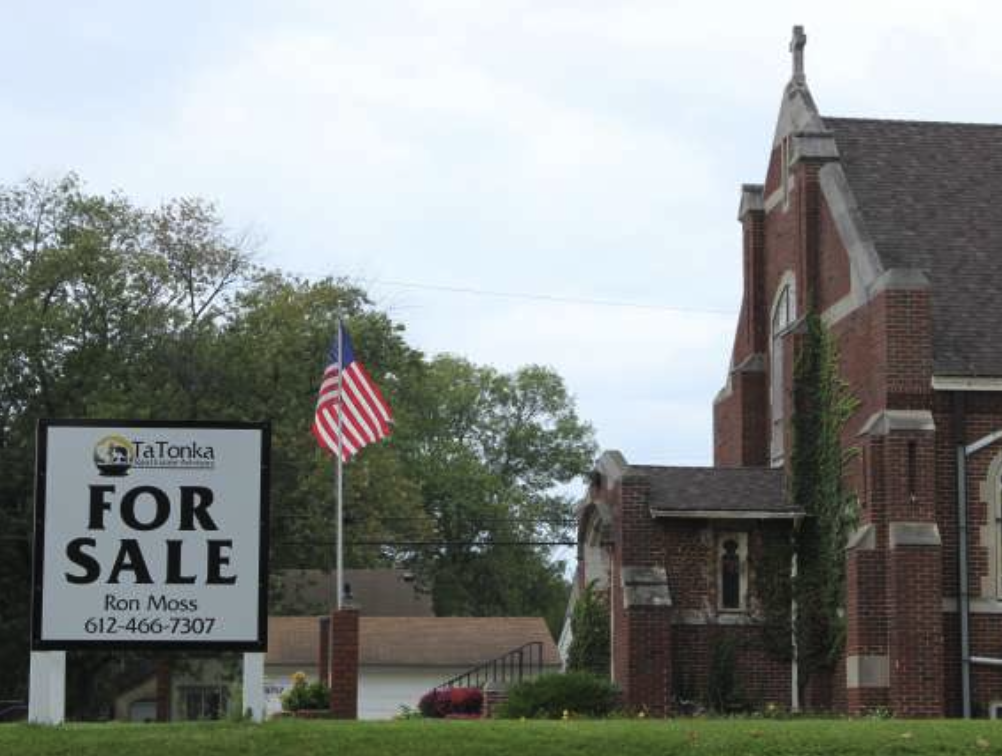
Podcast: Why are churches closing? There are many forces at work, but doctrine still matters

Podcast: Why are churches closing? There are many forces at work, but doctrine still matters

For years, there was a simple answer to the old question: Why do some churches grow, while others shrink?

You simply bought a copy of the 1972 book “Why Conservative Churches Are Growing: A Study in Sociology of Religion” by the late National Council of Churches leader Dean M. Kelley and that provided information answering lots (but not all) of the big questions. It was crucial that this groundbreaking book was written by a mainline Protestant insider, as opposed to a Southern Baptist or Assemblies of God leader.

Of course, everyone knew that some churches grew because of location, location, location. Also, there were always a few liberal churches that grew because of talented preachers or other strengths. Like I said: Kelley answered lots of church-decline questions, but not all of them.

What about 2022 in post-pandemic church life? For starters, many churches will never be post-pandemic — because many congregations (and maybe denominations or communions) were changed forever and we will see more evidence of that in the next few years.

All of this is an overture to this week’s “Crossroads” podcast (CLICK HERE to tune that in) which focuses on a must-read feature story by Godbeat veteran Bob Smietana. The headline at Religion News Service: “For a small Chicago church, closing down was an act of faith.” This was a personal, heartfelt story for Smietana, since this was a congregation that he once called home.

Like so many pastors around the United States, the Rev. Amanda Olson has kept one eye on the Bible and another on the evolving religious landscape.

She knew change was coming to the church in America.

Yet she hoped her congregation might be spared the worst of it.

“Everyone thinks that churches are going to close,” said Olson, the longtime pastor of Grace Evangelical Covenant Church on Chicago’s North Side. “But nobody thinks it is going to be their church.”


Please respect our Commenting Policy

What will American Protestantism look like after the wars inside the 'Seven Sisters' are done?

What will American Protestantism look like after the wars inside the 'Seven Sisters' are done?

Over decades, the map of U.S. Protestantism has been redrawn by splits over the authority and interpretation of the Bible that eventually focused on the LGBT dispute. Now we have a major case study that journalists will need to cover at the local, regional, national and global levels.

A balanced coalition of leaders in the large United Methodist Church (UMC) developed a treaty for mutually respectful separation — the Reconciliation and Grace Through Separation protocol — for that’s currently degenerating into a wasteful fight like other groups have suffered.

Reporters and concerned readers will want to dive into these commentaries and news stories:

* Look at a United Methodist timeline: Why are conservatives going nuclear with lawsuits?

* What happened to United Methodists’ proposal to split the denomination?

* Time is Running Out for Traditionalist United Methodists!

* For United Methodists, the center is not holding

* Special sessions of United Methodist annual conferences 2022

* United Methodist Church bishops mount defense amid conservative attacks (paywall protected)

* Liberal Bishops Have Redefined United Methodist Polity

The current maneuvers by the North American UMC establishment may well limit the number of dropouts joining the Global Methodist Church. Its vision has been to unite a million or more U.S. Methodist evangelicals with the growing Methodist churches in Africa and Asia, creating an effective and innovative international denomination dedicated to defending current Methodist doctrines. This could help counteract some U.S. conservatives’ drift into Christian nationalism. Is that still feasible?


Please respect our Commenting Policy

Plug-In: Why faith still matters -- Bob Smietana on how religion is getting reorganized

Plug-In: Why faith still matters -- Bob Smietana on how religion is getting reorganized

Religion reporter Bob Smietana’s “aha!” moment came a few years ago while covering a hurricane.

When a tornado, flood or other disaster occurs, so-called faith-based FEMA organizations typically play a crucial role in the relief effort.

“Usually, a bunch of church folks and other religious folks show up,” explained Smietana, a Religion News Service national reporter. “They cook meals, they clear trees, and they help people rebuild their houses and put their lives back together.”

But given the decline of organized religion in America, might those helpers — at some point — disappear? And if so, what might that mean for the nation’s social fabric? Such questions came to Smietana during his “aha!” moment.

“Something in my head went, ‘Oh, wait. All those people doing this faith-based disaster relief are usually older church folks, and most of them are White,’” he told me, noting the shrinking proportion of White Christians in America.

Reflecting on the hurricane volunteers, he realized, “There’s no one in the pipeline to replace those folks when they’re gone.”

The veteran Godbeat pro shared that anecdote as we talked about the ideas behind his insightful new book, “Reorganized Religion: The Reshaping of the American Church and Why It Matters”, which releases tomorrow.

Here’s how Worthy Publishing describes Smietana’s book: “A look at the ways the Christian church has changed in recent years — from the decline of the mainline denominations to the megachurchification of American culture to the rise of the Nones and Exvangelicals — as well as a hopeful vision for reimagining what the church might look like going forward.”

My own take: The 200-plus pages of “Reorganized Religion” certainly are timely, delving into long-term demographic trends while exploring challenges such as the COVID-19 pandemic and post-2020 political division.


Please respect our Commenting Policy

Is America's religion cup half-empty or half-full? Two new takes on the omnipresent 'nones'

Is America's religion cup half-empty or half-full? Two new takes on the omnipresent 'nones'

The uber-trend in 21st Century American religion is the increase in “nones” who cite no religious affiliation or identity when pollsters phone. Last December, the Pew Research Center reported that 29% of the adult population currently self-describes as either atheist, agnostic or — by far the biggest category — “nothing in particular” regarding religion.

Thus the media and religious professionals will want to examine two new assessments of the situation.

Religion’s cup looks half-empty, a familiar scenario, in the book “Reorganized Religion: The Reshaping of the American Church and Why It Matters” by Bob Smietana. But the cup is half-full for a team at Baylor University’s top-flight Institute for Studies of Religion, whose findings are summarized in a (paywalled) Wall Street Journal item. For access to the full academic report on "nones" research (Interdisciplinary Journal of Research on Religion, volume 18, article 7), contact the institute at ISR@baylor.edu or 254 -710-2841.

Smietana is a well-positioned veteran guide as a Religion News Service national reporter, formerly with the Nashville Tennessean and Christianity Today magazine. His book is especially useful for journalists new to the religion beat as he surveys this generation’s dire data of decline, mingled with interviews of assorted dropouts and questers.

His over-all theme is that America and Americans depend on what’s called “organized religion,” actual face-to-face gatherings now weakened by both COVID and societal undertow. Organized secularism simply cannot offer a substitute for building and serving communities. Pointed questions are posed by Eboo Patel, the founder of Interfaith America raised Ismaili Muslim, summed up as follows by Smietana.

“What would happen if all the religious and faith-based institutions in your community disappeared? All the churches and schools, the hospitals and medical clinics, homeless shelters and food pantries, all the tutoring programs and benevolence funds. Who would pick up the slack? Who would tutor kids, resettle refugees, run shelters for battered women, and devote themselves to the whole host of charitable activities, large and small, that faith groups do?”

That doesn’t even touch help to individuals that nobody notices or the religious aspect of religion, the inherent need to worship, the sense of wholeness and purpose within a puzzling cosmos that faith can provide, or the resulting emotional and even physical well-being demonstrated in many secular studies.


Please respect our Commenting Policy

Thinking about missing pieces of Axios report on changes in Latino life, politics and, yes, faith

Thinking about missing pieces of Axios report on changes in Latino life, politics and, yes, faith

GetReligion, as a rule, has never been interested in public-relations features.

So why lead the top of a weekend “think piece” with a Baptist Press story that is obviously the kind of glowing public-relations work that is a stable in church-market, denominational media of all kinds?

That’s easy to explain. You see, this feature — “Church ESL camp preps Hispanic elementary students for school year” — is a perfect example of a trend in the wider evangelical world that is linked to one of the most important political, and religious, stories in America right now.

Why is that?

Read the top of this story and think to yourself: This is an absolutely normal story in Southern Baptist Convention life at this point in time.

Fanny Baltanado planned to spend just six months visiting her new granddaughter in Texas when the unanticipated COVID-19 pandemic thwarted her return to Nicaragua. She would need to find a church home near Humble, Texas.

An adult English as a second language class attracted Baltanado in March to Cross Community Church, where she became a regular attendee and in August, helped the church teach ESL to local Hispanic elementary students in a back-to-school camp.

“For me, this was an amazing experience because we are able to bring the love of Jesus Christ to the people, especially kids,” Baltanado said. “I think they are the base of the society, and we need to help them to be more comfortable, to be more confident with themselves, because they are (in) difficult times.”

ESL classes ranked as a top community need when Del Traffanstedt and his wife Charmaine planted Cross Community Church in the majority Spanish-speaking Eastex-Jensen area of northeast Houston in September 2021. The couple learned of the need for the ESL camp for children after launching their first adult class in March, said Charmaine Traffanstedt, who directs the church’s ESL ministry.

What is the political angle in that local-church story?

Answer: Flash back a few days ago to my post that ran with this headline: “Axios looks at the hot political (of course) trend of Latinos becoming evangelical voters.”

I am returning to that topic again because (a) this truly is a story that news consumers will be hearing about as we head into midterm elections and beyond and (b) because I had an obvious “senior moment” when writing that earlier post.


Please respect our Commenting Policy

Axios looks at the hot political (of course) trend of Latinos becoming evangelical voters

Axios looks at the hot political (of course) trend of Latinos becoming evangelical voters

It’s the question that I get all the time from frustrated, fair-minded people when I speak to civic or church groups: “Where can I go, these days, for unbiased news?”

There is, of course, no easy answer. We live in an age in which pretty much every news organization — even the Associated Press on moral and cultural issues — is preaching to choirs of believers huddled in digital bunkers on the left and the right.

I recommend that people get on Twitter and follow about 10-20 journalists and public intellectuals who consistently tick off people on both sides of the political spectrum. The goal is follow their tweets and retweets and see who THEY are reading and what articles they have found helpful or horrible. You know, people like David French, Bari Weiss and Andrew Sullivan (and, I would hope, moi).

I also advise listeners to look for newsletters and websites, even if they lean left or right, that provide lots and lots of direct links to other sources of information. This list includes, of course, Axios. This brings me to one of that websites quick-hit pieces with this headline: “Mapped: Power of Latino Protestants.”

One of the stories that everyone missed in 2016 — but we discussed it here at GetReligion (and CNN, for a fleeting moment, on election night) — was that Donald Trump never would have reached the White House without the support of a surprisingly high number of Latino voters in Florida. Many of them were in the Orlando suburbs, an area dotted with evangelical and Pentecostal megachurches popular. Here is the lede on this Axios piece (with its own must-see map):

The Latino exodus from Catholicism and toward more politically conservative evangelical faiths is one important reason for the rightward shift that could shape the future of the electorate.

Pause for a moment. Look at the phrase “politically conservative evangelical faiths.”

Now, name a moral or cultural issue on which the STATED doctrines of evangelicalism are more conservative than the PRINTED contents of the Catholic Catechism.


Please respect our Commenting Policy

Plug-In: Five news takeaways as Kansas keeps abortion rights In its constitution

Plug-In: Five news takeaways as Kansas keeps abortion rights In its constitution

Catholic churches and dioceses in Kansas spent millions of dollars in support of a referendum to remove the right to abortion from the state’s constitution.

But in America’s first big post-Roe test, this ballot measure failed — and by a wide margin — with nearly three in five voters opposing it.

Given the Sunflower State’s solid conservative credentials, the referendum’s defeat might qualify as Kansas’ second-biggest upset in recent memory (college football fans won’t soon forget No. 1).

What exactly happened? Here are five takeaways:

1. Yes, Kansas has a history of voting for conservative Republicans, particularly for president. But its political leanings are more complicated.

On the one hand, the New York Times’ Mitch Smith and Katie Glueck note:

While Kansas has a history of voting for governors of both parties, the state almost always backs Republicans for president — Lyndon B. Johnson in 1964 was a notable exception. It is a largely white state and many Kansans identify as Christians, with a sizable evangelical constituency. Roman Catholic Archbishop Joseph F. Naumann of Kansas City, Kan., has long been a hero to many conservative Catholics for his ardent opposition to abortion, contraception and gay marriage.

But on the other hand, Kansas State University political scientist Brianne Heidbreder points to Kansas’ political unpredictably dating back to 1861, when it became the 34th state.

Heidbreder spoke to the New York Times’ Maggie Astor:

“While it is a very conservative state, there is a large proportion of the electorate that really considers itself moderate,” Dr. Heidbreder added.

Patrick Miller, an associate professor of political science at the University of Kansas, pointed to a crucial distinction: “We’re more Republican than we are conservative.”


Please respect our Commenting Policy

Podcast: More Americans are losing faith in God, but press should dig for deeper details

Podcast: More Americans are losing faith in God, but press should dig for deeper details

When looking for commentary on trends in Gallup poll numbers about religion, it never hurts to do a few online searches and look for wisdom from the late George Gallup, Jr.

Reporters should also consider placing a call to John C. Green, a scholar and pollster who has followed trends in religion and politics for decades. Of course, it always helps to collect files of charts from political scientist Ryan Burge, a GetReligion contributor who is an omnipresent force on Twitter (and buy his latest book, “20 Myths about Religion and Politics in America”).

Gallup, Green and Burge (#DUH) played prominent roles in this week’s “Crossroads” podcast (CLICK HERE to tune that in), which focused on a Religion News Service story (via the Washington Post) about a now-familiar trend in America’s public square. That headline: “Poll: Americans’ belief in God is dropping.” The overture:

Belief in God has been one of the strongest, most reliable markers of the persistence of American religiosity over the years. But a new Gallup Poll suggests that may be changing.

In the latest Gallup Poll, belief in God dipped to 81 percent, down six percentage points from 2017, the lowest since Gallup first asked the question in 1944.

This raises an obvious question: Who is losing faith in God?

This news report links the trend to politics (#DUH, again) and makes a very interesting connection, in terms of cause and effect. Read this carefully:

Belief in God is correlated more closely with conservatism in the United States, and as the society’s ideological gap widens, it may be a contributor to growing polarization. The poll found that 72 percent of self-identified Democrats said they believed in God, compared with 92 percent of Republicans (with independents between at 81 percent).

In recent years there has been a rise in the number of Americans who acknowledge being Christian nationalists — those who believe Christian and American identities should be fused.

“It could be that the increase in the number of atheists is a direct result of Christian nationalism,” said Ryan Cragun, a sociologist at the University of Tampa who studies the nonreligious.

I’ll provide some additional details in the rest of the post to back up what I’m about to say. The big idea in this story, interpreting these latest Gallup numbers, appears to be this: Lots of young people in liberal and progressive forms of religion are so upset about the rise in vaguely defined Christian nationalism that they openly declaring that they are atheists and agnostics.

Say what?


Please respect our Commenting Policy