Surveys & polls

Catholic doctrine has always rejected abortion: But what about Catholics in pews today?

Catholic doctrine has always rejected abortion: But what about Catholics in pews today?

It may be the most important U.S. Supreme Court decision of the last fifty years.

A leaked draft of a majority opinion, written by Justice Samuel Alito, would effectively dismantle the legal framework around abortion that was established in the 1973 decision Roe v. Wade. In its wake, states would have almost complete freedom to regulate abortion however they saw fit, including enacting a total prohibition.

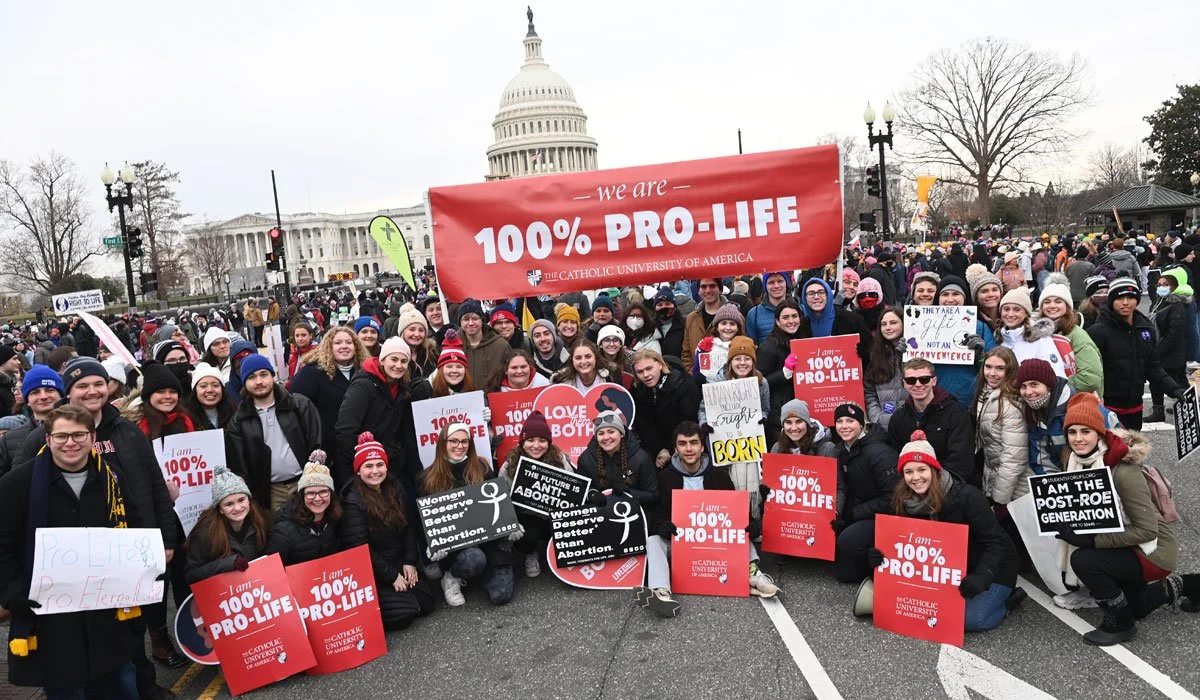
Among those who study American religion and politics, it’s long been established that the earliest political voices seeking to restrict access to an abortion were members of the Catholic Church. For centuries, the catechism has taught that life should be protected at all stages — from conception to natural death. Thus, the tens of millions of American Catholics should be the standard bearers for the pro-life movement in the United States.

But here is an important question for journalists: Will most Catholics applaud the end of Roe? The data tells a nuanced story about how the average Catholic thinks about the issue of abortion access. As always, it’s important to note if polls pay any attention to how often Catholics attend Mass.

Looking back to the time period immediately after the Roe v Wade decision in 1973, it’s clear that the vast majority of Catholics were not comfortable with the concept of a woman obtaining an abortion for any reason, which not was out of step with how the average American felt.

For instance, in 1985 about 35% of Catholics were in favor of abortion demand. It was 39% of the general public. In the 1990s and 2000s, abortion opinion was relatively stable, but then things began to shift in 2010. From that point forward, the share of Catholics who supported abortion began to rise, which paralleled a shift in the overall opinion of the American public.

By 2021, fifty-three percent of Americans supported abortion on demand along with forty-five percent of Catholics. But, it’s worth noting that the contours of the two lines run in almost perfect unison. As the country moved left on abortion, so did the average Catholic.

Please respect our Commenting Policy

Podcast: A growing post-Roe divide between 'Jesusland' and the 'United States of Canada'?

Podcast: A growing post-Roe divide between 'Jesusland' and the 'United States of Canada'?

Over the past week or so, I have received several emails — while noticing similar messages on Twitter — from people asking: “Why is The Atlantic publishing the same story over and over?” Some people ask the same question about The New York Times.

It’s not the same SPECIFIC story over and over, of course. But we are talking about stories with the same basic Big Idea, usually framed in the same way. In other words, it’s kind of a cookie-cutter approach.

The key word is “division,” as in America is getting more and more divided or American evangelicalism is getting more and more divided. A new Ronald Brownstein essay of this kind at The Atlantic — “America’s Blue-Red Divide Is About to Get Starker” — provided the hook for this week’s “Crossroads” podcast (CLICK HERE to tune that in).

The villains in these dramas are, of course, White evangelicals or, in more nuanced reporting, a radical wing of the White evangelicals. Just this week, I praised the New York Times for running a feature that offered a variation on one of these templates: “Bravo! The New York Times reports that evangelicals are divided, not united on politics.” That piece showed progress, in part, because it undercut the myth of the evangelical political monolith on issues such as Donald Trump, COVID vaccines, QAnon, etc.

Let me make this personal. There is a reason that all of these stories written by journalists and blue-checkmark Twitter stars sound a big familiar to me. You see, people who have been paying attention know that the great “Jesusland” v. the “United States of Canada” divide is actually at least three decades old. It’s getting more obvious, methinks, because of the flamethrower social-media culture that shapes everything,

So let’s take a journey and connect a few themes in this drama, including summary statements by some important scribes. The goal is to collect the dots and the, at the end, we’ll look at how some of these ideas show up in that new leaning-left analysis at The Atlantic.

First, there is the column I wrote in 1998, when marking the 10th anniversary of “On Religion” being syndicated (as opposed to the 33rd anniversary the other day). Here’s the key chunk of that:

… In 1986, a sociologist of religion had an epiphany while serving as a witness in a church-state case in Mobile, Ala.


Please respect our Commenting Policy

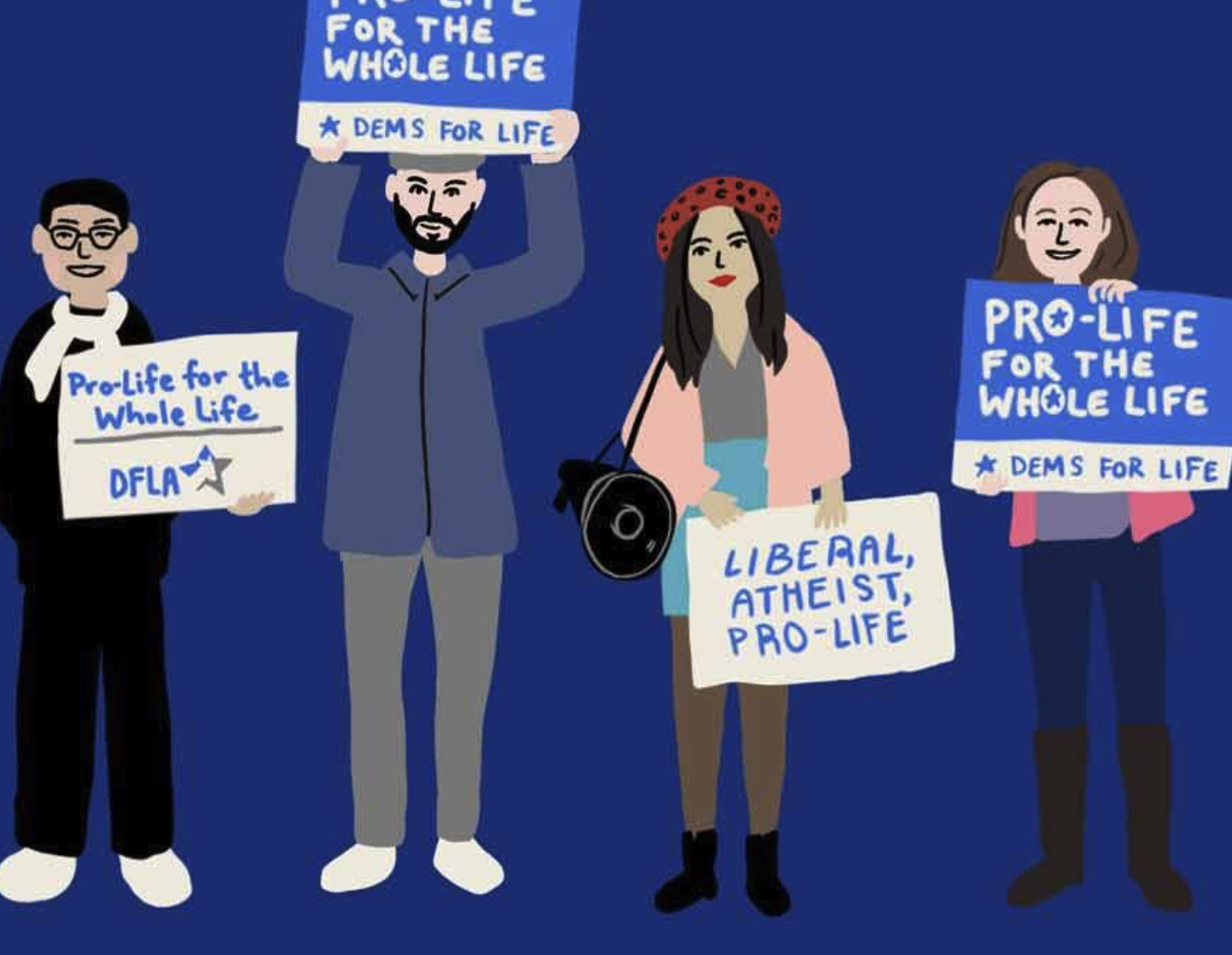
While polls show ambivalence, SCOTUS striking down Roe would let each state decide

While polls show ambivalence, SCOTUS striking down Roe would let each state decide

According to the Gallup Poll, 49% of American adults called themselves "pro-choice" last year versus 47% "pro-life," with the second designation chosen by 73% of those who attend worship weekly and 74% of Republicans.

The over-all population posted the same virtual tie in each of the prior three years. Journalists, by the way, should note that Gallup's question defied the widely-followed Associated Press Stylebook, which despite some criticism rejects both of those familiar labels in favor of "abortion-rights" versus "anti-abortion" while disallowing "pro-abortion."

After last week's leak to Politico of a Supreme Court draft opinion that would return abortion policy-making to each state, the Pew Research Center (media contact 202-419-4372) released poll results that are vitally important for media analysis.

Here’s where the stories will be found: The Pew team warns against Gallup's two-sided breakdown above, since "relatively few" Americans "take an absolutist view" for or against legality in all circumstances.

Much ambivalence is evident. Fully 33% of Pew respondents believed that whether to abort should "belong solely to the pregnant woman" (and 72% among Americans over-all) AND at the same time believed that "human life begins at conception so a fetus is a person with rights" (held by a 56% majority of Americans).

The Pew data fill a 78-page report, titled "America's Abortion Quandary." As typical with Pew, the new survey stands out for the precision and variety of questions, special skill in defining religious sectors (though this project does not distinguish between Hispanic and non-Hispanic Catholics), the huge sample of 10,441 (compared with 1,016 for that Gallup poll) and consequently a remarkably high response rate of 89% among members of Pew's ongoing American Trends Panel.

Another technical note on polls. Regarding political races they are often more accurate on the national level than with state races. And the Supreme Court draft indicates abortion policy will be returned to each individual state — so that's where legal and political fireworks will occur unless efforts in Congress succeed.


Please respect our Commenting Policy

Bravo! The New York Times reports that evangelicals are divided, not united on politics

Bravo! The New York Times reports that evangelicals are divided, not united on politics

If you stop and think about it, the latest New York Times feature about those dreaded White evangelicals includes a few signs of progress.

The good news is that the story focuses on the many ways White American evangelicals are divided, these days. That’s progress, since it undercuts the dominant news narrative of the years since 2016. You know the one: That White evangelicals from sea to shining sea just love Donald Trump and that’s that.

The truth was always more complex than that, but many blue-checkmark experts on Twitter really needed someone to blame for Trump. White evangelicals were the answer, of course, since it would have required a great deal of introspection to blame the Democratic Party for nominating Hillary Clinton — perhaps the only opponent that scared millions of depressed Americans more than Trump.

But back to the key truth in this Times report — which is that White evangelicals are divided, which is true, and that is certainly not the same thing as the myth of monolithic unity. For background, see this 2018 post: “Complex realities hidden in '81 percent of evangelicals' love Trump myth.”

At the heart of this story is a character that will be familiar to some news consumers — a conservative religious leader whose beliefs would normally cause heart attacks in blue-zip-code newsrooms, but this leader is shown to deserve sympathy because believers who are much worse are attacking him/her. (The irony in this case is that this particular pastor seems very familiar to me since he appears to represent the evangelicalism in which I was raised and that I greatly respect.)

The headline: “As a ‘Seismic Shift’ Fractures Evangelicals, an Arkansas Pastor Leaves Home.” Here’s the overture:

FORT SMITH, Ark. — In the fall of 2020, Kevin Thompson delivered a sermon about the gentleness of God. At one point, he drew a quick contrast between a loving, accessible God and remote, inaccessible celebrities. Speaking without notes, his Bible in his hand, he reached for a few easy examples: Oprah, Jay-Z, Tom Hanks.

Mr. Thompson could not tell how his sermon was received. The church he led had only recently returned to meeting in person. Attendance was sparse, and it was hard to appreciate if his jokes were landing, or if his congregation — with family groups spaced three seats apart, and others watching online — remained engaged.

So he was caught off guard when two church members expressed alarm about the passing reference to Mr. Hanks.


Please respect our Commenting Policy

Podcast: About post-Roe politics and Biden's evolving doctrines on choosing to 'abort a child'

Podcast: About post-Roe politics and Biden's evolving doctrines on choosing to 'abort a child'

Once upon a time, Sen. Joe Biden was almost a pro-life Catholic Democrat.

This may be the reason — as journalists frequently note — that he seems uncomfortable saying “abortion” in public remarks. Then again, he may also have private polling numbers on the muddled state of public opinion in which millions of Americans, including lots of Democrats, (a) oppose the U.S. Supreme Court overturning Roe vs. Wade, yet (b) are also in favor of European-style restrictions on abortion that have been blocked by U.S. courts because of legal logic built on Roe.

As is so often the case, Americans want it both ways and it’s rare for the mainstream press to note the tensions in that stance, since that would require balanced coverage of debates about Roe.

Back to Biden and a must-read Washington Post political feature that served as the hook for this week’s “Crossroads” podcast (CLICK HERE to tune that in). After spending much of his career somewhere in the middle on abortion, Biden now leads a Democratic Party that has veered so far to the cultural left that it champions third-trimester abortion (and even efforts to save the life of a baby born during a botched abortion).

That stance is hard to square with the Catechism of the Catholic Church, as well as lots of opinion polls, especially in states that will — if what appears to be a 5-3-1 SCOTUS verdict against Roe survives a blitz of elite media scorn — face debates about centrist laws to restrict, but not ban, abortion on demand.

Here is the top of the Post report, and readers are urged to spot a major abortion-talk stumble from Biden:

Joe Biden became a senator in 1973, just 17 days before the Supreme Court decided the landmark abortion rights case Roe v. Wade. Soon after, the young senator, a practicing Catholic, told an interviewer that he disagreed with the decision and that he had views on such matters that made him “about as liberal as your grandmother.”

“I don’t like the Supreme Court decision on abortion. I think it went too far,” he concluded in 1974. “I don’t think that a woman has the sole right to say what should happen to her body.”

Nearly a half-century later, with Biden evolving along with his party on the issue of abortion rights, he again declared the court was moving too far — this time, he argued, in the opposite direction.

“The idea that we’re going to make a judgment that is going to say that no one can make the judgment to choose to abort a child, based on a decision by the Supreme Court, I think, goes way overboard,” Biden said on Tuesday in reaction to a leaked Supreme Court draft opinion proposing to overturn Roe v. Wade.

Note that the Post editors, as opposed to some other elite media sources, used that quote in which Biden spoke words — “abort a child,” as opposed to a “fetus” — long banned in public-relations efforts for a pro-abortion-rights stance. I took that as a sign to keep reading.


Please respect our Commenting Policy

Podcast: AP fails to connect religion dots in latest surge in homeschooling statistics

Podcast: AP fails to connect religion dots in latest surge in homeschooling statistics

If you know anything about the history of homeschooling, you know that battles about parental rights, morality, religious motivations and faith-centered school content have been a big part of this drama since Day 1.

Connect a few dots in almost any trend linked to homeschooling and, sooner and later, you will hit religion.

It doesn’t matter if you are talking about mainstream groups such as the National Home School Association or aggressive activist groups such as the Home School Legal Defence Association. Needless to say, when you see a headline like this one — “The Frightening Power of the Home-Schooling Lobby” — or this one from Europe — “Home education: Court rules against German Christian family “ — you will almost always run into lots of content about religious fundamentalism (of various kinds), big families and other signs of countercultural behavior.

As I noted 20+ years ago in an “On Religion” column about a homeschooling convention inside the D.C. Beltway:

These are not business-as-usual families, cookie-cut into the sizes and shapes on display in shopping malls, mail-order catalogues and, especially, prime-time television. They have unique priorities when they budget their time and money. They have radically different family values that often defy simple political labels.

In a strange way, home-schoolers are creating a new counter-culture outside the American mainstream. It's the Anti-Woodstock Generation.

All of these issues came up for discussion during this week’s “Crossroads” podcast (CLICK HERE to tune that in), which focused on a recent Associated Press feature with this headline: “Homeschooling surge continues despite schools reopening.” Here is the overture for that story:

The coronavirus pandemic ushered in what may be the most rapid rise in homeschooling the U.S. has ever seen. Two years later, even after schools reopened and vaccines became widely available, many parents have chosen to continue directing their children’s educations themselves.

Homeschooling numbers this year dipped from last year’s all-time high, but are still significantly above pre-pandemic levels, according to data obtained and analyzed by The Associated Press.

Families that may have turned to homeschooling as an alternative to hastily assembled remote learning plans have stuck with it — reasons include health concerns, disagreement with school policies and a desire to keep what has worked for their children.

Now, there’s no doubt that what parents saw on Zoom screens during the COVID-tide played a big role in these numbers. But what did they see and hear?


Please respect our Commenting Policy

Father Joseph Ratzinger's sobering 1969 vision of the future and the new German reality

Father Joseph Ratzinger's sobering 1969 vision of the future and the new German reality

The 1960s were turbulent times and, in Europe, Catholics faced storms of radical change that left many weary or even cynical.

In 1969, one of Germany's rising theologians -- a liberal priest at Vatican II who then became a conservative -- was asked what he saw in the future.

"What St. Augustine said is still true -- man is an abyss; what will rise out of these depths, no one can see in advance," said Father Joseph Ratzinger, on German radio. "Whoever believes that the church is not only determined by the abyss that is man, but reaches down into the greater, infinite abyss that is God, will be the first to hesitate with his predictions."

Ratzinger's words grew in importance in 1977 when he became Archbishop of Munich and quickly became a cardinal. Then Pope John Paul II made him prefect of the Vatican's powerful Congregation for the Doctrine of the Faith, where his orthodoxy led liberals to call him "God's Rottweiler." In 2005, he became Pope Benedict XVI.

Catholics continue to ponder his 1969 words: "From the crisis of today the church of tomorrow will emerge -- a church that has lost much. … As the number of her adherents diminishes, so it will lose many of her social privileges. In contrast to an earlier age, it will be seen much more as a voluntary society, entered only by free decision. As a small society, it will make much bigger demands on the initiative of her individual members."

The future pope predicted a "crystallization" process creating a "more spiritual church, not presuming upon a political mandate, flirting as little with the left as with the right. … It will make her poor and cause her to become the church of the meek."

The retired pope celebrated his 95th birthday on April 16th -- Holy Saturday. During an earlier meeting with Jesuits, Pope Francis called his predecessor "a prophet" and cited Benedict's predictions of a "poorer" and "more spiritual" church..


Please respect our Commenting Policy

Could Hispanic-Americans, Protestants especially, shape the '22 and '24 elections?

Could Hispanic-Americans, Protestants especially, shape the '22 and '24 elections?

Something is afoot when two New York Times columnists, Charles Blow on the left and Ross Douthat on the right, both make the identical observation in Monday's edition.

Blow, who fears a "Biden blood bath" in the November midterms, underscored that Quinnipiac polling shows President Joe Biden's approval rating is even lower among Hispanics than whites, partly because "Hispanics hew conservative on some social issues." Douthat wrote that to win, Democrats need to do better with two groups from the Barack Obama coalition that have drifted rightward since, "culturally conservative Latinos and working class whites."

The 2020 election was a landmark for this community with an estimated 16.6 million voters, a record proportion of the electorate. There are a number of good analyses of the 2020 Hispanic vote online to consider. A Bloomberg piece reminds us "the Latinos of the United States have no single identity, no shared world view."

This article notes that Donald Trump won 53.5% in majority Hispanic precincts in Miami-Dade County on the way to carrying all-important Florida with its 29 electoral votes. Understandable aversion to any hint of "socialism" by those from Cuba, as well as Nicaragua and Venezuela, no doubt helped. In Arizona's populous Maricopa County, Trump improved his showing over 2016 in 61% of Hispanic-majority precincts. Exit polling said Trump improved over 2016 in Nevada by 8%. Other reports cited similar shifts in southern border areas of Texas. In 2004, George W. Bush proved Republicans can obtain a handsome number of Hispanic-Americans.

GetReligion's own tmatt has more than once proposed that the news media have neglected the religion aspect of recent Republican inroads and, in particular the growth of Hispanic Protestant churches. This is a big religion beat story in its own right. Or it could provide a strategic political analysis leading up to November 8 focusing either on politics nationally or on a specific regional audience.

The essential starting point for background is religion data from Pew Research Center's major survey of 5,103 U.S. Hispanic adults, in a report compiled in 2014.


Please respect our Commenting Policy