Surveys & polls

Looking for signs of life? Study the birth rates among religious faiths in America

Looking for signs of life? Study the birth rates among religious faiths in America

A team of economists from Wellesley College and the University of Maryland recently published a working paper that focused on a peculiar puzzle facing the United States: declining birth rates.

More particularly, the team of researchers was trying to understand why birth rates continued to fall even after the economy was recovering from the Great Recession of 2007. Those economists concluded that one of the biggest factors was shifting priorities among younger Americans — away from raising children and toward career and travel aspirations.

But fertility is obviously incredibly multifaceted. The decision to become a parent is often one that is made with a number of factors in mind. Young adults have to consider their educational plans, the amount of income they would have available to pay for a child and how to handle childcare responsibilities once they become parents.

One factor that can have a tremendous impact on this decision is religion.

Every major religious tradition on Earth encourages reproduction, and thus there can be a theological nudge for people to have children. But a local religious community can also make the decision easier for potential parents by offering up a safety net that can provide financial support or easy access to caregivers for babies and children in the congregation.

Clearly, it’s in the best interest of religious groups to encourage their young families to have children if they want to ensure the long-term viability of their traditions. It’s no secret that families with children are the easiest pathway to ensure that a church, mosque or synagogue will be able to sustain itself for decades to come. But which traditions are doing a good job of having children, and which ones aren’t? And what does that tell us about the future of American religion?
Please respect our Commenting Policy

Familiar, but newsworthy, trends: Catholicism grows in Africa and Asia, while Europe fades

Familiar, but newsworthy, trends: Catholicism grows in Africa and Asia, while Europe fades

The number of Roman Catholics across Africa and Asia continues to grow, according to a new report highlighted by the Vatican.

That’s one news hook for coverage. Here is another: the number of Catholic believers in Europe continues to implode.

“If we keep the faith to ourselves, we will become weak, and if we keep the faith to a small group, it might become an elite group,” Cardinal Luis Tagle of the Philippines warned on Oct. 21 during a news conference held at the Vatican.

This new report, compiled by Fides News Service, serves as a statistical snapshot of the church’s global population and institutions. It compared 2019 with the prior year and was based on the latest available statistics.

The findings, akin to a Vatican census, did not take into account the pandemic and the impact COVID-19 had on faith and church attendance as a result of shutdown orders across much of the world. The report was released to coincide with World Mission Day, which is celebrated on the third Sunday of October each year.

Pope Francis, in a message posted to the Holy See’s official website, highlighted the day’s purpose.

“We recall with gratitude all those men and women who by their testimony of life help us to renew our baptismal commitment to be generous and joyful apostles of the gospel,” he wrote. “Let us remember especially all those who resolutely set out, leaving home and family behind, to bring the gospel to all those places and people athirst for its saving message.”

Overall, the total number of Catholics throughout the world grew by 15.4 million people.


Please respect our Commenting Policy

Faith and politics: It's hard to tell true believers from those who are simply 'self-identified'

Faith and politics: It's hard to tell true believers from those who are simply 'self-identified'

When political scientists and pollsters discuss faith and politics, one of their biggest challenges is separating the true believers from those who merely say they are believers.

It's kind of like distinguishing between "football fans" and "FOOTBALL FANS," said John C. Green of the University of Akron, who for decades has been a trailblazer in studies of politics, pulpits and pews.

"Lots of people say they're football fans and they like to watch games on television," said Green. "Then there are the people who buy jerseys and get decked out in their team colors. They never miss a home game and everything that goes with that. You can just look at them and know that they're really FOOTBALL FANS."

In terms of faith and politics, oceans of ink have been spilled describing the beliefs and goals of evangelical Protestants, Catholics and members of other religious groups, he said. The problem is that there are "self-identified" evangelicals and then there are truly faithful evangelical Christians. There are plenty of people who tell pollsters they attend worship services every week and that their faith shapes their lives. Then there are those who truly walk that talk.

"All religious communities have lots of highly committed people, and all religious communities have their share of marginal members whose faith isn't all that active," said Green. For pollsters, the challenge is asking questions that help draw lines between "self-identified believers and those who are truly active" in their faith groups, he added.

The American Bible Society, in its "State of the Bible" surveys, has tried to document ways in which beliefs about the Bible, and personal interactions with scripture, separate "practicing Christians" from "self-identified Christians." This matters, in part, because religious groups containing a high percentage of committed believers usually maintain their members, or even make converts, while other groups struggle to survive.

The most recent ABS survey (.pdf here) was completed last January, with data collected from 3,354 online interviews with adults in all 50 states and the District of Columbia. The American Bible Society began studying these kinds of issues as early as 1812.

In this survey, a "practicing Christians" was defined as someone who "identifies as a Christian, attends a religious service at least once a month" and states that "faith is very important" in his or her life.


Please respect our Commenting Policy

Concerning evangelical elites, Donald Trump and the press: The great crack-up continues

Concerning evangelical elites, Donald Trump and the press: The great crack-up continues

Ah, yes, those omnipresent American evangelical Protestants.

Love ‘em or hate ‘em, the media can't avoid ‘em. And in case anyone doubts media fascination, consider last Sunday's episode of NBC's influential, anachronistically-named gabfest "Meet the Press."

In the midst of a hyper-clogged October political agenda, the show devoted a major segment to what host Chuck Todd called "the debate among evangelicals about Donald Trump and whether he represents their values." Click here for the transcript. This was excerpted from a 30-minute piece that's streaming on Peacock.

The segment led off with a visit to the nondenominational, independent Patriot Church outside Knoxville, where the Ken Peters averred: "I think President Trump is a miracle. I think God picked Donald Trump, an imperfect vessel, to be the champion of His people." This is a congregation that has inspired almost as many headlines as it has members.

Yes, Pew Research tells us Trump scored 84% with white evangelical voters in 2020. But politicized preacher Peters is hardly representative of the sprawling and diverse network of evangelical clergy, churches, denominations, campuses and agencies.

An older-style evangelical pastor, the Rev. Phil Nordstrom of Knoxville's Life Church, told NBC that "we're trying to not fight the culture wars from the pulpit." Todd then interviewed the Rev. Russell Moore, former Southern Baptist social-issues spokesman turned "public theologian" at Christianity Today magazine, who fretted over Trump-era politicization of the evangelical image.

A prior Guy Memo weighed the possibility that a newsworthy evangelical crack-up is upon us, while another Memo focused on the related Donald Trump political angle. Now there are further developments.

In case journalists are gathering string for a broad state-of-the-evangelical-union article, The Guy looked for perspective in a real period piece from 1977, our Time magazine Christmas cover story, "That Old Time Religion: The Evangelical Empire."

Now this feature was written just before the advent of Jerry Falwell's Moral Majority, Ronald Reagan's presidency, Pat Robertson's Christian Coalition and presidential run, the rightward doctrinal lurch by the Southern Baptist Convention, the rise of anti-abortion militancy and all the rest that would gobble up headlines in succeeding decades.


Please respect our Commenting Policy

Progressive Catholic cardinal of Washington, D.C., pours praise on America's embattled press

Progressive Catholic cardinal of Washington, D.C., pours praise on America's embattled press

With a controversial Catholic in the White House, there was no way for Cardinal Wilton Gregory to face a pack of Beltway journalists without fielding political questions.

Job 1 was addressing President Joe Biden's statement: "I respect them -- those who believe life begins at the moment of conception and all -- I respect that. Don't agree, but I respect that."

The leader of the Catholic Archdiocese of Washington, D.C., has made it clear that Biden can receive Holy Communion. However, Gregory also noted: "The Catholic Church teaches, and has taught, that life -- human life -- begins at conception. So, the president is not demonstrating Catholic teaching."

That was the big headline after this event, but this wasn't the topic Gregory came to the National Press club to discuss. In his recent address, he poured praise on America's mainstream press, especially journalists who -- during this "anxious time" -- have openly pushed for change on issues linked to racism and social justice.

"You are the ones we rely on to keep us informed, updated and connected as a global community of various faith traditions," said Gregory, America's first Black cardinal. "Like all industries, journalism has certainly changed over the years. Technology has expanded your reach and abilities to share our life stories, our dreams and our hopes.

"You are the professionals with just the right words, who immerse yourselves in a community, a situation or even a crisis -- to bring us the facts, the people and the takeaways that can help us work toward living in true peace and equality for all, without the threat of violence or harm."

According to a sobering blast of data from Gallup, the cardinal's critique of the national press would ring true for Democrats and political progressives -- but not for Republicans and cultural conservatives. Catholics can be found in both of those camps, of course.

In their Sept. 1-17 poll, Gallup researchers asked: "In general, how much trust and confidence do you have in the mass media -- such as newspapers, TV and radio -- when it comes to reporting the news fully, accurately and fairly -- a great deal, a fair amount, not very much or none at all?"


Please respect our Commenting Policy

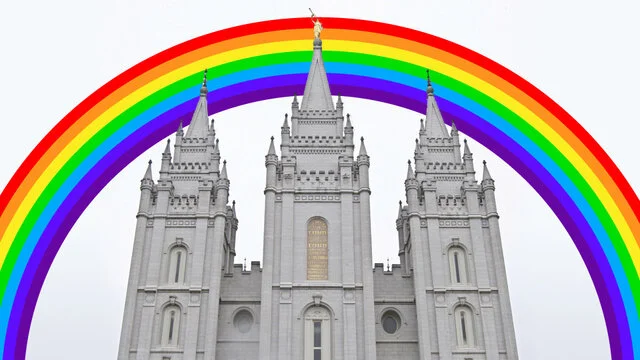
Lots of Latter-day Saints are going liberal? Washington Post story tries to make that case

Lots of Latter-day Saints are going liberal? Washington Post story tries to make that case

Back in late 2010, I began a seven-year stint of freelancing for the Washington Post’s Sunday magazine to help fill a gap in coverage of conservative religion. I wrote about Pentecostal serpent handlers, a female Jewish ambassador from Bahrain and the Orthodox Church of America’s rather controversial metropolitan, among other things.

Then sometime in 2017, a new editor came onboard and, after running my story on Paula White (which made quite a splash I might add), simply refused to respond to any more of my emails. “There goes in-depth religion coverage,” I thought, and turned to other markets.

But lo and behold, the magazine just ran a piece about the Church of Jesus Christ of Latter-day Saints about a “battle for the future of Mormonism.”

Basically this article makes the case that the Mormons are veering left on gay issues. The reporter visits a very liberal congregation in Berkeley, Calif., and some conservatives in Rexburg, Idaho, considered a traditional Latter-day Saint bastion.

Not to my surprise, the reporter, in support of this thesis, only cites people in both locations who are gay or gay-friendly.

It felt like the reporter had a predetermined goal for the story that just needed the right quotes to scaffold it. Why? I see all the interviews going in one direction: Committed, serious believers who have come to the conclusion that many Mormons are secretly quite liberal. Here at GetReligion, we call this “Kellerism,” a nod to the teachings of a former New York Times editor.

Part of the story is based on an amazing — and inaccurate — assumption.

More so than in other conservative religious institutions, liberals — or at least those disaffected from conservatism — are making their presence known inside and on the perimeters of the church, provoking something of a Latter-day Saint identity crisis.


Please respect our Commenting Policy

Elephant in sanctuary: Spot the news hooks in shocking changes facing Cincinnati Catholics

Elephant in sanctuary: Spot the news hooks in shocking changes facing Cincinnati Catholics

Let’s do the math. When discussing the future of the American Catholic Church, Joe Biden isn’t the biggest issue on the table. Biden’s liberal Catholicism may be a symptom of larger issues — and since it’s political, it’s easier to cover — but it isn’t the issue that’s going to lock the doors of many parishes from coast to coast, but especially in blue culture zones.

The big issue? Actually, it’s several connected issues — and the elephant in the living room (or sanctuary) is that links them. Hold that thought.

The obvious issues? The priest shortage. Declining enrollment rates in Catholic schools. Closed parishes. You can also add declining Mass attendance numbers in many, but clearly not all, parishes. I would add the collapse in the number of Catholics going to Confession.

This brings us to a very important Cincinnati Enquirer story with this headline: “'Change is difficult': Cincinnati Archdiocese launches shakeup that reaches almost every parish.” Here’s the overture:

The Archdiocese of Cincinnati … launched one of the most ambitious reorganizations in its 200-year history, potentially changing when and where almost a half-million Catholics attend Mass, school and other activities connected to their faith.

Known as Beacons of Light, the restructuring process will combine the archdiocese’s 208 parishes into 60 “families of parishes,” which will begin sharing priests and resources as early as next year.

Unlike past attempts to remake the archdiocese, which rarely got out of the planning stages, Beacons of Light is backed by Archbishop Dennis Schnurr and will in some way touch almost every Catholic and priest in the archdiocese’s 19 counties.

The goal, church officials say, is to eventually unite the 60 new parish families into single parishes.

So, the goal is 60 parishes instead of 208?


Please respect our Commenting Policy

Does church attendance reduce political polarization? Not among White conservatives

Does church attendance reduce political polarization? Not among White conservatives

There are some concepts in political science that have just become impossible to ignore. Whether it’s leading a classroom discussion, talking to a member of the media, or just chatting with friends about the current state of the world, I can’t help but bring it all back to political polarization.

Put simply, it’s the idea that American society has become more politically tribalized, with Democrats huddled in the far left corner of the political spectrum and Republicans doing the same on the right side of the scale with a huge chasm between the two. And, the two parties loathe each other — not just disagreeing, but believing that if the other party wins an election, it will lead to the end of the Republic.

Compromise becomes impossible in a world in which you see the other side not only as wrong, but also as the enemy. The inherent problem is that our democratic processes grind to a halt without a level of bi-partisan support.

There’s been a ton of great research done on measuring the level of polarization in the United States Congress by using DW-NOMINATE scores. The results indicate that both parties have moved away from the center, but that is more pronounced among the GOP than among the Democrats. This visual (it comes from this paper) is one I use in class to show just how bad it’s gotten.

But, I wanted to take a different approach here. I wanted to see just how much polarization is perceived by the average American, how that has changed over time, and how religion plays a role in that perception.

Here’s how I did it.

Since 2012, the CCES has asked respondents a battery of questions that require them to place the Democratic Party, the Republican Party, and themselves on an ideology scale running from 1 (very liberal) to 7 (very conservative), with the moderate option described as “middle of the road.” For my purposes someone has a polarized view of the world if they describe either the Democrats as “very liberal” or the Republicans as “very conservative.” In essence, they are saying: “that political party can’t get any more extreme.”


Please respect our Commenting Policy

New podcast: Yes, New York's governor urged church folks to be her 'apostles' backing vaccines

New podcast: Yes, New York's governor urged church folks to be her 'apostles' backing vaccines

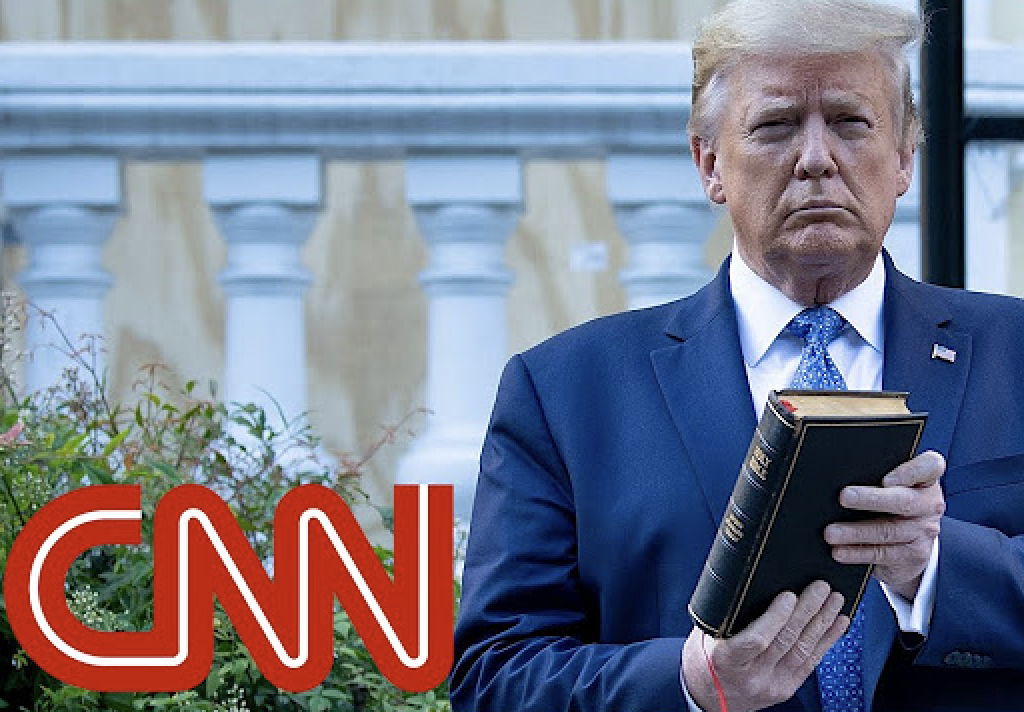
Hey news consumers, remember that time when President Donald Trump stood in front of a church (sort of in an urban war zone), held up a Bible and the world went nuts?

Chances are good that you heard about it. However, as a refresher, here are 66,100,1000 Google references to this incident, as well as as an imperfect collection of other Trumpian news involving the word “Bible.”

Or remember that time when Trump — long-time member of the liberal Presbyterian Church (U.S.A.) and probably, in terms of private life, one of the most secular presidents in American history — went to Liberty University to court evangelicals and said this (care of an NPR report):

"We're going to protect Christianity. I can say that. I don't have to be politically correct," he thundered at the beginning of his speech at the conservative evangelical university.

Then he moved on to cite "Two Corinthians 3:17, that's the whole ballgame. ... Is that the one you like?" Trump asked. "Now the Lord is that Spirit: and where the Spirit of the Lord is, there is liberty."

Over at Google, there appear to be a mere 2,380,000 references to this “Two Corinthians” incident.

Truth is, politicians often say and do strange things while courting support in religious settings that are way outside their own cultural comfort zone.

This brings us to this week’s “Crossroads” podcast, which focuses on the coverage — actually, the lack of coverage — of the recent visit that New York Gov. Kathy Hochul paid to the Christian Cultural Center, a massive and very influential predominantly African-American megachurch in Brooklyn. Click here to get that podcast, or head over to Apple Podcasts.

Now, there was more to this political-religious event than the hilarious typo in the rushed transcript of the governor’s remarks produced, apparently, by a staff member. Check out the opening words here: “The phrase be to God, this is the day the Lord has made. Amen, amen.”

Let’s assume that the governor actually said “praise be to God.”


Please respect our Commenting Policy