Surveys & polls

New podcast: New York Times still ignoring religion ghosts in 'demographic winter' trends

New podcast: New York Times still ignoring religion ghosts in 'demographic winter' trends

I could, without breaking a sweat, create a list of important religion-beat news stories that are, to some degree or another, connected to the sinking birth rates in the Unites States and around the world.

Clashes between Chinese leaders and Muslims inside their borders? Decades of declining numbers of men seeking Catholic priesthood? The sharp decline in the power of “mainline” Protestant churches? American political clashes between red-zip code and blue-zip code regions, usually seen as tensions between rural and urban life. Tensions between Orthodox and progressive Jews. Soaring numbers linked to anxiety and loneliness. And so forth and so on.

So when I saw this headline in The New York Times — “Long Slide Looms for World Population, With Sweeping Ramifications“ — I immediately thought to myself, “Here we go again.” I also figured that this would be the topic for this week’s “Crossroads” podcast (click here to tune that in).

Sure enough, this new feature was the global version of a Times story several years ago that led to a GetReligion post with this headline: “New York Times asks this faith-free question: Why are young Americans having fewer babies?” As I wrote at that time:

In a graphic that ran with the piece, here are the most common answers cited, listed from the highest percentages to lowest. That would be, "Want leisure time," "Haven't found partner," "Can't afford child care," "No desire for children," "Can't afford a house," "Not sure I'd be a good parent," “Worried about the economy," "Worried about global instability," "Career is a greater priority," "Work too much," "Worried about population growth," "Too much student debt," etc., etc. Climate change is near the bottom.

The economic and cultural trends are all valid, of course. But they also point toward changes in how modern people in modern economies define and look for “meaning in life” and the beliefs that define those choices.

Think birth, marriage, vocation, death. We are talking about topics that, for several billion people on this planet, are linked to religious faith.

So what did the Times have to say?

Please respect our Commenting Policy

Still thinking about (trigger alert) a scary Twitter topic -- Elizabeth Bruenig and motherhood

Still thinking about (trigger alert) a scary Twitter topic -- Elizabeth Bruenig and motherhood

At this point, I am a bit confused. What is the latest Twitter firestorm about Elizabeth Bruenig, the latest New York Times talent to hit the exit door for one reason or another? I may have missed a controversy or two in recent weeks.

You see, I am still stuck on the furor that greeting that essay published (May 7) just before she left the Gray Lady, the one with that terrifying headline: “I Became a Mother at 25, and I’m not Sorry I Didn’t Wait.”

I’ve been thinking about that one ever since and, thus, I have decided to treat it as a weekend think piece. But part of me still wants to argue that there was some kind of news feature that could have been written about that whole affair.

Yes, it was another example of folks in the blue-checkmark tribe losing their cool because someone triggered the urban, coastal principalities and powers. Can you say “fecundophobia”? However, this essay was also linked to some huge trends in postmodern America, especially crashing fertility rates and declines in the number of people getting married. There was news here, of some kind.

First, here is the Bruenig overture:

If someone had asked on the day of my college graduation whether I imagined I would still be, in five years’ time, a reliable wallflower at any given party, I would have guessed so. Some things just don’t change. What I would not have predicted at the time is that five years hence I would be lurking along the fringes of a 3-year-old’s birthday party, a bewildered and bleary-eyed 27-year-old mom among a cordial flock of Tory Burch bedecked mothers in their late 30s and early 40s who had a much better idea of what they were doing than I ever have.


Please respect our Commenting Policy

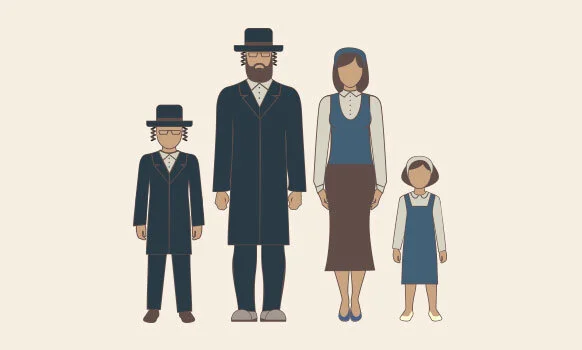
What's going on with faith trends in American Judaism, nationally and in your locale?

What's going on with faith trends in American Judaism, nationally and in your locale?

Since 9-11, the media have — with good cause — lavished attention upon Islam in America.

There's been less interest in the cultural and demographic challenges facing Judaism, long the nation's second-largest religion behind Christianity. Jewish news coverage in the mainstream press tends to focus on Democratic Party politics, trends in anti-Semitism and attitudes toward Israel and the unending Mideast mess.

Those are important, of course, but what about Judaism as a living 21st Century religious faith? Here, as so often, the Pew Research Center steps up with its 248-page survey on "Jewish Americans in 2020" (click here for the .pdf report).

The Guy proposes that this is the ideal moment for journalists to focus on the religion of Judaism, asking rabbis and lay synagogue leaders how Pew's trends are playing out both nationally and with their particular audiences and locales.

At one time, Jewish federations conducted such community surveys. This one follows up Pew's major survey in 2013 but direct comparisons with the 2000 numbers are iffy due to changed methodology.

As so often, Pew worked from an unusually large random sample of 4,718 Jewish adults who were interviewed between November 2019 and June 2020. To learn more about Pew's revised methodology to cope with low "response rates" among those sampled -- among factors that produced the embarrassingly wrong 2020 political polls -- see this prior Guy Memo.

As writers dig into the numbers they'll understand fears that unless things change "we are going to lose the illusion of there being a Jewish people." So says "modern Orthodox" Rabbi Shmuly Yanklowitz, speaking with Forward.com (“Pew’s new study of American Jews reveals widening divides, worries over antisemitism”).

The bottom line: Across the board, the gap between Orthodox and non-Orthodox Jews is deepening. This looks very much like the gap between declining U.S. "mainline" and "liberal" Protestants over against conservative or "evangelical" believers, or the gap between traditional religious believers and the growing world of atheists, agnostics and the “religiously unaffiliated.”


Please respect our Commenting Policy

First Baptist in Dallas works to promote COVID-19 vaccines: Was this a big news story?

First Baptist in Dallas works to promote COVID-19 vaccines: Was this a big news story?

If you have followed news coverage of debates about COVID-19 vaccines, you know that the leaders of churches and major religious denominations — Black and White — have been walking a tightrope on this issue.

Once this subject became politicized — like everything else in American life — there was almost no way to tackle it without causing more tension in their flocks.

Nevertheless, the vast majority of major religious leaders have been doing everything they can to make it possible for more people to safely return to the pews. These efforts have received quite a bit coverage at the local level.

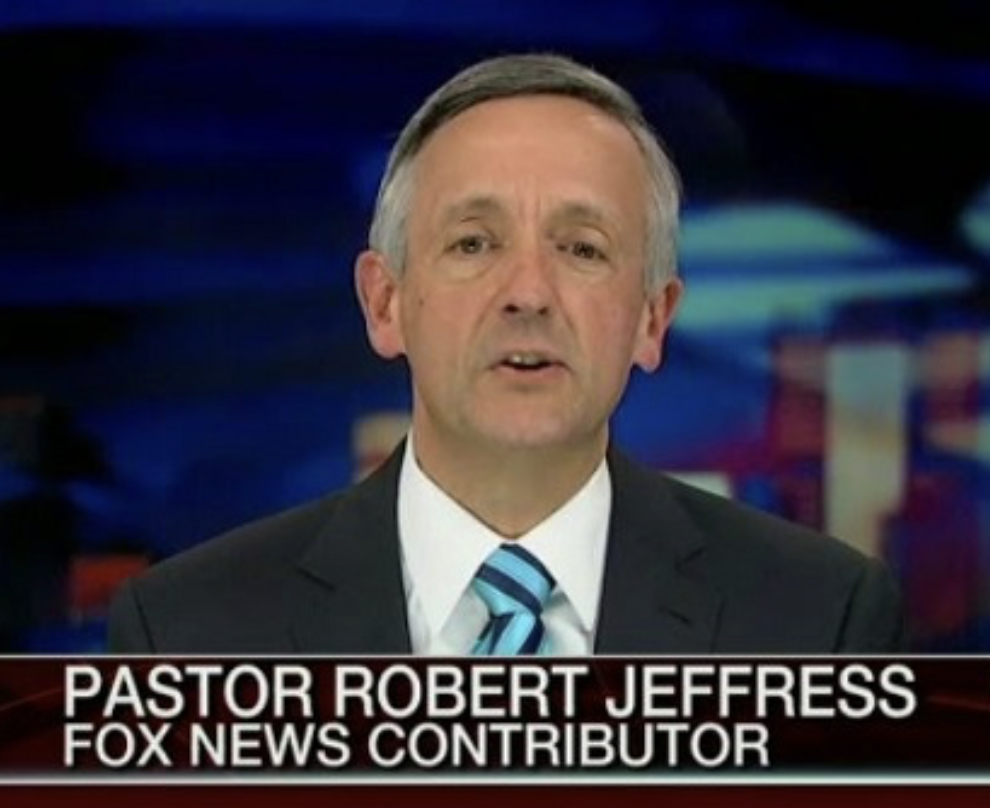
Take, for example, this recent headline in The Dallas Morning News: “Robert Jeffress hopes to combat vaccine fears with First Baptist Dallas’ COVID-19 vaccination effort.” Here is the overture:

To combat vaccine hesitancy among Christian evangelicals, First Baptist Church in Dallas will have a COVID-19 vaccination clinic. …

Senior pastor Robert Jeffress said he hopes the move will encourage people to get shots so more of his 14,000 congregants can come and worship in person.

“Our church will never be what it needs to be until you’re back. The greater risk is the spiritual danger of staying isolated,” Jeffress said in a recent sermon. “I’m not forcing anybody to get the vaccine. That’s your choice. But what I am saying is if you are not back yet, and would like to come back, one option is to take the vaccine, and therefore you don’t have to worry about what other people do or don’t do here in the church.”

Like I said, this was a totally normal local story on this issue.

However, stop and think about this question: Would this have been a bigger story — attracting coverage from TV networks and elite newsrooms such as The New York Times — if Jeffress had taken a stance against the vaccines?

You know it would have been a national story, in part because of this preacher’s past support for former President Donald Trump.


Please respect our Commenting Policy

The U.S. Census story and its hooks for religion news (plus a personal note about Rachel Zoll)

The U.S. Census story and its hooks for religion news (plus a personal note about Rachel Zoll)

The first round of 2020 U.S. Census data (with much more to come) is big news as states gain and lose seats in the U.S. House and politicos enter the wild decennial joust to gerrymander federal and state district lines to their advantage.

But here's another journalistic thought: What does the Census mean for religion?

Tony Carnes of the "A Journey Through NYC Religions" website provides an early example, analyzing possible implications for New York City that other writers could emulate for their own cities, towns or regions.

Editor Carnes (disclosure: a personal friend) is a professional sociologist leading a team that has spent years tracking religion developments in Gotham, notably at the neighborhood level. Despite the town's secular image, Carnes and company have documented that, starting in the late 1970s, thousands of new churches, synagogues, mosques and temples have been built. Such activity was continuing until the COVID-19 pandemic struck.

Carnes counts the populations moving in and moving out from the American Community Survey between 2010 and 2014 as updated by Census numbers for 2018. This shows a city gradually becoming less African-American (population down 96,000) and Hispanic (down 50,000). The gainers are non-Hispanic Whites (up 200,000) and Asians (up 97,000). We'll soon know if these trends continued in 2020.

Carnes calls that "a startling change in the racial/ethnic profile of the city, and it is also found in other cities in the United States."


Please respect our Commenting Policy

Thinking about evangelicals and COVID-19 vaccines: Wait! The numbers show WHAT?!?!

Thinking about evangelicals and COVID-19 vaccines: Wait! The numbers show WHAT?!?!

The last 14 months have given the world a series of public health challenges that it has never had to grapple with before.

Will people willingly disrupt their lives in order to contain the spread of a potentially lethal virus? Can drug manufacturers develop and test a vaccine in a very short period of time that is effective against COVID-19? Will those same pharmaceutical companies be able to ramp up manufacturing capabilities quickly enough to satisfy the demand for those vaccines?

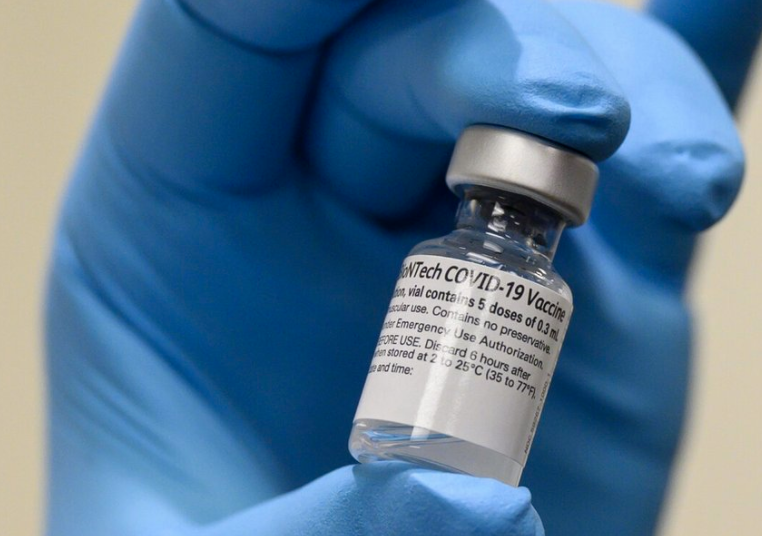
In terms of vaccine creation and distribution, there’s no doubt that it’s been an unqualified success. Every estimate indicates that the United States will be awash in vaccines by May. However, the question that is looming on the very near horizon is the most important and difficult to answer: will the United States be able to vaccinate enough of the population to get to a state of herd immunity and finally put an end to this year long nightmare?

It’s not the hard sciences that are under the microscope, it’s the social sciences. To reach herd immunity, most experts believe that a country needs to get at least 75% of the population fully vaccinated as a minimum threshold. Will that even be possible? Are societal factors like religion actually making the goal of herd immunity even more difficult?

The organization Data for Progress has been putting a poll into the field since the very beginning of the pandemic in March of 2020 as a way to get a sense of what percentage of the public is engaging in risky behaviors and how they feel the government is handling the crisis. Since January they have begun to ask respondents questions about their receptiveness to the vaccine. What these results indicate is that there are some reasons for hope, but there is also ample evidence that getting shots into arms may prove to be a lot more difficult in the very near future.

The survey asked respondents if they had received at least one dose of the COVID-19 vaccine. As can be quickly inferred, those shots were in short supply in January. Just about 6% of the entire sample indicated that they had gotten the vaccine at that point. However, things improved rapidly from there and the share of Americans who had been inoculated essentially doubled every month from January through early April, when 44% of the population had gotten a dose of the vaccine.

However, when the sample is broken down into the three of the largest religious groups: White evangelicals, White Catholics and the religiously unaffiliated, some disparities begin to emerge.


Please respect our Commenting Policy

New podcast: Religious wars over vaccines? They're more complex than those headlines

New podcast: Religious wars over vaccines? They're more complex than those headlines

Once again, it’s time for some time travel on the religion beat — as we ponder the current state of news coverage about the COVID-19 mask-and-vaccine wars.

Think back to Easter a year ago. Church leaders were wrestling with the real possibility that they would not be able to worship during Holy Week and on the holiest day on the Christian calendar. This was got lots of ink from the press, with good cause. There appeared to be two camps: (1) Crazy right-wingers (many journalists saw Donald Trump looming in the background) who wanted face-to-face worship at any cost and then (2) sensible, sane clergy willing to move to online worship and leave it at that.

The reality was more complex, especially since some (not all) government leaders seemed to think that worship was more dangerous than other forms of public life. During this week’s “Crossroads” podcast (click here to tune that in), host Todd Wilken and I discussed how it’s easy to see the same patterns in news reports on bitter battles over COVID-19 vaccines. For some on the left — see this fascinating Emma Green piece at The Atlantic — super-strict coronavirus rules have evolved into faith-based dogma.

Now for that early COVID-19 flashback. In a post and podcast a year ago, I argued that this wasn’t really a simplistic story about two groups (good churches vs. bad churches), but one in which there were at least five camps to cover:

Those five camps? They are (1) the 99% of religious leaders who cooperated and took worship online, (2) some religious leaders who (think drive-in worship or drive-thru confessions) who tried to create activities that followed [government] social-distancing standards, (3) a few preachers who rebelled, period, (4) lots of government leaders who established logical laws and tried to be consistent with sacred and secular activities and (5) some politicians who seemed to think drive-in religious events were more dangerous than their secular counterparts.

Say what? … Why were drive-in worship services — with, oh, 100 cars containing people in a big space — more dangerous than businesses and food pantry efforts that produced, well, several hundred cars in a parking lot?

These five camps still exist and we can see them in the vaccine wars.


Please respect our Commenting Policy

Did mainstream media distort America's religion-and-politics divide? Are they still doing so?

Did mainstream media distort America's religion-and-politics divide? Are they still doing so?

While culling files from decades of religion-beat work, The Religion Guy has come across a forgotten and seminal article from 2002 that contended the media were distorting public understanding of American politics. It said "religious right" Republicans were blanketed with coverage and turned the tables, contending that "the true origins" of cultural conflict were found in increased "secularist" influence in the Democratic Party.

As journalists contemplate the tumult of the succeeding two decades, ask what the article in question might say about media performance, past and present.

Consider the hostility toward openly religious nominees expressed by Senators Schumer, Feinstein, and Harris (now vice president and prospective future president). Or contrast the Religious Freedom Restoration Act, which passed the Senate 97-3 in 1993, with current House Democrats' unanimous vote for the pending Equality Act, which would forbid practical applications of that very law.

Customary political history emphasizes such landmarks as the Rev. Jerry Falwell (Senior) launching Moral Majority in 1979, Ronald Reagan's Republicans cultivating conservative Christians in the winning 1980 campaign or the Rev. Pat Robertson founding Christian Coalition in 1989 after his Republican run for president.

These events were important, of course. But what about Democrats and the other half of what was happening?

That's the focus of the 2002 article, by political scientists Louis Boice and Gerald De Maio from the City University of New York's Baruch College, drawn from their 2001 presentation at an academic conference. The piece appeared in the conservative journal The Public Interest, which is now defunct, but fortunately the American Political Science Association archive has posted the text (.pdf here). Also, click here and then here for tmatt columns on this duo’s work.

In their telling, 1972, the year before the Supreme Court legalized abortion, was the pivot point for Democrats' shift on emotion-laden social issues away from cultural conservatism and an "accommodation" policy toward religion.


Please respect our Commenting Policy

Plug-In: COVID-19 vaccines are still creating buzz on religion beat -- pro and con

Plug-In: COVID-19 vaccines are still creating buzz on religion beat -- pro and con

After sticking close to home for over a year, I’ve returned to in-person worship at my church in Oklahoma.

I’ve joined my sons and 2-year-old grandson in watching a game at my beloved Texas Rangers’ splashy new ballpark.

I’ve boarded an airplane and — for the first time since the pandemic hit — made a reporting trip (to Minneapolis this past weekend after Derek Chauvin’s conviction in George Floyd’s murder).

For millions, the COVID-19 vaccines have brought joy and hope, and I count myself among them after receiving my two Moderna shots.

Weekend Plug-in has covered various angles related to the vaccines and religion — from whether the shots are “morally compromised” to efforts to overcome skepticism among wary African Americans.

Still, the topic remains timely and important, as evidenced by interesting stories published just this past week:

COVID-19 has hit the Amish community hard. Still, vaccines are a tough sell (by Anna Huntsman, NPR)

Francis Collins urges evangelicals: ‘Love your neighbor,’ get COVID-19 vaccine (by Adelle M. Banks, Religion News Service)

At Orange County mosques, they come for the halal tacos and stay for the vaccination (by Alejandra Molina, RNS)

Churches, Christian universities hosting COVID-19 vaccine clinics (by Chellie Ison, Christian Chronicle)

For evangelical leader Jamie Aten, advocating for vaccines led to a death threat (by Bob Smietana, RNS)

Also, in case you missed it last week, Ryan Burge offers fascinating analysis here at ReligionUnplugged on data showing White evangelicals and Catholics are more likely to get the vaccine than religious “nones” and the general public. Yes, you read that right.


Please respect our Commenting Policy