Surveys & polls

2020 revisited: Repeat after me, White Catholic voters, White Catholic voters ...

2020 revisited: Repeat after me, White Catholic voters, White Catholic voters ...

The two main November exit polls showed Joseph Biden, the first Catholic elected U.S. president since John F. Kennedy, won either 52% or 49% support among Catholics over-all.

That's quite the plummet from 1960, when the Gallup Poll found J.F.K. scored 78 percent.

Reporters covering either politics or religion pay heed: Other remarkable data appear in the first batch of 2020 findings from the Harvard University-based Cooperative Election Study (CES), with more due in July. Though Hispanic and other minority Catholics went only 30% for Donald Trump (up from 26% in 2016), white Catholics gave the Republican impressive 59% support over their fellow church member, up a notch from 57% in 2016.

The massive CES sample of 61,000 allows good breakdowns by religion (also a highly useful feature with many Pew Research surveys). The CES data were explored for Religion Unplugged by ubiquitous political scientist Ryan Burge, a GetReligion contributor.

The Guy once again preaches to the U.S. media that those white Catholics are the nation's largest chunk of swing voters who can decide competitive elections except in Protestant tracts of the Southeast, and that they deserve more attention than the lavishly covered white "evangelicals," perennial knee-jerk Republicans who may edge up or down but never "swing."

That was true in 2016. It was true again in 2020. It’s especially interesting to look for patterns among generic “Catholic voters” and voters who are active, Mass-attending Catholics.
Please respect our Commenting Policy

Coronavirus pandemic provided an 'acid test' for financial issues in Catholic parishes

Coronavirus pandemic provided an 'acid test' for financial issues in Catholic parishes

Catholic leaders often whisper about "Christmas and Easter Catholics," as in people whose names are found on parish membership rolls but it's rare to see them in pews -- except during crowded Christmas and Easter rites.

Thus, any study of the COVID-19 pandemic's financial impact on America's nearly 17,000 parishes had to start with the early lockdowns that turned Easter 2020 into a virtual event, with millions of Catholics stuck at home, along with their wallets and checkbooks.

Journalists at The Pillar, an independent Catholic website, collected online materials from 100 parishes in 10 strategic church provinces and found that total offerings were 12% lower in 2020 than the previous year. It was clear when the crisis became real.

Data researcher Brendan Hodge noted donations at Christmas -- "perhaps in combination with secular notions both of making donations before the end of the tax year and of making resolutions for better tithing in the new calendar year" -- and then Easter.

"But in 2020 the normal Easter surge in giving was reversed: the very lowest weeks of tithing came during the Lent and Easter weeks when nearly all U.S. parishes were closed," he noted, in the first of two investigative reports.

After the Easter collapse tithes and offerings seemed to find a new "normal," with a consistent pattern of giving that mirrored 2019 numbers -- only about 12% lower. Clearly, many faithful Catholics stayed the course, offering their usual financial support while taking part in online services and whatever in-person rites could be held under social-distancing regulations.

This raised an old issue: Why are some Catholics -- in good times and bad -- more loyal than others? This question is part of a pattern religious leaders have seen for decades, with about 80% of the work and support in most congregations coming from 20% of their members.


Please respect our Commenting Policy

Thinking with two key Southern Baptists: Concerning those scary Gallup Poll numbers

Thinking with two key Southern Baptists: Concerning those scary Gallup Poll numbers

Let’s fly up to high altitude for a moment, before reading two interesting think pieces about those Gallup Poll numbers — “U.S. Church Membership Falls Below Majority for First Time” — that launched a kazillion headlines.

If you’ve been paying attention to the state of Christianity in America for the past 50 years or so, you’re aware of several broad trends.

* In terms of demographics, the world of oldline Protestantism — the “Seven Sisters” churches — is in freefall, with these aging denominations losing around 50% of their members after peaking in the 1960s.

* Catholic churches have grown, kind of, in part due to rising numbers of Latinos in the pews. Worship numbers are down. New vocations for priests and nuns are way down (but it’s fascinating to note the cases in which numbers are steady, or rising). Mass attendance and birth-rate trends are crucial.

* Evangelical Protestants surged, especially in the Sunbelt, filling much of the public-square void created by mainline decline. Growth was especially strong with charismatics and Pentecostals — Black and White. In the past decade or two, the rapid growth of nondenominational or even post-denominational churches and networks has hurt mainstream evangelicalism, especially the Southern Baptist Convention. Most evangelical numbers have stalled or gone into a slower decline.

Summary: Churches are growing or holding steady if members are (a) having children, (b) raising children in the faith, (c) retaining the loyalty of those children into the next generation and (d) winning converts (that final point has more to do with doctrine than politics).

Notice that the words “Donald Trump” are missing. Like I said, this is a view from the heavens.

With all that in mind, let’s look at two essays: “Why American Church Membership Is Plummeting,” by historian Thomas Kidd, care of The Gospel Coalition website, and “Why the Church Is Losing the Next Generation,” in the latest newsletter by the Rev. Russell Moore of the SBC’s Ethics and Religious Liberty Commission.

First, here are two crucial chunks of the Kidd essay, which opens — logically enough — with a discussion of the weaknesses of polling data.

… (A)s I have suggested before, we should take religion polls with a grain of salt. … They usually tell us about some trends on the religious landscape, to be sure, but they are almost always open to widely varying interpretation. Polls are at their best when there is little wiggle room for interpretation in the data.


Please respect our Commenting Policy

Lots of Mississippi folks don't want COVID-19 vaccines: They're white evangelicals, right?

Lots of Mississippi folks don't want COVID-19 vaccines: They're white evangelicals, right?

One of the snarkiest things an editor can say to a reporter — after reading a story that has been turned in for editing — is this: You really need to read your own newspaper.

Most of the time, this means that a reporter has produced a story about a topic the newspaper has already covered, yet the new story failed to engage with some of the previously reported information. Maybe the new material even clashes with an earlier story. That may be good, but the earlier reporting still needs to be acknowledged.

I thought about this while reading a New York Times piece that ran with this double-decker headline:

Why Mississippi Has Few Takers for 73,000 Covid Shots

The good news: There are more shots available. The challenge is getting people to take them.

Now, what I’m about to say may sound strange, in light of what I argued in last week’s “Crossroads” podcast, the one linked to the post with this headline: “New podcast: Familiar splits among white 'evangelicals,' only now they're about vaccines.

That post/podcast focused, in large part, on a recent Times piece that claimed believers inside the dreaded white-evangelical monolith were America’s biggest pandemic problem, in terms of flyover-country people who are refusing to get their COVID-19 vaccine shots. A quotation linked to that thesis said:

“If we can’t get a significant number of white evangelicals to come around on this, the pandemic is going to last much longer than it needs to,” said Jamie Aten, founder and executive director of the Humanitarian Disaster Institute at Wheaton College, an evangelical institution in Illinois.

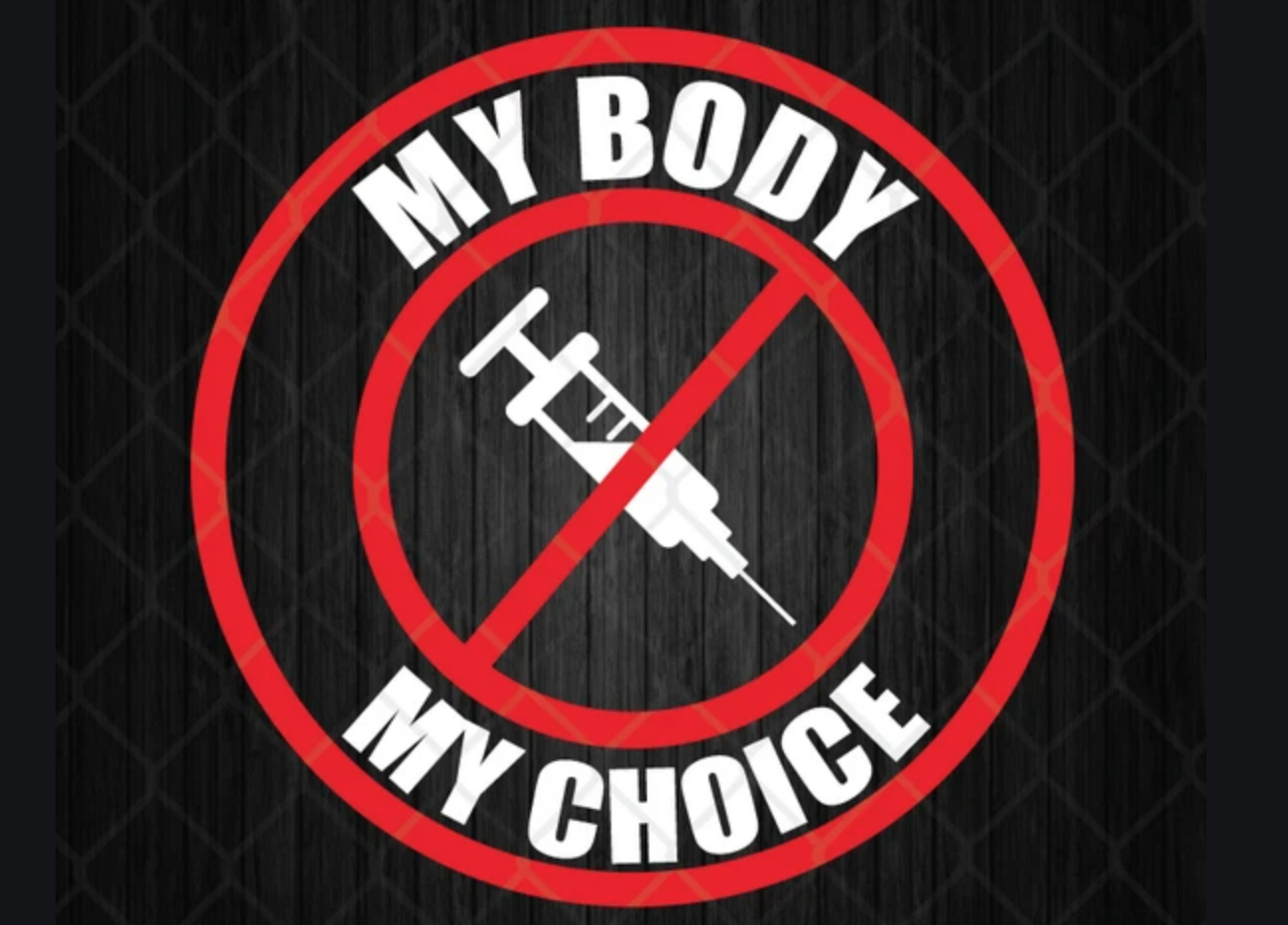
The story cited a poll indicating that 45% of white evangelicals planned to refuse their shots, while 55% planned to cooperate with anti-pandemic programs. I noted that these numbers were solid evidence of a DIVISION inside white evangelicalism, not a sign of unity in opposition to vaccines.

What is the big problem in Mississippi, where there are lots of empty slots on the lists where people sign up for appointments to get shots?


Please respect our Commenting Policy

'Nothing in particular' is the growing American religion niche few are studying

'Nothing in particular' is the growing American religion niche few are studying

While working on the 1985 book "Habits of the Heart," the late sociologist Robert N. Bellah met "Sheila," who described her faith in words that researchers have quoted ever since.

"I can't remember the last time I went to church," she said. "My faith has carried me a long way. It's Sheilaism. Just my own little voice." The goal was to "love yourself and be gentle with yourself. … I think God would want us to take care of each other."

A decade later, during the so-called "New Age" era, researchers described a similar faith approach with this mantra -- "spiritual but not religious."

Then in the 21st Century's first decade, the Pew Research Center began charting a surge of religiously unaffiliated Americans, describing this cohort in a 2012 report with this newsy label -- "nones."

Do the math. "Nones" were 10% of America's population in 1996, 15% in 2006, 20% in 2014 and 26% in 2019. This stunning trend linked many stories that I have covered for decades, since this past week marked my 33rd anniversary writing this national "On Religion" column.

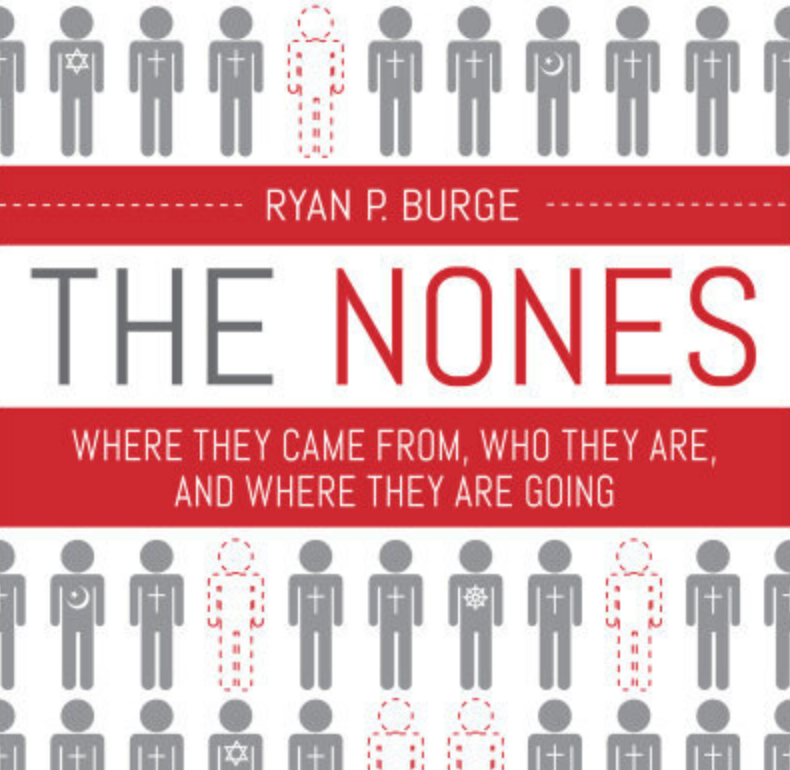
Obviously, these evolving labels described a growing phenomenon in public and private life, said political scientist Ryan Burge of Eastern Illinois University, author of the new book, "The Nones: Where They Came From, Who They Are, and Where They Are Going."

But hidden under that "nones" umbrella are divisions that deserve attention. For example, the 2018 Cooperative Congressional Election Study found that 5.7% of the American population is atheist, 5.7% agnostic and 19.9% "nothing in particular."

"When you say 'nones' and all you think about is atheists and agnostics, then you're not seeing the big picture," said Burge, who is a contributor at the GetReligion.org website I have led since 2004. "Atheists have a community. Atheists have a belief system. They are highly active when it comes to politics and public institutions.

"But these 'nothing in particular' Americans don't have any of that. They're struggling. They're disconnected from American life in so many ways."


Please respect our Commenting Policy

New podcast: Familiar splits among white 'evangelicals,' only now they're about vaccines

New podcast: Familiar splits among white 'evangelicals,' only now they're about vaccines

It’s really a matter of simple math and logic.

Let’s start with this question, stripped of the political and journalism questions attached to it: Which of the following numbers is larger and, thus, more important — 45 or 55?

If you said “45,” then you’re ready to write headlines and edit controversial stories for The New York Times.

Before we move on, let’s ask another question that was at the heart of this week’s “Crossroads” podcast (click here to tune that in). I’ll frame this in as neutral a manner as possible: If members of the Democratic Party were divided 55% “yes” to 45% “no” on a major decision, would you see this (a) as a sign that Democrats were united in opposition to the question at hand or (b) that Democrats were starkly divided on the question, with a majority taking a positive stance? I should mention that the 55% “yes” vote includes virtually all of leaders of major institutions within the world of Democratic Party life.

With that in mind, let’s contemplate the story under the following double-decker headline from the Times:

White Evangelical Resistance Is Obstacle in Vaccination Effort

Millions of white evangelical adults in the U.S. do not intend to get vaccinated against Covid-19. Tenets of faith and mistrust of science play a role; so does politics.

This brings us to the crucial summary material in this story:

The opposition is rooted in a mix of religious faith and a longstanding wariness of mainstream science, and it is fueled by broader cultural distrust of institutions and gravitation to online conspiracy theories. The sheer size of the community poses a major problem for the country’s ability to recover from a pandemic that has resulted in the deaths of half a million Americans. And evangelical ideas and instincts have a way of spreading, even internationally.

There are about 41 million white evangelical adults in the U.S. About 45 percent said in late February that they would not get vaccinated against Covid-19, making them among the least likely demographic groups to do so, according to the Pew Research Center.

“If we can’t get a significant number of white evangelicals to come around on this, the pandemic is going to last much longer than it needs to,” said Jamie Aten, founder and executive director of the Humanitarian Disaster Institute at Wheaton College, an evangelical institution in Illinois.


Please respect our Commenting Policy

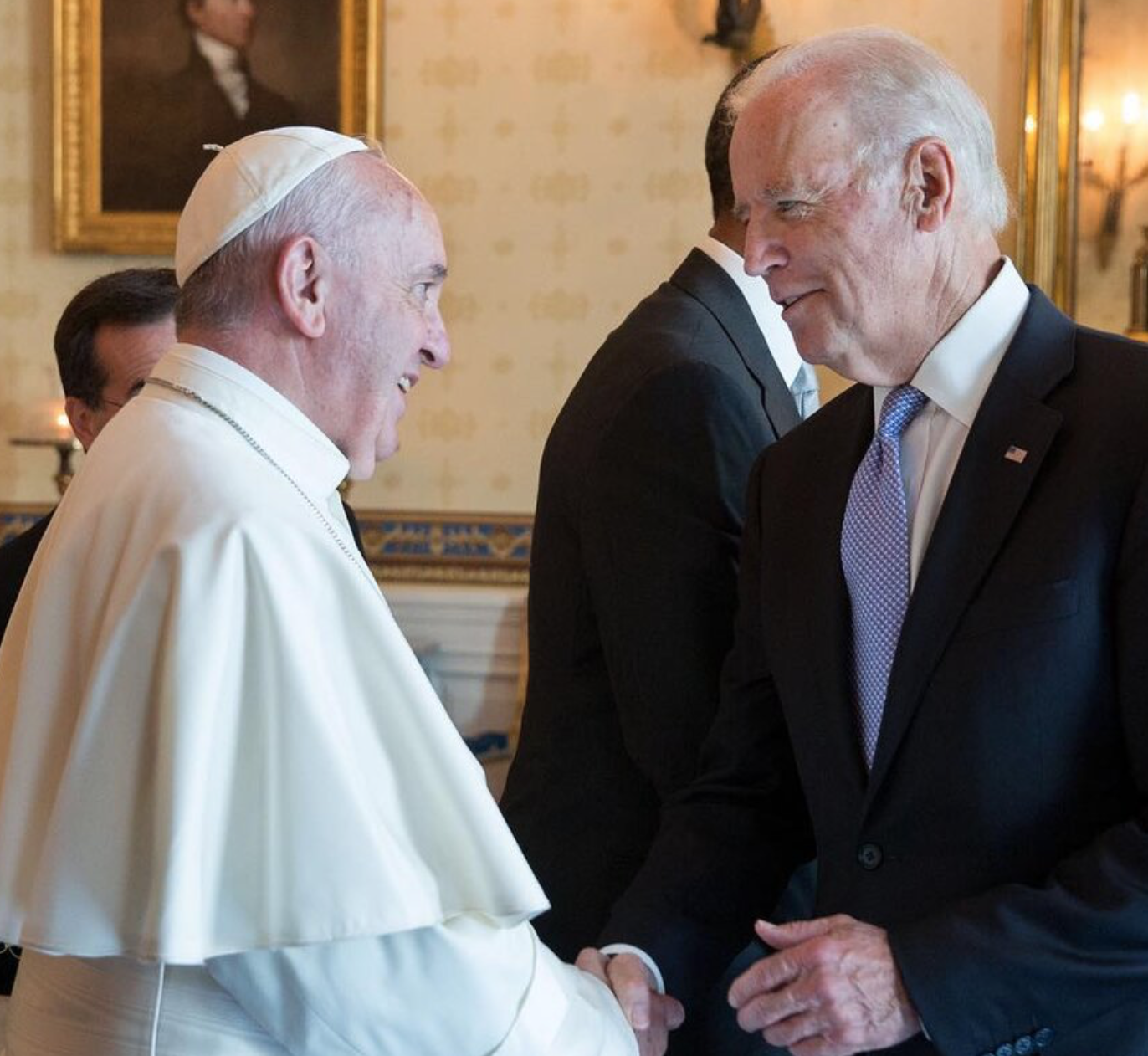
Biden's 'devout' faith is a news-media talking point, but a survey about it somehow isn't

Biden's 'devout' faith is a news-media talking point, but a survey about it somehow isn't

The culture wars have been on full display during the first two months of the Biden presidency.

It isn’t so much that Joe Biden is fueling the wars — he’s actually steered clear of many of these recent battles that brew on Twitter and cable TV news. Nevertheless, his actions over the arc of a career that spans almost five decades, as senator — vice-president and now commander-in-chief — certainly provides fodder for many Christians who differ with his policies and politics.

The president’s frequent references to his Catholic faith, mixed with affirmations of policies that clash with Catholic teachings, are at the heart of this discussion in public life and, every now and then, in the mainstream press.

USA Today, in a news feature from earlier this week, made the following observation:

When the Vatican announced last month the Catholic Church wouldn’t bless same-sex unions, the White House dodged when asked for a response from Biden, the nation’s second Catholic president and a gay rights supporter who officiated at a wedding of two men five years ago.

“I don’t think he has a personal response to the Vatican,” White House press secretary Jen Psaki said during a briefing that day. Psaki reaffirmed the president’s support of same-sex unions: “He’s long had that position.”

A couple of weeks earlier, Psaki punted when asked why Biden made no mention of Dr. Seuss in his proclamation declaring March 2 – the children’s book author’s birthday – as the annual “Read Across America Day.” Psaki suggested a reporter reach out to the Department of Education, which she said drafted the proclamation.

Psaki’s nuanced response to both questions underscores the delicate balance the White House is taking as Biden navigates a minefield of hot-button social issues ranging from the gender of children’s toys (see Mr. Potato Head) to transgender athletes in school sports to GOP complaints about “cancel culture.”

It was on March 30, a few days before Easter Sunday, that Pew Research Center released a study on how American Catholics view the president and how they view his approach to the Catholic faith. Here is a sample of that study’s results:


Please respect our Commenting Policy

Hail to the resurrection of the Religious Left, creating media blitz No. 175 (or thereabouts)

Hail to the resurrection of the Religious Left, creating media blitz No. 175 (or thereabouts)

The Easter season 2021 came with legacy media belief in the resurrection -- of the Religious Left.

Since Jerry Falwell (Senior) emerged from the underbrush, how many times have we read forecasts that religiously inspired political liberals will supplant the political prominence and influence of the Religious Right? This must be something like round 175.

The latest, headlined "Progressive Christians Arise! Hallelujah!", emerged from the word processor of Nicholas Kristof, who treats religious themes more often than fellow New York Times commentators — except David Brooks and Ross Douthat.

The Religious Left, so prominent in the New Deal days and the anti-war and civil rights efforts of the 1960s, never went away. Witness the perpetual political pronouncements from the “Seven Sisters” of Mainline Protestantism, for example the United Methodist Church lobby headquartered across the street from the U.S. Capitol and next door to the U.S. Supreme Court.

Journalists need to carefully evaluate these claims because renewed political impact by a Religious Left would loom large on story agendas. What's the evidence?

Kristof pins hopes heavily upon Democrats with religious leanings "moving onto center stage" as follows. Catholic President Joe Biden is a faithful churchgoer (unlike Donald Trump). Veep Kamala Harris regularly "attended" Baptist churches (but note the past tense). Senator Elizabeth Warren "taught" Sunday School (another past tense). Senator Cory Booker and Transportation Secretary Pete Buttigieg "speak the language of faith fluently." And media star Alexandria Ocasio-Cortez says Catholicism "inspires" her radicalism.

The column also touts troubles on the right. Some of those rabid U.S. Capitol rioters invoked religion.


Please respect our Commenting Policy

This just in! Millions of folks are sort of religious, a key to church membership decline

This just in! Millions of folks are sort of religious, a key to church membership decline

When it came to poll numbers about religion and American life, the late George Gallup, Jr., wasn’t all that interested in many of the most obvious questions.

As he told me in several telephone interviews, starting in the 1980s: The religion numbers just don’t add up. You could see the same sentiments in some of his public addresses.

Gallup — who died in 2011 — wasn’t impressed by the high numbers of Americans who told pollsters that they believe in God, attend worship services on a regular basis and say that faith is “very important” in their lives. That didn’t seem to fit with national patterns of divorce and family breakdown. He kept trying to find ways to ask questions that focused on the role of religious faith in daily life.

When push came to shove, Gallup was convinced that about 20% of Americans were seriously practicing some form of religious faith. The number might be lower than that.

Thus, that recent blitz of news about church membership trends. As the Washington Post headline stated: “Church membership in the U.S. has fallen below the majority for the first time in nearly a century.” Here’s some of the overture:

The proportion of Americans who consider themselves members of a church, synagogue or mosque has dropped below 50 percent, according to a poll from Gallup. … It is the first time that has happened since Gallup first asked the question in 1937, when church membership was 73 percent. …

In 2020, 47 percent of Americans said they belonged to a church, synagogue or mosque. The polling firm also found that the number of people who said religion was very important to them has fallen to 48 percent, a new low point in the polling since 2000.

Click here for the Gallup report on these findings, old and new. Here is another summary from 2019. And here is some additional background from the new Gallup release:

Gallup asks Americans a battery of questions on their religious attitudes and practices twice each year. The following analysis of declines in church membership relies on three-year aggregates from 1998-2000 (when church membership averaged 69%), 2008-2010 (62%), and 2018-2020 (49%). …

The decline in church membership is primarily a function of the increasing number of Americans who express no religious preference.


Please respect our Commenting Policy