Supreme Court

Many media pros have missed a mega-money source backing some big Christian causes

Many media pros have missed a mega-money source backing some big Christian causes

Follow the money.

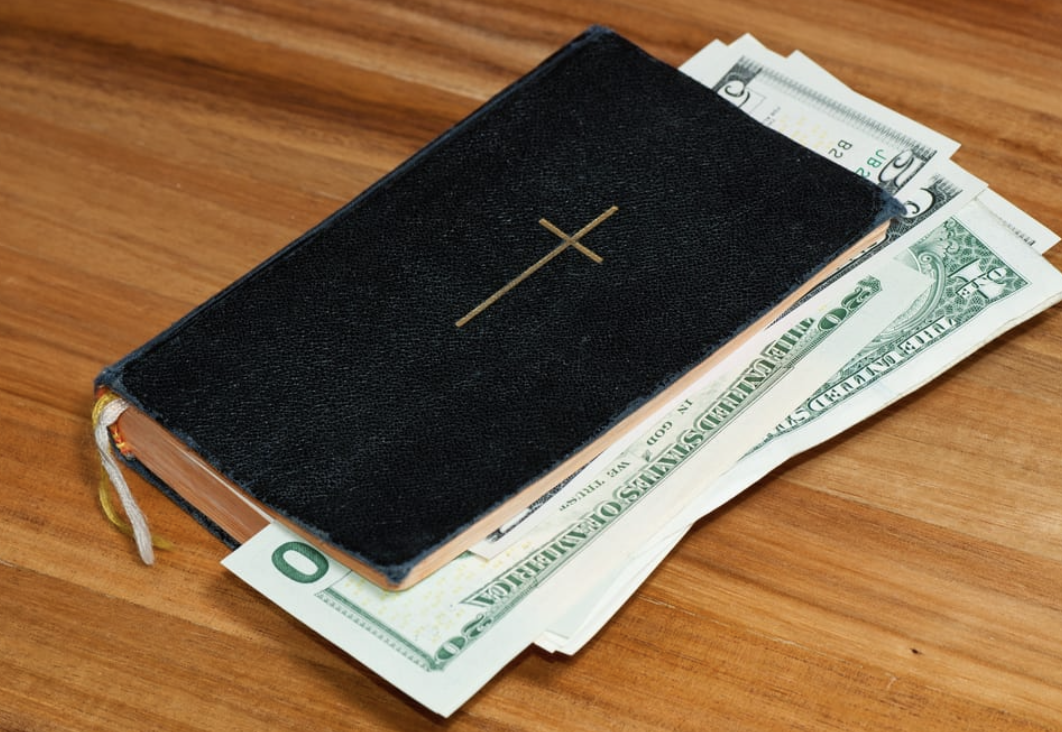
Those three little words guide journalists and prosecutors alike. And that explains the news potential of the Georgia-based National Christian Foundation (NCF), www.ncfgiving.com/ which to date has quietly given $14 billion to 71,000 non-profit groups, $1.3 billion of that last year, in both tiny and huge grants. An Atlanta Journal-Constitution piece recently noted that "mysterious" operation is "one of the most influential charities you've never heard of."

Writing last week for Ministry Watch (a news website that reporters should follow), GetReligion alumnus Steve Rabey reports that NCF became "the world's largest Christian foundation" largely through word-of-mouth referrals rather than promotional efforts. The Chronicle of Philanthropy, which posted antagonistic coverage in February, ranks NCF as the nation's eighth-largest charity.

NCF calls itself a "ministry," and though it aids a wide range of secular non-profit charities it's a particularly important vehicle for religious donations from wealthy conservative Protestants who share its belief that "the entire Bible is the inspired and inerrant Word of God." The foundation's 26 offices around the U.S. handle donations -- contact info posted here -- so local angles for the media abound. (At national headquarters, Dan Stroud is C.E.O and Steve Chapman the media contact via info@ncfgiving.com or 404-252-0100.)

Rabey's piece includes a helpful link to the Guidestar.org posting of NCF's 593-page IRS Form 990 filed for 2019, with a listing of grant recipients that reporters will want to eyeball. The largest categories of donations ranged from local churches ($215 million) on down to medical care ($21 million). Major causes included evangelism, relief, education, children and youth work, museums, spiritual and community development, media and publishing, orphan care, Bible translation and ministry to the homeless.

NCF typifies the rising importance of "donor-advised funds" in U.S. philanthropy. The basic idea has existed for a century and was devised as a vehicle for Christian donors in 1982 by pioneering Atlanta tax attorney Terry Parker, still a board member, along with evangelical financial gurus Ron Blue and Larry Burkett.
Please respect our Commenting Policy

Don't neglect the Supreme Court's potentially weighty case on religious schools funding

Don't neglect the Supreme Court's potentially weighty case on religious schools funding

Media eyes are trained on the U.S. Supreme Court's December 1 argument on Mississippi's abortion restrictions, preceded by a fast-tracked November 1 hearing about the stricter law in Texas. But don't neglect the Court's December 8 hearing and subsequent decision on tax funding of religious schools in the potentially weighty Carson v. Makin case (docket #20-1088).

University of Baltimore law Professor Kimberly Wehle certainly wants us to pay heed, warning October 14 via TheAtlantic.com that this is a "sleeper" appeal that "threatens the separation of church and state." In her view, the high court faces not just the perennial problem of public funding for religious campuses. She believes the justices could decide "religious freedom supersedes the public good" by aiding conservative Christian schools that, based on centuries of doctrine, discriminate against non-Christian and LGBTQ students and teachers.

Journalistic backgrounding: Thinly-populated Maine provides an unusual context for this story because the majority of its 260 school districts do not operate full K-12 systems and instead pay tuition for public or private schools that families choose for upper grades. Religiously-affiliated schools are included, but not if Maine deems them "sectarian."

Notably, the parents' plea for tuition is backed by major institutions of the Catholic Church, the Southern Baptist Convention and other evangelical Protestants, the Church of God in Christ (the nation's largest African-American denomination), Latter-day Saints (formerly called "Mormons") and Orthodox Judaism, alongside the 63-campus Council of Islamic Schools. A reporter's question: Has such a religious coalition ever formed in any prior Supreme Court case?

Of further interest, the case engages a major religious-liberty theorist, Michael W. McConnell, director of Stanford University's Constitutional Law Center and former federal judge on the 10th Circuit Court of Appeals. He wrote that circuit's 2008 opinion in Colorado Christian University v Weaver (.pdf here), which tossed out a law that barred "pervasively sectarian" colleges from a state scholarship program.

In Carson, McConnell filed a personal brief September 8 that hands the Supreme Court a history lesson (.pdf here) on religious freedom as conceived when the Constitution's First Amendment was framed. He has explored this ground since a significant Harvard Law Review article in 1989.


Please respect our Commenting Policy

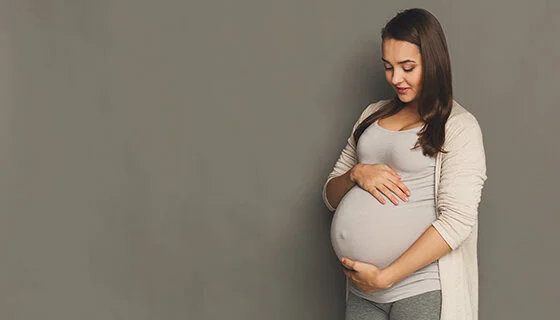
Crucial question in all those newsworthy abortion debates: When does life begin?

Crucial question in all those newsworthy abortion debates: When does life begin?

THE QUESTION:

When does life begin?

THE RELIGION GUY'S ANSWER:

Those four words are regularly posed in the current abortion debate, so let's scan the lines in pregnancy that have been drawn by experts — religious and secular — in the past.

Pre-scientific cultures spoke of "quickening," typically between 16 and 18 weeks, when the mother first feels the unborn child moving in her womb. A famous example involves the unborn John the Baptist in biblical Luke 1:41. Some ancient Jewish authorities in the Talmud, and Roman and Greek philosophers, supposed that the unborn child "formed" earlier, at 40 days.

Then there's "viability," when a fetus can live on its own outside the womb, typically reached around 23 or 24 weeks, or somewhat earlier or later in individual cases. The U.S. Supreme Court legalized abortion before that point in its 1973 Roe v. Wade decision, and after viability when there are risks to the mother's health, broadly defined.

The high Court on December 1 hears a case from Mississippi, which defied the Roe ruling and bars abortions after 15 weeks on grounds that the fetus experiences pain by then. A Missouri law, also under court challenge, puts a ban at eight weeks when "everything that is present in an adult human is now present in your baby," according to the American Pregnancy Association. The Court temporarily left in place a ban in Texas (likewise in 13 other states) after six weeks, when pulsations can be diagnosed at what eventually becomes the fully formed heart.

Many modern Christians believe that life begins at conception (sperm first meets egg) or implantation (fertilized egg attaches to the mother's womb) while some put the line a bit later at twinning (after which multiple pregnancies do not occur).

Note the brief filed last month in the Mississippi case by pro-choice religions including "mainline" Protestant churches, non-Orthodox Judaism, Unitarian Universalists and others. It says "numerous religious traditions posit that life begins at some point during pregnancy or even after a child is born."


Please respect our Commenting Policy

Notable omission among liberal religious voices in phase 2 of Supreme Court abortion case

Notable omission among liberal religious voices in phase 2 of Supreme Court abortion case

The media are prepping for the U.S. Supreme Court's December 1 hearing on the strict Mississippi abortion law and the subsequent ruling.

In a prior Guy Memo on religious "friend of the court" briefs filed on the pro-life side, I promised a second rundown when pro-abortion-rights activists weighed in with their views. Now that second wave of religious arguments has landed — with a notable omission in those ranks that journalists will want to pursue.

To explain, we'll need some religion-beat history on this issue.

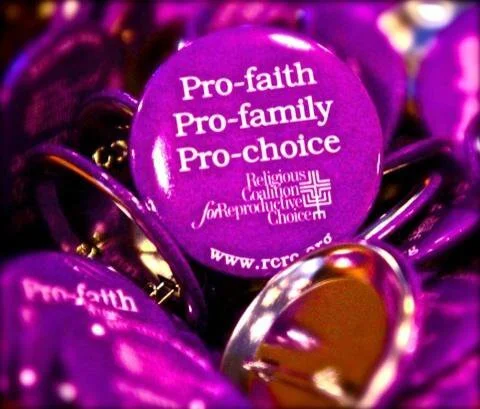
In 1967, two years before NARAL Pro-Choice America was founded, the 1,400-member Clergy Consultation Service formed to help women obtain abortions and fight legal barriers. After the high court legalized U.S. abortions in the 1973 Roe v. Wade decision currently at issue, the related Religious Coalition for Abortion Rights was founded to campaign for moral acceptance. (In 1994 it dropped the A-word and was renamed the Religious Coalition for Reproductive Choice or RCRC).

Founders included a significant chunk of "mainline" and liberal Protestantism, including the Episcopal Church, Presbyterian Church (U.S.A.) Mission Agency, United Church of Christ and several independent Protestant caucuses. The United Methodists' General Board of Church and Society hosted the founding, and the Methodist women's division also joined, but both later backed away. The Coalition also included major non-Orthodox Jewish organizations and the Unitarian Universalist Association (UUA).

In the new Court filings, abortion-rights law gets continued support from RCRC, UUA and Jewish organizations. But no Protestant denomination that favors abortion choice has joined to support Roe. Reporters should find out why they sidestepped this historic showdown. For example, have complex schism talks led to silence on the United Methodist left, as opposed to earlier debates (see YouTube video at the top of this post)?

The silence from "mainline" churches deprives the high court of in-depth moral thinking from pro-choice Christians that answers conservatives on issues that make abortion unusually difficult for public policy, among them: Does a genetically unique and developing human embryo or fetus have value? Why, or why not?


Please respect our Commenting Policy

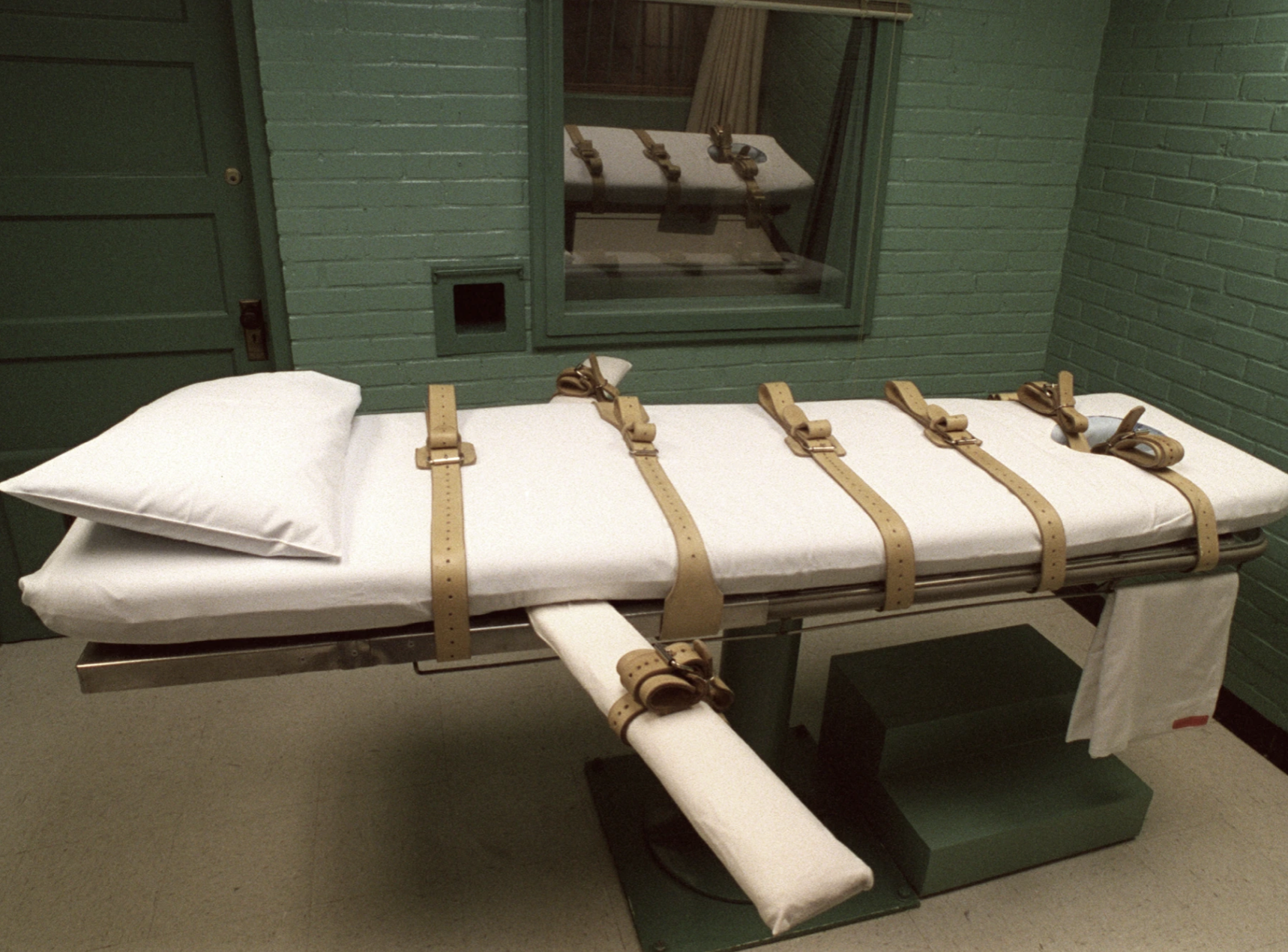
Thinking about prayers at executions: These stories offer glimpses of an old church-state unity

Thinking about prayers at executions: These stories offer glimpses of an old church-state unity

This is a “feeling guilty” post. For quite some time now, I have been planning to examine the coverage of some important religious-liberty cases that have been unfolding in the death-row units of prisons.

The decisions are worthy of coverage, in and of themselves. At the same time, these cases have demonstrated that it is still possible, in this day and age, for church-state activists on the left and right to agree on something. Maybe I should have put a TRIGGER WARNING notice at the start of that sentence.

Like I said the other day in this podcast and post — “Covering a so-called 'religious liberty' story? Dig into religious liberty history” — this kind of unity in defending religious freedom has become tragically rare (from my point of view as an old-guard First Amendment liberal). Indeed, to repeat myself, “America has come a long way since that 97-3 U.S. Senate vote to approve the Religious Freedom Restoration Act of 1993.”

The problem is that you rarely, if ever, see reporters catch this church-state angle in these decisions. The key is to look at who filed legal briefs in support of the religious liberty rights of the prisoners.

This brings me to an important Elizabeth Bruenig essay that ran the other day at The Atlantic, under this dramatic double-decker headline:

The State of Texas v. Jesus Christ

Texas’s refusal to allow a pastor to pray while holding a dying man’s hand is an offense to basic Christian values.

Here is the meaty overture:

Devotees to the cause of religious liberty may be startled to discover during the Supreme Court’s upcoming term that the latest legal-theological dispute finds the state of Texas locked in conflict with traditional Christian practice, where rites for the sick, condemned, and dying disrupt the preferences of executioners.


Please respect our Commenting Policy

New podcast: Covering a so-called 'religious liberty' story? Dig into religious liberty history

New podcast:  Covering a so-called 'religious liberty' story? Dig into religious liberty history

Believe it or not, America’s commitment to the First Amendment and religious liberty wasn’t dreamed up by the Religious Right.

However, at some point — mainly during press coverage of clashes between the Sexual Revolution and traditional forms of religion — religious liberty turned into “religious liberty” or even “so called ‘religious liberty’ ” and other language to that effect. America has come a long way since that 97-3 U.S. Senate vote to approve the Religious Freedom Restoration Act of 1993.

Now we are seeing waves of valid news coverage of religious liberty disputes linked to people seeking exemptions from mandates requiring COVID-19 vaccines. During this week’s “Crossroads” podcast (CLICK HERE to tune that in) I suggested that it would help for journalists to dig into the details of how courts have handled earlier religious liberty cases.

Consider this recent Washington Post headline, involving a White evangelical leader in Oklahoma: “This pastor will sign a religious exemption for vaccines if you donate to his church.” Here’s the overture:

A pastor is encouraging people to donate to his Tulsa church so they can become an online member and get his signature on a religious exemption from coronavirus vaccine mandates. The pastor, Jackson Lahmeyer, is a 29-year-old small-business owner running in the Republican primary challenge to Sen. James Lankford in 2022.

Lahmeyer, who leads Sheridan Church with his wife, Kendra, said Tuesday that in the past two days, about 30,000 people have downloaded the religious exemption form he created.

“It’s beautiful,” he said. “My phone and my emails have blown up.”

This minister isn’t alone in thinking this way. Here is a New York Daily News story about an African-American Pentecostal leader: “A Brooklyn preacher’s blessing is a pox upon his flock.”


Please respect our Commenting Policy

Thinking with Ryan Burge (and one of his critics) about abortion and evangelical voting

Thinking with Ryan Burge (and one of his critics) about abortion and evangelical voting

If you follow political scientist Ryan Burge on Twitter (which you should do, of course), then you know that he sends out waves of poll information, creatively sifted, in the form of charts.

From time to time, people have been known to bounce questions back to him, seeking clarification or more specific numbers on some strange angle of the topic at hand. I confess that I have been known to do that.

Burge is relentlessly helpful in that online setting. However — imagine this — there are people who argue with him? On Twitter, of all places! Some disagree with his interpretations. On Twitter!

I’m being sarcastic, to make a point linked to this weekend’s pair of “think pieces.” I’m one of those guys who disagrees with Burge from time to time. That happens, when someone is delivering and then interpretting lots of information in a public forum. The difference with Burge is that he is relentlessly candid, even when dealing with numbers and trends that challenge lots of common news templates.

Recently, Burge wrote a commentary piece — backed with some of his charts — for Religion News Service, flashing back to some polling from 2018. The piece ran with this double-decker headline:

Abortion just isn’t the motivating issue for evangelicals it once was

Studies show white evangelicals, by and large, do not have a hard-line approach to abortion — other issues like immigration and race are taking priority over advocating for the unborn.

Whatever your stance on “life” issues, don’t you want to read more about that claim? Here is a key (and quite long) section of that:


Please respect our Commenting Policy

Plug-In: At 20th anniversary of 9/11, faith remains big part of this world-shaking story

Plug-In: At 20th anniversary of 9/11, faith remains big part of this world-shaking story

Like everybody alive then, I remember what I was doing the morning of Sept. 11, 2001.

At the time, I was religion editor for The Oklahoman, the metro daily in Oklahoma City. I was running a few minutes late that Tuesday because I stopped at Walmart to buy a new pair of cleats for a company softball team starting the fall season that night. As it turned out, we didn't play.

As I flashed my company ID at the security guard outside the newspaper building, he asked if I'd heard about a plane crashing into the World Trade Center in New York. I had not. Minutes later, after I arrived in the ninth-floor newsroom, my colleagues and I watched on television as a second plane hit the twin towers. Almost immediately, ABC anchor Peter Jennings likened the attack to Pearl Harbor.

That's when I grasped the significance.

The rest of that day is a blur. Like my reporter colleagues all over the nation, I immediately put aside any personal feelings and operated on journalistic adrenaline. I wrote four bylined stories for the next day's paper: one on the religious community's response, one on Muslim fears of a backlash, one on Oklahoma City bombing victims' reactions and one on an eyewitness account by an Oklahoma professor's daughter.

Like many (most?) Americans, I tossed and turned that night.

In the days and weeks after 9/11, I recall interviewing religious leaders and ordinary congregants as they looked to God and sought to explain the seemingly unexplainable.

Twenty years later, faith remains a big part of the story. Here is some of the must-read coverage:

Eastern Orthodox shrine to replace church destroyed on 9/11 nears completion (by Peter Smith, Associated Press)

Generation 9/11 (by Emily Belz, World)

Young Sikhs still struggle with post-Sept. 11 discrimination (by Anita Snow and Noreen Nasir, AP)


Please respect our Commenting Policy

Possible clues for reporters seeking religion angles in 2022 and 2024 elections

Possible clues for reporters seeking religion angles in 2022 and 2024 elections

A year from now the Supreme Court will have ruled on its lollapalooza Dobbs abortion case, we'll know how much permanent damage Afghanistan dealt to the Biden-Harris Administration and -- we can hope -- COVID-19 and Delta may finally be under control.

Also, journalists will be in the thick of covering a red-hot election for the U.S. House and Senate and the state legislatures.

How will religion play into the outcome? Though church numbers are sliding, reporters shouldn't forget that more than with many other factors, religious participants by the millions provide readily organized activists and voting blocs.

There could be clues in Pew Research Center's report last week offering the last word on religious voters in 2020, with some comparative information from its 2016 post-election report. Rather than exit polling, Pew analyzed responses from 9,668 members of its ongoing, randomly selected American Trends Panel who were verified as having actually voted by checking commercially available lists.

White evangelical Protestants went 84% for Donald Trump's re-election, which is not surprising but remains significant for Republican strategists (and for this movement's own societal and outreach prospects). Pew says they gave Trump "only" 77% in 2016, slightly less than was shown in exit polls and a bit below Mitt Romney's 2012 support.

But evangelicals always go Republican. That’s no surprise.


Please respect our Commenting Policy