Supreme Court

Christians, Jews, Muslims and lobbyists left and right fret over SCOTUS 'donor privacy' case  

Christians, Jews, Muslims and lobbyists left and right fret over SCOTUS 'donor privacy' case   

What cause could ever possibly unite Christian Right activists, the Council on American-Islamic Relations, the Zionist Organization, "pro-family," "pro-life," "pro-choice" and gun-rights lobbies, Mitch McConnell, the American Civil Liberties Union, Chamber of Commerce, Judicial Watch, NAACP, People for the Ethical Treatment of Animals, Planned Parenthood, Southern Poverty Law Center, Columbia University's First Amendment institute and religious-liberty advocates?

Answer: These and many more are allied in the Americans for Prosperity Foundation v. Becerra case (#19-251), which the U.S. Supreme Court put on its upcoming docket January 8.

Yes, that Becerra is Xavier, as in President Biden's controversial pick for secretary of Health and Human Services, acting in his previous role as California's attorney general. Moreover, this situation implicates the track record of his predecessor as A.G., Kamala Harris — now U.S. vice president and a major 2024 presidential prospect.

At issue is "donor privacy." Non-profit groups cannot operate or raise money in the state of California unless they give its attorney general the names and addresses of their major donors, the same list that's required as an appendix to their federal IRS returns. The non-profits argue that this violates their right to freedom of association under the Constitution's First Amendment.

Obviously this is something for alert media eyes, including pros on the religion beat.

Adding to news interest, this case displays contrasting beliefs of the U.S. Department of Justice in its Trump Administration brief filed last November (.pdf here) versus its revised stance under the new Biden Administration (.pdf here). The Trump brief strongly backs non-profit interest groups. The Biden brief dodges the question and asks the court to bounce the case for further investigation.

Religion specialists note: The Supreme Court consolidated the Americans for Prosperity case, raised by the libertarian political foundation established by the Koch brothers, with a second appeal from the Thomas More Law Center. This second agency provides free legal representation for "people of faith" to uphold "the religious freedom of Christians, time-honored family values and the sanctity of human life."
Please respect our Commenting Policy

New podcast: Yes, cover RFRA; but Equality Act coverage has also been quiet on local stories

New podcast: Yes, cover RFRA; but Equality Act coverage has also been quiet on local stories

What we have here is a logical question that journalists (and news consumers) should be asking at this point in coverage of debates about the Equality Act. It’s also one of the questions that “Crossroads” host Todd Wilken and dissected during this week’s podcast (click here to tune that in).

That question: How many religious health organizations, schools, recreation centers, homeless shelters, campgrounds, day-care centers and other forms of faith-driven ministries and nonprofit groups are located in the zip codes covered by the newsrooms of your local media outlets?

Earlier this week, I wrote a post (“Puzzle: Many reporters ignoring Equality Act's impact on this crucial Schumer-Kennedy legislation”) noting that a few mainstream news organizations have covered the ways in which the Equality Act would edit or even crush the Religious Freedom Restoration Act (RFRA) of 1993, which passed in the U.S. Senate vote of 97-3. That vote symbolized both the bipartisan nature of that legislation and stunning left-right coalition of sacred and secular groups that supported it.

That remains a valid angle for coverage. However, the more I thought about this topic, and the more Equality Act reports that I read, the more I focused in on another “quiet zone” in the mainstream news coverage — including at the local and regional levels.

For starters, let’s look at two pieces of a major New York Times report on the Equality Act:

It was the second time the Democratic-led House had passed the measure, known as the Equality Act, which seeks to amend the Civil Rights Act of 1964 to add explicit bans on discrimination against lesbian, gay, bisexual and transgender people in both public and private spaces.

Now, that’s remarkably broad language. What kinds of groups and institutions, pray tell, are included under “both public and private places”? And remember this old journalism mantra: All news is local.

Later on, the story adds:

In a landmark decision in June, the Supreme Court ruled that the 1964 civil rights law protects gay and transgender people from workplace discrimination, and that the language of the law, which prohibits discrimination on the basis of sex, also applies to discrimination based on sexual orientation and gender identity. House Democrats sought to build on that ruling with the Equality Act, which would expand the scope of civil rights protections beyond workers to consumers at businesses including restaurants, taxi services, gas stations and shelters.


Please respect our Commenting Policy

Puzzle: Many reporters ignoring Equality Act's impact on this crucial Schumer-Kennedy legislation

Puzzle: Many reporters ignoring Equality Act's impact on this crucial Schumer-Kennedy legislation

I have been following the Equality Act coverage and, so far, a crucial piece in this puzzle has been missing.

Thus, here is a one-question pop test. That question: Name the piece of stunningly bipartisan legislation — vote was 97-3 in U.S. Senate — from the Bill Clinton era that will be gutted by passage of the Equality Act? Hint: It was introduced in the House by Rep. Chuck Schumer (D-NY) on March 11, 1993, and in the Senate on the same day by the late Sen. Ted Kennedy (D-MA).

We are, of course, talking about the Religious Freedom Restoration Act (RFRA). In today’s advocacy-media age that would, of course, be the “Religious Freedom” Restoration Act, complete with “scare quotes.”

The key is the impact the Equality Act would have on religious parachurch groups, social ministries, hospitals and educational institutions, from preschools to universities.

Now, does everyone agree on how the Equality Act would impact the First Amendment rights of religious believers and their doctrine-defined ministries?

Of course not. There are strong, credible voices on both sides of that debate that deserve serious, accurate, informed coverage by the mainstream press. However, this process — let’s call it “journalism” — would require newsroom managers to admit that this issue exists.

That’s why Andrew Sullivan — one of the world’s best-known gay public intellectuals — called the introductory Washington Post Equality Act story a “press release” (think PR) for the Human Rights Campaign. Here is that story’s description of the legislation’s impact:

The Equality Act would amend existing civil rights laws, such as the Civil Rights Act of 1964 and the Fair Housing Act, to explicitly ban LGBTQ discrimination in the workforce, housing, education, credit, jury service and other areas of American life.

If passed, the legislation would provide the most comprehensive LGBTQ civil rights protections in U.S. history, advocates say, significantly altering the legal landscape in a country where more than half of states lack explicit legal protections on the basis of sexuality or gender identity. …


Please respect our Commenting Policy

Farewell to 'reindeer rules'? Indiana nativity scene case could have been turning point

Farewell to 'reindeer rules'? Indiana nativity scene case could have been turning point

Year after year, the Lion's Club sets up wire-frame Christmas decorations on the lawn of the historic Jackson County courthouse, facing Main Street in Brownstown, Ind.

The display, which belongs to the local ministerial alliance, glows from dusk to dawn from Thanksgiving until New Year's Day, with the county providing the electricity.

This led to yet another "Christmas Wars" dispute, with the recent Woodring v. Jackson County court decision offering a precise description of this tableau.

There is a "waving Santa Claus with his sleigh, a reindeer, seven large candy-striped poles, the nativity scene … and four carolers standing in front of a lamp post," noted Seventh Circuit Judge Amy Joan St. Eve. "Santa Claus and the reindeer are on the left. …To their right are three gift-bearing kings (Magi) and a camel, who look upon the nativity. On the right side of the sidewalk, Mary, Joseph, and infant Jesus in the stable are flanked on each side by trumpet-playing angels. To their right are several animals facing the nativity. The carolers stand in front of the animals, closer to Main Street."

Before the 2018 lawsuit, the Freedom From Religion Foundation warned that the nativity scene needed to come down. County officials responded by moving Santa and other secular symbols closer to the telltale manger.

That move was clearly linked to what activists call the "reindeer rules," in which secular and sacred symbols are mixed to honor guidelines from the Supreme Court's Lemon v. Kurtzman in 1971. The "Lemon test" asks if a government action's primary effect advanced religion, as opposed to a secular purpose, thus entangling church and state.

But the majority in the new 2-1 decision in Indiana argued that the "nativity scene is constitutional because it fits within a long national tradition of using the nativity scene in broader holiday displays to celebrate the origins of Christmas."

This post-Christmas decision in the heartland may have been a turning point.

"To the degree that the reindeer rules were based on Lemon, this decision said that we now have a new Supreme Court precedent. The reindeer rules appear to be gone," said Diana Verm, senior counsel for the Becket Fund for Religious Liberty, which filed a brief in the case.


Please respect our Commenting Policy

Supreme Court justices are not singing the same religious liberty tune during pandemic

Supreme Court justices are not singing the same religious liberty tune during pandemic

Legal battles over pandemic-era worship gatherings rage on.

Last October’s confirmation of Justice Amy Coney Barrett flipped the U.S. Supreme Court’s script on such questions.

The latest ruling came last Friday night: A 6-3 order stopped California’s ban on indoor worship in most of the nation’s most populous state. But the justices allowed a 25 percent capacity limit to remain.

Perhaps most interestingly, the majority said California can keep prohibiting singing and chanting. For now.

On the singing issue, the justices sang several different tunes:

Chief Justice John Roberts: “The State has concluded … that singing indoors poses a heightened risk of transmitting COVID–19. I see no basis in this record for overriding that aspect of the state public health framework.”

Barrett, joined by Justice Brett Kavanaugh: “Of course, if a chorister can sing in a Hollywood studio but not in her church, California’s regulations cannot be viewed as neutral. But the record is uncertain. … (H)owever, the applicants remain free to show that the singing ban is not generally applicable and to advance their claim accordingly.”

Justice Neil Gorsuch, joined by Justices Clarence Thomas and Samuel Alito: “California has sensibly expressed concern that singing may be a particularly potent way to transmit the disease. … But, on further inspection, the singing ban may not be what it first appears. It seems California’s powerful entertainment industry has won an exemption. So, once more, we appear to have a State playing favorites … expending considerable effort to protect lucrative industries (casinos in Nevada; movie studios in California) while denying similar largesse to its faithful.”


Please respect our Commenting Policy

Welcome to New York Times 'religion' feed? A kissy-kissy chat with exiting NARAL boss

Welcome to New York Times 'religion' feed? A kissy-kissy chat with exiting NARAL boss

Does anyone else remember RSS feeds?

The whole idea of RSS — Really Simple Syndication — is that websites can allow you can set up an automated feed that feeds you updates on specific topics in a standardized, computer-readable format.

The key is that computer algorithms are supposed to detect when stories address issues that interest a specific reader.

Anyway, I received this item the other day in my RSS feed devoted to New York Times stories about religion. In this case, the Times defines the RSS criteria, not me.

In terms of religion news, this one is pretty weird — even for today’s Times. The headline: “Ilyse Hogue, Influential Abortion Rights Advocate, Will Step Down as NARAL Chief — In an interview, Ms. Hogue discussed a tumultuous era for abortion rights and the future of Roe v. Wade.”

In other words, this is a kissy-kissy Q&A marking Hogue’s exit after eight years as leader of NARAL Pro-Choice America. The Times informs readers that “abortion rights are at something of a crossroads, with Democrats facing the choice of whether to try to deliver on their promise of codifying Roe v. Wade.”

All right, says I, let’s see the many points in this report that touch on religion. After all, the RSS algorithms put this in the “religion” feed.

I found three, and even that it is stretching it. Can you spot the religious content in the following three bites from this news feature? The questions, obviously, are in bold type:

Let’s start with perhaps the biggest question: Is Roe v. Wade safe?


Please respect our Commenting Policy

Joe Biden era puts transgender rights atop newsroom agendas (which creates religion news)

Joe Biden era puts transgender rights atop newsroom agendas (which creates religion news)

Among American "social issues," freedom of abortion is long-settled as a matter of law, so foes largely nibble at the edges. Courtroom victories for gays and lesbians have put dissenters on the defensive seeking to protect conscience claims.

Meanwhile, in the Biden-Harris era the transgender debate -- emotion-laden, multi-faceted and religiously weighty -- is moving to the top of the news agenda. {The Guy admits at the start he brings no psychological insight to this complex terrain and has personal knowledge of only two such situations.}

Democrats' zeal is the major new factor. President Joe Biden has said that he believes "transgender equality is the civil rights issue of our time. There is no room for compromise." Last year, Donald Trump appointee Neil Gorsuch made the case for "gender identity" rights in the Supreme Court's Bostock ruling, but this covered only secular employment. During his first hours in office, President Biden issued an executive order that extends this outlook across the board.

The president declared, for instance, that school kids shouldn't have to worry about their "access to the restroom, the locker room, or school sports," nor should adults be mistreated "because how they dress does not conform to sex-based stereotypes." He directed each government agency to spend the next 100 days reframing all gender policies accordingly.

Los Angeles Archbishop Jose Gomez, elected leader of the U.S. Conference of Catholic Bishops, immediately responded that on this and other matters like abortion, America's second Catholic president "would advance moral evils and threaten human life and dignity." Chicago's Cardinal Blasé Cupich assailed Gomez's Inauguration Day statement as "ill-considered." (Click here for GetReligion post and podcast on this topic.)

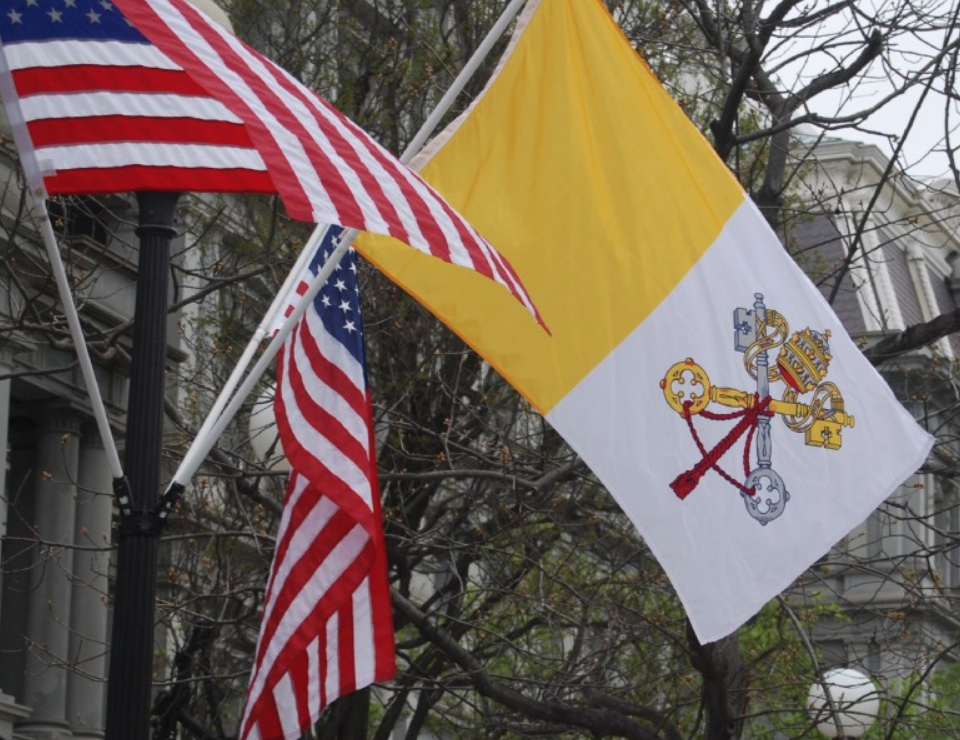
Then New York's Cardinal Timothy Dolan and four other chairmen of bishops' committees jointly declared that by reaching beyond the Supreme Court ruling Biden "needlessly ignored the integrity of God's creation of the two complementary sexes, male and female," and threatened religious freedom. This protest echoed the 2019 Vatican pronouncement "Male and Female He Created Them (.pdf here).”

A second Biden executive order Feb. 4 defined the new "LGBTQI+" approach in U.S. foreign policy. He directed 15 Cabinet departments and agencies to press other countries to comply with America's new stance, using diplomacy and, as needed, financial sanctions or visa restrictions. The State Department is to report annually on problem nations.


Please respect our Commenting Policy

Once again, AP accuses big Catholic bosses of abusing government coronavirus relief efforts

Once again, AP accuses big Catholic bosses of abusing government coronavirus relief efforts

There they go again.

In this case, “they” refers to whoever is in charge of religion-news coverage these days at the Associated Press. Someone there needs to take a remedial course in (a) church history, (b) church-state law in the United States or (c) both.

Let’s start by flashing back about six months, when the AP rolled out an investigation of what its editors clearly thought was a scandal of epic proportions. Does anyone remember this lede, and this GetReligion dissection (“AP explains why it was wrong for local-level Catholic employees to get coronavirus relief money“), of the expose)?

NEW YORK (AP) — The U.S. Roman Catholic Church used a special and unprecedented exemption from federal rules to amass at least $1.4 billion in taxpayer-backed coronavirus aid, with many millions going to dioceses that have paid huge settlements or sought bankruptcy protection because of clergy sexual abuse cover-ups.

That was a bizarre, but honest, opener. The entire story was built on the assumption that there is such a thing — corporately and legally speaking — as a “U.S. Roman Catholic Church.”

As I said at the time, this is “like saying that there is an ‘American Public School System,’ as opposed to complex networks of schools at the local, regional and state levels.” One could also note that there is a Planned Parenthood of America. However, government coronavirus aid in the paycheck-support program went to 37 regional and local Planned Parenthood groups.

The Associated Press has now produced a sequel, with this headline: “Sitting on billions, Catholic dioceses amassed taxpayer aid.” While the editors avoided the “U.S. Roman Catholic Church” label this time around, this lengthy story is built on a similar misunderstanding of what happened when Catholic parishes, schools, nonprofits and other ministries applied for coronavirus aid.

As readers can see in the headline, in the sequel AP leaders focused on finances at the diocesan level, as opposed to a mythical national Catholic structure. This is closer to the truth, but it still misses the mark. While many issues of church authority are linked to local bishops, in local dioceses, the crucial issue here was paycheck-relief money reaching staff members in individual parishes, schools and ministries that had been rocked by falling donations during the COVID-19 crisis. Let’s start with the overture:


Please respect our Commenting Policy

Inauguration Day showdown: U.S. Catholic bishops remain divided on 'McCarrick doctrine'

Inauguration Day showdown: U.S. Catholic bishops remain divided on 'McCarrick doctrine'

Speaking to an Italian family association in 2018, Pope Francis compared the abortion of children with genetic problems to "what the Nazis did to purify the race. Today, we do the same thing but with white gloves."

A year later, Francis bluntly asked a journalist from Mexico if it's "fair to eliminate a human life in order to solve a problem? The answer to which is, 'No.' Second question: Is it fair to pay a sniper to solve a problem? No. Abortion is not a religious problem. … It is a problem of eliminating a human life. Period."

But the pope was careful in his Inauguration Day message to America's second Catholic president, assuring Joe Biden that he would "pray that your decisions will be guided by a concern for building a society marked by authentic justice and freedom, together with unfailing respect for the rights and dignity of every person, especially the poor, the vulnerable and those who have no voice."

The pope's text was examined closely after reports that the Vatican -- on behalf of progressive American bishops -- tried to stop the circulation of a sobering statement from the president of the U.S. Conference of Catholic Bishops. The letter from Archbishop Jose Gomez of Los Angeles addressed the challenge, and blessing, of working with "our first president in 60 years to profess the Catholic faith."

Clearly, Biden's piety had offered "solace in times of darkness and tragedy," said Gomez, leader of America's largest diocese and a crucial voice among Hispanic Catholics. He also praised Biden's "longstanding commitment to the Gospel's priority for the poor."

Nevertheless, Gomez noted that "our new President has pledged to pursue certain policies that would advance moral evils and threaten human life and dignity, most seriously in the areas of abortion, contraception, marriage, and gender. Of deep concern is the … the freedom of believers to live according to their consciences."

Cardinal Blasé Cupich of Chicago fired back on Twitter, attacking this "ill-considered statement on the day of President Biden's inauguration" while claiming "there is seemingly no precedent" for this action by Gomez.

The Pillar, a Catholic news website, reported that the Vatican Secretariat of State intervened to "spike" the statement from the U.S. bishops after objections from Cupich, Cardinal Joseph Tobin of Newark and some other bishops.


Please respect our Commenting Policy