Scriptures

Podcast: What happens when drag-queen culture meets the Christmas Wars? Take a guess ...

Podcast: What happens when drag-queen culture meets the Christmas Wars? Take a guess ...

Just the other day, someone tweeted out a challenge asking readers to share, in five words or less, something that would annoy die-hard Texans. As a prodigal Texan, I responded: “Austin, Austin, Austin, Austin, Austin.”

You see, the People’s Republic of Austin — I heard that label in the 1970s — is located inside Texas and it is even the capital of Texas, but it has long been deep-blue urban zip code (there are now others) in a rather red state.

This creates tensions. Which brings us to that interesting Christmas Wars headline the other day in The Washington Post: “A Texas culture clash: Dueling parades over the meaning of Christmas,” which was the hook for this week’s “Crossroads” podcast (CLICK HERE to tune that in).

Let me offer a bit of “Christmas Wars” background. For decades, the most powerful institutions in American life — government, mass media, public schools, shopping malls, etc. — have argued about what kind of language and symbolism can be used during the cultural tsunami known as The Holidays. As one Baptist progressive said long ago, people may want to play it safe and say, "Merry Christmas, Happy Hanukkah, and a Joyous Kwanzaa, Martyrdom Day of Guru Tegh Bahadur, Bodhi Day, Maunajiyaras Day, Beginning of Masa'il, Nisf Sha'ban and Yalda Night, Yule and Shinto Winter Solstice, and Ramadan! Or, happy holidays!"

But there is a serious church-state issue looming in the background: Is religious speech and symbolism a uniquely dangerous force in public life? In practical terms, can public institutions — especially if there are tax dollars involved — let “Christmas be Christmas.”

Strange things have happened in these debates, such as some (repeat “SOME”) religious and cultural conservatives celebrating when, let’s say, Menorahs and even Nativity scenes are acceptable since they have become “secular” symbols that no longer have offensive religious content. That’s a win for religion?

With that in mind, let’s look at the overture of this Washington Post story, about Christmas Wars in greater Austin:

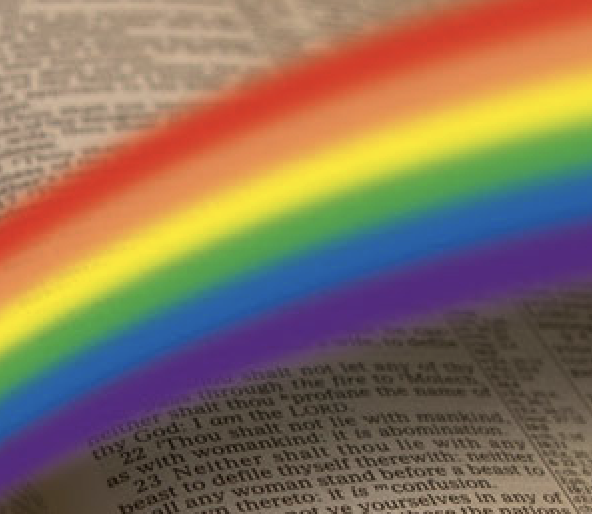
TAYLOR, Tex. — The trouble started at last year’s Christmas parade, when students from St. Mary’s Catholic School watched as two drag queens aboard the first Taylor Pride float danced and lip synced to Christmas carols beneath a glittering rainbow arch.
Please respect our Commenting Policy

Separation of coven and state? Journalists should ask religion questions in this Las Vegas case

Separation of coven and state? Journalists should ask religion questions in this Las Vegas case

Attention journalists: Here is an important theme that runs through First Amendment conflicts about the freedom of believers to practice the tenets of their faith in real life — always consider the ramifications of a new case on believers on the left, as well as the right, on believers in minority faiths, as well as those in the major world religions.

For a prime example of this principle, see this week’s Julia Duin post: “Christian web designer at the Supreme Court: How reporters covered 303 Creative case.”

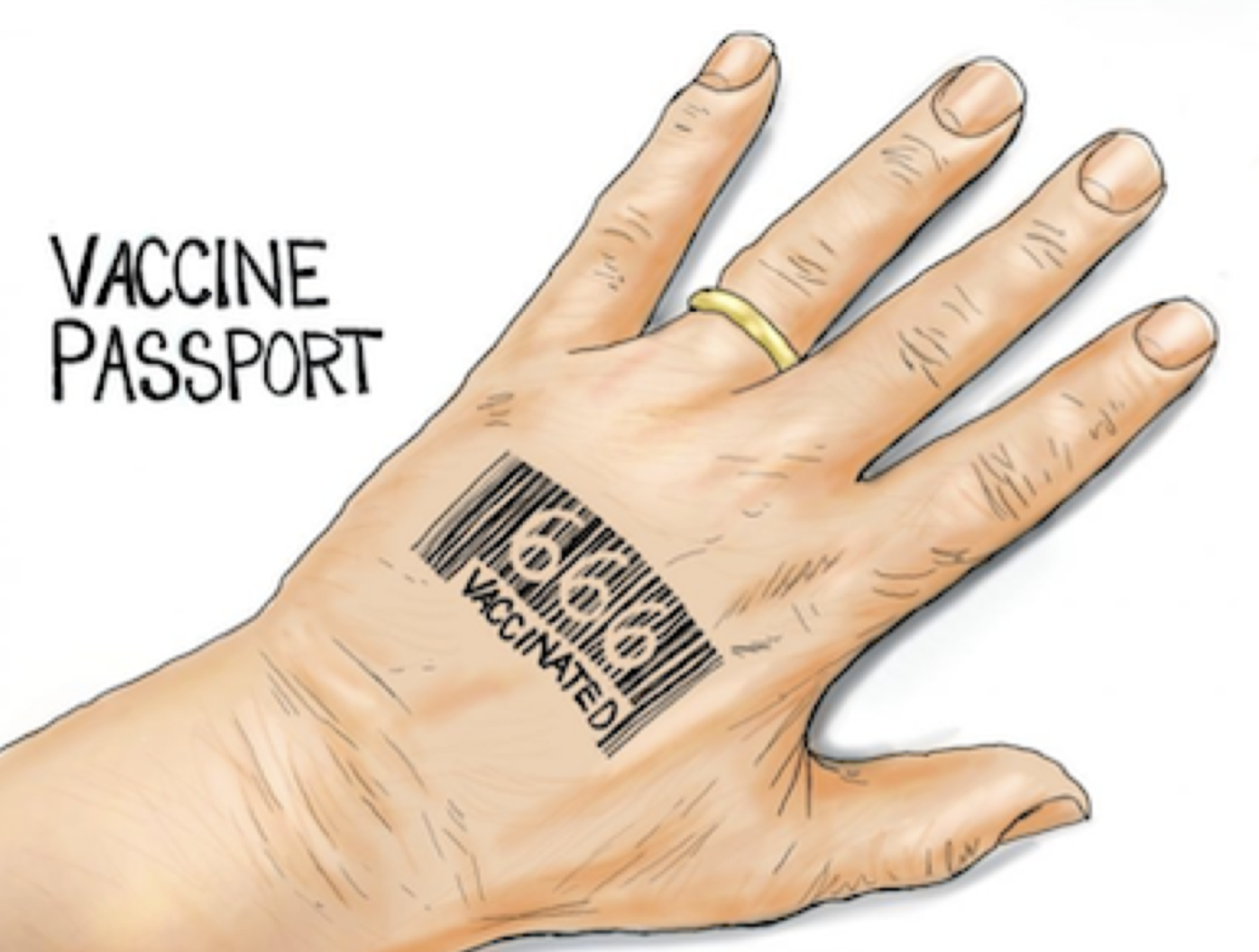
This leads me to a fascinating headline the other day from the Las Vegas Review-Journal — “Pagan nurse files religious discrimination lawsuit against UMC.” Ready for the plot twist? This is a pagan believer demanding the right to refuse a COVID-19 vaccination mandate.

Once again, we face a common religion-beat issue: Do journalists understand basic facts about the Religious Freedom Restoration Act of 1993 and the big themes that courts explore in these kinds of First Amendment cases?

We know what this looks like with, let’s say, wedding-cake artists in Colorado. But to consider coverage of the pagan nurse’s case, I would like readers to consider, once again, that mirror-image scenario that I created years ago, and tweaked recently:

… Let's say that there is a businessman in Indianapolis who runs a catering company. He is an openly gay Episcopalian and, at the heart of his faith (and the faith articulated by his church) is a sincere belief that homosexuality is a gift of God and a natural part of God's good creation. This business owner has long served a wide variety of clients, including a nearby Pentecostal church that is predominantly African-American.

Then, one day, the leaders of this church ask him to cater a major event — the upcoming regional conference of the Parents and Friends of Ex-Gays & Gays. He declines, saying this would violate everything he stands for as a liberal Christian. He notes that they have dozens of other catering options in their city and, while he has willingly served them in the past, it is his sincere belief that it would be wrong to do so in this specific case.

Now, about that Las Vegas story.


Please respect our Commenting Policy

Perfect storm before and after COVID-19: Do churches have $$$ for missions and charity?

Perfect storm before and after COVID-19: Do churches have $$$ for missions and charity?

Back in the heady church-growth days of the 1980s and 1990s, researchers John and Sylvia Ronsvalle began hearing caution creep into their interviews with church leaders.

Denominational leaders were especially uncomfortable when asked about declines in giving to overseas missions and projects to help the poor.

Sylvia Ronsvalle said the leader of one large congregation gave this blunt response: "Ah! No! We can't promote missions because there won't be enough for our seminaries." She responded: "Well, I think people would be more interested in your seminaries if you were actually impacting global needs in Jesus' name."

That encounter, and many others, ended up in "Behind the Stained Glass Windows: Money Dynamics in the Church," one of many publications the Ronsvalles have produced while leading empty tomb, inc. Their center also serves as a hub for missions in Champaign, Illinois, their home for 50 years.

Danger signs began decades ago. Giving to religious groups -- defined in terms of potential donations based on after-tax incomes -- peaked in 1960 and then began to decline, even as church membership numbers and budgets kept rising.

This trend "pre-dated many of the controversial issues that were to emerge by the end of the 1960s," noted the 31st annual empty tomb report, based on 2019 numbers. In mainline and evangelical denominations "per member giving in current dollars, as well as in inflation-adjusted dollars and as a portion of income" was lower in 2019 than the year before.

Then COVID-19 hit. But the pandemic's impact in pews only made an ongoing charity funding crisis more obvious, said Sylvia Ronsvalle, in a telephone interview.


Please respect our Commenting Policy

Why do ancient churches pray for the dead, while many modern churches do not?

Why do ancient churches pray for the dead, while many modern churches do not?

THE QUESTION:

“Why Do Catholics Pray for the Dead?”

THE RELIGION GUY’S ANSWER:

A Catholic News Agency feature for All Saints’ Day with the above headline was written by senior Rome Correspondent Hannah Brockhaus. One of The Guy’s colleagues immediately critiqued that wording because Eastern Orthodox Christians likewise pray for the dead — although in a different mode from Catholics, as we’ll see.

Perhaps the appropriate question should instead be: Why don’t Protestants pray for the dead when these other Christians have done so for many centuries?

There’s long-established history behind the practice of Christians during their earthly life praying to benefit fellow believers who are dead. This was commended by revered theologians of the early church.

By the early 5th Century, St. Augustine said “the whole Church observes this practice which was handed down by the Fathers.” He stated that through parishioners’ prayers, Masses, and donations, “there is no doubt that the dead are aided, that the Lord might deal more mercifully with them than their sins would deserve.”

The modern Orthodox catechism “The Living God” (St. Vladimir’s Seminary Press) teaches that just as Jesus and St. Stephen prayed for forgiveness even for the people who were executing them, so “the prayer of the righteous can also help to obtain forgiveness for a sinner even if he is already dead.”

At this point, Protestants will object that the Bible does not teach such a concept. Their founding principle of sola scriptura means Christian beliefs are defined solely by explicit teachings in Scripture and not by church traditions, even ones that are longstanding and deep-seated.


Please respect our Commenting Policy

Eastern University changes its doctrines on marriage, which is a totally valid news story

Eastern University changes its doctrines on marriage, which is a totally valid news story

OK, I know that it has only been two months since I wrote about this topic and that recent post’s headline even included a nod to the fact that this is a topic I have addressed before.

Sue me. That headline stated: “Reminder to journalists (again): Private schools – left, right – can defend their core doctrines.”

You see, as a former professor on several Christian campuses, and the graduate of the Baylor University Church-State Studies graduate program (which, alas, closed a decade ago), this is the kind of subject that matters to me. And since this is Thanksgiving, I really need to find a way to frame this quick post as a Thanksgiving offering.

So here goes. I am thankful for the First Amendment and I am thankful that, at this point, it still protects the believers on both the left and the right, in terms of the freedom to exercise their beliefs in the real world.

This First Amendment reminder was inspired by a recent Religion News Service story with this headline: “Eastern University on hold from CCCU after dropping ban on LGBTQ faculty.” I should state, right up front, that I am a former founder and director of the Washington Journalism Center program at the Council for Christian Colleges and Universities and, what do you know, I once interviewed for a proposed faculty slot at Eastern, where it was clear that I was not a good fit, doctrinally speaking.

There is nothing all that unusual about this RNS story. As one would expect, there is zero attempt in this “news” report — as opposed to an analysis piece — to represent small-o orthodox voices in this debate about life on a campus that has, as the story notes, been headed to the doctrinal left for several decades. This niche-news, advocacy journalism approach has, alas, become the norm on this topic. Here is the overture:

Eastern University, a Christian school affiliated with the American Baptist Churches USA, has amended its policies to allow for the hiring of LGBTQ faculty and to add sexual orientation to its non-discrimination statement.

As a result, its membership with the Council for Christian Colleges and Universities has been put on hold during the 2022-23 academic year, and the school is no longer listed online among the 150 U.S. and Canadian schools that belong to the Christian higher education association.


Please respect our Commenting Policy

AP soft-pedals big story: USA progressives winning (sort of) the United Methodist war

AP soft-pedals big story: USA progressives winning (sort of) the United Methodist war

If you have followed the half century of United Methodist Church warfare over the Bible, marriage and sex — I started covering this story in the early 1980s — you know the debates have consistently contained activists in three different camps. Here’s that line-up, for newcomers:

(1) The doctrinal right fighting for enforcement of the doctrines and rules in the church’s Book of Discipline.

(2) The North American establishment that has insisted that it could find a way to tweak the status quo — doctrine would change from zip code to zip code — so that everyone could stay in the same big financial tent, including LGBTQ activists in UMC seminaries and agencies.

(3) The candid doctrinal left — think West and Northeast — that openly proclaims the need to change 2,000 years of Christian tradition to fit the doctrines of the Sexual Revolution.

These divisions only became more complex as the United Methodists evolved into a truly global denomination that included booming churches in Africa and Asia — a form of diversity that made the denomination’s shrinking North American establishment more and more nervous.

In global meetings, a small-o orthodox coalition — most of the Global South plus a conservative U.S. minority — kept winning vote after General Conference vote to defend current doctrines. However, COVID-19 prevented crucial global meetings, allowing the U.S. establishment (Camp 2) several years to steer the ship.

This brings me to a new Associated Press report that does a great job, if that was the goal, of soft-pedaling recent victories by the establishment and candid left. The headline: “LGBTQ-friendly votes signal progressive shift for Methodists.” The overture:

The United Methodist Church moved toward becoming more progressive and LGBTQ-affirming during U.S. regional meetings this month that included the election of its second openly gay bishop. Conservatives say the developments will only accelerate their exit from one of the nation’s largest Protestant denominations.

Each of the UMC’s five U.S. jurisdictions — meeting separately in early November — approved similarly worded measures aspiring to a future of church where “LGBTQIA+ people will be protected, affirmed, and empowered.”

How would these aspirations come to pass?


Please respect our Commenting Policy

Irish priest dares to preach on sex and sin -- creating a hellish media firestorm

Irish priest dares to preach on sex and sin -- creating a hellish media firestorm

For centuries, Irish Catholics heard priests deliver sermons about sin, hell, repentance, grace and heaven.

Times have changed and an 80-year-old priest in County Kerry didn't get the memo.

"How will people know that God wants to forgive them if we don't tell them?", said Father Sean Sheehy, preaching as a substitute priest at St. Mary's Church, Listowel. "How will people who are lost, be found, if we -- as God's people -- don't call them and say, 'Look, God loves you. He has come to call sinners. But he wants you to have life, and to have it to the full'? …That's what he wants. He wants you to live life to the fullest."

The problem was that Sheehy's October 30 sermon stressed ancient Catholic doctrines on behaviors many modern Catholics refuse to call "sins."

This caused a media storm, including this Irish Times headline: "Fr Sheen Sheehy's Listowel sermon was an uncomfortable reminder of who we really were." Also, Kerry Bishop Ray Browne apologized, after 20-plus parishioners walked out of the rite, and barred Sheehy from saying Mass until the parish priest returns to the altar.

During his sermon, Sheehy fiercely condemned core doctrines of the Sexual Revolution, while defending Catholic teachings on marriage and sex.

"What is so sad today is you rarely hear about sin but it's rampant. It's rampant," he said. "We see it, for example, in the legislation of our governments. We see it in the promotion of abortion. We see it in the example of this lunatic approach of transgenderism. We see it, for example, in the promotion of sex between two men and two women.

"That is sinful, that is mortal sin and people don't seem to realize it. … And we need to listen to God about it -- because if we don't, then there is no hope for those people."

In his public statement about the furor, Bishop Browne said it's crucial for Catholics to have "total respect for one another" and it was wrong for Sheehy to address these issues during a weekend Mass.

"I apologize to all who were offended," he said. "The views expressed do not represent the Christian position."


Please respect our Commenting Policy

What kind of believers want to sit in pews surrounded by their political allies?

What kind of believers want to sit in pews surrounded by their political allies?

Just over half of churchgoing American Protestants went into the tense midterm elections believing that the people in the pews around them would vote the same way they did.

A Lifeway Research online survey in September found that 50% of those in its national panel agreed with the statement, "I prefer to attend a church where people share my political beliefs, while 55% agreed that "My political views match those of most people at my church." At the same time, 10% were not sure about the first question and 22% the second.

"What we are seeing is a pretty complex situation," said Scott McConnell, executive director at Lifeway Research. While churchgoers are divided on the need for political uniformity in their pews, there are enough believers who take that stance to prove that "this is not one or two people that pastors need to talk to and try to understand. This is a GROUP of people in most of our churches and that's something pastors have to deal with now."

This new survey began with questions used in 2017, he noted, and while the results are similar some new trends are clear. In the earlier survey, 51% of the respondents felt their church was politically homogenous, with only 11% "strongly" agreeing. Now, 21% strongly agree. Also, a rising number of believers assume they can predict the politics of others in their churches. In 2017, 30% were unsure if they shared the views of others in their congregations, but that number dropped to 22% this time.

In a survey result clashing with a popular stereotype, those with evangelical beliefs (44%) were less likely than non-evangelicals (54%) to say they wanted a church in which believers shared their political views. The survey defined "evangelical" in doctrinal terms, stressing beliefs such as, "The Bible is the highest authority for what I believe" and "Only those who trust in Jesus Christ alone as their Savior receive God's free gift of eternal salvation." Other significant results included:


Please respect our Commenting Policy

Topic that's back in the news: What do world religions teach on polygamy, pro and con?

Topic that's back in the news: What do world religions teach on polygamy, pro and con?

THE QUESTION:

What do world religions believe on polygamy, pro and con?

THE RELIGION GUY’S ANSWER:

With religion, age-old issues such as polygamy vs. monogamy never disappear, and a recent Jerusalem Post article discussed Jewish practices, which we’ll examine below.

First, some terminology: What’s called “polygamy” occurs in two ways. “Polyandry” means one woman with more than one husband, a rare form found among, for instance, some Buddhists in Tibet where the husbands are commonly brothers. The familiar form technically named “polygyny” is one man with more than one wife. “Bigamy” applies when civil law makes plural marriages a crime.

All of that needs to be distinguished from modern “polyamory,” namely multiple and consensual sexual ties with various gender configurations minus marriage (see this recent GetReligion podcast and post). These range from “free love” to “open” relationships to formalized temporary or permanent sexual groupings. Notably, this movement is now acceptable within one U.S. religion. Unitarian Universalists for Polyamory Awareness is officially recognized as a “related” organization of that denomination serving members who support and promote such a sexual identity.

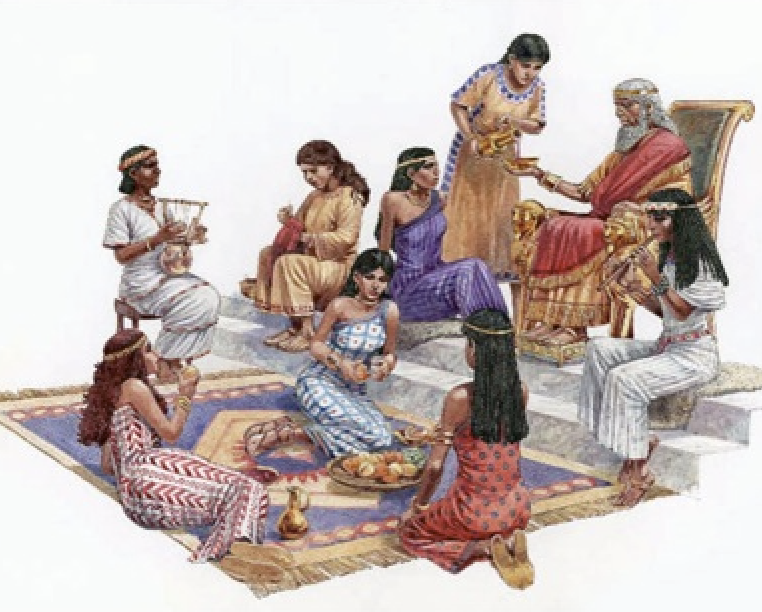
Polygamy has been opposed by Christianity throughout history but exists without dispute in lands dominated by the world’s second-largest religion, Islam. Most other nations make it a criminal offense. The United Nations Human Rights Commission expresses moral abhorrence and urges abolition, arguing that legal polygamy violates “the dignity of women.”

Indigenous religion that involves polygamy continues in some sectors of Africa. South Africa allows it not only for the Muslim minority but for those who maintain their traditional cultures, for example former President Jacob Zuma of the Zulu people, who has four wives. Modern India forbids polygamy even though it was part of Hindu tradition, but similarly allows it for Muslims.

In U.S. history, hostility was such that in 1856 the major pronouncement by the first convention of the newborn Republican Party declared that Congress must “prohibit in the territories those twin relics of barbarism, polygamy and slavery.”


Please respect our Commenting Policy