Scriptures

Crazy political stuff happening in churches right now, but which events get the elite ink?

Crazy political stuff happening in churches right now, but which events get the elite ink?

It’s that time, once again. It’s time for the mainstream press to be terrified of that fact that, for millions of Americans, the content of their religious beliefs frequently has implications for what happens inside voting booths on Election Day.

This happens all the time on both the Religious Left and the Religious Right, although it appears to be more common in sermons on the political left (click here for more on that from Baptist progressive Ryan Burge).

If you have any doubts about press concerns about this issue, see this recent collection of headlines from one of those daily Pew Research Center emails about religion in the news:

* Churches are breaking the law and endorsing in elections, experts say. The IRS looks the other wayProPublica

* Virginia pastor investigated for campaigning during church services — The Associated Press

* The senator-pastor from Georgia mixes politics and preaching on the trailThe New York Times

* Black church tradition survives Georgia’s voting changes — The Associated Press

* ‘We need to make America godly again.’ The growing political influence of Latino evangelicals — CNN

* Battle for Catholic vote inflames Pa. governor’s racePittsburgh Post-Gazette

Remember that GetReligion mantra: Politics is the true faith of most elite-newsroom professionals, who — functionally — believe that politics is the only answer If you want to get something done in the real world. Politics is real. Religion? Not so much. Thus, it is logical that religious faith is important to the degree that it affects politics.

Is the blue-zip-code press more worried about political influence on the conservative side of this equation? Of course, especially this soon after an earthquake like the fall of Roe v. Wade. I would also admit that, at the moment, the stunning rise of nondenominational, independent evangelical and Pentecostal churches has made it even harder for reporters to cover what is and what is not happening in the institutions that define conservative Christianity..

This brings me to that ProPublica investigation that hit social-media the other day: “Churches Are Breaking the Law by Endorsing in Elections, Experts Say. The IRS Looks the Other Way.


Please respect our Commenting Policy

Podcast: Much to learn in ongoing cases with cannabis church and yet another Christian baker

Podcast: Much to learn in ongoing cases with cannabis church and yet another Christian baker

A cannabis church (It’s California) keeps fighting for freedom of worship.

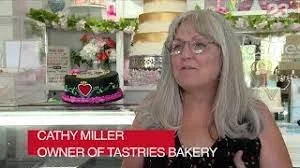
Another Christian baker wins what may be a temporary (It’s California) First Amendment victory in her fight to stay in business, even though she declined to create a one-of-a-kind, artistic wedding cake for a same-sex couple.

What connects these two stories? That was the topic at the heart of this weeks “Crossover” podcast (CLICK HERE to tune that in), which was recorded this week while I was on grandfather duty. This post is a day late because I’ve been driving back to East Tennessee and it’s really hard to write in a car in cross winds on the High Plains.

The connecting link in the podcast is the Religious Freedom Restoration Act of 1993 — or RFRA for short. This was a crucial piece of liberal (in the old sense of the word) church-state law backed by a stunningly broad coalition of religious and legal groups during the Bill Clinton administration. Try to imagine: There were only three “nay” votes in the U.S. Senate. Would that happen now? Clearly, the answer is “nay.’

These days, many reporters act as if “RFRA” was some kind of dirty, four-letter term that cannot be spoken in elite newsrooms. If you want some additional info on this syndrome, click here (“Covering a so-called 'religious liberty' story? Dig into religious liberty history”) or here (“Religious Left returns to RFRA: Washington Post explores a crucial Florida abortion showdown”).

The key is that RFRA doesn’t guarantee a victory for citizens who claim that their First Amendment rights have been violated. RFRA states that people have a right to argue that case and that — following some guidelines that have developed over the years — courts have to take these arguments seriously.

So let’s start with this Religion News Service headline: “Shuttered cannabis church takes fight to reopen to California Supreme Court.” Here’s the overture:

A cannabis church in Southern California — which was shut down by the county of San Bernardino over accusations it was illegally functioning as a dispensary — is taking its fight to reopen to the state Supreme Court, arguing that it uses cannabis for religious healing.


Please respect our Commenting Policy

FitzSimons Allison: Bookish Episcopal bishop who dared to say 'apostasy'

FitzSimons Allison: Bookish Episcopal bishop who dared to say 'apostasy'

It has been three decades since the Rt. Rev. C. FitzSimons Allison took his first step away from his life as one of the Episcopal Church's strongest evangelical voices.

That tentative move took place in a small-group discussion during an Episcopal House of Bishops meeting in Kanuga, N.C., during his final year serving as the 12th bishop of the historic Diocese of South Carolina. The topic that day was, "Why are we dysfunctional?"

Allison attacked Episcopal priests and seminary professors who were openly proclaiming their faith in an ancient, erotic, divine spirit "older and greater" than the God of the Bible. There was, Allison said, a clear, ancient word for that -- "apostasy."

Other bishops said they had no problem accepting clergy who were testing the boundaries of ancient Christian doctrines.

After that clash, Allison remained in his pew and declined to share the consecrated bread and wine during a Holy Eucharist with the entire House of Bishops. He didn't publicly discuss this act of broken Communion for several years, but his silent protest was a poignant symbol of early cracks forming in the global Anglican Communion.

Now the 95-year-old bishop has officially resigned his status as an Episcopal bishop, making his departure official. Two weeks ago, he wrote U.S. Presiding Bishop Michael Curry to clarify that he had been received into the Anglican Church in North America -- a body recognized as valid by many Anglican bishops in Africa, Asia and the Global South, but not by the Archbishop of Canterbury or leaders in the U.S. Episcopal Church.

"Some people said that I didn't need to do this, because everyone knows where I stand," said Allison, reached by telephone. "But I felt, the way things have been going, that I still needed to make things official. That's just the way I am."


Please respect our Commenting Policy

Doctrine and fashion: As Iran protests persist, what women's clothing does Islam require?

Doctrine and fashion: As Iran protests persist, what women's clothing does Islam require?

THE QUESTION:

As Iran protests persist, what women’s clothing does Islam require?

THE RELIGION GUY’S ANSWER:

The facts are these. On September 13, Iran’s morality police arrested 22-year-old Mahsa Amini for violating the legally required Muslim dress code for women. She was wearing the mandatory head scarf (hijab), but apparently it did not correctly conceal all of her hair. Three days later, Amini died while still in police custody. The government blames a heart attack, but suspicions that she was abused run rampant.

In the spontaneous uproar that resulted, refusal to wear the hijab became a symbol of resisting oppression as protests across the nation targeted not only restrictions for women but expressed over-all rejection of the harsh theocratic regime that has ruled revolutionary Iran the past 43 years. At this writing, at least 200 Iranians have reportedly been killed and 1,500 demonstrators arrested.

Azadeh Moaveni of New York University wrote in The New York Times that resentment boiled over in part because women in Tehran’s wealthy and politically-connected elite flagrantly ignore the Muslim dress laws without arrest.

There’s always been vigorous discussion of the complexities about exactly what attire is properly modest and thus faithful to Islam.

Responding to events in Iran, Deina Abdelkader at the University of Massachusetts Lowell contends that clothing rules “have nothing to do with Islamic tenets” while Muslim countries have imposed — or forbidden — forms of women’s attire in order to proclaim their ideology, whether secular or scrupulously religious.

Islam’s fundamental concern here is not unique, since religions normally advocate modesty and propriety. In particular, Jewish tradition associates attire as part of a general admonition in the Torah (Deuteronomy 23:15, JPS translation): “Let your camp be holy; let Him [God] not find anything unseemly among you and turn away from you.”


Please respect our Commenting Policy

Podcast: 'Culture Wars' again, as Muslims protest LGBTQ advances in public schools

Podcast: 'Culture Wars' again, as Muslims protest LGBTQ advances in public schools

If you read newspapers or magazines in America, you have heard the term “culture wars.”

If you have read GetReligion for any time at all, then you probably know that, in the work of sociologist James Davison Hunter, the term “culture wars” was given a very specific definition that rarely shows up in news coverage.

In the early 1990s, Hunter published a bestseller entitled, “Culture Wars: The Struggle To Control The Family, Art, Education, Law, And Politics In America.” The term leapt into news jargon and, as often happens, it became totally politicized.

What was Hunter talking about? Hold that thought, because we will come back to it. We will need to apply it to a story that’s in the news right now, a story that many will describe as a “culture wars” fight. We discussed all of this during this week’s “Crossroads” podcast (CLICK HERE to tune that in).

Let’s start with this local headline from the Detroit Free Press: “LGBTQ and faith communities struggle for unity in Dearborn, Hamtramck.” What we have here is one of those stories in which conservative religious parents are making a stand in protest LGBTQ education efforts — and some other gender trends — in their local schools.

Sound familiar? But there’s a twist. This time, the evangelical Protestants have what journalists clearly consider some unlikely parters. Here is the (long) overture to the Detroit story, which went national:

The protest began with a prayer.

On a Sunday afternoon last month in Dearborn, Nagi Almudhegi took the stage to address the crowd gathered outside Henry Ford Centennial Library to demonstrate against some LGBTQ books in Dearborn Public Schools' libraries.

"I'd like to start off first of all with a prayer," Almudhegi said. "And I'm going to read, recite the chapter on Fatiha (opening of Quran) in Arabic and then I will read the English translation."

As he spoke, some in the crowd held up signs denouncing books and educational materials in the public schools that they believe are too explicit for children.


Please respect our Commenting Policy

Bobby Ross, Jr., tweets and tweets and tweets bonus coverage of that new SBC president

Bobby Ross, Jr., tweets and tweets and tweets bonus coverage of that new SBC president

Just a note from tmatt, even though the byline on this piece says Bobby Ross, Jr.

There’s a good reason for that.

The Rev. Bart Barber has certainly been in the news, of late — “Yes, Southern Baptists are talking about '60 Minutes' (while Ryan Burge keeps doing the math)” — and, as it turns out, chart-master Ryan Burge wasn’t the only GetReligionista who has been talking with him or about him.

Bobby wrote a profile piece on Barber the other day for the Associated Press (this has been happening more often, methinks) and, as it turns out, he had material left over from that interview that he put in lots, and lots, and lots of tweets.

A Bobby Ross tweetstorm?

You got it.

All of these short punchy sentences, in Ross style, means it’s time to let the tweet-storm begin.

Roll tweets, in this bonus Ross piece.

Ready?


Please respect our Commenting Policy

Loretta Lynn's reality: Gospel truth mixed with rhinestone feminism in the real world

Loretta Lynn's reality: Gospel truth mixed with rhinestone feminism in the real world

On many Sundays, Loretta Lynn sent her social-media followers a thought for the day from Scripture.

Two days before her death at her ranch in Hurricane Mills, Tenn., the 90-year-old country-music legend posted two verses, repeating the second verse to stress her point.

Lynn's final Instagram post said: "Everyone who does evil hates the light, and will not come into the light for fear that their deeds will be exposed. But whoever lives by the truth comes into the light, so that it may be seen plainly that what they have done has been done in the sight of God. John 3:20-21"

The feisty superstar experienced plenty of darkness and light and shared the gritty details in a career that changed the role of women in Nashville. Lynn was raised poor in the Kentucky hills and spent years in church pews before she started singing in honky-tonks. Her husband Oliver "Dolittle" Lynn struggled with alcoholism, but they stuck together in a union that inspired songs about love and loyalty, as well as break-ups and fist fights, such as "Don't Come Home A-Drinkin' (With Lovin' On Your Mind)."

Lynn vowed to tell the truth about both sides of her life. She loved to sing hymns and gospel music, while critics hailed the rhinestone feminism of her hits such as "You Ain't Woman Enough," "The Pill," "Rated X" and "You're Looking at Country."

In her "Coal Miner's Daughter" memoir, Lynn described her faith journey: "I believed it all, but for some reason, I was never baptized. After I started in music, I got away from going to church and reading the Bible. I believe I was living the way God meant me to, but I wasn't giving God the right attention."

In that same 1976 memoir, she added: "I'm trying to lead a good Christian life, especially since I got baptized two years ago. So there ain't too much spicy to tell about me -- just the truth." Christian Chronicle editor Bobby Ross, Jr., noted that she later added a strong kicker to that: "Nobody's perfect. The only one that ever was, was crucified.”

Anyone who explored the details of Lynn's life and music knew that she wasn't a good fit in the "elite feminist establishment" or among advocates of a "status-quo idea of domesticity," noted Russell Moore, Christianity Today's editor in chief.


Please respect our Commenting Policy

Politicos and Scripture: What does biblical religion teach about forgiving loans?

Politicos and Scripture: What does biblical religion teach about forgiving loans?

THE QUESTION:

What does biblical religion teach about forgiving loan debts?

THE RELIGION GUY’S ANSWER:

President Joe Biden’s pre-election executive order to limit or erase college students’ loan debts is still in the news this week. The non-partisan Congressional Budget Office issued its “highly uncertain” estimate that the plan will cost at least $420 billion, the first federal lawsuits filed against it argued that only Congress can legally enact spending, and the Department of Education scaled back the numbers who get this benefit.

The president claims the power to bypass Congress under the “HEROES Act,” passed after the 9/11/01 attacks, which allows forgiveness in case of a “military operation or national emergency.” Biden interprets the COVID pandemic as such an emergency; critics call that a stretch.

Biden says that now “people can start to finally crawl out from under that mountain of debt to get on top of their rent and their utilities, to finally think about buying a home or starting a family or starting a business.” But a Wall Street Journal editorial considered cancellations “unfair to Americans who repaid their loans or didn’t go to college” and accused Biden of “the biggest executive usurpation of Congress in modern history.”

As all this plays out, does the Bible, which has so long shaped moral judgments on public policy, have anything to say on such matters?

Liberal Protestant blogger John Pavlovitz chided Christians who oppose Biden, saying they ignore that “their entire professed religion is based on the idea of a cancelled debt. Way to lose the plot, kids.”

Podcaster Allie Beth Stuckey responded for World magazine that “the debt is sin, and Jesus, God made flesh, voluntarily paid it on our behalf through his death on a cross” so that “we are reconciled to God forever.”

One wording of history’s most-recited prayer asks God to “forgive us our debts as we forgive our debtors.”


Please respect our Commenting Policy

AP covers the new Pentecost in United Methodist life, without mentioning Ms. Penny Cost

AP covers the new Pentecost in United Methodist life, without mentioning Ms. Penny Cost

As I have stressed many times, I totally understand the challenges that religion-beat professionals face when attempting to do short, balanced, accurate hard-news stories about the 40 years of warfare inside the United Methodist Church over issues of marriage, sex, biblical authority and some core Christian doctrines about salvation and Christology.

I understand because I have been covering this story since my arrival at the old Rocky Mountain News (#RIP) back in 1983, with the church-discipline case of an openly gay UMC pastor, the Rev. Julian Rush. The progressive Rocky Mountain Annual Conference backed Rush and, well, the rest is history.

The biggest challenge in this story is helping readers understand why the Methodists who are defending the UMC Book of Discipline have decided to hit the exit doors, even though they have — for several decades — been winning the key votes at the global level of the denomination.

The problem is that the church establishment here in North America is actually running the show and the center-left leaders want to tweak the Discipline to allow more freedom for doctrinal progressives, while assuring mainstream Methodists that nothing will change at the local level unless their congregation wants it to change. See this recent post: “Why are United Methodists at war? Readers need to know that sexuality isn't the only fault line.”

The Associated Press recently shipped a long feature that tries To Explain It All, and there is much to praise in this piece. Here is the stating-it-mildly headline: “United Methodists are breaking up in a slow-motion schism.” Here is a long, long, essential piece of this feature that shows the complexity of these issues:

In annual regional gatherings across the U.S. earlier this year, United Methodists approved requests of about 300 congregations to quit the denomination, according to United Methodist News Service. Special meetings in the second half of the year are expected to vote on as many as 1,000 more, according to the conservative advocacy group Wesleyan Covenant Association.

Scores of churches in Georgia, and hundreds in Texas, are considering disaffiliation. Some aren’t waiting for permission to leave: More than 100 congregations in Florida and North Carolina have filed or threatened lawsuits to break out.

Those departing are still a fraction of the estimated 30,000 congregations in the United States alone, with nearly 13,000 more abroad, according to recent UMC statistics.

But large United Methodist congregations are moving to the exits, including some of the largest in Arkansas, Georgia, Louisiana, Oklahoma and Texas.

The flashpoints are the denomination’s bans on same-sex marriages and ordaining openly LGBTQ clergy — though many see these as symptoms for deeper differences in views on justice, theology and scriptural authority. The denomination has repeatedly upheld these bans at legislative General Conferences, but some U.S. churches and clergy have defied them.


Please respect our Commenting Policy