Scriptures

Loretta Lynn: A tough, trailblazing woman whose edgy art included doses of grit and faith

Loretta Lynn: A tough, trailblazing woman whose edgy art included doses of grit and faith

If you know Nashville, then you probably know that there is nothing new about major country music stars also being Christian believers. In fact, it’s probably worthy of a headline or two if and when superstars send signals that they’re NOT at home in the Bible Belt.

That being said, I am still amazed when journalists produce stories about country artists and edit out the details in their lives and music that point toward faith. It happens all the time.

I’m not just talking about musicians putting a gospel song or two in their set lists when touring, as a kind of music-history exercise. I’m talking about reporters missing revelations in autobiographies, social-media statements to fans or mini-sermons on stage. I’m talking about passing up chances to talk with pastors who have known performers for years.

This brings me to the death of honky-tonk angel herself, Loretta Lynn — the matriarch for a generation or more of female artists in guitar town. As you would expect, the obits following her death stressed — with good cause, let me stress — her daring hit songs about blue-collar American life, with strong doses of reality about hard times, troubled homes, cracked marriages and lots of other sobering subjects.

Which is why, to cut to the chase, it’s even more important that this legend turned to Christian faith as an adult, in the midst of all that gritty stuff. Hold that thought. Here is a chunk of the Associated Press report that will appear in most American newspapers:

The Country Music Hall of Famer wrote fearlessly about sex and love, cheating husbands, divorce and birth control and sometimes got in trouble with radio programmers for material from which even rock performers once shied away.

Her biggest hits came in the 1960s and ’70s, including “Coal Miner’s Daughter,” “You Ain’t Woman Enough,” “The Pill,” “Don’t Come Home a Drinkin’ (With Lovin’ on Your Mind),” “Rated X” and “You’re Looking at Country.” ...

Lynn knew that her songs were trailblazing, especially for country music, but she was just writing the truth that so many rural women like her experienced.

“I could see that other women was goin’ through the same thing, ‘cause I worked the clubs. I wasn’t the only one that was livin’ that life and I’m not the only one that’s gonna be livin’ today what I’m writin’,” she told The AP in 1995.

All true.

Please respect our Commenting Policy

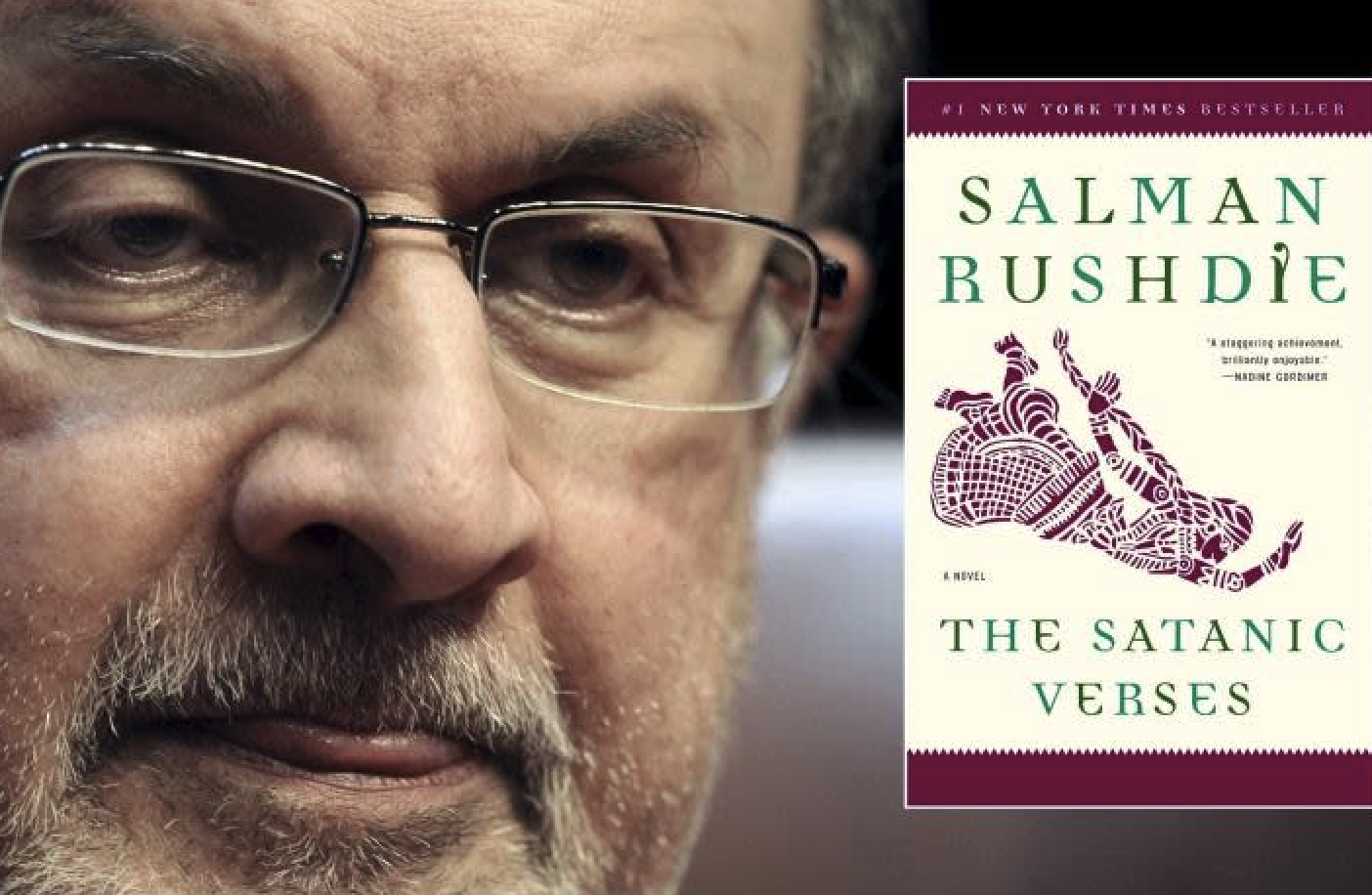
In Islamic tradition, what is a fatwa? Why the demands to kill novelist Salman Rushdie?

In Islamic tradition, what is a fatwa? Why the demands to kill novelist Salman Rushdie?

THE QUESTION:

In Islam, what is a fatwa? Why the demand to kill novelist Salman Rushdie?

THE RELIGION GUY’S ANSWER:

In 1989, the Ayatollah Ruhollah Khomeini, Iran’s theocratic ruler, ordered the assassination “without delay” of novelist Salman Rushdie because of his novel “The Satanic Verses.” Remarkably, this official fatwa imposed the duty of freelance killing in the name of God upon masses of Muslim believers in all nations, and also demanded death for the editors and publishers involved with the book.

Three decades later, a Lebanese-American stands accused of attempting to murder Rushdie by repeated stabbings onstage at New York’s Chautauqua Institution. The author suffered severe injuries but survived. Though the Muslim Council of Britain condemned the attack, the Iranian regime’s Kayhan newspaper dispatched “a thousand bravos” to “the brave and dutiful” assailant while militants in other Muslim lands celebrated. We’ll see what prosecutors and defense attorneys finally say about links between Iran’s fatwa of death and the sensational bloodshed.

Rushdie’s complex fantasy had dream sequences in which depraved enemies of Islam — not the author himself — complain about moral absolutism and treatment of women and demean the Prophet Muhammad’s wives and closest Companions. They also challenge the divine inspiration of the Quran. A Wall Street Journal op-ed correctly noted that the far greater threat to the Quran is the revisionist theorizing on its origins by the late John Wansbrough at the University of London.

The Rushdie novel resulted in book-banning and riots in the Muslim world, and the famous fatwa sent Rushdie into hiding for years. In 1998, Iran’s president declared the case “finished” during diplomatic efforts, but the regime did not actually abolish the fatwa. It was reaffirmed by Khomeini’s successor as Supreme Leader in 2017, and re-published on a government Web site five days before the Chautauqua stabbing. During the past decade, Iranian groups have pledged to pay a $3.9 million bounty to anyone who slays Rushdie.


Please respect our Commenting Policy

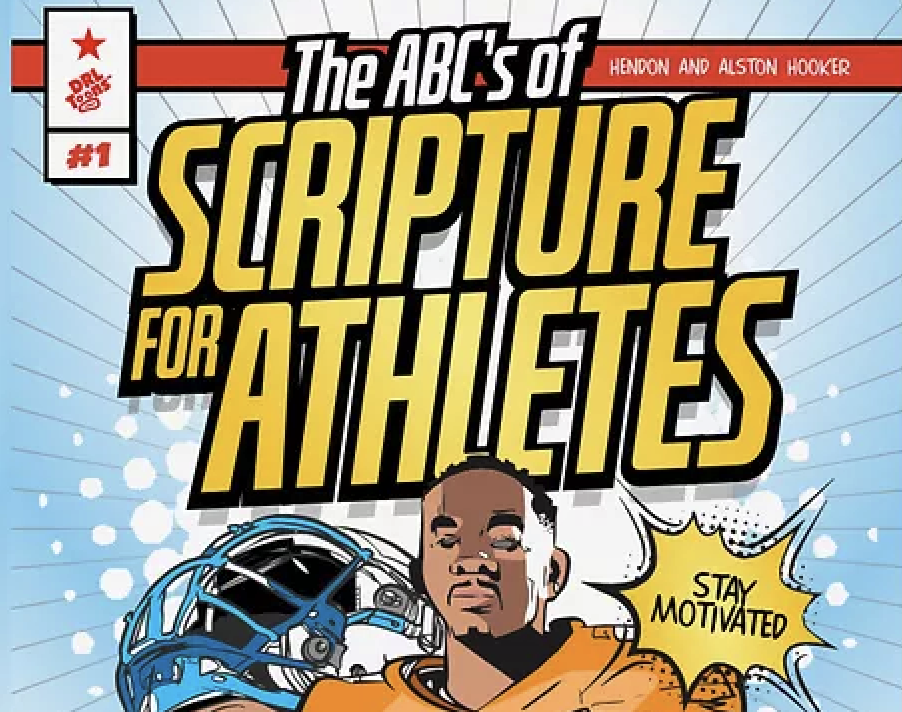
It's hard to miss the facts about faith, and scripture, in Tennessee QB Hendon Hooker's life

It's hard to miss the facts about faith, and scripture, in Tennessee QB Hendon Hooker's life

This post has nothing to do with the game in which the University of Tennessee Volunteers hung on to defeat the Gators of the University of Florida (click here for highlights).

Well, there is some connection. But the goal here is, once again, to urge sports journalists to listen to what many athletes have to say when asked questions about what makes them tick — as people and as leaders in their sports communities. I’ve written a hundred or so posts (it seems) on this subject during the past 18 years or so.

Consider this a refresher memo on that topic, since Vols senior quarterback Hendon Hooker — after the post-game shows this past weekend — has officially entered the Heisman Trophy chatter zone.

In this case, Hooker isn’t the stereotypical athlete who uses vague God-talk during sideline interviews or in his post-game press conferences. While that kind of language can be important, I have always thought that journalists need to look for deeper signs of faith — in friendships, family ties and concrete actions in daily life.

Thus, let me note a story of two in East Tennessee media that spotted crucial faith facts about this calm, steady quarterback and worked them into a sports-page basic — the pre-game rituals feature. The headline at the Knoxville News Sentinel read: “How Hendon Hooker will calm his nerves before Tennessee football plays Florida.” The faith issue even made it into the overture:

Neyland Stadium will be rocking before Tennessee football plays Florida … , but Hendon Hooker will go into slow-jam mode and lean on his faith.

ESPN’s College Gameday will rev up the crowd. Checker Neyland will create quite a scene. And the sellout crowd will shake the stadium moments before the Vols run through the Power T.

A few lines later there is this basic quote:

“I just go into meditation mode and put my gospel playlist on,” Hooker said Monday. “I really just listen to a lot of slow jams and really just relax. I kind of go through the locker room and dap up everyone, just to make sure that I’m ready to roll. And they give me the reassurance back by the look in their eyes that they’re ready to roll too.”


Please respect our Commenting Policy

DeSantis as 'culture warrior' or theocrat: Coverage depends on a newsroom's worldview

DeSantis as 'culture warrior' or theocrat: Coverage depends on a newsroom's worldview

A Republican politician with presidential aspirations visits a Christian college. What happens next, in terms of the way the event is covered by the mainstream press, is predictable — during this era of niche news, with stories written to appeal to the beliefs of specific political flocks.

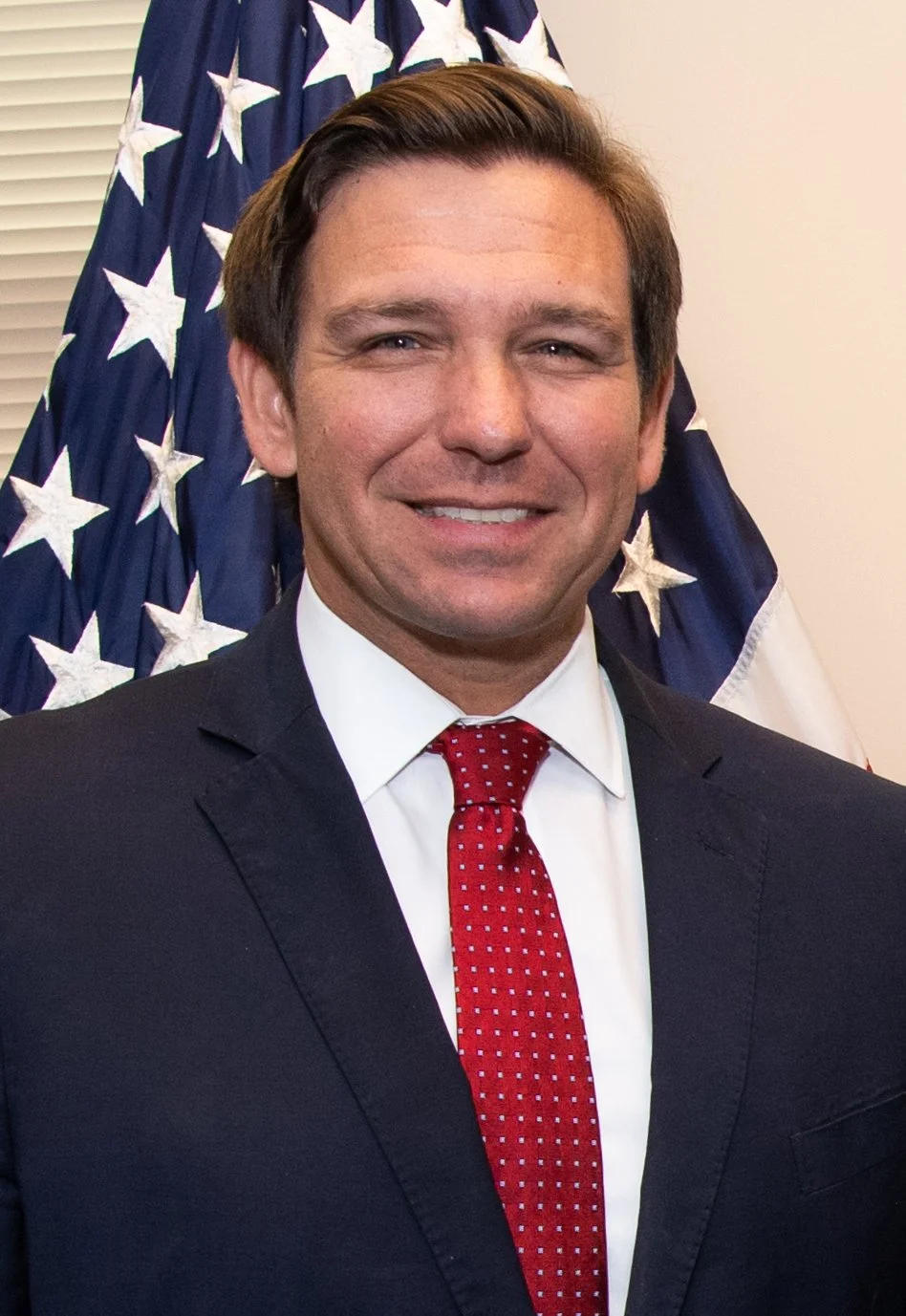
The politician in question is Florida Gov. Ron DeSantis and the school is Hillsdale College in Michigan. The visit took place this past February and was used as an example in a recent Miami Herald article of DeSantis’ mingling of faith and politics.

This is how the paper opens its Sept. 13 piece:

While visiting a private Christian college in southern Michigan that wields influence in national politics, Gov. Ron DeSantis rephrased a biblical passage to deliver a message to conservatives.

“Put on the full armor of God. Stand firm against the left’s schemes. You will face flaming arrows, but if you have the shield of faith, you will overcome them, and in Florida we walk the line here,” DeSantis told the audience at Hillsdale College in February. “And I can tell you this, I have only begun to fight.”

The Republican governor, a strategic politician who is up for reelection in November, is increasingly using biblical references in speeches that cater to those who see policy fights through a morality lens and flirting with those who embrace nationalist ideas that see the true identity of the nation as Christian.

That’s followed by the thesis:

He and other Republicans on the campaign trail are blending elements of Christianity with being American and portraying their battle against their political opponents as one between good and evil. Those dynamics have some political observers and religious leaders worrying that such rhetoric could become dangerous, as it could mobilize fringe groups who could be prone to violence in an attempt to have the government recognize their beliefs.

The article has no problem finding experts who warn of impending danger.


Please respect our Commenting Policy

Podcast: What will Queen Elizabeth II tell the world about her faith with her funeral liturgy?

Podcast: What will Queen Elizabeth II tell the world about her faith with her funeral liturgy?

This week something unexpected happened after I filed my national “On Religion” column, something that I have never seen before in my decades of religion-news work.

What? A retired literature professor responded to my column with a poem.

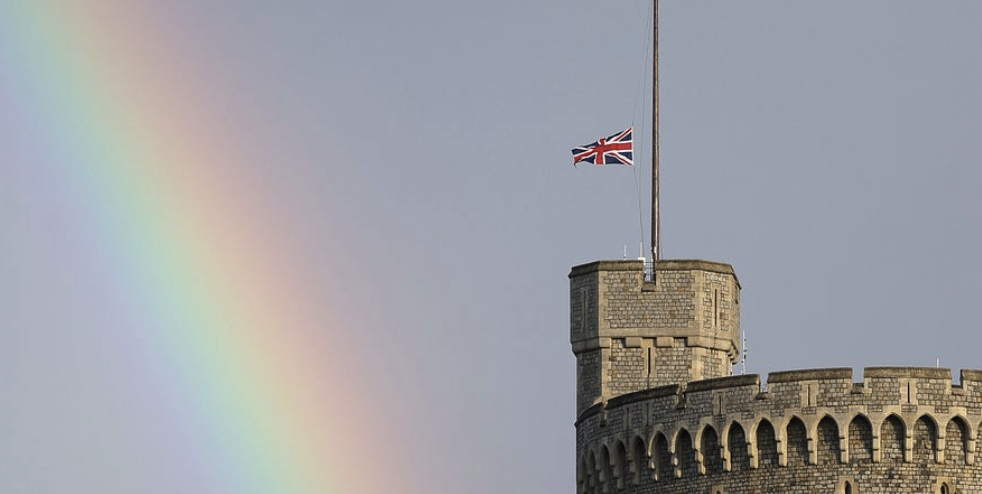
The topic was easy to predict. Like millions of other people around the world, but especially in Great Britain and the Commonwealth, I have spent many hours watching (primarily on British television) the rites and public drama surrounding the death of Queen Elizabeth II.

I will post the column at GetReligion at the usual time this weekend, after it has run in most newspapers linked to the Universal syndicate. But the podcast team decided to go ahead and use it as the hook for this week’s “Crossroads” (CLICK HERE to tune that in), since so many people are talking about the death of the queen. Here is a short clip from that column:

Throughout her life, Queen Elizabeth II understood the symbolic importance of kneeling, according to former Durham Bishop N.T. Wright. After one Church of England synod, she privately expressed surprise — disappointment, even — that worshippers in Westminster Abbey simply lined up to receive Holy Communion, instead of kneeling.

“Kneeling was important to her,” said the popular author, in a “Premier Christianity” tribute. In his encounters with her, Wright found the queen “very friendly and clearly a very devout, what we would consider ‘old fashioned’ Church of England Christian. I remember thinking during more than one Christmas broadcast, she has just preached the Gospel to the nation in a way that perhaps nobody else could have done.”

In response to the column, a reader raised in Canada — but best known for his work at Baylor University in Texas and at Peking University — wrote a poem and sent it to me.

David Lyle Jeffrey, now a distinguished senior fellow at Baylor’s Institute for Studies in Religion, noted that he has never considered himself a “royalist,” but the queen’s death is certainly a time to explore the “essence of her admirable Christian character and gracious reign.” The former Baylor provost and literature professor entitled the poem “Regina Exemplaris (An exemplary queen).” Here is how it ends:


Please respect our Commenting Policy

Podcast: New York Times talks to a Catholic 'star' and (#triggerwarning) things went OK

Podcast: New York Times talks to a Catholic 'star' and (#triggerwarning) things went OK

It isn’t everyday that I get emails from Catholic readers, of one tribe or another, praising a New York Times article, especially one in which a Catholic leader is asked tough questions about some controversial points of doctrine.

That’s strange, in a sad kind of way. This phenomena was almost worth a “Crossroads” podcast in and of itself (CLICK HERE to tune that in).

But there are other worthwhile reasons to discuss the New York Times Magazine feature that ran with what was clearly meant to be a grabber headline: “A Catholic Podcasting Star Says Theocracy Is Not the Way.”

Yes, yes, we all know that there are armies of Catholics out there who believe that this diverse and rapidly secularizing nation can be turned into some kind of Catholic or ecumenical Christian theocracy. Try to imagine either of those political options in a culture dominated by Big Tech, Big Academia and Hollywood.

Before we get to the “theocracy” discussion, let’s note the identity and the credentials of the priest featured in this interview. In the end, we want to know: Why was this priest able to emerge relatively unscathed by this dance with the Gray Lady, to the degree that many Catholics were pleased with this encounter? Here is some of the introduction:

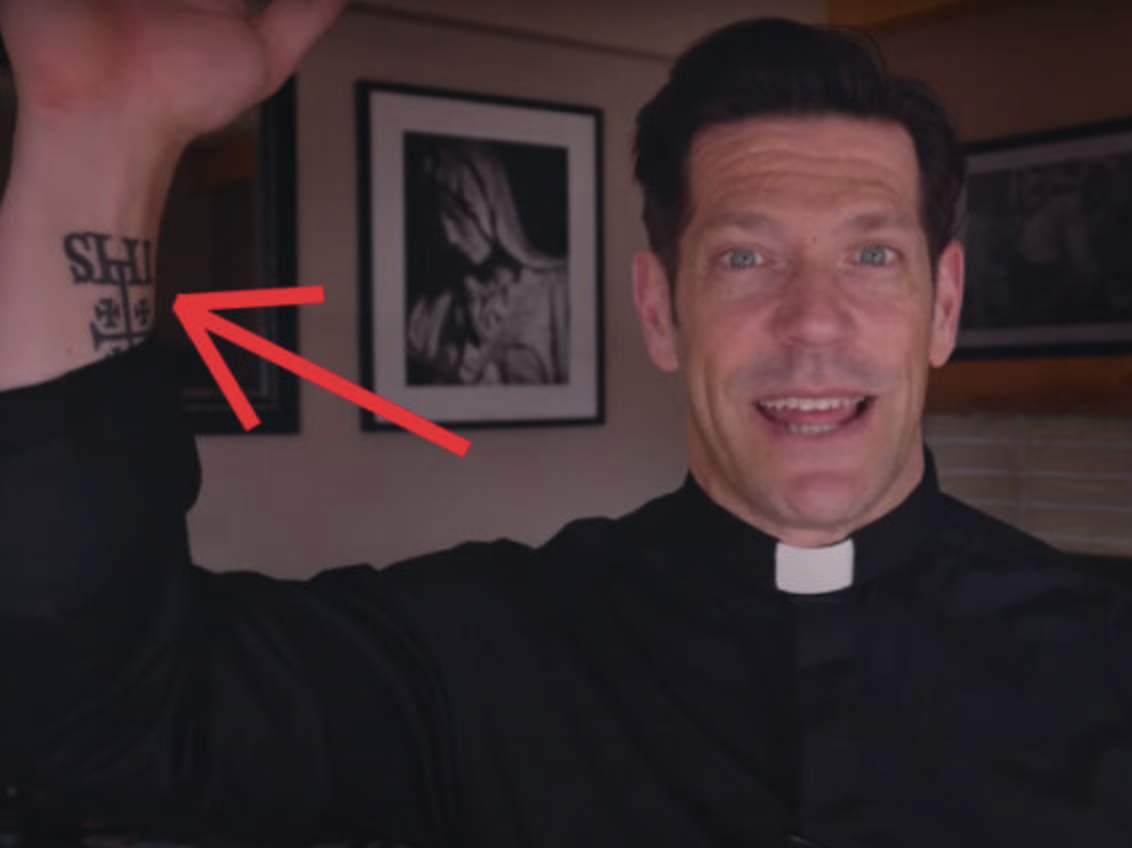
Since it was introduced by the Catholic priest Mike Schmitz, who goes by Father Mike, in January 2021, the little-heralded “The Bible in a Year (With Fr. Mike Schmitz)” has been the most popular Apple religion podcast for a majority of 2021 and 2022 and has even, on two occasions, reached the No. 1 spot among all podcasts on Apple’s platform. The show has been downloaded 350 million times and an average of 750,000 times a day.

That’s credibility, in our tech-defined world — even to Times-people. Let’s continue:

Each 20-to-25-minute installment … features two or three short scriptural readings and a pithy reflection by Father Mike, an affable 47-year-old Midwesterner whose upbeat and self-deprecating manner — not to mention regular-guy good looks — exude strong Ted Lasso vibes. The staggering success of the podcast has helped turn its host, whose day job is as a chaplain at the University of Minnesota Duluth and the director of the youth ministry for the Duluth diocese, into a kind of celebrity. He travels the country giving speeches, and some of his YouTube videos have racked up millions of views.

Now, on to the content that provided that click-bait headline for faithful New York Times readers.


Please respect our Commenting Policy

Sam Harris take jab at those who believe in heaven: Maybe listen to some ancient voices?

Sam Harris take jab at those who believe in heaven: Maybe listen to some ancient voices?

When cosmonaut Yuri Gagarin returned to earth in 1961, after the first manned spaceflight, Soviet leaders claimed he said: "I went up to space, but I didn't encounter God."

Venturing into similar territory, superstar atheist Sam Harris rocked cyberspace during a recent Triggernometry YouTube appearance in which he discussed Donald Trump, faith elements in "wokeness" and the flocks of Americans who insist on believing in heaven.

Political Twitter screamed when he said there was "a left-wing conspiracy to deny the presidency to Donald Trump. … Absolutely, but I think it was warranted."

But comedians Konstantin Kisin and Francis Foster pushed back, asking if Harris was justifying moral relativism. Perhaps today's truth wars, the Triggernometry team suggested, were linked to a famous G.K. Chesterton quip: "When men choose not to believe in God, they do not thereafter believe in nothing, they then become capable of believing in anything."

During the ensuing discussion, Harris offered another viral soundbite: "Where is heaven, exactly, given that we have multiple telescopes up there beaming back tens of billions of years' worth of information?" Yet millions of Americans still embrace the supernatural claims of an ancient faith, including that Jesus will return to "raise the living and the dead."

"You'd be surprised by the number of percent of sober, non-Bible-thumping people who would say 'yes' to that question," he said. "They might be Christian, they might be, listen, 'I love the Bible. It gives me a great moral framework. It gives my kids a great moral framework. This is the tradition I'm identified with. This is all super important to me' -- but that's kind of as far as it goes. Right? Like, I'm not going to make magical claims about flying saviors who are literally going to come down from … heaven."

While the Twitter masses raged, the French-Canadian iconographer and writer Jonathan Pageau recorded a video essay on his "The Symbolic World" channel about why materialists and religious believers keep debating the meaning of terms such as "heaven" and "earth."


Please respect our Commenting Policy

Old debates behind the new headlines: What does the Bible teach about abortion?

Old debates behind the new headlines: What does the Bible teach about abortion?

THE QUESTION:

What does the Bible teach about abortion?

THE RELIGION GUY’S ANSWER:

This question is raised by the assertion that the Bible “says nothing about abortion.”

So writes Melanie Howard, a scripture scholar at Fresno Pacific University, a Mennonite Brethren campus self-defined as both “evangelical and ecumenical” that “embodies Christ-centered values.” Her July 25 article titled “What the Bible actually says about abortion may surprise you” for TheConversation.com was widely distributed to Associated Press and Religion News Service clients under the three outlets’ cooperative agreement.

Later in the article, Howard is more precise, explaining correctly that though abortion was known and practiced in biblical times it “is not directly mentioned” in scripture. True, but there’s more to be said about how the Bible views unborn human lives.

The biblical passage that applies most specifically is Exodus 21:22-23, which involves miscarriage but was extended to the abortion issue by ancient rabbis. It states that if a pregnant woman is hit accidentally “when men fight” and “a miscarriage results,” the person responsible pays a negotiated fine. But “if other damage results” (understood to be the woman’s death), then the “life for life” principle requires the death penalty. (This Memo uses the 1999 JPS translation throughout).

The Jewish Study Bible (2nd edition, 2014) presents the faith’s understanding from ancient times that this passage means “abortion is permitted when necessary to save the mother.” Today, even pro-life conservative Christians mostly agree with that. Due to this passage, Judaism also teaches that “feticide is not murder” because the unborn life is not yet regarded as fully a person. Over the centuries, authoritative “responsa” from rabbis issued varied opinions on allowing abortions in specific circumstances.

Otherwise, one Christian website lists 100 Bible passages said to bear on abortion.


Please respect our Commenting Policy

What will American Protestantism look like after the wars inside the 'Seven Sisters' are done?

What will American Protestantism look like after the wars inside the 'Seven Sisters' are done?

Over decades, the map of U.S. Protestantism has been redrawn by splits over the authority and interpretation of the Bible that eventually focused on the LGBT dispute. Now we have a major case study that journalists will need to cover at the local, regional, national and global levels.

A balanced coalition of leaders in the large United Methodist Church (UMC) developed a treaty for mutually respectful separation — the Reconciliation and Grace Through Separation protocol — for that’s currently degenerating into a wasteful fight like other groups have suffered.

Reporters and concerned readers will want to dive into these commentaries and news stories:

* Look at a United Methodist timeline: Why are conservatives going nuclear with lawsuits?

* What happened to United Methodists’ proposal to split the denomination?

* Time is Running Out for Traditionalist United Methodists!

* For United Methodists, the center is not holding

* Special sessions of United Methodist annual conferences 2022

* United Methodist Church bishops mount defense amid conservative attacks (paywall protected)

* Liberal Bishops Have Redefined United Methodist Polity

The current maneuvers by the North American UMC establishment may well limit the number of dropouts joining the Global Methodist Church. Its vision has been to unite a million or more U.S. Methodist evangelicals with the growing Methodist churches in Africa and Asia, creating an effective and innovative international denomination dedicated to defending current Methodist doctrines. This could help counteract some U.S. conservatives’ drift into Christian nationalism. Is that still feasible?


Please respect our Commenting Policy