Scriptures

Dramatic story of Kyrgyz Christian swept up in China's Uyghur repression gets very little ink

Dramatic story of Kyrgyz Christian swept up in China's Uyghur repression gets very little ink

In all the stories about Ukraine and the genocide/war happening there, it’s easy to forget the other genocide going on in western China.

A number of weeks ago, Axios.com published a short about China’s “crime’s about humanity” there, particularly against the more than 1 million Muslims who are imprisoned in this 21st century gulag.

Lost in the details of this story is a second angle that would be of great interest to lots of readers in the United States and elsewhere — that Christians too have been caught up in the dragnet.

A Christian Chinese national who spent 10 months in a Xinjiang detention camp has arrived in the United States after months of behind-the-scenes lobbying by U.S. lawmakers, human rights activists and international lawyers.

Why it matters: The man, Ovalbek Turdakun, will provide evidence that international human rights lawyers say is vital to the case they have submitted to the International Criminal Court (ICC) prosecutor arguing that China has committed crimes against humanity in Xinjiang.

Here are several crucial details in this overlooked story:

* Ovalbek and his wife and child were authorized to enter the U.S. on significant public benefit parole, which permits entry for special purposes such as testifying in a proceeding, but does not grant immigration status, because of the value of the testimony they are expected to give. Ovalbek crossed the borders of several Asian countries to get out, finally landing at Dulles Inernational Airport on April 8. Thus:

The big picture: Ovalbek Turdakun is a unique witness to Chinese government repression in Xinjiang, according to international lawyers, U.S. officials and others with knowledge of the case.


Please respect our Commenting Policy

Was Jesus a socialist? Concerning the 'rich young ruler' and modern economics

Was Jesus a socialist? Concerning the 'rich young ruler' and modern economics

THE QUESTION:

Was Jesus a Socialist?

THE RELIGION GUY’S ANSWER:

Well, no. For one thing, that term, as with rival capitalism, pertains to modern industrialized society.

The 1st Century economy consisted mostly of hand-to-mouth subsistence agriculture, along with fishermen, small-time merchants, individual craftsmen and a tiny class of wealthy overlords. But the question above was posed this month by a Wall Street Journal column, so let’s briefly scan a few aspects of Christianity and economics.

Those familiar with the New Testament will immediately think of the incident between Jesus and the “rich young ruler” recorded in three of the four Gospels (here we’ll follow Luke 18:18-27 in the RSV translation).

The ruler asks Jesus, “What shall I do to inherit eternal life?” Jesus recites several of the Ten Commandments that are to be obeyed. The ruler replies that he has done this since his youth. Jesus then tells him “one thing you still lack. Sell all that you have and distribute to the poor, and you will have treasure in heaven; and come, follow me.” The ruler “became sad, for he was very rich.”

Jesus then observes, “How hard it is for those who have riches to enter the kingdom of God! It is easier for a camel to go through the eye of a needle,” but he concludes, “What is impossible with man is possible with God.”

You can have some fun checking out commentaries on this passage online or in your local library. Softening the force of Jesus’ words (a bit too easily?), Bible experts often say this was a unique saying for one individual who was perhaps stingy and had set his heart too much on his wealth while neglecting God’s priority, that He be served through service to his needy people.

Whatever the ruler ended up doing with his wealth, we are familiar with Catholic men’s and women’s orders where those who join take voluntary vows of poverty and keep only minimal personal possessions, and the same in Buddhism.


Please respect our Commenting Policy

Alongside abortion, don't neglect the Supreme Court's big school prayer ruling

Alongside abortion, don't neglect the Supreme Court's big school prayer ruling

Vastly overshadowed by the uproar over Politico's bombshell report that the Supreme Court may be poised to overturn past abortion rulings, the court actually released religious-liberty ruling written by retiring Justice Stephen Breyer. His Shurtleff v. City of Boston opinion (.pdf here) reasoned that since Boston had permitted 284 city hall flag displays by varied groups, it violated freedom of speech to forbid a Christian flag for fear of violating church-state separation.

Harvard Divinity student Hannah Santos, writing for Americans United, said Christian flag displays would be "disturbing and demoralizing" and evoke the Puritan founders' "cruel" intolerance. But Breyer and the other two liberal justices joined six conservatives in this unanimous — repeat unanimous — decision.

There's likely to be less Court concord on another First Amendment ruling reporters need to prepare for in coming weeks. This dispute crisply demonstrates the culture-war split among American religious groups and between most Democrats and Republicans.

Kennedy v, Bremerton School District [Docket #21-418] involves the firing of Joseph Kennedy, an assistant high school football coach in Washington state. He violated the school's order against his kneeling to utter brief prayers on the 50-yard line after games, with students who wished joining him.

Here, too, Kennedy's freedoms of speech and religion ran up against school fears about violating the Constitution's clause barring government "establishment of religion." Click here for a recent Julia Duin post looking at some of the media coverage of this debate.

In preparing coverage to interpret the forthcoming ruling, keep in mind possible ramifications beyond the gridiron. As Christianity Today reported, hypothetical situations the justices discussed during the two-hour oral argument included teachers or coaches praying silently or aloud or reading the Bible before class, coaches praying on the sidelines perhaps with specific notice that students weren't required to pray or that they cannot pray or a player simply making the sign of the cross.

Also this. A court filing from the Jewish Coalition for Religious Liberty and the Islam team at the Religious Freedom Institute informed the justices that observant Jewish teachers and coaches need to speak brief public blessings before eating or drinking, and that Muslims must join daily prayer times during public school hours or while chaperoning a field trip.


Please respect our Commenting Policy

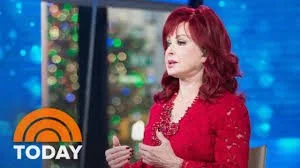
Naomi Judd: Press reports covered the dark nights of her life, but not the Sunday mornings

Naomi Judd: Press reports covered the dark nights of her life, but not the Sunday mornings

Journalists tend to remember symbolic details from many of interesting interviews — whether they are with superstars of various kinds or ordinary people who have seen remarkable things.

Exhausted after signing hundreds of copies of her “Love Can Build a Bridge” memoir back in 1993, Naomi Judd retreated to her tour bus parked behind the bookstore. She apologized for heading to the back room to get out of one of her famous stage dresses and into something from her farm outside of Nashville. The ground rules: no photos, but all questions were fair game.

At point in her life, she had already talked about some dark days and nights — from rape to a crisis pregnancy and beyond. But she hadn’t dug deeper into her childhood and the abuse that created the deep pools of depression that would eventually take her life.

But this was a woman who was driven to talk about her angels, as well as her demons. My favorite quote from that interview didn’t make it into the “On Religion” column that I wrote pre-Internet, but stashed deep in my file cabinets with pages of notes and transcripts.

Naomi Judd stressed that if people — journalists included — want to understand country music, and the relationship between the musicians and their fans, they need to remember that it’s normal, in a country music show, “to sing about Sunday morning, as well as Friday and Saturday nights.”

That’s what I went looking for in the coverage of her death and then the ceremony in which The Judds — Wynonna and Naomi — entered the Country Music Hall of Fame. Here’s the top of the Nashville Tennessean report on that event, as it ran in USA Today:

As Grammy-winning duo The Judds were inducted into the Country Music Hall of Fame Sunday evening, Wynonna Judd addressed the passing of her mother Naomi just one day earlier.

Following brief remarks from her younger sister Ashley, Wynonna spoke for roughly four minutes.

"It's a strange dynamic to be this broken and this blessed. … But though my heart is broken, I will continue to sing," she said.

Wynonna said Naomi Judd, 76, passed away at 2:20 PM, and that she kissed her mother "on the forehead and walked away." She also stated that the last act she, Ashley and unnamed other family members did together was praying the Bible's 23rd Psalm. The crowd in attendance all recited the Psalm in unison with Judd to complete her speech.

That’s solid and hints at the atmosphere during the ceremony.

Truth is, Hall of Fame member Ricky Skaggs — who knew the Judds from the days before their rise to fame — took the audience to church, as he struggled to control his emotions through the entire speech-sermon.


Please respect our Commenting Policy

In terms of church history, should the United Methodist break-up be called a 'schism'?

In terms of church history, should the United Methodist break-up be called a 'schism'?

When I moved to Denver in 1984, Rocky Mountain News (RIP) my work plunged me into the ongoing United Methodist Church battles over creed-level doctrines, the Bible and, of course, homosexuality.

The region’s defining institution was the Iliff School of Theology, a UMC authorized seminary that a former professor there once told me was “the single most liberal school in America that still bothers to call itself ‘Christian.’ “ In the late ‘80s, an Iliff student said he had encountered one professor who believed that the resurrection of Jesus actually happened, as an event in real time. I would doubt this seminary has become more small-o “orthodox” in the past third of a century.

If you were in Denver back then it was clear that the United Methodists were in the midst of a very slow train wreck and that a parting of the ways was inevitable. The question: Who would leave and who would control the assets of this large, but shrinking, denomination?

This brings us to a recent story in The Nashville Tennessean with this dramatic double-decker headline (behind a fierce paywall):

Methodists focus on Easter amid denominational schism and the tough decisions ahead

A new, more conservative Methodist denomination is set to launch May 1 after a years-long debate centered largely over LGBTQ rights.

People have been using the word “schism” for decades, when describing this conflict. I would like to argue that this technical term is problematic, in this case, and that recent events — especially the proposed “Reconciliation and Grace Through Separation” protocol — have made it even more so. I propose using the word “divorce,” in this case. Hold that thought.

There is much to praise in this Tennessean story, especially the many quotes from regional church leaders on both sides of this battle. However, the “schism” lens is easy to see. I think that with two or three extra sentences, readers would have a better idea what is going on in this conflict. It’s also important to know that the Southeast is a crucial region in this conflict (along with the core Midwest), in which there are many doctrinally conservative churches paired with bishops who are more progressive.

But let’s start with the term “schism.” Here is a helpful Britannica reference:

schism, in Christianity, a break in the unity of the church.


Please respect our Commenting Policy

Father Joseph Ratzinger's sobering 1969 vision of the future and the new German reality

Father Joseph Ratzinger's sobering 1969 vision of the future and the new German reality

The 1960s were turbulent times and, in Europe, Catholics faced storms of radical change that left many weary or even cynical.

In 1969, one of Germany's rising theologians -- a liberal priest at Vatican II who then became a conservative -- was asked what he saw in the future.

"What St. Augustine said is still true -- man is an abyss; what will rise out of these depths, no one can see in advance," said Father Joseph Ratzinger, on German radio. "Whoever believes that the church is not only determined by the abyss that is man, but reaches down into the greater, infinite abyss that is God, will be the first to hesitate with his predictions."

Ratzinger's words grew in importance in 1977 when he became Archbishop of Munich and quickly became a cardinal. Then Pope John Paul II made him prefect of the Vatican's powerful Congregation for the Doctrine of the Faith, where his orthodoxy led liberals to call him "God's Rottweiler." In 2005, he became Pope Benedict XVI.

Catholics continue to ponder his 1969 words: "From the crisis of today the church of tomorrow will emerge -- a church that has lost much. … As the number of her adherents diminishes, so it will lose many of her social privileges. In contrast to an earlier age, it will be seen much more as a voluntary society, entered only by free decision. As a small society, it will make much bigger demands on the initiative of her individual members."

The future pope predicted a "crystallization" process creating a "more spiritual church, not presuming upon a political mandate, flirting as little with the left as with the right. … It will make her poor and cause her to become the church of the meek."

The retired pope celebrated his 95th birthday on April 16th -- Holy Saturday. During an earlier meeting with Jesuits, Pope Francis called his predecessor "a prophet" and cited Benedict's predictions of a "poorer" and "more spiritual" church..


Please respect our Commenting Policy

Just in time for Easter media and academic discussions: Did Jesus Exist?

Just in time for Easter media and academic discussions: Did Jesus Exist?

THE QUESTION:

Did Jesus Exist?

THE RELIGION GUY'S ANSWER:

Yes.

It would be the ultimate blow to the Christian religion if Jesus, and with him the entirety of the New Testament, is totally fictional.

However, the strong consensus among historians, including non-Christians and skeptics, is that, yes. Jesus was an actual person of the 1st Century (Anno Domini!!). Yet an Ipsos poll for the Episcopal Church, released last month, showed only 76% of Americans "believe in the historical existence" of Jesus, with 89% of self-identified Christians, 43% for adherents of other religions and 38% among the non-religious.

Among scholars, across the years certain "mythicists" have contended that he never existed.

University of North Carolina Professor Bart Ehrman, author of "Did Jesus Exist?" (2012) and rather skeptical himself, knows of only one such thinker among thousands of scholars with Ph.D. degrees who are working in the New Testament field. He's Robert Price, a onetime Baptist minister, member of the radical "Jesus Seminar," and author of "The Historical Bejeezus" who teaches at Johnnie Coleman Theological Seminary, a "New Thought" school.

Other mythicists have included Frank Zindler, a science educator, Jesus Seminar participant, and an editor with American Atheists. In 1970, Doubleday published an eccentric book by Britain's John M. Allegro, who thought there never was a Jesus and Christianity originated as a drug cult. John Remsburg, a 19th Century superintendent of public instruction for Kansas, backed mythicism by listing 42 ancient authors never wrote about Jesus. (A newsman like The Guy would figure that's what you'd expect with an itinerant teacher executed as a criminal in a backwater of the Roman Empire.)

But Remsburg raised an interesting question. Let's say for the sake of argument we totally exclude the New Testament as evidence (which historians would never do in judging the existence of other figures from ancient times). Do we have any other relevant documentation?


Please respect our Commenting Policy

Podcast: Thoughts on a third of a century as a columnist (and a symbolic SCOTUS ruling)

Podcast: Thoughts on a third of a century as a columnist (and a symbolic SCOTUS ruling)

This week marked a rather symbolic anniversary for my national “On Religion” column, which I have been writing now for (#GULP) a third of a century.

As you would imagine, I spend some time thinking about the subject for this week’s column: “Why 'religious liberty' has ended up inside quotation marks.” This column was also the hook for this week’s “Crossroads” podcast (CLICK HERE to tune that in).

Anyone who has followed my work with GetReligion and “On Religion” will not be surprised that I chose to write about the First Amendment and and a highly symbolic religious liberty case (no scare quotes there) at the U.S. Supreme Court.

But hold that thought. I’d like to walk through what are, for me, four symbolic columns I have written in the past, as I head into year No. 34.

That first column in 1988 was rather newsy: “Pat Robertson, evangelicals and the White House.” Here’s the lede on that:

On the morning before Easter, Pat Robertson stood in a pulpit under an American flag and a banner that read, "King of Kings, Lord of Lords."

Alas, change the name of the candidate and that still sounds rather relevant, considering the state of warfare inside American evangelicalism these days (see this must-read Richard Ostling post).

On the 10th anniversary of the column — that seemed like a long time, back then — I focused on a classic book by sociologist James Davison Hunter (“Culture Wars: The Struggle to Define America”) that has greatly influenced my work as a journalist and as a professor. The column opened by describing an interesting trend at political and religious rallies at that time:


Please respect our Commenting Policy

Is evangelical Protestantism breaking into five factions in the United States of America?

Is evangelical Protestantism breaking into five factions in the United States of America?

Let’s start with two quotes.

A weary grievance from the Bible: "Of making many books there is no end" (Ecclesiastes 12:12). The same can be said about endless journalistic articles trying to figure out what's with U.S. evangelical Protestantism in the age of Donald Trump -- saith The Religion Guy himself.

"A successful political movement must incorporate both elites and the people. Only intermittently, however, has the American right been able to achieve such a synthesis. That is why its victories have been so tenuous." So writes Matthew Continetti in "The Right," his new opus about U.S. political conservatism.

The Guy has taken Continetti's view regarding U.S. conservative Protestantism and is far more interested in the gap between its intellectual elite and the grassroots than e.g. the current hullabaloo over The New York Times describing worship mingling with Trumpified politicking by a segment of evangelicals (see tmatt post here).

Which brings us to a must-read article entitled "The Five Emerging Factions in Evangelical Higher Education" by Daniel K. Williams (contact: 678-839-6034 and dkwillia@westga.edu). He's a history professor at the University of West Georgia and author of "God's Own Party" (2010), and "The Politics of the Cross" 2021).

Williams reflects on the recent convention of the Conference on Faith and History, an association of Christians who teach this subject at both secular and religious colleges. Crucial: He writes only about diverse camps among evangelical scholars and schools. But does this breakdown characterize U.S evangelicalism as a whole? He depicts five factions.

Culture warriors -- These political conservatives actively oppose socialism, critical race theory, feminism, the new sexuality and "cultural liberalism in all its forms," while embracing "Trumpist conservative partisanship." Such teachers at e.g. Bob Jones, Liberty and Regent Universities; Patrick Henry and Saint Andrews Colleges; and elsewhere rarely interact with "the rest of Christian academia."

Anti-nationalists -- These evangelicals mostly agree with the culture warriors on the issues but don't want to be "adjuncts of the Republican Party" and are anti-Trump.


Please respect our Commenting Policy