Scriptures

Updates in the journalism style bible: Appropriate 'cult' advice and other tweaks

Updates in the journalism style bible: Appropriate 'cult' advice and other tweaks

If you know anything about the nuts and bolts of reporting and editing, then you know that the Associated Press Stylebook is the bible — that’s with a lower-case “b” — of journalism.

It’s also a great place to chart tensions inside the news business. Consider, for example, the decades of debate about “pro-life” and “pro-choice,” as opposed to “anti-abortion” and “pro-abortion rights.” Will the next major revision of the AP manual need to include an updated definition for the suddenly controversial word “woman”?

Our GetReligion patriarch, Richard Ostling, recently sent me an interestingly list of some of the religion-beat terms in the latest revisions to this AP bible. He served as a consultant on that revision project and, thus, doesn’t want to make any comments about the results. Here is one of the updates that is sure to lead to newsroom discussions:

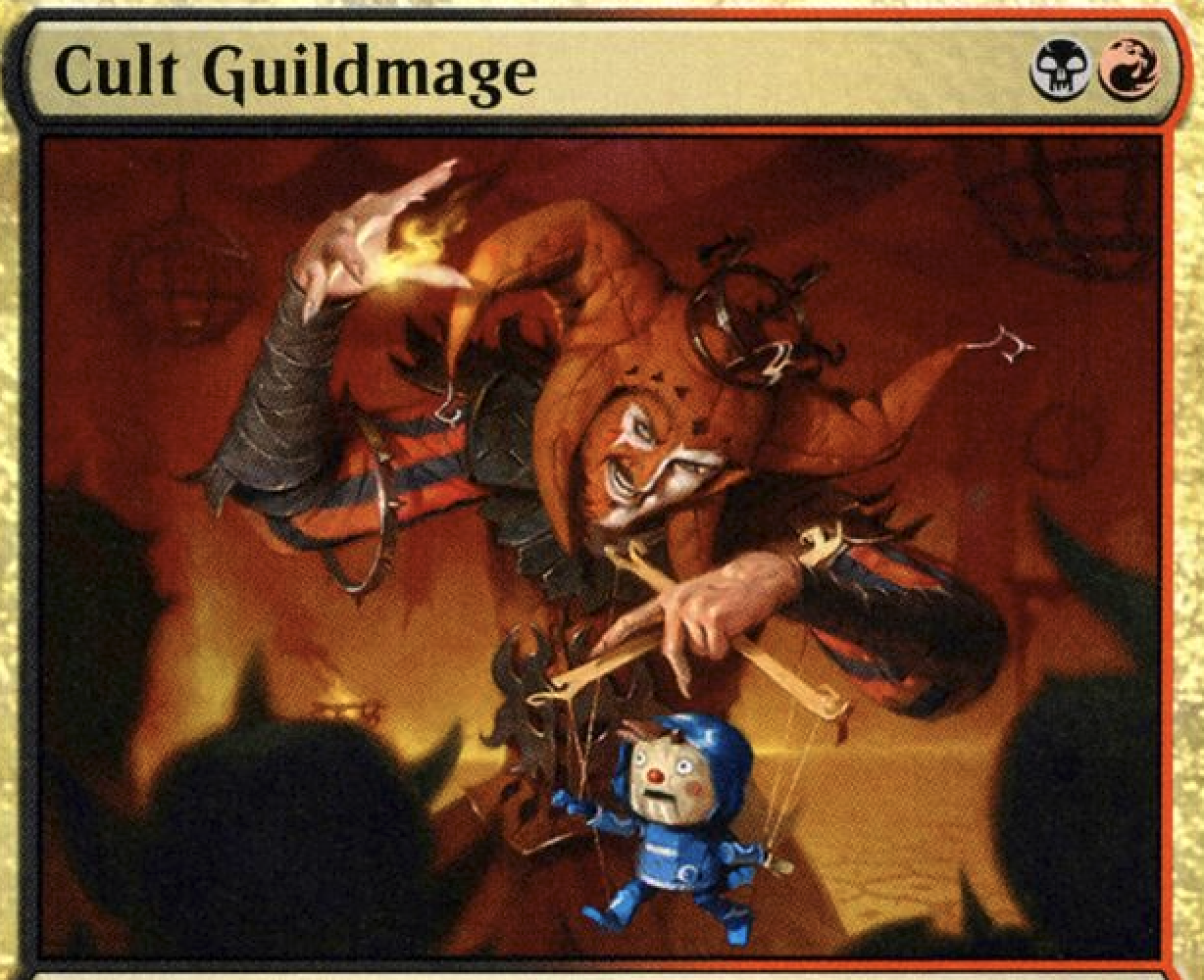
cult (new)

A loaded term to be used with caution.

Yes, indeed — proceed with caution. I totally agree that this is a “loaded term” that journalists should avoid whenever possible.

The problem, however, is that this is a term that religious leaders, activists and even scholars are going to use every now and then and it will be hard to avoid the term when it is used in important direct quotations. Thus, editors need to know the various ways that informed people use the word — the key is sociology vs. theology — so that these loaded quotes can be placed in context for readers. Then there are activists of various kinds who throw this term around like a verbal hand grenade.

Readers can tell, with a quick glance at the venerable Merriam-Webster dictionary, that this is a complicated subject. Here are several of the definitions:

cult

noun, often attributive …

Definition of cult

1: a religion regarded as unorthodox or spurious (see SPURIOUS sense 2) also : its body of adherents
Please respect our Commenting Policy

This is still a question that scholars debate: Why did early Christianity rise so rapidly?

This is still a question that scholars debate: Why did early Christianity rise so rapidly?

THE QUESTION:

Why did early Christianity rise so rapidly?

THE RELIGION GUY'S ANSWER:

New religions appear all the time, nowhere more than in the United States, but very few ever achieve prominence and permanence. Christianity is a rare and dramatic case of a faith that triumphed. The tale is told in Rodney Stark's classic "The Rise of Christianity" with this descriptive subtitle in the 1997 paperback edition (still on sale): "How the Obscure, Marginal Jesus Movement Became the Dominant Religious Force in the Western World in a Few Centuries."

Sociologist Stark is now retired as co-director of Baylor University's esteemed Institute for Studies of Religion. The book treats its subject as a puzzle to be explained by objective social science scholarship and does not consider whether Christian teachings are true.

Though we lack reliable census data, Stark's best estimate was that only 7,530 Christians existed at the close of the apostolic era in A.D. 100 [which conflicts with Acts 2:41]. He said the total exceeded 1 million by 250 when systemic persecution by the Roman empire was reaching its peak. The Edict of Milan in 313 allowed the faith to exist without harassment, and as of 350 there were 33.9 million Christians. Stark figured that was a 56.5% majority of the population. Inevitably, by 380 this became the empire's official creed.

What happened? Stark's scenario drew upon more than 300 works plus his own original research, and made heavy use of economic market theory. Let's skim some of what he concluded.

Stark thought Christianity's key advantages included the spread of Greek-speaking Jews across the Greco-Roman world who provided a base to build upon, the failures of rival paganism, attractive charitable efforts (especially during ruinous epidemics), innovative respect for women, high birth rates, good organization, close fellowship, demanding and respected moral standards, the inspiring example of martyrs willing to die rather than renounce their faith and positive doctrines that were attractive to new city dwellers coping with chaos and squalor.


Please respect our Commenting Policy

Podcast: What parents (and journalists) can learn from LGBTQ debates at Calvin

Podcast: What parents (and journalists) can learn from LGBTQ debates at Calvin

Any list of the two or three most influential evangelical Protestant colleges and universities in America has to include Calvin University in Grand Rapids, Mich.

Hang around at Council of Christian Colleges and Universities gatherings (I was a senior fellow and journalism professor for 20 years) and you’ll hear chatter about the “Calvin mafia” that has long provided intellectual clout shaping trends and programs nationwide. In other words, what happens at Calvin doesn’t stay at Calvin.

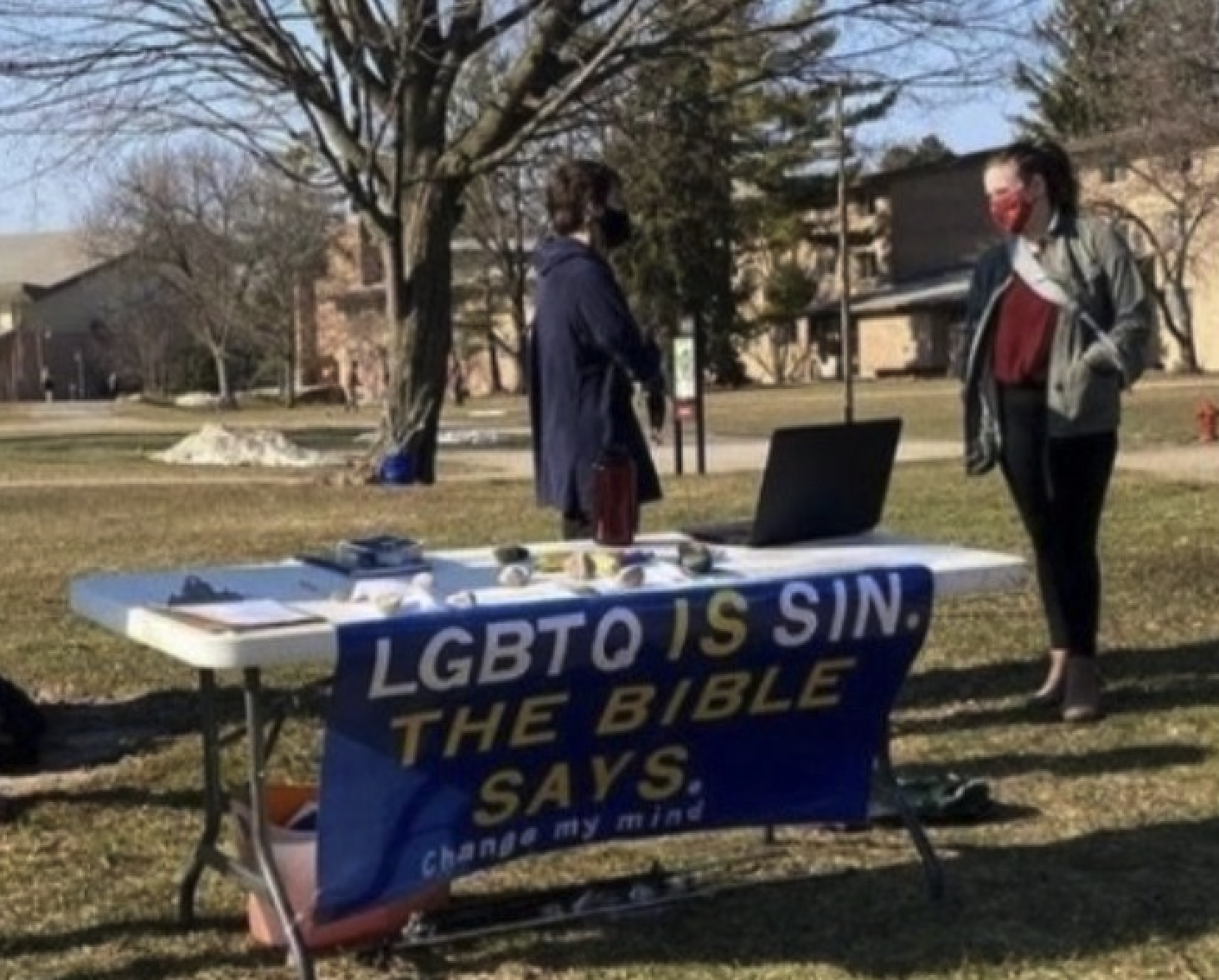
You could say that was the Big Idea in this week’s “Crossroads” podcast (CLICK HERE to tune that in), which focused on a Religion News Service story with this headline: “Fallout over LGBTQ spouses at Calvin University captures broader evangelical divide.” The second line: “A same-sex wedding led the university to split with its longtime research center over Christian teaching on sexuality.” Before we look at the overture, let’s jump down to a crucial passage in this story:

Provost Noah Toly did confirm that all faculty and staff, including those at the center, are required to follow the school’s employment policies, which bar sex outside of a marriage between a man and a woman. He also said that hiring managers and supervisors are required to enforce the policy.

“Employment policies” is a rather secular way of stating that Calvin has a doctrinal statement linked to its ties to the Christian Reformed Church. It’s safe to assume that, at some point, faculty and staff sign a copy of that statement or a “lifestyle covenant” that states the doctrines in practical terms. At some schools, faculty and staff reaffirm that doctrinal statement/covenant every year.

When we are talking about defining the boundaries of a voluntary association of this kind — an explicitly Christian liberal-arts university — “doctrines” are more important than “policies.” Keep that quote from the provost in mind as you read the top of this RNS story. This is long, but crucial:

For years, Calvin University, a leading evangelical school in Grand Rapids, Michigan, has tried to walk a fine line of being welcoming to LGBTQ students while still enforcing traditional Christian Reformed Church views on sexuality.


Please respect our Commenting Policy

No longer a Ukraine news sidebar: Pope Francis asks if combat can ever be moral

No longer a Ukraine news sidebar: Pope Francis asks if combat can ever be moral

As Russia's invasion sought to erase Ukraine from the map, Moscow's Orthodox Patriarch Kirill, a key ally of dictator Vladimir Putin, met via video last week with Pope Francis.

The Religion Guy had planned to propose a wartime sidebar about the theological justifications for combat that could run any time, but suddenly the theme has gained timely mainbar status.

That's because an official Vatican release reported that Francis stated this at the meeting: "There was a time, even in our churches, when people spoke of a holy war or just war. Today we cannot speak in this manner. A Christian awareness of the importance of peace has developed. Wars are always unjust, since it is the people of God who pay."

Francis' 2020 encyclical Fratelli Tutti declared similarly that "it is very difficult nowadays to invoke the rational criteria elaborated in earlier centuries to speak of the possibility of a 'just war'."

Francis deplores the bloodshed in Ukraine, but did not publicly castigate Putin or Russia by name, presumably in case a neutral papacy could help negotiate an end to the conflict. (That argument is used to explain Pope Pius XII's silence during Nazi Germany's Holocaust against European Jewry.)

Journalists can, at this point, ask several logical questions:

* Is Francis declaring dead the church's "just war" teaching, first formulated in the 5th Century by St. Augustine?

* Should 1.36 billion Catholics shift to pacifism, which excludes support for all wars?

* Is Ukraine wrong to take up arms to defend its existence as a sovereign and democratic nation?

Nearly all Christian commentators agree that Russia's aggression is evil and Ukraine's military defense against it is justified.


Please respect our Commenting Policy

Never forget: There are more than two strategic camps in the global United Methodist war

Never forget: There are more than two strategic camps in the global United Methodist war

It’s time for another religion-beat journey beyond “whataboutism” and the basic assumption that all controversial subjects have “two sides,” and that’s basically that.

Of course, we live in an age in which many elite newsrooms decline to cover “one side” of a story if, according to newsroom doctrines, it’s already obvious which side is good and which side is bad. Here at GetReligion we have a term for this — “Kellerism,” a nod to candid remarks once made, on the record, by former New York Times editor Bill Keller.

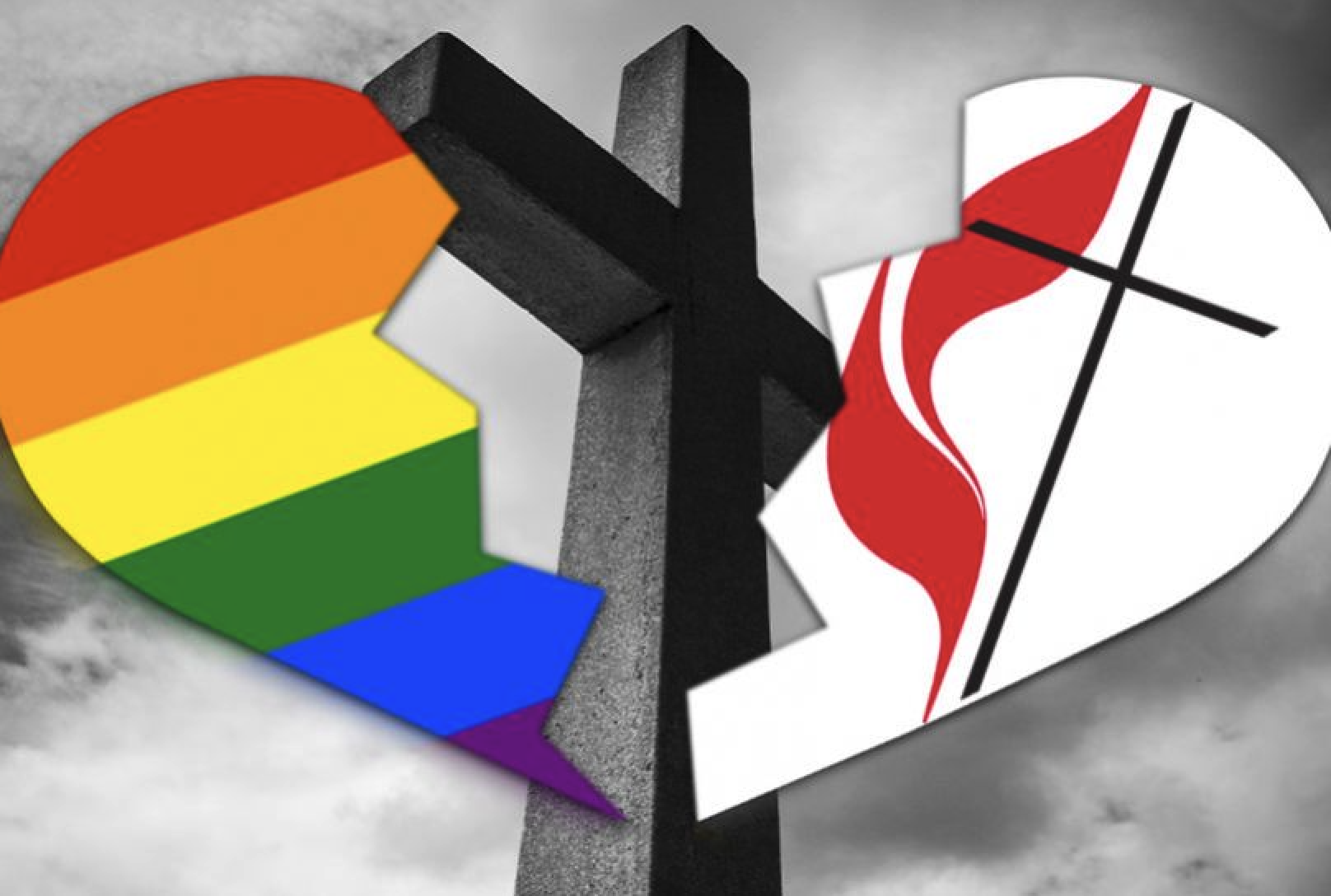
In this case, we are looking at a religion-beat superstory at the local, regional, national and global levels — the break-up of the United Methodist Church, the second largest Protestant denomination in America.

To get the big picture, please see this recent GetReligion post by Richard Ostling: “The latest United Methodist bombshell will create news throughout 2022 and beyond.” To see how long this battle has been going on, check out this “On Religion” column that I wrote in 1998: “United Methodists — Breaking up is hard to do” and two more on a related topic, “Old fault lines can be seen in the ‘seven churches’ of divided Methodism” (and then part II).

Here are Three Big Ideas for today. Remember that I have, as a reporter, been wrestling with this ongoing story since the early 1980s.

(I) Never forget the unique element of this story, which is that the United Methodist Church has a GLOBAL structure that includes the growing churches of Africa and Asia, as well as the splintering (and usually shrinking) congregations in the United States. Readers should question news reports that fail to mention — or even stress — the racial and cultural diversity of the global conservative United Methodism coalition.

(II) While fights about LGBTQ issues make headlines, the United Methodist wars have — behind the scenes — included clear divisions on basic, even credal, issues in Christian theology. In addition to clashing views of biblical authority, we’re talking about splits on salvation, sin, heaven, hell, the Resurrection and the very nature of Jesus Christ. Reporters need to ask questions about issues other than sex.

(III) There are, at the very least, three major groups involved in this story. Let’s call them the “candid left,” the “establishment left” and then the “traditional” United Methodists, as in the defenders of the existing laws and doctrines in the United Methodist Book of Discipline. However, there are subgroups on the right. Never assume that the global conservatives have precisely the same views as their American counterparts.

To see that these issues look like “in the wild,” consider this recent Religion News Service story: “Vote delayed again, some United Methodists say they quit. Now what?”


Please respect our Commenting Policy

Are Southern Baptists bracing for another civil war? Well, today isn't 1979 ...

Are Southern Baptists bracing for another civil war? Well, today isn't 1979 ...

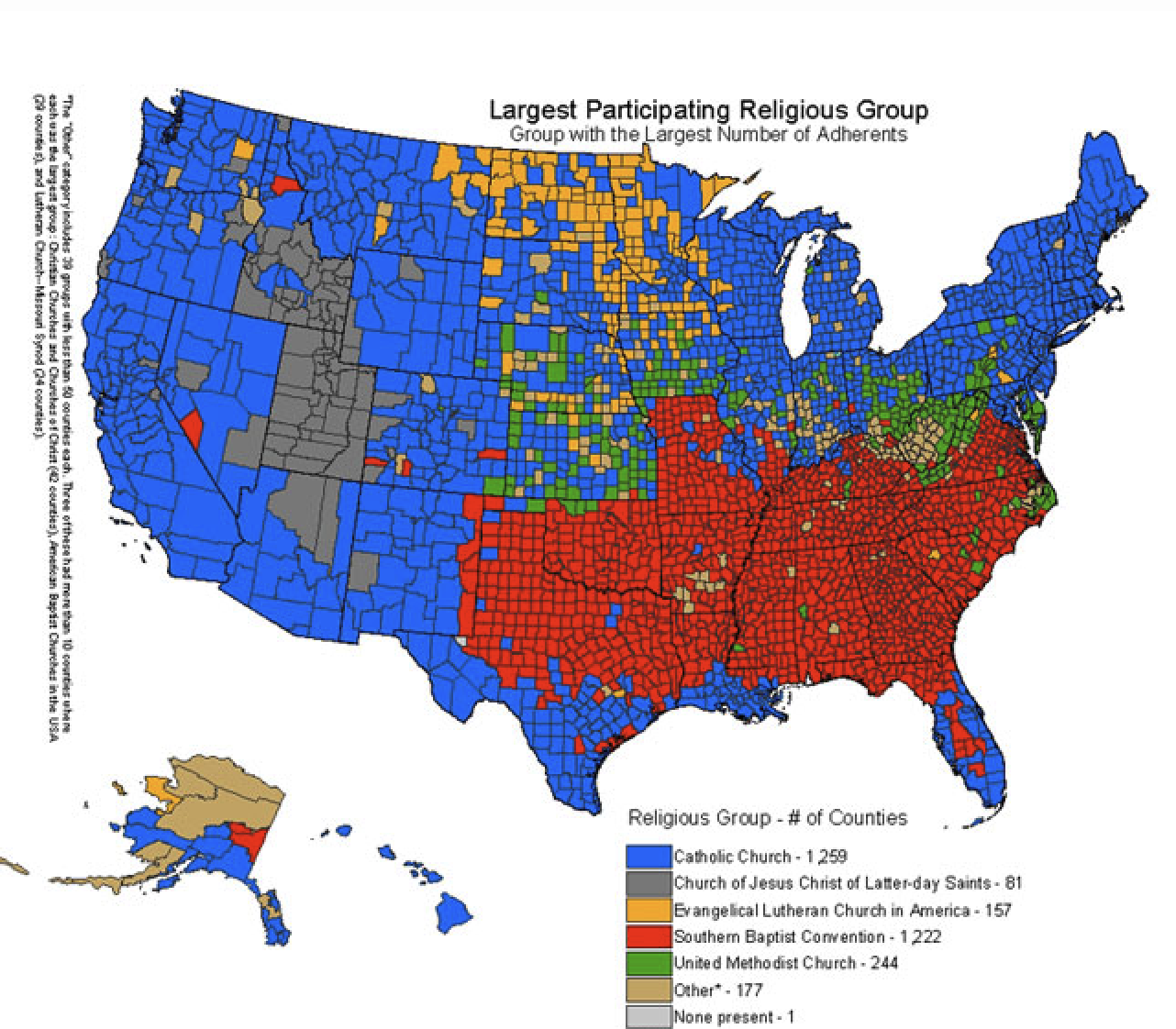
Once upon a time, Southern Baptists in Bible Belt communities knew how to talk to people who didn't go to church.

"We were dealing with people who were, for the most part, like us," said Baptist historian Nathan Finn, the provost of North Greenville University, located in the South Carolina hills near the North Carolina border. "Everyone understood sweet tea, fried chicken and SEC football. It was easier to talk to those people about Jesus."

Things changed, as the greater Greenville-Spartanburg welcomed waves of high-tech firms and industries with global brands such as BMW, Bosch, Fluor, Hitachi and many others. Today's newcomers speak German or Japanese.

"It's not Black folks and White folks from the South. We're past that. The Sunbelt has gone global and we're more urban. We don't know how to talk to the new people," said Finn. "The cultural gaps are bigger. … Southern Baptists are better at handling these kinds of issues in foreign missions than in our own communities."

Finn has been studying this trend and others for years, which led him to write a series of articles in 2009 for Southeastern Baptist Theological Seminary entitled "Fifteen Factors that have Changed the SBC since 1979."

Anyone who knows Southern Baptist Convention history gets that 1979 reference. That was when activists backing "biblical inerrancy" attacked establishment leaders of America's largest Protestant flock, while also supporting causes favored by the surging Religious Right. Electing one SBC president after another during the 1980s, this "conservative resurgence" helped change the face of evangelicalism.

There are signs a second Baptist civil war may be ahead.


Please respect our Commenting Policy

The latest United Methodist bombshell will create news throughout 2022 and beyond

The latest United Methodist bombshell will create news throughout 2022 and beyond

Yet another United Methodist bombshell will create news throughout 2022 and beyond

In this, the 50th anniversary year of the 12.9-million-member United Methodist Church's fierce debate over the Bible and sexuality, a late summer General Conference was set to settle how to split. But a March 3 bombshell announcement cancelled this all-important meeting, already postponed twice due to COVID. Without plans for an orderly and respectful breakup, rancor will persist till delegates finally do assemble, presumably in May, 2024.

Here's some lay of the land for the media through 2022 and beyond.

"The only problem with [cancellation] is everything," remarks Religion News Service commentator Jacob Lupfer. "Every major faction in the church agrees on the need for schism. The status quo is untenable." The liberal Reconciling Ministries Network supports the delay, but "this lengthening test of our patience" postpones "the road to justice for our LGBTQ+ kin" who want a policy change that regularizes weddings and clergy ordinations for Methodists in same-sex relationships.

Conservatives are more upset, so much so they immediately rushed to launch a new "Global Methodist Church" (GMC) on May 1. Mark your calendars: GMC supporters will hold a "global gathering" in Avon, Indiana, just afterward on May 7. The GMC will combine U.S. conservatives with sizable groups from the Methodists' flocks in Africa, the Philippines and elsewhere in the diverse Global South. (Most other "mainline" denominations exist in the United States only.)

Crucially, the breakup "protocol" on the 2022 General Conference agenda would have approved a temporary time window until 2024 during which congregations could quit the UMC and keep ownership of their buildings and other assets. The 2024 General Conference could still OK such an escape clause, but by then the schism will be in full swing.

Here is the key for journalists working at the local and regional levels: Without a mutually agreed pact, Lupfer expects expensive, "chaotic, unruly litigation."


Please respect our Commenting Policy

Will Russia listen to Orthodox voices praying for ceasefire? How about journalists?

Will Russia listen to Orthodox voices praying for ceasefire? How about journalists?

During Sunday rites, worshippers in the Orthodox Church in America are led through a tour of the faith's music, with hymns from Russia, Romania, Georgia, Bulgaria and beyond.

The faithful know many by heart, including the ancient Trisagion hymn -- "Holy God, Holy Mighty, Holy Immortal, have mercy on us" -- in a haunting setting that for centuries has simply been called "Kievan Chant."

With Great Lent approaching, Archbishop Alexander Golitzin of the Diocese of Dallas and the South instructed parishes (including my own in East Tennessee) to add prayers for Ukraine in every Divine Liturgy: "Again, we ask Thy great mercy on our brothers and sisters who are presently involved in conflict. Remove from their midst all hostility, confusion and hatred. Lead everyone along the path of reconciliation and peace."

The OCA's Metropolitan Tikhon, leader of a church that began with Russian missionary work in 1794, has urged that "hostilities be ceased immediately and that President Putin put an end to the military operations. As Orthodox Christians, we condemn violence and aggression."

In Slavic Orthodox history, all roads lead to Kiev, now called Kyiv in the West.

Orthodox leaders with ties to the European Union and highly European Western Ukraine have issued fierce statements after the Russian invasion. Metropolitan Epiphanius I of the independent Ukrainian Orthodox Church, launched in 2018 by Ecumenical Patriarch Bartholomew of Istanbul, has said the "spirit of the Antichrist operates in the leader of Russia."

However, it's significant that leaders of many Orthodox churches with roots in Russian Orthodoxy have also condemned the invasion and urged a ceasefire. The leader of Ukraine's oldest Orthodox body -- one with centuries of ecclesiastical ties to Moscow -- condemned the invasion in a statement addressed directly to Vladimir Putin.

"Defending the sovereignty and integrity of Ukraine, we appeal to the President of Russia and ask him to immediately stop the fratricidal war," said Metropolitan Onuphry, primate of Kiev and all Ukraine. "The Ukrainian and Russian peoples came out of the Dnieper Baptismal font, and the war between these peoples is a repetition of the sin of Cain, who killed his own brother out of envy. Such a war has no justification either from God or from people."


Please respect our Commenting Policy

Podcast: Return of the SBC civil war? That'd be a huge development in American religion

Podcast: Return of the SBC civil war? That'd be a huge development in American religion

In the early 1980s, the Religion Newswriters Association (now the Religion News Association) held many of its annual meetings in the days just before the Southern Baptist Convention’s big national gatherings .

With good cause: The SBC was in the midst of a spectacular, painful civil war — “moderates” fighting the armies of “biblical inerrancy” — for control of America’s largest non-Catholic flock Big headlines were a certainty, year after year. Religion reporters knew their editors — back in the days when more newsrooms had travel budgets for this sort of thing — would pay to get them to the SBC front lines.

Thus, the trip was a twofer. Religion-beat pros arrived early and started work during the meetings that preceded the actual convention, such as the Pastors’ Conference (a preaching festival featuring rising SBC stars) and the Women’s Missionary Union. The RNA would work its own seminars into the gaps.

One of my favorite memories was in New Orleans in 1982. Religion-beat patriarch Russell Chandler of the Los Angeles Times and some other scribes got into a convention-hotel elevator, carrying a box of wine and liquor for an RNA social hour. The elevator was packed with WMU women, who didn’t like the looks of that box.

When the RNA folks got off the elevator, one of the women said, under her breath: “Well, they’re not here for the Southern Baptist Convention.” Over his shoulder, Chandler replied: “Oh, yes we are.”

I bring this up because there’s plenty of evidence that the Southern Baptists are about to have a second civil war. As I argued during this week’s “Crossroads” podcast (CLICK HERE to tune that in), that would be a big news story for at least three reasons.

Before we get to those, here’s a few key passages from a Religion News Service story by Bob Smietana describing a big SBC domino that tipped over this week: “SBC President Ed Litton won’t run again — to focus on racial reconciliation instead.” Here’s the overture:

Saying he wants to spend his time focusing on racial reconciliation, Southern Baptist Convention President Ed Litton announced via video Tuesday (March 1) that he would not seek a second term in office.

Litton will become the first SBC president in four decades to not seek reelection after his first one-year term.


Please respect our Commenting Policy