Scriptures

Podcast: Reporters who ask the right questions will find lots of NFL religion stories

Podcast: Reporters who ask the right questions will find lots of NFL religion stories

Several days before former Miami Dolphin head coach stunned the National Football League with his class-action lawsuit alleging racial discrimination and other sins, I read a very interesting profile at The Athletic about one of my sports heroes.

The headline summed things up: “Bears Hall of Famer Mike Singletary is hungry for a second chance to be an NFL head coach, but will it ever come?”

Singletary was a legend in Chicago and, before that, at Baylor University — where I met him because of a mutual friend. Singletary was a highly articulate preacher’s kid from Houston with a voice that sounded like he was auditioning to be the next James Earl Jones. He was a leader from Day 1 at Baylor and demonstrated all the characteristics that made him the face, brain and soul of the greatest defensive unit in NFL history.

This is where the Singletary feature became relevant during this week’s “Crossroads” podcast (CLICK HERE to tune that in), which focused on why journalists struggle to spot “religion ghosts” in so many sports stories, such as the life of Los Angeles Rams superstar Cooper Kupp (“Emerging NFL superstar — Cooper Kupp — puts his faith on his hat, not that reporters notice”) and the beliefs that appear to be putting the steel in the spine of Flores.

Why hasn’t Singletary had a second shot at being an NFL head coach, after his tumultuous tenure in San Francisco (not the best city for his views on faith and culture)? It may have something to do with Singletary trying to “stand for what he had been preaching” with the 49ers. Read this long passage carefully:

… 49ers owner John York, CEO Jed York, director of player personnel Trent Baalke and other executives called Singletary to a meeting. They had a trade in place with the Steelers for Ben Roethlisberger, who had recently been accused of sexual assault. Singletary vetoed the deal. …

“I had been telling the team I wanted a team of character,” he says.


Please respect our Commenting Policy

Emerging NFL superstar -- Cooper Kupp -- puts his faith on his hat, not that reporters notice

Emerging NFL superstar -- Cooper Kupp -- puts his faith on his hat, not that reporters notice

If you have been following the remarkable 2022 National Football League playoffs, then you have probably heard quite a bit about Cooper Kupp, the all-world wide receiver for the Los Angeles Rams.

I know. I know. Not many GetReligion readers are into sports, as Bobby Ross Jr., and I have bemoaned for quite a few years. But this Super Bowl thing is a pretty big deal in American culture and, once again, there’s a religion ghost linked to the life of one of the key players in The Big Game. Not that readers and viewers would know anything about that, based on the elite sports-media coverage.

You see, “crown” is the big word attached to Kupp right now. This year, he became only the fourth player in NFL history to win the “triple crown” as a wide receiver, leading the league in receptions, receiving yards and receiving touchdowns (click here for a Los Angeles Times profile that stresses this fact, “When it mattered most, Cooper Kupp again carried the Rams”).

Wait, there’s more. As this CBS Sports feature noted, Kupp also became the first NFL player EVER to have more than 2,000 receiving yards in the regular season and postseason combined.

The “crown” thing keeps showing up in those stories and many others like them, along with countless references to how selfless Kupp is and how much he and his wife Anna contribute to their community.

At some point, reporters need to read the message — mixing sports and faith — that is written on that signature hat that Kupp keeps wearing in press appearances. See this reference, care of Sports Spectrum — a Christian news website.

As he spoke, he sported a hat from his own apparel line. On one side of the hat it says, “Do it to get a crown that will last forever.” The phrase comes from the Bible verse 1 Corinthians 9:25, which says, “Everyone who competes in the games goes into strict training. They do it to get a crown that will not last, but we do it to get a crown that will last forever.”

As always, it isn’t news, in and of itself, that Kupp is an outspoken Christian.


Please respect our Commenting Policy

Catholics for Choice boldly projects its own credo before the 2022 March for Life

Catholics for Choice boldly projects its own credo before the 2022 March for Life

When progressive Catholics list their heroes in the church hierarchy most would include Cardinal Wilton Gregory of Washington, D.C.

When preparing their own lists, most conservative Catholics would include Archbishop Salvatore J. Cordileone of San Francisco.

Thus, it's important to note how these two shepherds reacted to the spectacular protest staged by Catholics for Choice during the 2022 Vigil for Life inside the Basilica of the National Shrine of the Immaculate Conception.

While worshippers gathered for overnight rites and prayers before the Jan. 21st March for Life, pro-abortion-rights Catholics -- using a nearby projector -- displayed their own beliefs on the 329-foot tower and facade of America's largest Catholic sanctuary. "Catholics for Choice" appeared inside a glowing cross, accompanied by a litany of slogans, such as "Stop stigmatizing; Start listening," "Mi cuerpo, mi decision (my body, my decision in Spanish)" and "Pro-choice Catholics you are not alone."

Archbishop Cordileone released this response, via Twitter, using language implying the actions of Satan: "The attempted desecration is enormous. Diabolical. Mother Mary, pray for them, now and at the hour of death. Amen."

Cardinal Gregory's press statement pointed readers to a specific scripture to find the context for his words: "The true voice of the Church was only to be found within The Basilica. … There, people prayed and offered the Eucharist asking God to restore a true reverence for all human life. Those whose antics projected words on the outside of the church building demonstrated by those pranks that they really are external to the Church and they did so at night -- John 13:30."

That verse describes the moment when Judas exits the Last Supper to betray Jesus: "So … he immediately went out; and it was night."

Catholics for Choice offered no apologies on Twitter: "Our faith teaches us that EVERY person, including the 1 in 4 abortion patients who are Catholic, should be able to make their own decisions about their lives and bodies without interference from the church or the state. #AbortionIsEssential!!" The group's communications director, Ashley Wilson, added: "I am tired of feeling shame and stigma for being a pro-choice Catholic. And I'm not here for people to judge my own personal relationship with God."


Please respect our Commenting Policy

Anglicans are wrestling with 'climate change' in their pews: Will they adapt and survive?

Anglicans are wrestling with 'climate change' in their pews: Will they adapt and survive?

Journalist Michael Kinsley famously added a twist to American politics when he redefined a "gaffe" as when "a politician tells the truth -- some obvious truth he isn't supposed to say."

As the Rev. Neil Elliot of the Anglican Church of Canada discovered, this term also applies to religious leaders.

After seeing 2018 General Synod reports, the denomination's research and statistics expert produced an analysis that included this: "Projections from our data indicate that there will be no members, attenders or givers in the Anglican Church of Canada by approximately 2040."

Reactions to his candor varied, to say the least.

"I think of it very much like … people's responses to climate change," said Elliot, updating his earlier remarks in a video posted by Global News in Canada.

Signs of church "climate" change? In the early 1960s, Anglican parishes in Canada had nearly 1.4 million members. But that 2018 report found 357,123 members, with an average Sunday attendance of 97,421. The church had 1,997 new members that year, while holding 9,074 burials or funerals.

Canada's national statistics agency reported that 10.4% of all Canadians were Anglicans in 1996, but that number fell to 3.8% in 2019.

People have one of three reactions when faced with these kinds of numbers. The first "is denial. People are saying, 'We're, we're … It's not happening,' " said Elliot, while counting the options on one hand. "Then there's people who say, 'We can stop it.' And then there's people who say, 'We can adapt.'

"The adapt language is much more rare and I'm only starting to hear it on the media in the last few months. … That's what I'm trying to get us to do within the Anglican church. It's, 'How do we adapt to it?' not, 'How do we stop it?' or … people burying their heads in the sand."


Please respect our Commenting Policy

New podcast: Sex, marriage and babies are now topics too hot for preachers to handle?

New podcast: Sex, marriage and babies are now topics too hot for preachers to handle?

Hey religion-beat reporters (and even pros who cover politics): Want to find some really interesting stories?

Ask this question: What are the subjects that clergy are afraid to address in the pulpit? This was the big idea looming in the background during this week’s “Crossroads” podcast (CLICK HERE to tune that in).

For example, lots of people interpreted the silence of many super-preachers on the ethics and affairs of Donald Trump as evidence of support for him. It is much more likely (see some of the info in this “On Religion” column) that they knew the people in their pews were divided on this topic.

Thus, they were afraid to discuss it. They didn’t want to start a war.

Here’s another case study, one so old that my reporting on it predates the Internet. But I addressed the topic in this 2016 post here at GetReligion. Remember the “True Love Waits” phenomenon?

Anyway, I realize that for many people the whole "True Love Waits" thing was either a joke or an idealistic attempt to ask young people to do the impossible in modern American culture. …

What fascinated me was that, according to key "True Love Waits" leaders, they didn't struggle to find young people who wanted to take vows and join the program. What surprised them was that many church leaders were hesitating to get on board because of behind-the-scenes opposition from ADULTS in their congregations.

The problem was that pastors were afraid to offend a few, or even many, adults in their churches — even deacons — because of the sexual complications in many lives and marriages, including sins that shattered marriages and homes. Key parents didn't want to stand beside their teens and take the program's vows.

This brings me to some amazing Gallup Poll data that —as far as I can tell — didn’t receive any news coverage when it came out in 2020. There was a Twitter flurry about it the other day, which led to some people re-upping this “story” that wasn’t a “news story.”

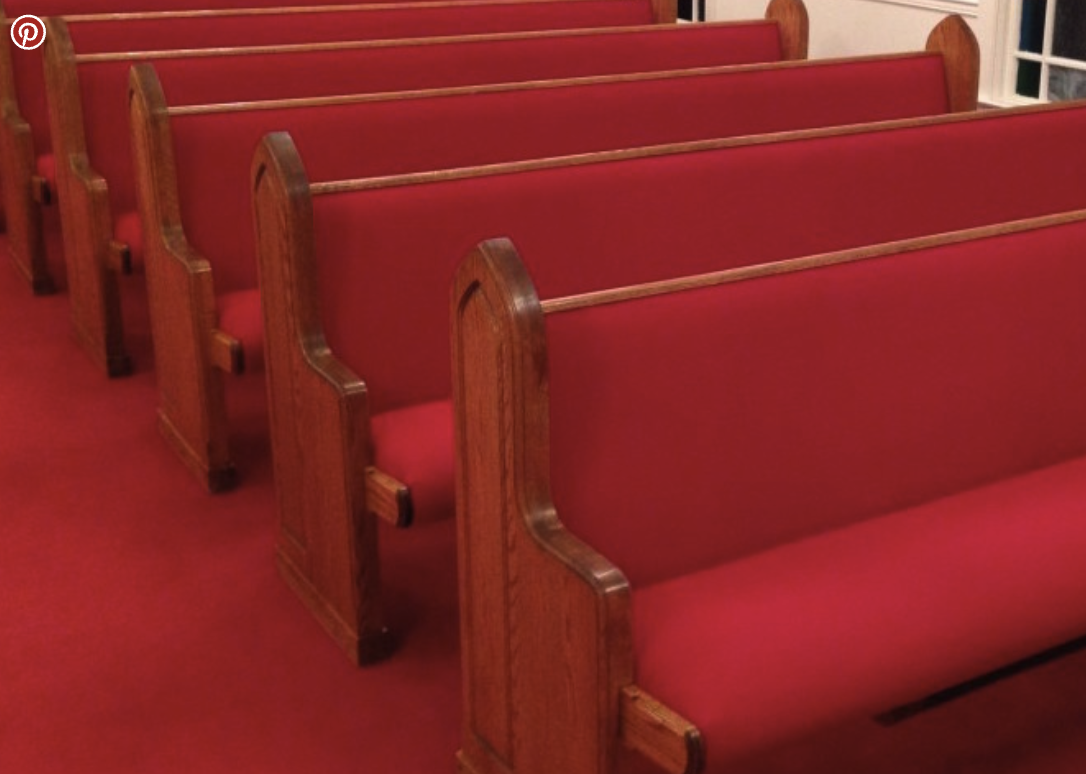
The headline on the feature at Gallup: “Is Marriage Becoming Irrelevant?” Here is a chunk of the information that should have raised eyebrows, for reporters and preachers — including clergy who face people sitting in “red,” “conservative” pews.


Please respect our Commenting Policy

Concerning Elon Musk, the Babylon Bee and the wise teachings of Jesus

Concerning Elon Musk, the Babylon Bee and the wise teachings of Jesus

At the end of each podcast, Babylon Bee leaders ask guests the same 10 questions, including this stumper: "Calvinist or Arminian?"

That caught Elon Musk by surprise, and he needed clarification on the difference between Arminian believers and persons from Armenia. After some background on Protestant history, he said: "My mind would say 'determinism' and my heart says, 'free will.' "

Why was the mastermind behind Tesla and SpaceX -- a man worth $278 billion at the end of 2021-- talking to a Christian satire website? The answer: Musk has 69.7 million Twitter followers, and he frequently responds, even if it's a U.S. senator questioning his taxes.

"You know, he engages with our content from time to time," Bee CEO Seth Dillon told Fox News. After email exchanges about a meeting, Musk said: "Fly to me and we'll do it."

The result was 100-plus minutes of conversation in Austin, Texas, ranging from satire to science, from politics to pop culture. Topics included why entrepreneurs are fleeing California, sustainable energy, superheroes (Musk would choose to be "Irony Man"), the physics of reusable rockets, cyborgs, how "wokeness" threatens humor, CNN morality and the future of a planet near an expanding sun.

Musk discussed his journey from South Africa to America, including his days as a manual laborer while struggling to pay student loans. Then he dove into computer coding and online commerce, making millions of dollars that led to Tesla. The rest is history.

On celebrity websites, Musk is often described as an atheist or agnostic. Asked if he prays, Musk once replied: "I didn't even pray when I almost died of malaria." But after the success of the first manned Falcon rocket mission, Musk said, in his public remarks: "You know, I'm not very religious but I prayed for this one."


Please respect our Commenting Policy

Variations on old questions: What do U.S. churches believe on transgender issues?

Variations on old questions: What do U.S. churches believe on transgender issues?

THE QUESTION:

What do U.S. churches believe on the transgender issue?

THE RELIGION GUY'S ANSWER:

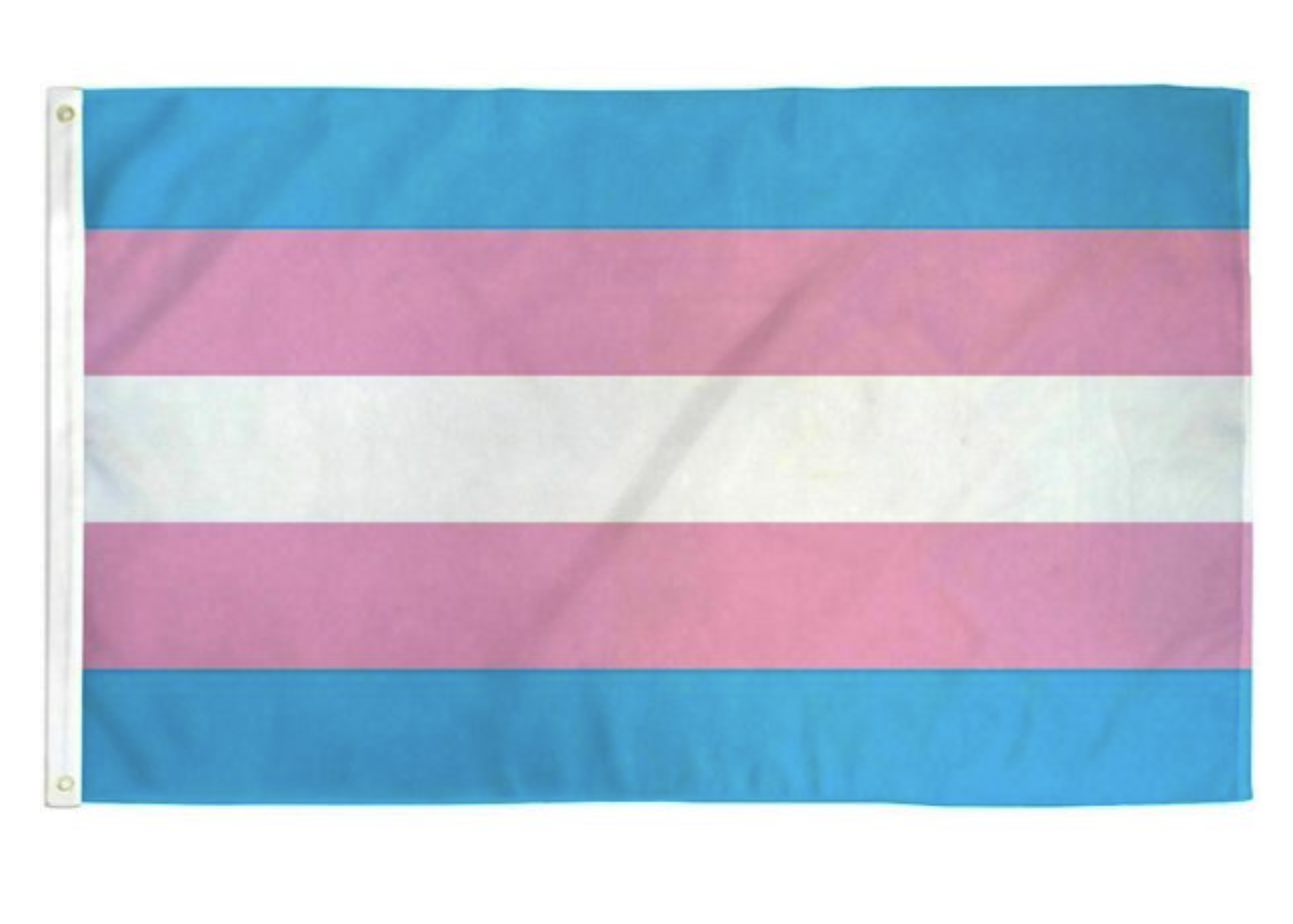
As with American society at large, churches' consideration of the sensitive transgender issue emerged only recently and rather suddenly, compared with their decades-long-debate over whether to leave behind the Christian tradition against sexual activity in gay and lesbian relationships. The religious implications go well beyond political agitation over "bathroom bills," athletic competition or women's shelters.

Transgenderism is part of a broader gender-fluidity movement. A recent survey by the interfaith Religion News Service asked readers to identify themselves as either female, male, transgender, trans woman or MTF, trans man or FTM, intersex, questioning, non-binary, genderqueer, gender fluid, agender or "other."

Among theologically flexible "Mainline" Protestants, a key breakthrough was the Evangelical Lutheran Church in America's September installation of Megan Rohrer of California, its first transgender-identified bishop. Rohrer was barred from the clergy until a 2009 policy change, so was originally ordained by the independent Extraordinary Lutheran Ministries, which works for full LGBT inclusion. (Oddly, that organization suspended Rohrer from membership in December over alleged and unspecified "racist words and actions.")

The United Methodist Church is expected to split this year over the older same-sex disagreement, exactly 50 years after the first floor debate at a governing General Conference. In October, religious media reported the gender transition of the formerly "cisgender" Methodist pastor married to Peggy Johnson, the just-retired bishop for eastern Pennsylvania, Delaware and eastern Maryland. But last month Indiana Methodists removed Pastor Craig Duke from his congregation over drag queen shows and drag education to express solidarity with his daughter, who identifies as pansexual.


Please respect our Commenting Policy

New podcast: Reformed Church in America split points to rising tensions in Calvin country

New podcast: Reformed Church in America split points to rising tensions in Calvin country

Growing up as a Texas Baptist (long ago) I was predestined to know next to nothing about what some have called the great “northern kingdom” of American evangelicalism. Yes, we can debate whether “evangelical” is an accurate description of the Calvinist world based in Grand Rapids, Mich., and other cities and towns in the Midwest.

I had to learn some of this lingo when I moved to Central Illinois and then when I broke into religion-beat work in Charlotte, N.C., a city with every imaginable form of Presbyterian and Reformed church life.

As I mentioned in this week’s “Crossroads” podcast (CLICK HERE to listen), I quickly learned that the Reformed Church in America was a rather centrist flock, while the Christian Reformed Church was much more conservative, in terms of doctrine and culture. I would not have called either of these bodies a “Mainline Protestant” denomination.

Things change. Eventually, the RCA started arguing about the familiar subjects that have divided so many religious bodies — biblical authority and sex. This leads us to a Religion News Service report: “Reformed Church in America splits as conservative churches form new denomination.” Here is the overture:

(RNS) — On New Year’s Day, 43 congregations of the Reformed Church in America split from the national denomination, one of the oldest Protestant bodies in the United States, in part over theological differences regarding same-sex marriage and the ordination of LGBTQ clergy.

The departure of the theologically conservative congregations to the new group, the Alliance of Reformed Churches, leaves some who remain in the RCA concerned for the denomination’s survival. Before the split, the nearly 400-year-old denomination had fewer than 200,000 members and 1,000 churches.

At least 125 churches from various denominations are in conversation with ARC leaders about joining.

“Various denominations?” Hold that thought.


Please respect our Commenting Policy

Talking to Jesus? This is big New York Times news when a Hollywood spiritualist is involved

Talking to Jesus? This is big New York Times news when a Hollywood spiritualist is involved

Let’s see. If you were going to write a New York Times article in which someone claimed to be channeling the Buddha, would you, at some point, talk to Buddhists? Maybe even a scholar whose work is rooted in Buddhist thought?

What about Judaism? If someone was claiming to channel Moses, would you talk to a rabbi or two about that? Maybe a scholar who has studied Jewish mysticism?

How about Islam? How would a reporter approach the claims of someone who says she is channeling Mohammad? And what would Islamic believers think of this process?

With these questions in mind, let’s look at that chatty first-person piece that ran more than a month ago at the Times with this headline: “In Good Spirits — Carissa Schumacher channels the dead for her A-list celebrity clients. But most days, she’s in the forest.

The headline omits the big reveal: Schumacher claims to channel the spirits of the dead, including her most famous connection — Jesus. This is tricky territory, as demonstrated in the wild correction at the end of this long feature:

Correction: Nov. 29, 2021

An earlier version of this article described incorrectly the biblical name Yeshua. The name refers to multiple people, including Joshua; it does not refer solely to Jesus Christ. The article also referred incorrectly to the Old Testament; while the name Yeshua appears in it, Jesus Christ does not.

Ready for the overture?


Please respect our Commenting Policy