Scriptures

New podcast: Are 'parental rights' references (inside scare quotes) the new 'religious liberty'

New podcast: Are 'parental rights' references (inside scare quotes) the new 'religious liberty'

Here’s a question that I heard recently from a young person down here in Bible Belt country: Why do students at (insert public school) need permission forms from their parents and a doctor to take (insert over-the-counter medication), but the school can assist a student’s efforts to change her gender identity while keeping that a total secret from the parents?

Obviously, something had changed at this school. The crucial question was whether parents had any right to shape or attempt to influence the education — or the moral and physical transformation — of their child in this setting controlled by the state and funded by their tax dollars. Yes, there are religious doctrines involved in many or even most of these cases.

Here’s the question we discussed during this week’s “Crossroads” podcast: Are media reports about this issue starting to turn parental rights into “parental rights,” complete with those prickly “scare quotes” that have turned references to old-school religious liberty issues into so-called “religious liberty” issues. Click here to listen to that podcast.

You can find traces of this conflict if you dig deep enough in a recent New York Times story with this double-decker headline:

The Unlikely Issue Shaping the Virginia Governor’s Race: Schools

Virginia Republicans in a tight governor’s race have been staging “Parents Matter” rallies and tapping into conservative anger over mandates and critical race theory.

The team behind this fascinating Times story didn’t spot the obvious religion ghost in this story. But this story didn’t attempt to turn these standoffs into libertarian dramas in which Trumpian parents are only concerned about COVID-19 conflicts about masks and vaccines (see a related Washington Post story, for example).
Please respect our Commenting Policy

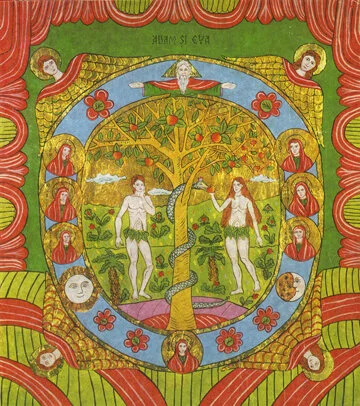
On the news budget once again: New Evangelical debates about Adam and Eve

On the news budget once again: New Evangelical debates about Adam and Eve

It's hard to beat William Lane Craig for conservative evangelical credentials.

This influential author and philosophy professor teaches at Houston Baptist University, where faculty members "must" believe in the Bible's divine inspiration and "that man was directly created by God." He's simultaneously a visiting scholar at California's Talbot School of Theology, where teachers commit to the beliefs that the Bible is "without error or misstatement" in its "record of historical facts" and that Adam was created by God and "not from living ancestors."

Craig is also a longtime member in good standing of the Evangelical Theological Society, whose members are required to affirm that the entire Bible is "the Word of God written and is therefore inerrant" as originally written. Trinity Evangelical Divinity School, where he formerly taught, likewise proclaims that the Bible is "without error."

But exactly how do those vows apply to the early chapters of the Bible's Book of Genesis?

Debates about this issue are frequently hooks for news stories, energized over and over again. Evolution and the creation of Adam and Eve have been allergic issues among evangelical Protestants in the 162 years since Darwin published "On the Origin of Species"?

So there's eye-opening stuff in Craig's article titled "The Historical Adam" in the current First Things magazine.

In Genesis 1-11, he asserts, those "fantastic lifespans" of primeval humans starting with Adam indicate "we are not dealing here with straightforward history."

Yet it's not simple fiction either, but rather an amalgam he calls "mytho-history, not to be taken literally," though there could be some overlap between the "the literary Adam of Genesis" over against the "historical Adam." He further explains that in the New Testament, Jesus and Paul were talking about that non-literal "literary Adam."

Given current science, Craig figures Adam and Eve lived 750,000 to a million years ago at the point of separation between Neanderthals and our own species of homo sapiens, with the latter endowed by God to surpass human-like animals that lacked rational thought. On that understanding, "the mythic history of Genesis is fully consistent with current scientific evidence concerning human origins."


Please respect our Commenting Policy

Crucial question in all those newsworthy abortion debates: When does life begin?

Crucial question in all those newsworthy abortion debates: When does life begin?

THE QUESTION:

When does life begin?

THE RELIGION GUY'S ANSWER:

Those four words are regularly posed in the current abortion debate, so let's scan the lines in pregnancy that have been drawn by experts — religious and secular — in the past.

Pre-scientific cultures spoke of "quickening," typically between 16 and 18 weeks, when the mother first feels the unborn child moving in her womb. A famous example involves the unborn John the Baptist in biblical Luke 1:41. Some ancient Jewish authorities in the Talmud, and Roman and Greek philosophers, supposed that the unborn child "formed" earlier, at 40 days.

Then there's "viability," when a fetus can live on its own outside the womb, typically reached around 23 or 24 weeks, or somewhat earlier or later in individual cases. The U.S. Supreme Court legalized abortion before that point in its 1973 Roe v. Wade decision, and after viability when there are risks to the mother's health, broadly defined.

The high Court on December 1 hears a case from Mississippi, which defied the Roe ruling and bars abortions after 15 weeks on grounds that the fetus experiences pain by then. A Missouri law, also under court challenge, puts a ban at eight weeks when "everything that is present in an adult human is now present in your baby," according to the American Pregnancy Association. The Court temporarily left in place a ban in Texas (likewise in 13 other states) after six weeks, when pulsations can be diagnosed at what eventually becomes the fully formed heart.

Many modern Christians believe that life begins at conception (sperm first meets egg) or implantation (fertilized egg attaches to the mother's womb) while some put the line a bit later at twinning (after which multiple pregnancies do not occur).

Note the brief filed last month in the Mississippi case by pro-choice religions including "mainline" Protestant churches, non-Orthodox Judaism, Unitarian Universalists and others. It says "numerous religious traditions posit that life begins at some point during pregnancy or even after a child is born."


Please respect our Commenting Policy

Keeping up: Ongoing 'woke' pronoun wars reach into the world of God-talk

Keeping up: Ongoing 'woke' pronoun wars reach into the world of God-talk

This Memo is a twofer, offering both a lively story theme to pursue plus an issue that is now affecting the work of every stylebook and copy editor in the American media.

An older campaign by feminists — including those working in the world of liturgy — sought to shun male pronouns, particularly when either gender is meant, in favor of plural they-them-their usage with singular antecedents. This increasingly common wording is of course grammatically incorrect given the structure of the English language, and can be confusing for readers.

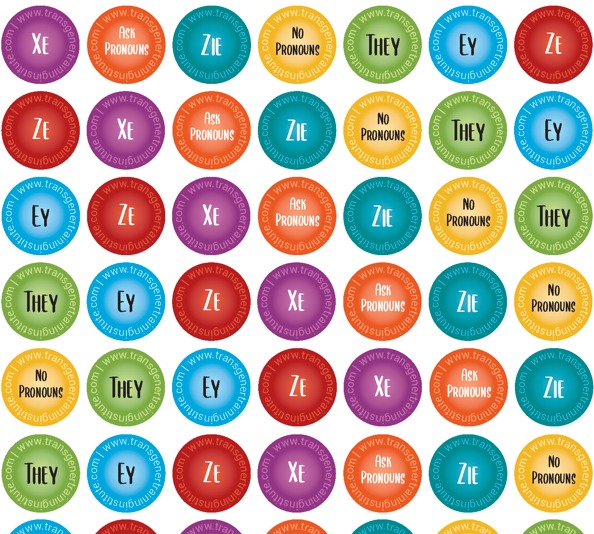
That's now combined with the effort of transgender and "non-binary" advocates to suppress gender-specific adjectives by applying that same "singular they" along with newly crafted pronouns. A list of such neologisms recommended at the University of Wisconsin-Milwaukee, said to be non-exhaustive, covers ae, e, ey, fae, per, sie, tey, ve xe, ze and zie. So, for example, with "xe" the variants to parallel she-her-hers-herself are xem-xyr-xyrs-xemself.

As you would expect, references to God himself -- or is that "themself"? -- is now part of this debate.

Religion News Service ran a column last week from one of its regulars, Mark Silk, headlined "Why our preferred pronoun for God should be 'they'." He thinks calling God "they," not "he," and similar verbal tactics have become "imperative."

How would other progressives respond? His proposal was immediately publicized in a tweet from RNS's Catholic columnist, Jesuit Father Thomas Reese and the online comments began flowing.


Please respect our Commenting Policy

Death of a post-theist shepherd: The unorthodox faith of Bishop John Shelby Spong

Death of a post-theist shepherd: The unorthodox faith of Bishop John Shelby Spong

Newark Bishop John Shelby Spong never stuck "Why Christianity Must Change or Die" on the doors of Canterbury Cathedral, since it was easier to post a talking-points version of his manifesto on the Internet.

"Theism, as a way of defining God is dead," he proclaimed, in 1998. "Since God can no longer be conceived in theistic terms, it becomes nonsensical to seek to understand Jesus as the incarnation of the theistic deity."

Lacking a personal God, he added, it was logical to add: "Prayer cannot be a request made to a theistic deity to act in human history in a particular way."

Spong's 12-point take on post-theism faith emerged after spending years on the road, giving hundreds of speeches and appearing on broadcasts such as "The Oprah Winfrey Show" and "Larry King Live." While leading the Episcopal Diocese of Newark, within shouting range of New York City, he did everything he could to become the news-media face of liberal Christianity.

By the time of his death at the age of 90, on Sept. 12 at his home in Richmond, Va., Spong had seen many of his once-heretical beliefs -- especially on sex and marriage -- normalized in most Episcopal pulpits and institutions. However, his doctrinal approach was too blunt for many in the mainline establishment, where a quieter "spiritual but not religious" approach has become the norm.

Spong called himself a "doubting believer" and said he had no problem reciting traditional rites and creeds because, in his own mind, he had already redefined the words and images to fit his own doctrines. He also knew when to be cautious, such as during Denver visit in the late 1980s -- an era in which the Diocese of Colorado remained a center for evangelical and charismatic Episcopalians.

After a lecture at the liberal St. Thomas Episcopal Church, I asked Spong if he believed the resurrection of Jesus was an "historic event that took place in real time."

"I don't think that I can say what the disciples believed they experienced. I'll have to think about that some more," he said, moving on to another question.


Please respect our Commenting Policy

Bonus podcast: 'What's next in Afghanistan?' Warning: this news topic involves religion

Bonus podcast: 'What's next in Afghanistan?' Warning: this news topic involves religion

Here is a truth claim that, over the years, I have heard (or seen) stated in a number of ways by journalists and mass-media professors: Without strong, or at least adequate, visual images a story doesn’t exist in television news.

Yes, there are exceptions. But the exceptions almost always take place when big stories break in print media and television producers are highly committed to getting them on air — somehow.

Now, in the smartphone era, there are lots of ways for visual images to emerge (ask Hunter Biden). However, in our era of partisan, niche news, it may not matter if images exist. What citizens cannot see (or read) will not hurt them?

This brings me back to a subject I addressed in this recent GetReligion essay: “What's next in Afghanistan? Press will have to face issues of religion, culture and gender.”

The big question: Where does the Afghanistan story go next and, frankly, will elite American media cover the religion elements of this story?

That question was at the heart of a recent Religion Unplugged podcast discussion that I had with a friend and, long ago, a former religion-beat colleague — Roberta Green. In recent decades, she is better known as the philanthropist and fine arts-maven Roberta Green Ahmanson (click here for a typical arts lecture).

This new podcast is entitled, “How Will Afghanistan's Next Chapter be Written?” Click here to head over to iTunes to tune that in. Meanwhile, here is a key chunk of the GetReligion essay linked to our discussion about religion, journalism, culture, politics and “nation building”:

Viewed through the narrow lens of Taliban doctrine, it doesn’t matter if Western governments were forcing open doors for the work of Planned Parenthood or Christian missionary/relief groups, the work of LGBTQ think tanks (or the American corporations that back them) or Islamic thinkers and clerics whose approach to the faith clashed with their own.


Please respect our Commenting Policy

Thinking about prayers at executions: These stories offer glimpses of an old church-state unity

Thinking about prayers at executions: These stories offer glimpses of an old church-state unity

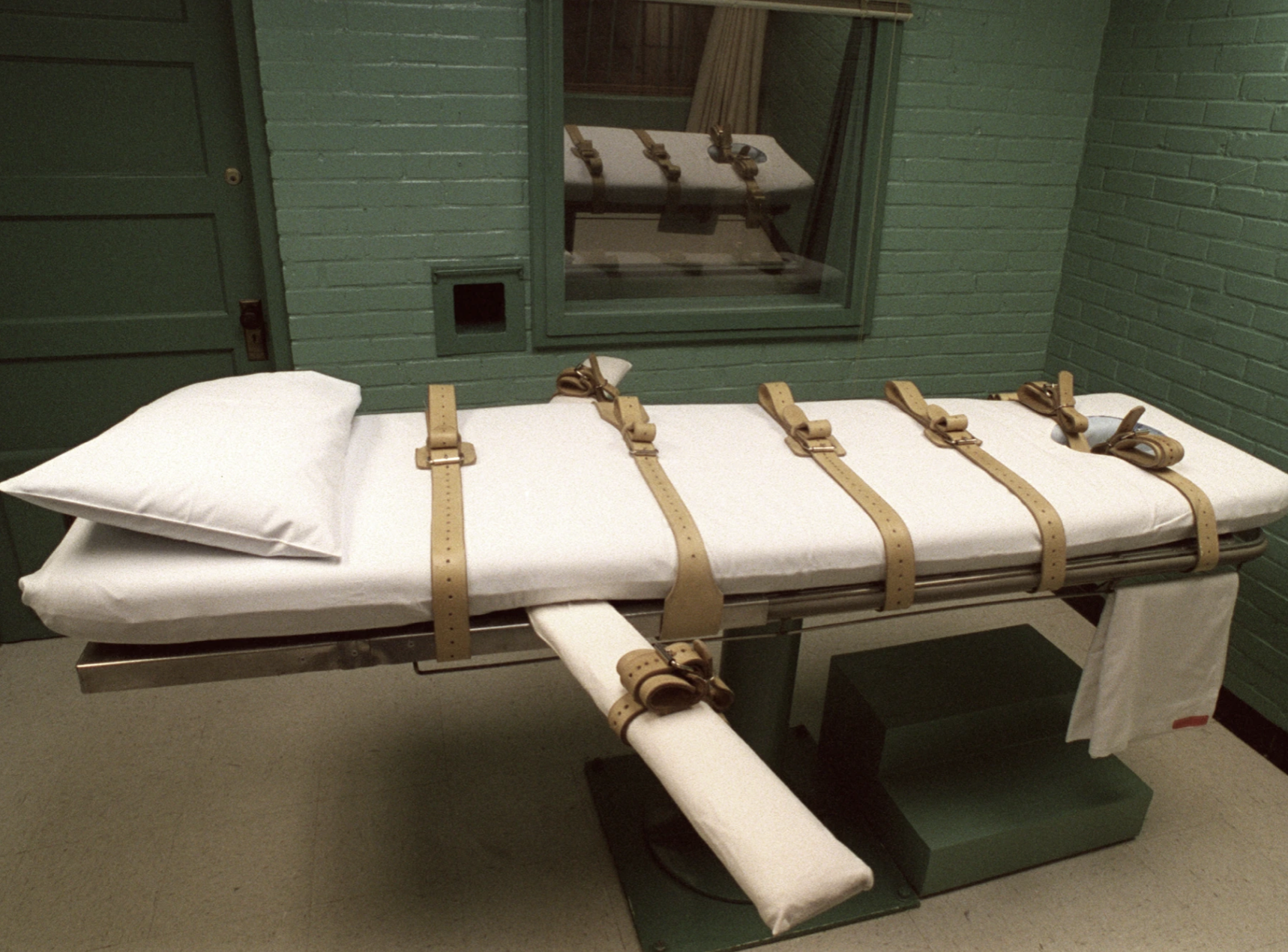
This is a “feeling guilty” post. For quite some time now, I have been planning to examine the coverage of some important religious-liberty cases that have been unfolding in the death-row units of prisons.

The decisions are worthy of coverage, in and of themselves. At the same time, these cases have demonstrated that it is still possible, in this day and age, for church-state activists on the left and right to agree on something. Maybe I should have put a TRIGGER WARNING notice at the start of that sentence.

Like I said the other day in this podcast and post — “Covering a so-called 'religious liberty' story? Dig into religious liberty history” — this kind of unity in defending religious freedom has become tragically rare (from my point of view as an old-guard First Amendment liberal). Indeed, to repeat myself, “America has come a long way since that 97-3 U.S. Senate vote to approve the Religious Freedom Restoration Act of 1993.”

The problem is that you rarely, if ever, see reporters catch this church-state angle in these decisions. The key is to look at who filed legal briefs in support of the religious liberty rights of the prisoners.

This brings me to an important Elizabeth Bruenig essay that ran the other day at The Atlantic, under this dramatic double-decker headline:

The State of Texas v. Jesus Christ

Texas’s refusal to allow a pastor to pray while holding a dying man’s hand is an offense to basic Christian values.

Here is the meaty overture:

Devotees to the cause of religious liberty may be startled to discover during the Supreme Court’s upcoming term that the latest legal-theological dispute finds the state of Texas locked in conflict with traditional Christian practice, where rites for the sick, condemned, and dying disrupt the preferences of executioners.


Please respect our Commenting Policy

Norm Macdonald: Theological mysteries, a red-brick wall, a spotlight and a microphone

Norm Macdonald: Theological mysteries, a red-brick wall, a spotlight and a microphone

While debating heretics, early Christians used the Greek term "hypostasis" -- meaning "substance" and "subsistence" -- to help define their belief in the Incarnation of Jesus as one person, yet with divine and human natures.

This "hypostatic union" is not the kind of subject a comedian typically raises on a TV talk show while chatting about mortality with a Hollywood legend. Then again, Norm Macdonald -- who died on September 14 after a secret nine-year fight with cancer -- wasn't a typical funny man. He openly identified as a Christian, while making it clear that he didn't consider himself a very good one.

During an episode of "Norm Macdonald has a Show," the former Saturday Night Live star asked Jane Fonda -- who at one point briefly embraced evangelical Christianity -- this question: "Are you a religious person?"

"I have faith," said Fonda. The host quickly asked, "In Jesus Christ?" Hesitating, Fonda called herself "a work in process," saying she accepted "the historical Jesus."

Macdonald responded: "But do you believe in the hypostatic Jesus?"

When Fonda said "no," he added, "So, you're not a Christian. But you believe, you believe in something."

Raised vaguely Protestant in Canada, Macdonald didn't discuss the brand-name specifics of his faith, even as he wrestled with his own demons -- such as habitual gambling. Yet he could be stunningly specific when addressing criticisms of Christian beliefs. As a judge on NBC's "Last Comic Standing," he quietly shot down a contestant who trashed the Bible, before praising the Harry Potter series.

"I think if you're going to take on an entire religion, you should maybe know what you're talking about," said Macdonald. "J.K. Rowling is a Christian, and J.K. Rowling famously said that if you're familiar with the scriptures, you could easily guess the ending of her book."

The result was a public persona laced with paradoxes, an edgy, courageous comic who often seemed unconcerned if his work pleased the public or his employers.


Please respect our Commenting Policy

Latest angles on Trump-era 'evangelicals,' including questions about the vague label itself

Latest angles on Trump-era 'evangelicals,' including questions about the vague label itself

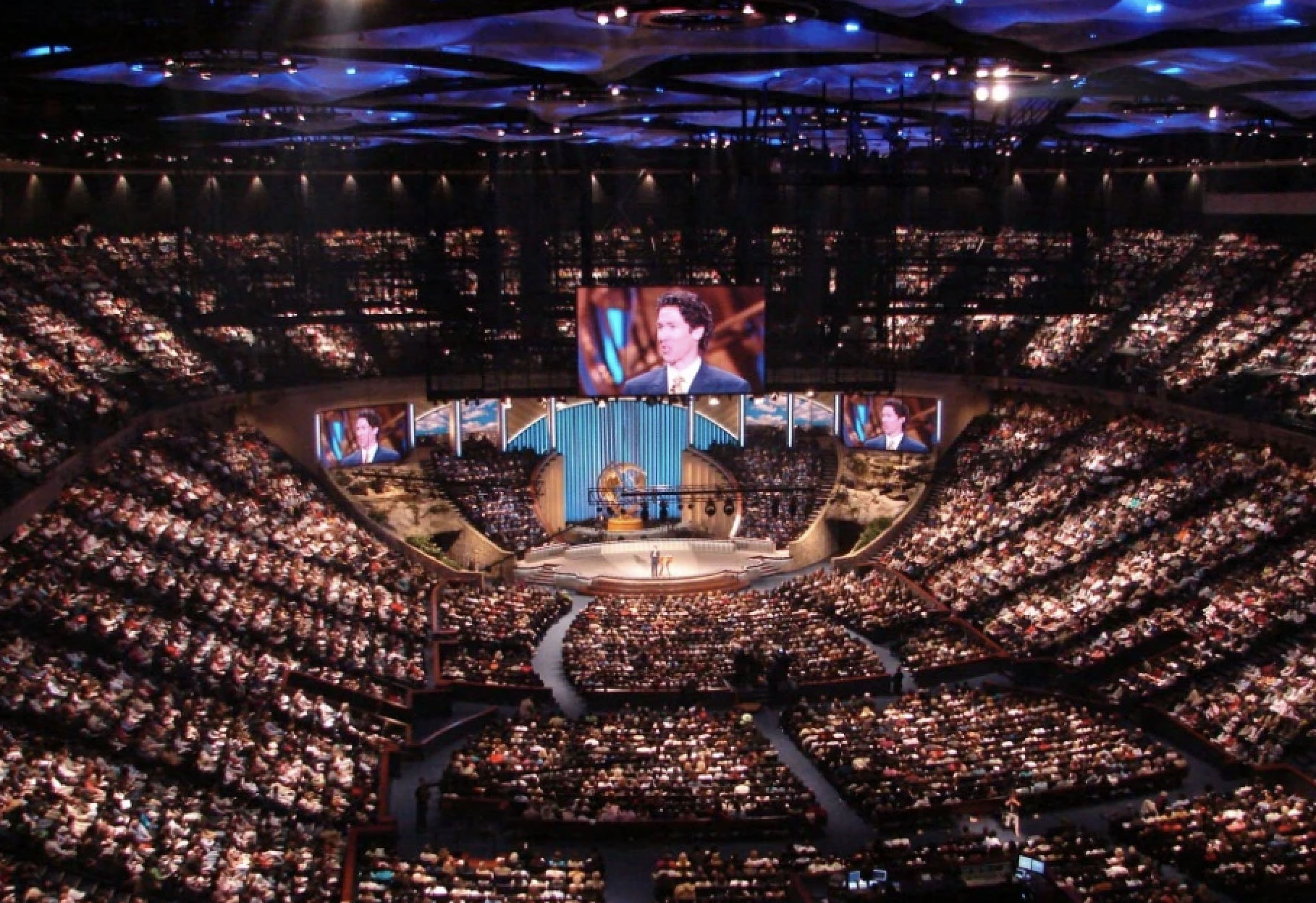
This Memo concerns not some breaking story but a potential scenario about U.S. "evangelical" Protestants that reporters on both the politics and religion beats should be watching.

For the umpteenth time we revisit the definition of this vibrant but challenged movement and its relation to a Republican Party that the secularized Donald Trump continues to dominate.

(See The Guy's effort at defining evangelicalism here, and remember that most media discussions involve White evangelicals only, since Black and Hispanic evangelicals are very different politically. And click here for a wave of tmatt posts on this topic.)

GetReligion team member Ryan Burge, an energetic political scientist who posts interesting data most days of the week, tweeted this chart on Sept. 16th showing how self-identified evangelicals described their own church attendance over a dozen years in Cooperative Election Study polling.

There's a clear developing trend. As recently as 2008, 58.6% of self-identified evangelicals said they worshiped weekly or more often, but less than half (49.9%) by 2020.

Over the same years, evangelicals who "seldom" or "never" attended grew from 16.1% to 26.7%. The slide did not begin with the Trump presidency but was already at work, since in 2016 the weekly-or-mores were down to 52.9% and seldom-or-nevers up to 22.6%.

The Guy considers attendance a good barometer of devotion, as a historically central value inside the evangelical subculture. We can speculate that similar downward slides might be occurring with other bonding activities in the evangelical tradition such as adult Bible classes, prayer meetings, small groups, daily devotions, evangelistic revivals and charity projects.

The numbers surely reflect the nation's 21st Century secularization. But Burge reaches the provocative conclusion that they mean evangelical "is not a religious term anymore." (What substitute word would suffice? There's a story theme for you.) Certain movement insiders have argued that a different label is needed because the term has taken on such a heavy Republican -- and Trumpublican -- flavor


Please respect our Commenting Policy