Scriptures

New podcast: Did a religious search help shape Norm Macdonald's haunting humor?

New podcast: Did a religious search help shape Norm Macdonald's haunting humor?

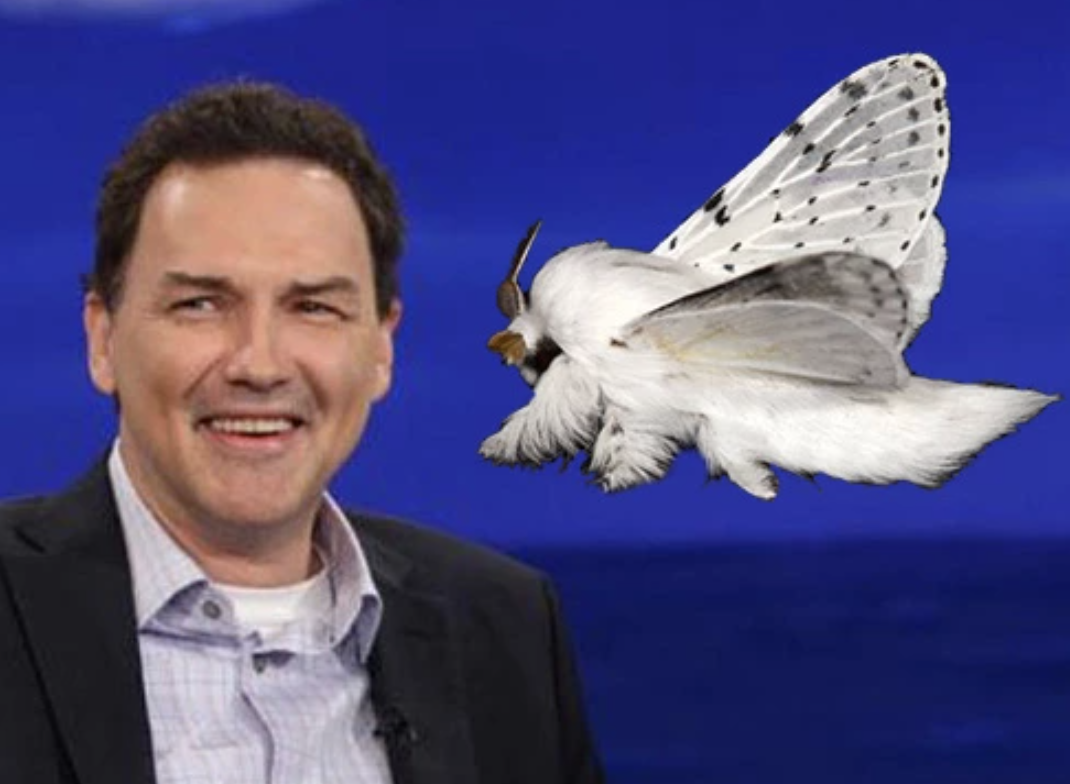
While it may sound strange, I would argue that there are theological “ghosts” hiding inside the great comic Norm Macdonald’s most famous joke. This was the “moth” story, of course.

Right. This joke wasn’t a Saturday Night Live shot at O.J. Simpson or Bill Clinton. It was a long, twisting, bizarre story about a nihilistic moth who was afraid of eternity. It was the kind of joke that fit with the summary of Macdonald’s life and work that opened this Ricochet tribute by Jon Gabriel: “Norm Macdonald — Dostoyevsky in Front of a Red Brick Wall.

The smartest comedians portray themselves as the dumbest; Norm Macdonald was the best at this sleight of hand. He graduated high school at 14, read Russian literature in his downtime, and had long philosophical discussions with clergy. … Macdonald was a student of human nature first, comedy second.

Macdonald was also a self-identified Christian, yet he made it clear that he didn’t consider himself a very good one.

The question raised during this week’s “Crossroads” episode (click here to tune that in) was whether news consumers had any right to expect journalists to mention that reality in their obits of this brilliant, courageous, edgy, mysterious comedian.

The more I read about him — following some really simple online searches — the more I hoped that someone would spot the religion “ghost” in his death-and-virtue haunted work. It also, at least to me, became obvious that many of his spiritual and religious questions were linked to his secret 10-year battle with the cancer that took his life. Cue up these two YouTube clips (here and here).

So this brings us to a crucial text: The actual “moth story” as it unfolded on on Conan.

Read carefully and keep thinking — Russian literature and maybe even a glimpse of a sacred icon.

Yes, I know that this is long. That’s the point:

Please respect our Commenting Policy

Facebook decides -- following clicks and $$$ -- that it should encourage online prayer

Facebook decides -- following clicks and $$$ -- that it should encourage online prayer

There are 2.4 billion Christians in the world today, according to most estimates.

Then again, nearly 3 billion people have Facebook accounts. Nearly 70% of U.S. adults use this social-media platform, which recently passed $1 trillion in market capitalization.

"I will use Facebook to reach people, because you almost have to do that," Father Andrew Stephen Damick, chief content officer for Ancient Faith Ministries, a 24-hour source for online radio channels, podcasts, weblogs, forums and more. The ministry was born in 2004 and is now part of the North American archdiocese of the ancient Orthodox Patriarchate of Antioch.

Facebook remains, he noted, "the No. 1 social-media platform in the world -- by a lot. You can't ignore all those people. … We knew this before COVID, but the pandemic made it impossible to deny the obvious. Everyone had to go online, one way or another."

Facebook Live became a way to stream worship services online, even if all a pastor could do was mount a smartphone on a stand. Even small congregations began holding online religious-education classes, support groups and leadership meetings.

As for worship, it was one thing for Protestant megachurches to stream TV-friendly services built on pop-rock Christian music and charismatic preaching. The online options were more problematic for faiths in which worship centered on the smells, bells, images and tastes of ancient liturgies.

Then, in early June, images began circulating of a Twitter message introducing "Prayer Posts" allowing Facebook users to "enable group members to ask for and respond to prayers" with a few clicks in a page's control settings. Participation could be as simple as a user clicking an "I prayed" button linked to a prayer.

This isn't a totally new idea. The Facebook "Prayer Warriors" group already has 865,700 active members, a flock larger than the average of 518,000 Episcopalians that attended services on an average Sunday in 2019, according to the denomination's statistics.


Please respect our Commenting Policy

Everything the media will cover about Afghanistan is bound up with a rigid form of Islam

Everything the media will cover about Afghanistan is bound up with a rigid form of Islam

Two weeks ago, the Religion Guy looked at the future of world Islam and the media after Afghanistan's Taliban takeover. Herewith a look backward with a bit of historical and cultural perspective for writers covering this turbulent and tormented land.

As University of Washington political scientist Anthony Gill commented in the Wall Street Journal, "Despite the seeming irrelevance of religion in the secular West, policy-makers and military strategists would do well to understand its power elsewhere in the world." In the case of Afghanistan, one good source for that is "Holy Wars: The Rise of Islamic Fundamentalism" (Routledge, 1989, reissued 2014) by British journalist Dilip Hiro, a native of Pakistan.

A big theme emerges: Anything and everything that has occurred and will occur is bound up with an especially rigid form of Islam that dominates Afghan culture. In rural villages across the countryside, where most live, mullahs with rudimentary schooling are part of the influential elite establishment.

Time and again over the past century, monarchs tried to tame the clergy and impose a somewhat flexible form of Islam only to be defeated by populist rancor. Among the issues: whether to educate girls, child marriage, modern dress vs. the veil and burqa, whether women can leave their houses without male chaperones or hold down jobs, women voting, alcohol prohibition, polygamy rules and whether to permit banks when the religion bans charging of interest.

Hiro writes that Afghanistan was "a landlocked society which clung to medieval Islam and tenaciously resisted modernization well into the last quarter of the 20th Century." The media have well and amply surveyed the following eruptions since a 1973 military coup abolished the monarchy.

Soviet troops invaded to prop up a Marxist regime and produced the militant Muslim movement (1979). U.S.-aided Mujahideen forces won Soviet withdrawal (1989). The Taliban emerged from the resulting confusion to impose harsh theocracy (1996). Western powers and Afghan allies expelled Taliban rulers for harboring the 9/11 plotters (2001). The Taliban rapidly regain power (August, 2021).


Please respect our Commenting Policy

Plug-In: Is Afghanistan a religion story? If so, it may be the year's biggest religion story

Plug-In: Is Afghanistan a religion story? If so, it may be the year's biggest religion story

A few weeks ago, realizing how quickly 2021 was racing toward 2022, I made a mental note of the year’s top religion stories so far.

On my quick list: Christian nationalism at the Jan. 6 Capitol riot. Battles over pandemic-era worship restrictions. Faith’s role in vaccine hesitancy. The biggest Southern Baptist Convention annual meeting in many years. The Communion drama between President Joe Biden and U.S. Catholic bishops. Jewish connections to the Florida condo collapse.

Nowhere in my mind: Afghanistan.

But now — especially after the suicide bombings in Kabul on Thursday — it’s looking as if news (much of it tied to religion) in that war-torn nation will dominate headlines for weeks and even months.

As I noted last week, it’s impossible to keep up with all the rapid-fire developments, but these stories delve into compelling religion angles:

Stranded at the airport (by Mindy Belz, World)

Taliban follow strict Islamic creed that doesn’t change with the times, scholars say (by Mark A. Kellner, Washington Times)

Taliban’s religious ideology has roots in colonial India (by Sohel Rana and Sumit Ganguly, ReligionUnplugged.com)

Who is ISIS-K, the group officials blame for the Kabul airport bombings? (by Jack Jenkins, Religion News Service)

Desperate Afghan Christians turned away at airport, aid groups say (by Alejandro Bermudez, Shannon Mullen and Matt Hadro, Catholic News Agency)

Kabul airport attacks strand Afghan contacts of Christian humanitarians (by Cheryl Mann Bacon, Christian Chronicle)


Please respect our Commenting Policy

Once again, journalists need to ponder this question: What is an 'evangelical'?

Once again, journalists need to ponder this question: What is an 'evangelical'?

THE QUESTION:

One more time: What is an "evangelical"?

THE RELIGION GUY'S ANSWER:

Last month the Public Religion Research Institute reported that its latest polling shows white U.S. Protestants who identify as "evangelical" are now outnumbered by whites who do not do so. That upended the usual thinking on numbers, and analysts raised doubts. The discussion led Terry Shoemaker of Arizona State University, writing for theconversaation.com, to again mull the perennial question of what "evangelical" means.

In the American context, this term essentially covers the conservative wing of Protestantism, a variegated constellation of denominations, independent congregations, "parachurch" ministries, media outlets, and individual personalities that is organizationally scattered but religiously coherent.

There are three ways of defining and counting U.S. evangelicals -- by belief, by church affiliation and by self-identification. Shoemaker's analysis (which is open to some nitpicking) started from the belief aspect and a four-point definition by historian David Bebbington in his 1989 work "Evangelicalism in Modern Britain." In summary, these points are:

(1) a high view of the Bible as Christians' ultimate authority,

(2) emphasis on Jesus Christ's work of salvation on the cross,

(3) the necessity of conscious personal faith commitments and changed lives (often called the "born again" experience) and

(4) activism in person-to-person evangelism, missions and moral reform.

Problem is, those four points overlap with the definition of "Protestant" or even "Christian."


Please respect our Commenting Policy

What does the New York Times mean when it reports on 'religious leaders' in Afghanistan?

What does the New York Times mean when it reports on 'religious leaders' in Afghanistan?

Anyone who has read GetReligion for more than a month probably knows that I have always been concerned about the lack of press coverage of endangered religious minorities in large parts of the world — including nations such as Afghanistan.

It’s crucial to remember, when talking about religious freedom issues and the Universal Declaration of Human Rights, that it is tragically common for members of a major world religion to punish other members of their own faith because of strong disagreements about doctrine and tradition. It is common to see persecution of those who have no faith — think atheists and agnostics — as well as those who have converted to a new faith.

As a reminder, here is Article 18 of that landmark United Nations document:

Everyone has the right to freedom of thought, conscience and religion; this right includes freedom to change his religion or belief, and freedom, either alone or in community with others and in public or private, to manifest his religion or belief in teaching, practice, worship and observance.

With all of that in mind, it’s easy to understand why I was interested in this headline atop a New York Times report: “The Taliban holds first meeting of religious leaders since taking Kabul.

The key, of course, is the meaning of these two words — “religious leaders.”

If you follow news updates, you know that the ancient Jewish community in Afghanistan is long gone — unless merchant Zablon Simintov chose to attend this meeting. Was there a Catholic representative at the meeting? Were leaders of the growing underground church invited? Did they dare to come out of hiding? What about the Muslim leaders of progressive (for lack of a better word) mosques who cooperated with Western leaders during the past 20 years?

Who were these “religious leaders”?


Please respect our Commenting Policy

United Methodist prelude: Small denomination faces its own split over Bible and sex

United Methodist prelude: Small denomination faces its own split over Bible and sex

The Reformed Church in America, one of those small denominations that usually get little ink despite rich history and accomplishments, is set to celebrate its 400th anniversary in 2028. But what will the RCA consist of by then?

At an October 14-19 General Synod meeting in Tucson, Arizona, this venerable church will decide whether to split up.

Reporters can think of this as a prelude to the formal divorce that the huge United Methodist Church (UMC) is expected to approve next year. In both churches, the central problem is the dispute over proper Bible interpretation, especially on sexual morality.

The goal of this Memo is to sketch out a few basics for journalists who'll cover the RCA showdown, which was postponed from 2020 because of COVID-19. The United Methodists have faced similar legal delays, of course.

Like the UMC, the RCA (www.rca.org) has spent nearly half a century discussing its traditional teachings on marriage and sexuality, which shaped rules on same-sex marriages and ordinations. All sides have reached a consensus that the divide is unbridgeable and the status quo untenable.

In 2018 the RCA commissioned a study team to consider future options that included "grace-filled separation." In July, the team issued its final recommendations with a proposed process for splitting.

The report offers a different and unusual path that avoids formal schism by reorganizing RCA regional units ("classes," singular "classis") on the basis of "affinity" in belief rather than the usual geography, in effect creating two churches within a church. In yet another proposal. those staying within the RCA and those leaving would still cooperate in a new, non-denominational foreign mission agency.

In the schism plan, the RCA would change an existing policy and let any unhappy local congregation leave and keep ownership of its building and other assets. A request to depart would need three-fourths approval by the congregation's governing board and then three-fourths of voting members (two-thirds margins are the more common Protestant practice).

Then there are other hoops to jump through.


Please respect our Commenting Policy

Thinking about the practical impact of shaming messages aimed at vaccine-resistant believers

Thinking about the practical impact of shaming messages aimed at vaccine-resistant believers

During my decades in religion-beat work, I have heard many an evangelical leader make the following sardonic observation.

Wait, I’ve also heard traditional Catholics offer variations on this theme. And there may be partisan political versions of this, as well. But that’s not my turf.

OK, here is the message: The quickest way for an evangelical to receive glowing elite press coverage and commentary (add social-media praise, after about 2000+) is to attack other evangelicals.

Now, that is not what this think piece is about. I say that, even though some vaccine-resistant religious leaders may have thought that’s what Daniel Darling, senior vice president for Communications at the NRB (think National Religious Broadcasters) was doing in his recent USA Today op-ed entitled, “Why, as a Christian and an American, I got the COVID vaccine.”

But careful readers could see that his message was way more complicated than that. If you weren’t sure about his intent, check out the lengthy interview with Darling that followed on MSNBC’s “Morning Joe” program (click here or see the YouTube at the top of the full copy of this post). The veteran evangelical leader — former head of communications for the Southern Baptist Convention’s Ethics and Religious Liberty Commission — was clearly sending two messages.

Yes, one was to religious leaders who have doubts about the COVID-19 vaccines. But he also had sobering words for their critics, whose attacks have caused anger and conflict, instead of changing minds.

Thus, what we have here is a piece of op-ed work, and the MSNBC appearance that followed, that people on both sides of this warfare need to parse carefully. This includes journalists who are covering this story — which is so not over yet.


Please respect our Commenting Policy

With the Taliban takeover, world Islam -- and the press -- have much at stake in the future

With the Taliban takeover, world Islam -- and the press -- have much at stake in the future

The return of Taliban rule after 20 years will likely produce the typical mayhem and murder when a regime suddenly collapses. Longer-term, immense challenges face the people of Afghanistan under the "Islamic Emirate" and, externally, the takeover will intensify a host of international military, security, political and humanitarian problems.

But much is also at stake for world Islam, a crucial aspect that the media have tended to slight thus far, as tmatt has already observed here at GetReligion. Journalists may be witnessing a new phase in what Georgetown University expert John Esposito has called a long-running "struggle for the soul of Islam."

The fallout could last for years, or even a generation, because it will be highly difficult to again dislodge Taliban control — from within or without. Though plans are unknown, Afghanistan’s rulers may well reimpose harsh practices that had provoked widespread condemnation (without, however, losing religiously freighted diplomatic recognition by Saudi Arabia). And they could again provide a strategic national sanctuary from which terrorists could target innocent civilians in the despised West.

The key, of course, is that all this would be proclaimed as God's will, enacted in the name of Islam and for its benefit. The Taliban announce religious zeal for a strict construction of Islam's dominant Sunni branch in their very name, which derives from "student" in the Pashto language.

Militant movements that include the Taliban have achieved special appeal for youthful Muslim devotees and some government backing. They have variously claimed religious sanction for destruction of historic artifacts, torture, mutilation, beheading and stoning to death, execution without trial, kidnaping for ransom, forced marriages and sexual slavery, drug trafficking and thievery, killing of envoys and charity workers, and persecution not only of Christians and Jews and Yazidis but even moreso of fellow Muslims who dissent (see scholar Paul Marshall’s book “Silenced: How Apostasy and Blasphemy Codes are Choking Freedom Worldwide“). Not to mention banning music and movies, kites and dolls.

The most severe consequences have fallen upon Muslim girls and women, not merely put under strict clothing mandates, but denied human rights, education beyond age 10 or careers outside the home.


Please respect our Commenting Policy