Scriptures

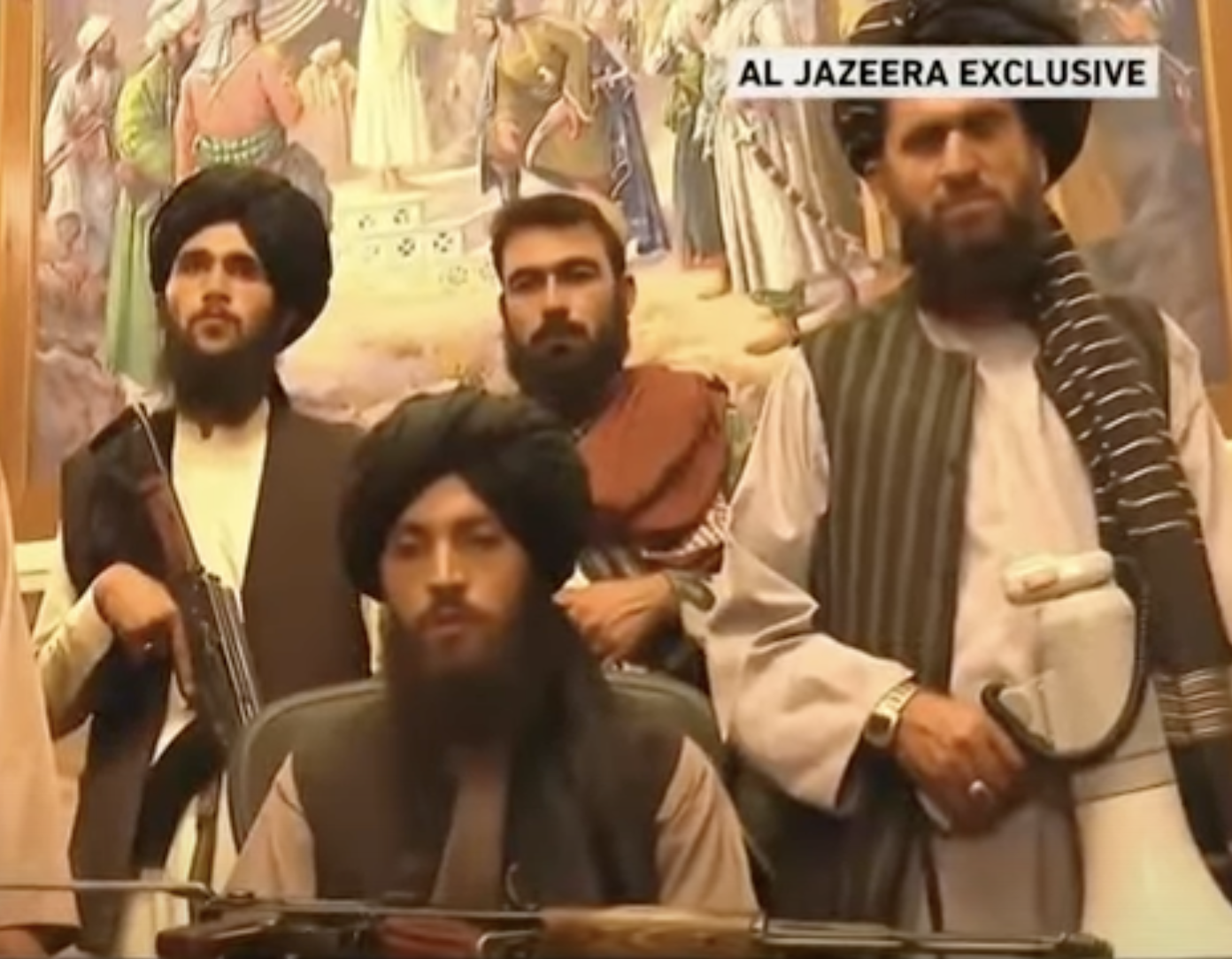
Trying to spot religion 'ghosts' in the dramatic fall of America's version of Afghanistan (#FAIL)

Trying to spot religion 'ghosts' in the dramatic fall of America's version of Afghanistan (#FAIL)

The whole idea of Axios, as a news publication, is to take massive, complex stories and — using a combination of bullet lists and URLs to additional information — allow readers to quickly scan through the news of the previous day. The Axios team calls this “smart brevity.”

More often than not, this turns out to be a crunched summary of the big ideas in mainstream coverage. Thus, it’s logical to look at this online newsletter’s take — “1 big thing: System failure” — on the horrific scenes that unfolded yesterday in Kabul, Afghanistan.

The big question: What did American diplomats, intellectuals and politicos miss in the big picture?

* The United States was literally run out of town after 20 years, $1 trillion and 2,448 service members' lives lost.

* Mohammad Naeem, the spokesman for the Taliban's political office, told Al Jazeera today: "Thanks to God, the war is over in the country."

Why it matters: A friend who spent more than a decade as a U.S. official in Afghanistan and Iraq texted me that the collapse "shows we missed something fundamental — something systemic in our intel, military and diplomatic service over the decades — deeper than a single (horrible) decision."

* As the BBC's Jon Sopel put it: "America's attempt to export liberal democracy to Afghanistan is well and truly over. …”

What were the key tasks in this “export of liberal democracy”? Here is my two-point summary.

First, the United States and its allies had to build an Afghan military that could protect this project. #FAIL

Second, the Western nation builders had to sell a vision of an Islamic culture that, somehow, embraced American values on a host of different issues — from free elections to freedom for women, from Western-style education to respect for the Sexual Revolution in all its forms. This Georgetown University faculty lounge vision of Islam needed to be more compelling than the one offered by the Taliban. #FAIL

Looking at this from a journalism perspective, I think it is more than symbolic that most of the elite media coverage of the fall of this new, alternative Afghanistan have almost nothing to say about Islam and, in particular, the divisions inside that stunningly complex world religion. Was this, in any way, a “religion story”? Apparently not. #FAIL

There is way too much coverage to look at, of course. However, it does help to look at The New York Times, since that is the straw that stirs the drink in American media. My goal was to find material that contrasted the Taliban’s vision of Islam with the vision offered by the U.S. State Department.


Please respect our Commenting Policy

Adventures in religion-beat life: What's the difference between a 'pool pit' and a pulpit?

Adventures in religion-beat life: What's the difference between a 'pool pit' and a pulpit?

I read the preacher’s words once — and then again — and tried to make sense of them.

In a Florida TV station’s report on a church promoting the COVID-19 vaccines, minister Charlie McClendon was quoted as saying, “Each week I emphasize it from the pool pit just before I preach.”

The pool pit?

I’ve covered religion for two-plus decades, but I hadn’t come across that term. Strange.

Later, my eyes popped wide open in the middle of the night.

Suddenly, it hit me.

“Pulpit.”

I burst into laughter, much to the chagrin of my sleeping wife.

After I posted on Twitter about the mistake, reporter Gretchen Kernbach offered a gracious mea culpa and corrected the wording.

Even before her tweet, I made clear — amid humorous responses and more serious calls for better religious literacy in journalism — that I wasn’t casting stones. In 30 years of news reporting, I’ve made plenty of doozy mistakes myself.

I just thought this particular one was funny. If you don’t believe me, feel free to ask my wife.


Please respect our Commenting Policy

Ticking United Methodist clock: Will the church's establishment Zoom to the left?

Ticking United Methodist clock: Will the church's establishment Zoom to the left?

As one of the founders of the United Methodist Centrist Movement, the Rev. Doug Damron spend years hiding his rejection of his church's rule that the "practice of homosexuality is incompatible with Christian teaching."

Centrists used a "perfectly delicious" theological platform defined by words such as "unity," "peace" and "moderate," he said, during a recent guest sermon at the historic Broad Church United Methodist Church in Columbus, Ohio. After decades of fighting about sex, many hoped "traditionalists" and "progressives" could keep "United" attached to "Methodist."

The goal was "compromise," he said, a "sweet word" that hid a "status quo of oppression." But there was "an institution to protect" and many clergy feared being honest. Thus, they didn't openly attack the denomination's Book of Discipline.

"By nature, I am a rule follower," he said. "I knew that such defiance may have cost me my clergy credentials."

Now it's time for candor and courage, said Damron. When United Methodists finally split, conservatives will build a church defined "by who they will exclude today and who they will exclude tomorrow." The question is whether progressives will act on their convictions.

"It is time to speak into existence, following the Spirit's leading, a church which fully welcomes, includes, affirms not only God's beloved gay and lesbian ones, but a host of other folks who have found the door of the church closed," he said. This would include embracing and ordaining "trans folks, bi folks, kink folks, poly folk, gender-fluid folk and others."

The United Methodist clock kept ticking this summer, even as COVID-19 realities delayed -- again -- votes on the "Protocol of Reconciliation and Grace Through Separation" negotiated by activists on the left and right. The General Conference will not meet until August 2022, since the UMC establishment has declined to take actions in virtual forums.


Please respect our Commenting Policy

Old Southern Baptist stereotypes? Journalists need to update some information

Old Southern Baptist stereotypes? Journalists need to update some information

Anyone looking for Baptists should head to Greenville, S.C.

"People here say you can throw a rock in one direction and hit a Southern Baptist church and if you throw a rock in the other direction you'll hit an independent Baptist church," said Nathan A. Finn, provost of North Greenville University.

Finn's school -- with strong Southern Baptist ties -- isn't the only brand of "Baptist" life in town. There's the progressive Furman University, as well as the independent Bob Jones University, known for its rock-ribbed Baptist defense of fundamentalism.

The Baptist world is extremely complex and hard for many outsiders to navigate. Some of this confusion, said Finn, affects life inside the most prominent Baptist flock -- the Southern Baptist Convention -- and perceptions of SBC conflicts.

"Lots of people need to understand that Southern Baptists are far more diverse, ethnically and culturally, than they think we are," he said, in a telephone interview. "At the same time, we're more uniformly conservative that we often appear, especially since we spend so much time fighting with each other over some of the small points of theology on which we differ."

With some of these stereotypes in mind, Finn recently fired off a dozen Twitter messages describing different images of real "Southern Baptist" churches that are common today. The goal, he said, was to create "composites of what different kinds of SBC congregations look like" and he gave them "names that are common with certain types of real churches."

There is, of course, a "First Baptist Church" which Finn described as "a downtown church that runs 500 in worship. The church is affluent, which is reflected in their beautiful building. The worship service is traditional. There are lots of programs & committees" and the congregation is known for big donations to the SBC's shared "Cooperative Program" budget.

Then there is one of the megachurches that have dominated the American religious marketplace in recent decades. While the word "Baptist" is missing in its name, Finn noted: "CrossWay Church is a suburban church that runs 1400 in two services. The 'feel' of each service is laid back & contemporary. CrossWay has excellent recreational facilities" and its leaders are "considering launching a second campus."

These big churches frequently make headlines.


Please respect our Commenting Policy

Thinking about evangelicals and January 6: DIY independents are (still) not the whole story

Thinking about evangelicals and January 6: DIY independents are (still) not the whole story

How many Protestant denominations are there?

That’s a question I’ve been hearing as long as I have walked the religion beat. People used to toss around crazy numbers like 32,000 or 23,000, but no one takes those numbers seriously anymore. At the same time, a number like 200 sounds way low to me.

Denominations — large and small, formal and informal — remain an important part of the religion marketplace, but they are not really where the action is these days. Have you been reading the Julia Duin posts (start here and here) exploring the post-Donald Trump arguments among the Pentecostal and charismatic “prophets”? Is the clout of these emerging doctrinal tribes limited by their lack of historic brand names?

Hang in there with me for a moment. I am trying to connect an important moment in January 6th hearings on Capitol Hill with an important piece that former Southern Baptist leader Russell Moore wrote just after the riot (and has not re-upped on Twitter). Here is the crucial passage from a Washington Post report describing a key moment in the hearing that, with good cause, has provoked some debate.

In emotional testimony that recounted the abuse he received while defending the Capitol on Jan. 6, D.C. police officer Daniel Hodges said he was struck by the flags carried by members of the mob, whom he characterized as “terrorists.”

“To my perpetual confusion, I saw the thin blue line flag, a symbol of support for law enforcement more than once being carried by the terrorists as they ignored our commands and continued to assault us,” Hodges said.

He nodded to the conflict between the beliefs represented by the flags, and the actions of those holding them.

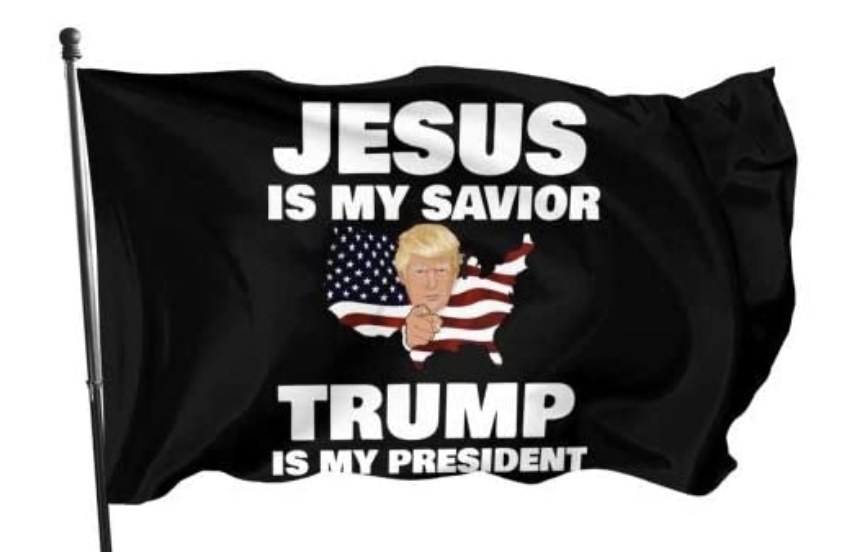
“It was clear the terrorists perceived themselves to be Christians. I saw the Christian flag directly to my front, another ‘Jesus is my savior.’ ‘Trump is my president.’ Another ‘Jesus is king,’ ” Hodges continued.

No doubt about it, lots of those marchers and the rioters who attacked the Capitol (two different groups, in terms of the legality of their actions) can accurately be called “white evangelicals” — in large part because “evangelical” has become a term with almost zero historic or doctrinal content.

The question, from the start, is whether evidence would emerge in trials indicating that any of these lawbreakers were linked to powerful evangelical Protestant denominations, ministries, schools, etc.


Please respect our Commenting Policy

Future scenarios emerge as the media debate the health of U.S. Mainline Protestantism 

Future scenarios emerge as the media debate the health of U.S. Mainline Protestantism 

What has long been called “Mainline” Protestantism suffered inexorable shrinkage this past generation, eroding so much of its once-potent U.S. cultural impact that the news media tend to neglect these moderate-to-liberal churches. Yet a new Public Religion Research Institute poll reported what it argues is a sudden comeback and indicates Mainliners even outnumber the rival conservative "evangelicals" widely thought to dominate Protestantism.

True? The Religion Guy assembled devastating statistics that raise questions about that claim.

U.S. religion's hot number-cruncher Ryan Burge is even more doubtful and notes the Harvard-based Cooperative Election Study found a recent rise in Americans who self-identify as "evangelical."

As reporters ponder that debate, they should also play out longer-term Mainline scenarios, for instance for the Episcopal Church and United Methodist Church.

The hed on another Burge article proclaimed that "The Death of the Episcopal Church is Near."

"I don't think it's an exaggeration at all to believe that Episcopalians will no longer exist by 2040," he contended.

His gloomy forecast relied partly on a stark, candid piece from the blog of the Living Church magazine. It reasoned that annual marriages and baptisms foretell how the denomination will fare. If trends continue, the former would fall from 39,000 in 1980 to 750 as of 2050, and the latter from 56,000 to 2,500, over decades when average worship attendance would plummet from 857,000 to 150,000.

Similarly, in 2019 the Evangelical Lutheran Church in America's research agency projected that this now-sizable denomination would dip below 67,000 members by 2050 and average Sunday attendance would hit 16,000 by 2041. Two years before that, Wheaton College's Ed Stetzer notably warned that Mainline Protestantism has "23 Easters left."


Please respect our Commenting Policy

Does this ancient document have authority in modern debates about moral theology?

Does this ancient document have authority in modern debates about moral theology?

THE QUESTION:

What was the ancient Didache and what is its to moral controversies relevance today?

THE RELIGION GUY'S ANSWER:

Except for the Bible or Quran, ancient writings rarely pop up in 21st Century public disputes. So it was rather interesting to see that happen with the Didache, whose importance rests on its likely status as the oldest surviving text from Christianity's earliest days other than the New Testament itself. Certain scholars think it was written even before the Gospels, between A.D. 50 and 70, but more common dating puts it in the early 2nd Century A.D.

This text's sudden media appearance involved the unending abortion debate, which is hotter than ever in the U.S. with the Supreme Court set to re-examine the law next term in the Dobbs case and the Catholic bishops' conference considering whether to endorse denial of Communion to "pro-choice" office-holders, President Biden included.

Garry Wills, the Northwestern University historian and renegade Catholic, recently sought to convince New York Times readers that "the cult of the fetus" embraced by Catholic bishops (also evangelical Protestants) is off-base because, among other things, Jesus and the New Testament authors never condemn abortion as sinful.

A blistering response by National Review's Michael Brendan Dougherty cited the Didache as prime evidence in contending that Christianity from its earliest phase opposed abortion. The document's second chapter forbids "grave sins," listed as follows:

"You shall not commit murder, you shall not commit adultery, you shall not commit pederasty, you shall not commit fornication, you shall not steal, you shall not practice magic, you shall not practice witchcraft, you shall not murder a child by abortion nor kill that which is born. You shall not covet the things of your neighbor, you shall not swear, you shall not bear false witness, you shall not speak evil, you shall bear no grudge . . . (Roberts-Donaldson translation).

A later section targets "murderers of children, destroyers of the handiwork of God" in a catalogue of people who are living out "the way of death."


Please respect our Commenting Policy

When the FBI infiltrates a Bible study, why does CNN say it was a fake 'Bible study'?

When the FBI infiltrates a Bible study, why does CNN say it was a fake 'Bible study'?

Every so often, one comes across a news story that’s beyond odd.

Ever since the Jan. 6 attack on the U.S. Capitol, law enforcement has been trying to get to the bottom as to who and what were the planners for all this. We all know that. But this time around, the FBI infiltrated something new — a Bible study in Alexandria.

Or, as many media are saying, a “Bible study.”

Look at this part of a CNN piece. The key is to try to find some information on a specific religious institution or movement linked to this activity:

The FBI has infiltrated a "Bible study" group in Virginia that after the January 6 riot had members discussing surveilling the US Capitol and their wish for secession from the US, and investigators closely followed one member's plans to build and test Molotov cocktails, according to recently unsealed court records.

The newly disclosed criminal case against Virginia man Fi Duong -- who also goes by "Monkey King" and "Jim," according to the court record -- arose after Duong interacted with undercover law enforcement officers several times on January 6 and into recent months, when the FBI ultimately gained access to his group in Virginia then accompanied him to an old jail as Duong allegedly pursued bomb-building.

Looks like an FBI agent befriended Duong and began hanging out with him and his friends.

Duong told the FBI agent that his group tried to be "cloak and dagger" and wanted to "build resistances," according to court records. The agent then attended what the group members called a "Bible study" meeting at an Alexandria, Virginia, house in February, where the group members discussed the Bible and secession, weaponry and combat training, and using methods to make their communications private, according to court records.

One person in the group commented at the meeting about creating "a semi-autonomous region" for Virginia. "I like the Constitution; I don't like the Democratic sh*t this region keeps voting for," the person said, according to the FBI.

I’m curious why the scare quotes are put around this Bible study group when it’s obvious there really was discussion about the Bible at this gathering. I listened to CNN’s video alongside the article and the reporter called the gathering “a so-called Bible study meeting.”


Please respect our Commenting Policy

Hot Takes: Ryan Burge on return of debates about evangelicals and QAnon (etc.)

Hot Takes: Ryan Burge on return of debates about evangelicals and QAnon (etc.)

Well, Bobby Ross, Jr., is taking the week off.

Thus, I went looking for another list of religion-news material featuring short punchy takes on lots and lots of different topics.

I settled on this VICE News chat with GetReligion contributor Ryan Burge — that must-follow guy on Twitter who is also well known for his work at the Religion in Public weblog.

To say that this punchy little video report includes some Hot Takes is an understatement. Yes, there is a flashback to the whole QAnon and evangelicalism wars.

However, let me stress that there are some producers at VICE News who are sincerely interested in the complex world of American evangelicalism and they are doing their homework. I know this because I sent about three hours with one of their production teams several months ago and I know the wide range of materials that we covered.

That video is still in a vault somewhere. It would be interesting if they turned bites of it into a bullet-list collection of takes similar to this one with the always quotable Burge.

So what shows up in this Burge blast? He put this list out on social media:

Things I discuss in this Vice News video:

QAnon

John Darby

Dispensationalism

Thomas Jefferson as the anti-Christ


Please respect our Commenting Policy