Scriptures

Plug-In: Lots of news about Southern Baptists, U.S. Catholic bishops and even a modern Jonah

Plug-In: Lots of news about Southern Baptists, U.S. Catholic bishops and even a modern Jonah

One.

Two.

This makes three straight weeks that the Southern Baptist Convention’s big meeting in Nashville, Tennessee, has topped Plug-in.

Want an impossible challenge? Try highlighting the best coverage out of the plethora of headlines produced in Music City this week.

Some of the big news:

• The surprise election of “moderate” (if you’re OK with that term from the SBC past) pastor Ed Litton from Alabama as the SBC’s president.

Religion News Service’s Bob Smietana, the Washington Post’s Sarah Pulliam Bailey, Christianity Today’s Kate Shellnutt, the New York Times’ Ruth Graham, The Associated Press’ Travis Loller and Peter Smith and ReligionUnplugged’s own Hamil R. Harris all offer insightful coverage on that. (Even the Los Angeles Times weighs in, via Atlanta bureau chief Jenny Jarvie.)

The skirmish over critical race theory, which Chris Moody describes in an in-depth narrative piece for New York Magazine.

Also, don’t miss The Tennessean’s Wednesday front-page report by Katherine Burgess, Duane W. Gang and Holly Meyer.

For more on the CRT angle, see Adelle M. Banks’ RNS story and Greg Garrison’s Birmingham News coverage.

The major action to confront sexual abuse in the denomination, as the Houston Chronicle’s Robert Downen, CT’s Shellnutt, the Memphis Commercial Appeal’s Burgess and RNS’ Smietana detail.
Please respect our Commenting Policy

Thinking about 1962: Catholic politicos, an archbishop, excommunication, doctrine and race

Thinking about 1962: Catholic politicos, an archbishop, excommunication, doctrine and race

The equation was rather remarkable.

First you had some Catholic politicians who — in words and deeds — kept defying church teachings on an important and controversial topic in public life.

Then you had an archbishop who faced a tough decision about whether to do anything, beyond verbal warnings, to show them he was willing to defend these church teachings on moral theology and the sacraments.

When the archbishop stepped up and punished the politicos, denying them Holy Communion and more, the mainstream press — CBS and The New York Times, even — openly backed his actions with positive coverage.

Wait, what was that last thing?

Right now, the U.S. Catholic bishops are headed deeper into a showdown over the status of President Joe Biden and other Catholics who openly — through word and deed — defy church teachings on abortion, marriage, gender and other issues in which doctrines are defined in the Catholic Catechism and centuries of church tradition.

As part of the discussion this past week, America magazine — a strategic voice for Catholic progressives — can this fascinating essay: “What a 60-year-old excommunication controversy tells us about calls to deny Biden Communion.” It was written by Peter Feuerherd, a journalism professor at St. John's University in New York City. Here’s the overture:

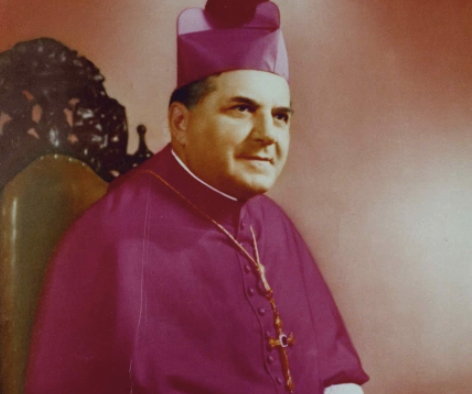
In April 1962, Archbishop Joseph Rummel of New Orleans not only denied Communion to three Catholics in his archdiocese; he went a step beyond. At 86 years of age and in ill health — he would die two years later — he formally excommunicated the three, who vehemently opposed his efforts to desegregate Catholic schools.


Please respect our Commenting Policy

New podcast: Is SBC President Ed Litton 'woke'? What is a 'conservative' stance on CRT?

New podcast: Is SBC President Ed Litton 'woke'? What is a 'conservative' stance on CRT?

It certainly was an interesting way to start a podcast (click here to tune that in) about press coverage of the 2021 national meeting of the Southern Baptist Convention.

Here’s the gist of what “Crossroads” host Todd Wilken wanted to know: If journalists were going to write that the Rev. Mike Stone — who lost his bid to become SBC president — was “right-wing” and “ultraconservative,” then why didn’t they pin “left-wing” and “ultraliberal” labels on Bishop-elect Megan Rohrer, the first trans/queer/gender fluid bishop in the Evangelical Lutheran Church of America?

Think about it this way: Stone and the new Conservative Baptist Network — many flew pirate flags — set out to attack the already conservative (theologically speaking) leadership of the Southern Baptist Convention, saying that it was not conservative ENOUGH on several issues. In other words, the goal was to move the SBC further right and away from recent pronouncements by the convention.

Meanwhile, Bishop-elect Rohrer is an open advocate of the CURRENT teachings of the ELCA. In the context of this denomination and its doctrines, Rohrer is part of the ruling class.

Now, is Rohrer “ultraliberal” in the context of American culture? How about liberal mainline Protestantism? How about other Lutheran bodies? Was Stone “ultraconservative” in the context of today’s SBC?

You can see the struggle here. Are journalists supposed to label religious leaders in the context of the wider culture or of their own flocks? I have argued that this depends: I go with the “flock” framing when discussing news events that are taking place inside a given “flock.”

As I argued the other day (#SBC21: Press wrestles with Twitter-niche labels as Southern Baptists choose a new leader), most of the religion-beat pros who gathered in Nashville tried to be very cautious when describing the various groups under the conservative SBC umbrella. The exception was the New York Times, which offered a kind of acid-flashback return to the SBC civil wars of the early 1980s.

The key was the labeling in this early headline — “Southern Baptists Narrowly Head Off Conservative Takeover” — and then this overture:


Please respect our Commenting Policy

#SBC21: Press wrestles with Twitter-niche labels as Southern Baptists choose a new leader

#SBC21: Press wrestles with Twitter-niche labels as Southern Baptists choose a new leader

If you have followed mainstream coverage of religion (and politics) in recent decades, you know that many journalists tend to make liberal use of the vague term “moderate.”

This has certainly been true of coverage of warfare inside the Southern Baptist Convention.

Since “liberal” is kind of scary, journalists have long divided the SBC into “moderate” and “conservative” camps. With very few exceptions, your typical “moderate” Southern Baptist would be a “fundamentalist” in the world of mainline Protestantism.

Thus, in the great SBC civil war of 1979 and the years thereafter, the term “moderate” came to mean Southern Baptists that mainstream journalists thought were acceptable. These were the folks in the white hats who backed abortion rights, women’s ordination and, at first, were silent or vague on LGBTQ issues. Most of all, they were the enemies of those Southern Baptists who fit under the Religious Right umbrella.

With that in mind, consider the tweaked double-decker headline on The New York Times report after the fireworks at the SBC national meetings in Nashville:

Southern Baptists Narrowly Head Off Ultraconservative Takeover

Ed Litton, a moderate pastor from Alabama, won a high-stakes presidential election with the potential to reshape the future of the country’s largest Protestant denomination.

The original headline stuck with the old-school “moderate” vs. “conservative” language.

The leadership of the Conservative Baptist Network may have been sad about their candidate, the Rev. Mike Stone of Georgia, losing the election. But they had to be elated at how the Times described this event in terms that meshed with their views on SBC life. Here is the top of that report:

NASHVILLE — In a dramatic showdown on Tuesday, Southern Baptists elected a moderate pastor from Alabama as their next president, narrowly heading off an attempted takeover by the denomination’s insurgent right wing.


Please respect our Commenting Policy

UFO buzz raises (once again) big religion question: Will aliens erase belief in Christianity?

UFO buzz raises (once again) big religion question: Will aliens erase belief in Christianity?

THE QUESTION:

Would proof that intelligent life exists on distant planets overturn the Christian religion?

THE RELIGION GUY'S ANSWER:

Religious skeptics say very likely yes.

Why? They argue that given the unimaginably vast number of planets throughout space, there seem to be heavy odds that life would have evolved on some or many of them. If so, we earthlings no longer stand at the center of God's plan for the cosmos, and that overturns the biblical viewpoint.

The answer is “no,” according to the consistent view of Christian thinkers who've pondered this since ancient times. The Bible naturally focuses on homo sapiens, not theoretical species elsewhere.

Space is red hot just now. It's Roswell 1947 all over again. The latest fuzzy videos and reports from the Pentagon suggest something may be going on up there that's not merely the stuff of science fiction novels. Are we no longer alone in the universe? Are aliens from another galaxy spying on us from those UFOs (Unidentified Flying Objects)? Is SETI (the Search for Extra-Terrestrial Intelligence) poised for its devoutly desired breakthrough?

Even strict Bible literalist Ken Ham of Answers in Genesis sees a chance because "the Bible does not state whether life exists elsewhere in the universe," though he "strongly" suspects it does not.

University of Rochester astrophysicist Adam Frank pooh-poohs the current UFO buzz because the real story is that super telescopes may well bring us proof of life by other means, for instance spotting light gleaming on the dark sides of distant planets. He also poses a common-sense objection. If we're really being visited by aliens "why don't they just land on the White House lawn and announce themselves?"

That "I" in SETI is all-important.


Please respect our Commenting Policy

#SBC2021, CRT and sexual abuse: Are compromises possible in this complex showdown?

#SBC2021, CRT and sexual abuse: Are compromises possible in this complex showdown?

When most journalists, and thus most news consumers, think of Southern Baptists it’s highly likely that “compromise” is not one of the first words that leaps to mind.

But think about this for a moment. The current firestorm surrounding the Southern Baptist Convention’s national meetings in Nashville (tomorrow and Wednesday) centers on recent efforts by the convention’s leaders to find working compromises on two explosive issues in church life — racism and sexual abuse. In both cases, forces have pulled at convention leaders to move further to the right or to pursue more “progressive” options that would clash with realities in SBC life and polity.

Consider the hellish realities of racism and, in particular, the complex secular doctrines of “Critical Race Theory.” The SBC could praise CRT and embrace it or totally reject this school of thought. A compromise? That would stress listening to conservative Black church leaders and saying that CRT makes some points about racism in America that are valid, but that it also contains secular views of evil and race that do not mesh with traditional Christian beliefs. Hold that thought.

On sexual abuse, there are progressives who want the SBC to start some kind of national agency that would be granted powers to yank abusive clergy and congregations into line. This would clash with Baptist teachings on the autonomy of local churches. At the same time, others say SBC leaders have already gone to far while trying to create a centrist, compromise, stance — providing some guidelines for churches facing accusations of sexual abuse, as well as best-practices materials on how to help victims.

So, here is the journalism question to ponder in the next few days: Can national-level religion reporters find a way to avoid the classic two-army, left vs. right, template that dominates most news coverage of clashes of this kind? This would allow readers to see the larger picture — the attempt to find compromises between two extremes that please enough conservatives to prevent a damaging explosion in SBC life.


Please respect our Commenting Policy

Beyond Potiphar's wife: Leaked letters yank SBC debates about sexual abuse into the open

Beyond Potiphar's wife: Leaked letters yank SBC debates about sexual abuse into the open

It's hard to follow warfare inside the Southern Baptist Convention without a working knowledge of biblical symbolism.

Consider this passage in a May 31 letter (.pdf here) from the Rev. Russell Moore to SBC President J.D. Greear, which described key events leading to his recent resignation as head of the denomination's Ethics and Religious Liberty Commission.

"You and I both heard, in closed door meetings, sexual abuse survivors spoken of in terms of 'Potiphar's wife' and other spurious biblical analogies," wrote Moore, in a letter posted at the Baptist Blogger website. "The conversations in these closed door meetings were far worse than anything Southern Baptists knew. … And as you know, this comes on the heels of a track-record of the Executive Committee staff and others referring to victims as 'crazy' and, at least in one case, as worse than the sexual predators themselves."

Who was "Potiphar's wife"? She was known for her efforts to manipulate Joseph during his enslavement in Egypt. The Genesis narrative notes: "Now Joseph was handsome and good-looking. And after a time, his master's wife cast her eyes upon Joseph, and said, 'Lie with me.' " When Joseph refused, the seductress accused him of assault and had him jailed.

It's easy to see how "Potiphar's wife" insults would fit into attempts to discredit Moore and activists who want America's largest Protestant flock to change how its agencies, seminaries and nearly 48,000 autonomous congregations deal with sexual abuse.

Moore's resignation, after years of attacks by critics, has pushed sexual abuse to the top of the agenda at the SBC's June 15-16 national meetings in Nashville -- along with the election of a new president.


Please respect our Commenting Policy

Weekend thinking: Concerning Southern Baptists and the fracturing of evangelicalism

Weekend thinking: Concerning Southern Baptists and the fracturing of evangelicalism

All together now: Can the word “evangelical” be defined in doctrinal terms or is it time to admit that “evangelical” is a political term and that’s that?

A related question: Is the war between the alleged “woke” conservatives and the “real” conservatives in the Southern Baptist Convention based on serious disagreements about essential Christian doctrines or leftover resentments and anger from the 2016 rise of Donald Trump?

The way I see things, religion-beat pros can do some groundbreaking research on these questions this coming week during the SBC’s tense national meetings in Nashville.

If you have been following SBC life for a half-century or so, you know that what goes around comes around. Only this time it is really, really hard to find concrete doctrinal differences between the generals in the two warring camps. That was the subject of this week’s GetReligion podcast: “Will SBC politicos answer questions about doctrinal clashes in this new war?

But here is one more question for this weekend: Is there anything really new about this conflict?

A fascinating piece at MereOrthodoxy.com — “The Six Way Fracturing of Evangelicalism” — believes that we are watching a religious and cultural earthquake that will change evangelicalism forever. The piece was written by the Rev. Skyler Flowers of Grace Bible Church in Oxford, Miss., a graduate of Reformed Theological Seminary.

Before I point out a few crucial pieces of that puzzle, I’d like — once again — to flash back to a 1987 interview I did with the Rev. Billy Graham, a man who knew a thing or two about evangelicalism. I asked him: “What does the word ‘evangelical’ mean?”

"Actually, that's a question I'd like to ask somebody, too," he said, during a 1987 interview in his mountainside home office in Montreat, N.C. This oft-abused term has "become blurred. ... You go all the way from the extreme fundamentalists to the extreme liberals and, somewhere in between, there are the evangelicals."

The key, he argued, is that “evangelical” needed to be understood:


Please respect our Commenting Policy

New podcast: Will SBC politicos answer questions about doctrinal clashes in this new war?

New podcast: Will SBC politicos answer questions about doctrinal clashes in this new war?

Whether they’ll admit it or not, when covering conflicts and controversies many (not all) journalists seem to think that one of their main duties is to help (wink, wink) readers separate the people in white hats from those in black hats, smart people from the not-so-smart people and kind people from mad people.

There are several ways to do this. Reporters can quote calm, articulate people on one side, will seeking the most radical, scary voices on the other. I have, when covering events linked to abortion, seen TV crews rush past women who oppose abortion (including women who have experienced abortions) in order to interview screaming male protesters who are waving (literally) bloody signs.

Journalists can do long, personal interviews with people on one side, while pulling dry, boring quotes from press releases on the other. They can allow one set of activists to define all the crucial terms and questions, while ignoring or distorting the beliefs of activists on the other side.

Journalists also get to choose the labels they pin on the competing armies. That was the subject that loomed over this week’s “Crossroads” podcast (CLICK HERE to tune that in), which focused on the bitter debates surrounding the resignation of Russell Moore as leader of the Southern Baptist Convention’s Ethics and Religious Liberty Commission.

The obvious other news hook: The nation’s largest non-Catholic flock will hold its 2021 national meeting next week (June 15-16) in Nashville. For more background, see this earlier post: “That SBC powderkeg: Clearly, executive committee is bitterly divided on sexual-abuse issues.”

As the old saying goes, “You can’t tell the players without a program.” Well, it’s going to be crucial how journalists label the “players” in this conflict.

For example, here is a crucial section of a new Peter Wehner essay at The Atlantic, which ran under this headline: “The Scandal Rocking the Evangelical World — The sudden departure of Russell Moore is forcing an overdue conversation about the crises of American Christendom.”


Please respect our Commenting Policy