Scriptures

Returning to Kamp Kanakuk: Is this new expose a work of journalism, theology or both?

Returning to Kamp Kanakuk: Is this new expose a work of journalism, theology or both?

Readers with long memories will recall that, when the Internet arrived it had an immediate impact on important subjects that rarely received adequate coverage in mainstream media.

Take religion, for example. The lower cost of publishing online led to an explosion of forums, listservs, newsletters, online “radio” channels, podcasts and weblogs. Some failed or evolved into new forms — consider the long and complicated histories of Beliefnet and Patheos — and others became, well, normal.

Now, in the “cancel culture” era, it’s clear that another example of online evolution is affecting serious coverage of religion, as well as other complicated topics.

I am referring to the controversies surrounding Substack and the myriad newsletters and alternative publications thriving there. For a sample of the fea paranoia surrounding Substack, click into this thread from a professor at the UCLA Center for Critical Internet Inquiry or read between the lines of this Washington Post column: “The Substack controversy’s bigger story.” Here is a sample of that:

Substack is a start-up for self-publishing email newsletters: Writers decide how often to write and whether and how much to charge; Substack sends the newsletters and collects any fees. The ease of use has made it popular with journalists. …

Some of the most prolific users are heterodox political writers who had found mainstream publications an increasingly poor fit. A number quickly rose to the top of the Substack leader boards. This attracted the gimlet eye of the cancelers: Other online writers — some of whom had their own Substack newsletters — have leveled accusations of transphobia and other offenses. A nascent boycott aims to pressure Substack into deplatforming the alleged offenders. Reportedly, their campaign is having some effect.

“Heterodox” is an interesting word. It appears, in this context, to define the work of various kinds of conservatives or, even worse, free thinkers (Andrew Sullivan and Bari Weiss, for example) who accuse many “liberals” or “progressives” of turning dangerously illiberal.

This brings me to this weekend’s must-read missive from Nancy and David French, care of The Dispatch, an alternative conservative online publication that is thriving in this new online environment. Here is the dramatic double-decker headline atop this long feature:

‘They Aren’t Who You Think They Are’

The inside story of how Kanakuk — one of America’s largest Christian camps — enabled horrific abuse.


Please respect our Commenting Policy

Purity culture questions: A friendly, but crucial, dialogue between two evangelical thinkers

Purity culture questions: A friendly, but crucial, dialogue between two evangelical thinkers

The purity culture wars continue over on Twitter, where a crucial question — from a journalism perspective — can be seen in the following sequence.

There is no question that some church leaders went too far with purity culture themes and rites, including hellish actions by abusive men. Can anyone deny that? However, can journalists (and their academic and activist sources) assume that because evil happened in some cases means that it happened in all cases? And, to be specific, do journalists have on-the-record evidence that the alleged shooter in Atlanta was, in fact, warped by abusive people at an abusive church?

GetReligion published two posts linked to these debates. Check out Julia Duin’s post here: “Panning purity culture: What the press doesn't get about basic Christian doctrines on sex.”

Then, I raised other basic journalism questions here: “Wait a minute: How is a sermon on the Second Coming linked to shootings in Atlanta?

Before we get to this weekend’s two “think pieces” on this topic — by religious-liberty activist David French and Crossway books executive Justin Taylor — here is a flashback to a key passage in my post, which is linked to some of Taylor’s constructive criticism of the French piece.

It’s not enough to say that this or that conservative congregation, or counseling center, or parachurch ministry is “evangelical” and, thus, the public can assume that Christian doctrines were used in manipulative ways. …

Ponder this equation: Journalists cannot assume that a specific evangelical flock advocates dangerous doctrine X, simply because there are experts (progressive evangelicals even) who insist that all evangelicals teach dangerous doctrine X and, thus, we know that dangerous doctrine X causes broken, manipulated individuals to do hellish things.

At some point, journalists need to find specific people advocating specific ideas and actions — using research methods that are deeper than second-hand reports and the convictions of hostile experts on one side of fights about the Sexual Revolution.

This brings us to French’s must-read piece:


Please respect our Commenting Policy

New podcast: Tensions with NCAA and Christian schools? That issue will not go away

New podcast: Tensions with NCAA and Christian schools? That issue will not go away

A decade or so ago, I had a chance to speak to journalism students at Oral Roberts University. My strongest memories — other than visions of the shiny modernist architecture — center on an unusual moment during a campus chapel service.

There’s nothing unusual about a Christian university having a full-house chapel service. There’s nothing unusual about a student-led praise-rock band blasting out Contemporary Christian Music songs that inspired lots of people to do their share of swaying and dancing.

But here’s the memory. My visit to the campus took place during a meeting of ORU’s board of trustees, who sat together near the front of the auditorium during chapel. Looking down from the balcony, I was surprised to see that (a) many of the trustees were rather young, (b) a much higher than normal number of them were Black or Latino and (c) several were enthusiastically dancing with the students, including at least one in an aisle (the current board doesn’t look quite as young).

All of this was a reminder that much of the racial and cultural diversity at ORU — a major factor in campus life — was and is linked to the school’s roots in charismatic and Pentecostal Christianity, a movement that as been highly multiracial since its birth. Founder Oral Roberts was a famous, and often controversial, leader among charismatic Christians, even though, as an adult, he aligned with the United Methodist Church (which is more conservative in Oklahoma than, let’s say, parts of Illinois and other blue zip codes).

I bring this up because of a recent USA TodayFor the Win” column that served as the hook for this week’s “Crossroads” podcast (click here to tune that in). Here’s the headline for that piece, which was written by the “race and inclusion editor” at USA Today sports: “Oral Roberts University isn't the feel good March Madness story we need.” Here is a crucial passage:

… As the spotlight grows on Oral Roberts and it reaps the good will, publicity and revenue of a national title run, the university’s deeply bigoted anti-LGBTQ+ polices can’t and shouldn’t be ignored.

Founded by televangelist Oral Roberts in 1963, the Christian school upholds the values and beliefs of its fundamentalist namesake, making it not just a relic of the past, but wholly incompatible with the NCAA’s own stated values of equality and inclusion.


Please respect our Commenting Policy

Wait a minute: How is a sermon on the Second Coming linked to shootings in Atlanta?

Wait a minute: How is a sermon on the Second Coming linked to shootings in Atlanta?

The hellish shootings in Atlanta have unleashed fierce debates combining questions about sex, sin, salvation, repentance, race and various combinations of all of those hot-button topics.

The debates center, of course, of statements by Robert Aaron Long — the suspect in the killing of eight people, including six Asian women — and his complicated and troubled history as a young member of Crabapple First Baptist Church in Milton, Ga., a Southern Baptist congregation.

Eventually, court testimony will provide hard facts about this case. At this point, all the evidence is that Long was raised as a conservative Christian, was active in his church youth group and that he abandoned his faith and then, quite literally, all hell broke loose in his personal and family life. Long has said that a “sex addiction” drove him to frequent massage parlors and his family, apparently, sent him to a Christian counseling center for treatment. His conservative Christian parents “threw him out of the house” the night before the shootings, according to reports in the Washington Post and elsewhere.

Like I said, on-the-record details will emerge. Right now, I want to raise a journalism question or two about coverage of the SBC congregation that is involved in this story. What do we know about this church and, well, how do we know what we know? One Post story notes the following, quoting a solid, factual source:

The evangelical congregation’s minister, the Rev. Jerry Dockery, is an energetic preacher who advocated for a socially conservative brand of Christianity that, as the church bylaws put it, views “adultery, fornication, homosexuality, bisexual conduct, bestiality, incest, polygamy, pedophilia, pornography, or any attempt to change one’s sex, or disagreement with one’s biological sex” as “sinful and offensive to God.”

This isn’t shocking material, if you know anything about traditional forms of Christianity. It would be easy to find specific quotations from recent Catholic popes — including Pope Francis — condemning behaviors such as these, and more.

This congregation is also connected to several doctrinally conservative organizations or movements linked to SBC life, such as the Founders Ministries. All of this leads me to a specific sermon reference discussing the end of the world and Christian teachings about the second coming of Jesus Christ. Oh, and if you stop and think about it, this includes the church’s pastor — indirectly — offering a warning about Christians worshipping political leaders such as Donald Trump.

Say what?


Please respect our Commenting Policy

Thinking about J.S. Bach: As it turns out, it's hard to ignore the composer's views on doctrine

Thinking about J.S. Bach: As it turns out, it's hard to ignore the composer's views on doctrine

Sometimes we forget how strange the Internet is, in terms of providing an environment for reading and sharing news stories and other features.

Readers used to be able to flip through their daily newspaper and know that they had a chance, in an orderly manner, to look at “everything” that was in those pages. Today, there is no way to know — for a variety of technical reasons — if you’ve looked at everything in the “daily” New York Times or any other news product . It all exists in a vast digital cloud of material that is always evolving and being updated. There is no logical sequence or form.

People find “news stories” with a search engine, they run into them on Facebook or people end them URLs in emails or texts. Often these articles are stripped of context — news or editorial, for example — and often the publication dates vanish, as well.

Thus, every now and then, GetReligion readers ship us a story that they think deserves praise or criticism. Sure enough, I’ll find that it’s amazing and start work on a post and then notice — oh no — that it’s actually several years old.

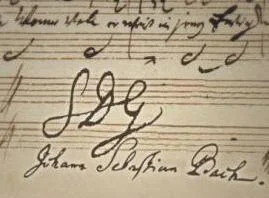
This happened to me the other day with a “feature” story from the Times with this headline: “Johann Sebastian Bach Was More Religious Than You Might Think.” Well, I love Bach. As far as I am concerned, the stunningly productive and brilliant Bach is either (a) evidence of intelligent life elsewhere in the universe, (b) the most important artist in the history of Western civilization or (c) both.

I dug into the piece and quickly realized that this essay by Michael Marissen, author of “Bach & God,” wasn’t a news feature and, on top of that, it ran in 2018. I’m sharing it as a weekend “think piece” because it is fascinating stuff and contains an interesting example of modern thinkers reaching conclusions about a historical figure — even though there is hard evidence that directly contradicts their views. This feature focuses on a piece of Bach material (not a piece of music) that I didn’t know about — with incredible implications for discussions of this cultural giant’s faith. Here is the overture:

Bach biographers don’t have it easy. Has there ever been a composer who wrote so much extraordinary music and left so little documentation of his personal life?


Please respect our Commenting Policy

Local news? Tricycle's Western Buddhism essay shows how religions adapt to new environs

Local news? Tricycle's Western Buddhism essay shows how religions adapt to new environs

Religions evolve and accommodate as they migrate around the globe. What works in one time and place may not in another for a host of cultural and political reasons, forcing adjustments that facilitate their establishment or survival.

Historical examples abound. Not the least of which are the monumental transformations that occurred within early Christianity as it migrated across the Roman world from the Levant, and within early Islam as it spread from the Arabian Peninsula west to the Atlantic coast and east across Asia.

Here are two more recent examples of religious accommodation.

The first occurred in the late 19th Century when the Church of Jesus Christ of Latter-day Saints made a corporate decision to jettison its public practice of polygamous marriage to smooth the way for Utah’s full acceptance into the expanding United States. This despite plural marriage remaining part of the church’s scriptural doctrine to this day. The practice, though illegal under secular law, is still followed by some breakaway Mormon sects.

The second example was the melding of Roman Catholicism and West African tribal beliefs in the Caribbean and South America by Black slaves and their descendants. This gave rise to syncretic faiths such as Santeria and Voodoo. They persist today side by side with the church in ways that would scandalize the hierarchy, were it happening on a similar scale in the United States.

It’s not unusual for Mass-going Cuban, Haitian and Brazilian Catholics to also draw meaning from West African-derived rituals that to outsiders might appear hard to reconcile with core church beliefs.

A contemporary religious travel story is the Westernization of Asian Buddhism. Tricycle, a leading American Buddhist publication, deconstructed the phenomenon in its Spring 2021 issue.

The piece is well worth the time of journalists interested in moving beyond today’s often superficial religion headlines. To understand a group’s sociology is to better understand why members act as they do in the public square, journalism’s primary purview.

I suggest you view the Tricycle essay — which weighs in at more than 3,600 words — as a sort of crash course in the adaptation of religions to new circumstances. This will help reporters spot stories in the communities served by their newsrooms.


Please respect our Commenting Policy

3D chess in Rome? Pope Francis approves Vatican decree affirming doctrines on marriage

3D chess in Rome? Pope Francis approves Vatican decree affirming doctrines on marriage

All together now: Is the pope Catholic?

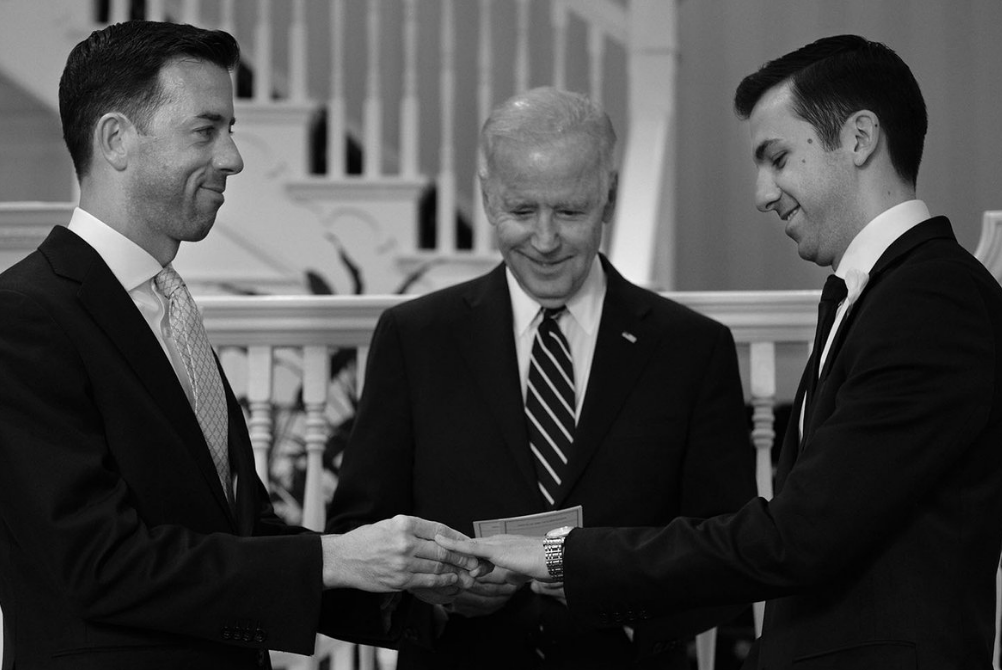
Actually, in this age of conspiracy theories — on right and left — the question of the day appears to be: Is THIS pope Catholic? I am referring, of course, to the Vatican’s decision to affirm centuries of Christian doctrine stating that sex outside of marriage is (trigger warning) “sin” and that the sacrament of marriage is limited to the union of a man and a woman.

But, but, but, clearly Pope Francis must be playing some kind of three-dimensional chess with this action, moving the doctrinal pieces in some subtle way that will become clear in “reforms” at a later date? This was a case in which one could catch whiffs of disappointment and even conspiracy thinking on both the Catholic left and right (and in the press).

To see this in print, check out the overture in this Washington Post report: “Pope Francis says priests cannot bless same-sex unions, dashing hopes of gay Catholics.” The headline assumes, of course, that all gay Catholics oppose the church’s teachings on this matter but, well, nevermind.

ROME — Pope Francis has invited LGBT advocates to the Vatican. He has spoken warmly about the place of gay people in the church. He has called for national laws for same-sex civil unions.

But Monday, Francis definitively signaled the limits to his reformist intentions, signing off on a Vatican decree that reaffirms old church teaching and bars priests from blessing same-sex unions.

The pronouncement, issued at a time when some clerics were interested in performing such blessings, leans on the kind of language that LGBT Catholics have long found alienating — and that they had hoped Francis might change. It says that same-sex unions are “not ordered to the Creator’s plan.” It says acknowledging those unions is “illicit.” It says that God “cannot bless sin.”

The decree shows how Francis, rather than revolutionizing the church’s stance toward gays, has taken a far more complicated approach, speaking in welcoming terms while maintaining the official teaching. That leaves gay Catholics wondering about their place within the faith, when the catechism calls homosexual acts “disordered” but the pontiff says, “Who am I to judge?”

Let’s see. We have the standard use of the word “reform” to prejudge this matter. We have a sense of yearning that Pope Francis is taking a “more complicated approach” to this doctrinal issue.


Please respect our Commenting Policy

Hey journalists: Can you name three or more Ramadan news angles linked to COVID-19 vaccines?

Hey journalists: Can you name three or more Ramadan news angles linked to COVID-19 vaccines?

I don’t mind admitting it. I thought I had read just about every religion-angle COVID-19 vaccine story that there was to read (and I say that just before heading out the door to drive deep into the Cumberland Mountains to get shot No. 1 at a small-county health clinic).

The Detroit Free Press published a long, long story the other day that certainly proved me wrong on that. The headline: “Vaccine-mobile brings COVID-19 shots to Dearborn mosque, helping to convince the hesitant.

The key to the story was mentioned in an email from the GetReligion reader who (thank you readers who take the time to do this kind of thing) sent us the URL for this story. Here is part of her note:

What I really liked about this article was the way it presented vaccine concerns of the Metro Detroit Muslim community in the context of how the mosque met those concerns. Some of the concerns are unique to the Muslim community (such as the relationship of vaccination to the Ramadan fast) and others are more broad, but the article shows how this religious community is addressing them. The article quotes a variety of actual community members, which I always appreciate.

The Ramadan angle?

That’s the connection that I admit had not occurred to me. The key is explaining the specific link between the strict rules of the Ramadan fast and the simple act of getting a shot of vaccine. We are not talking, at this point, about conspiracy theory talk about the vaccine formulas containing traces of pork.

Here is the crucial part of the story, quoting Mirvat Kadouh, vice chair of the Islamic Center of America's Board of Trustees.

"We are trying to vaccinate as many people as we can before Ramadan," Kadouh said early Monday morning, spreading a plastic tablecloth over a folding table in a large conference room, where the Islamic Center's first COVID-19 vaccine clinic was about to begin.


Please respect our Commenting Policy

That painful issue of SBC culture -- is 'Southern' more important than 'Baptist'?

That painful issue of SBC culture -- is 'Southern' more important than 'Baptist'?

When megachurch pastor J.D. Greear became the 62nd president of the Southern Baptist Convention he saw all kinds of statistics headed in all kinds of directions.

After decades of growth, America's largest Protestant flock faced steady decline as many members joined thriving nondenominational evangelical and charismatic churches. Ominously, baptism statistics were falling even faster. On the other side of the 2018 ledger, worship attendance and giving to SBC's national Cooperative Program budget were holding strong.

But one set of numbers caught Greear's attention, he told the SBC's executive committee, as he nears the end of his three years in office.

"Listen, I made diversity … one of my goals coming into this office, not because it's cool, or trendy, or woke," he said. "It's because in the last 30 years the largest growth we've seen in the Southern Baptist Convention has been among Black, Latino and Asian congregations. They are a huge part of our future. … Praise God, brothers and sisters."

Greear's blunt, emotional address came during a Feb. 22 meeting in Nashville in which SBC leaders ousted two churches for "affirming homosexual behavior" by accepting married gay couples as members and two more for employing ministers guilty of sexual abuse.

Those issues loomed in the background during Greear's remarks, which ranged from a fierce defense of the SBC's move to the right during 1980s clashes over "biblical inerrancy" to his concerns about "demonic" attacks from social-media critics who are "trying to rip us apart."

"I've read reports online that I was privately funded by George Soros with the agenda of steering the SBC toward political liberalism," he said. "My office has gotten calls from people who say they've heard that I am friends -- good friends -- with Nancy Pelosi and that we text each other regularly, that I am a Marxist, a card-carrying member of the Black Lives Matter movement and that I fly around on a private jet paid for by Cooperative Program dollars."


Please respect our Commenting Policy