Scriptures

Thinking about disunited Methodist future: Questions, terms and fault lines to ponder

Thinking about disunited Methodist future: Questions, terms and fault lines to ponder

So the “United” Methodists are back on the clock, in terms of waiting for their amicable divorce?

It would appear so, as COVID-19 continues to delay all kinds of large-scale meetings for pretty much everyone. Maybe they could have a socially distanced meeting in something like the University of Michigan’s “Big House” stadium (which seats about 110,000 under normal conditions)?

This is a huge story, of course, any way you cut it — with major implications for the shrinking world of the Seven Sisters of oldline liberal Protestantism, as well as putting the spotlight on the thriving evangelicalism of the Global South. As GetReligion patriarch Richard Ostling noted the other day:

The United Methodist Church is on the brink of America's biggest religious schism since the Civil War, with the conflict centering on sexual morality, biblical authority and theological liberalism.

At stake is an empire with 6.7 million U.S. members and 31,000 congregations located across most American counties, 6.5 million members overseas and $6.3 billion in annual donations (though there's now a severe money crunch). Many of those churches sit on prime urban and suburban real estate.

You know that COVID-19 has to be affecting the economics of all of this, especially for the center-left UMC establishment. Will they try to run out the clock somehow, assuming that the doctrinal conservatives will simply leave on their own (thus avoiding the need for some kind of severance check)? But that kind of split would lead to legal warfare (think of it as the United Methodist lawyers Employment Act) over church sanctuaries, clergy benefits, etc. Ask the the Episcopalians about that.

This leads me to two think pieces for reporters and news consumers to file. The first comes from the Mark Tooley, the must-follow analyst on the Methodist right: “Global Methodism’s New Church.” He covers essential background, with logical attention to Methodist growth in Africa, then offers this helpful summary:

Why are conservatives leaving when they won at the General Conference?

Liberals, although outnumbered globally, dominate the U.S. church and its bureaucracy. Few American conservatives want to inherit liberal church agencies, seminaries, and local conference structures, whose financial viability is already dubious.


Please respect our Commenting Policy

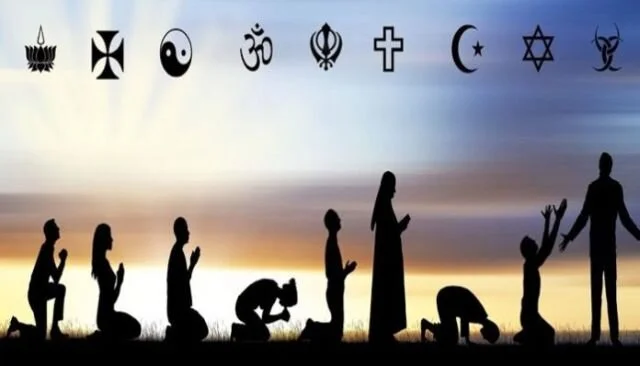
Ask any church-state lawyer and you'll hear that this is a hard question: What is religion?

Ask any church-state lawyer and you'll hear that this is a hard question: What is religion?

THE QUESTION:

What is religion?

THE RELIGION GUY’S ANSWER:

Oddly, “Religion Q&A” entered its ninth year online before getting around to this question.

It’s not an easy one.

During the tax season, we may not feel particularly fond toward the IRS but can pity the staffers who spent years on a long-running dispute that ended in 1993 when the godless Scientology system was finally defined as a “religion” and thus eligible for the tax exemption benefit.

Then there are the federal and state disputes — beloved of journalists and too numerous to summarize here — over tax exemption for the “Universal Life Church,” and whether marriages performed by its clergy are legit. The ULC provides instant internet ordinations, sometimes for the likes of comedian Conan O’Brien, with no questions asked and no requirements of training, creed, or church. The ordination itself is free but the group sells such paraphernalia as a “Doctor of Divinity” certificate, a bargain at $20, and a $59.99 kit for performing weddings.

Let’s back up for the basics. Whatever the IRS might think, here are definitions of “religion” from the authoritative Merriam-Webster folks :

* “The service and worship of God or the supernatural.”

* “Commitment or devotion to religious faith or observance” (which is certainly a circular definition. Religion is religious.).

* “A personal set or institutionalized system of religious attitudes, beliefs, and practices.” (Again, religion is religious.)

* “A cause, principle, or system of beliefs held to with ardor and faith.” (This means devoutly embraced atheism or Communism can be deemed a de facto religion although, as “Religion Q & A” has learned over the years, this terminology can provoke atheists’ fury.)

Another definition, labeled “archaic,” is “scrupulous conformity” to something.


Please respect our Commenting Policy

Which issue drew more ink? SBC on Trump-era rifts, race, #ChurchToo abuse, gay marriage

Which issue drew more ink? SBC on Trump-era rifts, race, #ChurchToo abuse, gay marriage

Here’s a question for GetReligion readers, including journalists: Are you surprised that the Southern Baptist Convention still believes sex outside of marriage is sin and, yes, that marriage is defined — by two millennia of Christian teaching — as the union of man and woman?

All of you who are surprised, please raise your hands.

There shouldn’t be many hands in the air on that one.

Now, would you say that SBC action on that question is, well, sexier than the decision by the national convention’s executive committee to oust two congregations for violating guidelines on sexual abuse, following in the wake of many #ChurchTwo revelations (especially in major Texas newspapers)?

Meanwhile, SBC President J.D. Greear offered up a blistering speech to the executive committee in which he addressed what he called demonic attacks on SBC unity, attacks centering on two hot-button topics — racism and (to be blunt) Donald Trump-era politics.

Of these four issues, want to guess which drew mainstream-press headlines? That’s the question that host Todd Wilken and I discussed during this week’s “Crossroads” podcast. Click here to tune that in or head over to iTunes to subscribe.

According to the Associated Press, the biggest news was that totally predictable decision linked to marriage and sex. Meanwhile, I am happy to report that The New York Times produced a story that, while the headline was predictable (“Southern Baptists Expel 2 Churches Over Sex Abuse and 2 for L.G.B.T.Q. Inclusion”), was updated to become a solid look at the tensions surrounding Greear and some of these issues. We will come back to both of those stories.

But first, I think GetReligion readers need to read a large chunk of the (edited) text from the Greear broadside. (Click here for Baptist Press coverage and, most of all, here for a file that includes the full video.)

The key: Greear sets out to affirm the 1980s SBC move to the right on issues of biblical authority, while repudiating what he calls the “leaven of the Pharisees” emerging on the SBC’s right flank. The following is long, I know, but essential to understanding what is happening right now in America’s largest Protestant flock:


Please respect our Commenting Policy

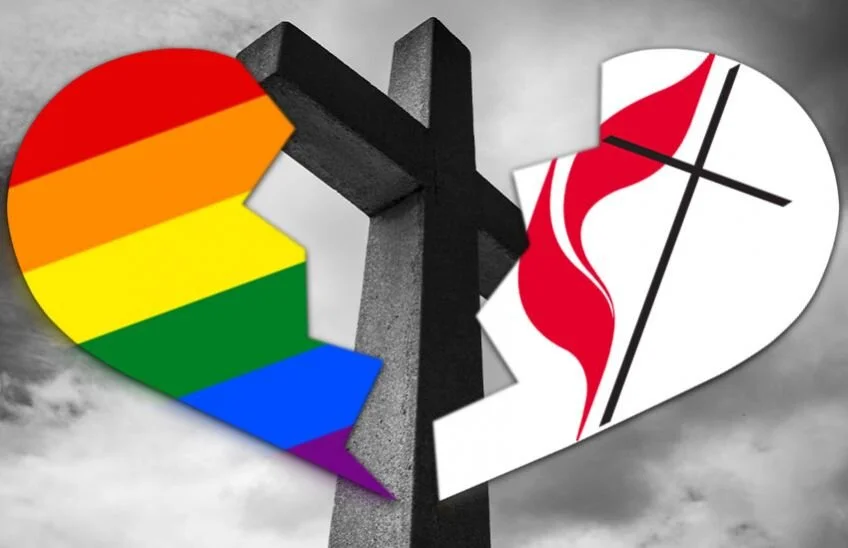
United Methodists remain on clock: Will 2022 see biggest church split since Civil War? (updated)

United Methodists remain on clock: Will 2022 see biggest church split since Civil War? (updated)

The United Methodist Church is on the brink of America's biggest religious schism since the Civil War, with the conflict centering on sexual morality, biblical authority and theological liberalism.

At stake is an empire with 6.7 million U.S. members and 31,000 congregations located across most American counties, 6.5 million members overseas and $6.3 billion in annual donations (though there's now a severe money crunch). Many of those churches sit on prime urban and suburban real estate.

But when? The 2020 General Conference to settle matters was postponed until this coming Aug. 29- Sept. 7 in Minneapolis, a city that currently limits meetings to 150 people. News calendars are iffy until the imminent UMC decision on whether it can meet then, or must delay a second time or whether it's possible to manage such a complex international meeting online.

Whenever and however delegates assemble, by most accounts they're prepared to adopt some version of the 33-page "Protocol of Reconciliation & Grace Through Separation" (.pdf here) hashed out last year via professional mediation among representatives of various factions.

One breakaway has occurred prematurely. Online worship last Nov. 29 established the hard left "Liberation Methodist Connection." The new denomination is intended for Methodist exiles to live out their "God-given identities" regardless of not only same-sex identity but e.g. gender expression, sexual non-monogamy, immigration status, piercings, body art or drug use.

However, the main event involves who inherits the UMC's name, logo, endowments, properties and structures. In U.S. Methodism, liberals and centrists combined have political power to install a laissez-faire LGBT policy, while the evangelical wing dissents alongside millions of Methodists in Africa and the Philippines. (This structure is unusual. Most "mainline" denominations that have legislated full LGBT inclusion are U.S.-only.)

The Wesleyan Covenant Association figures conservative congregations and pastors will happily leave behind UMC assets, schools and agencies and is busily preparing a new breakaway denomination under "Protocol" terms that would merge Americans and booming churches overseas.


Please respect our Commenting Policy

Want to trigger Episcopalians? Ask an evangelical superstar to preach at National Cathedral

Want to trigger Episcopalians? Ask an evangelical superstar to preach at National Cathedral

Halfway between Norway and the North Pole, scientists have buried a million seeds and crop samples under a mountain in the Svalbard archipelago -- in case an environmental doomsday comes to pass.

That strategy rings true during "this crazy, chaotic season" when so many are anxious about the coronavirus pandemic, global warming, lost jobs, surging debts and the bitter state of public life, said evangelical megachurch leader Max Lucado, in a recent sermon streamed online by the National Cathedral in Washington, D.C.

“Most of us can't hide out in a bunker, yet threats of calamity may make us try to do so," he said. "If the wrong person pushes the wrong red button -- it's enough to make a person purchase a plane ticket to Svalbard."

But there was a problem. While pre-service publicity stressed that Lucado's books have sold more than 120 million copies and Christianity Today has called him "America's pastor," this invitation alarmed legions of Episcopalians opposed to his history of orthodoxy on sex and marriage. His sermon about God offering comfort in the midst of chaos avoided hot-button topics, but his cathedral appearance triggered an online storm.

Before the event, the Very Rev. Randolph Marshall Hollerith linked the Lucado invitation to the cathedral's history of hosting a variety of religious leaders. This has included evangelicals such the late Billy Graham, Archbishop of Canterbury Justin Welby and megachurch leader Rick Warren of Saddleback Church in Southern California.

"When we only engage with those with whom we agree on every issue, we find ourselves in a dangerous (and lonely) place," wrote the cathedral's dean. "That means this cathedral, and this pulpit, are big enough and strong enough to welcome pastors, rabbis, imams, clergy of every faith. … It does not mean we agree with everything they might believe, but it does mean that we exhibit and inhabit a sense of open handed welcome."

However, Hollerith issued a formal apology in response to the online backlash, noting: "In my straight privilege I failed to see and fully understand the pain he has caused. I failed to appreciate the depth of injury his words have had on many in the LGBTQ community. I failed to see the pain I was continuing. I was wrong."

While Lucado is known as an evangelical moderate, Episcopalians were outraged by a 2004 sermon, and online commentary, stating that he "categorically opposes" gay marriage, as well as his conviction that "homosexual activity" is sin.


Please respect our Commenting Policy

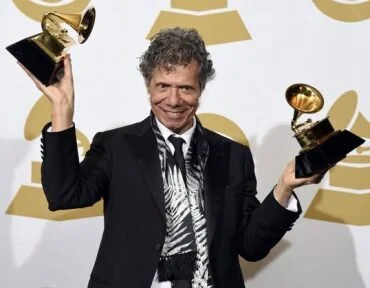
Chick Corea's life and music: If Scientology 'informed' his art, why not offer a few examples?

Chick Corea's life and music: If Scientology 'informed' his art, why not offer a few examples?

When it comes to modern forms of jazz, I was never a fan of the late Chick Corea’s work in the fusion megaband Return to Forever. I was a Weather Report guy.

However, I was totally into Corea’s classic duets with Gary Burton on vibes (see the epic 1979 live version of “Crystal Silence” at the top of this post) and his lovely “Children’s Songs” collection, for solo piano.

I can also remember debates long ago among my friends — secular and religious — about the impact that Corea’s embrace of the Church of Scientology would have on his life and music. After all, he was an instrumental musician. Were the teachings of L. Ron Hubbard supposed to have soaked into his unique chord voicings and the sparkling rhythms of his compositions?

This leads me to the solid New York Times obituary for Corea, who died recently after a short battle with a rare form of cancer. The double-decker headline on this feature covered a lot of ground:

Chick Corea, Jazz Keyboardist and Innovator, Dies at 79

When jazz and rock fused in the 1970s, he was at the forefront of the movement. But he never abandoned his love of the acoustic piano.

I’ve been thinking about this piece for a week now, wondering if it was worthy of a short post. I finally decided that it was. After all, the obit’s brief treatment of the religion angle demonstrated a classic puzzle that GetReligion has discussed many times in the past, linked to coverage of athletes, actors, writers, etc. Here is that section of the Times piece:

In the early 1970s, Mr. Corea converted to Scientology, and the religion’s teachings informed much of his music from then on, including his work with Return to Forever.

Armando Anthony Corea was born on June 12, 1941, in Chelsea, Mass., near Boston. His father, also named Armando Corea, was a trumpeter and bandleader in Boston, and his mother, Anna (Zaccone) Corea, was a homemaker. He began studying piano when he was 4.

And that was that.


Please respect our Commenting Policy

Spot the link between Trump ally Sen. Josh Hawley and hot 5th Century Christian dispute?

Spot the link between Trump ally Sen. Josh Hawley and hot 5th Century Christian dispute?

THE QUESTION:

How is Trump ally Sen. Josh Hawley linked with 5th Century Christianity’s hottest dispute?

THE RELIGION GUY’S ANSWER:

New York Times contributor Katherine Stewart doesn’t care much for conservative Christians.

Consider the subtitle of her 2012 book “The Good News Club: The Christian Right’s Stealth Assault on America’s Children.” (Actually, these non-political after-school clubs operate openly, and participation is voluntary.) Last year, she wrote the timely “The Power Worshippers: Inside the Dangerous Rise of Religious Nationalism.

Stewart’s latest Times op-ed article (“The Roots of Josh Hawley’s Rage”) decries U.S. Senator Josh Hawley’s clenched-fist backing for President Trump’s attempt to have Congress overturn the 2020 election that culminated in the U.S. Capitol riot, Trump’s second impeachment and multitudes of criminal investigations.

The controversial 42-year-old is a Stanford and Yale Law alumnus whose rapid rise included clerking for Chief Justice Roberts and just two years as Missouri’s attorney general before winning his U.S. Senate seat. Pundits assume he’ll seek the presidency in 2024 if Trump does not or cannot run.

Hawley tells World magazine he is part of the Evangelical Presbyterian Church, he was formerly a staff attorney with the Becket Fund for Religious Liberty and some count him among Capitol Hill’s most devout figures.

Stewart makes the surprising assertion that to understand the senator’s role in the unprecedented furies of recent weeks we must look back 16 centuries to one of the hottest theological disputes in Christian history.


Please respect our Commenting Policy

Could these writings shatter Christian history? True or false, journalists might take a look

Could these writings shatter Christian history? True or false, journalists might take a look

Let's pretend there's not much news coming out of Washington, D.C and a reporter yearns to cover something different. And what if the press has missed "the biggest biblical discovery to date," indeed, "arguably the most important religious discovery of all time"?

Sounds interesting. And if those lavish promotional claims turn out to be false, that's a story, too.

A friend of The Religion Guy uses the News360.com app, whose algorithms scan 7,000 newspapers and magazines for articles keyed to the individual's interests. This friend's interests include Christian history, and he was alerted to a Jan. 29 article announcing the discovery of ancient documents that "could revolutionize our picture of Christianity."

A seasoned journalist immediately recalls hoaxes of this sort. Leave aside the deceptive history on Christian origins offered as fact in "The Da Vinci Code" novel, a huge 2003 seller that spawned a movie starring Tom Hanks. A claim of proof Jesus Christ was married that emanated from august Harvard Divinity School was debunked. Evangelicals swooned over spurious reports about finding a manuscript of the Gospel of Mark written in the 1st Century. In 2017, The Guy attempted to assess the Shroud of Turin dispute.

The Jan. 29 article wasn't from a recognized scholarly journal or site but CoreSpirit.com, which informs practitioners, entrepreneurs and curiosity-seekers about magic, esoterica, life enhancement nostrums, transcendence and "ancient wisdom."

By the way, this site is potentially useful for media. The Guy bets journalists know nothing about most of the 800-plus topics covered (e.g. global brain, isolation tank, medical intuition, superhuman agility, urine therapy, tongue cutting, wall crawling, you name it).

Core Spirit neglected to tell readers that its news is not new.

The mysterious "Jordanian Codices," a collection of small, bound-together metal tablets, first won publicity in 2011 and mostly in Britain. Though scholars scoffed, there's been lively chatter across the Internet ever since that reporters can plumb to assess story prospects. The history of where these items came from is confused, but they're now being held by Jordan's antiquities department.


Please respect our Commenting Policy

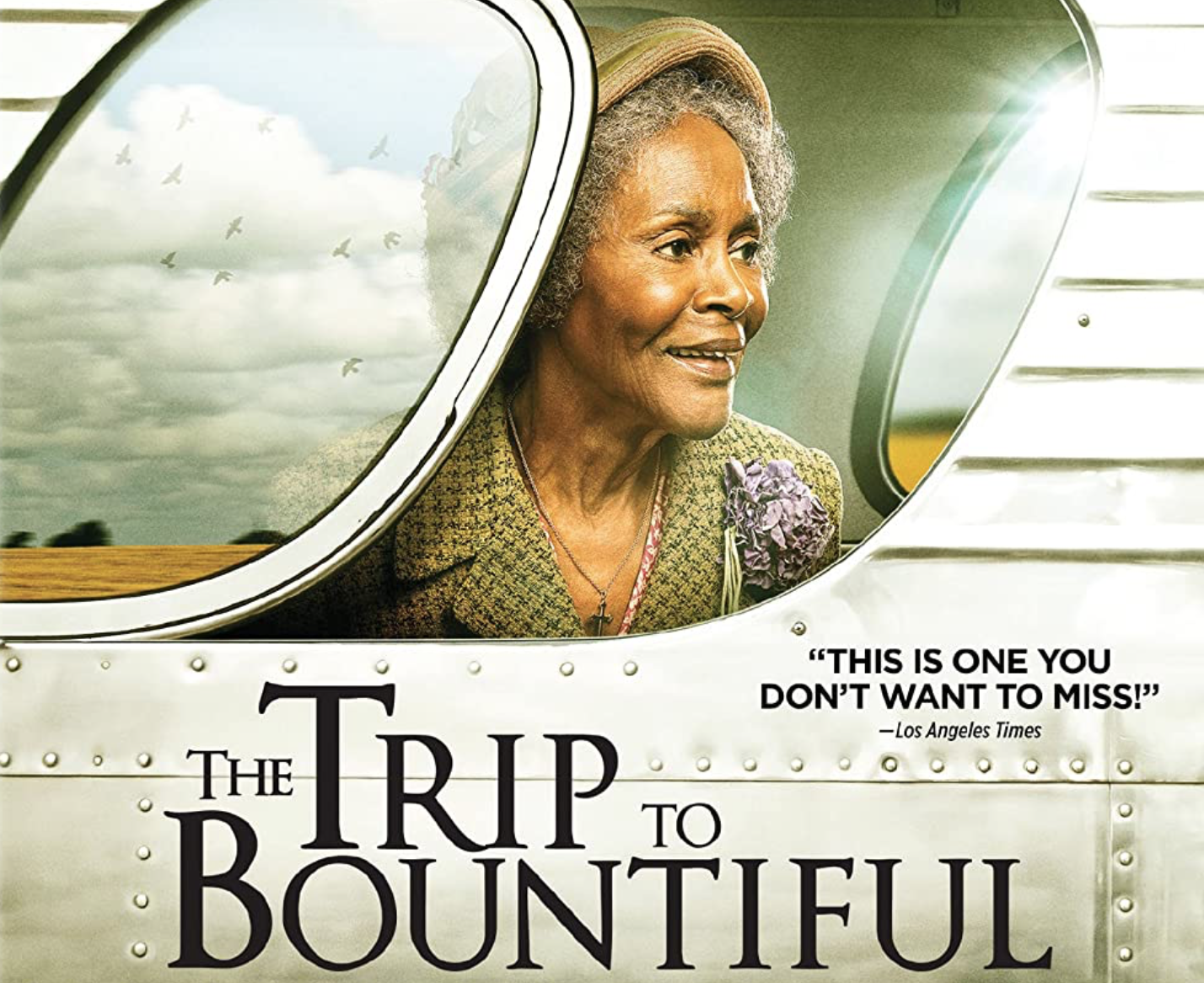
It was hard to edit God out of Cicely Tyson's epic story, but some journalists gave it a try

It was hard to edit God out of Cicely Tyson's epic story, but some journalists gave it a try

It was hard to listen to Cicely Tyson talk about her life without recognizing the strong undercurrent of Christian faith in her words, deeds and also in her art. While remaining a proud, private, dignified woman, her faith was not something that she tried to hide.

The question here at GetReligion, of course, was whether any of that imagery and information would make it into the news coverage surrounding her death at the age of 96.

The answer was, of course, “yes” and “no.” Many of the obituaries mentioned her Tony-winning return to Broadway in 2013, at the age of 88, to play the unstoppable matriarch in Horton Foote’s classic, faith-driven play, “The Trip to Bountiful.” The show-stopping moment, night after night, was when Tyson would sing — joined by many in the audience — the classic hymn “Blessed Assurance.” It’s hard to avoid the content of lyrics such as these:

Blessed assurance, Jesus is mine; Oh, what a foretaste of glory divine!
Heir of salvation, purchase of God; Born of His Spirit, washed in His blood.

This is my story, this is my song, Praising my Savior all the day long.

If you were looking for the faith-free version of Tyson’s life, the natural place to turn was The New York Times.

This story did a great job of capturing her impact on American culture, especially in terms of the sacrifices she made to portray African-American life with style, power and dignity. Here are two crucial summary paragraphs on that essential theme:

In a remarkable career of seven decades, Ms. Tyson broke ground for serious Black actors by refusing to take parts that demeaned Black people. She urged Black colleagues to do the same, and often went without work. She was critical of films and television programs that cast Black characters as criminal, servile or immoral, and insisted that African-Americans, even if poor or downtrodden, should be portrayed with dignity.

Her chiseled face and willowy frame, striking even in her 90s, became familiar to millions in more than 100 film, television and stage roles, including some that had traditionally been given only to white actors. She won three Emmys and many awards from civil rights and women’s groups, and at 88 became the oldest person to win a Tony, for her 2013 Broadway role in a revival of Horton Foote’s “The Trip to Bountiful.”

But the only reference to her Christian faith — negative, of course — came in this bite of biography:


Please respect our Commenting Policy