Scriptures

Lost in the digital morgue: David Caleb Cook (1850-1927), founder of a global publishing powerhouse

Lost in the digital morgue: David Caleb Cook (1850-1927), founder of a global publishing powerhouse

Alicia Fabbre, a freelance writer for the Elgin Courier-News, wrote a lovely story recently about Ramona and Sam Jones, who have rescued a former mansion in that city from a long abandonment.

Fabbre had a more dramatic story to tell but for one considerable detail that did not appear: Who was David Caleb Cook, and how did he afford to build this mansion in 1885?

Yes, there is a religion angle here.

Fabbre referred to Cook only as “a publishing magnate.” Imagine if someone bought the former mansion of the legendary and volcanic Robert R. “Colonel” McCormick and the Elgin Courier-News, which is owned Tribune Publishing, referred to him only as “a former Chicago newspaper editor.”

McCormick’s onetime home, Cantigny, was spared that fate and is under the protective shield of the McCormick Foundation. Still, the comparison is valid for Christians who have worked in Sunday schools that have relied on the extensive curriculum developed by David C. Cook, the global publisher that still bears its founder’s name.

A Courier-News story by Mike Danahey in May 2018 had this minimal detail about Cook:

Born in 1850, David C. Cook founded what would become the nation’s largest interdenominational publishing house. The Cook home is a 12-room mansion that cost $10,000 to build in 1885, the city said. It became a nursing home in 1945, and additions were added over the decades.

It appears the background on Cook’s former mansion may be the victim of morgue decay, in which good details fall to the side based on various reporters’ limits on column inches, or their greater interest in other matters.

Certainly the primary focus of this story belongs on the visionary couple from the suburbs of Atlanta who knew they had found a neglected jewel with an asking price of only $1.

Please respect our Commenting Policy

'Hamilton,' the prophets and liberal Catholicism: Poet Amanda Gorman took her shot

'Hamilton,' the prophets and liberal Catholicism: Poet Amanda Gorman took her shot

After Inauguration Day, everyone was buzzing -- obviously -- about weary Sen. Bernie Sanders and his mittens, as well as Lady Gaga's massive social-distance enforcing dress. Commentators explored the socio-political importance of the various shades of purple worn by female Democrats, while Garth Brooks raised eyebrows with blue jeans and maskless-hugs of assorted presidents.

Oh, and President Joe Biden belted out an address that was Bill Clinton-esque in terms of length.

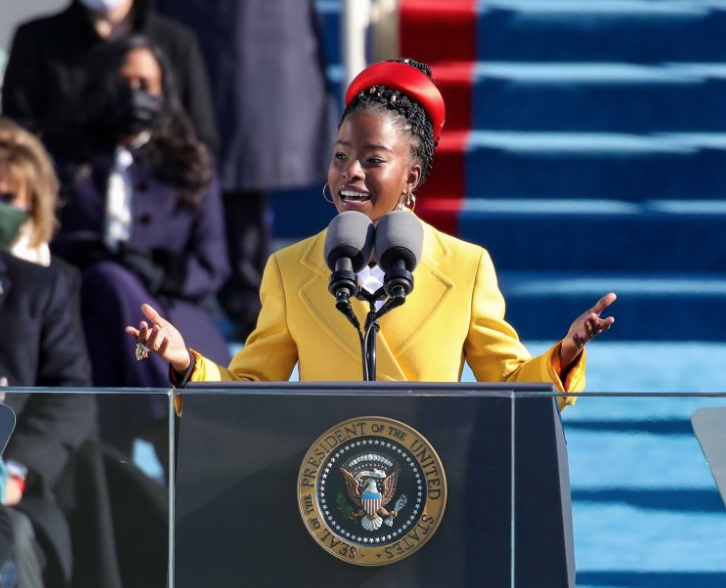
But there was no question that the day’s rising star was Amanda Gorman, the young poet in the canary-yellow coat who certainly didn’t throw away her shot. The question, for GetReligion readers, was whether there was a religion angle in her work that meshed with the rest of the Inauguration Day celebration of the Gospel according to the Religious Left.

Anyone with a computer-based device and a search engine could easily learn that the answer was, “Yes.”

As one would expect, the New York Times offered the definitive faith-free story: “Amanda Gorman Captures the Moment, in Verse.” Now, it was totally valid that the overture underlined the role that the January 6th conspiracy-theory apocalypse played in the creation of the poem. The question is whether this young Catholic woman’s faith was part of her response to it.

Two weeks ago, the poet Amanda Gorman was struggling to finish a new work titled “The Hill We Climb.” She was feeling exhausted, and she worried she wasn’t up to the monumental task she faced: composing a poem about national unity to recite at President-elect Joseph R. Biden Jr.’s inauguration.

“I had this huge thing, probably one of the most important things I’ll ever do in my career,” she said in an interview. “It was like, if I try to climb this mountain all at once, I’m just going to pass out.”

Gorman managed to write a few lines a day and was about halfway through the poem on Jan. 6, when pro-Trump rioters stormed into the halls of Congress, some bearing weapons and Confederate flags. She stayed awake late into the night and finished the poem, adding verses about the apocalyptic scene that unfolded at the Capitol. …

At one point, this Times piece came close to exploring the DNA of key passages in her poem. Of course, the “Hamilton” influence was relevant (hold that thought). Then there was this:


Please respect our Commenting Policy

Hotter than inauguration! Christian financial guru Dave Ramsey burns religion-beat pro

Hotter than inauguration! Christian financial guru Dave Ramsey burns religion-beat pro

Joe Biden’s inauguration as America’s 46th president produced a ton of religion news. We’ll get to all that in a moment.

First, though, the most jaw-dropping Godbeat story of the week comes not from the Beltway but from the Bible Belt, courtesy of Religion News Service national writer (and gainfully employed) Bob Smietana.

Last Friday, RNS published Smietana’s 4,150-word investigative piece on the “cultlike environment” inside Christian financial guru Dave Ramsey’s $42 million headquarters in Franklin, Tenn., south of Nashville. That piece followed a December story by Smietana on Ramsey’s for-profit enterprise defying COVID-19 precautions such as wearing masks.

Ramsey Solutions didn’t take kindly to Smietana’s latest questions, responding with a sarcastic email that said, “Who would have guessed that an unemployed guy, oh I am sorry, a ‘freelance reporter’ would be the one to show us how horrible we are so we can change and to let the world know of our evil intent, secrets, and complete disregard for decency…..but YOU did it, you with all your top notch investigative skills have been able to weave together a series of half-truths to expose our evil ways. You are truly amazing.”

It’s unclear why Ramsey Solutions thinks one of the nation’s top religion correspondents is unemployed. But the statement proceeded to dox Smietana, sharing his email address, phone number and hometown with pastors, business leaders and the entire Ramsey team.

In a Religion Unplugged online panel discussion, Smietana talked about his coverage of Ramsey and the company’s response to him.

Also offering their insight were Cheryl Mann Bacon, retired journalism chair at Abilene Christian University; Meagan Clark, managing editor of Religion Unplugged; Holly Meyer, religion writer for The Tennessean; and Warren Cole Smith, president of Ministry Watch.

“If I were teaching PR Principles this semester, we would start with that as an example of how to never, ever, ever do public relations,” Bacon said of the email. “It just violated all of the basic principles of ethical public relations.”


Please respect our Commenting Policy

On the agenda until Inauguration Day 2025: Whither Trumpism and, thus, evangelicalism? 

On the agenda until Inauguration Day 2025: Whither Trumpism and, thus, evangelicalism? 

In a city locked down as an armed encampment, Joseph Biden and Kamala Harris were inaugurated without the disruptions many feared. There were prayers and familiar political calls for healing and unity.

References to the January 6th riot at the U.S. Capitol came early and often.

Regarding that historic day, much remains to be investigated but Wall Street Journal veteran Gerald Seib offered a brisk summary: "Mr. Trump sent a crowd of his supporters to the Capitol to stop the constitutional transfer of power to his elected successor. That crowd turned into a mob that ransacked the seat of American democracy and tried to hunt down its elected leaders." Senate Republican leader Mitch McConnell stated much the same Tuesday.

Seib added that in the melee, "mainstream Trump supporters were overshadowed by those swinging fire extinguishers at cops and a man wearing a 'Camp Aushwitz' sweatshirt." That is, the fringe dwellers, unhinged devotees and insurrection plotters emerged from a larger throng that obeyed the president's summons to attend his "Stop the Steal" rally and march upon the Capitol.

The same with a certain number of evangelical-style Protestants at the "Steal" protest and explicitly religious "Jericho" march. They were swept into the criminal rampage alongside violent extremists who trashed the symbolic citadel, spewed F-bombs, assaulted police (battering one to death) and chanted threats to assassinate America's #1 evangelical office-holder, Vice President Mike Pence.

Several top religion reporters publicized this unnerving aspect of the fray. In response, GetReligion editor Terry Mattingly questioned whether the rioting rabble truly represented elements of the power structures of the evangelical movement and its leadership, as some claimed.

The evangelical elite does not control many among the proletariat, as The Guy noted while pondering evangelicalism's future last July 29, and the gap has grown since then. Revulsion over Trump's words and deeds provoked some evangelical leaders to favor Biden but evangelical voters gave Trump a healthy margin (as always with Republican nominees, witness Romney, McCain, Bush). This is especially true among nondenominational, independent churches and among some self-proclaimed Pentecostal prophets (see this important Julia Duin post)

Whatever the numbers and stature of the those who waved Jesus banners, the day sullied evangelical Protestantism, and perhaps even religious faith in general, for the vast American citizenry that believes Trump and his disciples tried to steal the election from Biden.

Fairly or not, in the public mind and in the media, evangelicalism is now fused not just with the Republican Party but its dominant Trumpite wing.


Please respect our Commenting Policy

After the U.S. Capitol riot: Personality cults do not mix well with traditional Christian faith

After the U.S. Capitol riot: Personality cults do not mix well with traditional Christian faith

Year after year, thousands of Americans attend the March for Life, marching past the U.S. Capital on a late January date close to the anniversary of Roe vs. Wade.

Most of the marchers are young and come by bus from Catholic and evangelical schools. While most of the groups present are conservative, there are smaller groups like Secular Pro-Life and Democrats for Life. Most of the banners contain slogans such as, "Abortion Hurts Women," "Love Life, Choose Life" or "We are the Pro-Life Generation."

Things were different at the Save America March backing President Donald Trump's efforts to flip the 2020 election. Some banners contained messages like "Jesus is my Savior, Trump is my President." But many more proclaimed "Stand with Trump!" or "Trump 2020: No More Bulls--t."

It's one thing to march for a cause. It is something else to hail a political leader as the key to saving America, said Southern Baptist Seminary President R. Albert Mohler, Jr., a central figure in evangelical debates about Trump.

"The American experiment in ordered liberty is inherently threatened by a cult of personality. And we saw the results of that. … So many of those who were there as protestors explicitly said that they were there in the name of Donald Trump," said Mohler, in a podcast the day after U.S. Capitol riot. "It was Trump that was the name on the banners. They were not making the argument about trying to perpetuate certain political principles or even policies or platforms."

History shows that personality cults -- left or right -- are dangerous, he stressed. After this "American nightmare," Christians should soberly ponder the "way sin works" and its impact on powerful leaders who are tempted to become demagogues.

"Demagoguery simply means that you have a character who comes to power on the basis of emotion, rather than argument, and passion rather than political principles," said Mohler.

It's crucial to know that, in 2016, Mohler was numbered among evangelical leaders who opposed Trump's candidacy. When the New York City billionaire clinched the GOP nomination, Mohler tweeted: "Never. Ever. Period."

But in 2020 he said he would vote for Trump in support of the Republican Party, thus opposing the Democratic Party platform.


Please respect our Commenting Policy

Big symbols, big story: Pope Francis changes church law to put women 'on the altar' in robes

Big symbols, big story: Pope Francis changes church law to put women 'on the altar' in robes

It’s not every day that the pope changes canon law. Pope Francis did just that in allowing women a larger role during Mass.

The pope said, using a powerful phrase in Catholic thought, that this headline-grabbing change was based on “a doctrinal development” seen in the recent life of the church.

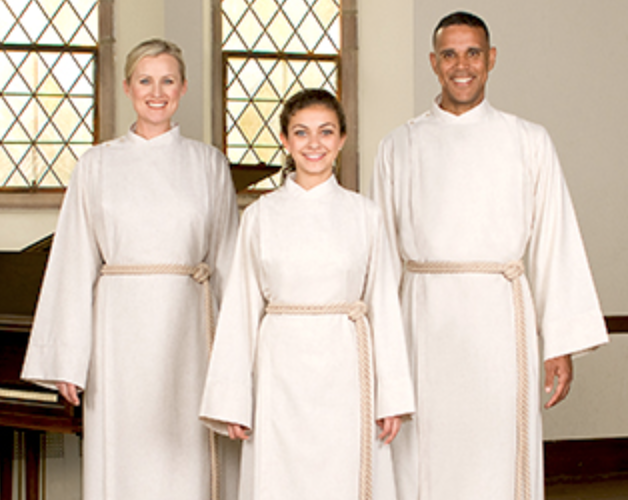
The move — in the wake of a decades-old priest shortage — will grant “non-ordained ministers” the chance to serve as lectors, read scripture, act as eucharistic ministers and, in a crucial symbolic change, wear robes while serving in the sacred space around the altar. The changes, however, will continue to forbid women from being made deacons or ordained priests.

The pope changed canon law to read: “Lay people who have the age and skills determined by decree of the Episcopal Conference, they can be permanently assumed, through the established liturgical rite, to the ministries of lectors and of acolytes; however this contribution does not give them the right to support or to remuneration by the church.”

For the sake of comparison, the law had previously read: “Lay men who possess the age and qualifications established by decree of the conference of bishops can be admitted on a stable basis through the prescribed liturgical rite to the ministries of lector and acolyte.”

In other words, this codifies into the canon the role of women as part of Roman liturgical rite. The announcement, however, caused lots of confusion, especially among many Catholics who have already witnessed women in some of these roles for decades.

The Associated Press headline on the story read, “Pope says women can read at Mass, but still can’t be priests.” That vague language didn’t clarify matters.

In a letter that accompanied the changes, the pontiff said he wanted to bring “stability” and “public recognition” to women already serving during the Mass. Beyond the headline, the AP, in its reporting of the announcement, said that the pope had “amended” church law “to formalize and institutionalize what is common practice in many parts of the world: Women can be installed as lectors, to read Scripture, and serve on the altar as eucharistic ministers. Previously, such roles were officially reserved to men even though exceptions were made.”

The original AP story caused even more confusion when it initially reported that women could read the Gospel during Mass.


Please respect our Commenting Policy

Prayers for the soul of Brian Sicknick: Did anyone ask officers faith questions after Capitol riot?

Prayers for the soul of Brian Sicknick: Did anyone ask officers faith questions after Capitol riot?

When you live somewhere, you develop friendships and contacts that survive — especially in the age of email and social media.

I lived and worked in Baltimore and Washington, D.C, for a decade-plus and my commute took me to Union Station and then past the U.S. Capitol. Many of my students had press passes on the Hill and that landmark was simply part of work-day life.

Right after the rioting last week, I received an email through church contacts requesting prayers for the “repose of the soul of a friend and U.S. Capitol Police officer, Brian,” as well as prayers for other police who were injured. Christians in the USCP and linked to it were spreading this request.

It’s impossible to read all of the coverage of the January 6th riots. But if you dig into the coverage at all, you are sure to hit detailed coverage of the “Fight for Trump” rioters who carried Christian symbols and banners inside the U.S. Capitol security zone, even while surrounded by others chanting, “Hang Mike Pence” and slogans that can’t be printed here.

Let me stress, once again, that this coverage was and is valid. The impact of QAnon in corners of white evangelicalism cannot be denied and many of other conspiracy theory believers “speak evangelical” even if they’re not churchgoers.

The note from friends in Beltway land led me to look for signs of religion-news coverage on the other side of that battle line between police and the rioters. I know the U.S. Capitol community well enough to know that there are all kinds of prayer groups and Bible studies there, on both sides of the aisle and crossing them. Do similar groups exist in the USCP? Did anyone ask if Brian Sicknick was part of such a support network?

It’s clear that Sicknick was an unusual and even inspiring man, an officer appreciated by Democrats and Republicans. We know something about his politics, naturally. He was an Air National Guard veteran who, in some ways, backed Donald Trump. Sicknick was also a critic of many mainstream Republicans.

A Washington Post story quoted Chief Master Sgt. Lance C. Endee — Sicknick’s squad leader in the guard — as saying: “I think Brian had a bigger impact on people than he would have ever realized.” That same story included this:

In a statement, Sicknick’s family said “many details regarding Wednesday’s events and the direct causes of Brian’s injuries remain unknown and our family asks the public and the press to respect our wishes in not making Brian’s passing a political issue.”


Please respect our Commenting Policy

Courage vs. civility? It doesn't help when believers join mobs in social media

Courage vs. civility? It doesn't help when believers join mobs in social media

It seemed that whenever the Rev. Daniel Darling ventured into social media, he saw the same red flags -- so he posted a commentary on "Christians and Conspiracy Theories."

"Because it's online, doesn't mean it's true," he noted. "Because a story is advanced by someone whose ideology I agree with, doesn't mean it's true. …

"For some reason, we are a people who want to believe there is a big plot behind every single thing that happens. … If you watch enough cable TV, depending on your political persuasion, you will come to think that behind every act in Congress there is a string of connected dots that go back to either George Soros (liberal) or the Koch brothers (conservative)."

This wasn't a hot take on QAnon letters or rumors of shredded Georgia ballots.

Darling wrote those words a decade ago, while leading an evangelical church near Chicago. Now he's a crucial voice for the National Religious Broadcasters and author of a book -- "A Way with Words: Using Our Online Conversations for Good" -- pleading for believers to think twice about their online lives.

"I'm not saying we should run away and hide," said Darling, in a telephone interview. "There's no way to avoid the fact that social media is a crucial part of American life. I don't think Christians have any choice about whether or not to be engaged. …

"What we need to do is be more careful when deciding where to draw lines and take stands. But, unless you're Amish, I don't see anyone sitting this one out."

It's especially important for religious leaders to warn their followers not to join the online "mobs" that are destroying America's ability to have sane public debates. In some cases, digital attacks are also threatening lives and reputations.

Consider, for example, the woke social-media attacks that fueled inaccurate mainstream news reports about Covington Catholic High School students at the 2019 March for Life. Then there were the conservative social-media warriors who embraced #pizzagate conspiracy theory claiming that prominent Democrats were linked to a global child-trafficking ring.

Did Russia steal the White House in 2016? Yes, there were mainstream-news reports. Did China, Cuba, Venezuela or some other evil force steal the 2020 election? Yes, there have been headlines on the other side of America's partisan media wars.

The result is anger and pain that has reached many pews and some pulpits.


Please respect our Commenting Policy

Yes, this is a religion question: Year in, year out, why is January 1st New Year’s Day?

Yes, this is a religion question: Year in, year out, why is January 1st New Year’s Day?

THE QUESTION:

Why is January 1st New Year’s Day?

THE RELIGION GUY’S ANSWER:

There’s a religious angle here, as with almost any major aspect of human culture past and present. Our January 1 observance stems from ancient paganism. The numbering of “2021,” as with every year, reflects the global reach of Christianity. And the specific day everyone reckons to be January 1 was fixed by the Catholic Church during the Reformation and Counter-Reformation hostilities.

Alongside this conventional calendar, many faiths observe their own religious new years by calculations apart from the January 1 tradition.

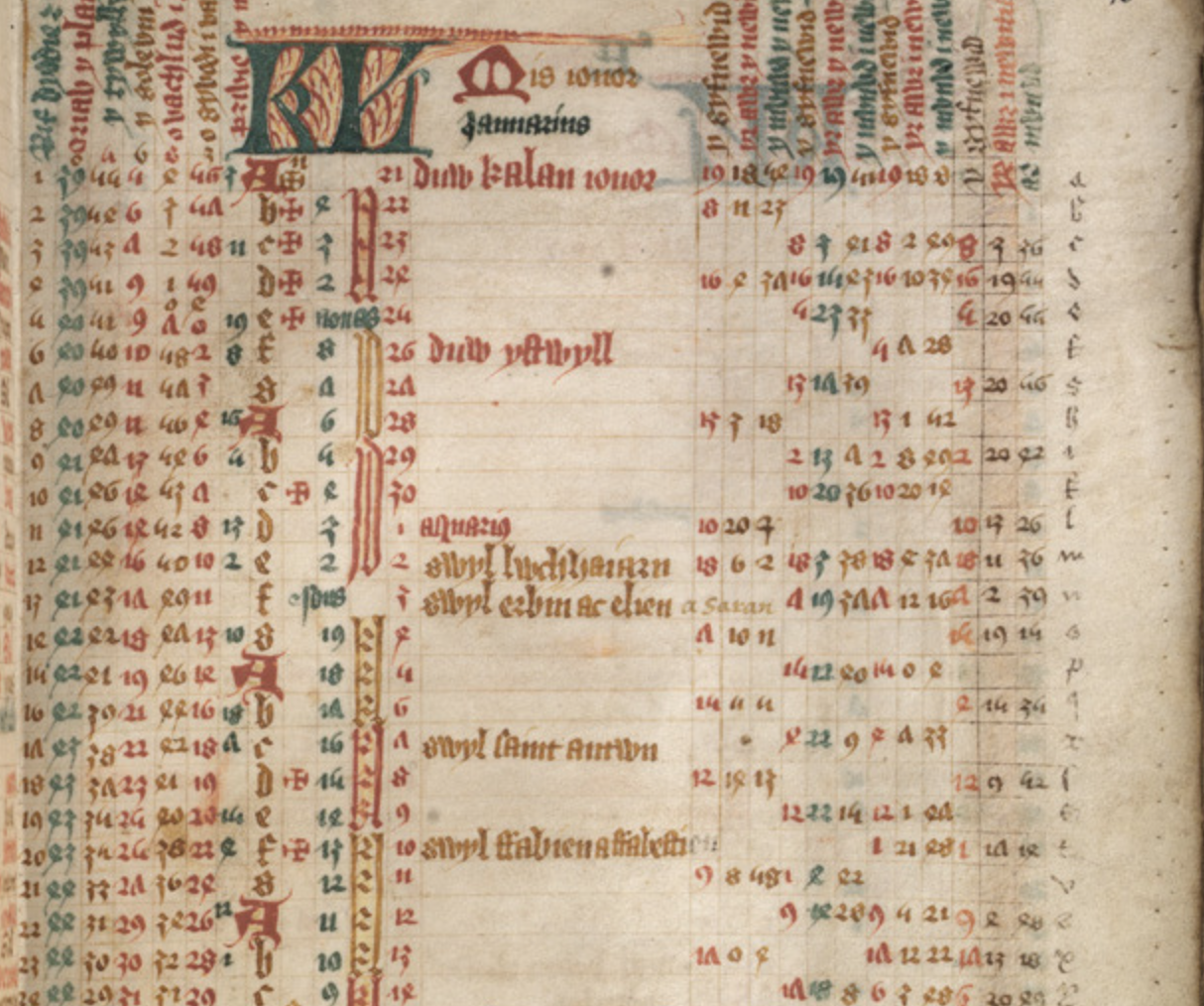
The perpetually valuable Encyclopaedia Britannica tells us that worship of the Roman god Janus, with his festival (on January 9th, not the 1st) in the month eventually named for him was practiced even before the legendary founding of the city of Rome in 753 B.C. Janus was the animistic divinity of doorways (januae) and archways (jani). The idea of auspicious entrances and exits, endings and beginnings, eventually applied to turn of the year. January 1 officially replaced March 1 as the start of Rome’s year in 153 B.C..

Due to this pagan background, much of Christian Europe came to reject January 1 observances and celebrated the new year on Christmas Day or March 25, the feast of the Annunciation (the angel Gabriel’s message to Mary that she would bear the divine Son).

The year is the length of time the earth makes one circuit around the sun, but the day upon which a year begins is an arbitrary choice. In 46 B.C., Julius Caesar kept Rome’s January 1 starting point but reworked the “Julian calendar” to better fit with astronomy. The Julian system gained widespread use all the way until A.D. 1582, when Pope Gregory XIII ordered the “Gregorian calendar” cleanup that is universal today.

The Julian system figured that a year lasts roughly 365 days plus 1/4 of a day, so it added one day in the “leap year” every four years.


Please respect our Commenting Policy