
Scriptures

National Prayer Breakfast wars: Did President Trump mean to reject words of Jesus?

National Prayer Breakfast wars: Did President Trump mean to reject words of Jesus?

Few politicos at the National Prayer Breakfast were shocked when President Donald Trump brandished copies of The Washington Post and USA Today to celebrate their "ACQUITTED" headlines.

But it was a Harvard University professor who did something even more provocative -- quoting strong words from Jesus of Nazareth -- during an event known for its meek Godtalk and vague calls for unity.

America's "biggest crisis," said Arthur Brooks of the Kennedy School of Government, is a culture of contempt that is "tearing our society apart."

"I want to turn to the words of the ultimate original thinker, history's greatest social entrepreneur, and as a Catholic, my personal Lord and Savior, Jesus," said Brooks, author of books such as "The Conservative Heart" and "Love Your Enemies." He is the former leader of the American Enterprise Institute, a conservative think tank.

The key passage for this era, he said, is found in Gospel of Saint Matthew, chapter 5, verses 43-45: "You have heard that it was said, 'Love your neighbor and hate your enemy.' But I tell you, love your enemies and pray for those who persecute you, that you may be children of your Father in heaven."

Brooks added: "Love your enemies! Now that is thinking differently. It changed the world starting 2,000 years ago, and it is as subversive and counterintuitive today as it was then. But the devil's in the details. How do we do it in a country and world roiled by political hatred and differences that we can't seem to bridge?"

Trump declined to take part when Brooks challenged prayer-breakfast participants to raise their hand if they loved someone who disagreed with them about politics.

As the next speaker, the president responded to Brook's remarks with words that unleashed a week of online debate among conservative religious believers -- early Trump supporters and reluctant Trump supporters alike -- who have debated the degree to which they can embrace his take-no-prisoners approach to national leadership.

Please respect our Commenting Policy

LDS church leaders enact a major breakthrough on secrecy next Wednesday

Mitt Romney’s explanation that he voted to expel President Donald Trump as a duty to God, followed by the president’s religious scorn, renews interest in the senator’s well-known devotion to The Church of Jesus Christ of Latter-day Saints.

Journalists also need to know that the nation’s fourth-largest religious body will also be in the news on February 19 for a very different reason. For the first time it will grant members (and thus the media and the public) full access to its governing rulebook.

This is a major breakthrough. The General Handbook prescribes the exercise of powers, procedures, and policies that define the church. The quasi-official Encyclopedia of Mormonism says it is “pre-eminent among Church publications” as “an authoritative guide.” But the contents were long kept secret except for those appointed to church offices.

Religion News Service’s “Flunking Sainthood” columnist Jana Riess, author of the 2019 book The Next Mormons (Oxford), noted that since only males hold office, as a woman she’s been denied access to policies “that potentially affect my life” and open access “helps to empower the general membership” of both genders.

We’re dealing here with the most secretive of America’s major religions.

Its strictly-held financial information is the stuff of legend. The texts of the sacred rituals in temples are kept confidential, and non-members and church members who lack their bishop’s approval cannot attend. (There’s special angst when non-LDS family members cannot witness temple weddings.)

Likewise, the Handbook was carefully distributed with numbered copies that were to be destroyed when no longer in use.


Please respect our Commenting Policy

Was Romney's faith taken seriously in impeachment coverage? Alas, few surprises here...

In the end, the only drama in the impeachment vote didn’t involve the Democrats and Donald Trump.

No, it involved Sen. Mitt Romney and Trump. If you looked at this from Romney’s stated point of view, the final decision came down to Trump vs. God — as in Romney’s oath to follow his faith and his conscience, as opposed to loyalty to his political party.

The most dramatic moment in Romney’s speech on the U.S. Senate floor — that long, long, long pause as he fought to control his emotions — came as he tried to explain how his decision was linked to his faith and his family.

So how did this obvious faith factor show up in the mainstream coverage of the political story of the day? The results, for better and for worse, were totally predictable.

Take the New York Times, for example. Here is the crucial passage, pushed deep into the main Romney story.

On the Senate floor on Wednesday, Mr. Romney placed his decision in the context of his faith, his family and how history would remember it.

And that was that.

The political desk team at The Washington Post managed to get one snippet of Godtalk into its Romney story. Readers who made it to the 12th paragraph read the following:

Romney said he couldn’t let concerns over breaking with his party guide his vote, which he cast as one of conscience and rooted in his religious beliefs.

“I am aware that there are people in my party and in my state who will strenuously disapprove of my decision, and in some quarters, I will be vehemently denounced,” Romney said on the Senate floor. “I am sure to hear abuse from the president and his supporters. Does anyone seriously believe I would consent to these consequences other than from an inescapable conviction that my oath before God demanded it of me?”


Please respect our Commenting Policy

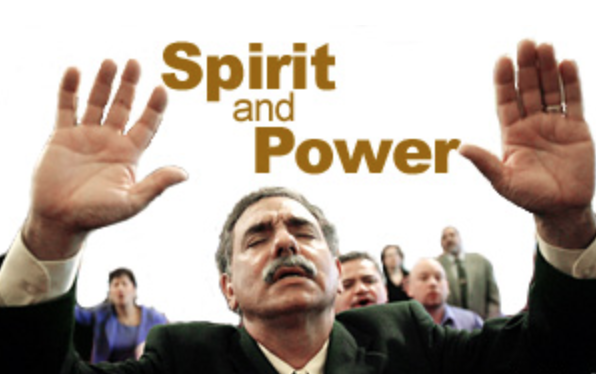
Thinker from David French: Does it matter if media elites don't 'get' Pentecostalism?

Thinker from David French: Does it matter if media elites don't 'get' Pentecostalism?

The other day I praised Religion News Service for jumping into the Twitter tornado caused by the Rev. Paula White’s wild sermon thundering about the powers of the “marine kingdom” and the miscarriage of “satanic pregnancies” and lots of other stuff.

It was just another day in America’s shattered and splintered public discourse.

Here’s the New York Times summary of what that Right Wing Watch clip unleashed:

The video shows part of a nearly three-hour-long service at the City of Destiny church in Apopka, Fla., on Jan. 5. In it, Ms. White can be seen talking about fighting witchcraft and demonic manipulation. She called for any “strange winds that have been sent to hurt the church, sent against this nation, sent against our president, sent against myself” to be broken.

“In the name of Jesus, we command all satanic pregnancies to miscarry right now,” Ms. White said. “We declare that anything that’s been conceived in satanic wombs, that it’ll miscarry. It will not be able to carry forth any plan of destruction, any plan of harm.”

As of Monday, the video had been watched more than eight million times.

It appeared that no one in this shouting match had the slightest interest in promoting understanding. Some commentators weren’t even interested in accurate, honest disagreements.

However, Adelle Banks and Bob Smietana wrote a short explainer that provided crucial information about what White was saying and, most importantly, what she was not saying. Click here to see my piece on that: “RNS pros offered crucial context for 'Satanic pregnancies' sound bite.”

Now I would like to do something that I rarely do: I want to point mainstream journalists and concerned readers to another explainer digging deeper into this topic. This one is by David French, a Harvard Law graduate and First Amendment expert who is one of the most quoted #NeverTrump conservatives in American political life.

In recent weeks, the former National Review star has been doing some brilliant religion-news analysis for his new publication — The Dispatch. His new piece (“Satanic Pregnancies, Explained”) is not an attempt — obviously — to support Paula White or her political master, President Donald Trump. However, it is an attempt to explain why White’s critics, especially scribes in the mainstream press, need to slow down and try to grasp what charismatic and Pentecostal Christians believe on the topic of fierce prayer and “spiritual warfare.”


Please respect our Commenting Policy

What is 'religion news'? The Washington Post asked for feedback on that tricky question

I am sure every journalist who has ever worked on the religion beat for multiple years — let alone decades — has taken part in this exchange.

Q: So what do you do?

A: I’m a journalist who covers religion.

Q: So you’re a religious reporter. What kinds of things do you cover?

Yes, lots of people automatically turn “religion” into “religious,” but that’s a topic for another day.

But there’s the question for today: What kinds of things do we cover on the religion beat?

If you look, year after year, at the Religion News Association’s list of the Top 10 stories of the year, it’s pretty obvious that most of the big stories tend to fall into predictable patterns. Such as:

(1) Stories in which religion plays a role in partisan politics.

(2) Stories in which religious groups act like political parties and fight it out over hot-button doctrinal issues (often about sexuality) that most journalists define in political terms.

(3) Scandals that involve religious leaders (think sex and money) that play out like political dramas.

(4) Big, unavoidable events like terrorist acts, cathedrals burning, etc.

Am I being too cynical? Take a look at the 2019 list and see how many items fit into these kinds of patterns.

Long ago, I interviewed for religion-beat jobs at two major newspapers. At one, the editor admitted that he basically wanted news about scandals and politics. At the other, the editor (active in a mainline Protestant church) offered a broad approach to the beat that included culture, the arts, medical ethics, educational institutions, etc. I took that second job.

All of this brings me to a fascinating little memo that religion-beat veteran Michelle Boorstein circulated the other day in the “Acts of Faith” digital newsletter from The Washington Post. What was her goal?

In our extra-polarized times, I wanted to reach out to our most committed religion (spirituality/faith/ethics/meaning-making) readers and get a sense -- In your view, what are the most important topics in our realm for Washington Post journalists to cover?


Please respect our Commenting Policy

Spiritual warfare explainer: RNS pros offered crucial context for 'Satanic pregnancies' sound bite

No doubt about it: There are people who show up in religion-beat news who are hard to quote accurately and fairly.

It’s hard, for example, to find a punchy, bite-sized quotation in your typical papal encyclical, even when you’re dealing with the work of Pope Francis. It’s possible, of course, to rip something out of context that sounds like commentary on this or that political issue that’s already in the headline. Most of the time, that context-free approach sheds more heat than light.

Then there are the charismatic and Pentecostal preachers whose words are drenched in metaphors and images mixing biblical language with their own vivid (they would say “Holy Spirit inspired”) imaginations.

This brings me that Twitter storm the other day (sorry to be late on this) about a colorful (to say the least) sermon by the Rev. Paula White, the charismatic leader best known as a spiritual advisor to President Donald Trump. She has been known to unleash storm clouds of rhetoric that sound more like rock-music lyrics more than the traditional exegesis of scripture.

For example, what — precisely — is a “satanic pregnancy”? Come to think of it, what is a “satanic womb”?

If you yanked her words out of context, as legions of her critics did, it sounded like this sermon contained some inconsistent language about abortion.

Thus, I was glad when veterans Bob Smietana and Adelle Banks of Religion News Service quickly produced a short explainer that found some context to White’s wild words. In this case, that was a really big challenge. Here’s some key material at the top of that report (“Paula White’s sermon comment about ‘satanic pregnancies’ goes viral”).


Please respect our Commenting Policy

Big news decades in the making: Why are United Methodists finally going to divorce?

THE QUESTION:

Why is the large United Methodist Church preparing to split in May?

THE RELIGION GUY’S ANSWER:

One of 2020’s major news events occurs May 5-15 when delegates in Minneapolis decide whether and how to break up the large United Methodist Church (UMC). The simple answer to why is that long-running conservative-vs.-liberal differences proved irreconcilable when it comes to sexual morality in general, and homosexuality in particular.  But there’s much more to be said.

The stakes are high, since the UMC is America’s second-largest Protestant denomination and biggest of the so-called “mainline” groups, which are long-established, predominantly white, active in ecumenical organizations, and allow more flexibility on belief than conservative “evangelicals.” The UMC has dealt with the gay issue for 48 years, during which membership slid from 10.3 million to 7 million. Continual and enervating haggles doubtless contributed to membership shrinkage in all of “mainline” Protestantism, even as U.S. culture and politics shifted toward gay toleration following the 1969 Stonewall Riots.

The UMC’s debate began soon after it was founded in a 1968 merger between the Methodist Church and the smaller Evangelical United Brethren Church. An official commission was appointed to collate the uniting groups’ teachings on a range of topics and report to the new denomination’s first General Conference in 1972. (The Guy covered this Atlanta event for Time magazine).

The commission proposed approval of the statement that “homosexuals no less than heterosexuals are persons of sacred worth, who need the ministry and guidance of the church in their struggles for human fulfillment, as well as the spiritual and emotional care of a fellowship which enables reconciling relationships with God, with others, and with self. Further, we insist that all persons are entitled to have their human and civil rights ensured.”

Conservatives did not dispute those concepts but were wary, and seemed befuddled during floor debate. Then Texas lawyer Donald Hand jotted down wording, ran it past a state Supreme Court justice, and offered this amendment: “we do not condone the practice of homosexuality and consider this practice incompatible with Christian doctrine.” The spur-of-the-moment insert passed, and remains on the books to this day.


Please respect our Commenting Policy

Tips for mainstream journalists as they grapple with America's growing religious complexity

Last month, the Pew Research Center issued an innovative analysis of 49,719  sermons delivered between last April 7 and June 1 in 6,431 U.S. congregations that were posted online. This report made a bit of news and is worth perusing if you missed it (click here).

 This Guy Memo recommends to fellow writers that a useful appendix to that document (click here for .pdf) deserves more than a glance. It details Pew’s standard system for “classifying congregations by religious tradition,” with 244 specific identities cited in interviewing, grouped into 19 categories.

Pew makes a major contribution to analysis of American religion with its frequent polling practice of pushing to get respondents'  specific identities and affiliations beyond the usually unhelpful “Protestant” vs. “Catholic” approach of old-fashioned polling.

What kind of Protestant?

For that matter, what kind of, say, Presbyterian (tmatt shows a blitz of options here)?

Are you an active or nominal churchgoer?

With the media frenzy over religion and politics, polls nowadays at least usually ask Protestants whether they self-identify as “evangelical” or not, whatever that word means.

When Pew asks poll respondents about the specific congregation they affiliate with, it then helpfully lumps the Protestants into the three main categories of “Evangelical,” “Mainline” and “Historically Black.” These three groups are distinct not only on religion but in social and political terms. Writers are likely to be less perplexed by Pew’s other categories of Catholic, Orthodox Christian, “other Christian,”  “Mormon” (there’s that controversial word again!), Jehovah’s Witness, Jewish, Buddhist, Hindu, “other faiths,” "miscellaneous" and “unclassifiable.”   

The following examples from Pew’s Protestant taxonomy will indicate some of the difficulties with America’s astonishing religious variety, particularly for those new to religion writing.


Please respect our Commenting Policy

Concerning a Christian-school student and her rainbow birthday cake (and online pics)

If GetReligion readers search the nearly 17 years of material on our site for this term — “doctrinal covenant” — they will find five or six screens (depending on browser settings) worth of posts. Click here and explore that if you wish.

What we have here is story after story about disputes between private religious schools (or similar institutions) and students, parents, faculty members or staffers. The vast majority of the reports are about LGBTQ-related clashes rooted in centuries of Christian and Jewish doctrines about sexuality and marriage. There may be cases involving Muslim doctrine, but they don’t seem to make it into the news.

Private religious schools — whether on the doctrinal left or right — are voluntary associations, and the word “voluntary” is crucial. No one has to attend one of these religious schools or work for them. However, it’s important (from a legal point of view) that students, parents, etc., clearly acknowledge that they are consenting to follow — or at least not openly attack — the doctrines and traditions that define the life of a religious private institution.

Thus, most of these religious schools require students, parents, faculty, etc., to SIGN a “doctrinal covenant” that states these teachings and the school rules that are linked to them.

Readers who glance through those GetReligion posts about news coverage of these cases will notice that these media reports rarely mention the existence of these covenants (they are often referred to as mere “rules,” thus failing to note their doctrinal content) and, if they are mentioned, the stories usually fail to note that people involved in disputes with these schools voluntarily signed them. In other words, who needs to know that First Amendment issues are involved?

This brings us to the “rainbow cake girl” story, as covered by The Louisville Courier Journal, The Washington Post and other newsrooms. The headline in the Courier Journal shows how this story is being framed: “Louisville Christian school expelled student over a rainbow cake, family says.”


Please respect our Commenting Policy