Richard Ostling

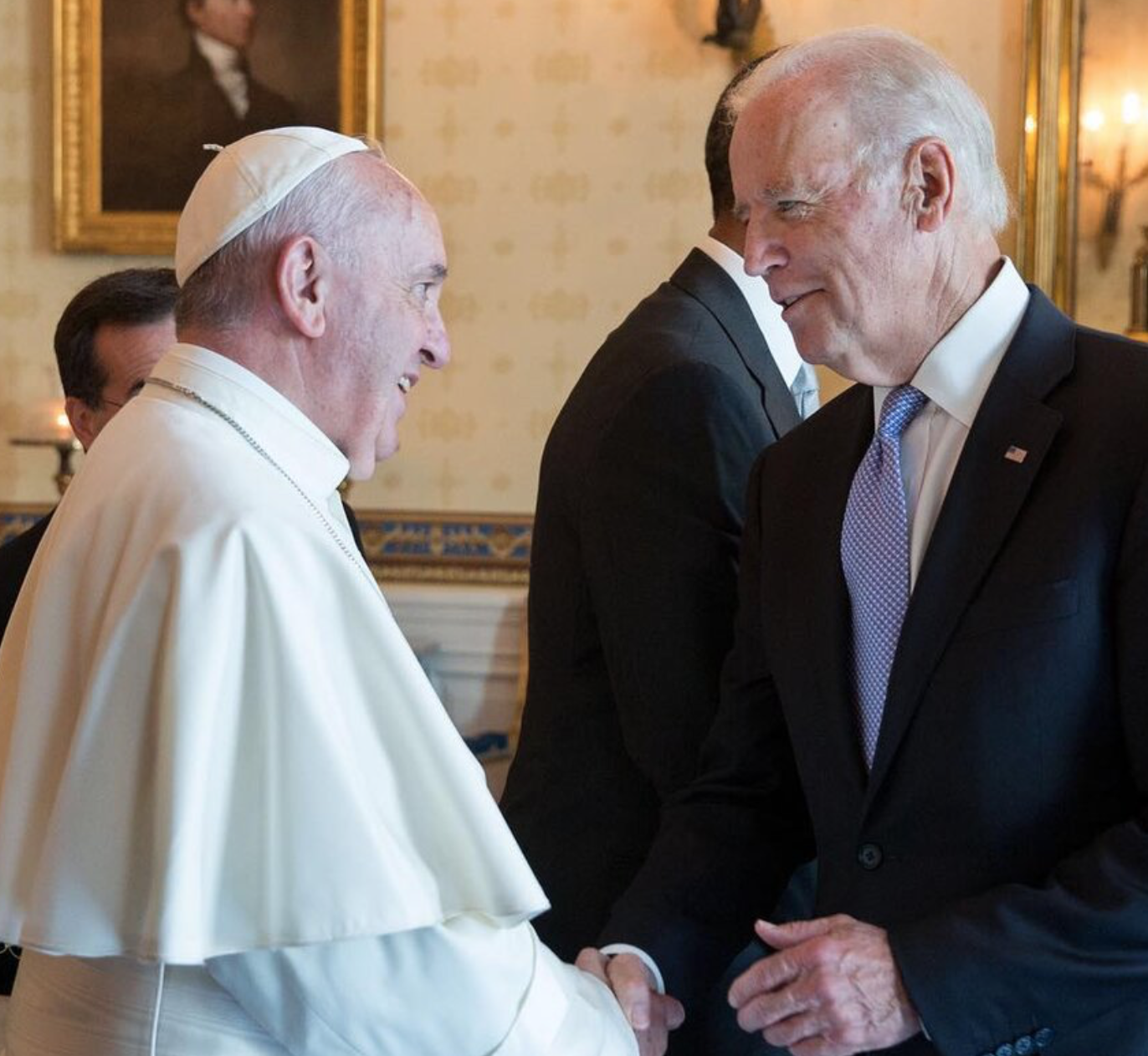
Repeat after me: White Catholics voting in 2004. White Catholics voting in 2024 ...

Repeat after me: White Catholics voting in 2004. White Catholics voting in 2024 ...

The topic of this Memo will not surprise readers.

It’s time to focus on the U.S. Catholic vote in 2024, following up a prior Memo assessing religion angles with Donald Trump’s prospects. The Guy once again advises journalists and other observers that Catholics are more pivotal politically than unbudgeable Democrats such as Black Protestants, non-Orthodox Jews and non-religious Americans.

Ditto with the long-running lockstep Republican loyalty among white evangelical Protestants and Latter-day Saints, in national-level elections when they are pushed into a two-party vise. As for America’s other major religious bloc, the more liberal “Mainline” Protestants, they are nearly split down the middle, usually with slim Republican majorities, and they are declining in influence as memberships shrink.

The past generation saw two U.S. political earthquakes. With one, many Southern white Protestants left the Democrats, effectively ending that party’s “Solid South” that dated from the Civil War, Reconstruction and the New Deal eras. Earthquake No. 2 was the move of white (that is, non-Hispanic) Catholics away from Democratic identity that originated in 19th Century immigration, reinforced in the presidential nominations of Al Smith and John F. Kennedy (who won 78% of Catholic voters in 1960, according to Gallup).

Today, this chunk of the broadly defines “Catholic vote” provides pretty consistent and modest but all-important Republican majorities. The Pew Research Center reports they were evenly split between the two parties as recently as 1994, the year Republicans finally won the U.S. House after four decades of failure. By 2019 they identified as Republican by 57% (and weekly Mass attenders moreso) even though the G.O.P. has never nominated a Catholic. (Could Florida’s Ron DeSantis be the first?)

Around two-thirds of Hispanic Catholics have consistently identified as Democrats, but the media will want to closely monitor their float toward the G.O.P in certain regions, especially pivotal parts of Florida and Texas. Note that Pew newly reports that 67% of Hispanics identified as Catholic in 2010 but only 43% in 2022. The cause was not Protestant inroads, but a remarkable jump from 10% to 30% over a mere dozen years in those who lack religious identity.
Please respect our Commenting Policy

Schism or not, what's next for the huge, disrupted global Anglican Communion?

Schism or not, what's next for the huge, disrupted global Anglican Communion?

If the Anglican Communion did not suffer schism on April 21, it’s the next best thing.

A declaration issued that day at the conclusion of an international church assembly in Kigali, Rwanda, means the media and other religion-watchers should gird loins for years of maneuvers, legalities, confusion and acrimony.

Here’s what’s at stake. This major segment of Christianity encompasses an estimated 85 to 90 million members worldwide in 46 regional branches. Its older western churches have a rich heritage in religious thought, worship, and fine arts, while the younger churches in the “Global South” are at the forefront of today’s creative Christian expansion.

This loose confederation has been organized like so.

(1) The archbishop of Canterbury, its titular leader as head of the “mother” Church of England, is no pope but summons and presides at these meetings.

(2) The Lambeth Conference, which gathers all Anglican bishops worldwide, most recently held — with many Global South leaders absent —last summer.

(3) The Primates’ Meeting (the confusing P-word refers to the leaders of regional branches), held most recently in March, 2022.

(4) The Anglican Consultative Council, a body of bishops, clergy and lay delegates that met most recently in February in Ghana.

The April 21 “Kigali Commitment,” which includes an emphatic vote of no confidence in all four of those entities, was issued by 315 bishops, 456 priests and 531 lay delegates from 52 countries. Sponsors claim their churches constitute nearly 85% of the world’s active Anglicans; for certain they represent a substantial — and growing — majority.


Please respect our Commenting Policy

Hot megachurch question: 'Why have many worshippers stopped singing in church'?

Hot megachurch question: 'Why have many worshippers stopped singing in church'?

QUESTION:

“Why have many worshippers stopped singing in church?”

THE RELIGION GUY’S ANSWER:

The question in that headline accompanied a provocative article about U.S. Protestant church trends that The Guy will turn to in a moment. The answer is important, and it’s quite obvious to observers of the long-running “worship wars” that are about far more than guitars and drums supplanting pipe organs and hymnals.

(For Catholicism’s parallel debate, check out the lively book “Why Catholics Can’t Sing” in the revised edition subtitled “With New Grand Conclusions and Good Advice”(!). Author Thomas Day, retired music department chair at Rhode Island’s Salve Regina University, laments destructive inroads of popular culture.)

The headline question accompanied this April piece on GetReligion.org by its editor Terry “tmatt” Mattingly: That might suggest slant from a boyhood Southern Baptist turned (guitar playing) Eastern Orthodox. However, Mattingly was not promoting his own liturgical preference, but reporting concerns raised by Kenny Lamm, the worship strategist for the Southern Baptists’ North Carolina state convention, who leads workshops nationwide.

Lamm recently posed these issues on his website in response to a pre-Easter e-mail from a frustrated man who’s been searching for a new church to join and visited one possibility four weeks in a row. Here’s what he experienced there.

Programmed lighting that blinds the “audience” (notably, not “congregation” or “worshippers”) in a pitch black room so you cannot see your fellow Christians. Haze machines. Unfamiliar songs “we can’t follow” with “unmemorable” melodies that leap uncomfortably, and with a vocal range running so high “the average singer” cannot reach the notes (a la the National Anthem!). Amplified instruments so loud they bury the sloppily dressed singers on stage and far moreso those out in the seats, and make the ears hurt (earplugs are kindly provided in the lobby).

Result: “We did not see one person singing — not one.”


Please respect our Commenting Policy

Has Donald Trump won nomination already? Careful. And keep a hawkeye on Iowa ...

Has Donald Trump won nomination already? Careful. And keep a hawkeye on Iowa ...

In nationwide polls, Donald Trump has defied multiple legal snarls to pad his already healthy margin over potential challenger Ron DeSantis for the Republican nomination. So far, those two swamp all other possible names, such as Nikki Haley.

As for state polling, South Carolina numbers last week from Winthrop University have Trump at 41% and DeSantis 20%, while the two locals got only 18% (Haley), and 7% (Tim Scott). Likewise in New Hampshire with its first primary, where a St. Anselm College poll in late March reported Trump 42%, DeSantis 29%, popular Governor Chris Sununu a mere 14% and Haley 4%.

Reporters on the politics, religion, and religion-and-politics beats should especially keep a hawkeye (so to speak) on Iowa, with its crucial first-in-the-nation caucus next January — turf already well-trod by GOP hopefuls. An April 4 poll of likely G.O.P. caucus-goers by J.L. Partners shows Trump 41%, DeSantis 26%, and Haley a 5% also-ran.


Please respect our Commenting Policy

Campaign for thorough reform of Muslim law deserves mainstream coverage -- now

Campaign for thorough reform of Muslim law deserves mainstream coverage -- now

The world’s largest organization of Muslims is campaigning for thorough worldwide reform of how to understand the faith’s religious law (Sharia) and applied jurisprudence (Fiqh).

Such an ambitious goal may seem unlikely and, to date, western media have given the effort minimal coverage. It’s time for that trend to change.

Far from some esoteric intellectual discourse, such a philosophical change could potentially affect the future of the world’s second-largest faith regarding democracy, blasphemy laws, human rights, education, the role of women, treatment of other religions, warfare, extremism, terrorism and crime and punishment.

The organization in question is Nahdlatul Ulama (NU, meaning Revival of Islamic Scholars) in Indonesia, the nation with the largest Muslim population. Consider these numbers from James M. Dorsey, a freelance writer and adjunct senior fellow in international studies at Singapore’s Nanyang Technological University: NU encompasses an estimated 90 million lay followers, tens of thousands of religious scholars, 44 universities and 18,000 lower schools.

NU upholds Sunni orthodoxy, but with a more tolerant tone than is customary in the Mideast. Its legal reform program was prominent during the massive February celebration of its 100th anniversary, analyzed in Dorsey’s March 31 Substack column. His article is a good starting point for journalists, but its opinionated viewpoint warrants careful follow-up interviewing. Also note this 2021 NU backgrounder by political scientist Ahmet T. Kuru (akuru@sdsu.edu).

Moderate Muslim thinkers have long favored some sort of move away from rigid legal traditionalism. Dorsey depicts a two-sided struggle among them, pitting allies of NU’s fully democratic and tolerant outlook against religious leaders beholden to rulers in the Mideast, as in Saudi Arabia, where certain social liberation is being allowed without fundamentally rethinking Islamic law or politics.


Please respect our Commenting Policy

God's Word? Concerning modern scholarship and those bloodthirsty Bible passages

God's Word? Concerning modern scholarship and those bloodthirsty Bible passages

QUESTION:

How do scholars explain bloodthirsty Bible passages?

THE RELIGION GUY’S ANSWER:

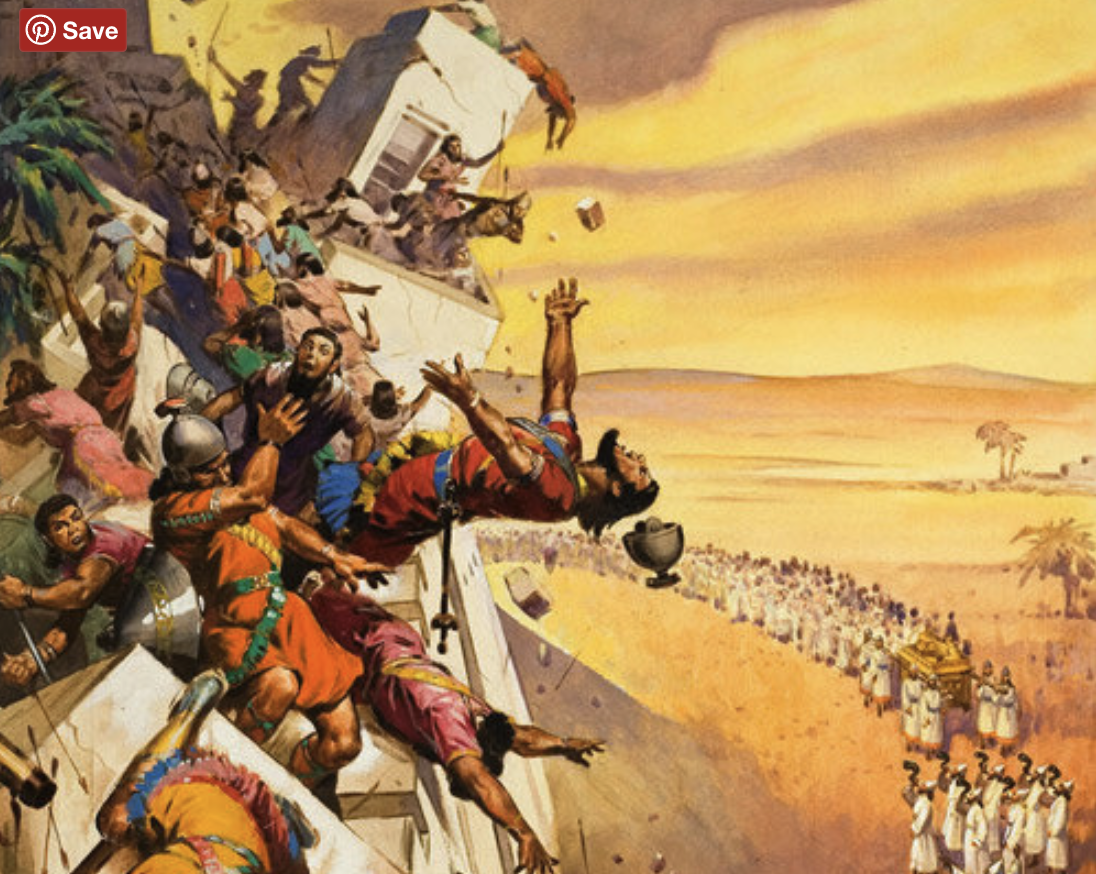
Skeptics seeking to disparage the Bible and, with it, Judaism and Christianity, cite certain passages in the Bible that depict all-out warfare as mandated by God. Consider Israel’s “conquest” of Canaan under Joshua, and a notably bloodthirsty passage like Deuteronomy 20:16-17, which says “you shall save alive nothing that breathes, but you shall utterly destroy them … as the LORD your God has commanded.”

Readers can see how that issue might, to say the least, be relevant to debates about some events in recent decades.

There’s been intriguing recent discussions of this complex issue. Even conservative evangelicals, who defend the Bible’s historical accuracy, are reinterpreting such passages, as we’ll see.

“Etz Hayim: Torah and Commentary,” issued by Judaism’s Conservative branch, freely admits a modern reader “recoils” from a demand to wipe out a population group. It says the context is the Canaanites’ “abhorrent” deeds. Verse 18 goes on to explain combat is necessary so “they may not teach you to do according to all their abominable practices which they have done in the service of their gods.”

Scholarly commentaries think ritual sacrifice of children was a major part of this. The context of such verses is said to be “the Torah’s abiding fear that these pagan nations will lead Israel astray.”

Here’s another part of the context. Risking any military advantage from surprise, Joshua informed Canaanites in advance about the invasion plan so they could flee from bloodshed, and he first offered a peace settlement before resorting to combat. (That was relatively humane for the cruel culture 3,000 years ago.) The same point is underscored by a classic source in Orthodox Judaism, the “Pentateuch & Haftorahs” compiled by Britain’s longtime chief rabbi, J.H. Hertz.

This Orthodox Jewish commentary also observes that the Israelites’ need for a homeland is part of all human history, including for most western nations.


Please respect our Commenting Policy

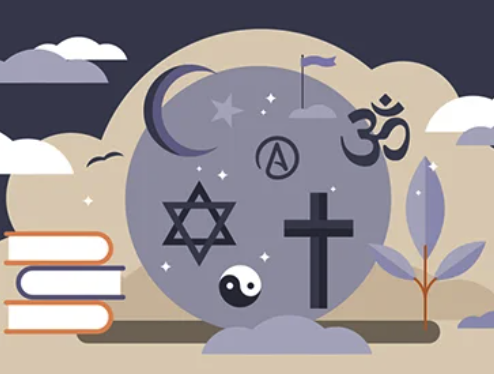
Attention mass-media leaders: What should Americans know about each others' faiths?

Attention mass-media leaders: What should Americans know about each others' faiths?

America’s three biggest hamburger chains have 27,000 local outlets.

The three biggest of America’s 2,800 or so religious denominations alone have 97,000 local congregations.

Which is to simply remind readers that faiths retain powerful impact in society despite the increase of people with no religious affiliation and other secular inroads.

Relations among major faiths feel especially pertinent in 2023, since Islam’s holy month of Ramadan with concluding Eid festival overlaps Jewish Passover and the two Easter dates observed by Christians.

Zeenat Rahman, executive director of the University of Chicago’s Institute of Politics, thinks American religion is “increasingly polarizing” and yet at the same time is “essential to rebuilding a strong civil society,” which means Americans “need a basic understanding of the faith of others.”

So, in practice what do people know about other major world religions? What should they know?

Those are important questions for regional or national journalists to explore via interviewing, plus polling if your medium has the money. Or consider commissioning brief articles where religious leaders sum up the basics they think others should know about their faiths and — especially helpful — what’s often misunderstood.

How about books? Stephen Wylen accepted this sort of challenge with his self-published “You Should Know This: A Rabbi Explains Christianity to Jews.” For years now, Terry Mattingly has also been recommending this classic by religion-beat veteran Mark Pinsky: “A Jew among the Evangelicals: A Guide for the Perplexed.”

Some standard book publisher should put together a non-sectarian and up-to-date anthology in which experts would depict their own religions for outsiders, including the main internal branches and variants.

Political scientist (and GetReligion contributor) Ryan Burge recently took up these matters, in a Religion News Service analysis, by re-examining 2019 interfaith data from the ubiquitous Pew Research Center.


Please respect our Commenting Policy

Time to step up the mainstream coverage of transgender debates within U.S. religion

Time to step up the mainstream coverage of transgender debates within U.S. religion

News about transgender issues tends to deal with women’s athletic competitions and shelters, pronouns, girls’ locker rooms, public school sex education, competing rights claims (with parents on both sides of the dates) and resulting political and legal disputes.

There’s been less coverage of medical morality, especially concerning under-aged youths, and hardly any about how various religious groups understand gender and why.

Journalists should take notice when four vigorous arguments on the religious aspect appear in the space of just six days, as follows.

March 20: The leaders of the U.S. Conference of Catholic Bishops authorized publication (.pdf here) of an important but little-reported transgender policy. It declares that Catholic health-care agencies “must not” perform or help develop chemical or surgical procedures to transform a person’s bodily characteristics into those of the opposite sex.

The stated reasons are theological and moral. Key quotes: “We did not create human nature; it is a gift from a loving Creator,” so human dignity requires “genuine respect for this created order.” Sexual differentiation is a reality “willed by God” and a “ fundamental aspect of existence as a human being.”

Therefore, surgical and chemical techniques to switch a patient’s sexual characteristics, or puberty blockers to halt youths’ natural development, “are not morally justified.” To the bishops, such interventions are “injurious to the true flourishing of the human person” and violate doctors’ basic moral maxim to “do no harm.”


Please respect our Commenting Policy

Religion in politics, again: What is Sikhism, candidate Nikki Haley’s one-time faith?

Religion in politics, again: What is Sikhism, candidate Nikki Haley’s one-time faith?

QUESTION:

What is Sikhism, candidate Nikki Haley’s one-time religion?

THE RELIGION GUY’S ANSWER:

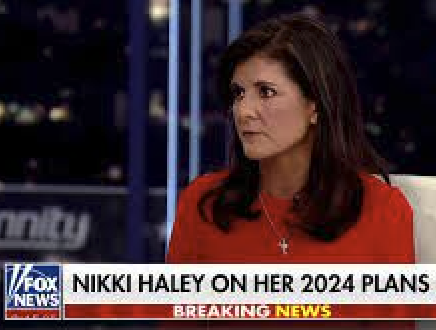
Nikki Haley, who is challenging Donald Trump for the Republican presidential nomination, was raised in the religion of Sikhism  (“SEEK-ism”) by immigrant parents from India. But soon after both Sikh and Methodist weddings she converted to husband Michael’s Christianity.

During Haley’s first run for South Carolina governor in 2010, National Public Radio posted a notably nasty piece by a fellow Indian-American who said “I’m not buying” Haley’s “Christian bit,” noting that “serious churchgoers” and political opponents suspected a “conversion of convenience” in a heavily Protestant state. However, Haley adopted Christianity at age 24 and only entered politics eight years later.

Partners in mixed marriages do have to make religious choices. Haley has repeatedly professed that she is a Christian believer but respects her family and does not criticize its religious heritage. Though a Methodist churchgoer, she occasionally attends Sikh services and has visited the faith’s holiest sanctuary, the Temple of God in Amritsar, India (known as the Golden Temple because it’s covered in gold leaf).

As a journalist, The Guy has no business examining Haley’s soul, but sees her candidacy as a good opportunity for Americans to learn more about her former faith. Sikhism claims to be the fifth-largest world religion after Christianity, Islam, Hinduism and Buddhism, though it does not evangelize and counts only a modest 30 million adherents. Still, that’s double the global number for Judaism.

Sikhism is by far the youngest of the major world religions. Its homeland is the Punjab region of northern India and adjacent Pakistan. The founder, Guru Nanak (1469-1539), was a married accountant with two sons who had a dramatic encounter with God, whence he proclaimed “there is no Hindu; there is no Muslim” and gathered a following as a spiritual teacher.

Western scholars often depict Sikhism as a classic example of syncretism (blending of different religions) or a reforming “offshoot” of Hinduism.


Please respect our Commenting Policy