Richard Ostling

Gazing into a niche-media future: How politicized might evangelical radio become?

Gazing into a niche-media future: How politicized might evangelical radio become?

During the heat of the election campaign, the Salem Media Group staged an 11-day “Battleground Talkers” tour that covered politically potent Arizona, Florida, Georgia, Michigan, Ohio and Pennsylvania.

Purpose: To boost conservative voter turnout and nudge undecided voters on what “may be the most important election in the history of our country. … The war for America’s soul is on the line.” The rallies’ Republican and conservative flavor was no surprise, since they featured Salem radio personalities Mike Gallagher, Sebastian Gorka, Hugh Hewitt, Charlie Kirk, Eric Metaxas, Dennis Prager and Brandon Tatum, among others.

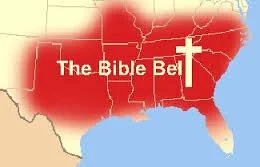
Salem Media, a publicly traded firm founded and chaired by Edward G. Atsinger III (469-586-0080), is based in Irving, Texas. It boasts of being “America’s leading Christian media company” — in this context “Christian” means pretty much evangelical Protestant — with radio networks, local stations, syndicated programs, websites, podcasts, marketing services, event planning and Regnery, a major conservative book house.

The “Battleground” personalities appear on the company’s Salem Radio Network, which employs a “conservative news talk” format. Salem says market research indicates such programming “is highly complementary to our core format of Christian Teaching and Talk” heard on other Salem outlets because “both formats express conservative views and family values.”

A thoroughly-reported, 70-inch New York Times examination of the politics of the Salem “juggernaut” October 18 (paywalled here) said, among many other things, that the company consistently promotes “ballot fraud conspiracy theories.”

Such a mix of the sacred and the profane would have astonished the 20th Century founding preachers of conservative Protestant radio such as William Ward Ayer, Donald Grey Barnhouse, Percy Crawford, M.R. DeHaan, Charles Fuller, Aimee Semple MacPherson, Walter Maier or Paul Rader.

Though TV gets the glamour, radio has arguably been more important in building the U.S. evangelical subculture and shaping its substance since World War II.


Please respect our Commenting Policy

Great Britain's first Hindu prime minister inherits a prominent role in Anglicanism

Great Britain's first Hindu prime minister inherits a prominent role in Anglicanism

ry to imagine, say, U.S. President William Howard Taft, who was a Unitarian, involved with choosing bishops who rule the Episcopal Church, or President Joseph Biden, a Catholic, participating in the selection of bishops in the United Methodist Church.

After the historically brief leadership of Britain's Liz Truss, Conservative Party members of Parliament this week agreed on Rishi Sunak to succeed her as prime minister at a moment of severe economic and political turmoil.

Despite sporadic calls for a change in the system, this Hindu believer will have the unique task of proposing each new Church of England bishop for formal action by King Charles III, the church’s Supreme Governour and “Defender of the Faith.” Then again will that be “Defender of Faith” this time around?

The Sunak religious anomaly provides the media a sidebar to the astonishing ascent of this Anglo-Indian as the first “person of color” and first person from ethnic minorities to lead the British government. He’s also the first prime minister who is not at least nominally a Christian.

The Times of India reports Sunak has called himself a “proud Hindu” and regularly attends the temple in his hometown of Southampton. He has sworn his oath of office on the Bhagavad Gita rather than the Bible.

By coincidence, Sunak’s triumph occurred on Diwali, the annual festival of lights celebration when Hindus invoke the goddess Lakshmi for prosperity. The Times article depicts this 42-year-old’s remarkably prosperous corporate career and rapid political rise.


Please respect our Commenting Policy

Doctrine and fashion: As Iran protests persist, what women's clothing does Islam require?

Doctrine and fashion: As Iran protests persist, what women's clothing does Islam require?

THE QUESTION:

As Iran protests persist, what women’s clothing does Islam require?

THE RELIGION GUY’S ANSWER:

The facts are these. On September 13, Iran’s morality police arrested 22-year-old Mahsa Amini for violating the legally required Muslim dress code for women. She was wearing the mandatory head scarf (hijab), but apparently it did not correctly conceal all of her hair. Three days later, Amini died while still in police custody. The government blames a heart attack, but suspicions that she was abused run rampant.

In the spontaneous uproar that resulted, refusal to wear the hijab became a symbol of resisting oppression as protests across the nation targeted not only restrictions for women but expressed over-all rejection of the harsh theocratic regime that has ruled revolutionary Iran the past 43 years. At this writing, at least 200 Iranians have reportedly been killed and 1,500 demonstrators arrested.

Azadeh Moaveni of New York University wrote in The New York Times that resentment boiled over in part because women in Tehran’s wealthy and politically-connected elite flagrantly ignore the Muslim dress laws without arrest.

There’s always been vigorous discussion of the complexities about exactly what attire is properly modest and thus faithful to Islam.

Responding to events in Iran, Deina Abdelkader at the University of Massachusetts Lowell contends that clothing rules “have nothing to do with Islamic tenets” while Muslim countries have imposed — or forbidden — forms of women’s attire in order to proclaim their ideology, whether secular or scrupulously religious.

Islam’s fundamental concern here is not unique, since religions normally advocate modesty and propriety. In particular, Jewish tradition associates attire as part of a general admonition in the Torah (Deuteronomy 23:15, JPS translation): “Let your camp be holy; let Him [God] not find anything unseemly among you and turn away from you.”


Please respect our Commenting Policy

Could secular feminism and some kind of religion converge in a Sexual Revolution rethink?

Could secular feminism and some kind of religion converge in a Sexual Revolution rethink?

Attention journalists: Here are some chapter headings from the latest advice book on sex:

“Men and Women Are Different”

“Some Desires Are Bad”

“Loveless Sex Is Not Empowering”

“Violence Is Not Love”

“People Are Not Products”

“Marriage Is Good”

“Sex Must Be Taken Seriously”

“Listen to Your Mother”

To which geezers in The Guy’s swiftly passing generation can only respond with something that, today, would be #DUH.”

Yet Americans who’ve grown up since the blitz of the 1960s Sexual Revolution have been immersed in a culture that promotes and expects commitment-free hook-ups and casual sex, even very early in a relationship.

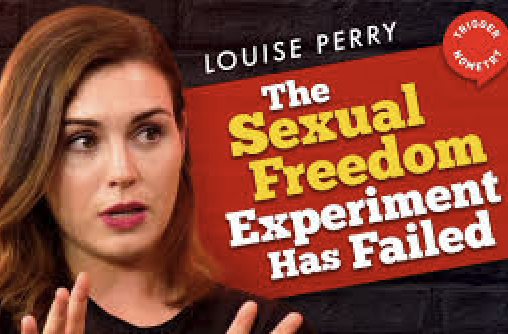
Turns out women feel disheartened, dishonored and coerced by this supposed “freedom,” and have good reason to be, says Britain’s Louise Perry in her spirited book “The Case Against the Sexual Revolution: A New Guide to Sex in the 21st Century” (Polity Press). She assails so-called “liberal feminism” for routinely handing countless women a raw deal.

Her preachments will be routine common sense for folks who resist fierce cultural pressure and remain guided by religious teachings of the past few thousand years.

What might especially intrigue reporters is that Perry, a fellow journalist with the Daily Mail and the New Statesman and an anti-rape crusader, makes a thoroughly secularized case that nonetheless coincides at many points with a religious tradition toward which she expresses zero trace of fondness.


Please respect our Commenting Policy

Politicos and Scripture: What does biblical religion teach about forgiving loans?

Politicos and Scripture: What does biblical religion teach about forgiving loans?

THE QUESTION:

What does biblical religion teach about forgiving loan debts?

THE RELIGION GUY’S ANSWER:

President Joe Biden’s pre-election executive order to limit or erase college students’ loan debts is still in the news this week. The non-partisan Congressional Budget Office issued its “highly uncertain” estimate that the plan will cost at least $420 billion, the first federal lawsuits filed against it argued that only Congress can legally enact spending, and the Department of Education scaled back the numbers who get this benefit.

The president claims the power to bypass Congress under the “HEROES Act,” passed after the 9/11/01 attacks, which allows forgiveness in case of a “military operation or national emergency.” Biden interprets the COVID pandemic as such an emergency; critics call that a stretch.

Biden says that now “people can start to finally crawl out from under that mountain of debt to get on top of their rent and their utilities, to finally think about buying a home or starting a family or starting a business.” But a Wall Street Journal editorial considered cancellations “unfair to Americans who repaid their loans or didn’t go to college” and accused Biden of “the biggest executive usurpation of Congress in modern history.”

As all this plays out, does the Bible, which has so long shaped moral judgments on public policy, have anything to say on such matters?

Liberal Protestant blogger John Pavlovitz chided Christians who oppose Biden, saying they ignore that “their entire professed religion is based on the idea of a cancelled debt. Way to lose the plot, kids.”

Podcaster Allie Beth Stuckey responded for World magazine that “the debt is sin, and Jesus, God made flesh, voluntarily paid it on our behalf through his death on a cross” so that “we are reconciled to God forever.”

One wording of history’s most-recited prayer asks God to “forgive us our debts as we forgive our debtors.”


Please respect our Commenting Policy

Under-covered story in tense times: Counseling with transgender Christian believers

Under-covered story in tense times: Counseling with transgender Christian believers

Experts at UCLA estimate that 0.6% of American adults currently identify as transgender.

Like other writers covering religion, politics and culture, The Religion Guy has accumulated a bulging file on recent transgender conflicts, which go far beyond grade-school curriculums or women’s shelters, locker rooms and athletics. The major question facing practitioners, legislators and moral theologians is how the age-old “do no harm” principle applies to the greatly increasing numbers of teens under 18, especially girls, seeking transition via puberty blockers, hormone treatments and surgery.

A planned Memo analyzing those developments has been supplanted by a new book, “Gender Identity and Faith: Clinical Postures, Tools and Case Studies for Client-Centered Care” (InterVarsity Press) by Mark A. Yarhouse and Julia A. Sadusky, who are evangelicals and licensed clinical psychologists. Their work turns journalistic attention from the socio-political debates to the situations of transgender individuals, especially those raised in traditional forms of religious faith.

A blurb from Laura Edwards-Leeper, who chairs the child and adolescent committee of the World Professional Association for Transgender Health, considers this book “essential” for mental health providers. But The Guy thinks it’s equally pertinent for individual clients, parents, pastors and churches (and journalists!) seeking understanding.

Even The Christian Century thinks that though the book “will at times disappoint” fellow religious progressives, it may “prove an important harm-reduction tool and entry point for conservatives who are struggling to join the conversation.”

The bottom line: Considering the timeliness and difficulty of the topic, The Guy sees it as a Book of the Year prospect in religion, and a compelling topic for journalism.


Please respect our Commenting Policy

In Islamic tradition, what is a fatwa? Why the demands to kill novelist Salman Rushdie?

In Islamic tradition, what is a fatwa? Why the demands to kill novelist Salman Rushdie?

THE QUESTION:

In Islam, what is a fatwa? Why the demand to kill novelist Salman Rushdie?

THE RELIGION GUY’S ANSWER:

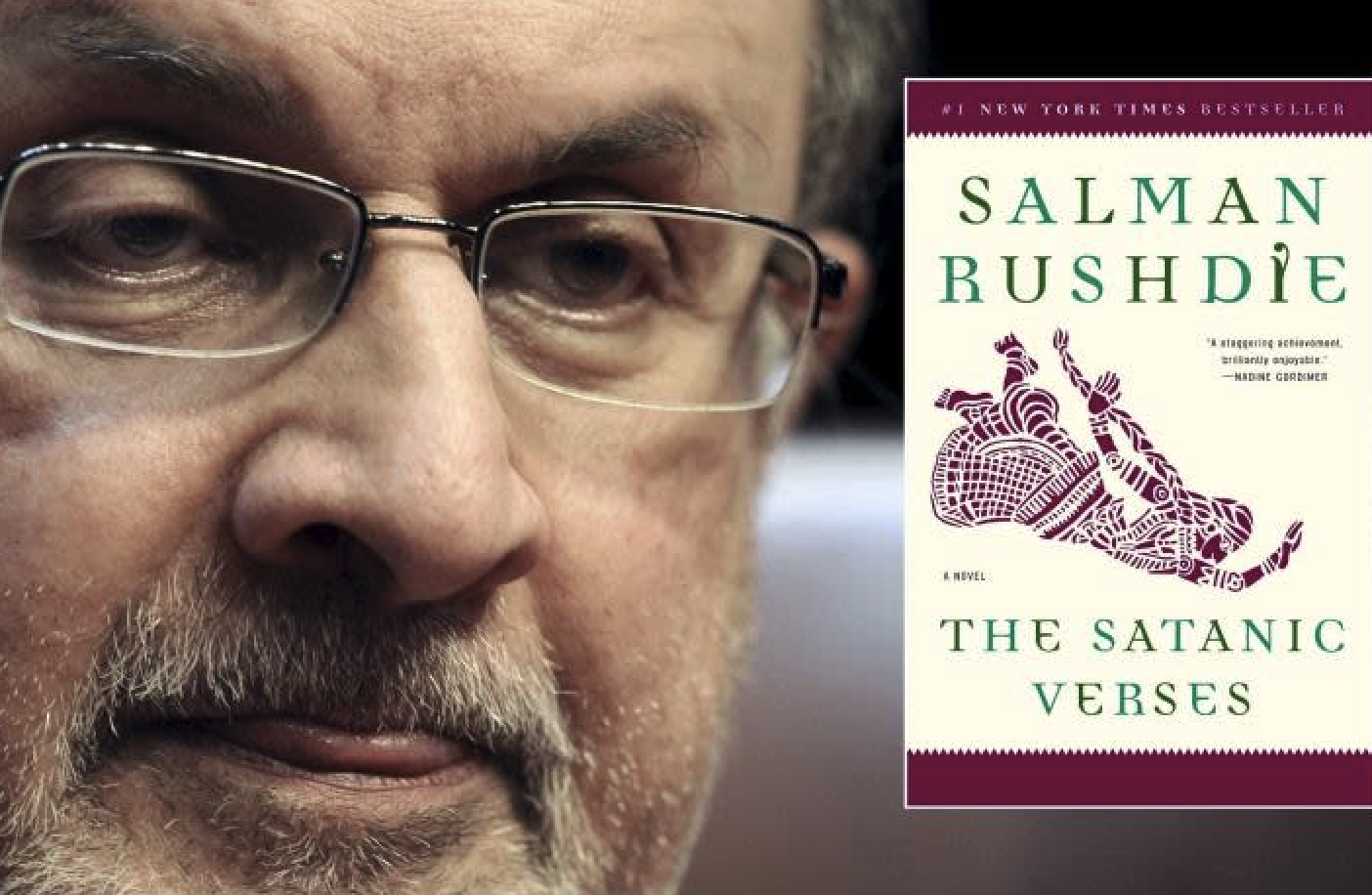
In 1989, the Ayatollah Ruhollah Khomeini, Iran’s theocratic ruler, ordered the assassination “without delay” of novelist Salman Rushdie because of his novel “The Satanic Verses.” Remarkably, this official fatwa imposed the duty of freelance killing in the name of God upon masses of Muslim believers in all nations, and also demanded death for the editors and publishers involved with the book.

Three decades later, a Lebanese-American stands accused of attempting to murder Rushdie by repeated stabbings onstage at New York’s Chautauqua Institution. The author suffered severe injuries but survived. Though the Muslim Council of Britain condemned the attack, the Iranian regime’s Kayhan newspaper dispatched “a thousand bravos” to “the brave and dutiful” assailant while militants in other Muslim lands celebrated. We’ll see what prosecutors and defense attorneys finally say about links between Iran’s fatwa of death and the sensational bloodshed.

Rushdie’s complex fantasy had dream sequences in which depraved enemies of Islam — not the author himself — complain about moral absolutism and treatment of women and demean the Prophet Muhammad’s wives and closest Companions. They also challenge the divine inspiration of the Quran. A Wall Street Journal op-ed correctly noted that the far greater threat to the Quran is the revisionist theorizing on its origins by the late John Wansbrough at the University of London.

The Rushdie novel resulted in book-banning and riots in the Muslim world, and the famous fatwa sent Rushdie into hiding for years. In 1998, Iran’s president declared the case “finished” during diplomatic efforts, but the regime did not actually abolish the fatwa. It was reaffirmed by Khomeini’s successor as Supreme Leader in 2017, and re-published on a government Web site five days before the Chautauqua stabbing. During the past decade, Iranian groups have pledged to pay a $3.9 million bounty to anyone who slays Rushdie.


Please respect our Commenting Policy

This time, will U.S. Supreme Court finally clarify rights of same-sex marriage dissenters?

This time, will U.S. Supreme Court finally clarify rights of same-sex marriage dissenters?

The U.S. Supreme Court’s 2021-2022 term produced biggies on abortion, religious freedom and the separation of church and state. The term that opens October 3 will bring another blockbuster — if the high court finally settles the unending clashes over LGBTQ+ rights versus religious rights.

Newsroom professionals will want to watch for the date set for the oral arguments in 303 Creative v. Elenis (Docket #21-476).

In this six-year dispute, graphic designer Lorie Smith is suing Colorado officials over the state’s anti-discrimination law, seeking to win the right to refuse requests to design websites that celebrate same-sex marriages, which she opposes, based on the teachings of her faith. She does not reject other work requests from LGBQ+ customers.

As currently framed, the case involves Smith’s freedom of speech rather than the First Amendment Constitutional right to “free exercise” of religion. The U.S. Supreme Court sidestepped the religious rights problem in 2018 (click here for tmatt commentary) when it overturned Colorado’s prosecution of wedding cake baker Jack Phillips (who is still enmeshed in a similar case per this from the firm that also represents Smith). Nor did the high court rule on religious freedom aspects when it legalized same-sex marriage in the 2015 Obergefell decision.

Last month, the Biden Administration entered 303 Creative (.pdf here) on the side of Colorado and LGBTQ+ interest groups. Essentially, the Department of Justice argues that as enforced in Colorado or elsewhere, “traditional public accommodations laws ... burden no more speech than necessary to further substantial government interests — indeed, compelling interests of the highest order.”

Smith has support from 16 Republican-led state governments and 58 members of Congress, while 21 Democratic states and 137 Congress members take the opposite stance alongside e.g. the American Bar Association.

The issue will face the U.S. Senate after the November elections as Democrats try to “codify” Obergefell into federal law but for passage may need to accept a Republican religious-freedom amendment. The Equality Act, which won unanimous support from House Democrats but is stalled in the Senate, would explicitly ban reliance on federal religious-freedom law in discrimination cases, include crucial laws passed by a broad left-right coalition during the Bill Clinton administration.


Please respect our Commenting Policy