Richard Ostling

Beyond the Orthodox questions: How might the Ukraine war scramble world Christianity?

Beyond the Orthodox questions: How might the Ukraine war scramble world Christianity?

Russia's invasion of Ukraine has potential to be "the most transformational" European conflict since World War II, writes New York Times foreign policy columnist Thomas Friedman.

Will it be transformational for Christianity?

There's a slim chance peace could be restored, but at this writing Russian dictator Vladimir Putin appears committed to doing whatever it takes to demolish the independence of his once-friendly neighbor and its young democracy. We might see Russian military occupation, a puppet regime, persistent armed resistance by furious Ukrainians, ongoing aid by the West and at some future point a humiliating defeat and withdrawal -- a replay of the decade-long occupation of Afghanistan that played into the Soviet Union's collapse and therefore to Ukraine's independence.

Russia faces accusations of war crimes amid mass killings of innocent civilians, and bombardment of homes, hospitals, schools and infrastructure, with attendant suffering.

The contours of world Christianity could be scrambled, as a result of all of this. This religious aspect seems a mere sidebar for the news media just now.

But long term, the Russian Orthodox hierarchy has fused the church's stature with a regime hit by widespread moral condemnation, sagging influence and rising economic and diplomatic isolation. Opprobrium comes not just from the U.S. and western allies. In a United Nations vote, 141 nations denounced the "aggression" while only four problematic regimes backed Russia. Even China abstained.

The media should be alert to the following possible scenarios.

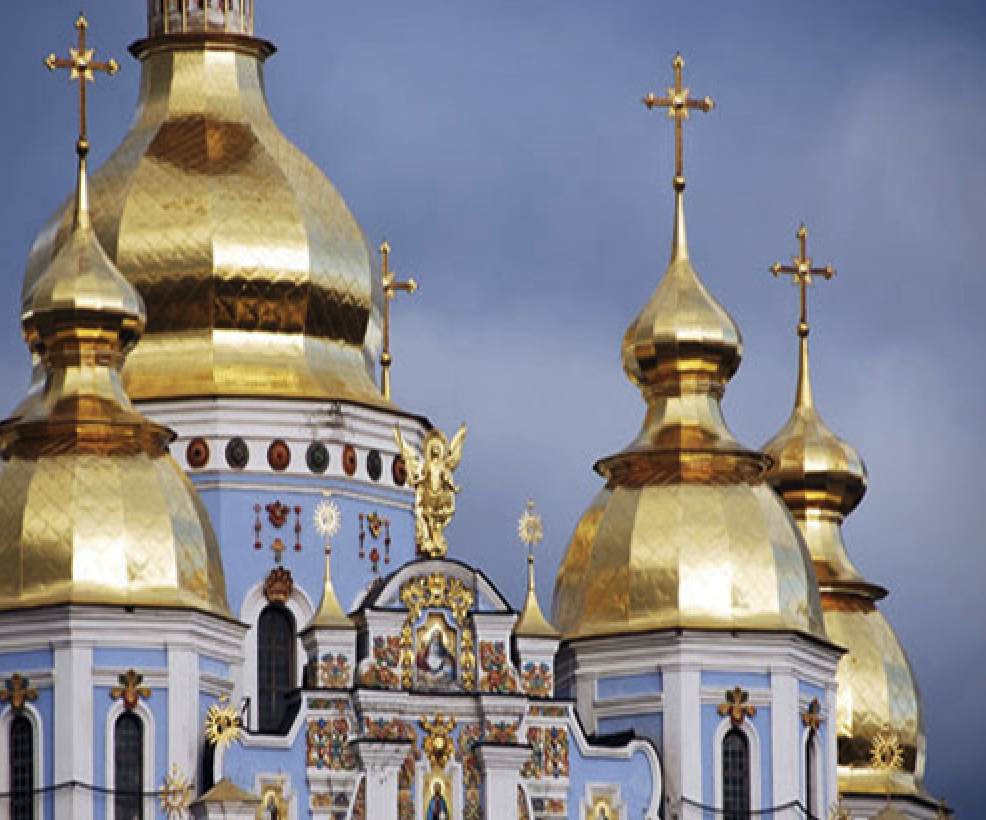
The starting point for discussion is a current church split within Ukraine, whose Orthodox population is second only to the massive church of Russia. See detail here in a previous Memo.

In 1686, the Ecumenical Patriarch, "first among equals" who lead Orthodoxy's independent "autocephalous" branches, granted the Moscow Patriarch the jurisdiction over Ukraine that it still exercises. But after national independence, a rival Orthodox Church of Ukraine now led by Metropolitan Epiphanius arose, and Ecumenical Patriarch Bartholomew — with the sympathy of western leaders — formalized its autocephalous status in 2019.
Please respect our Commenting Policy

One of the central religion-beat issues of our day: What is 'Christian nationalism'?

One of the central religion-beat issues of our day: What is 'Christian nationalism'?

THE QUESTION:

What is “Christian nationalism”?

THE RELIGION GUY’S ANSWER:

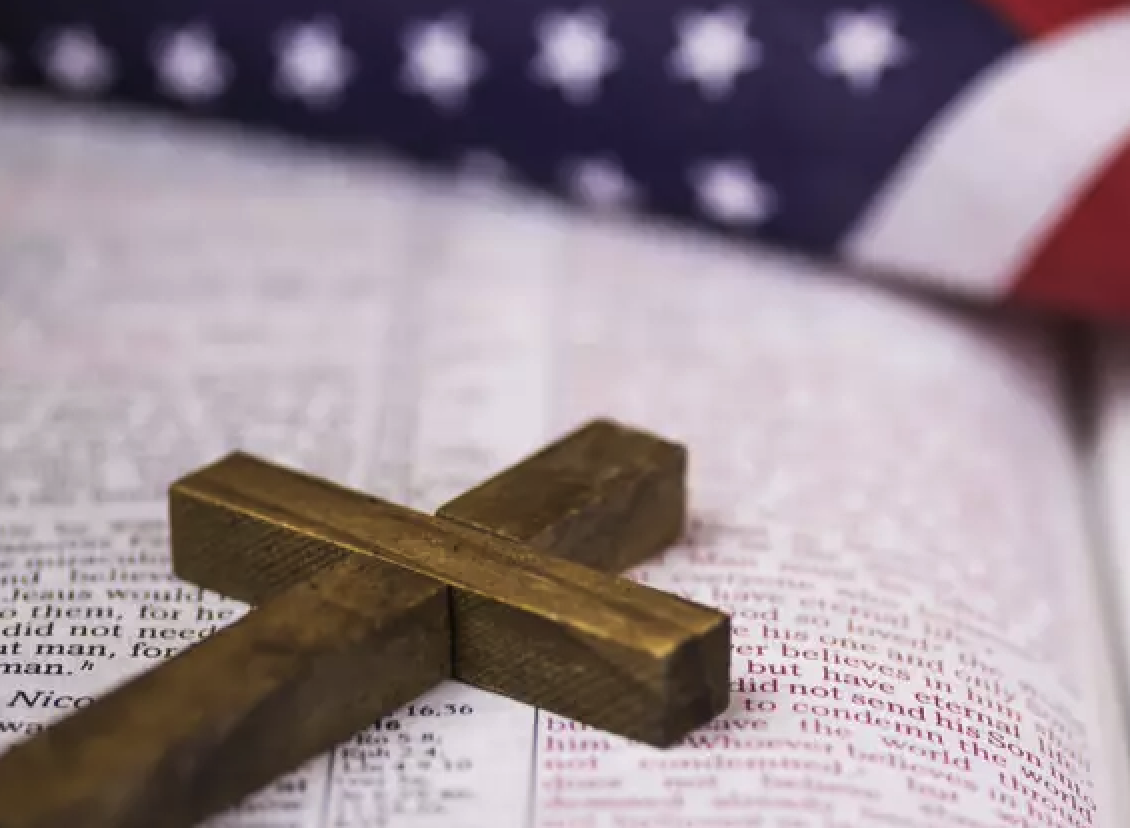
“Christian nationalism” became common coinage in the U.S. fairly recently, usually raised by cultural liberals who view it with alarm, and often with “white” as an added adjective. The term is not generally embraced by those considered to be participants.

As journalist Samuel Goldman remarks, to describe something as Christian nationalism “is inevitably to reject it.”

The Merriam-Webster definition of plain “nationalism” is “loyalty and devotion to a nation” but adds this important wording: “ … especially a sense of national consciousness exalting one nation above all others and placing primary emphasis on promotion of its culture and interests as opposed to those of other nations or supranational groups.”

“Nationalism” is not the same as “patriotism,” the natural and benign love and loyalty toward one’s homeland that characterizes all peoples and countries, including huge numbers of non-nationalists on America’s religious left as well as the right. Nor is it the same thing as either political or religious conservatism but is instead a narrow faction within those broad populations.

The latest bid to shape public perceptions of the concept is a 63-page “Report on Christian Nationalism and the January 6 Insurrection,” issued last month by the Baptist Joint Committee for Religious Liberty (BJCRL) and the Freedom From Religion Foundation (FFRF). Click here for .pdf text.

These two organizations may seem odd partners, since FFRF claims that “persons free from religion” have brought about “most” of the West’s “moral progress.” But FFRF shares the Baptist committee’s devotion to strict separation of church and state and opposition to “targeting of religious minorities” and “the politicization of houses of worship” as well as to Christian nationalism.


Please respect our Commenting Policy

The latest United Methodist bombshell will create news throughout 2022 and beyond

The latest United Methodist bombshell will create news throughout 2022 and beyond

Yet another United Methodist bombshell will create news throughout 2022 and beyond

In this, the 50th anniversary year of the 12.9-million-member United Methodist Church's fierce debate over the Bible and sexuality, a late summer General Conference was set to settle how to split. But a March 3 bombshell announcement cancelled this all-important meeting, already postponed twice due to COVID. Without plans for an orderly and respectful breakup, rancor will persist till delegates finally do assemble, presumably in May, 2024.

Here's some lay of the land for the media through 2022 and beyond.

"The only problem with [cancellation] is everything," remarks Religion News Service commentator Jacob Lupfer. "Every major faction in the church agrees on the need for schism. The status quo is untenable." The liberal Reconciling Ministries Network supports the delay, but "this lengthening test of our patience" postpones "the road to justice for our LGBTQ+ kin" who want a policy change that regularizes weddings and clergy ordinations for Methodists in same-sex relationships.

Conservatives are more upset, so much so they immediately rushed to launch a new "Global Methodist Church" (GMC) on May 1. Mark your calendars: GMC supporters will hold a "global gathering" in Avon, Indiana, just afterward on May 7. The GMC will combine U.S. conservatives with sizable groups from the Methodists' flocks in Africa, the Philippines and elsewhere in the diverse Global South. (Most other "mainline" denominations exist in the United States only.)

Crucially, the breakup "protocol" on the 2022 General Conference agenda would have approved a temporary time window until 2024 during which congregations could quit the UMC and keep ownership of their buildings and other assets. The 2024 General Conference could still OK such an escape clause, but by then the schism will be in full swing.

Here is the key for journalists working at the local and regional levels: Without a mutually agreed pact, Lupfer expects expensive, "chaotic, unruly litigation."


Please respect our Commenting Policy

Two insiders' writings should be weighed carefully by evangelical-watchers in the press

Two insiders' writings should be weighed carefully by evangelical-watchers in the press

As U.S. Protestant evangelicalism copes with internal divisions and problematic status in the broader society, along with the usual brickbats from the Left, non-partisan journalists and evangelical strategists alike should carefully monitor the thinking of knowledgeable insiders who are not wedded to customary loyalties and assumptions. Two in particular: David French and the lesser-known Michael F. Bird.

Preliminaries: (1) The media should indicate when they're talking about WHITE evangelicals, who are so distinct from the Hispanic and Black subgroups in socio-political terms. (2) Contrary to the customary media story line, it's important to acknowledge that grassroots, evangelicalism remains the LEAST politically involved of U.S. religion's major segments, as seen in the National Congregations Study.

Attorney-turned-pundit David French is, yes, a critic of Donald Trump who even flirted with a quixotic third-party run against him in 2016. Therefore his journalism is ignored if not despised by legions yearning for a second Trump term (which would end when he's age 82.5). Yet consider that though a Harvard Law product, French is a conservative's conservative and an evangelical's evangelical.

The Tennessee-based writer, who worships in the conservative Presbyterian Church in America, is a senior editor of The Dispatch and formerly a National Review writer. During his prior legal career he was a senior counsel with two top evangelical shops, the American Center for Law and Justice and the Alliance Defending Freedom, and president of the Foundation for Individual Rights in Education. Perhaps no attorney has labored more effectively to defend Christian voices and organizations on U.S. campuses, harassed local churches and conservatives and pro-lifers exercising Bill of Rights freedoms.

Additionally, he served with the U.S. Army in Iraq, winning the Bronze Star for combat service. His importance as a conservative thinker was depicted in this 2019 New Yorker article. Wife Nancy was a Sarah Palin ghostwriter and founded Evangelicals for Romney in 2012.

With that background, you'll understand why The Guy keeps thinking about the contention in French's weekly column on religion February 13 that "the seeds of renewed political violence are being sown in churches across the land."


Please respect our Commenting Policy

That word always gets surprising media attention. What does biblical 'inerrancy' mean?

That word always gets surprising media attention. What does biblical 'inerrancy' mean?

THE QUESTION:

What does biblical "inerrancy" mean?

THE RELIGION GUY'S ANSWER:

A February article by Stephen Young of Appalachian State University in North Carolina pulls the "inerrancy" of the Bible into a surprising media spotlight.

Writing in the liberal ReligionDispatches.org, Young blames this concept for American Christian racism and "white patriarchy" that subjugates women. By coincidence, days before Young's posting Michael F. Bird of Ridley College, an Anglican seminary in Australia, contended via the interfaith Patheos.com that his fellow evangelicals in the U.S. advocate a version of inerrancy that's a bit skewed.

Hold those thoughts while the Memo sketches some background.

Merriam-Webster defines inerrancy as "exemption from error," with "infallible" as a synonym. However, the modern debate distinguishes between those two words, as we'll see below.

Churchgoers may simply view the Bible as trustworthy because, after all, it's the Word of God, but "inerrancy" is a more sweeping contention meant to cover every detail of the events depicted in the Bible.

Inerrancy came to the fore, especially among U.S. Protestants, through Princeton Theological Seminary professors such as B.B. Warfield (1851-1921) who believed Christianity had always taught the Bible is error-proof.

As theological "modernism" made inroads, the largest Presbyterian denomination in 1910 defined five tenets as "essential doctrine" required of clergy candidates. The first one stated that "the Holy Spirit did so inspire, guide and move the writers of the Holy Scriptures as to keep them from error." The 1910 platform evolved into the "five points of Fundamentalism," embraced by that militant new movement even as the Presbyterians themselves moved away from their requirement.


Please respect our Commenting Policy

When ancient texts meet high tech, behold, will we get near-instant Bibles? 

When ancient texts meet high tech, behold, will we get near-instant Bibles? 

The Religion Guy has touted the investigative chops of the Ministry Watch website and its usefulness as a story source for journalists. Let’s re-up that message.

Along with assorted financial and moral scandals, President Warren Cole Smith has been examining what he calls the "Bible translation industry" (which prefers to call itself a "ministry"). This is a very popular cause among U.S. Protestants, with revenues of around $500 million a year. The biggest group, Wycliffe Bible Translators, took in $227 million in 2020.

In articles here (“Outsourcing Bible Translation?”), here (“Translation Service Providers Could Be Paradigm-Changing For Bible Translation Industry”) and finally here (“Just How Broken Is the Bible Translation Industry?”) Smith has been criticizing translation groups for taking so long and spending so much money to produce a Bible translation in a new language when the need is so great.

To force a massive speedup, Smith promotes the fascinating idea of applying the technology used widely by businesses and governments for necessary rapid translations of contracts, diplomatic exchanges, scientific articles, movie scripts and the like. Such biblical projects are already under way, and that provides a solid feature idea for reporters to pursue.

A consortium of traditional Bible translation organizations, illumiNations, figures the planet has around 7,000 languages currently being spoken, of which 3,700 have little or no scripture. It seeks to fill that gap by 2033, and states that it typically takes seven years to render the New Testament and 16 years for a complete Bible. At the present rate, Smith comments, the task will take till at least A.D. 2150.

As a former business executive, Smith argues that Christian donors should reasonably expect 10 times the new Bibles than are actually being produced and, while chiding groups for lack of financial transparency, estimates it takes not only many years but many millions of dollars to produce a new translation. He says the current experimental phase of the new high-tech scheme indicates radically shortened time frames are possible at a cost of a mere $350,000 per new Bible.

Big, if true. That’s a news story.


Please respect our Commenting Policy

Here we go again: What ails U.S. evangelicalism and where is this movement headed?

Here we go again: What ails U.S. evangelicalism and where is this movement headed?

It's hard to imagine a print article more eye-catching than a lead item in The New York Times Sunday Review that sprawls over three pages, or to imagine a more prominent scribe than columnist David Brooks. The February 6 Brooks opus lionized "the dissenters trying to save evangelicalism."

Save from what? "Misogyny, racism, racial obliviousness, celebrity worship, resentment, and the willingness to sacrifice principle for power" — that last phrase targeting disciples of Donald Trump.

We're at the publicity apex for what Brooks, and movement outsiders and insiders, are calling a "crisis" for this conservative Protestant movement. In recent months The Guy has, less elegantly, pondered a "crack-up. Thus:

* “Are we finally witnessing the long-anticipated (by journalists) evangelical crack-up?

* “Latest angles on Trump-era 'evangelicals,' including questions about the vague label itself.”

* “Concerning evangelical elites, Donald Trump and the press: The great crack-up continues.”

* “Journalism tips on: (1) Evangelical crack-ups, (2) campus faith fights, (3) COVID exemptions.”

This struggle will continue to need fair-minded journalistic attention, simply because this loosely-organized and variegated movement remains the largest and most dynamic segment of American religion. To a considerable extent, as evangelicalism goes, so goes the nation. Both are polarized, troubled and scandal-ridden.

On this topic it's always necessary to remember we're talking about WHITE evangelicals because Black Protestants, though often evangelical in style and substance, form a distinctly separate subculture (which "mainstream" media typically ignore alongside their fixation on the white variety).

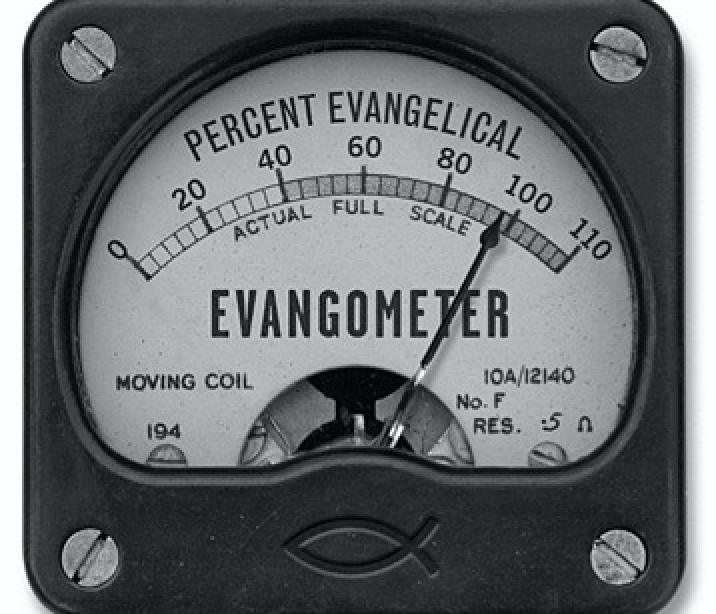
A related preliminary point: What is an "evangelical" anyway?


Please respect our Commenting Policy

Entering a religion-beat minefield: What is the proper definition of the word 'cult'?

Entering a religion-beat minefield: What is the proper definition of the word 'cult'?

THE QUESTION:

What is a religious "cult"

THE RELIGION GUY'S ANSWER:

On this somewhat delicate terrain, trusty Merriam-Webster offers us three definitions of "cult."

(1) A small religious group "not part of a larger and more accepted religion" with beliefs many regard as "extreme or dangerous."

(2) A situation with something or someone cared about "very much or too much," as in "a cult of personality."

(3) A small group of "very devoted supporters."

Note that the word can also depict well-recognized mainstream devotion, as when Catholics speak of the "cult of the Virgin."

he Guy proposes this definition: A marginal religious group we’re not supposed to like much or at all, which deviates from accepted practices or long-familiar beliefs, typically controlled by a dictatorial leader or leaders and often isolated from mainstream society.

Similarly from J. Gordon Melton of Baylor University, author of the essential "Encyclopedia of American Religions," who is not just an expert but highly tolerant toward America's countless offbeat religions. He has remarked that a cult is "a group that somebody doesn't like. It is a derogatory term"

Indeed it is derogatory. Undoubtedly some -- but not all -- groups considered to be cults have sinister track records; deceive outsiders; abuse their followers physically, psychologically, sexually, and/or financially; damage family and other relationships; and even resort to violence. The Guy says such allegations should be fairly pursued on the basis of secular criminal or civil law without judging whether a group's teachings measure up to some cultural standard. After all, the Constitution's Bill of Rights enshrines a religious freedom guarantee.


Please respect our Commenting Policy

What role will religion play in current U.S. Supreme Court nomination intrigue?

What role will religion play in current U.S. Supreme Court nomination intrigue?

When President Biden soon chooses a successor to Supreme Court Justice Stephen Breyer, journalists will need to keep in mind highly contentious religious issues, not just on matters like abortion but over how much to limit First Amendment claims of religious freedom, as in same-sex disputes, and where to draw lines on church-state separation.

Liberal, secularist and separationist voices are quick out of the gate with warnings to Biden about the Court's 6-3 conservative majority. Americans United for Separation of Church and State wants a new justice who'll be "a bulwark against the court's ultra-conservative majority, who seem set on redefining religious freedom as a sword to harm others instead of a shield to protect all of us." This lobby asserts that "our democracy depends on it."

A must-read from the cry-of-alarm forces is the analysis of numerous recent Supreme Court religion rulings from Ian Millhiser — Vox.com's specialist covering law and "the decline of liberal democracy." He asserts that a religion "revolution" is the "highest priority" of the Court's six Republican appointees, who are "rapidly changing the rules of the game to benefit" religious interests.

However, Kelsey Dallas at Salt Lake City's Deseret News tabulates that Breyer, in tandem with fellow liberal Justice Elena Kagan, voted with conservative justices in nine out of the 13 Court's decisions from 2006 to 2020 that backed religious-freedom claims.

The most illustrative example of the Jewish justice's thinking came in 2005 with two apparently contradictory rulings about Ten Commandments displays on public property. Beyer formed a 5-4 majority to permit the display on the Texas state Capitol grounds (Van Orden v. Perry) but then switched to create a 5-4 majority that outlawed displays in two Kentucky courtrooms (McCready County v. A.C.L.U.)

How come? Breyer advocated the "fullest possible" religious liberty and tolerance to avoid societal conflict.


Please respect our Commenting Policy