Richard Ostling

In reportage on Russia and Ukraine, don't neglect the importance of two rival churches 

In reportage on Russia and Ukraine, don't neglect the importance of two rival churches 

On top of the 2014 seizure of Crimea and years of infiltration in eastern borderlands, Russia now poses a more severe threat to neighboring Ukraine.

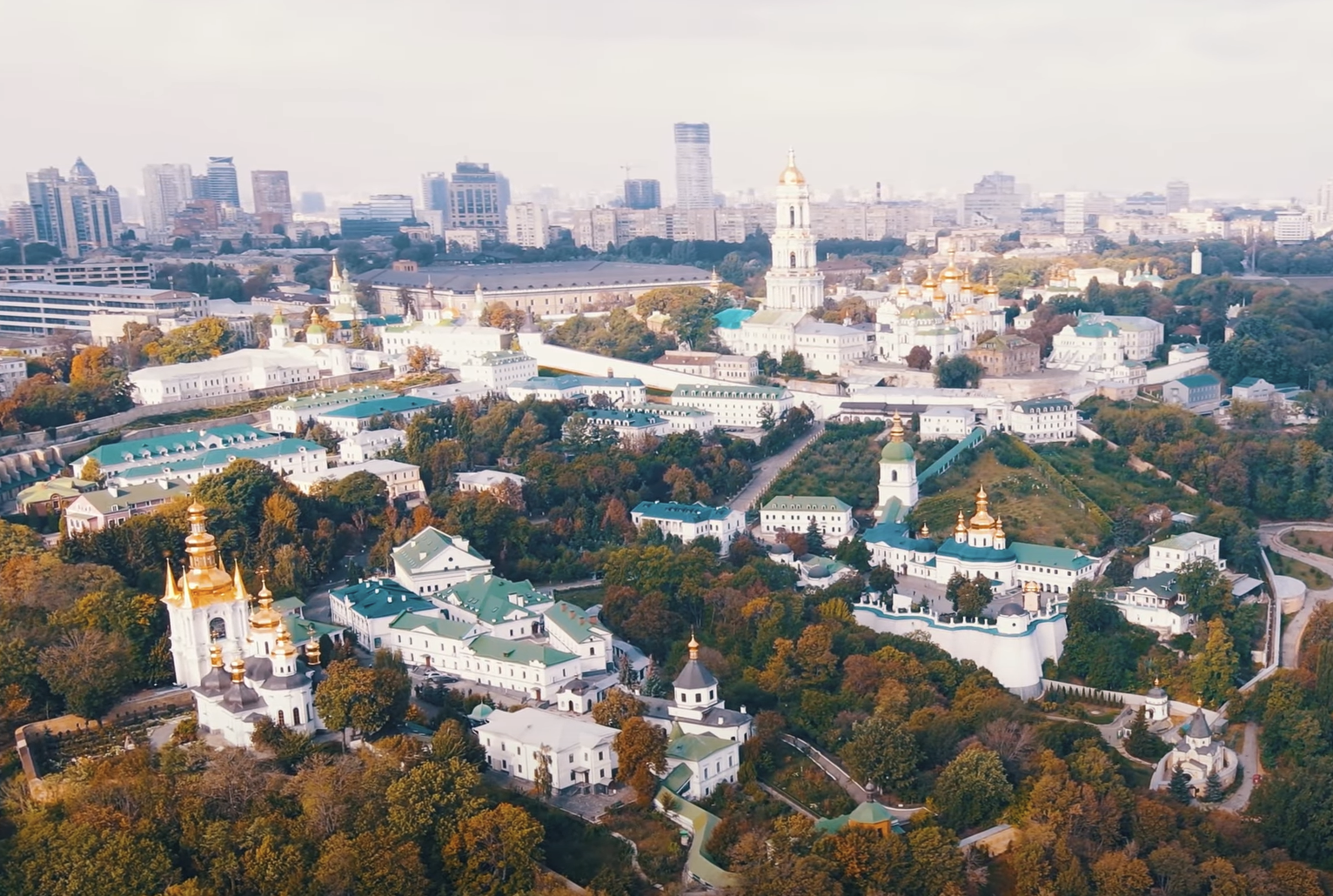
Whether the nation faces a military invasion, or even a World War 2.5, or less bloody subversion and hoped-for domination, journalists these next few years will need to understand and depict the religious aspect of Ukraine's rising nationalism and resistance against Russian expansionism.

Here are some basics. Russia and Ukraine contain by far the two largest national populations in Eastern Orthodox Christianity. The new World Christian Encyclopedia edition (which belongs in every media and academic library) counts 114 million Orthodox in Russia for 79% of the population, and 32 million in Ukraine for 73%.

Terminology note for writers: "Eastern Orthodox" is the precise designation for such churches, related historically to the Ecumenical Patriarchate based in Turkey, that affirm the definition of Jesus Christ's divinity by the Council of Chalcedon (A.D. 451). The separate branch of so-called "Oriental Orthodox" is non-Chalcedonian; its largest national church is in Ethiopia.

Ukraine's ecclesiastical history, like its political history, is highly complex. The saga began with the A.D. 988 "baptism of Rus" in Kyiv (Russians prefer "Kiev") when Prince Vladimir proclaimed Orthodoxy the religion of his realm and urged the masses to join him in conversion and baptism.

Russians see Christendom's entry into Eastern Europe as the origin of their homeland and the Russian Orthodox Church. Russian President Vladimir Putin cites this history to support his claim for Ukraine as a client area within greater Russia instead of a validly independent nation. His post-Soviet Kremlin maintains close bonds with the Russian Church's Moscow Patriarchate, which in turn has centuries of ecclesiastical authority within Ukraine.

Please respect our Commenting Policy

And now, in other Pope Francis news: Is having kids a moral duty for married couples?

And now, in other Pope Francis news: Is having kids a moral duty for married couples?

THE QUESTION:

Is having children a moral duty for married couples?

THE RELIGION GUY'S ANSWER:

Pope Francis provoked a fuss at his first general audience of 2022 by remarking that "many, many couples do not have children because they do not want to, or they have just one -- but they have two dogs, two cats. … Dogs and cats take the place of children." He continued, "This denial of fatherhood or motherhood diminishes us; it takes away our humanity" and "civilization becomes aged."

So, do married couples have a moral duty to bear children, and preferably more than one?

Birth rates have emerged as a pressing secular issue of this era. The Religion Guy is old enough to remember progressives' alarm over an impending "population bomb" and enthusiasm for "zero population growth."

While those ideas persist, all the buzz these days is about the globe's great Birth Dearth.

The lead article on page one of the January 18 New York Times was headlined "Worries in China that Population May Soon Shrink." The trend in that nation's official demographic report, issued the day before, suggested that 2021 may be the last year when births outnumber deaths as the population begins decreasing. The birth shortage is even bigger than in 1961 during Mao Zedong's infamous "Great Leap Forward" economic scheme, which produced unaccountably vast famine and death.

The Times stated as objective fact that this is a "crisis" for the vast nation that "could undermine its economy and even its political stability."


Please respect our Commenting Policy

In post-pandemic America, will sagging church health damage public health? 

In post-pandemic America, will sagging church health damage public health? 

America's religious congregations have, over all, suffered steady erosion in attendance, membership and vitality since around 2000.

Analysts fret that worse may occur after the current COVID-19 emergency finally subsides because myriads of members are now accustomed to worshiping online rather than in person or they may skip services altogether.

At the same time, there is evidence that, while decline is common, a majority of congregations report that they have survived or even grown during the past two years. This is a complex subject. As a recent Associated Press story noted:

Gifts to religious organizations grew by 1% to just over $131 billion in 2020, a year when Americans also donated a record $471 billion overall to charity, according to an annual report by GivingUSA. Separately, a September survey of 1,000 protestant pastors by the evangelical firm Lifeway Research found about half of congregations received roughly what they budgeted for last year, with 27% getting less than anticipated and 22% getting more.

This is an important news topic, no matter what. Even secularized news consumers should be interested when social science researchers tell us that sagging participation could not just damage religious institutions but create a public health "crisis." In our age of solitary, do-it-yourself forms of spirituality, research indicates, regular in-person attendance at worship services is central to the well-being of children, adults and society.

This important assertion does not come from religious propagandists but Harvard's Institute for Quantitative Social Science. Building upon two decades of scholarship, the institute in 2016 launched its distinctive "Human Flourishing Project" to focus on the impact the family, workplace, education and religion have on peoples' well-being. Their survey samples are large and they say their methodology improves upon past research.

Key findings document differences between Americans who regularly attend worship versus those who never attend.


Please respect our Commenting Policy

Is America really threatened by civil war? What is religion's role in these tensions?

Is America really threatened by civil war? What is religion's role in these tensions?

American Civil War talk is all the rage this New Year.

No, not that war, the one that cost 620,000 lives and was evoked by President Biden to castigate Senate Democrats and Republicans who are blocking passage of new election-ballot rules. Rather, The Guy refers to the drumbeat of warnings that the disunited United States may in the near future face an internal legal and economic cold war or some kind of hot war.

National Public Radio's Ron Elving reports that "not long ago the idea of another American Civil War seemed outlandish. These days, the notion has not only gone mainstream, it seems to suddenly be everywhere." He summarized anxiety-producing polls that show a polarized nation, and noted that 434,000,000 firearms are in civilian hands.

Then there's New Yorker Editor David Remnick's article "Is a Civil War Ahead?" New York Times columnist Michelle Goldberg likewise wonders, "Are We Really Facing a Second Civil War?" A Times op-ed by former National Security Council staffers Jonathan Stevenson and Steven Simon offers "the worst case scenario" in which "the United States as we know it could come apart at the seams" with "insurrection, secession, insurgency and civil war."

New January books include "The Next Civil War: Dispatches From the American Future" by novelist Stephen Marche, who sees virtually inevitable doom, and the slightly more upbeat "How Civil Wars Start and How to Stop Them" by Barbara F. Walter of the University of California San Diego. (Is it mere coincidence that The Atlantic's London writer Tom McTague is just out with "How Britain Falls Apart"?)

One typical forecaster is all the more interesting because he's Canadian. Thomas Homer-Dixon of Royal Roads University issued a New Year's Eve alarm in the influential Globe and Mail. He believes that as soon as 2025 "American democracy could collapse, causing extreme domestic political instability, including widespread civil violence. By 2030, if not sooner, the country could be governed by a right-wing dictatorship."

Outlandish?


Please respect our Commenting Policy

Variations on old questions: What do U.S. churches believe on transgender issues?

Variations on old questions: What do U.S. churches believe on transgender issues?

THE QUESTION:

What do U.S. churches believe on the transgender issue?

THE RELIGION GUY'S ANSWER:

As with American society at large, churches' consideration of the sensitive transgender issue emerged only recently and rather suddenly, compared with their decades-long-debate over whether to leave behind the Christian tradition against sexual activity in gay and lesbian relationships. The religious implications go well beyond political agitation over "bathroom bills," athletic competition or women's shelters.

Transgenderism is part of a broader gender-fluidity movement. A recent survey by the interfaith Religion News Service asked readers to identify themselves as either female, male, transgender, trans woman or MTF, trans man or FTM, intersex, questioning, non-binary, genderqueer, gender fluid, agender or "other."

Among theologically flexible "Mainline" Protestants, a key breakthrough was the Evangelical Lutheran Church in America's September installation of Megan Rohrer of California, its first transgender-identified bishop. Rohrer was barred from the clergy until a 2009 policy change, so was originally ordained by the independent Extraordinary Lutheran Ministries, which works for full LGBT inclusion. (Oddly, that organization suspended Rohrer from membership in December over alleged and unspecified "racist words and actions.")

The United Methodist Church is expected to split this year over the older same-sex disagreement, exactly 50 years after the first floor debate at a governing General Conference. In October, religious media reported the gender transition of the formerly "cisgender" Methodist pastor married to Peggy Johnson, the just-retired bishop for eastern Pennsylvania, Delaware and eastern Maryland. But last month Indiana Methodists removed Pastor Craig Duke from his congregation over drag queen shows and drag education to express solidarity with his daughter, who identifies as pansexual.


Please respect our Commenting Policy

Add that forthcoming U.S. House report on Jan. 6 riot to your 2022 religion news calendar

Add that forthcoming U.S. House report on Jan. 6 riot to your 2022 religion news calendar

We can expect that the U.S. House select committee investigating the Jan. 6 Capitol attack will unveil findings in time to help Democrats' Nov. 8 prospects and, thus, spur Republican ire.

Even if the report ignores the matter, this report can peg thoughtful and thorough journalistic re-examination of the religious significance of continuing furor over the nine troublesome weeks from the 2020 vote through Jan. 6. Carefully balanced, non-partisan contexting will be needed.

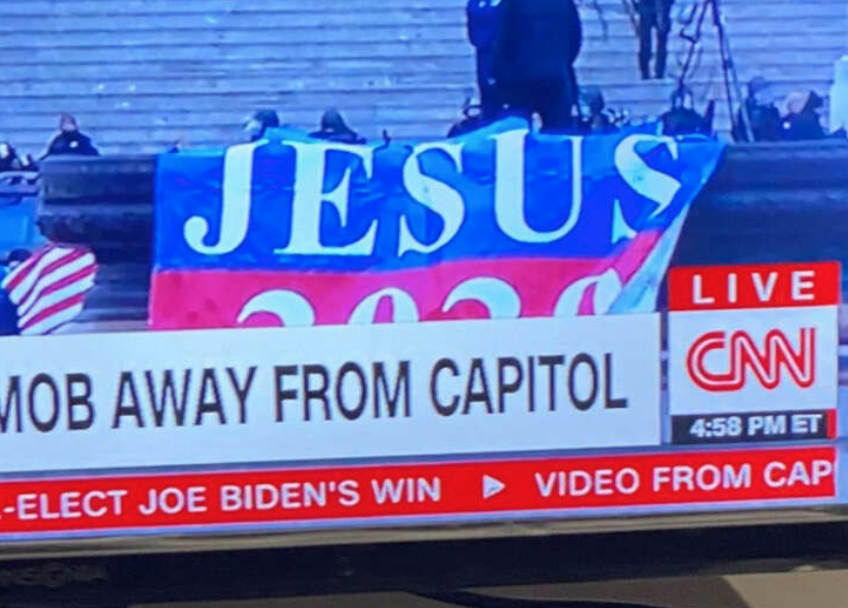
Media and amateur videos show us that -- yes -- some of the rioters uttered prayers and brandished Christian signs, slogans and symbols. Were they isolated cranks, or representative of a broader religious phenomenon, or a bit of both?

A New York Times anniversary walkup last week counted 275 defendants with federal charges for obstructing Congress, 225 or so for acts against police, and another 300 for minor trespass or disorderly conduct. So far, a fifth of these defendants have admitted legal guilt.

Importantly, the Times reported that the mob included "church leaders" (plural).

In a national newspaper, that phrase suggests not some small-time parsons from independent churches but notable media stars, denominational and "parachurch" officials, influential college and seminary thinkers, or at least local pastors from "big steeple" congregations. In fact, that reference appears to echo this Times passage that has been discussed several times here at GetReligion, referring to religious image on Jan. 6:

The blend of cultural references, and the people who brought them, made clear a phenomenon that has been brewing for years now: that the most extreme corners of support for Mr. Trump have become inextricable from some parts of white evangelical power in America.

At some point, it would be good to cite examples of “church leaders” linked to “evangelical power.”

By contrast, last year The Washington Post's Michelle Boorstein perceptively profiled certain of the rioters to highlight Americans' growing trend of concocting idiosyncratic "do it yourself" religions for themselves.


Please respect our Commenting Policy

Whether art or mere craft, old-school interviewing is a reporter's perennial linchpin

Whether art or mere craft, old-school interviewing is a reporter's perennial linchpin

The New York Times offers daily doses of clever self-promotion (and often self-congratulation) in a feature called "Inside The Times: The Story Behind The Story." One of these carefully curated items last week, "How Reporters Interview Celebrities," merits contemplation from other journalists.

Interviews are forever the linchpin of all original reporting. This opus tapped three specialists about dealing with show business personalities, a different challenge from typical interviewing. But some points have broad application.

Prepare thoroughly, which assures interview subjects of your professionalism and intent to conduct a knowledgeable discussion . Know what they have said in previous articles, which they may be anxious to explain or rebut. Inevitably you'll have some prickly questions, and a savvy subject will expect this and be prepared, but don't ask them early on.

The best strategy is often "simply to listen."

Those observations, of course, pertain to feature-writing with advance notice and a reasonable amount of time for the conversation itself — as opposed to breaking news stories where the reporter is scrambling and the interview must quickly get to the point.

How does this apply to the religion beat?

For one thing, the field has few celebrities. Over the decades The Guy has met with some, such as the Dalai Lama, Billy Graham, Mother Teresa or Cardinal Joseph Ratzinger (soon to become Pope Benedict XVI). In those situations, never ever give way to awe, whatever your private reactions. (The Guy has observed this is a more likely temptation among people who do not work the religion beat.)

Even religious leaders who are highly influential within their own spheres typically do not have to deal with inquisitive journalists. They may feel (often for good reason) that representatives of the Mainstream Media will bring little understanding of faith or harbor slight scorn toward this aspect of human experience.


Please respect our Commenting Policy

Sikhs, Santas and prophets: Do beards symbolize good or bad character?

Sikhs, Santas and prophets: Do beards symbolize good or bad character?

THE QUESTION:

Santa take note: Do beards symbolize good or bad character?

THE RELIGION GUY'S ANSWER:

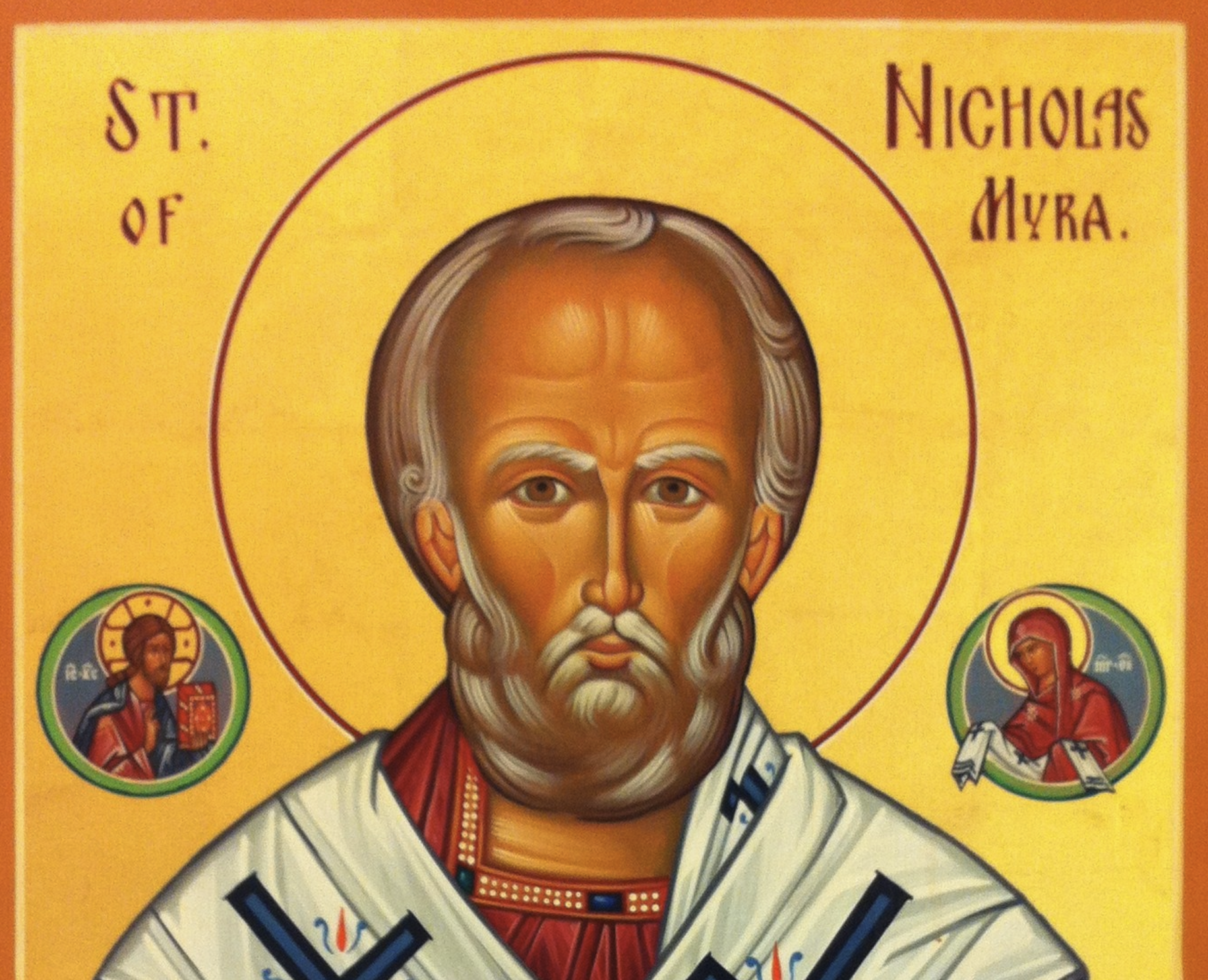
Any self-respecting Santa Claus will have actual or artificial paunch, a red suit and, perhaps most important, that luxuriant white beard. Yet notwithstanding shopping-mall Santas and St. Nicholas, as well as St. Nicholas of Myra, the bearded but monk-skinny 4th Century original, some fear that beards symbolize questionable character.

Take the New York Yankees. Please. In 1973, boss George Steinbrenner was perturbed by a player's sloppy appearance during the National Anthem and ever since no player or other employee has been allowed to have a beard or long hair "except for religious reasons." The Yankees presumably borrowed their famed appearance code from the U.S. military and police departments.

And yet. Jesus Christ is portrayed with a beard, since in the 1st Century mostly the upper crust had the time and money to bother with shaving. As for revered secular figures, Abraham Lincoln decided to become America's first bearded president for unknown reasons just after his 1860 victory (though predecessors John Quincy Adams and Martin Van Buren sported serious sideburns).

A cloud of suspicion hovers over chin whiskers in the U.S.-based Church of Jesus Christ of Latter-day Saints (nicknamed LDS and, formerly, "Mormon"). Headquarters personnel are almost always clean-shaven, and the same for young male missionary duos unless their district leader happens to allow beards.

This is not, however, a matter of doctrine.


Please respect our Commenting Policy

Old, nagging conflicts will continue to dominate religion news in the coming year

Old, nagging conflicts will continue to dominate religion news in the coming year

Yes, there will be a hotly contested U.S. election in 2022. And pretty much every secular and religious faction is keyed up awaiting the U.S. Supreme Court's decision on whether to revise or revoke its rulings that legalized abortion.

Big decisions like this typically land in late June.

Other lingering disputes on the news coverage agenda include the following.

* As the U.S. Senate struggles with a rewrite of the Catholic President Joe Biden's elephantine social-spending bill, the Catholic bishops' conference vehemently opposes any inclusion of abortion funding.

The bishops, along with Orthodox Judaism's synagogue union, also fear (.pdf here) this law will cripple funding for widespread religious preschools. In yet another church-state debate, Biden hopes to end religious exemption from anti-discrimination rules, which went into effect in January.

* Inside the world of Mainline Protestantism, the unending dispute over the Bible and LGBTQ+ issues may produce the biggest U.S. church split since the Civil War at the United Methodist Church's General Conference. Early in 2022, a commission must decide whether the twice-postponed conference, now scheduled for August 29-September 6 in Minneapolis, can finally occur despite two years of COVID-related snarls and, some say, stalling by the UMC establishment.

* The T in LGBTQ won new Methodist attention as just-retired Pennsylvania Bishop Peggy Johnson and her husband, a Methodist pastor, publicized the latter's gender transition while identifying publicly as a "cisgender" male.

Last March, a sizable body of U.S. conservatives announced plans to leave the denomination and unite with former mission churches overseas — primarily in Africa and Asia — to form the "Global Methodist Church," led temporarily by Virginia Pastor Keith Boyette (540-898-4960).


Please respect our Commenting Policy