Richard Ostling

This is actually a doctrinal question: Did the infant Jesus cry?

This is actually a doctrinal question: Did the infant Jesus cry?

MARY (the appropriate name for person asking this question) ASKS: Did the infant Jesus cry?

THE RELIGION GUY'S ANSWER:

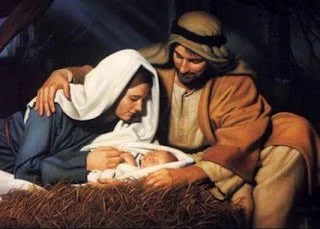
That’s a good one. A beloved Christmas carol says “the little Lord Jesus no crying he makes,” which would have been a tiny miracle.

But newborn reality -- and Christian doctrine -- are better expressed by Jesus' "tears" in “Once in Royal David’s City.” This charming children’s carol always begins the majestic “Festival of Nine Lessons & Carols" in King's College Chapel at Britain’s Cambridge University, sung by a choir of men and boys. As always, this service will be heard live at 10 a.m. (Eastern) Christmas Eve over U.S. public radio stations and internationally on the BBC.

Cecil Alexander's words:

For He is our childhood’s pattern; / Day by day, like us, He grew. / He was little, weak, and helpless; / Tears and smiles, like us, he knew. / And he feeleth for our sadness, / And He shareth in our gladness. …

The New Testament Gospels of Matthew and of Luke, which provide the earliest accounts of Jesus’ birth, tell us nothing about what his infancy or childhood were like, except for the incident of teaching in the Jerusalem Temple at age 12. But if pondered in terms of what Christianity has always believed, there’s every reason to assume the Babe of Bethlehem cried just like all other infants, and for the same physiological and emotional reasons.

That’s a solid inference from the faith’s central and mysterious belief that Jesus was God incarnate and at the same time fully a human being (“yet without sin”). The New Testament reports that just like everyone else the adult Jesus could be tired, hungry and perturbed, and experienced pain, grief and death.

In other words, truly and fully human, not inhuman.


Please respect our Commenting Policy

Tops in religion for 2021: Gallup spotlights America's downward Church Lurch

Tops in religion for 2021: Gallup spotlights America's downward Church Lurch

As Religion News Association colleagues vote on the top stories of 2021, here's The Guy's own pick for first place: Gallup spotlights the great downward Church Lurch in 21st Century America.

The polling organization, which is unmatched for data on trends that span decades — including a steady barrage of questions about religion — marked the Easter and Passover seasons by announcing that only a minority of Americans report membership in a religious congregation any longer.

Yes, yet again we confront those religiously unaffiliated "nones,” “nothing in particulars” and the long-emerging flock often called “spiritual, but not religious.”

The much-buzzed-about poll report, full details here, said membership rates held remarkably steady from the 73% in Depression-era 1937, when the question was first asked, through 70% in 2000. But now, self-reported affiliation has plummeted to 47% -- and a mere 36% for younger Americans in the Millennial generation. Equally significant, a three-year aggregate of 6,000 respondents in 2018-2020 also gave membership minority status at 49%.

This slump drew attention from media that rarely mention much less cover religion substantively. Assessing the many reactions, GetReligion boss Mattingly's post back in April — “Thinking with two key Southern Baptists: Concerning those scary Gallup Poll numbers” — astutely focused on two pieces by Baylor historian Thomas Kidd and the Rev. Russell Moore, who was soon to quit as president of the Southern Baptist Convention's Ethics and Religious Liberty Commission. They analyzed Protestantism with little specific to Catholicism or other faiths. Links to both articles are included in Mattingly's post.

Note that responses in 2000 would not capture the potential negative impact of COVID-19 — which was hurting attendance and donations — on future membership counts.

So, what's happening?


Please respect our Commenting Policy

As the news media churn, two rising religion muckrakers belong on your source list

As the news media churn, two rising religion muckrakers belong on your source list

It's the worst of times for the American media, with vanishing newspapers and magazines, shrinking staffs and budgets with what's left, the heavy-handed slant on cable TV "news" and polls showing record lows for consumer confidence in the accuracy and honesty of work done by journalists.

But the religion beat offers one ray of hope with gutsy investigative journalism from within evangelical Protestant ranks that sets the standard for other media -- and is one reason this movement so dominates religious news.

For years, Christianity Today and World magazines have bravely lifted rocks regarding what's been called the "evangelical industrial complex.". One can hope World will persist after its recent shakeup (click here for GetReligion post on that topic).

This Memo spotlights two muckrakers who belong on source lists of religion writers and religious organizations: Julie Roys of "The Roys Report" and Warren Cole Smith of "Ministry Watch."

Alas, there's much muck for them to rake. Religion-watchers are unlikely to miss any newsworthy scandals if they subscribe to free listserves and monitor their original reporting, alongside pick-ups such as this $600,000 mystery at THE Houston superchurch or this academic fuss at Cornerstone University.

By coincidence, both editors, who are resolutely conservative in terms of religious beliefs, jumped into the scene in 2019. Either or both would make for a good story, as would Roys' "Restore 2022" conference May 20-21 at Judson University in Elgin, Illinois.

Roys, a Wheaton and Medill School alumna, was a newswriter and reporter for Chicago TV stations. She took 13 years off to raise her three children and then, for a decade, hosted Moody Radio Network's "Up For Debate" show. She then exposed "corruption and mission drift" at the sponsoring Moody Bible Institute on her personal blog, which evolved into the "Report," with a special focus on #ChurchToo sexual exploitation scandals. She is even a watchdog of watchdogs, catching the president of the Evangelical Council for Financial Accountability in resume-padding.


Please respect our Commenting Policy

Emerging split inside old mainline: Is U.S. Christianity becoming two different religions?

Emerging split inside old mainline: Is U.S. Christianity becoming two different religions?

THE QUESTION:

Is Christianity in the United States becoming two different religions?

THE RELIGION GUY'S ANSWER:

If the question above seems off the wall, at least look why it has arisen.

Two years ago, The Guy wrote that he was quite astonished by some survey research reported in "The Twentysomething Soul" (Oxford University Press) by Tim Clydesdale of the College of New Jersey and Kathleen Garces-Foley of Marymount University.

Young Americans age 30 and under, quizzed about religion, were asked how they think of God.

One option was "a personal being, involved in the lives of people today." It doesn't get any simpler or more basic than that, whether you're Jewish, Christian or Muslim. Other choices were some impersonal "cosmic life force," or a deistic creator who is "not involved in the world now," or that God does not exist.

Not surprisingly, the evangelical Protestants were virtually unanimous in embracing the first definition. But remarkably, only half of those in the predominantly white, theologically pluralistic "mainline" Protestant church bodies made that choice, while 40 percent favored the vague "life force." Young adult Catholics fell in between the two Protestant groups. (In this random sample, 30 percent were evangelicals, 18 percent Catholic, 14 percent "mainline" Protestant, and 29 percent with no religious affiliation.)

The Guy therefore posed the question whether Protestants' long-running two-party rivalry "could be evolving toward a future with two starkly different belief systems."

Now a more radical version of that scenario is explored at book length in "One Faith No Longer" (New York University Press) by Baylor University sociologist George Yancey and Ashlee Quosigk, a visiting scholar of religion at the University of Georgia. More info here.


Please respect our Commenting Policy

Modernized New Revised Standard Bible is surefire news, landing amid today's language wars

Modernized New Revised Standard Bible is surefire news, landing amid today's language wars

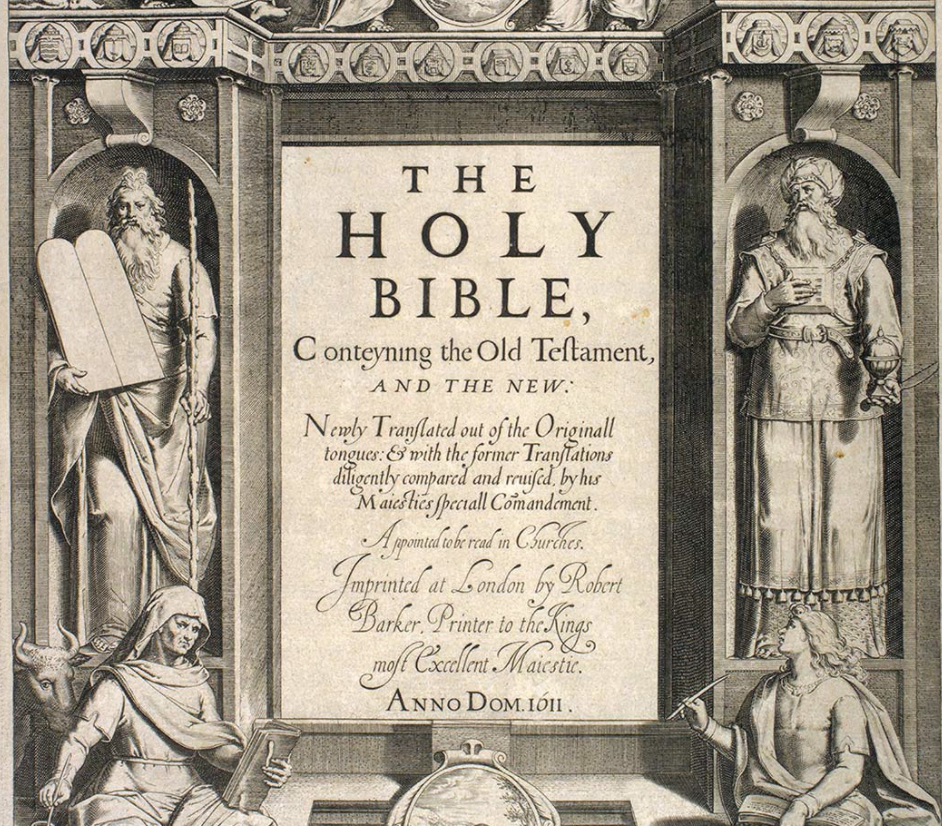
As religion writers (and historians) know, the 1611 King James Version of the Bible begat the 1952 Revised Standard Version, which begat the 1989 New Revised Standard Version which now begets the new "Updated Edition" of the NRSV.

It’s the "NRSVue" — a surefire news topic. This Bible will be available in ebook format by Christmas and in print around next May 1.

Media might issue advance articles about this production or wait for reactions to the complete text from reviewers or local clergy and parishioners. A 36-page media memo provides an advance look, accessible here. For further queries contact Friendship Press at info@friendshippress.org or CEO Joseph Crockett at joseph@frienshippress.org.

The NRSV copyright is held by the National Council of Churches, a cooperative body of the “Mainline” Protestant and Orthodox denominations. It assigned this rewrite to the Society of Biblical Literature, a professional guild of university and seminary scholars, whose 63-member team made approximately 12,000 "substantive" changes and thousands more that are trivial. The team consulted African-American church leaders, a group said to be "historically excluded" from prior Bible translation projects.

The result "improves" upon the original NRSV policy "to eliminate masculine-oriented language when it can be done without altering passages that reflect the historical situation of ancient patriarchal culture." The church council says both of its versions seek to be "as free as possible from the gender bias inherent in the English language."

A typical example is saying "brothers and sisters" when the original Greek literally said only "brothers" but was referring generally to people of both genders. The update omits footnotes that specify what the Greek said. Plural pronouns will abound, which depending on the translation can occasionally make the antecedent unclear or miss the direct force of a singular pronoun. In the rewrite, the Bethlehem "wise men" are now "magi."

Both the 1989 and 2021 renditions leave language about God undisturbed. "He" is still permitted and He remains the "Lord" and "Father."


Please respect our Commenting Policy

America's secular and religious death-by-choice debate is perennial and always newsworthy

America's secular and religious death-by-choice debate is perennial and always newsworthy

By count of the Death with Dignity organization, which devised Oregon's pioneering 1997 law under which 1,905 lives have been ended as of January 22, 10 states plus the District of Columbia have legalized euthanasia and -- assignment editors note -- 14 more states are currently debating such proposals. Click here to check on the situation in each state.

To begin, writers dealing with this perennial and newly current issue should be aware of the verbal politics with what's variously known as "euthanasia" (from the Greek meaning "good death"), "the right to die," "death on demand," "assisted suicide," "physician-assisted suicide” or "mercy killing." The activists who use the “pro-choice” label dislike any blunt mention of "suicide" or "killing" and urge instead that we use "physician-assisted death," "aid in dying" or "death with dignity."

Coverage by some media outlets, to be blunt, replaces non-partisanship with cheerleading.

Britain's The Economist had this mid-November cover headline: "The welcome spread of the right to die." However, to its credit the news magazine's (paywalled) editorial and international survey did summarize problems and opposing arguments.

A November 16 New York Times roundup on U.S. action — “For Terminal Patients, the Barrier to Aid in Dying Can Be a State Line” — reported that in addition to states that may newly legislate death-by-choice, states that already permit it are weighing further liberalization such as ending in-state residency requirements, shortening or waiving waiting periods, dropping the mandate that only physicians handle cases, filing of one request rather than two or more and other steps to streamline the process.

Reporters can find non-religious arguments in favor from Death With Dignity, cited above. It also recommends procedures to avoid abuse of this right. On the con side, pleas and cautions can be obtained from various disability rights organizations (click here for information).

On that score, psychiatrist-turned-journalist Charles Krauthammer, a non-religious Jew, spent much of his adult life paralyzed from the waist down.


Please respect our Commenting Policy

Many like to speculate: What was the biblical 'thorn in the flesh' that plagued St. Paul?

Many like to speculate: What was the biblical 'thorn in the flesh' that plagued St. Paul?

THE QUESTION:

What was the biblical "thorn in the flesh" that so plagued St. Paul?

THE RELIGION GUY'S ANSWER:

We'll never be sure. But the question is perennially fascinating.

"Thorn in the flesh" is one of many commonplace phrases we take from the Bible. It appears in 2 Corinthians chapter 12, where St. Paul writes that he knew "a man" -- modestly referring to himself -- who was "caught up into Paradise and heard things that are not to be told." He describes the aftermath of his powerful experience in verses 7-9:

To keep me from being too elated, a thorn was given me in the flesh, a messenger of Satan to torment me, to keep me from being too elated. Three times I appealed to the Lord about this, that it would leave me, but he said to me, “My grace is sufficient for you, for power is made perfect in weakness.” So, I will boast all the more gladly of my weaknesses, so that the power of Christ may dwell in me. (New Revised Standard Version)

Other English translations say "arrogant," "conceited," "lifted up," "proud" or "exalted" instead of "elated."

Christians through history have pondered what so plagued this New Testament writer and Christian founder (though we can imagine his close colleagues knew). Some say it was a interior spiritual or psychological challenge, while others see opponents, obstacles or persecution his pioneer missionary work coped with.

Many focus on the telltale word "flesh" and insist it must have been some physical malady.


Please respect our Commenting Policy

How will media cover the secretive Afghan mullah who will shape Islam's global status?

How will media cover the secretive Afghan mullah who will shape Islam's global status?

Showing his age, The Guy notes with amusement that early in his career "Afghanistanism" meant "the practice (as by a journalist) of concentrating on problems in distant parts of the world while ignoring controversial local issues" (per the authoritative Merriam-Webster)!

Today, many will argue that no nation is more important in news terms than the Islamic Emirate of Afghanistan, which affects both international turmoil and Islam's global status and cultural direction.

Journalists may ask, “Why?” This is probably the most heavily Muslim of nations and the Taliban who regained power in August proudly proclaim totalist governance based upon strictly interpreted and enforced Sharia (Islamic religious law). This example of Islam in action presents a huge challenge to the world religion.

A two-page (paywalled) Wall Street Journal status report by chief foreign correspondent Yaroslav Trofimov last weekend said the militantly Sunni Taliban have yet to impose the harshest policies that provoked wide condemnation during the prior Taliban years in power.

But the future is iffy.

For the moment, females seem able to attend primary school, but mostly not high school and college. Rigid bans on women leaving home unless accompanied by male relatives have not reappeared, and some women continue careers though many do not.

Public spectacles of beheading of opponents, and street beatings by religious police, have not resumed (though there are social-media rumors), nor have music and visual art yet been restricted. Shia and Sufi Muslims, and the tiny enclaves of non-Muslims, are understandably anxious, along with Christians, both coverts and missionaries who chose to remain after the exodus. (Other aspects of autocratic rule are commonplace in that part of the world.)


Please respect our Commenting Policy

Journalism tips on: (1) Evangelical crack-ups, (2) campus faith fights, (3) COVID exemptions

Journalism tips on: (1) Evangelical crack-ups, (2) campus faith fights, (3) COVID exemptions

A potential U.S. evangelical crack-up continues as a lively story topic since Guy Memos here since these two Memos here at GetReligion, “Are we finally witnessing the long-anticipated (by journalists) evangelical crack-up?” and also “Concerning evangelical elites, Donald Trump and the press: The great crack-up continues.” In USA Today, Daniel Darling, for one, sought hope despite his recent victimhood in these tensions.

Media professionals considering work on this theme should note a lament at book length coming next week: "Struggling with Evangelicalism: Why I Want to Leave and What It Takes to Stay" by Dan Stringer. The author is a lifelong evangelical, Wheaton College (Illinois) and Fuller Theological Seminary alum, leader of InterVarsity's graduate student and faculty ministries in Hawaii and Evangelical Covenant Church minister. This book comes from InterVarsity Press.

The Guy has yet to read this book, but it looks to be a must-read for reporters covering American evangelicals in the Bible-Belt and elsewhere. Stringer ponders how evangelicalism can move beyond too-familiar sexual scandals, racial and gender conflicts, and Trump Era political rancor -- what a blurb by retired Fuller President Richard Mouw calls "blind spots, toxic brokenness and complicity with injustice."

Regarding the Donald Trump factor, the evangelical elite was largely silent, with one faction openly opposed, while certain outspoken evangelicals backed the problematic populist.

As The Guy has observed, recent politics exposed the already existing gap between institutional officials and the Trumpified evangelical rank and file. Problem is, to thrive any religious or cultural movement needs intelligent leaders united with a substantial grass-roots constituency to build long-term strategy.

Evangelicalism has always combined basic unity in belief with a wide variety of differences. Think denominational vs. independent, Arminian vs. Calvinist, gender "complementarian" vs. "egalitarian," Pentecostal-Charismatic vs. others and a racial divide so wide that many Black evangelicals shun the e-word alltogether.

In an October 21 Patheos article, historian Daniel K. Williams at the University of West Georgia added North vs. South to those internal divisions. He recounts that the Southern Baptist Convention remained mostly apart when northerners began to supplant "fundamentalism" with "evangelicalism" in the World War II era. Eventually, he says, this movement formed a North-South alliance but it's now eroding.


Please respect our Commenting Policy