Religious Liberty

The New York Times (#WHOA) probes ACLU's move away from First Amendment liberalism

The New York Times (#WHOA) probes ACLU's move away from First Amendment liberalism

I don’t know about you, but The New York Times was the last place that I expected to see a long news feature about disturbing trends at the American Civil Liberties Union away from its proud history of First Amendment liberalism.

I am sure that some ACLU insiders must have felt the same way, especially in light of recent headlines about the rising power of a generation of woke journalists at the Times. The pot calling the kettle black?

But there was no way around the contents of that dramatic double-decker headline the other day:

Once a Bastion of Free Speech, the A.C.L.U. Faces an Identity Crisis

An organization that has defended the First Amendment rights of Nazis and the Ku Klux Klan is split by an internal debate over whether supporting progressive causes is more important.

As the headline states, the emphasis in this report is about free speech. Maybe it was too much to ask Times editors to see the same illiberal trend developing in ACLU work defending the First Amendment clause protecting religious freedom, without “scare quotes.”

But we will take what we get because of the influence that the Times has in other newsrooms and even in some influential corners of elite academia.

The story opens with an event celebrating the career of lawyer David Goldberger, who played a key role in the famous 1978 case when the ACLU defended the free speech rights of Nazis to march in Skokie, Ill., the home of many Holocaust survivors. Read this long passage carefully:


Please respect our Commenting Policy

Thinking with Ryan Burge: Concerning young Latter-day Saints, third parties and life post-Trump

Thinking with Ryan Burge: Concerning young Latter-day Saints, third parties and  life post-Trump

There are times, when you are reading Ryan Burge on Twitter (which journalists should, of course, be doing) and you see signs that he has read some religion-news related item somewhere that has caused him to do that thing that he does — sift through lots of poll numbers looking for a new angle.

What we have here is a pair of tweets linked to a Christian Sagers think piece at The Deseret News that I had missed. The headline: “Are Latter-day Saint voters turning blue?”

That’s blue as in learning toward the Democratic Party, not feeling sad or depressed. That would be a huge news story hinting at other possible changes among centrists on moral and cultural issues.

Burge send me this comment containing what he thinks is the key question about this possible news twist.

The big question is: have younger LDS really abandoned the Republican Party? I don't think that we will ever know for sure until Trump is off the ballot completely.

So where to begin? Here is the overture in Sager’s piece, noting that a recent:

Cook Political Report concludes that all four of Utah’s congressional districts are among the most Democratic-trending in the country. Latter-day Saint voters in Arizona doubled their Democratic turnout from 2016.

Meanwhile, a Democratic activist group with whom I spoke recently is optimistic about converting Latter-day Saint women, traditionally Republican, who it believes to be rejecting the GOP in greater percentages than other religious demographics.

That candidate Donald Trump fared so poorly among members of The Church of Jesus Christ of Latter-day Saints in 2016 was met with astonishment in national media coverage and a flurry of conjectures that Latter-day Saints were up for grabs.

And yet, the political status of the Latter-day Saint voting bloc doesn’t fit into a tidy narrative. Yes, there are signs that some Latter-day Saints are reconsidering the modern GOP, but at the same time there are suggestions that Latter-day Saints remain reliably Republican.

Sure enough, there are other complications that need to be considered when looking at conservatives in this Donald Trump-warped political age.


Please respect our Commenting Policy

'On Religion' flashback to 1998: Ten years of reporting on a church-state fault line

'On Religion' flashback to 1998: Ten years of reporting on a church-state fault line

Back in the 1980s, I began to experience deja vu while covering event after event on the religion beat in Charlotte, Denver and then at the national level.

I kept seeing a fascinating cast of characters at events centering on faith, politics and morality. A pro-life rally, for example, would feature a Baptist, a Catholic priest, an Orthodox rabbi and a cluster of conservative Methodists, Presbyterians, Episcopalians and Lutherans. Then, the pro-choice counter-rally would feature a "moderate" Baptist, a Catholic activist or two, a Reform rabbi and mainline Methodists, Presbyterians, Episcopalians and Lutherans.

Similar line-ups would appear at many rallies linked to gay rights, sex-education programs and controversies in media, the arts and even science. Along with other journalists, I kept reporting that today's social issues were creating bizarre coalitions that defied historic and doctrinal boundaries. After several years of writing about "strange bedfellows," it became obvious that what was once unique was now commonplace.

Then, in 1986, a sociologist of religion had an epiphany while serving as a witness in a church-state case in Mobile, Ala. The question was whether "secular humanism" had evolved into a state-mandated religion, leading to discrimination against traditional "Judeo-Christian" believers. Once more, two seemingly bizarre coalitions faced off in the public square.

"I realized something there in that courtroom. We were witnessing a fundamental realignment in American religious pluralism," said James Davison Hunter of the University of Virginia. "Divisions that were deeply rooted in our civilization were disappearing, divisions that had for generations caused religious animosity, prejudice and even warfare. It was mind- blowing. The ground was moving."

The old dividing lines centered on issues such as the person of Jesus Christ, church tradition and the Protestant Reformation. But these new interfaith coalitions were fighting about something even more basic – the nature of truth and moral authority.


Please respect our Commenting Policy

Mainstream press shrugs at Biden's Notre Dame snub for upcoming graduation rite

Mainstream press shrugs at Biden's Notre Dame snub for upcoming graduation rite

This is the time of year where college graduations dominate the lives of many Americans. A year after these ceremonies were relegated to Zoom because of the pandemic, graduations are back this spring, with masks and social distancing in place, to again signal the sending off to undergraduates into the workplace.

For journalists, graduations have long served as an easy news stories. Above all, the graduation speaker is what makes these ceremonies news. At that vast majority of rites at elite and state schools the speaker is — to one degree or another — a cultural or political liberal.

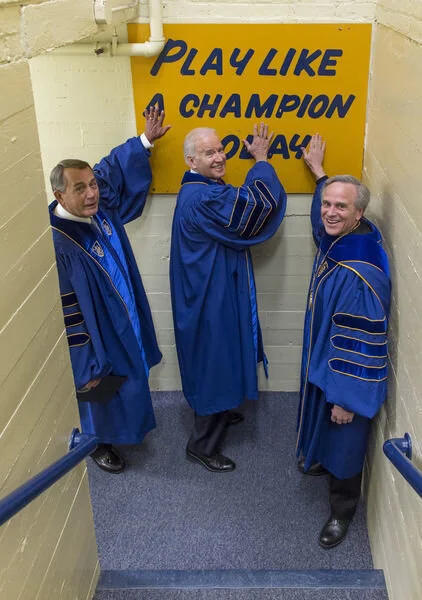
Thus, is it any surprise that the ongoing tug-of-war between the U.S. bishops and President Joe Biden has spilled over into the graduation season? Well, it has in the form of the president not addressing graduates at the University of Notre Dame this year.

This news story was broken by Catholic News Agency. Here’s how the May 11 news story opened:

In a break with recent tradition, President Joe Biden will not be delivering the commencement address at the University of Notre Dame this year – although he was invited by the university to do so.

On Tuesday, the university announced that its May 23 commencement speaker will be Jimmy Dunne, a finance executive and trustee of the university. During the last three presidential administrations, U.S. presidents or vice presidents have addressed the university's commencement in their first year in office, but that trend will not continue in 2021.

Although a university spokesman told CNA that, as a policy, “we do not discuss who may or may not have been approached to address our graduates,” sources from the White House confirmed to CNA that Biden had indeed been invited by the university but could not attend due to scheduling.

Biden, just the second Catholic president since John F. Kennedy in 1960, has not been shy about mentioning his faith in public.

While he’s attended Mass regularly on Sundays, Biden supports taxpayer-funded abortion in defiance of the U.S. bishops’ conference and, as vice president, he performed two same-sex marriage rites. The Biden administration has also started to roll back restrictions on public funding of abortion providers, has supported the expansion of LGBTQ rights and continues to wage a legal battle to keep a mandate in place for doctors to provide gender-transition surgeries.


Please respect our Commenting Policy

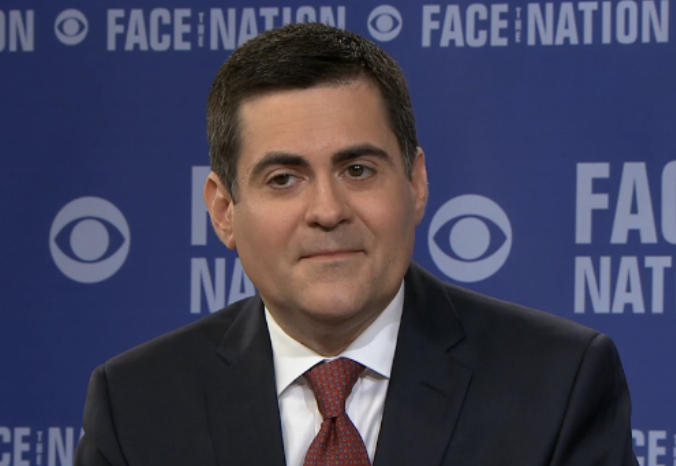
When covering Moore's exit from SBC power, scribes should ponder what made him 'liberal'

When covering Moore's exit from SBC power, scribes should ponder what made him 'liberal'

This may be a strange place to start when discussing early news coverage of the Rev. Russell Moore moving from the Ethics & Religious Liberty Commission — the crucial Southern Baptist camp in Beltway land — to what looks like a Christianity Today think tank on theology and public life.

So be it. This is where we will start — with the whole Moore is “too liberal” thing.

What does “liberal” mean in that curse that has been tossed about in Baptist social media?

Remember that one of Moore’s primary duties in Washington, D.C., has been to help Southern Baptists defend against attacks on religious liberty and the First Amendment in general. With that in mind, let me return to a question that I have been asking here at GetReligion — while focusing on the role that labels play in American journalism — for a decade or so. This is from a 2015 post:

What do you call people who are weak in their defense of free speech, weak in their defense of freedom of association and weak in their defense of religious liberty (in other words, basic First Amendment rights)?

The answer: I don't know, but it would be totally inaccurate — considering the history of American political thought — to call these people "liberals."

So what do you call someone, like Moore, who has been defending free speech, defending the freedom of association and defending religious liberty?

Wait. For. It. You can accurately call him a “liberal” in that context. In this framework, the New York Times editorial pages and, in many cases, the American Civil Liberties Union, are now — what? What is the accurate term, these days?

Note that this struggle to define “liberal” was at the heart of the celebrated clash between Bari Weiss and the Times. I would argue that it was part of the newsroom warfare that led to the ousting of Liz Spayd as the Times public editor (when she dared to ask if the newspaper was committed to fair, accurate coverage of half of America). It’s at the heart of the growing tensions between gay-rights icon Andrew Sullivan and the LGBTQ establishment. I could go on and on.

But back to another cluster of issues linked to Moore.


Please respect our Commenting Policy

Trends that influence news: Where in the world is Christianity still growing?

Trends that influence news: Where in the world is Christianity still growing?

THE QUESTION:

Where in the world is Christianity still growing, and why?

THE RELIGION GUY'S ANSWER:

This page often addresses topics that have been in the air for months, even years. But this one is raised by a brand-new article this week at Christianity Today and a more academic version posted by the journal Sociology of Religion. There's further timeliness in the Gallup Poll's March bombshell that less than half of Americans now claim religious affiliations, the lowest mark since it began asking about this 84 years ago.

The CT article, headlined "Proof That Political Privilege Is Harmful for Christianity," is found here. The academic article is headlined "Paradoxes of Pluralism, Privilege and Persecution: Explaining Christian Growth and Decline Worldwide," and available for purchase.

So: Bad times for Christians are good times for Christianity?

That contention is a modern update on Tertullian's 2nd Century maxim during an era of outright persecution, "semen est sanguis Christianorum" — "blood is the seed of Christians." If you persecute us, we grow even more. And so it was.

The scholars proposing a 21st Century version of this are Nilay Saiya (writing solo in C.T.) and study partner Stuti Manchanda, both at the public policy department of Nanyang Technological University in Singapore. This team analyzed data on churches' rise and decline in 166 countries from 2010 to 2020, found impressive expansion, and examined causal factors.

Looking back, Asia began the last century with only one Christianized nation, the Philippines, but more recently the faith "has grown at twice the rate of the population." Africa in 1900 had only pockets of Christians, mostly in coastal locations but today is "the world's most Christian continent in terms of population."

Now, all of that is familiar to missionary strategists and historians of the modern church. What's new here is the team's fresh look at explanations. They conclude "the most important determinant of Christian vitality is the extent to which governments give official support to Christianity." It's often said that the American founders' pioneering separation of church and state energized Christianity across two centuries.


Please respect our Commenting Policy

Did mainstream media distort America's religion-and-politics divide? Are they still doing so?

Did mainstream media distort America's religion-and-politics divide? Are they still doing so?

While culling files from decades of religion-beat work, The Religion Guy has come across a forgotten and seminal article from 2002 that contended the media were distorting public understanding of American politics. It said "religious right" Republicans were blanketed with coverage and turned the tables, contending that "the true origins" of cultural conflict were found in increased "secularist" influence in the Democratic Party.

As journalists contemplate the tumult of the succeeding two decades, ask what the article in question might say about media performance, past and present.

Consider the hostility toward openly religious nominees expressed by Senators Schumer, Feinstein, and Harris (now vice president and prospective future president). Or contrast the Religious Freedom Restoration Act, which passed the Senate 97-3 in 1993, with current House Democrats' unanimous vote for the pending Equality Act, which would forbid practical applications of that very law.

Customary political history emphasizes such landmarks as the Rev. Jerry Falwell (Senior) launching Moral Majority in 1979, Ronald Reagan's Republicans cultivating conservative Christians in the winning 1980 campaign or the Rev. Pat Robertson founding Christian Coalition in 1989 after his Republican run for president.

These events were important, of course. But what about Democrats and the other half of what was happening?

That's the focus of the 2002 article, by political scientists Louis Boice and Gerald De Maio from the City University of New York's Baruch College, drawn from their 2001 presentation at an academic conference. The piece appeared in the conservative journal The Public Interest, which is now defunct, but fortunately the American Political Science Association archive has posted the text (.pdf here). Also, click here and then here for tmatt columns on this duo’s work.

In their telling, 1972, the year before the Supreme Court legalized abortion, was the pivot point for Democrats' shift on emotion-laden social issues away from cultural conservatism and an "accommodation" policy toward religion.


Please respect our Commenting Policy

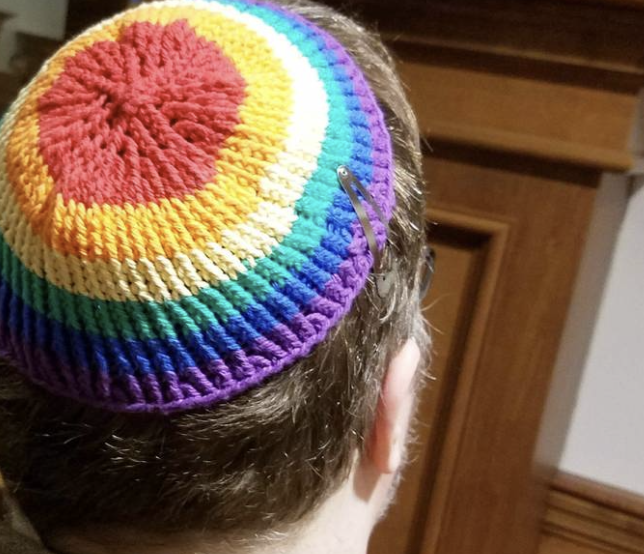
What do you know? Doctrinal-covenant fights can occur on an Orthodox Jewish campus

What do you know? Doctrinal-covenant fights can occur on an Orthodox Jewish campus

By now, GetReligion readers are probably aware that some journalists have their doubts about whether the First Amendment actually protects religious doctrines and the “free exercise thereof” by believers.

The problem is that the old-liberal defense of “religious liberty” — inside the usual “scare quotes” — now clashes with the evolving doctrines of the Sexual Revolution. This leads to fights on religious campuses in which journalists pit bad religious believers who defend ancient doctrines against good believers who want those bad doctrines to evolve to mesh with the good teachings of the New York Times and other sacred texts.

The key in most of these clashes is whether students, faculty and staff sign a “doctrinal covenant” when they choose to work or study at one of these private schools. Private schools — liberal and conservative — have a right to defend the doctrines of the religious groups that founded them. As GetReligion readers know (explore this file), journalists often ignore the content of these covenants and fail to ask progressive activists whether they read these covenants before signing them.

Most of these stories focus on disputes at evangelical and Catholic schools. If you ever wondered how an education-beat newsroom would handle one of these stories in an Orthodox Jewish context, now you know — care of an Inside Higher Education report under this double-decker headline:

Students Sue Over Denial of LGBTQ+ Club Recognition

A lawsuit accuses Yeshiva University of violating New York City human rights law in its long-standing refusal to recognize an LGBTQ+ student group

The reader who forwarded this URL was rather blunt, stating that the article is “a mess. Journalistically speaking, it's biased, lopsided, and incurious.”

As usual, there is no way to know whether the school’s admission documents include a doctrinal covenant, since the reporting is sketchy, at best, on that subject.


Please respect our Commenting Policy

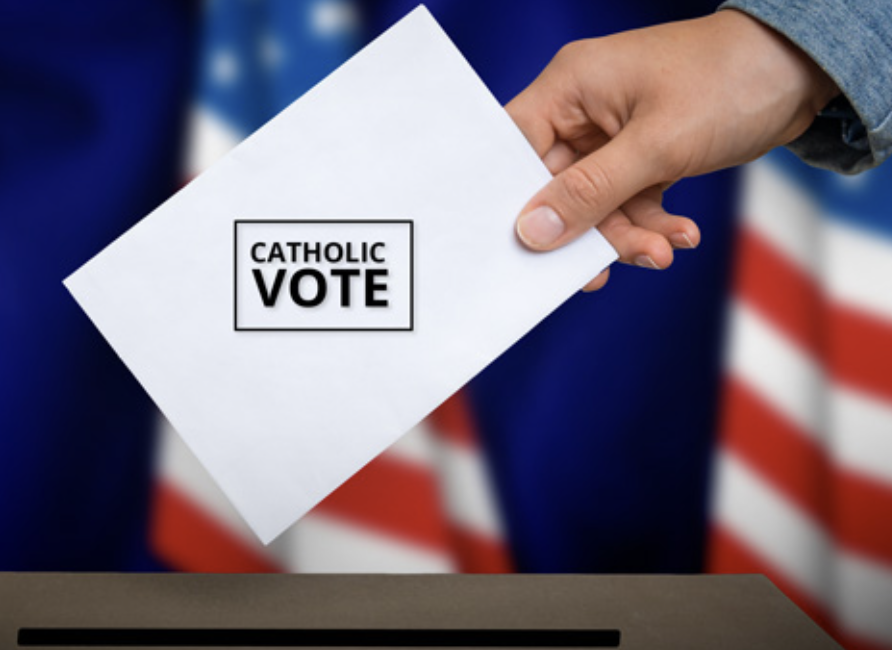
2020 revisited: Repeat after me, White Catholic voters, White Catholic voters ...

2020 revisited: Repeat after me, White Catholic voters, White Catholic voters ...

The two main November exit polls showed Joseph Biden, the first Catholic elected U.S. president since John F. Kennedy, won either 52% or 49% support among Catholics over-all.

That's quite the plummet from 1960, when the Gallup Poll found J.F.K. scored 78 percent.

Reporters covering either politics or religion pay heed: Other remarkable data appear in the first batch of 2020 findings from the Harvard University-based Cooperative Election Study (CES), with more due in July. Though Hispanic and other minority Catholics went only 30% for Donald Trump (up from 26% in 2016), white Catholics gave the Republican impressive 59% support over their fellow church member, up a notch from 57% in 2016.

The massive CES sample of 61,000 allows good breakdowns by religion (also a highly useful feature with many Pew Research surveys). The CES data were explored for Religion Unplugged by ubiquitous political scientist Ryan Burge, a GetReligion contributor.

The Guy once again preaches to the U.S. media that those white Catholics are the nation's largest chunk of swing voters who can decide competitive elections except in Protestant tracts of the Southeast, and that they deserve more attention than the lavishly covered white "evangelicals," perennial knee-jerk Republicans who may edge up or down but never "swing."

That was true in 2016. It was true again in 2020. It’s especially interesting to look for patterns among generic “Catholic voters” and voters who are active, Mass-attending Catholics.


Please respect our Commenting Policy