Religious Liberty

Christians, Jews, Muslims and lobbyists left and right fret over SCOTUS 'donor privacy' case  

Christians, Jews, Muslims and lobbyists left and right fret over SCOTUS 'donor privacy' case   

What cause could ever possibly unite Christian Right activists, the Council on American-Islamic Relations, the Zionist Organization, "pro-family," "pro-life," "pro-choice" and gun-rights lobbies, Mitch McConnell, the American Civil Liberties Union, Chamber of Commerce, Judicial Watch, NAACP, People for the Ethical Treatment of Animals, Planned Parenthood, Southern Poverty Law Center, Columbia University's First Amendment institute and religious-liberty advocates?

Answer: These and many more are allied in the Americans for Prosperity Foundation v. Becerra case (#19-251), which the U.S. Supreme Court put on its upcoming docket January 8.

Yes, that Becerra is Xavier, as in President Biden's controversial pick for secretary of Health and Human Services, acting in his previous role as California's attorney general. Moreover, this situation implicates the track record of his predecessor as A.G., Kamala Harris — now U.S. vice president and a major 2024 presidential prospect.

At issue is "donor privacy." Non-profit groups cannot operate or raise money in the state of California unless they give its attorney general the names and addresses of their major donors, the same list that's required as an appendix to their federal IRS returns. The non-profits argue that this violates their right to freedom of association under the Constitution's First Amendment.

Obviously this is something for alert media eyes, including pros on the religion beat.

Adding to news interest, this case displays contrasting beliefs of the U.S. Department of Justice in its Trump Administration brief filed last November (.pdf here) versus its revised stance under the new Biden Administration (.pdf here). The Trump brief strongly backs non-profit interest groups. The Biden brief dodges the question and asks the court to bounce the case for further investigation.

Religion specialists note: The Supreme Court consolidated the Americans for Prosperity case, raised by the libertarian political foundation established by the Koch brothers, with a second appeal from the Thomas More Law Center. This second agency provides free legal representation for "people of faith" to uphold "the religious freedom of Christians, time-honored family values and the sanctity of human life."

Please respect our Commenting Policy

New podcast: Yes, cover RFRA; but Equality Act coverage has also been quiet on local stories

New podcast: Yes, cover RFRA; but Equality Act coverage has also been quiet on local stories

What we have here is a logical question that journalists (and news consumers) should be asking at this point in coverage of debates about the Equality Act. It’s also one of the questions that “Crossroads” host Todd Wilken and dissected during this week’s podcast (click here to tune that in).

That question: How many religious health organizations, schools, recreation centers, homeless shelters, campgrounds, day-care centers and other forms of faith-driven ministries and nonprofit groups are located in the zip codes covered by the newsrooms of your local media outlets?

Earlier this week, I wrote a post (“Puzzle: Many reporters ignoring Equality Act's impact on this crucial Schumer-Kennedy legislation”) noting that a few mainstream news organizations have covered the ways in which the Equality Act would edit or even crush the Religious Freedom Restoration Act (RFRA) of 1993, which passed in the U.S. Senate vote of 97-3. That vote symbolized both the bipartisan nature of that legislation and stunning left-right coalition of sacred and secular groups that supported it.

That remains a valid angle for coverage. However, the more I thought about this topic, and the more Equality Act reports that I read, the more I focused in on another “quiet zone” in the mainstream news coverage — including at the local and regional levels.

For starters, let’s look at two pieces of a major New York Times report on the Equality Act:

It was the second time the Democratic-led House had passed the measure, known as the Equality Act, which seeks to amend the Civil Rights Act of 1964 to add explicit bans on discrimination against lesbian, gay, bisexual and transgender people in both public and private spaces.

Now, that’s remarkably broad language. What kinds of groups and institutions, pray tell, are included under “both public and private places”? And remember this old journalism mantra: All news is local.

Later on, the story adds:

In a landmark decision in June, the Supreme Court ruled that the 1964 civil rights law protects gay and transgender people from workplace discrimination, and that the language of the law, which prohibits discrimination on the basis of sex, also applies to discrimination based on sexual orientation and gender identity. House Democrats sought to build on that ruling with the Equality Act, which would expand the scope of civil rights protections beyond workers to consumers at businesses including restaurants, taxi services, gas stations and shelters.


Please respect our Commenting Policy

Puzzle: Many reporters ignoring Equality Act's impact on this crucial Schumer-Kennedy legislation

Puzzle: Many reporters ignoring Equality Act's impact on this crucial Schumer-Kennedy legislation

I have been following the Equality Act coverage and, so far, a crucial piece in this puzzle has been missing.

Thus, here is a one-question pop test. That question: Name the piece of stunningly bipartisan legislation — vote was 97-3 in U.S. Senate — from the Bill Clinton era that will be gutted by passage of the Equality Act? Hint: It was introduced in the House by Rep. Chuck Schumer (D-NY) on March 11, 1993, and in the Senate on the same day by the late Sen. Ted Kennedy (D-MA).

We are, of course, talking about the Religious Freedom Restoration Act (RFRA). In today’s advocacy-media age that would, of course, be the “Religious Freedom” Restoration Act, complete with “scare quotes.”

The key is the impact the Equality Act would have on religious parachurch groups, social ministries, hospitals and educational institutions, from preschools to universities.

Now, does everyone agree on how the Equality Act would impact the First Amendment rights of religious believers and their doctrine-defined ministries?

Of course not. There are strong, credible voices on both sides of that debate that deserve serious, accurate, informed coverage by the mainstream press. However, this process — let’s call it “journalism” — would require newsroom managers to admit that this issue exists.

That’s why Andrew Sullivan — one of the world’s best-known gay public intellectuals — called the introductory Washington Post Equality Act story a “press release” (think PR) for the Human Rights Campaign. Here is that story’s description of the legislation’s impact:

The Equality Act would amend existing civil rights laws, such as the Civil Rights Act of 1964 and the Fair Housing Act, to explicitly ban LGBTQ discrimination in the workforce, housing, education, credit, jury service and other areas of American life.

If passed, the legislation would provide the most comprehensive LGBTQ civil rights protections in U.S. history, advocates say, significantly altering the legal landscape in a country where more than half of states lack explicit legal protections on the basis of sexuality or gender identity. …


Please respect our Commenting Policy

Keep the Bible in one hand, a newspaper in the other: Tips for stressed-out preachers

Keep the Bible in one hand, a newspaper in the other: Tips for stressed-out preachers

“You preach with the Bible in one hand and the newspaper in the other.”

That’s what Bishop Timothy Clarke, an Ohio senior pastor, said in a recent front-page feature by Danae King, the Columbus Dispatch’s religion writer.

It’s an idea that originated with the late Karl Barth, one of the most influential theologians of the 20th century. Barth put it this way: “Take your Bible and take your newspaper, and read both. But interpret newspapers from your Bible.”

Barth’s concept was a prominent theme of a Facebook Live panel discussion organized this week by the Siburt Institute for Church Ministry at Abilene Christian University in Texas.

“We used to think the hard part was interpreting the Bible, but now we've decided the hard part is interpreting the newspaper,” quipped Randy Harris, one of the co-hosts, along with Carson Reed, of the discussion on “Light, Truth and Fake News.”

The panel — on which I was honored to speak — aimed to help stressed-out ministers make sense of the news in a time of polarization and conspiracy theories.

“Read broadly. Value truth,” urged Cheryl Mann Bacon, a Christian Chronicle correspondent and retired journalism chair at Abilene Christian. “Be compassionate when you share it, but be courageous when you share it.”

Co-host Harris is a longtime preacher and spiritual director who works with the Siburt Institute.

He advised: “Pay attention to local news. We can get caught up with what's happening in Washington, but there's stuff that's happening in your town that needs a response. The second thing is, to ministers: You've made a commitment to read the news through a certain lens, and that's the lens of a crucified and risen Messiah.”


Please respect our Commenting Policy

Farewell to 'reindeer rules'? Indiana nativity scene case could have been turning point

Farewell to 'reindeer rules'? Indiana nativity scene case could have been turning point

Year after year, the Lion's Club sets up wire-frame Christmas decorations on the lawn of the historic Jackson County courthouse, facing Main Street in Brownstown, Ind.

The display, which belongs to the local ministerial alliance, glows from dusk to dawn from Thanksgiving until New Year's Day, with the county providing the electricity.

This led to yet another "Christmas Wars" dispute, with the recent Woodring v. Jackson County court decision offering a precise description of this tableau.

There is a "waving Santa Claus with his sleigh, a reindeer, seven large candy-striped poles, the nativity scene … and four carolers standing in front of a lamp post," noted Seventh Circuit Judge Amy Joan St. Eve. "Santa Claus and the reindeer are on the left. …To their right are three gift-bearing kings (Magi) and a camel, who look upon the nativity. On the right side of the sidewalk, Mary, Joseph, and infant Jesus in the stable are flanked on each side by trumpet-playing angels. To their right are several animals facing the nativity. The carolers stand in front of the animals, closer to Main Street."

Before the 2018 lawsuit, the Freedom From Religion Foundation warned that the nativity scene needed to come down. County officials responded by moving Santa and other secular symbols closer to the telltale manger.

That move was clearly linked to what activists call the "reindeer rules," in which secular and sacred symbols are mixed to honor guidelines from the Supreme Court's Lemon v. Kurtzman in 1971. The "Lemon test" asks if a government action's primary effect advanced religion, as opposed to a secular purpose, thus entangling church and state.

But the majority in the new 2-1 decision in Indiana argued that the "nativity scene is constitutional because it fits within a long national tradition of using the nativity scene in broader holiday displays to celebrate the origins of Christmas."

This post-Christmas decision in the heartland may have been a turning point.

"To the degree that the reindeer rules were based on Lemon, this decision said that we now have a new Supreme Court precedent. The reindeer rules appear to be gone," said Diana Verm, senior counsel for the Becket Fund for Religious Liberty, which filed a brief in the case.


Please respect our Commenting Policy

'Follow the science': Is there room for Catholic voices in COVID-19 news coverage?

'Follow the science': Is there room for Catholic voices in COVID-19 news coverage?

The phrase “follow the science” may very well be one of the most annoying to emerge from this pandemic. It’s proudly used by politicians, often to talk down to the rest of us when they are trying to chide political conservatives or religious people (not always the same thing) on an array of issues.

Was New York’s Gov. Andrew Cuomo “following the science” when his executive order last year forced elderly patients with COVID-19 be returned to nursing homes rather than kept in hospitals? He eventually reversed the order — but his administration remains in hot water after admitting they covered up the number of nursing home deaths. At least he didn’t fly to Cancun in the middle of all of it.

While he received wave after wave of positive press coverage, Cuomo’s actions last year were anti-science, since understanding how the virus was spreading at the time was critical to stopping it nationwide. The U.S. Attorney in Brooklyn and the FBI are now investigating the matter.

“Follow the science” is a phrase that has been used by politicians and mimicked by the mainstream press. A Google News search of the phrase yields 203,000 mentions. In mainstream news outlets, particularly last year when Donald Trump was president, the phrase became an attack on the administration’s handling of the virus. Post-Trump, the phrase continues to be one that journalists, especially in newsrooms like The New York Times are eager to quote.

This piece — “Studies Examine Variant Surging in California, and the News Isn’t Good” — began like this:

A variant first discovered in California in December is more contagious than earlier forms of the coronavirus, two new studies have shown, fueling concerns that emerging mutants like this one could hamper the sharp decline in cases over all in the state and perhaps elsewhere. …

“I wish I had better news to give you — that this variant is not significant at all,” said Dr. Charles Chiu, a virologist at the University of California, San Francisco. “But unfortunately, we just follow the science.”

This pandemic may have led to the wide use of this feel-good phrase, allowing government officials (copying what they hear from scientists) to exert enormous powers. However, other politically polarizing issues — such as abortion, transgender rights and climate change — have also led to its overuse. For many journalists, it means something like this: We have the truth on our side, while the rest of you believe in conspiracy theories. It’s a way to stifle debate, while offering lopsided news coverage.

What does it mean for journalism and particularly the impact of Catholic voices in news stories?


Please respect our Commenting Policy

Reader asks: How can news consumers decide if Ethiopian massacre reports are true?

Reader asks: How can news consumers decide if Ethiopian massacre reports are true?

While Americans focused on the dramatic conclusion of 2020 White House race, reports began circulating in the overseas press claiming that a sickening massacre had taken place in a famous church — a pilgrimage site for the Ethiopian Orthodox.

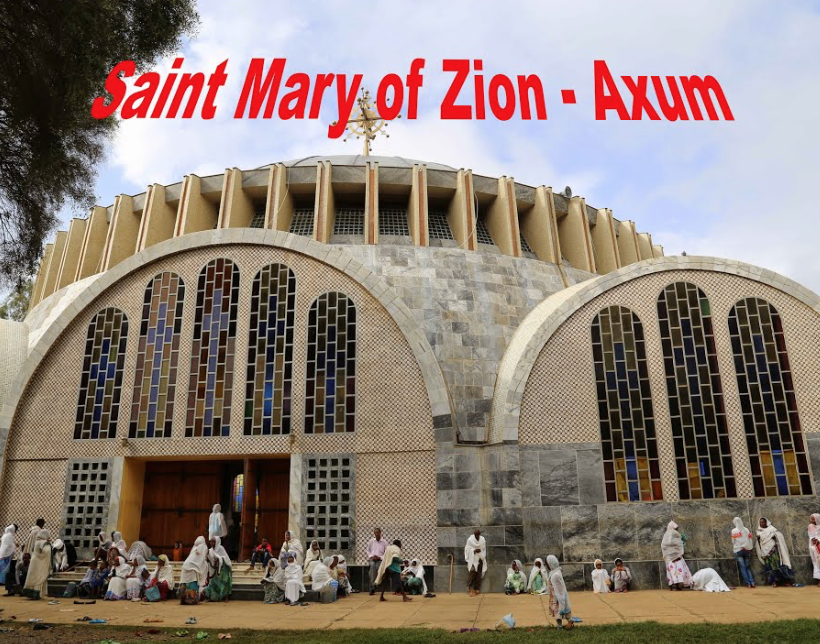
How famous? For centuries, church officials have claimed that the Church of St. Mary of Zion in Axum contains the Ark of the Covenant.

This was, from the start, a journalism horror story — since Ethiopian officials were preventing foreign journalists from reaching the site of the alleged massacre. At the same time, activists on both sides of the stunningly complex conflict appeared to be working hard to shape the coverage that was taking place.

The other day, a frustrated reader sent me this note, after seeing materials posted online attempting to undercut claims that this massacre of 700-plus believers took place. “I’ve trusted you and your sources for about five years now so I’m hoping you can help get to the bottom of this,” the reader said.

I told the reader that, to me, it appeared that this was a case in which — at this point — certainty was impossible. A careful reader would note that some journalists were saying that claims about the massacre could not be verified — either way. “Human rights activists on left and right are concerned about the report and believe the attack COULD have taken place. But there has been no verification that has been locked down certain,” I said.

If you want to see what we’re talking about, check out these early reports from Catholic News Agency (“Hundreds reportedly dead after massacre at Oriental Orthodox church in Ethiopia”) and The Church Times (“Massacre ‘of 750’ reported in Aksum church complex, Tigray, Ethiopia”).

This is, of course, an argument about the attribution of truth claims. When journalists cannot (for a variety of reasons) do on-site reporting to seek evidence, they frequently are forced to seek the best sources that are available to them (often via telephone or other forms of technology) and report what they can. Here is the crucial point: Journalists have to clearly identify the identity of the sources and let readers know what kind of access they would or would not have to the information.

This leads us to a recent Associated Press story with a headline stating, “ ‘Horrible’: Witnesses recall massacre in Ethiopian holy city.

The key word is, of course, “witnesses.”


Please respect our Commenting Policy

Supreme Court justices are not singing the same religious liberty tune during pandemic

Supreme Court justices are not singing the same religious liberty tune during pandemic

Legal battles over pandemic-era worship gatherings rage on.

Last October’s confirmation of Justice Amy Coney Barrett flipped the U.S. Supreme Court’s script on such questions.

The latest ruling came last Friday night: A 6-3 order stopped California’s ban on indoor worship in most of the nation’s most populous state. But the justices allowed a 25 percent capacity limit to remain.

Perhaps most interestingly, the majority said California can keep prohibiting singing and chanting. For now.

On the singing issue, the justices sang several different tunes:

Chief Justice John Roberts: “The State has concluded … that singing indoors poses a heightened risk of transmitting COVID–19. I see no basis in this record for overriding that aspect of the state public health framework.”

Barrett, joined by Justice Brett Kavanaugh: “Of course, if a chorister can sing in a Hollywood studio but not in her church, California’s regulations cannot be viewed as neutral. But the record is uncertain. … (H)owever, the applicants remain free to show that the singing ban is not generally applicable and to advance their claim accordingly.”

Justice Neil Gorsuch, joined by Justices Clarence Thomas and Samuel Alito: “California has sensibly expressed concern that singing may be a particularly potent way to transmit the disease. … But, on further inspection, the singing ban may not be what it first appears. It seems California’s powerful entertainment industry has won an exemption. So, once more, we appear to have a State playing favorites … expending considerable effort to protect lucrative industries (casinos in Nevada; movie studios in California) while denying similar largesse to its faithful.”


Please respect our Commenting Policy

In the age of COVID-19, it's impossible for clergy to avoid wrestling with the internet

In the age of COVID-19, it's impossible for clergy to avoid wrestling with the internet

Even before the coronavirus crisis, this question haunted pastors: What in God's name are we supposed to do with the internet?

American clergy aren't the only ones wrestling with this puzzle. Consider this advice -- from Moscow -- about online personality cults.

"A priest, sometimes very young, begins to think that he is an experienced pastor -- so many subscribers! -- able to answer the many questions that come to him in virtual reality," noted Patriarch Kirill, leader of the Russian Orthodox Church, at a recent diocesan conference. "Such clerics often lose the ability to accept any criticism, and not only on the internet, or respond to objections with endless arguments."

Pastors eventually have to ask, he added, if their online work is leading people through parish doors and into face-to-face faith communities.

"That is the question of the hour, for sure," said Savannah Kimberlin, director of published research for the Barna Group. Recent surveys have convinced Barna researchers that "the future church will be a blend of digital and in-person work. But it's up to us to decide what that will look like. …

"But isn't that true of our society as a whole? There are digital solutions for so many issues in our lives, right now. … But we can also see people yearning for more than that -- for experiences of contact with others in a community."

In a recent survey, 81% of churchgoing adults affirmed that "experiencing God alongside others" was very important to them, she said. At the same time, a majority of those surveyed said they hoped their congregations would continue some forms of online ministry in the future.

Similar paradoxes emerge when researchers studied evangelistic efforts to reach people who are "unchurched" or completely disconnected from religious institutions.

Half of all unchurched adults (52%), along with 73% of non-Christians, said they are not interested in invitations to church activities. However, a new Barna survey -- cooperating with Alpha USA, a nondenominational outreach group -- found that 41% of non-Christians said they were open to "spiritual conversations about Christianity" if the setting felt friendly.

Online forums and streamed events -- experienced at home, with viewers in control -- may offer some newcomers the flexibility and "safety" that they want.


Please respect our Commenting Policy