Religious Liberty

New podcast: 'Screen' culture tied to loneliness; can clergy build bridges with same tech?

New podcast: 'Screen' culture tied to loneliness; can clergy build bridges with same tech?

The coronavirus pandemic has created a wide variety of religion-beat stories — from empty local pews to the U.S. Supreme Court debating how many people can occupy local pews. And sometimes it feels like all roads during this crisis, for better or worse, lead to the internet.

Yes, we had lots of ground to cover in this week’s “Crossroads” podcast (click here to tune that in).

Empty local pews have, in some cases, led to near-empty offering plates. Leaders in religious groups that were struggling before COVID-19 — look for closing congregations, seminaries, colleges and even cathedrals — are now hearing the demographics clock tick, tick, tick even louder.

We’re talking about huge stories, but they are also stories that are hard for journalists to cover, simply because they require information at the local, regional and national levels.

It was easy to cover local clergypersons as they learned to mount smartphones atop camera tripods and stream worship services to their locked-down flocks (as opposed to megachurches that already had cameras and massive websites). It was also easier to cover black-sheep clergy that rebelled against social-distancing guidelines than it was to report on the remarkable efforts of leaders in entire denominations and religious traditions seek ways for their people to worship as best they could within constantly evolving (and often hostile) government guidelines.

Journalists, of course, were also being affected by lockdowns and, in some cases, budget cuts. This was an equal-opportunity crisis.

Let me give you an example of an important story that everyone knows is unfolding right now. Consider this Baptist Press headline: “Pandemic division causing pastors to leave ministry, pastoral mentor says.” Here is the overture:

Brian Croft jokes that masks are the new “color of the carpet argument” in churches, with similarly poor outcomes. Pastors are resigning from the stress “kind of in a way I’ve never really seen.”

The founder of Practical Shepherding transitioned from fulltime pastoring to lead the shepherding outreach fulltime in January, pulled by a need for coaching and counseling that has steadily increased among pastors over the past decade.

Then came COVID-19.

Please respect our Commenting Policy

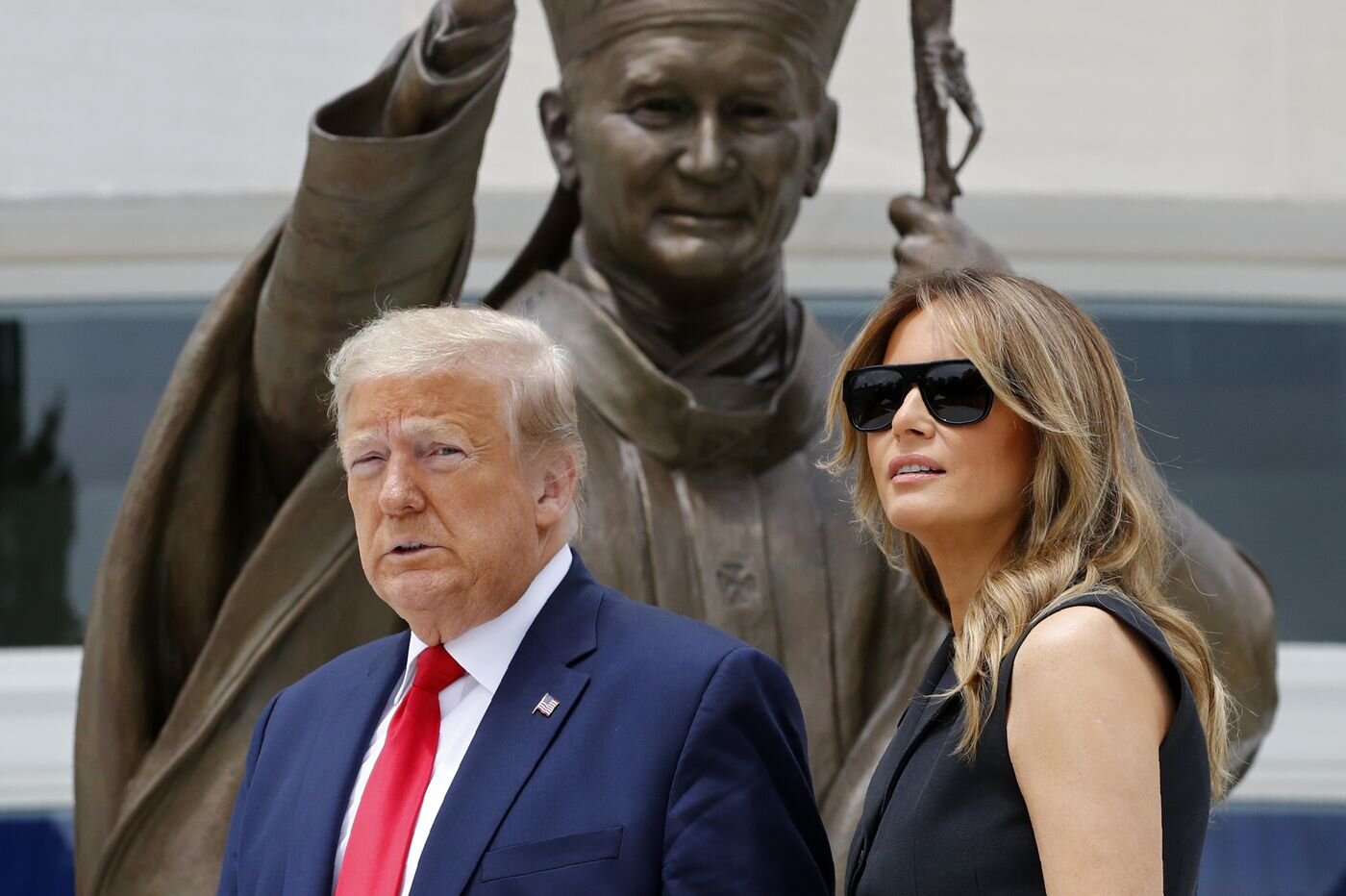
Con Don: Why some conservative Catholic news sites were duped by Donald Trump

Con Don: Why some conservative Catholic news sites were duped by Donald Trump

Now that Donald Trump is no longer president, the discussion about his time in office and legacy is something that has become a media preoccupation despite Joe Biden being inaugurated last month.

That’s because Trump upended much of the way government worked. Add to that a media that can’t quit him (some outlets saw a huge increase in readers and viewers since 2016) and the U.S. Senate impeachment trial, and you can see why Trump remains a focal point.

The U.S. Capitol riot on Jan. 6 is the coda to the Trump presidency and the reason why he remains a news cycle fixture. You may no longer see the former president on Twitter, but The New York Times and CNN — to name just two mainstream news organizations — continue to give him plenty of coverage.

This brings us to another development in today’s evolving news-media marketplace: Catholic media also blossomed during the Trump years.

What has been the result of some Catholic news websites giving Trump any form of editorial support?

Catholic news sites across the doctrinal spectrum should have done a better job calling out both sides — something the mainstream press no longer does, especially on moral, cultural and religious issues. Most often, they don’t run opposing opinion pieces and it appears that the selection of news stories and their arguments are often guided by politics.

However, if we have learned anything over the past four years it is that marrying one’s faith to a political ideology can be a form of idolatry. How else would you explain the zeal of some Catholics who argued that Trump should remain in office?

Catholics have been seduced by the concept that the government can remedy the nation’s problems. They weren’t duped by Trump in as much as they tried to find a solution for what ails society, from their point of view, by supporting an imperfect man. Catholics, like many people of other Christian denominations, wanted to believe Trump. They had too much invested in him and his policy decisions.

Where right-wing Catholics news sites, in particular, go from here remains to be seen.


Please respect our Commenting Policy

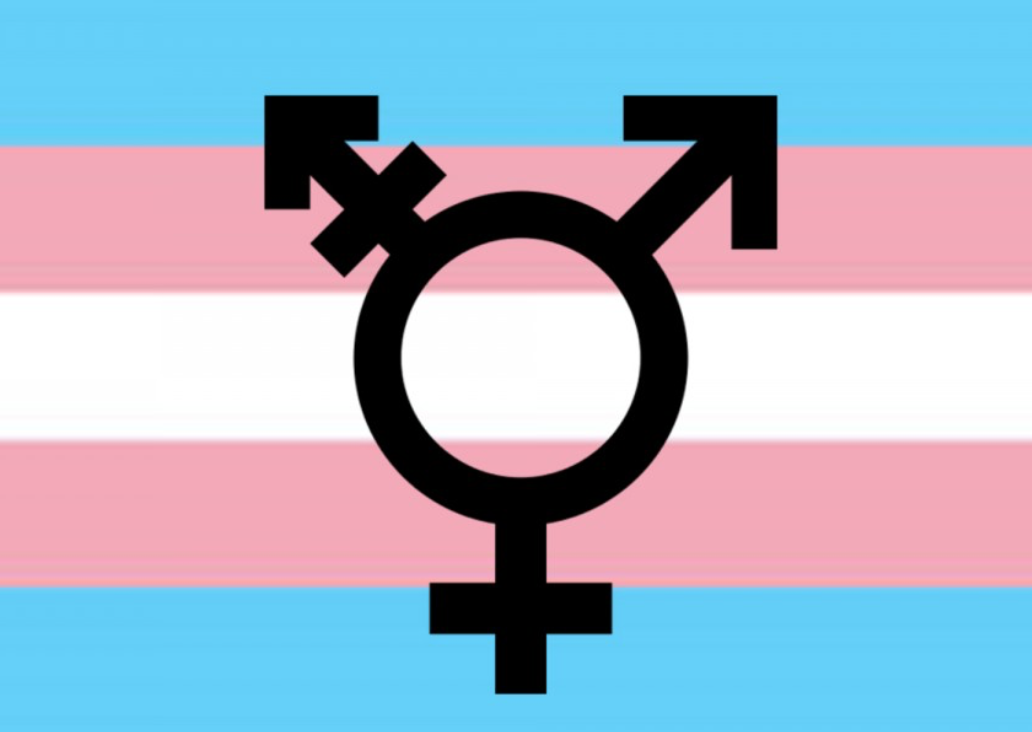
Joe Biden era puts transgender rights atop newsroom agendas (which creates religion news)

Joe Biden era puts transgender rights atop newsroom agendas (which creates religion news)

Among American "social issues," freedom of abortion is long-settled as a matter of law, so foes largely nibble at the edges. Courtroom victories for gays and lesbians have put dissenters on the defensive seeking to protect conscience claims.

Meanwhile, in the Biden-Harris era the transgender debate -- emotion-laden, multi-faceted and religiously weighty -- is moving to the top of the news agenda. {The Guy admits at the start he brings no psychological insight to this complex terrain and has personal knowledge of only two such situations.}

Democrats' zeal is the major new factor. President Joe Biden has said that he believes "transgender equality is the civil rights issue of our time. There is no room for compromise." Last year, Donald Trump appointee Neil Gorsuch made the case for "gender identity" rights in the Supreme Court's Bostock ruling, but this covered only secular employment. During his first hours in office, President Biden issued an executive order that extends this outlook across the board.

The president declared, for instance, that school kids shouldn't have to worry about their "access to the restroom, the locker room, or school sports," nor should adults be mistreated "because how they dress does not conform to sex-based stereotypes." He directed each government agency to spend the next 100 days reframing all gender policies accordingly.

Los Angeles Archbishop Jose Gomez, elected leader of the U.S. Conference of Catholic Bishops, immediately responded that on this and other matters like abortion, America's second Catholic president "would advance moral evils and threaten human life and dignity." Chicago's Cardinal Blasé Cupich assailed Gomez's Inauguration Day statement as "ill-considered." (Click here for GetReligion post and podcast on this topic.)

Then New York's Cardinal Timothy Dolan and four other chairmen of bishops' committees jointly declared that by reaching beyond the Supreme Court ruling Biden "needlessly ignored the integrity of God's creation of the two complementary sexes, male and female," and threatened religious freedom. This protest echoed the 2019 Vatican pronouncement "Male and Female He Created Them (.pdf here).”

A second Biden executive order Feb. 4 defined the new "LGBTQI+" approach in U.S. foreign policy. He directed 15 Cabinet departments and agencies to press other countries to comply with America's new stance, using diplomacy and, as needed, financial sanctions or visa restrictions. The State Department is to report annually on problem nations.


Please respect our Commenting Policy

Once again, AP accuses big Catholic bosses of abusing government coronavirus relief efforts

Once again, AP accuses big Catholic bosses of abusing government coronavirus relief efforts

There they go again.

In this case, “they” refers to whoever is in charge of religion-news coverage these days at the Associated Press. Someone there needs to take a remedial course in (a) church history, (b) church-state law in the United States or (c) both.

Let’s start by flashing back about six months, when the AP rolled out an investigation of what its editors clearly thought was a scandal of epic proportions. Does anyone remember this lede, and this GetReligion dissection (“AP explains why it was wrong for local-level Catholic employees to get coronavirus relief money“), of the expose)?

NEW YORK (AP) — The U.S. Roman Catholic Church used a special and unprecedented exemption from federal rules to amass at least $1.4 billion in taxpayer-backed coronavirus aid, with many millions going to dioceses that have paid huge settlements or sought bankruptcy protection because of clergy sexual abuse cover-ups.

That was a bizarre, but honest, opener. The entire story was built on the assumption that there is such a thing — corporately and legally speaking — as a “U.S. Roman Catholic Church.”

As I said at the time, this is “like saying that there is an ‘American Public School System,’ as opposed to complex networks of schools at the local, regional and state levels.” One could also note that there is a Planned Parenthood of America. However, government coronavirus aid in the paycheck-support program went to 37 regional and local Planned Parenthood groups.

The Associated Press has now produced a sequel, with this headline: “Sitting on billions, Catholic dioceses amassed taxpayer aid.” While the editors avoided the “U.S. Roman Catholic Church” label this time around, this lengthy story is built on a similar misunderstanding of what happened when Catholic parishes, schools, nonprofits and other ministries applied for coronavirus aid.

As readers can see in the headline, in the sequel AP leaders focused on finances at the diocesan level, as opposed to a mythical national Catholic structure. This is closer to the truth, but it still misses the mark. While many issues of church authority are linked to local bishops, in local dioceses, the crucial issue here was paycheck-relief money reaching staff members in individual parishes, schools and ministries that had been rocked by falling donations during the COVID-19 crisis. Let’s start with the overture:


Please respect our Commenting Policy

Inauguration Day showdown: U.S. Catholic bishops remain divided on 'McCarrick doctrine'

Inauguration Day showdown: U.S. Catholic bishops remain divided on 'McCarrick doctrine'

Speaking to an Italian family association in 2018, Pope Francis compared the abortion of children with genetic problems to "what the Nazis did to purify the race. Today, we do the same thing but with white gloves."

A year later, Francis bluntly asked a journalist from Mexico if it's "fair to eliminate a human life in order to solve a problem? The answer to which is, 'No.' Second question: Is it fair to pay a sniper to solve a problem? No. Abortion is not a religious problem. … It is a problem of eliminating a human life. Period."

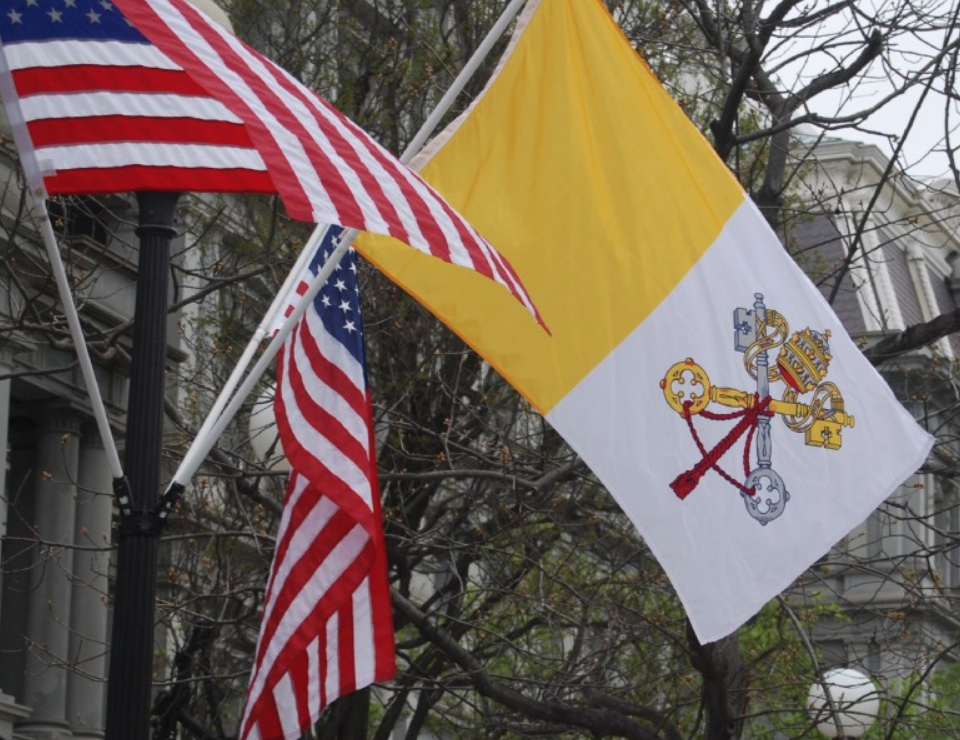
But the pope was careful in his Inauguration Day message to America's second Catholic president, assuring Joe Biden that he would "pray that your decisions will be guided by a concern for building a society marked by authentic justice and freedom, together with unfailing respect for the rights and dignity of every person, especially the poor, the vulnerable and those who have no voice."

The pope's text was examined closely after reports that the Vatican -- on behalf of progressive American bishops -- tried to stop the circulation of a sobering statement from the president of the U.S. Conference of Catholic Bishops. The letter from Archbishop Jose Gomez of Los Angeles addressed the challenge, and blessing, of working with "our first president in 60 years to profess the Catholic faith."

Clearly, Biden's piety had offered "solace in times of darkness and tragedy," said Gomez, leader of America's largest diocese and a crucial voice among Hispanic Catholics. He also praised Biden's "longstanding commitment to the Gospel's priority for the poor."

Nevertheless, Gomez noted that "our new President has pledged to pursue certain policies that would advance moral evils and threaten human life and dignity, most seriously in the areas of abortion, contraception, marriage, and gender. Of deep concern is the … the freedom of believers to live according to their consciences."

Cardinal Blasé Cupich of Chicago fired back on Twitter, attacking this "ill-considered statement on the day of President Biden's inauguration" while claiming "there is seemingly no precedent" for this action by Gomez.

The Pillar, a Catholic news website, reported that the Vatican Secretariat of State intervened to "spike" the statement from the U.S. bishops after objections from Cupich, Cardinal Joseph Tobin of Newark and some other bishops.


Please respect our Commenting Policy

Watch what Biden does, not what he says: Executive orders will widen rift within U.S. bishops

Watch what Biden does, not what he says: Executive orders will widen rift within U.S. bishops

Can you feel the unity yet? That’s the joke among political conservatives as the Biden administration closed out its first week.

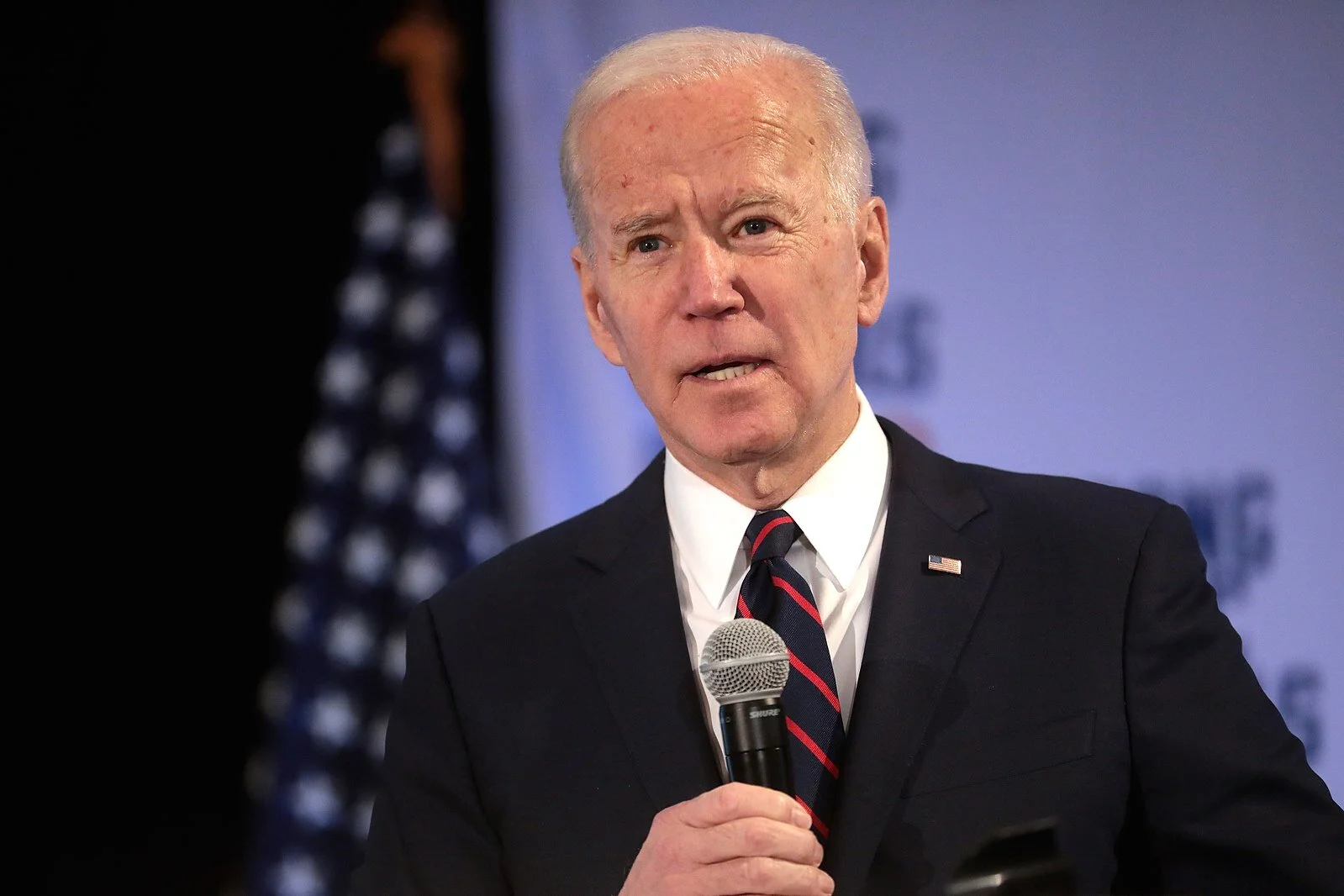
Within hours of taking the oath of office on his family’s massive Bible, President Joe Biden signed a raft of executive orders — something that went on in the ensuing days — to undo strategic executive moves during Donald Trump’s presidency. During that process, Biden fan afoul of traditional Catholic teachings and, once again, placed the spotlight on his Catholic faith.

Political and religious conservatives (not always the same thing) can agree that Biden’s actions over the past week didn’t foster unity. If anything, this blitz of activity highlighted the differences between two ever-divergent Catholic camps in this country, something that revealed itself on Day 1 among the U.S. bishops and across the Atlantic Ocean in Rome as a result of dueling statements and the polemics it unleashed, all of which pointed to old fights and old wounds. Can you say “Theodore McCarrick”?

Biden, the first Roman Catholic president since John F. Kennedy in 1960, is often identified as “devout” (click here for background), when journalists describe his faith. Of course, the doctrinal side of Biden’s piety isn’t something journalists dig into. We don’t know what is in Biden’s heart or even his head.

But here is the key point for journalists and news readers: What we do know — as is the case with every politician — is what he does and says. Options about church teachings on marriage and sexuality are one thing. Biden’s decision to perform an actual gay union rite represented open conflict with the teachings of his church.

Journalists can (and should) report and show where there is overlap regarding church teachings and where there is clear contradiction. The Religious Left will soon learn that it shouldn’t hitch their wagon to any political ideology. The Religious Right learned that the hard way with Trump — something that could take years to unspool when it comes to credibility.

With Biden being a Democrat, however, I don’t expect the mainstream press to do any of this. Instead, we see puff pieces from The New York Times calling Biden “perhaps the most religiously observant commander in chief in half a century.” Guess they forgot that George W. Bush was a born-again Christian who regularly attended services. What about Jimmy Carter’s decades teaching Sunday school?

Here’s the key excerpt from that very feature that ran this past Saturday:


Please respect our Commenting Policy

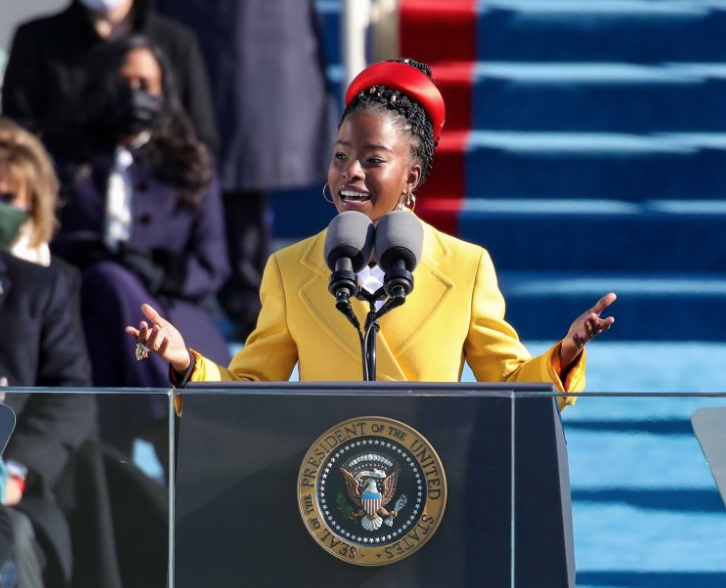
'Hamilton,' the prophets and liberal Catholicism: Poet Amanda Gorman took her shot

'Hamilton,' the prophets and liberal Catholicism: Poet Amanda Gorman took her shot

After Inauguration Day, everyone was buzzing -- obviously -- about weary Sen. Bernie Sanders and his mittens, as well as Lady Gaga's massive social-distance enforcing dress. Commentators explored the socio-political importance of the various shades of purple worn by female Democrats, while Garth Brooks raised eyebrows with blue jeans and maskless-hugs of assorted presidents.

Oh, and President Joe Biden belted out an address that was Bill Clinton-esque in terms of length.

But there was no question that the day’s rising star was Amanda Gorman, the young poet in the canary-yellow coat who certainly didn’t throw away her shot. The question, for GetReligion readers, was whether there was a religion angle in her work that meshed with the rest of the Inauguration Day celebration of the Gospel according to the Religious Left.

Anyone with a computer-based device and a search engine could easily learn that the answer was, “Yes.”

As one would expect, the New York Times offered the definitive faith-free story: “Amanda Gorman Captures the Moment, in Verse.” Now, it was totally valid that the overture underlined the role that the January 6th conspiracy-theory apocalypse played in the creation of the poem. The question is whether this young Catholic woman’s faith was part of her response to it.

Two weeks ago, the poet Amanda Gorman was struggling to finish a new work titled “The Hill We Climb.” She was feeling exhausted, and she worried she wasn’t up to the monumental task she faced: composing a poem about national unity to recite at President-elect Joseph R. Biden Jr.’s inauguration.

“I had this huge thing, probably one of the most important things I’ll ever do in my career,” she said in an interview. “It was like, if I try to climb this mountain all at once, I’m just going to pass out.”

Gorman managed to write a few lines a day and was about halfway through the poem on Jan. 6, when pro-Trump rioters stormed into the halls of Congress, some bearing weapons and Confederate flags. She stayed awake late into the night and finished the poem, adding verses about the apocalyptic scene that unfolded at the Capitol. …

At one point, this Times piece came close to exploring the DNA of key passages in her poem. Of course, the “Hamilton” influence was relevant (hold that thought). Then there was this:


Please respect our Commenting Policy

America remains bitterly divided: But is this country veering closer to another civil war?

America remains bitterly divided: But is this country veering closer to another civil war?

Call it the "Texit" parable.

America's new civil war begins with the Supreme Court overturning Roe v. Wade, creating an abortion-free zone in the Bible Belt and most heartland states.

Enraged Democrats pledge to end the U.S. Senate filibuster and expand the number of high-court justices. After restoring Roe, they seek single-payer health care, strict gun control and sweeping changes in how government agencies approach the First Amendment, with the IRS warning faith groups to evolve -- or else -- on matters of sexual identity. Big Tech begins enforcing the new orthodoxy.

Conservatives rebel and liberals soon realize that most of America's military, including nuclear weapons, are in rebel territory. Then federal agents kill Alabama's pro-life, Black governor -- while trying to arrest him as a traitor. That's too much for Gov. Francisco Gonzalez of Texas, who decides that it's time for a new republic.

David French fine-tuned this "Texit" vision early in 2020, while finishing "Divided We Fall: America's Secession Threat and How to Restore Our Nation." Best-known as a #NeverTrump conservative pundit, most of the Harvard Law graduate's career has focused on old-school First Amendment liberalism -- which in recent decades has meant defending conservative religious believers in religious liberty cases.

The book's first lines are sobering, especially after recent scenes on Capitol Hill.

"It's time for Americans to wake up to a fundamental reality: the continued unity of the United States cannot be guaranteed," wrote French. Right now, "there is not a single important cultural, religious, political, or social force that is pulling Americans together more than it is pulling us apart."

Americans are divided by their choices in news and popular culture. America remains the developing world's most religious nation, yet its increasingly secularized elites occupy one set of zip codes, while most traditional religious believers live in another. In politics, more and more Democrats are Democrats simply because they hate Republicans, and vice versa.

Ironically, cultural conservatives now find themselves hoping that the Supreme Court will protect them, said French, reached by telephone. Conservatives know they have lost Hollywood, academia, America's biggest corporations, the White House and both houses of Congress.

"I constructed the Texit scenario around court packing because that has become their last firewall," said French.


Please respect our Commenting Policy

Should elite European officials outlaw Jewish and Muslim ritual slaughter for meat?

Should elite European officials outlaw Jewish and Muslim ritual slaughter for meat?

THE QUESTION:

Should Europeans outlaw ritual slaughter for meat practiced by Judaism and Islam as cruelty to animals?

THE RELIGION GUY’S ANSWER:

With such unprecedented political mayhem, Americans can be forgiven for barely noticing important events overseas.

The Guy, who believes threats to religious freedom warrant especially close attention, highlights a Dec. 17 ruling by the Court of Justice, the highest tribunal in the European Union (which covers 27 member nations with the departure of Great Britain). Readers will want to check out this recent Ira Rifkin post on this topic: “EU hypocrisy? Foie gras and factory farming continue, but kosher and halal traditions nixed.”

The decision, on referral from Belgium’s Constitutional Court, approved a regional statute mandating that animals be stunned before they are slaughtered for meat. This requirement directly pits animal-welfare advocates against Judaism and Islam, in which long-standing tradition allows observant believers to eat only meat from ritual slaughter, which forbids such stunning. European Jews and Muslims plan to appeal the decision, which could influence policies in other nations.

The court acknowledged that religious liberty is important, but on balance stated that the crackdown in Belgium occurs in “an evolving societal and legislative context which is characterized by an increasing awareness of the issue of animal welfare.” Several European nations already require stunning before slaughtering. (In the United States, statutes require stunning but allow for religious exemptions.)

Adding to the emotions in Europe, this dispute brings to mind that in 1933 Germany’s new Nazi-influenced regime prohibited Jewish slaughter on grounds of the stunning problem. More recently, this argument has been employed by Islamophobes.

The Conference of European Rabbis, which represents believers in 40 nations, said such prohibitions “put Jewish life at risk.” Omer Yankelevitch, a member of Israel’s parliament and the government diaspora affairs minister, wrote similarly in the Jerusalem Post last week. He said the European Union is violating freedom of religion and “harms the viability of Jewish communities in Europe,” so intense diplomatic efforts will be undertaken to respect the age-old observance.

Those who enjoy eating meat may give barely a thought to the methods used to produce it, although perhaps some reflected on this reality when COVID outbreaks brought attention to slaughterhouse conditions.


Please respect our Commenting Policy