Race

If the big goal is racial reconciliation, pastors may want to start by breaking bread

If the big goal is racial reconciliation, pastors may want to start by breaking bread

The Rev. Martin Luther King, Jr., faced a barrage of questions about race and politics during his landmark 1960 appearance on NBC News' "Meet the Press," but one of the most memorable exchanges concerned a blunt question about church life.

"How many white people are members of your church in Atlanta?", asked a reporter from Nashville.

"I think it is one of the tragedies of our nation, one of the shameful tragedies, that 11 o'clock on Sunday morning is one of the most segregated hours, if not the most segregated hour, in Christian America," King replied. Any church that has "a segregated body is standing against the spirit and the teachings of Jesus Christ, and it fails to be a true witness," he added.

Millions of Americans are still wrestling with this Sunday morning divide.

But another practical question emerged during a recent Southern Baptist Convention program entitled "Pursuing Unity: A Discussion of Racial Reconciliation Efforts and the SBC." Can Black and White church folks find gaps in their jammed schedules and start breaking bread together?

"It doesn't matter how many panel discussions you watch. It doesn't matter how many books you read, how many conferences you go to. None of that will do better than dinner table ministry," said the Rev. Jon Kelly of Chicago West Bible Church.

If people want progress, he said, they need to consider their circle of friends and ask "why everyone looks like me, votes like me, thinks like me. … When we talk about racial reconciliation, we want the fruit of reconciliation without the relationships. Until our dinner tables become diversified, … until we eat bread together and fellowship together, we won't make any progress."

Fellowship meals will not make headlines or ignite rhetorical fireworks in social media, and that's a good thing, said the Rev. Ed Litton, who recently said he wouldn't seek a second term as SBC president. He plans to focus on racial-reconciliation projects linked to his own church near Mobile, Ala.

Years ago, he said, Black and White pastors began sharing meals while discussing the "deep wounds" in that racially divided community. The key was focusing on faith and the ties that bind, until basic bonds of trust were in place.

"We hashed out why we were there," said Litton. "We weren't there to bring about some kind of social change.

Please respect our Commenting Policy

No need for balance? Washington Post offers sermon on behalf of Alabama trans activists

No need for balance? Washington Post offers sermon on behalf of Alabama trans activists

Before we get to the Washington Post story at the heart of this post, please allow me to share a journalism parable from my years at the Rocky Mountain News (RIP), back in the 1980s.

It was obvious that, sooner or later, Operation Rescue protesters would come to the Boulder Abortion Clinic, which was nationally known for its work in third-trimester abortions and other controversial procedures. I urged my editors to commit time and resources to a pair of profiles of important activists on both sides. One was a former abortionist who had joined the pro-life cause. The other was a liberal Christian who was pouring her life into the defense of abortion rights.

These profiles would be the same length and would run side-by-side, with similar art and headlines. There would be no need to include balance and dissent in each of the profiles since they represented competing voices on both sides of an important debate in public life. In the end, we heard praise and criticism from readers on both sides of this event.

Now, let’s look at the Post story that ran under this double-decker headline:

Activists face an avalanche of anti-transgender bills

‘If this bill don’t pass, it’s coming back next year,’ says an ardent advocate in Alabama

That sub-headline is, for all practical purposes, the only time that “conservative” cultural voices are heard in this long, long feature story. Every single sentence in this story is written using the precise terms, images and themes of the activists opposed to these “anti-transgender” bills in Alabama and across America.

In effect, this story — a totally valid profile of an important activist — is one half of a package covering these debates deep in the Bible Belt.

The problem is that there is no second profile. There is no feature of equal length addressing, let’s say, the views of a Black church leader who works with young people who are making efforts to “detransition” after declaring themselves trans.


Please respect our Commenting Policy

Thinking about world Christianity, as Crux digs deep into many overlooked Catholic details

Thinking about world Christianity, as Crux digs deep into many overlooked Catholic details

It’s hard to believe that it has been two decades since historian Philip Jenkins published his groundbreaking essay “The Next Christianity” in The Atlantic Monthly.

It contained key material from the first of three books that Jenkins published on the future of world Christianity and, thus, of the changing face of world religion — period. The first book was entitled: “The Next Christendom: The Coming of Global Christianity.

This piece of the Atlantic subtitle is crucial: “We stand at a historical turning point, the author argues — one that is as epochal for the Christian world as the original Reformation. Around the globe Christianity is growing and mutating in ways that observers in the West tend not to see.”

Sure enough, many reporters didn’t see what Jenkins was describing, even though clashes between the chilly, declining Christian West and the blooming Christian South and East are easy to see looming in the background of many major stories. As the Anglicans and United Methodists about that.

Understanding Jenkins’ work is a crucial first step to understanding the importance of a new Crux think piece by the omnipresent John L. Allen, Jr. The headline: “In new Catholic numbers, an ‘imponderable’ movement shaping history.”

First, consider this from Jenkins:

If we look beyond the liberal West, we see that another Christian revolution, quite different from the one being called for in affluent American suburbs and upscale urban parishes, is already in progress. Worldwide, Christianity is actually moving toward supernaturalism and neo-orthodoxy, and in many ways toward the ancient worldview expressed in the New Testament: a vision of Jesus as the embodiment of divine power, who overcomes the evil forces that inflict calamity and sickness upon the human race. In the global South (the areas that we often think of primarily as the Third World) huge and growing Christian populations — currently 480 million in Latin America, 360 million in Africa, and 313 million in Asia, compared with 260 million in North America — now make up what the Catholic scholar Walbert Buhlmann has called the Third Church, a form of Christianity as distinct as Protestantism or Orthodoxy, and one that is likely to become dominant in the faith.


Please respect our Commenting Policy

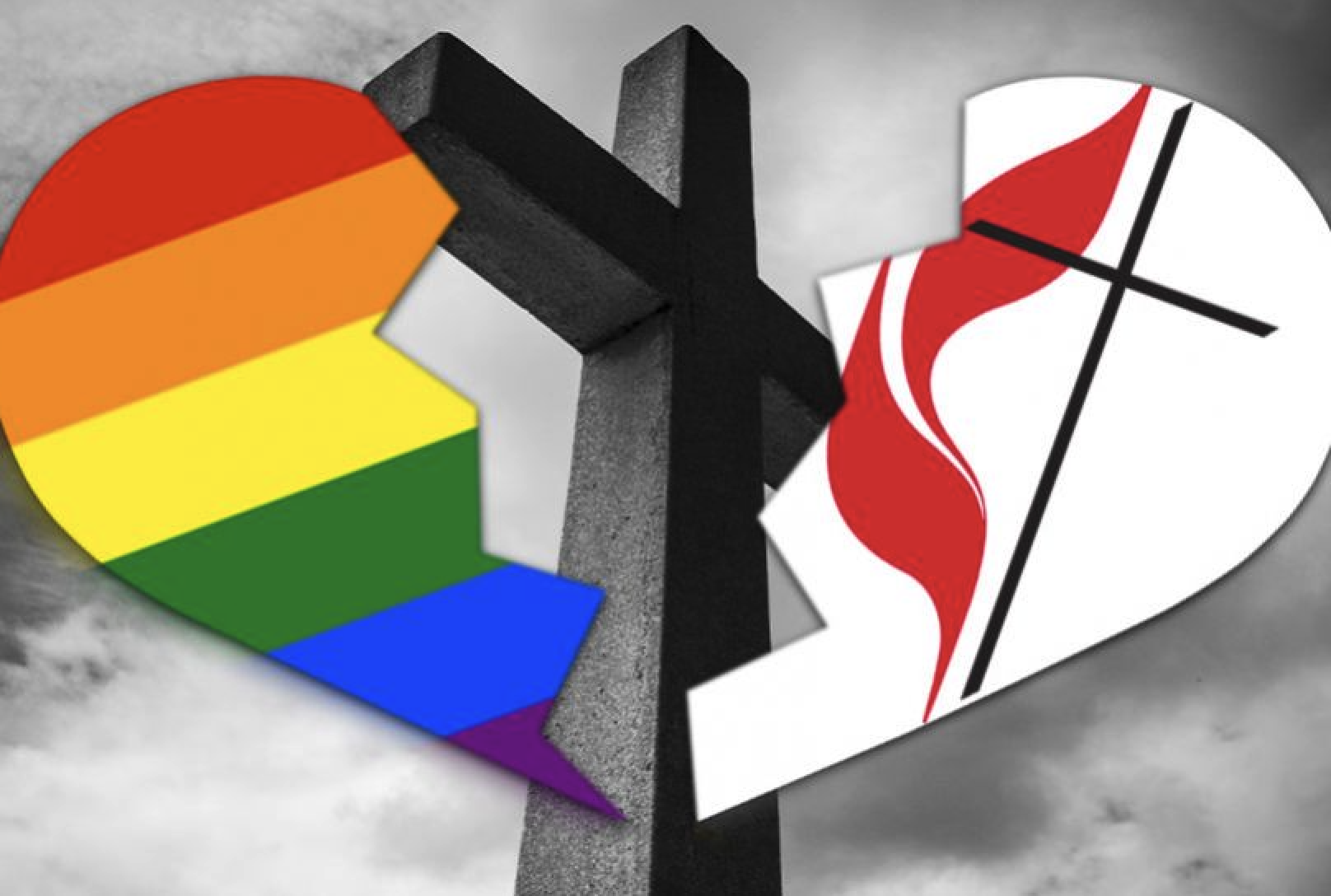
Never forget: There are more than two strategic camps in the global United Methodist war

Never forget: There are more than two strategic camps in the global United Methodist war

It’s time for another religion-beat journey beyond “whataboutism” and the basic assumption that all controversial subjects have “two sides,” and that’s basically that.

Of course, we live in an age in which many elite newsrooms decline to cover “one side” of a story if, according to newsroom doctrines, it’s already obvious which side is good and which side is bad. Here at GetReligion we have a term for this — “Kellerism,” a nod to candid remarks once made, on the record, by former New York Times editor Bill Keller.

In this case, we are looking at a religion-beat superstory at the local, regional, national and global levels — the break-up of the United Methodist Church, the second largest Protestant denomination in America.

To get the big picture, please see this recent GetReligion post by Richard Ostling: “The latest United Methodist bombshell will create news throughout 2022 and beyond.” To see how long this battle has been going on, check out this “On Religion” column that I wrote in 1998: “United Methodists — Breaking up is hard to do” and two more on a related topic, “Old fault lines can be seen in the ‘seven churches’ of divided Methodism” (and then part II).

Here are Three Big Ideas for today. Remember that I have, as a reporter, been wrestling with this ongoing story since the early 1980s.

(I) Never forget the unique element of this story, which is that the United Methodist Church has a GLOBAL structure that includes the growing churches of Africa and Asia, as well as the splintering (and usually shrinking) congregations in the United States. Readers should question news reports that fail to mention — or even stress — the racial and cultural diversity of the global conservative United Methodism coalition.

(II) While fights about LGBTQ issues make headlines, the United Methodist wars have — behind the scenes — included clear divisions on basic, even credal, issues in Christian theology. In addition to clashing views of biblical authority, we’re talking about splits on salvation, sin, heaven, hell, the Resurrection and the very nature of Jesus Christ. Reporters need to ask questions about issues other than sex.

(III) There are, at the very least, three major groups involved in this story. Let’s call them the “candid left,” the “establishment left” and then the “traditional” United Methodists, as in the defenders of the existing laws and doctrines in the United Methodist Book of Discipline. However, there are subgroups on the right. Never assume that the global conservatives have precisely the same views as their American counterparts.

To see that these issues look like “in the wild,” consider this recent Religion News Service story: “Vote delayed again, some United Methodists say they quit. Now what?”


Please respect our Commenting Policy

Are Southern Baptists bracing for another civil war? Well, today isn't 1979 ...

Are Southern Baptists bracing for another civil war? Well, today isn't 1979 ...

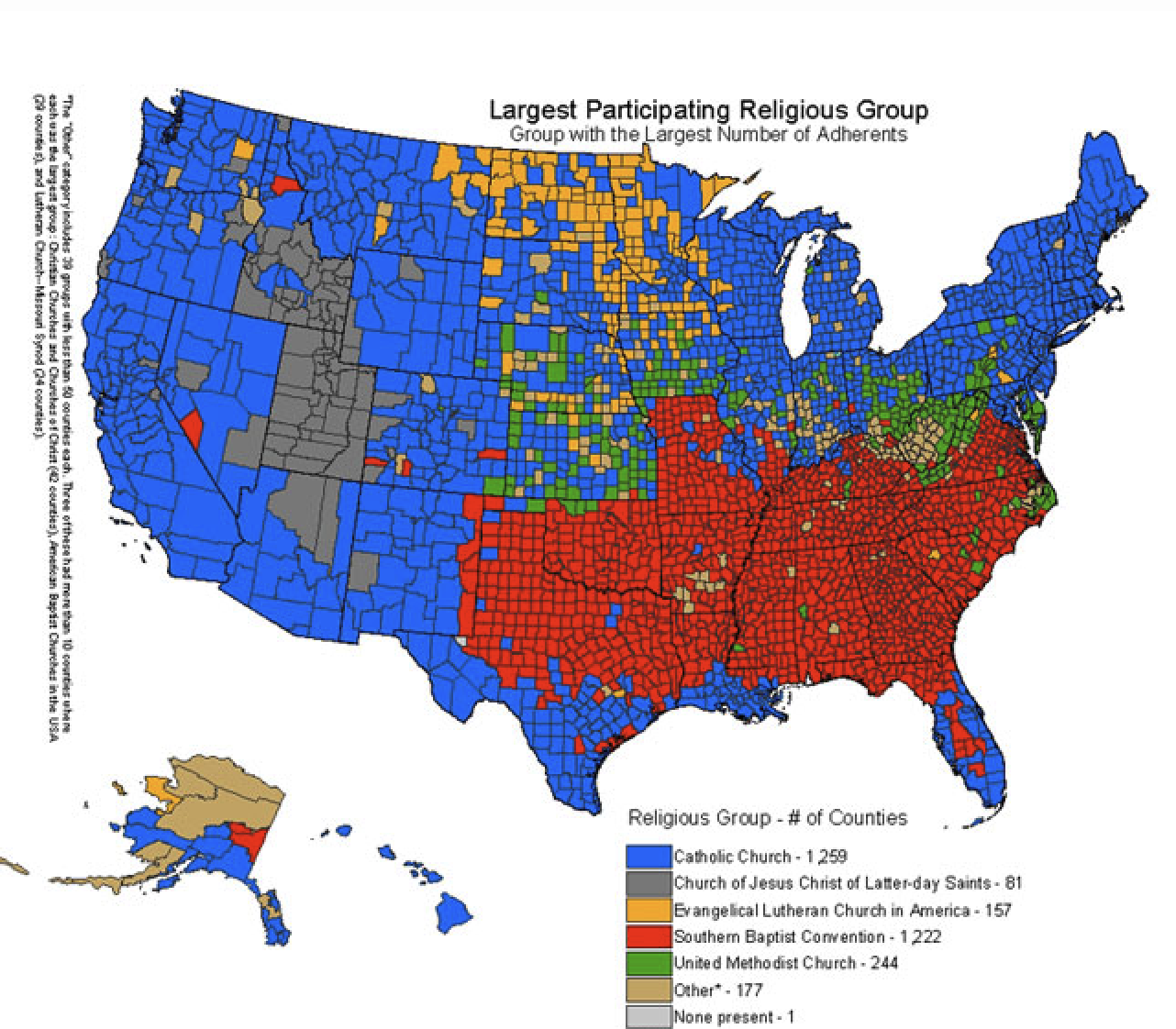
Once upon a time, Southern Baptists in Bible Belt communities knew how to talk to people who didn't go to church.

"We were dealing with people who were, for the most part, like us," said Baptist historian Nathan Finn, the provost of North Greenville University, located in the South Carolina hills near the North Carolina border. "Everyone understood sweet tea, fried chicken and SEC football. It was easier to talk to those people about Jesus."

Things changed, as the greater Greenville-Spartanburg welcomed waves of high-tech firms and industries with global brands such as BMW, Bosch, Fluor, Hitachi and many others. Today's newcomers speak German or Japanese.

"It's not Black folks and White folks from the South. We're past that. The Sunbelt has gone global and we're more urban. We don't know how to talk to the new people," said Finn. "The cultural gaps are bigger. … Southern Baptists are better at handling these kinds of issues in foreign missions than in our own communities."

Finn has been studying this trend and others for years, which led him to write a series of articles in 2009 for Southeastern Baptist Theological Seminary entitled "Fifteen Factors that have Changed the SBC since 1979."

Anyone who knows Southern Baptist Convention history gets that 1979 reference. That was when activists backing "biblical inerrancy" attacked establishment leaders of America's largest Protestant flock, while also supporting causes favored by the surging Religious Right. Electing one SBC president after another during the 1980s, this "conservative resurgence" helped change the face of evangelicalism.

There are signs a second Baptist civil war may be ahead.


Please respect our Commenting Policy

One of the central religion-beat issues of our day: What is 'Christian nationalism'?

One of the central religion-beat issues of our day: What is 'Christian nationalism'?

THE QUESTION:

What is “Christian nationalism”?

THE RELIGION GUY’S ANSWER:

“Christian nationalism” became common coinage in the U.S. fairly recently, usually raised by cultural liberals who view it with alarm, and often with “white” as an added adjective. The term is not generally embraced by those considered to be participants.

As journalist Samuel Goldman remarks, to describe something as Christian nationalism “is inevitably to reject it.”

The Merriam-Webster definition of plain “nationalism” is “loyalty and devotion to a nation” but adds this important wording: “ … especially a sense of national consciousness exalting one nation above all others and placing primary emphasis on promotion of its culture and interests as opposed to those of other nations or supranational groups.”

“Nationalism” is not the same as “patriotism,” the natural and benign love and loyalty toward one’s homeland that characterizes all peoples and countries, including huge numbers of non-nationalists on America’s religious left as well as the right. Nor is it the same thing as either political or religious conservatism but is instead a narrow faction within those broad populations.

The latest bid to shape public perceptions of the concept is a 63-page “Report on Christian Nationalism and the January 6 Insurrection,” issued last month by the Baptist Joint Committee for Religious Liberty (BJCRL) and the Freedom From Religion Foundation (FFRF). Click here for .pdf text.

These two organizations may seem odd partners, since FFRF claims that “persons free from religion” have brought about “most” of the West’s “moral progress.” But FFRF shares the Baptist committee’s devotion to strict separation of church and state and opposition to “targeting of religious minorities” and “the politicization of houses of worship” as well as to Christian nationalism.


Please respect our Commenting Policy

Podcast: Return of the SBC civil war? That'd be a huge development in American religion

Podcast: Return of the SBC civil war? That'd be a huge development in American religion

In the early 1980s, the Religion Newswriters Association (now the Religion News Association) held many of its annual meetings in the days just before the Southern Baptist Convention’s big national gatherings .

With good cause: The SBC was in the midst of a spectacular, painful civil war — “moderates” fighting the armies of “biblical inerrancy” — for control of America’s largest non-Catholic flock Big headlines were a certainty, year after year. Religion reporters knew their editors — back in the days when more newsrooms had travel budgets for this sort of thing — would pay to get them to the SBC front lines.

Thus, the trip was a twofer. Religion-beat pros arrived early and started work during the meetings that preceded the actual convention, such as the Pastors’ Conference (a preaching festival featuring rising SBC stars) and the Women’s Missionary Union. The RNA would work its own seminars into the gaps.

One of my favorite memories was in New Orleans in 1982. Religion-beat patriarch Russell Chandler of the Los Angeles Times and some other scribes got into a convention-hotel elevator, carrying a box of wine and liquor for an RNA social hour. The elevator was packed with WMU women, who didn’t like the looks of that box.

When the RNA folks got off the elevator, one of the women said, under her breath: “Well, they’re not here for the Southern Baptist Convention.” Over his shoulder, Chandler replied: “Oh, yes we are.”

I bring this up because there’s plenty of evidence that the Southern Baptists are about to have a second civil war. As I argued during this week’s “Crossroads” podcast (CLICK HERE to tune that in), that would be a big news story for at least three reasons.

Before we get to those, here’s a few key passages from a Religion News Service story by Bob Smietana describing a big SBC domino that tipped over this week: “SBC President Ed Litton won’t run again — to focus on racial reconciliation instead.” Here’s the overture:

Saying he wants to spend his time focusing on racial reconciliation, Southern Baptist Convention President Ed Litton announced via video Tuesday (March 1) that he would not seek a second term in office.

Litton will become the first SBC president in four decades to not seek reelection after his first one-year term.


Please respect our Commenting Policy

Two insiders' writings should be weighed carefully by evangelical-watchers in the press

Two insiders' writings should be weighed carefully by evangelical-watchers in the press

As U.S. Protestant evangelicalism copes with internal divisions and problematic status in the broader society, along with the usual brickbats from the Left, non-partisan journalists and evangelical strategists alike should carefully monitor the thinking of knowledgeable insiders who are not wedded to customary loyalties and assumptions. Two in particular: David French and the lesser-known Michael F. Bird.

Preliminaries: (1) The media should indicate when they're talking about WHITE evangelicals, who are so distinct from the Hispanic and Black subgroups in socio-political terms. (2) Contrary to the customary media story line, it's important to acknowledge that grassroots, evangelicalism remains the LEAST politically involved of U.S. religion's major segments, as seen in the National Congregations Study.

Attorney-turned-pundit David French is, yes, a critic of Donald Trump who even flirted with a quixotic third-party run against him in 2016. Therefore his journalism is ignored if not despised by legions yearning for a second Trump term (which would end when he's age 82.5). Yet consider that though a Harvard Law product, French is a conservative's conservative and an evangelical's evangelical.

The Tennessee-based writer, who worships in the conservative Presbyterian Church in America, is a senior editor of The Dispatch and formerly a National Review writer. During his prior legal career he was a senior counsel with two top evangelical shops, the American Center for Law and Justice and the Alliance Defending Freedom, and president of the Foundation for Individual Rights in Education. Perhaps no attorney has labored more effectively to defend Christian voices and organizations on U.S. campuses, harassed local churches and conservatives and pro-lifers exercising Bill of Rights freedoms.

Additionally, he served with the U.S. Army in Iraq, winning the Bronze Star for combat service. His importance as a conservative thinker was depicted in this 2019 New Yorker article. Wife Nancy was a Sarah Palin ghostwriter and founded Evangelicals for Romney in 2012.

With that background, you'll understand why The Guy keeps thinking about the contention in French's weekly column on religion February 13 that "the seeds of renewed political violence are being sown in churches across the land."


Please respect our Commenting Policy

Can someone please report on the real Ginni Thomas? The truth is out there

Can someone please report on the real Ginni Thomas? The truth is out there

If it’s late winter, it must be time to report on the U.S. Supreme Court, its upcoming decisions and particularly about its most senior justice, Clarence Thomas.

Thomas is also the lone Black justice, although that may change in that President Joe Biden is poised elect the first black woman to the high court.

Two investigative stories have come out recently about Ginni Thomas, the second wife of the Supreme Court justice, and how her political activities are allegedly compromising her famous husband. One was this New Yorker piece and the other is this lengthy New York Times Magazine piece. I’ll be critiquing the latter in a moment, but I do want to excerpt one paragraph from the New Yorker piece:

Ginni Thomas has complained that she and her husband have received more criticism than have two well-known liberal jurists with politically active spouses: Marjorie O. Rendell continued to serve on the appeals court in Pennsylvania while her husband at the time, Ed Rendell, served as the state’s governor; Stephen Reinhardt, an appeals-court judge in California, declined to recuse himself from cases in which the American Civil Liberties Union was involved, even though his wife, Ramona Ripston, led a branch of the group in Southern California.

She may have a point. When I read the adulation that that the Times accords to people like Justice Ruth Bader Ginsburg (who made no secret of her political leanings) or Hillary Clinton (who wrote the book on activist wives), Ginni Thomas may be justified in complaining.

This is not to say she doesn’t have her issues, even with her Republican friends, and I’m not objecting to the reporting on Ginni Thomas’ activities about town. Fair is fair, but I simply don’t see the same disdain and suspicion meted out to activist spouses on the Left. Whenever the latter is politically active, that’s laudable. But if it’s someone on the cultural Right –- well, they’re compromisers.

I am no expert on anything pertaining to the U.S. Supreme Court; I’ve covered two or three hearings in person over the years and that’s that. So I’ll stick to the religious content of the piece. Here are two paragraphs that appear in the middle of the piece:


Please respect our Commenting Policy