Race

Scripture, faith, race, politics: Mississippi Today on the story behind the state's new flag

Scripture, faith, race, politics: Mississippi Today on the story behind the state's new flag

Every newsroom in which I worked kept a large hardback Bible in the copy desk’s collection of reference books (this was pre-Internet, of course).

I often wondered why this was true, since almost every time I used long quotes in a news story or column in which believers talked about the specifics of their beliefs — because the material was directly linked to crucial facts or their motivations — most newsroom pros rolled their eyes. Those quotes tended to get shortened and, sometimes, edited out. This was especially true when politicians talked about their religious beliefs, for whatever reason.

I thought of this recently when I read a strong Mississippi Today feature — part one of a five-story series — about the role that Speaker of the House Philip Gunn played in changing that state’s controversial flag.

This was a story that centered on a public action, as seen in the headline: “Why Philip Gunn became the first prominent Republican to call for changing the state flag.”

Yes, the word “Republican” is important. But the key word there is “why.” Here is block of material early on that begins to link the political action with the beliefs behind it.

Less than a week before in South Carolina, a young white man walked into a Black church in Charleston and brutally murdered nine worshippers. Because the gunman had publicly documented his obsession with the Confederate battle emblem, the murders inspired debate across the country about the government-sanctioned use of the Confederate symbol.

The TV reporter asked Gunn about the Mississippi state flag, which was the last in the nation containing the Confederate battle emblem. While the camera rolled, Gunn advocated for a new flag.

As soon as Gunn left the fundraiser, he called Nathan Wells, his then-chief of staff and longtime top political adviser. The two had been privately talking for years about their shared disdain of the state flag and how they could work to change it.

“He said, ‘Nathan, uh, I think we need to release a statement,’ ” Wells recounted to Mississippi Today in an interview earlier this year.

That official statement in 2015 said:


Please respect our Commenting Policy

Think about it: Southern Baptist tweetstorm spotlights an important issue for religion-beat pros

Think about it: Southern Baptist tweetstorm spotlights an important issue for religion-beat pros

How many times have you read a story that said something like, “Southern Baptists are expected to do so-and-so or such-and such”?

I’m not talking about coverage of the actual annual meeting when “messengers” from autonomous SBC churches actually get together and vote on this-and-that and make statements and changes in the mechanisms that affect their common work. I am referring to news stories that seem to assume that Southern Baptists can be summed up with one set of cultural or political images or a set of data points.

You know: I’m talking about news coverage of Southern Baptists that assumes that Sunbelt suburban megachurches are the only reality. It’s so easy, when trying to write news reports of 666 words or so, to settle into language that attempts to make the blurry real world snap into super-sharp focus.

The same is true of all big religious movements, of course. We all know that the singular “Catholic vote” doesn’t exist, now or ever. We know that rural United Methodists are not the same folks as blue zip-code urbanites (and there are complexities inside those two groups). We know that many Episcopalians in north Texas are not the same as those in northern California. But there’s only so much space (even in today’s online world) and editors always want snappy phrases and punchy conclusions, usually with a political hook or two.

Anyway, Nathan A. Finn — provost at North Greenville University, a campus in South Carolina with strong Southern Baptist ties — recently rolled out a tweetstorm in the wake of all the news coverage of the SBC annual meeting in Nashville.

This is not a news story. It isn’t even a conventional “think piece,” although Finn could have turned it into one quite easily. It’s “just” a long chain of tweets. Nevertheless, there is much to learn here. Let us attend.

The chain opened with the tweet at the top of this post. Here’s the rest of the “storm” (sorry about the repeats, but it’s the best way to keep the URLs clear).


Please respect our Commenting Policy

Plug-In: Pastors and plagiarism -- why a very, very old story is making new headlines

Plug-In: Pastors and plagiarism -- why a very, very old story is making new headlines

Two decades ago, while serving as religion editor for The Oklahoman, I investigated allegations of plagiarism and faked endorsements by a prominent Baptist pastor who had written a book.

I still remember how angry the 2002 story made some church members — at me for reporting it.

“One thing great preachers enjoy about traveling is that they can hear other people preach,” Terry Mattingly wrote in a 2003 “On Religion” column on plagiarism and the pulpit. “But the American orator A.J. Gordon received a shock during an 1876 visit to England. Sitting anonymously in a church, he realized that the sermon sounded extremely familiar — because he wrote it.”

While plagiarism by pastors falls under the category of “nothing new under the sun” (see Ecclesiastes 1:9), the subject is making timely new headlines.

Prominent among them: a front-page “Sermongate” story this week by New York Times religion writer Ruth Graham.

Credit questions over past sermons by Ed Litton, the new president of the Southern Baptist Convention, for the fresh interest in the subject.

Last week’s Weekend Plug-in pointed to related coverage by Religion News Service’s Bob Smietana and the Washington Times’ Mark A. Kellner. Check out, too, Mattingly’s recent GetReligion podcast on the topic.

Even before the Litton controversy, Smietana produced an excellent story earlier this year headlined “‘If you have eyes, plagiarize’: When borrowing a sermon goes too far” with a related piece on “Why some preachers rely on holy ghostwriters and other pulpit helps.”


Please respect our Commenting Policy

Nashville 2021 revisited: For Southern Baptists, sermons are part of how their work gets done

Nashville 2021 revisited: For Southern Baptists, sermons are part of how their work gets done

Whenever the Southern Baptist Convention gathers in times of trials and turmoil, one thing is certain -- someone will preach a sermon that makes a difference.

That's how Southern Baptists do what they do. These sermons may not produce as many headlines as SBC elections or fiery debates about hot-button social issues. But the sermons matter.

The big sermon during the 2021 convention in Nashville came at a logical moment -- when SBC President J.D. Greear gave his farewell address, just before tense voting to elect his successor.

In this "defining moment" address, the leader of the Summit Church in Raleigh-Durham, N.C., offered a stinging quote about an elephant that has camped in the SBC fellowship hall.

"We have to decide," Greear said, "if we want our convention primarily to be a political voting bloc or if we want it to be a Great Commission people. … Whenever the church gets in bed with politics, the church gets pregnant, and the offspring does not look like our Father in heaven."

America is important, he stressed. But America is not the whole picture for believers striving to build churches around the world. "God has not called us primarily to save America politically. He has called us to make the Gospel known to all," said Greear.

Southern Baptists can agree that "no compromise should be tolerated" on crucial social issues, he said. And no one wants to stop defending the inerrant truth of the Bible.


Please respect our Commenting Policy

Plug-In: Lots of news about Southern Baptists, U.S. Catholic bishops and even a modern Jonah

Plug-In: Lots of news about Southern Baptists, U.S. Catholic bishops and even a modern Jonah

One.

Two.

This makes three straight weeks that the Southern Baptist Convention’s big meeting in Nashville, Tennessee, has topped Plug-in.

Want an impossible challenge? Try highlighting the best coverage out of the plethora of headlines produced in Music City this week.

Some of the big news:

• The surprise election of “moderate” (if you’re OK with that term from the SBC past) pastor Ed Litton from Alabama as the SBC’s president.

Religion News Service’s Bob Smietana, the Washington Post’s Sarah Pulliam Bailey, Christianity Today’s Kate Shellnutt, the New York Times’ Ruth Graham, The Associated Press’ Travis Loller and Peter Smith and ReligionUnplugged’s own Hamil R. Harris all offer insightful coverage on that. (Even the Los Angeles Times weighs in, via Atlanta bureau chief Jenny Jarvie.)

The skirmish over critical race theory, which Chris Moody describes in an in-depth narrative piece for New York Magazine.

Also, don’t miss The Tennessean’s Wednesday front-page report by Katherine Burgess, Duane W. Gang and Holly Meyer.

For more on the CRT angle, see Adelle M. Banks’ RNS story and Greg Garrison’s Birmingham News coverage.

The major action to confront sexual abuse in the denomination, as the Houston Chronicle’s Robert Downen, CT’s Shellnutt, the Memphis Commercial Appeal’s Burgess and RNS’ Smietana detail.


Please respect our Commenting Policy

Thinking about 1962: Catholic politicos, an archbishop, excommunication, doctrine and race

Thinking about 1962: Catholic politicos, an archbishop, excommunication, doctrine and race

The equation was rather remarkable.

First you had some Catholic politicians who — in words and deeds — kept defying church teachings on an important and controversial topic in public life.

Then you had an archbishop who faced a tough decision about whether to do anything, beyond verbal warnings, to show them he was willing to defend these church teachings on moral theology and the sacraments.

When the archbishop stepped up and punished the politicos, denying them Holy Communion and more, the mainstream press — CBS and The New York Times, even — openly backed his actions with positive coverage.

Wait, what was that last thing?

Right now, the U.S. Catholic bishops are headed deeper into a showdown over the status of President Joe Biden and other Catholics who openly — through word and deed — defy church teachings on abortion, marriage, gender and other issues in which doctrines are defined in the Catholic Catechism and centuries of church tradition.

As part of the discussion this past week, America magazine — a strategic voice for Catholic progressives — can this fascinating essay: “What a 60-year-old excommunication controversy tells us about calls to deny Biden Communion.” It was written by Peter Feuerherd, a journalism professor at St. John's University in New York City. Here’s the overture:

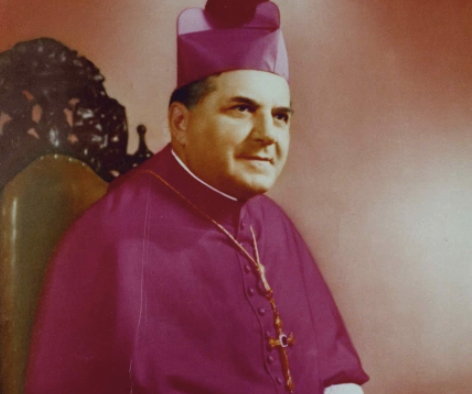
In April 1962, Archbishop Joseph Rummel of New Orleans not only denied Communion to three Catholics in his archdiocese; he went a step beyond. At 86 years of age and in ill health — he would die two years later — he formally excommunicated the three, who vehemently opposed his efforts to desegregate Catholic schools.


Please respect our Commenting Policy

New podcast: Is SBC President Ed Litton 'woke'? What is a 'conservative' stance on CRT?

New podcast: Is SBC President Ed Litton 'woke'? What is a 'conservative' stance on CRT?

It certainly was an interesting way to start a podcast (click here to tune that in) about press coverage of the 2021 national meeting of the Southern Baptist Convention.

Here’s the gist of what “Crossroads” host Todd Wilken wanted to know: If journalists were going to write that the Rev. Mike Stone — who lost his bid to become SBC president — was “right-wing” and “ultraconservative,” then why didn’t they pin “left-wing” and “ultraliberal” labels on Bishop-elect Megan Rohrer, the first trans/queer/gender fluid bishop in the Evangelical Lutheran Church of America?

Think about it this way: Stone and the new Conservative Baptist Network — many flew pirate flags — set out to attack the already conservative (theologically speaking) leadership of the Southern Baptist Convention, saying that it was not conservative ENOUGH on several issues. In other words, the goal was to move the SBC further right and away from recent pronouncements by the convention.

Meanwhile, Bishop-elect Rohrer is an open advocate of the CURRENT teachings of the ELCA. In the context of this denomination and its doctrines, Rohrer is part of the ruling class.

Now, is Rohrer “ultraliberal” in the context of American culture? How about liberal mainline Protestantism? How about other Lutheran bodies? Was Stone “ultraconservative” in the context of today’s SBC?

You can see the struggle here. Are journalists supposed to label religious leaders in the context of the wider culture or of their own flocks? I have argued that this depends: I go with the “flock” framing when discussing news events that are taking place inside a given “flock.”

As I argued the other day (#SBC21: Press wrestles with Twitter-niche labels as Southern Baptists choose a new leader), most of the religion-beat pros who gathered in Nashville tried to be very cautious when describing the various groups under the conservative SBC umbrella. The exception was the New York Times, which offered a kind of acid-flashback return to the SBC civil wars of the early 1980s.

The key was the labeling in this early headline — “Southern Baptists Narrowly Head Off Conservative Takeover” — and then this overture:


Please respect our Commenting Policy

#SBC21: Press wrestles with Twitter-niche labels as Southern Baptists choose a new leader

#SBC21: Press wrestles with Twitter-niche labels as Southern Baptists choose a new leader

If you have followed mainstream coverage of religion (and politics) in recent decades, you know that many journalists tend to make liberal use of the vague term “moderate.”

This has certainly been true of coverage of warfare inside the Southern Baptist Convention.

Since “liberal” is kind of scary, journalists have long divided the SBC into “moderate” and “conservative” camps. With very few exceptions, your typical “moderate” Southern Baptist would be a “fundamentalist” in the world of mainline Protestantism.

Thus, in the great SBC civil war of 1979 and the years thereafter, the term “moderate” came to mean Southern Baptists that mainstream journalists thought were acceptable. These were the folks in the white hats who backed abortion rights, women’s ordination and, at first, were silent or vague on LGBTQ issues. Most of all, they were the enemies of those Southern Baptists who fit under the Religious Right umbrella.

With that in mind, consider the tweaked double-decker headline on The New York Times report after the fireworks at the SBC national meetings in Nashville:

Southern Baptists Narrowly Head Off Ultraconservative Takeover

Ed Litton, a moderate pastor from Alabama, won a high-stakes presidential election with the potential to reshape the future of the country’s largest Protestant denomination.

The original headline stuck with the old-school “moderate” vs. “conservative” language.

The leadership of the Conservative Baptist Network may have been sad about their candidate, the Rev. Mike Stone of Georgia, losing the election. But they had to be elated at how the Times described this event in terms that meshed with their views on SBC life. Here is the top of that report:

NASHVILLE — In a dramatic showdown on Tuesday, Southern Baptists elected a moderate pastor from Alabama as their next president, narrowly heading off an attempted takeover by the denomination’s insurgent right wing.


Please respect our Commenting Policy

#SBC2021, CRT and sexual abuse: Are compromises possible in this complex showdown?

#SBC2021, CRT and sexual abuse: Are compromises possible in this complex showdown?

When most journalists, and thus most news consumers, think of Southern Baptists it’s highly likely that “compromise” is not one of the first words that leaps to mind.

But think about this for a moment. The current firestorm surrounding the Southern Baptist Convention’s national meetings in Nashville (tomorrow and Wednesday) centers on recent efforts by the convention’s leaders to find working compromises on two explosive issues in church life — racism and sexual abuse. In both cases, forces have pulled at convention leaders to move further to the right or to pursue more “progressive” options that would clash with realities in SBC life and polity.

Consider the hellish realities of racism and, in particular, the complex secular doctrines of “Critical Race Theory.” The SBC could praise CRT and embrace it or totally reject this school of thought. A compromise? That would stress listening to conservative Black church leaders and saying that CRT makes some points about racism in America that are valid, but that it also contains secular views of evil and race that do not mesh with traditional Christian beliefs. Hold that thought.

On sexual abuse, there are progressives who want the SBC to start some kind of national agency that would be granted powers to yank abusive clergy and congregations into line. This would clash with Baptist teachings on the autonomy of local churches. At the same time, others say SBC leaders have already gone to far while trying to create a centrist, compromise, stance — providing some guidelines for churches facing accusations of sexual abuse, as well as best-practices materials on how to help victims.

So, here is the journalism question to ponder in the next few days: Can national-level religion reporters find a way to avoid the classic two-army, left vs. right, template that dominates most news coverage of clashes of this kind? This would allow readers to see the larger picture — the attempt to find compromises between two extremes that please enough conservatives to prevent a damaging explosion in SBC life.


Please respect our Commenting Policy