Race

When covering Moore's exit from SBC power, scribes should ponder what made him 'liberal'

When covering Moore's exit from SBC power, scribes should ponder what made him 'liberal'

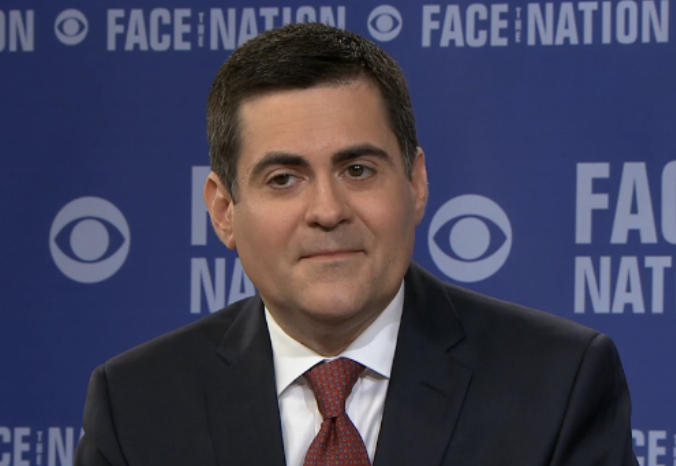
This may be a strange place to start when discussing early news coverage of the Rev. Russell Moore moving from the Ethics & Religious Liberty Commission — the crucial Southern Baptist camp in Beltway land — to what looks like a Christianity Today think tank on theology and public life.

So be it. This is where we will start — with the whole Moore is “too liberal” thing.

What does “liberal” mean in that curse that has been tossed about in Baptist social media?

Remember that one of Moore’s primary duties in Washington, D.C., has been to help Southern Baptists defend against attacks on religious liberty and the First Amendment in general. With that in mind, let me return to a question that I have been asking here at GetReligion — while focusing on the role that labels play in American journalism — for a decade or so. This is from a 2015 post:

What do you call people who are weak in their defense of free speech, weak in their defense of freedom of association and weak in their defense of religious liberty (in other words, basic First Amendment rights)?

The answer: I don't know, but it would be totally inaccurate — considering the history of American political thought — to call these people "liberals."

So what do you call someone, like Moore, who has been defending free speech, defending the freedom of association and defending religious liberty?

Wait. For. It. You can accurately call him a “liberal” in that context. In this framework, the New York Times editorial pages and, in many cases, the American Civil Liberties Union, are now — what? What is the accurate term, these days?

Note that this struggle to define “liberal” was at the heart of the celebrated clash between Bari Weiss and the Times. I would argue that it was part of the newsroom warfare that led to the ousting of Liz Spayd as the Times public editor (when she dared to ask if the newspaper was committed to fair, accurate coverage of half of America). It’s at the heart of the growing tensions between gay-rights icon Andrew Sullivan and the LGBTQ establishment. I could go on and on.

But back to another cluster of issues linked to Moore.

Please respect our Commenting Policy

The U.S. Census story and its hooks for religion news (plus a personal note about Rachel Zoll)

The U.S. Census story and its hooks for religion news (plus a personal note about Rachel Zoll)

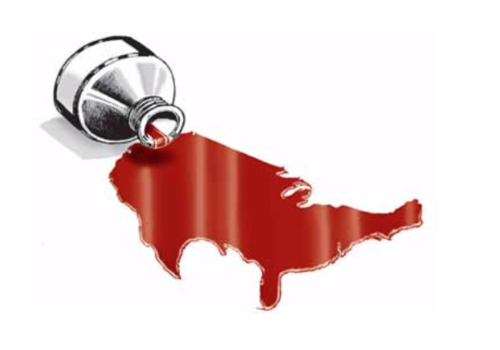
The first round of 2020 U.S. Census data (with much more to come) is big news as states gain and lose seats in the U.S. House and politicos enter the wild decennial joust to gerrymander federal and state district lines to their advantage.

But here's another journalistic thought: What does the Census mean for religion?

Tony Carnes of the "A Journey Through NYC Religions" website provides an early example, analyzing possible implications for New York City that other writers could emulate for their own cities, towns or regions.

Editor Carnes (disclosure: a personal friend) is a professional sociologist leading a team that has spent years tracking religion developments in Gotham, notably at the neighborhood level. Despite the town's secular image, Carnes and company have documented that, starting in the late 1970s, thousands of new churches, synagogues, mosques and temples have been built. Such activity was continuing until the COVID-19 pandemic struck.

Carnes counts the populations moving in and moving out from the American Community Survey between 2010 and 2014 as updated by Census numbers for 2018. This shows a city gradually becoming less African-American (population down 96,000) and Hispanic (down 50,000). The gainers are non-Hispanic Whites (up 200,000) and Asians (up 97,000). We'll soon know if these trends continued in 2020.

Carnes calls that "a startling change in the racial/ethnic profile of the city, and it is also found in other cities in the United States."


Please respect our Commenting Policy

Movie mogul Tyler Perry preaches tolerance to the woke flock at Oscars 2021

Movie mogul Tyler Perry preaches tolerance to the woke flock at Oscars 2021

It was just like one of those inspiring Tyler Perry movie scenes when a believer does the right thing and helps a struggler have a come-to-Jesus epiphany.

Perry was walking to his car after some Los Angeles production work when he was approached by homeless woman.

"I wish I had time to talk about judgment," said Tyler, after receiving the Jean Hersholt Humanitarian Award during the 93rd Academy Awards. "Anyway, I reach in my pocket and I'm about to give her the money and she says: 'Excuse me sir, do you have any shoes?'

"It stopped me cold because I remember being homeless and having one pair of shoes," he added. "So, I took her into the studio. … We're standing there [in] wardrobe and we find her these shoes and I help her put them on. I'm waiting for her to look up and all this time she's looking down. She finally looks up and she's got tears in her eyes. She says: 'Thank you Jesus. My feet are off the ground.' "

Perry, of course, is a movie mogul who has built a 330-acre studio facility in Atlanta used for all kinds of work, including parts of the Marvel epic "The Black Panther." He has created many profitable films of this own, such as "Diary of a Mad Black Woman," "The Family that Preys" and "Madea's Family Reunion," part of a series in which Perry, in drag, plays a pistol-packing, Bible-quoting matriarch at the heart of Black-family melodramas.

It was logical for Perry to receive the Jean Hersholt award, in part because of his rags-to-riches life and his efforts to help churches and nonprofits help the needy. At the same time, it's unlikely that he could ever win a regular Oscar statue since critics and Hollywood elites have long mocked his movies as soapy parables crafted to appeal to ordinary church folks -- Black and White. It isn't unusual, in the final act of Perry movies, for weeping sinners to pull their lives together during Gospel-music altar calls.

Thus, Perry's sermonette was an unusual twist in an Oscar rite packed with political messages and wins by films that few American moviegoers saw or even knew existed.


Please respect our Commenting Policy

New podcast: Should religious leaders and the cultural right applaud lousy Oscar ratings?

New podcast: Should religious leaders and the cultural right applaud lousy Oscar ratings?

Pick a headline, just about any Oscar headline.

The ratings for the 2021 Academy Awards were bad. How bad? Here’s the take from the world-weary folks at Entertainment Weekly: “Oscars hit another historic low in ratings.”

The New York Post has been known to produce blunt headlines. Thus: “Oscar ratings drop to an all-time low with unwatchable show.”

But what matters, of course, is what runs in prestige settings such as The New York Times. The big business-desk headline there provided some extra, rather acidic, context:

Oscars Ratings Plummet, With Fewer Than 10 Million Tuning In

Sunday night’s pandemic-restricted telecast drew 58 percent fewer viewers than last year’s record low.

Wait, there’s more bad news:

Among adults 18 to 49, the demographic that many advertisers pay a premium to reach, the Oscars suffered an even steeper 64 percent decline, according to preliminary data from Nielsen. …

[The] Oscars have been on a slide since 1998, when 57.2 million people tuned in to see “Titanic” sweep to best-picture victory.

What’s the religion-news hook in this story, other than the semi-religious role that the Oscar rites play in the cult of Hollywood? That was the subject of this week’s “Crossroads” podcast. Click here to tune that in or head over to Apple Podcasts to sign up for a weekly feed.

Let’s walk through this.


Please respect our Commenting Policy

Plug-In: Murder convictions in death of George Floyd -- why faith angles were important

Plug-In: Murder convictions in death of George Floyd -- why faith angles were important

Guilty. Guilty. Guilty.

This week’s big news — former Minneapolis police officer Derek Chauvin’s conviction on all counts in George Floyd’s murder — is a story about police brutality. And racial justice. And yes, the power of faith.

USA Today captures this powerful scene:

George Floyd's brother Philonise Floyd was sitting with his head bowed and his hands folded in front of his face in prayer before the verdict was read. As each verdict was read, his hands increasingly shook and his head nodded up and down.

"I was just praying they would find him guilty. As an African American, we usually never get justice," Floyd said.

The exceptional coverage by the Minneapolis Star-Tribune’s Chao Xiong and Paul Walsh contains this important highlight:

As news spread of the verdicts — guilty on all counts — social media sites reposted the Minneapolis Police Department's initial report that Floyd died of a medical event at the scene, an assertion that might never have been contradicted so forcefully were it not for a teenage girl, Darnella Frazier, walking by and recording Floyd's death last May 25 on her cellphone and posting it for the world to see.

"I just cried so hard. This last hour my heart was beating so fast, I was so anxious, anxiety [busting] through the roof," Frazier, who was 17 at the time, posted on Facebook after the verdict. "But to know GUILTY ON ALL 3 CHARGES !!! THANK YOU GOD THANK YOU … George Floyd we did it!! Justice has been served."

The Los Angeles Times’ Kurtis Lee recounts this scene:


Please respect our Commenting Policy

Thinking with two key Southern Baptists: Concerning those scary Gallup Poll numbers

Thinking with two key Southern Baptists: Concerning those scary Gallup Poll numbers

Let’s fly up to high altitude for a moment, before reading two interesting think pieces about those Gallup Poll numbers — “U.S. Church Membership Falls Below Majority for First Time” — that launched a kazillion headlines.

If you’ve been paying attention to the state of Christianity in America for the past 50 years or so, you’re aware of several broad trends.

* In terms of demographics, the world of oldline Protestantism — the “Seven Sisters” churches — is in freefall, with these aging denominations losing around 50% of their members after peaking in the 1960s.

* Catholic churches have grown, kind of, in part due to rising numbers of Latinos in the pews. Worship numbers are down. New vocations for priests and nuns are way down (but it’s fascinating to note the cases in which numbers are steady, or rising). Mass attendance and birth-rate trends are crucial.

* Evangelical Protestants surged, especially in the Sunbelt, filling much of the public-square void created by mainline decline. Growth was especially strong with charismatics and Pentecostals — Black and White. In the past decade or two, the rapid growth of nondenominational or even post-denominational churches and networks has hurt mainstream evangelicalism, especially the Southern Baptist Convention. Most evangelical numbers have stalled or gone into a slower decline.

Summary: Churches are growing or holding steady if members are (a) having children, (b) raising children in the faith, (c) retaining the loyalty of those children into the next generation and (d) winning converts (that final point has more to do with doctrine than politics).

Notice that the words “Donald Trump” are missing. Like I said, this is a view from the heavens.

With all that in mind, let’s look at two essays: “Why American Church Membership Is Plummeting,” by historian Thomas Kidd, care of The Gospel Coalition website, and “Why the Church Is Losing the Next Generation,” in the latest newsletter by the Rev. Russell Moore of the SBC’s Ethics and Religious Liberty Commission.

First, here are two crucial chunks of the Kidd essay, which opens — logically enough — with a discussion of the weaknesses of polling data.

… (A)s I have suggested before, we should take religion polls with a grain of salt. … They usually tell us about some trends on the religious landscape, to be sure, but they are almost always open to widely varying interpretation. Polls are at their best when there is little wiggle room for interpretation in the data.


Please respect our Commenting Policy

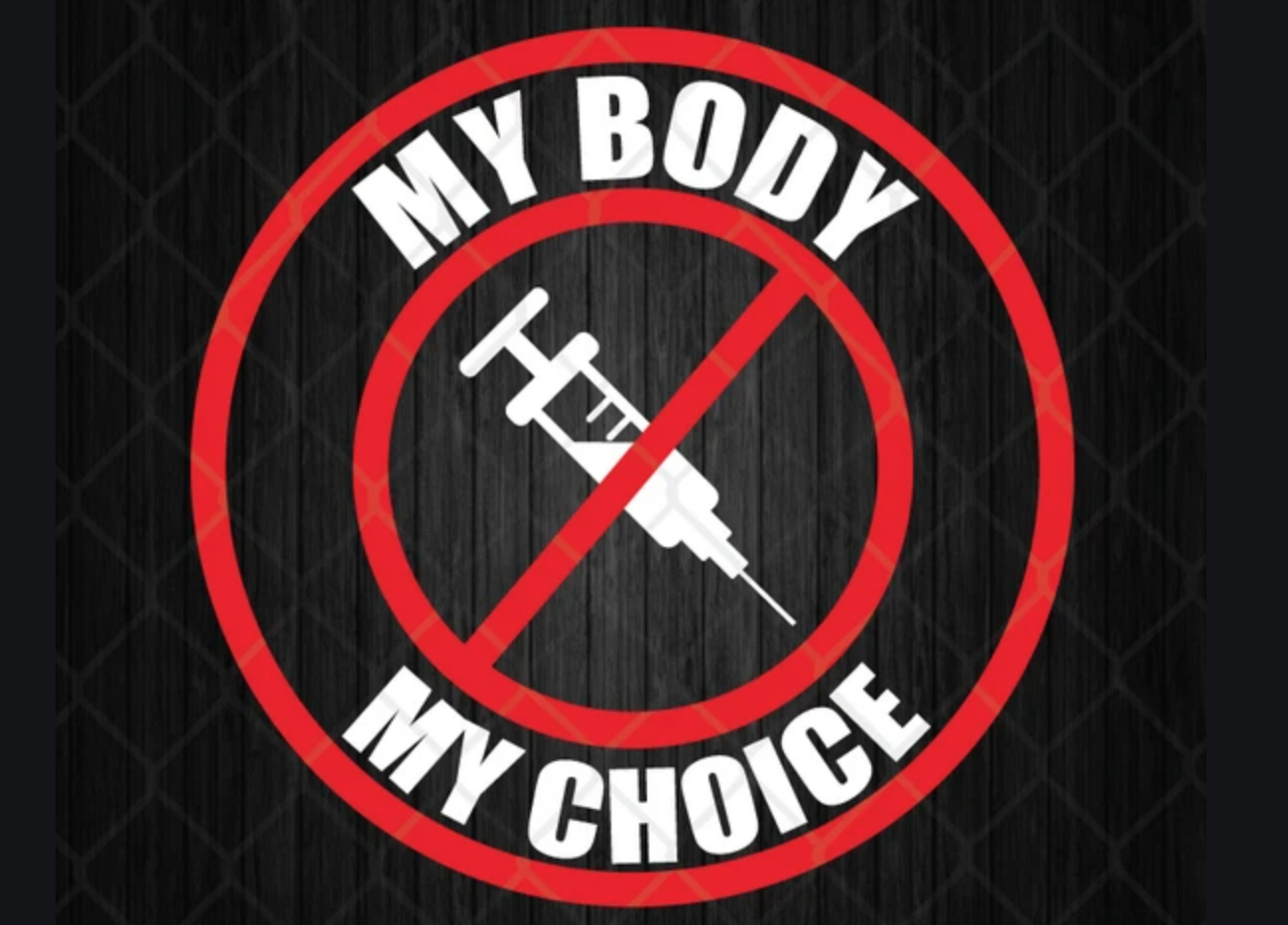
Lots of Mississippi folks don't want COVID-19 vaccines: They're white evangelicals, right?

Lots of Mississippi folks don't want COVID-19 vaccines: They're white evangelicals, right?

One of the snarkiest things an editor can say to a reporter — after reading a story that has been turned in for editing — is this: You really need to read your own newspaper.

Most of the time, this means that a reporter has produced a story about a topic the newspaper has already covered, yet the new story failed to engage with some of the previously reported information. Maybe the new material even clashes with an earlier story. That may be good, but the earlier reporting still needs to be acknowledged.

I thought about this while reading a New York Times piece that ran with this double-decker headline:

Why Mississippi Has Few Takers for 73,000 Covid Shots

The good news: There are more shots available. The challenge is getting people to take them.

Now, what I’m about to say may sound strange, in light of what I argued in last week’s “Crossroads” podcast, the one linked to the post with this headline: “New podcast: Familiar splits among white 'evangelicals,' only now they're about vaccines.

That post/podcast focused, in large part, on a recent Times piece that claimed believers inside the dreaded white-evangelical monolith were America’s biggest pandemic problem, in terms of flyover-country people who are refusing to get their COVID-19 vaccine shots. A quotation linked to that thesis said:

“If we can’t get a significant number of white evangelicals to come around on this, the pandemic is going to last much longer than it needs to,” said Jamie Aten, founder and executive director of the Humanitarian Disaster Institute at Wheaton College, an evangelical institution in Illinois.

The story cited a poll indicating that 45% of white evangelicals planned to refuse their shots, while 55% planned to cooperate with anti-pandemic programs. I noted that these numbers were solid evidence of a DIVISION inside white evangelicalism, not a sign of unity in opposition to vaccines.

What is the big problem in Mississippi, where there are lots of empty slots on the lists where people sign up for appointments to get shots?


Please respect our Commenting Policy

What is news? Apparently, strangers shooting at nuns in an American convent isn't news

What is news? Apparently, strangers shooting at nuns in an American convent isn't news

It’s a question journalists hear all the time from mystified readers: “What is ‘news’?”

At least, that was a question we used to hear when newspapers tried to appeal to all kinds of people in a community, including those on both sides of common cultural and political divisions.

Why are some stories big local, regional and national news stories, while others are not?

Years ago, a Charlotte megachurch pastor asked me why it was news when a downtown Episcopal parish replaced a window, but it wasn’t news when his church built a multi-million-dollar facility. Well, I explained, there was controversy about changing that window because it was part of a historic sanctuary. What I didn’t say is that editors tend to think that what happens downtown is, by definition, more important than what happens in suburbs.

I raise this issue because of events that unfolding in rural Missouri. But before we get to that, let me ask a few questions. Would it be local, regional and even national news if strangers kept shooting rifles at a:

* Mosque in the Bible Belt?

* Catholic parish with an LGBTQ+ rainbow flag?

* Baptist church at the forefront of local #BlackLivesMatter demonstrations?

Clearly, the answer would “yes” in all three cases, especially if that Baptist church was in Georgia.

Now let’s look at an example of a story that is NOT news, care of the Catholic News site called The Pillar: “Missouri nuns targeted in multiple ‘extremely disturbing’ shooting incidents, motive unknown.” Here is the overture on this recent story:

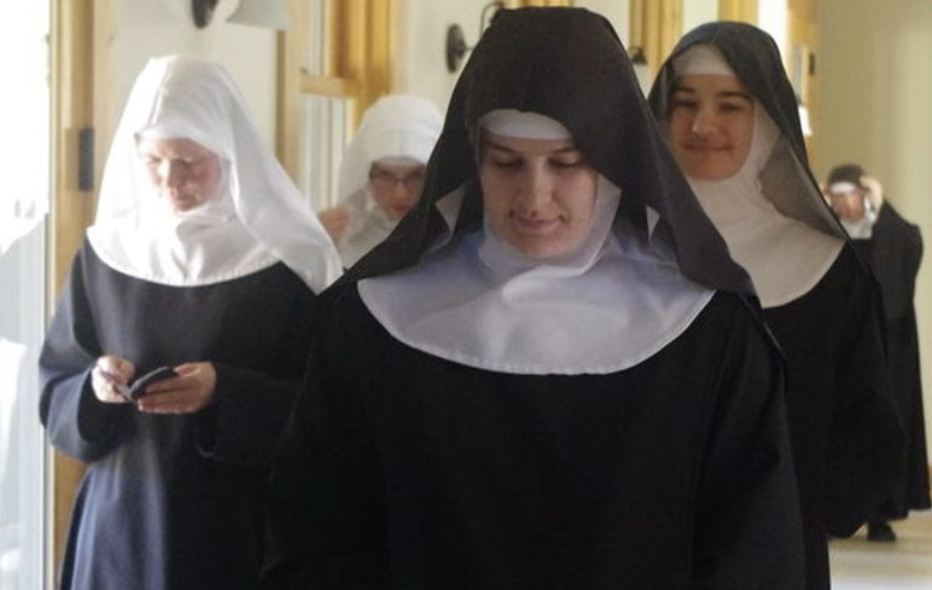
Shots have been fired at a rural Missouri abbey of nuns on several occasions this Lent, the sisters have said, with a bullet from one shooting lodging in the bedroom wall of the order’s superior. The nuns are fundraising for a security fence, while local law enforcement is providing extra security and investigating the shootings.


Please respect our Commenting Policy

Plug-In: Even with ailing digit, Bobby Ross, Jr., manages to cut and paste week's top stories

Plug-In: Even with ailing digit, Bobby Ross, Jr., manages to cut and paste week's top stories

Power Up: The Week’s Best Reads

1. Evangelical leaders are encouraging their congregants — many of whom are skeptical — to get the vaccine.

* Why "the pathway to ending the pandemic runs through the evangelical church" (by Kathryn Watson, CBS News)

* Love Your Neighbor' And Get The Shot: White Evangelical Leaders Push COVID Vaccines (by Sarah McCammon, NPR)

* White Evangelical Resistance Is Obstacle in Vaccination Effort (by Elizabeth Dias and Ruth Graham, New York Times)

* Vaccine skepticism runs deep among white evangelicals in US (by David Crary, Associated Press)

2. A Nashville church is planting a community garden to survive after the building was destroyed in tornadoes last year.

* A tornado destroyed their church. Now, faith takes root in a garden planted to serve the community (by Holly Meyer, The Tennessean)

* After 13 months apart, Easter service brings Watson Grove church members together again (by Cassandra Stephenson, The Tennessean)


Please respect our Commenting Policy