Race

New podcast: Rising tensions between religious liberty, pronoun wars, academic freedom, etc.

New podcast: Rising tensions between religious liberty, pronoun wars, academic freedom, etc.

My name is Terry Lee Mattingly. However, when I converted to Eastern Orthodoxy, I took the name of a patron saint — St. Brendan the Navigator.

Let’s pretend that I am young and attending a state university right now and that I have decided to require professors to address me as “Holy St. Brendan the Navigator.” It is, after all, my name. While we are at it, let’s say that all of the Catholic and Orthodox students take the same tack, if their saint names are different then the names they were given at birth.

Some professors would wince, but go along with this. But let’s say that one professor is very secular, a Marxist perhaps, and he refuses — stating that my request violates his personal convictions. I threaten to sue, along with other students in the same situation. Game on.

How would the leaders of this taxpayer-funded public university respond? Would this be treated as a natural request on my part, with the understanding that any refusal would attack my sense of identity? What if I requested that my university ID card state my name as “St. Brendan the Navigator”?

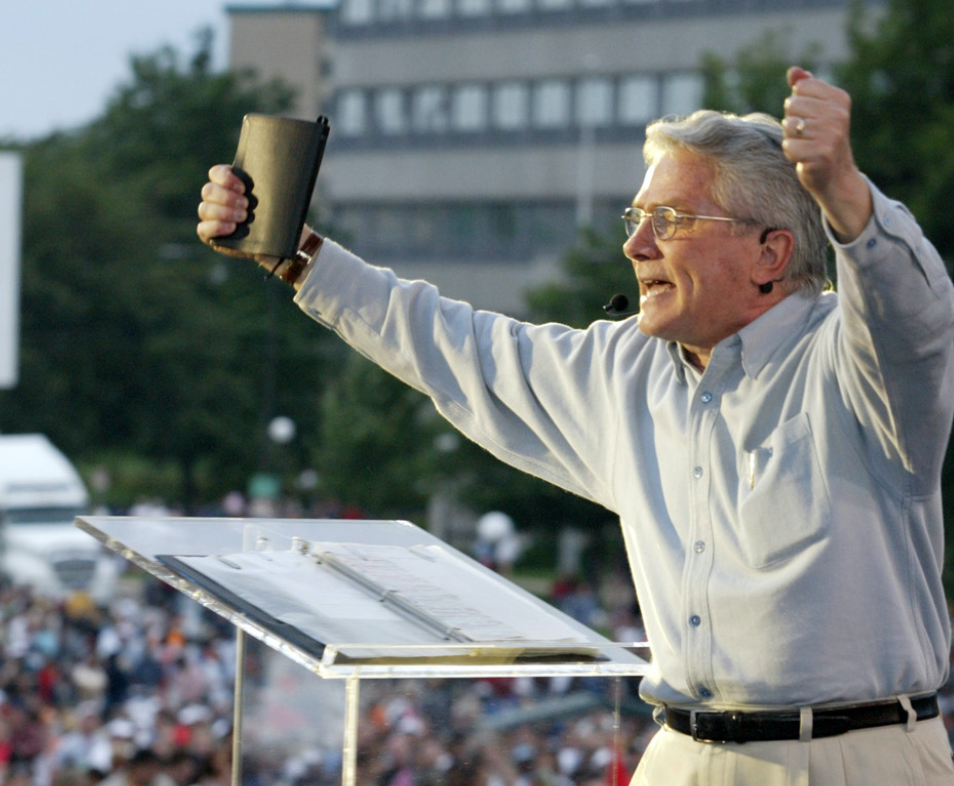
It’s a crazy question, of course. But it would — at a state university — raise issues about the First Amendment (free speech and religious liberty) and academic freedom. These questions were at the heart of this week’s “Crossroads” podcast discussion. Click here to tune that in. [This episode also includes a bizarre gaffe when — I’m wrestling with a painful medical condition right now — I messed up my own saint’s name, mixing St. Brendan’s title with that of St. Nicholas of Myra. Listen for it.]

At the heart of the podcast discussion is a timely question: Can the state force the professor to recognize and even affirm — with public speech — beliefs that violate his conscience?

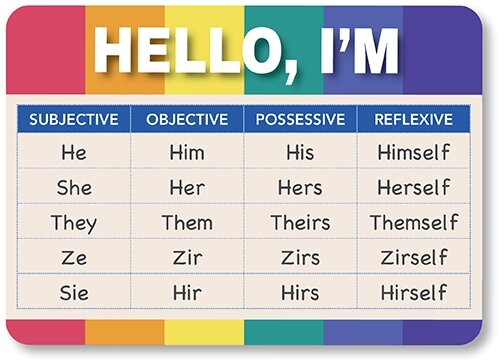
Now, as readers probably guessed right from the get go, this podcast focuses on another matter of personal identity — the degree to which professors can be forced to cooperate with students who chose to use any of the myriad and evolving gender pronouns linked to the LGBTQ+ movement. We looked at a Washington Post story with this headline: “A professor was reprimanded for refusing to use a transgender student’s pronouns. A court says he can sue.

Now, when these clashes take part in PRIVATE schools — left or right, religious or secular — it’s clear (pending passage of the Equality Act) that these doctrinally defined institutions have a right to create belief and lifestyle covenants that settle issues of this kind. Students can chose to affirm these beliefs, freely signing on the dotted line, or go to school somewhere else.

But what about state schools built and operated with tax dollars?


Please respect our Commenting Policy

Plug-in: Double standard? Treatment of Boulder suspect's faith raises tough question

Plug-in: Double standard? Treatment of Boulder suspect's faith raises tough question

Another week.

Another mass shooting.

Another 21-year-old suspect.

Last week's news coverage of Robert Aaron Long, charged in the deaths of eight people — including six women of Asian descent — at three Atlanta-area spas, focused on his ties to a Southern Baptist congregation.

Long's arrest sparked a barrage of stories and columns on evangelical theology, racism and "purity culture," including a Religion News Service op-ed headlined "Blaming Christians for the Atlanta shootings isn't persecution, it's prosecution."

On the other hand, Ahmad Al Aliwi Alissa's Muslim background has figured less prominently — so far — in reporting on the suspect in Monday's massacre that claimed 10 lives at a King Soopers grocery store in Boulder, Colorado.

In profiling the suspect, some major news organizations haven’t mentioned his religious affiliation at all. RNS has emphasized concerns that Alissa's arrest might ramp up "Islamophobia" and spark hate crimes as Muslims gather in congregational settings. (It’s a familiar storyline, going at least back to 9/11.)

"I think there definitely is a double standard," said Warren Smith, an evangelical who serves as president of the independent charitable giving watchdog MinistryWatch.com.

Smith, a longtime investigative reporter, offers this advice for covering a mass shooting: Stick to the facts. Avoid speculating on the gunman’s motives. Focus on the victims and the helpers.

"The perpetrator’s story will have an opportunity to come out in the legal process,” Smith said. “Let coverage of that process be the place where the perpetrator’s story is told factually, dispassionately, empathetically."

But the facts, not a double standard, are the reason for the different emphases in the Georgia and Colorado cases, said a journalist friend who is reporting on the Boulder massacre.

"The big difference to me is that police investigators brought up the 'sex addiction' question quickly and directly in Atlanta, which led people to seek where that guilt came came, which led to religious background," my friend said.


Please respect our Commenting Policy

New podcast: Tensions with NCAA and Christian schools? That issue will not go away

New podcast: Tensions with NCAA and Christian schools? That issue will not go away

A decade or so ago, I had a chance to speak to journalism students at Oral Roberts University. My strongest memories — other than visions of the shiny modernist architecture — center on an unusual moment during a campus chapel service.

There’s nothing unusual about a Christian university having a full-house chapel service. There’s nothing unusual about a student-led praise-rock band blasting out Contemporary Christian Music songs that inspired lots of people to do their share of swaying and dancing.

But here’s the memory. My visit to the campus took place during a meeting of ORU’s board of trustees, who sat together near the front of the auditorium during chapel. Looking down from the balcony, I was surprised to see that (a) many of the trustees were rather young, (b) a much higher than normal number of them were Black or Latino and (c) several were enthusiastically dancing with the students, including at least one in an aisle (the current board doesn’t look quite as young).

All of this was a reminder that much of the racial and cultural diversity at ORU — a major factor in campus life — was and is linked to the school’s roots in charismatic and Pentecostal Christianity, a movement that as been highly multiracial since its birth. Founder Oral Roberts was a famous, and often controversial, leader among charismatic Christians, even though, as an adult, he aligned with the United Methodist Church (which is more conservative in Oklahoma than, let’s say, parts of Illinois and other blue zip codes).

I bring this up because of a recent USA TodayFor the Win” column that served as the hook for this week’s “Crossroads” podcast (click here to tune that in). Here’s the headline for that piece, which was written by the “race and inclusion editor” at USA Today sports: “Oral Roberts University isn't the feel good March Madness story we need.” Here is a crucial passage:

… As the spotlight grows on Oral Roberts and it reaps the good will, publicity and revenue of a national title run, the university’s deeply bigoted anti-LGBTQ+ polices can’t and shouldn’t be ignored.

Founded by televangelist Oral Roberts in 1963, the Christian school upholds the values and beliefs of its fundamentalist namesake, making it not just a relic of the past, but wholly incompatible with the NCAA’s own stated values of equality and inclusion.


Please respect our Commenting Policy

Keeping up with the times: If schools nix 'Mom and Dad,' is mainstream journalism next?

Keeping up with the times: If schools nix 'Mom and Dad,' is mainstream journalism next?

Reporters and editors want to be sensitive to personal and minority-group concerns alongside their professional duty to be clear, accurate and non-partisan.

How to handle this balancing act amid the West's fast-evolving verbiage to accommodate feminist or LGBTQ+ advocates? The media need to consider that proposed prohibitions now go well beyond replacement of "binary" pronouns with the singular usage of they-them-their (which breaks strict grammar in English and creates ambiguity on antecedents).

Grace Church School in lower Manhattan (sticker price $57,330 per year) provides a revealing rundown on new expectations for usage and diction in its "Inclusive Language Guide," enacted last September. It says e.g. that instead of "boys and girls," school personnel should now say "people, folks, friends," or specifics like "readers" or "mathematicians." Similarly, "husband, wife, boyfriend, girlfriend" give way to "spouse / partner / significant other." The Grace community is asked to say "grown-ups, folks or family" and shun the formerly acceptable "parents" or "Mom and Dad."

Some Moms and Dads were apparently upset upon learning about the guide when posted online in January. School leaders defended their new "inclusive" regimen but hastened to explain that wordings are "suggested," not "mandatory," and apply to the adult faculty and staff, not students.

The 12-page Grace guide, posted here under "Antiracism Resources" at is by no means unique in concept. It draws from such resources as the 2018 "language values" policy at New York City's Bank Street College of Education, which media policy-makers need to be monitoring.

The key disputes involve LGBTQ+ expectations and especially regarding gender identity and fluidity. Grace opposes "heteronormativity," that is, "the assumption that cisgender is the 'norm' or standard and transgender is the outlier or an abnormality." (Editors should ponder the "cisgender" neologism for labeling persons whose gender identity or gender expression matches their biology.)

"Language is constantly evolving," Grace correctly states, and the longstanding term "homosexual" should be eliminated. "More appropriate" designations include "queer,” formerly a derogatory equivalent of the N-word — but now rehabilitated as individuals' deliberate "political identification."


Please respect our Commenting Policy

Wait a minute: How is a sermon on the Second Coming linked to shootings in Atlanta?

Wait a minute: How is a sermon on the Second Coming linked to shootings in Atlanta?

The hellish shootings in Atlanta have unleashed fierce debates combining questions about sex, sin, salvation, repentance, race and various combinations of all of those hot-button topics.

The debates center, of course, of statements by Robert Aaron Long — the suspect in the killing of eight people, including six Asian women — and his complicated and troubled history as a young member of Crabapple First Baptist Church in Milton, Ga., a Southern Baptist congregation.

Eventually, court testimony will provide hard facts about this case. At this point, all the evidence is that Long was raised as a conservative Christian, was active in his church youth group and that he abandoned his faith and then, quite literally, all hell broke loose in his personal and family life. Long has said that a “sex addiction” drove him to frequent massage parlors and his family, apparently, sent him to a Christian counseling center for treatment. His conservative Christian parents “threw him out of the house” the night before the shootings, according to reports in the Washington Post and elsewhere.

Like I said, on-the-record details will emerge. Right now, I want to raise a journalism question or two about coverage of the SBC congregation that is involved in this story. What do we know about this church and, well, how do we know what we know? One Post story notes the following, quoting a solid, factual source:

The evangelical congregation’s minister, the Rev. Jerry Dockery, is an energetic preacher who advocated for a socially conservative brand of Christianity that, as the church bylaws put it, views “adultery, fornication, homosexuality, bisexual conduct, bestiality, incest, polygamy, pedophilia, pornography, or any attempt to change one’s sex, or disagreement with one’s biological sex” as “sinful and offensive to God.”

This isn’t shocking material, if you know anything about traditional forms of Christianity. It would be easy to find specific quotations from recent Catholic popes — including Pope Francis — condemning behaviors such as these, and more.

This congregation is also connected to several doctrinally conservative organizations or movements linked to SBC life, such as the Founders Ministries. All of this leads me to a specific sermon reference discussing the end of the world and Christian teachings about the second coming of Jesus Christ. Oh, and if you stop and think about it, this includes the church’s pastor — indirectly — offering a warning about Christians worshipping political leaders such as Donald Trump.

Say what?


Please respect our Commenting Policy

Plug-in: Debates about race, religion follow shooting of eight, Including six Asian women

Plug-in: Debates about race, religion follow shooting of eight, Including six Asian women

Was race a motive in Tuesday’s killings of eight people — including six Asian women — at three Atlanta-area massage parlors?

Was religion?

These are among the questions after the arrest of a White suspect with ties to a Southern Baptist church.

Despite police downplaying the role of race, the shootings have stirred national fear amid “reported record numbers of hate crimes and incidents of harassment” against Asian Americans, note the Los Angeles’ Times’ Jaweed Kaleem and Richard Read.

The first details concerning 21-year-old suspect Robert Aaron Long’s faith background were vague, with the Daily Beast indicating that “he was big into religion.”

But then Washington Post religion writer Sarah Pulliam Bailey interviewed his youth pastor:

As a teenager, Long would stack chairs and clean floors at Crabapple First Baptist Church in Milton, Ga., said Brett Cottrell, who led the youth ministry at Crabapple from 2008 to 2017. Long’s father was considered an important lay leader in the church, Cottrell said, and they would attend morning and evening activities on Sundays, as well as meetings on Wednesday evenings and mission trips.

“There’s nothing that I’m aware of at Crabapple that would give approval to this,” Cottrell said in an interview, referring to the shootings. “I’m assuming it’s as shocking and numbing to them as it has been to me.”

Today, a front-page story by a team of New York Times reporters, including religion writer Ruth Graham, focuses on Long’s battle against a “self-described sex addiction”:


Please respect our Commenting Policy

Luis Palau: New York Times dug deeper than the 'Billy Graham of Latin America' label

Luis Palau: New York Times dug deeper than the 'Billy Graham of Latin America' label

It was the kind of question that general-assignment television reporters asked Billy Graham, since they didn’t realize that it had become a cliche: Who will be the “next Billy Graham?”

I heard Graham answer this question several times (and discussed it in depth with him in a 1987 one-on-one interview) and his response almost always included three key points.

First of all, he would say that he really didn’t know how or why he became “Billy Graham,” as in the world’s most famous evangelist (click here for his famous “turtle on a fencepost analogy). Second, Graham thought it was strange that reporters seemed to assume that he would know who the “next Billy Graham” would be. And finally, why did evangelists in other parts of the world need to be compared to him?

Take Luis Palau, for example. Graham said he didn’t consider him the “Billy Graham” of Latin America or anywhere else. Luis Palau, Graham told me, was Luis Palau, and that was who God wanted him to be.

I bring this subject up, of course, because of the double-decker headline that ran atop the recent New York Times obituary for this singular figure in modern evangelical history: “

Luis Palau, the ‘Billy Graham of Latin America,’ Dies at 86

He rose from preaching on street corners in Argentina to ministering to millions around the world, then focused his ministry on liberal corners of the U.S.

I’m not blaming the Times for using that image, since it appeared — to one degree or another — in almost every major news feature about his passing. In fact, the key to the Times feature is that dug deeper than that cliche and showed why Palau was a major player, in his own right, in global evangelicalism.

Still, everyone knows where this story will begin. But note the transition in this key summary passage near the top of the Times obit:

Though his headquarters were in Oregon, Mr. Palau was often called “the Billy Graham of Latin America.” He addressed that region’s 120 million evangelicals through three daily radio shows (two in Spanish, one in English), shelves of Spanish-language books and scores of revival crusades, in which he might spend a week, and millions of dollars, preaching in a single city. The Luis Palau Association estimates that he preached to 30 million people in 75 countries.


Please respect our Commenting Policy

Spot the theology issue: Top hymns of a year in which COVID-19 touched everything

Spot the theology issue: Top hymns of a year in which COVID-19 touched everything

It's a hymn that the faithful start singing whenever a Baptist church organist plays the opening chords -- because everyone knows it by heart.

All together now: "When peace like a river attendeth my way. When sorrows like sea billows roll. Whatever my lot, Thou hast taught me to say. … It is well, it is well, with my soul."

Chicago attorney Horatio Spafford wrote those words after losing his son to scarlet fever and then, a few years later, all four of his daughters in an 1873 shipwreck. His wife, Anna, survived and her telegram home from England began: "Saved alone. What shall I do?"

No one should be surprised that worship leaders frequently turned to "It Is Well With My Soul" as their people wrestled with the coronavirus pandemic, said the Rev. Roger O'Neel, who teaches in the worship and music program at Cedarville University in Ohio.

"People were feeling their way in 2020," he said. "It wasn't just the pandemic and people being locked down worshipping in (online) streamed services. We were also facing all the bitter political conflicts in our nation and the racial divisions that we were experiencing. …

"People were trying to find hymns that would speak to all of that, to the pain that everyone felt last year."

Faithlife, a Bellingham, Wash., company that publishes online worship and Bible study tools, recently released a report covering 2020 trends spotted in its Proclaim software. "It Is Well With My Soul" topped the hymns list, with usage increasing 68% after the pandemic hit.

The classic hymn "Great Is They Faithfulness" came next, with a 64% increase. It begins: "Great is Thy faithfulness, O God my Father, there is no shadow of turning with Thee; Thou changest not, Thy compassions, they fail not. As Thou hast been, Thou forever wilt be. Great is Thy faithfulness! … Morning by morning new mercies I see; All I have needed Thy hand hath provided -- great is Thy faithfulness, Lord, unto me."


Please respect our Commenting Policy

Hey journalists: Can you name three or more Ramadan news angles linked to COVID-19 vaccines?

Hey journalists: Can you name three or more Ramadan news angles linked to COVID-19 vaccines?

I don’t mind admitting it. I thought I had read just about every religion-angle COVID-19 vaccine story that there was to read (and I say that just before heading out the door to drive deep into the Cumberland Mountains to get shot No. 1 at a small-county health clinic).

The Detroit Free Press published a long, long story the other day that certainly proved me wrong on that. The headline: “Vaccine-mobile brings COVID-19 shots to Dearborn mosque, helping to convince the hesitant.

The key to the story was mentioned in an email from the GetReligion reader who (thank you readers who take the time to do this kind of thing) sent us the URL for this story. Here is part of her note:

What I really liked about this article was the way it presented vaccine concerns of the Metro Detroit Muslim community in the context of how the mosque met those concerns. Some of the concerns are unique to the Muslim community (such as the relationship of vaccination to the Ramadan fast) and others are more broad, but the article shows how this religious community is addressing them. The article quotes a variety of actual community members, which I always appreciate.

The Ramadan angle?

That’s the connection that I admit had not occurred to me. The key is explaining the specific link between the strict rules of the Ramadan fast and the simple act of getting a shot of vaccine. We are not talking, at this point, about conspiracy theory talk about the vaccine formulas containing traces of pork.

Here is the crucial part of the story, quoting Mirvat Kadouh, vice chair of the Islamic Center of America's Board of Trustees.

"We are trying to vaccinate as many people as we can before Ramadan," Kadouh said early Monday morning, spreading a plastic tablecloth over a folding table in a large conference room, where the Islamic Center's first COVID-19 vaccine clinic was about to begin.


Please respect our Commenting Policy