Race

Why are Latinos veering into GOP? It's all about money, money, money (and zero faith)

Why are Latinos veering into GOP? It's all about money, money, money (and zero faith)

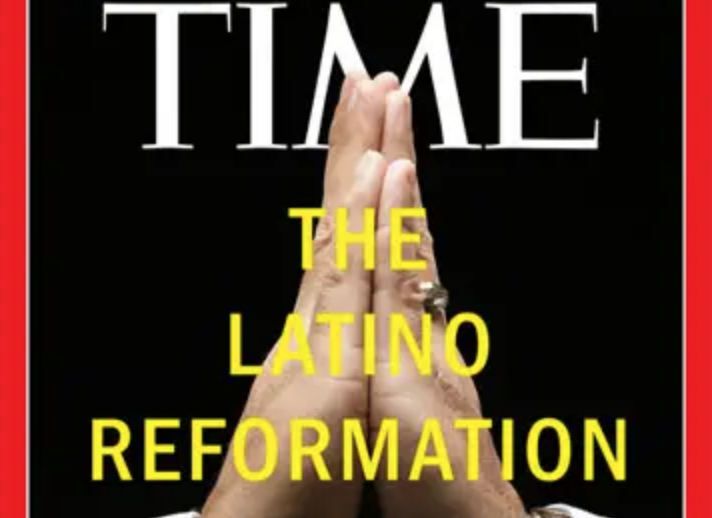
I know, I know. If you have read GetReligion for the past four-plus years, you know that we’re convinced that the rise of the Latino evangelical voter (often paired with traditional Catholic Latino voters) is an emerging story in American public life.

Part of this story is the rise of Pentecostalism in the Spanish-speaking world (classic Pew Research Center study here) and another part is linked to the defense of Latino family values (to use a loaded phrase).

There’s much more to this story than the role these voters played in Donald Trump’s surprising (to some) showings in some Florida and Texas zip codes. Click here (“New York Times listens to Latino evangelicals: 'Politically homeless' voters pushed toward Trump”) and then here (“Concerning Hispanic evangelicals, secret Trump voters and white evangelical women in Georgia”).

To be blunt about it, it appears that political-desk reporters are struggling with this issue, in part because it undercuts some themes in long-predicted demographic trends backing Democrats. You can see that in the recent, oh-so-predictable New York Times story that ran with this massive double-decker headline:

A Vexing Question for Democrats: What Drives Latino Men to Republicans?

Several voters said values like individual responsibility and providing for one’s family, and a desire for lower taxes and financial stability, led them to reject a party embraced by their parents.

The story is getting some Twitter attention because of this magisterial statement of woke Times doctrine:

Some of the frustrations voiced by Hispanic Republican men are stoked by misinformation, including conspiracy theories claiming that the “deep state” took over during the Trump administration and a belief that Black Lives Matter protests caused widespread violence.

But it’s more important to focus on the bigger picture, which is that this trend is all about Latino men wanting to get rich by being part of the American dream. The overture is long, but essential:

Please respect our Commenting Policy

That painful issue of SBC culture -- is 'Southern' more important than 'Baptist'?

That painful issue of SBC culture -- is 'Southern' more important than 'Baptist'?

When megachurch pastor J.D. Greear became the 62nd president of the Southern Baptist Convention he saw all kinds of statistics headed in all kinds of directions.

After decades of growth, America's largest Protestant flock faced steady decline as many members joined thriving nondenominational evangelical and charismatic churches. Ominously, baptism statistics were falling even faster. On the other side of the 2018 ledger, worship attendance and giving to SBC's national Cooperative Program budget were holding strong.

But one set of numbers caught Greear's attention, he told the SBC's executive committee, as he nears the end of his three years in office.

"Listen, I made diversity … one of my goals coming into this office, not because it's cool, or trendy, or woke," he said. "It's because in the last 30 years the largest growth we've seen in the Southern Baptist Convention has been among Black, Latino and Asian congregations. They are a huge part of our future. … Praise God, brothers and sisters."

Greear's blunt, emotional address came during a Feb. 22 meeting in Nashville in which SBC leaders ousted two churches for "affirming homosexual behavior" by accepting married gay couples as members and two more for employing ministers guilty of sexual abuse.

Those issues loomed in the background during Greear's remarks, which ranged from a fierce defense of the SBC's move to the right during 1980s clashes over "biblical inerrancy" to his concerns about "demonic" attacks from social-media critics who are "trying to rip us apart."

"I've read reports online that I was privately funded by George Soros with the agenda of steering the SBC toward political liberalism," he said. "My office has gotten calls from people who say they've heard that I am friends -- good friends -- with Nancy Pelosi and that we text each other regularly, that I am a Marxist, a card-carrying member of the Black Lives Matter movement and that I fly around on a private jet paid for by Cooperative Program dollars."


Please respect our Commenting Policy

Which issue drew more ink? SBC on Trump-era rifts, race, #ChurchToo abuse, gay marriage

Which issue drew more ink? SBC on Trump-era rifts, race, #ChurchToo abuse, gay marriage

Here’s a question for GetReligion readers, including journalists: Are you surprised that the Southern Baptist Convention still believes sex outside of marriage is sin and, yes, that marriage is defined — by two millennia of Christian teaching — as the union of man and woman?

All of you who are surprised, please raise your hands.

There shouldn’t be many hands in the air on that one.

Now, would you say that SBC action on that question is, well, sexier than the decision by the national convention’s executive committee to oust two congregations for violating guidelines on sexual abuse, following in the wake of many #ChurchTwo revelations (especially in major Texas newspapers)?

Meanwhile, SBC President J.D. Greear offered up a blistering speech to the executive committee in which he addressed what he called demonic attacks on SBC unity, attacks centering on two hot-button topics — racism and (to be blunt) Donald Trump-era politics.

Of these four issues, want to guess which drew mainstream-press headlines? That’s the question that host Todd Wilken and I discussed during this week’s “Crossroads” podcast. Click here to tune that in or head over to iTunes to subscribe.

According to the Associated Press, the biggest news was that totally predictable decision linked to marriage and sex. Meanwhile, I am happy to report that The New York Times produced a story that, while the headline was predictable (“Southern Baptists Expel 2 Churches Over Sex Abuse and 2 for L.G.B.T.Q. Inclusion”), was updated to become a solid look at the tensions surrounding Greear and some of these issues. We will come back to both of those stories.

But first, I think GetReligion readers need to read a large chunk of the (edited) text from the Greear broadside. (Click here for Baptist Press coverage and, most of all, here for a file that includes the full video.)

The key: Greear sets out to affirm the 1980s SBC move to the right on issues of biblical authority, while repudiating what he calls the “leaven of the Pharisees” emerging on the SBC’s right flank. The following is long, I know, but essential to understanding what is happening right now in America’s largest Protestant flock:


Please respect our Commenting Policy

Ryan Burge day: Political tensions rise as secularism grows (yet faith numbers stay strong)

Ryan Burge day: Political tensions rise as secularism grows (yet faith numbers stay strong)

Anyone who has followed GetReligion for nearly two decades knows that we have — over, and over, and over — stressed that the safe middle ground in American life seems to be vanishing.

This is true in religion and it is certainly true in politics.

Now, journalists and news consumers can prepare to dig into two books related to these trends — both linked to the work of names that will be familiar to GetReligion readers.

The first, by GetReligion contributor Ryan Burge, is entitled, “The Nones: Where They Came From, Who They Are, and Where They Are Going.” It will hit the market March 9th. We will come back to Burge in a moment, with links to some of his omnipresent charts and commentary.

The second book is entitled, “Secular Surge: A New Fault Line in American Politics,” and it was written by David Campbell, Geoffrey C. Layman and (here’s the familiar name to most GetReligion readers) John C. Green.

Yes, that John C. Green, the man from the 2007 seminar at the Washington Journalism Center who told a circle of journalists from around the world about emerging research about “religiously unaffiliated” Americans and how this would impact politics and, in particular, the shape of the Democratic Party. The line-graph he sketched on our write-on-wall that day was a foretaste of the stunning 2012 Pew study on the rapid rise of the “nones.”

The key was that the “nones” were the natural political partners of secular voters and believers in the shrinking world of the Religious Left. At some point, however, he said there would be tensions with moderate and even conservative Democrats in the Black church and in Hispanic pews, both Catholic, evangelical and Pentecostal. As I wrote in an On Religion column:

The unaffiliated overwhelmingly reject ancient doctrines on sexuality with 73 percent backing same-sex marriage and 72 percent saying abortion should be legal in all, or most, cases. Thus, the “Nones” skew heavily Democratic as voters — with 75 percent supporting Barack Obama in 2008. The unaffiliated are now a stronger presence in the Democratic Party than African-American Protestants, white mainline Protestants or white Catholics.

“It may very well be that in the future the unaffiliated vote will be as important to the Democrats as the traditionally religious are to the Republican Party,” said Green, addressing the religion reporters. “If these trends continue, we are likely to see even sharper divisions between the political parties.”


Please respect our Commenting Policy

Ryan Burge day: Black church believers and Black ‘nones’ show little Ideological divide

Ryan Burge day: Black church believers and Black ‘nones’ show little Ideological divide

There are a number of narratives that have emerged from the 2020 election season, many of which will take years to fully unpack.

One of the most important actually began to take root in December 2017 when Alabama held a special election to fill the Senate seat vacated by Jeff Sessions who became Attorney General in the Donald Trump administration. Alabama, one of the most conservative states in the nation, elected a Democrat — Doug Jones — to a statewide office for the first time in 25 years.

The reason for the victory was quickly attributed to the African-American community who turned out in large numbers for the Democrats. This same thread has run through coverage of the 2020 presidential election, when Joe Biden bested Trump in Georgia. Observers noted that the deep history of civil rights activism in the state energized the African-American base to repudiate the Trump presidency.

That bore out again on Jan. 5, 2021 when the Democrats won both Senate run-off elections in the state, defeating two Republican incumbents.

The Rev. Raphael Warnock’s win has garnered the most headlines. The pastor of one of America’s most historic churchesEbeneezer Baptist — Warnock’s sermons featured prominently in the campaign. One of the results of this coverage is that it pulled back the curtain a bit on the Black church experience for many White Americans who have never had a lot of exposure to other religious traditions.

Yet, despite the fact that a lot of the chatter about the Black vote has centered on people of faith — it’s important to recognize that the Black community is not a religious monolith. While the largest share of African-Americans identify as Christian (63.5%), nearly a quarter indicate that they have no religious affiliation (22.1%) and another 15% identify as part of another faith group (Muslims, Buddhists, Hindus, etc.)

While these religious differences generate huge political divides among the White community, is the same true for Black Americans? The data indicates that race generates a unifying identity for Black Americans much more so than it does for White America, and religious differences at the ballot box are often small or non-existent when comparing Black Americans of different faith traditions.

In terms of political partisan and ideology — the differences between Black Christians, Black Nones and those of other faith traditions is relatively small. However, it’s worth pointing out that Black Christians are clearly the most likely to identify with the Democratic Party.


Please respect our Commenting Policy

Linking Kamala Harris to 'Jezebel.' What are those Baptist pastors talking about?

Linking Kamala Harris to 'Jezebel.' What are those Baptist pastors talking about?

Ever so often, a religious term gets thrown into the popular discourse that leaves some heads spinning in newsrooms.

A recent example is a few Southern Baptist pastors calling Vice President Kamala Harris a “Jezebel,” as attested to TheLily.com, a feminist newsletter published by the Washington Post. The headline: “Southern Baptist leaders called Kamala Harris a ‘Jezebel.’ That’s not just insulting, it’s dangerous, experts say.”

In this case, we are not talking about “leaders” of the Southern Baptist Convention. The attacks came from a few pastors.

Before I dissect this opinion piece, I need to mention that “Jezebel” or “Jezebel spirit” is a term used quite frequently in Pentecostal-charismatic discourse. Now, here is the key material from this essay:

Two days after Vice President Harris was sworn in as the nation’s first female vice president, Tom Buck let it out.

“I can’t imagine any truly God-fearing Israelite who would’ve wanted their daughters to view Jezebel as an inspirational role model because she was a woman in power,” tweeted Buck, senior pastor of First Baptist Church in Lindale, Tex…

Despite criticism, including from fellow pastors, Buck doubled down in a follow-up tweet the next day.

Criticism didn’t just come from “fellow pastors.”

SBC president J.D. Greer weighed in on Twitter, chastising Buck. That’s a significant response from the nation’s largest Protestant flock.

“For those torn up over my tweet, I stand by it 100%,” Buck wrote. “My problem is her godless character. She not only is the most radical pro-abortion VP ever, but also most radical LGBT advocate.”

Buck wasn’t the only Southern Baptist preacher to refer to Harris as a Jezebel, a biblical character who has become shorthand for an amoral, wantonly sexual woman. Weeks earlier, before the Jan. 6 insurrection at the U.S. Capitol, Steve Swofford, head of the First Baptist Church of Rockwall near Dallas, made a similar statement. Delivering a videotaped sermon, Swofford called Biden “cognitively dysfunctional.”

“What if something happens to [Biden] and Jezebel has to take over?” Swofford asked in the sermon. “Jezebel Harris, isn’t that her name?”

The rest of the article does explain the history of the biblical Jezebel, but leaves out vast swatches of her history, such as her habit of executing righteous prophets.


Please respect our Commenting Policy

Did the January 6th riot at the U.S. Capitol involve Christian 'heresy' or was it 'apostasy'?

Did the January 6th riot at the U.S. Capitol involve Christian 'heresy' or was it 'apostasy'?

THE QUESTION:

Did the January 6th Capitol riot involve Christian “heresy” or “apostasy”?

THE RELIGION GUY’S ANSWER:

The U.S. Senate may have debated whether ex-President Donald Trump bears responsibility for the Jan. 6 riot at U.S. Capitol, but certain conservative Christians focused instead on his followers. They propose that the final day of Trump’s campaign to overturn President Biden’s December 14 Electoral College victory involved religious “heresy” or “apostasy.”

Those leveling this charge are not #NeverTrump politicians or pundits but devout and conservative Christians. That may seem surprising because in the media and the public mind the “religious right” fuses with devotion to Trump. But such thinkers take doctrine and biblical teaching seriously (unlike religious liberals who define political sins while ignoring theological errors).

A survey by the conservative American Enterprise Institute shows 63% of white evangelicals think Biden’s win was illegitimate, despite the numerous federal and state court rulings that found no evidence for Trump’s claim of a “sacred landslide.” But to what extent were Christians implicated in the Capitol mayhem?

As weeks roll on, we’re learning how a radical fringe planned the Capitol attack in advance and energized the crowd that Trump assembled and addressed.

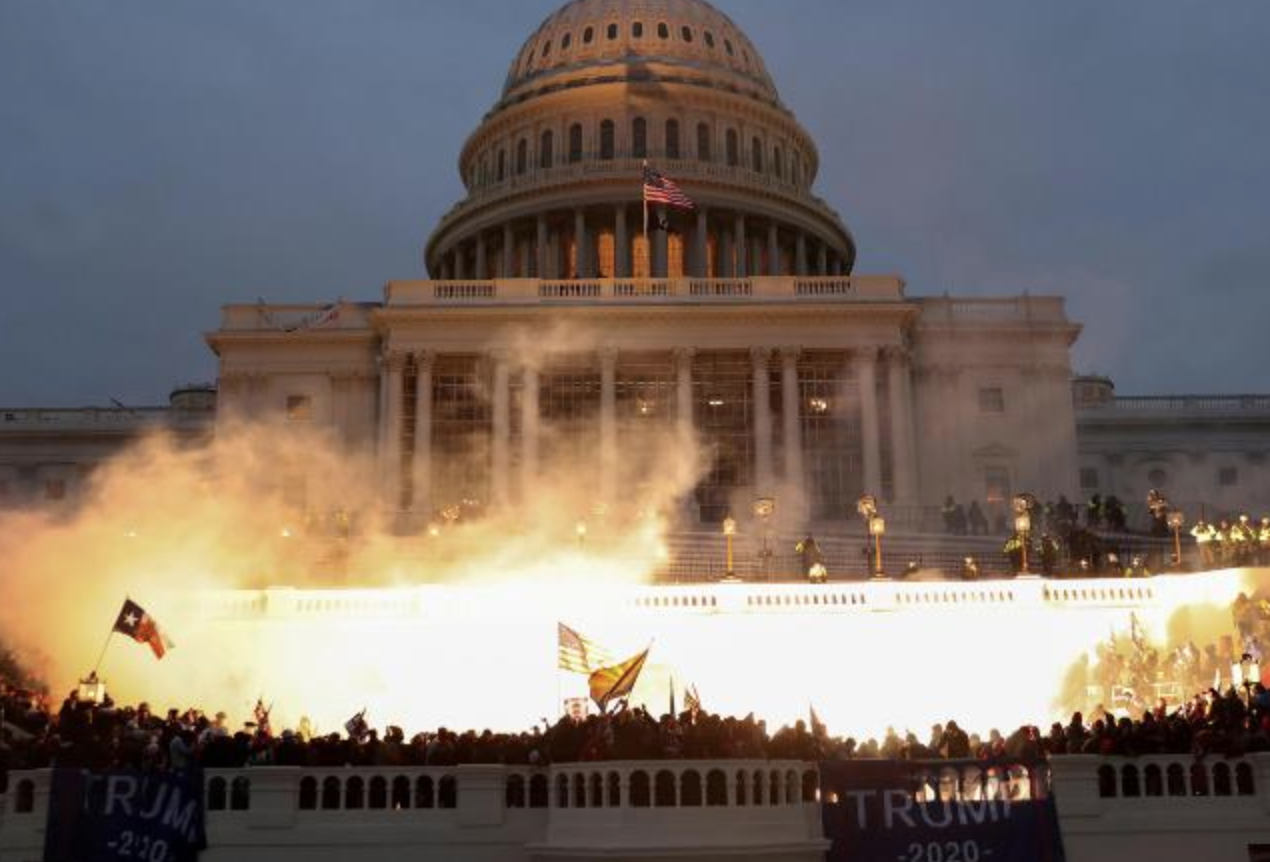
Terry Mattingly of GetReligion.org distinguishes among four groups: The horde that Trump assembled to hear his demand that Congress and Vice President Mike Pence somehow overthrow Biden’s election; those who obeyed Trump’s plea to march on the Capitol; the militant marchers who broke into the security zone, but only protested outside the Capitol; and the smaller, violent, and foul-mouthed mob that desecrated this potent symbol of democracy across the globe.

Regarding that fourth group, Tony Carnes, editor of the A Journey Through NYC Religions website observed that, “no pastors, priests, or other organized religious leaders have been identified so far as part of the riot.” Mattingly wondered where’s the evidence that links a legal protest that evolved into insurrection with “evangelical networks and institutions.” And yet, videos do capture some incongruous Christian symbols and prayers that mingled with the homicide, threats to kill national leaders, injuries to 138 police, vandalism and theft.


Please respect our Commenting Policy

Welcome to New York Times 'religion' feed? A kissy-kissy chat with exiting NARAL boss

Welcome to New York Times 'religion' feed? A kissy-kissy chat with exiting NARAL boss

Does anyone else remember RSS feeds?

The whole idea of RSS — Really Simple Syndication — is that websites can allow you can set up an automated feed that feeds you updates on specific topics in a standardized, computer-readable format.

The key is that computer algorithms are supposed to detect when stories address issues that interest a specific reader.

Anyway, I received this item the other day in my RSS feed devoted to New York Times stories about religion. In this case, the Times defines the RSS criteria, not me.

In terms of religion news, this one is pretty weird — even for today’s Times. The headline: “Ilyse Hogue, Influential Abortion Rights Advocate, Will Step Down as NARAL Chief — In an interview, Ms. Hogue discussed a tumultuous era for abortion rights and the future of Roe v. Wade.”

In other words, this is a kissy-kissy Q&A marking Hogue’s exit after eight years as leader of NARAL Pro-Choice America. The Times informs readers that “abortion rights are at something of a crossroads, with Democrats facing the choice of whether to try to deliver on their promise of codifying Roe v. Wade.”

All right, says I, let’s see the many points in this report that touch on religion. After all, the RSS algorithms put this in the “religion” feed.

I found three, and even that it is stretching it. Can you spot the religious content in the following three bites from this news feature? The questions, obviously, are in bold type:

Let’s start with perhaps the biggest question: Is Roe v. Wade safe?


Please respect our Commenting Policy

It was hard to edit God out of Cicely Tyson's epic story, but some journalists gave it a try

It was hard to edit God out of Cicely Tyson's epic story, but some journalists gave it a try

It was hard to listen to Cicely Tyson talk about her life without recognizing the strong undercurrent of Christian faith in her words, deeds and also in her art. While remaining a proud, private, dignified woman, her faith was not something that she tried to hide.

The question here at GetReligion, of course, was whether any of that imagery and information would make it into the news coverage surrounding her death at the age of 96.

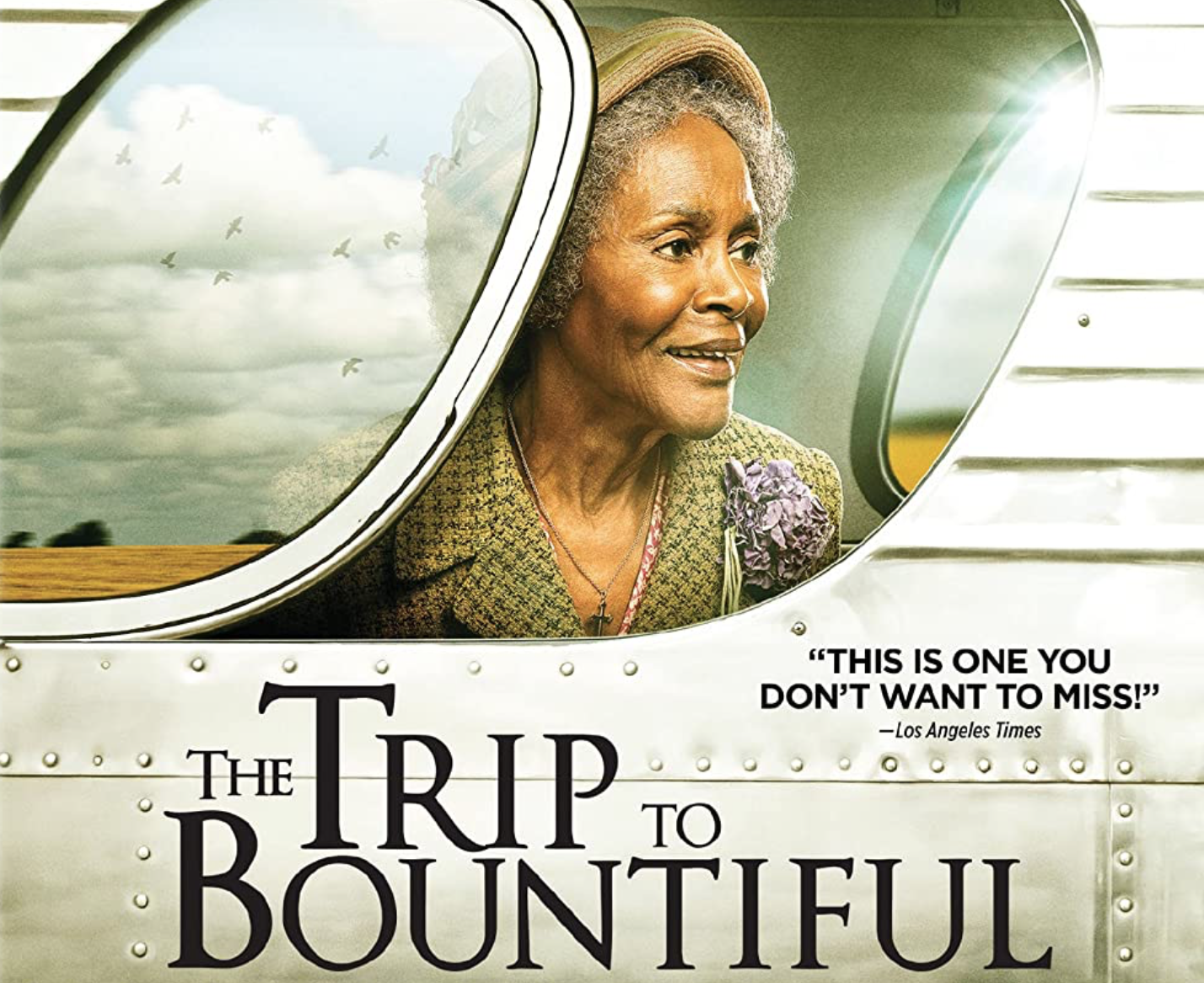
The answer was, of course, “yes” and “no.” Many of the obituaries mentioned her Tony-winning return to Broadway in 2013, at the age of 88, to play the unstoppable matriarch in Horton Foote’s classic, faith-driven play, “The Trip to Bountiful.” The show-stopping moment, night after night, was when Tyson would sing — joined by many in the audience — the classic hymn “Blessed Assurance.” It’s hard to avoid the content of lyrics such as these:

Blessed assurance, Jesus is mine; Oh, what a foretaste of glory divine!
Heir of salvation, purchase of God; Born of His Spirit, washed in His blood.

This is my story, this is my song, Praising my Savior all the day long.

If you were looking for the faith-free version of Tyson’s life, the natural place to turn was The New York Times.

This story did a great job of capturing her impact on American culture, especially in terms of the sacrifices she made to portray African-American life with style, power and dignity. Here are two crucial summary paragraphs on that essential theme:

In a remarkable career of seven decades, Ms. Tyson broke ground for serious Black actors by refusing to take parts that demeaned Black people. She urged Black colleagues to do the same, and often went without work. She was critical of films and television programs that cast Black characters as criminal, servile or immoral, and insisted that African-Americans, even if poor or downtrodden, should be portrayed with dignity.

Her chiseled face and willowy frame, striking even in her 90s, became familiar to millions in more than 100 film, television and stage roles, including some that had traditionally been given only to white actors. She won three Emmys and many awards from civil rights and women’s groups, and at 88 became the oldest person to win a Tony, for her 2013 Broadway role in a revival of Horton Foote’s “The Trip to Bountiful.”

But the only reference to her Christian faith — negative, of course — came in this bite of biography:


Please respect our Commenting Policy