
Race

That question I keep hearing: Why isn't slaughter of Nigerian Christians a news story?

GetReligion readers: It’s time for a poll about a subject that I keep hearing about over and over in emails and in social media. Raise your cyber hands if you have:

* Seen headlines such as this one — “Days Before Attack, Nigerian Bishop Warned of Poor Protection for Christians” — in religious-market publications.

* Seen the same kind of headlines in mainstream news publications that you read, either at the local or national levels.

* Wondered why these headlines rarely, if ever, appear in the news sources that drive most mainstream coverage.

* Sent GetReligion an email on this topic in the past year or two.

Here’s the basic question that I keep hearing from readers: Why would it take to get mainstream coverage of the slaughter of Christians in Nigeria? The assumption, of course, is that journalists are biased on this topic for some reason. Hold that thought.

Meanwhile, here are a few examples of the kinds of stories we are talking about, starting with that Catholic News Agency headline mentioned earlier. Here’s the overture there:

JOS, Nigeria — Just days before a suspected Islamist militant attack killed 30 people in Nigeria, a prominent bishop in the country lamented what he saw as a lack of adequate protection from the Nigerian government for the country’s nearly 100 million Christians.

Suspected Islamist militants set sleeping travelers on fire in Borno state, Nigeria, on Feb. 11, burning 18 vehicles filled with food supplies and killing at least 30, including a pregnant woman and her baby.

In a Feb. 7 interview with Aid to the Church in Need, Archbishop Augustine Obiora Akubeze of Benin City, president of the Catholic Bishops’ Conference of Nigeria, warned that “The current situation in Nigeria reflects an unnecessary, unwarranted and self-inflicted tension. A politically polarized nation.”

Please respect our Commenting Policy

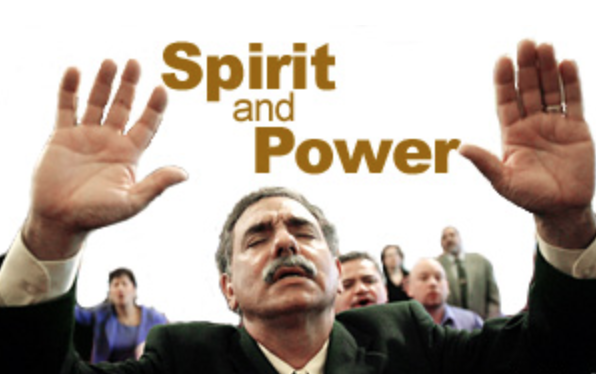
Thinker from David French: Does it matter if media elites don't 'get' Pentecostalism?

Thinker from David French: Does it matter if media elites don't 'get' Pentecostalism?

The other day I praised Religion News Service for jumping into the Twitter tornado caused by the Rev. Paula White’s wild sermon thundering about the powers of the “marine kingdom” and the miscarriage of “satanic pregnancies” and lots of other stuff.

It was just another day in America’s shattered and splintered public discourse.

Here’s the New York Times summary of what that Right Wing Watch clip unleashed:

The video shows part of a nearly three-hour-long service at the City of Destiny church in Apopka, Fla., on Jan. 5. In it, Ms. White can be seen talking about fighting witchcraft and demonic manipulation. She called for any “strange winds that have been sent to hurt the church, sent against this nation, sent against our president, sent against myself” to be broken.

“In the name of Jesus, we command all satanic pregnancies to miscarry right now,” Ms. White said. “We declare that anything that’s been conceived in satanic wombs, that it’ll miscarry. It will not be able to carry forth any plan of destruction, any plan of harm.”

As of Monday, the video had been watched more than eight million times.

It appeared that no one in this shouting match had the slightest interest in promoting understanding. Some commentators weren’t even interested in accurate, honest disagreements.

However, Adelle Banks and Bob Smietana wrote a short explainer that provided crucial information about what White was saying and, most importantly, what she was not saying. Click here to see my piece on that: “RNS pros offered crucial context for 'Satanic pregnancies' sound bite.”

Now I would like to do something that I rarely do: I want to point mainstream journalists and concerned readers to another explainer digging deeper into this topic. This one is by David French, a Harvard Law graduate and First Amendment expert who is one of the most quoted #NeverTrump conservatives in American political life.

In recent weeks, the former National Review star has been doing some brilliant religion-news analysis for his new publication — The Dispatch. His new piece (“Satanic Pregnancies, Explained”) is not an attempt — obviously — to support Paula White or her political master, President Donald Trump. However, it is an attempt to explain why White’s critics, especially scribes in the mainstream press, need to slow down and try to grasp what charismatic and Pentecostal Christians believe on the topic of fierce prayer and “spiritual warfare.”


Please respect our Commenting Policy

Plug-In: How the SBC sex abuse scandal turned a city hall reporter into a religion writer

Robert Downen almost burned out on newspapers and went into the insurance business.

Instead, the talented journalist, now 28, stuck it out and spearheaded what the Religion News Association chose as the No. 1 religion story of 2019.

I’m talking about the Houston Chronicle’s bombshell investigation that revealed more than 700 victims of sexual abuse in the Southern Baptist Convention and spurred reforms by the nation’s largest Protestant denomination.

Come April, Downen’s work on the “Abuse of Faith” project could earn him and his colleagues a Pulitzer Prize. For now, it has resulted in a new gig for the former City Hall reporter. As of last week, he’s covering religion full time for the Houston newspaper. This is wonderful news for Downen and Chronicle readers.

“Mr. Downen has already demonstrated the importance of the beat with his impactful investigative work,” said Peter Smith, the RNA’s president and the veteran religion writer for the Pittsburgh Post-Gazette. “Houston will benefit from his attention to the religiously diverse population of this major American city.”

Texas’s largest daily newspapers — including the Chronicle, the Dallas Morning News and the Fort Worth Star-Telegram — all used to have full-time Godbeat pros.

But no more. At the Chronicle, Downen steps into an important role that has been unfilled for a while. (Here’s hoping those other papers decide to keep up with the competition.)


Please respect our Commenting Policy

And this just in: Religious left is real, important, rather small and it's old news

And this just in: Religious left is real, important, rather small and it's old news

Every four to eight years, mainstream journalists start writing hopeful stories about the potential for the religious left — that should be Religious Left — to rise up and save America from the Religious Right.

This is the sort of thing that we write about here at GetReligion and the topic came up again in a post called, “Mayor Pete evolving into Pastor Pete? Prepare for latest uptick in MSM ardor for religious left.” That led to this week’s “Crossroads” podcast. Click here, please, to tune that in.

The religious left, of course, has changed and evolved over the decade that I have followed it and reported stories about it. But, basically, we are talking about liberal Mainline Protestants, liberal Catholics, a few evolving evangelicals, liberal Jews and so forth and so on.

The problem, of course, is that so many of those ancient doctrines keep clashing with the creeds of the emerging Zeitgeist (mostly the Sexual Revolution, in post-Roe v. Wade America).

Lots of folks who were part of the old religious left go with the flow. But some are troubled. Go to any traditional African-American church and talk to people. Go to a multi-racial Assemblies of God church. Talk to Catholics who go to Vespers and then stay for Confession.

So, White House race after White House race, we see stories about the latest set of “lesser of two evils” challenges faced by people who are, sincerely, religious/moral traditionalists, but they are also economic populists. There are the people who do not exist, according to MSNBC and Fox News. They don’t fit in the Democratic Party’s faculty lounge or the GOP’s country club.

So is the latest attempt to raise up the religious left a valid story?

Of course it is. The African-American church vote really mattered to Barack Obama (think his evolving beliefs on gay marriage) until the moment in time when he no longer needed those votes.

Latino voters matter, as well. Hold that thought!

The religious left also is very important in mainstream newsrooms — at least the ones in which I have worked.


Please respect our Commenting Policy

Mayor Pete evolving into Pastor Pete? Prepare for latest uptick in MSM ardor for religious left

If you have been paying any attention at all to the 2020 White House race, you were ready for the latest mini-sermon from Mayor Pete Buttigieg.

The setting, of course, was the last debate between Democratic Party hopefuls staged before the Iowa caucuses. Here is the key soundbite from Buttigieg, care of CNN, as the frequent churchgoing Episcopalian took yet another shot at Citizen Donald Trump, who — until recently — has been linked to mainline forms of Presbyterianism in great New York City.

Let us attend.

“If he keeps trying to use religion, if a guy like Donald trump keeps trying to use religion to somehow recruit Christianity into the GOP, I will be standing there not afraid to talk about a different way to answer the call of faith,” he said. “And insist that God does not belong to a political party.”

If that kind of language sounds familiar, there’s a good reason for that. Consider the top of the recent New York Times feature that ran with this double-decker headline:

Why Pete Buttigieg Has Made Religion Central to His Campaign

The former mayor is not only trying to bridge ground within the Democratic Party, he’s also making a direct appeal to disaffected conservatives who cannot stomach President Trump.

The overture, logically enough, is from a Sunday morning sermonette in which Mayor Pete proclaims:

“Look at what they do,” he said at a campaign stop about 45 minutes outside of Des Moines, calling out Republicans for “using faith as a way to tell some people they don’t belong.”


Please respect our Commenting Policy

After decades of fighting, United Methodists avoid a visit from ghost of the Episcopal future?

It’s the Methodist question I have heard the most from GetReligion readers (and even locals here in East Tennessee) over the weekend.

I will paraphrase: If the conservatives have been winning the big votes at United Methodist conferences for the past couple of decades, then why are news reports saying that the traditionalists have agreed to “leave the United Methodist Church”?

This is the response that popped into my head a few hours ago after round of news reports, Twitter and online buzz: Basically, I think conservative Methodists have been visited by the Ghost of the Episcopal Future.

Methodist traditionalists are not interested in 50 years of hand-to-hand legal conflict with the entrenched United Methodist principalities and powers. Hold that thought. Meanwhile, I will admit that it’s hard to see the logic of this statement in any one news report. Let’s start with some math from the Associated Press:

Members of the 13-million-person denomination have been at odds for years over the issue, with members in the United States leading the call for full inclusion for LGBTQ people. 

The rift widened last year when delegates meeting in St. Louis voted 438-384 for a proposal called the Traditional Plan, which affirmed bans on LGBTQ-inclusive practices. A majority of U.S.-based delegates opposed that plan but were outvoted by U.S. conservatives teamed with delegates from Methodist strongholds in Africa and the Philippines.

By the way: The numbers in that first paragraph are accurate, as opposed to the following circulated by Reuters: “The United Methodist Church lists more than 13 million members in the United States and 80 million worldwide.” That’s way off, but quite a few online and broadcast outlets picked up that error and ran with it.

Accurate math really is important here. So are the doctrines that are at stake, which are much broader than battles over marriage and sexuality (see my two “On Religion” columns about these trends here, and then here).

The key is two realities that are in constant tension.


Please respect our Commenting Policy

Ryan Burge combination punch: Concerning Republicans, Democrats and gaps in pews

Attention religion-news professionals and all of your news consumers. Do you remember where you were in 2012 when you read your first news report about the stunning rise of the “nones,” as in religiously unaffiliated Americans? Or, in terms of style, is it just Nones, at this point?

I sure do. In my case, I was actually at the press conference to announce the Pew Research Center survey results that became known as the “Nones on the Rise” report.

The religious implications of these numbers were stunning, especially for America’s declining Mainline Protestant flocks. However, the political implications were just as important — something noted by a scholar who has been following the “pew gap” phenomenon for decades. What is the “pew gap”? Here is the basic concept: The more a person (especially if she or he is white) attends worship services, the more likely they are to vote GOP.

Here is a bite of info from my “On Religion” column about that event, including a very prophetic quote from the pollster and scholar John C. Green of the University of Akron. Ready?

The unaffiliated overwhelmingly reject ancient doctrines on sexuality with 73 percent backing same-sex marriage and 72 percent saying abortion should be legal in all, or most, cases. Thus, the "Nones" skew heavily Democratic as voters — with 75 percent supporting Barack Obama in 2008. The unaffiliated are now a stronger presence in the Democratic Party than African-American Protestants, white mainline Protestants or white Catholics.

"It may very well be that in the future the unaffiliated vote will be as important to the Democrats as the traditionally religious are to the Republican Party,” said Green, addressing the religion reporters. "If these trends continue, we are likely to see even sharper divisions between the political parties."

As you would expect, this observation leads us to a pair of new charts from political scientist Ryan Burge of the Religion in Public blog (and now a regular here at GetReligion).

Scan on.


Please respect our Commenting Policy

Big news in 2020? Thinking about the religious left, Mayor Pete and black churchgoers

Think of it as a kind of “small-t” end of the year tradition here at GetReligion.

Toward the end of the annual podcast addressing the Top 10 religion-news events of the year — this year it’s “Oh-so familiar Top 10 religion stories list (with a few exceptions)” — host Todd Wilken always asks me the same question, one built on the assumption that journalists have some ability to see into the future. In other words, he asks something like, “What do you think will be the big religion stories of 2020?”

Like I said in the podcast post last week, news consumers can almost always count on the following:

* Some event or trend linked to politics and this often has something to with evangelicals posing a threat to American life.

* Mainline Protestants gathered somewhere to fight over attempts to modernize doctrines linked to sex and marriage.

* The pope said something headline-worthy about some issue linked to politics or sexuality.

* Someone somewhere attacked lots of someones in the name of God. …

You can’t go wrong with that list — especially with all of the ink being spilled, again, over Citizen Donald Trump and the great big monolithic “evangelical” vote.

However, there’s another political story that has, in the past three decades, become almost as predictable. It is, of course, the fill-in-the-blanks political feature about the rise (again) of the religious left (lower-case status) in the Democratic Party to do combat with the Religious Right (upper-case status).

These days, there is a bigger story that looms in the background of that old standard. Think of it as the Democrats trying to make peace with the religious middle in the age of the growing coalition of atheists, agnostics and the “Nones” (religiously unaffiliated). This coalition is now the most powerful religion-related power bloc in that party. The big question: How will this coalition, which includes the least religious congregation of Americans, get along with another crucial grassroots group — African-American churchgoers, who are among the most religious people in our culture.

That brings us to this weekend’s think piece, care of advocacy journalism team at The Daily Beast, that ran with this headline: “Mayor Pete Turns to God to Win Over Black Supporters.”


Please respect our Commenting Policy

This weekend 'think piece' is not about l'affaire Christianity Today: Please read it anyway

Believe it or not, I had already selected a Dallas Morning News essay by Baylor University historian Thomas about evangelicals and politics as this weekend’s “think piece” before l’affaire Christianity Today rocked the chattering classes that live on Twitter.

The double-decker headline proclaims, “When political pollsters talk about ‘evangelicals,’ they aren’t talking about all of us: The evangelical leaders whom the president cites are actually a small group.”

Kidd has been everywhere in recent weeks, with due cause, because of his new Yale University Press book: “Who Is an Evangelical?: The History of a Movement in Crisis.”

Somebody, somewhere, really needs to buy a truckload this book and distribute copies to every journalist in America (and maybe the world) who plans to cover the 2020 White House race. And not just because of Trump! There are crucial “evangelical” plot lines unfolding linked to African-American evangelicals (ask Mayor Pete Buttigieg) and the growing number of evangelical Latinos (think suburban voters in Florida).

But, wait, is the word “evangelical” a political term? Here is a bite from a recent column I did on Kidd’s work:

Some journalists and pollsters are now operating on the assumption that white evangelicals are the only evangelicals that matter, noted Kidd. … A few have, however, started to realize that many Americans who self-identify as "evangelicals" are not walking the talk. 

That has been common knowledge since the late 1970s, when Gallup researchers began asking hard questions about religious beliefs and the practice of those beliefs in daily life. Gallup cut its estimate that "evangelicals" were 34% of America's population to 18% – a number that would shock many journalists, as well as GOP activists.

"Evangelicals are covered, they are important, when they are a factor in politics — period," said Kidd.


Please respect our Commenting Policy