Politics

Time to dig into World Religions 101: Does Vivek Ramaswamy's Hinduism shape his politics?

Time to dig into World Religions 101: Does Vivek Ramaswamy's Hinduism shape his politics?

Vivek Ramaswamy — and his Hindu background — is the hot new flavor in religion reporting this week, with pieces coming out in Rolling Stone and Religion News Service. The New York Times did a piece earlier in July.

Yet, the outlet asking the best questions on this relevant topic may be Globely, a website that tracks international news. We will get to that in a moment. Ramaswamy

For those of you who don’t yet know, Ramaswamy is running for president — the second Hindu to do so since Tulsi Gabbard ran in 2020. In terms of interviewing actual Hindus, RNS came out on top.

Their numbers in this country are about 1% of the populace — 3 million maybe — and they are overwhelmingly first-generation immigrants, educated and majority male. According to this Pew Research data, they aren’t particularly observant religiously and they tend to be well-off.  

Let’s dig in.

First, a gripe: As someone who’s studied the false, independent Christian prophets who swore up and down that Donald Trump would be re-elected president in 2020, it’s beyond annoying when publications choose those folks to represent the beliefs of mainstream Christianity.

Not only did RNS do this in Monday’s story, but sadly, Rolling Stone does the same in their recent story.

Quoting Omaha, Neb., pastor Hank Kunneman — one of the prophets who got it wrong — and applying terms like “Christian nationalist” to anyone to the right of President Joe Biden is giving a big megaphone to this extreme wing of Christianity.

Rolling Stone proclaims:

VIVEK RAMASWAMY IS getting a hard look by Republicans willing to entertain alternatives to Donald Trump, especially as Ron DeSantis continues to flounder. The 37-year-old biotech entrepreneur has surged into third place in several national polls, ahead of prominent Republicans like Mike Pence, Nikki Haley, and Tim Scott.

Ramaswamy is also a practicing Hindu, and though he has been campaigning as an anti-abortion religious conservative, his non-Christian faith is a major stumbling block for many in the GOP’s evangelical base. He’s been on a charm offensive with these evangelical audiences, but the outreach appears to be backfiring, at least among the Christian nationalist set.


Please respect our Commenting Policy

The bottom line: The 'pew gap' remains a powerful reality in American political life

The bottom line: The 'pew gap' remains a powerful reality in American political life

As an emerging American voice, the Rev. Jerry Falwell visited South Carolina in 1980 to promote his new Moral Majority network, while urging evangelicals to back Ronald Reagan, instead of President Jimmy Carter, a Southern Baptist.

Then Furman University professor John C. Green was intrigued by mixed reactions on three Baptist campuses in Greenville -- his own "moderate" Baptist school, a mainstream Southern Baptist college and the proudly fundamentalist Bob Jones University. For example, Bob Jones, Jr., called Falwell the "most dangerous man in America today," because of his efforts to unite religious groups in political activism.

This potent blend of politics and religion was an obvious topic for political-science research. Colleagues agreed, but one said they needed to act fast, "since these kinds of trends burn out quick," Green recalled, laughing. "Here we are in 2023 and arguments about religion and politics are hotter than ever."

From the start, experts tried to show a clash between religion and secularism, noted Green, author of "The Faith Factor: How Religion Influences American Elections."

The reality is more complex than a "God gap." By the late 1980s, researchers learned that -- while most Americans remain believers -- it's crucial to note how often voters attend worship services. The more fervently Americans support religious congregations with their time and money, the more likely they are to back cultural conservatives.

This "religiosity gap" remains relevant. A new Pew Research Center analysis noted that, in 2022 midterms: "The gap in voting preferences by religious attendance was as wide as it's been in any of the last several elections: 56% of those who said they attend religious services a few times a year or less reported voting for Democratic candidates in the 2022 midterms. … But GOP candidates were the favorite among those who attend services monthly or more by more than two-to-one (67%, vs. 31% who voted for Democratic candidates)."

Meanwhile, Protestants supported the "GOP by nearly two-to-one." White evangelical support for Republicans hit 86%, while white Catholics "favored Republican candidates by 25 points, whereas Hispanic Catholics favored Democratic candidates by an even greater margin (34 points)." Jewish voters preferred Democrats -- 68% to 32%. Atheists, agnostics or "nothing in particular" voters remained loyal to the Democrats, with 72% supporting that party, and 27% backing Republicans.

In 2012, Green was part of the Pew Research team behind the landmark "Nones on the Rise" study, which documented the stunning growth of the "religiously unaffiliated."


Please respect our Commenting Policy

Catholic press, and Ross Douthat, remain must-reads during a busy Vatican summer

Catholic press, and Ross Douthat, remain must-reads during a busy Vatican summer

It should come to no surprise to any reader that we live in a polarized nation. We are separated along political partisan lines and in our own media universes.

There are those who watch and/or read Fox News on the web and consume copious amounts of information regarding President Joe Biden and his son’s alleged ties to corruption.

On the other side, the Hunter Biden is ignored. Instead, we get investigative journalism from The New York Times looking into the dealings and relationships of conservatives such as Supreme Court Justice Clarence Thomas and Florida Gov. Ron DeSantis.

This is why tmatt keeps quoting, here at GetReligion and in his national column, the opening lines of the David French book "Divided We Fall: America's Secession Threat and How to Restore Our Nation.”

"It's time for Americans to wake up to a fundamental reality: the continued unity of the United States cannot be guaranteed," wrote French. Right now, "there is not a single important cultural, religious, political, or social force that is pulling Americans together more than it is pulling us apart."

Confession: I have found it healthy and important to watch both Fox News and read The New York Times. Both are highly influential in their respective partisan bubbles. Both impact the world around us, for better or worse, and that’s of great importance in a world were journalistic objectivity is a relic of a pre-internet world.

I also like to read columnists. I like a few. Longtime Vatican observer John L. Allen, Jr., is one. J.D. Flynn over at The Pillar is another.

Yet another must-read is New York Times columnist, blogger and author Ross Douthat.

Douthat is a convert to Catholicism and often writes about the church. He is openly pro-Catholic Catechism. Thus, it is often refreshing to read Douthat because he tackles issues his own newspaper often fails to cover. I don’t know Douthat’s reading habits but I have to think he reads guys like the aforementioned Allen and Flynn.

Douthat was the target of recent criticism in the Jesuit magazine America.


Please respect our Commenting Policy

Plug-In: More Moore on values voters and what appears to be a permanent Trump effect

Plug-In: More Moore on values voters and what appears to be a permanent Trump effect

Among the week’s intriguing headlines: Pope Francis is hurrying to bolster his progressive legacy as his health problems increase, the Wall Street Journal’s Francis X. Rocca reports.

In Israel, the political rise of ultra-Orthodox Jews is shaking the nation’s sense of identity, the WSJ’s Dov Lieber and Shayndi Raice note. A related major vote is expected as soon as Sunday.

In the U.S., a crowded field of GOP presidential candidates is vying for the Christian Zionist vote as Israel’s rightward shift spurs protests, according to The Associated Press’ Tiffany Stanley.

Also, “the Robert F. Kennedy boomlet is over,” Semafor’s Benjy Sarlin opines. Before it ended (or not, since he isn’t that interested in mainstream press views), the Democratic presidential candidate gave an exclusive, nearly 40-minute interview to Jewish News Syndicate’s Menachem Wecker.

The King’s College in New York is canceling fall classes and laying off faculty but insists it’s not closing, as Emily Belz at Christianity Today and Meagan Saliashvili at Religion News Service explain.

This is our weekly roundup of the top headlines and best reads in the world of faith. We start with former President Donald Trump’s lingering hold on right-wing voters.

What To Know: The Big Story

More of the same: “One of former President Donald Trump’s most steadfast evangelical critics said he expects Trump to be the Republican nominee in 2024, and that the years since Trump’s election in 2016 have been an ‘apocalypse.’”

“There’s a wide-open choice, and still you have a majority in the Republican primary behind Trump,” Christianity Today editor-in-chief Russell Moore tells Yahoo News’ Jon Ward. “I would be shocked if he’s not the Republican nominee.” Moore has a new book, ”Losing Our Religion: An Altar Call for Evangelical America,” which releases July 25.


Please respect our Commenting Policy

How will religion fare as liberal arts education shrinks in the United States of America?

How will religion fare as liberal arts education shrinks in the United States of America?

Pity U.S. colleges coping with political feuds, “diversity,” declining applications and enrollments, student debt and tight budgets.

Add religious and moral issues and things get even more complex.

Some religious colleges are on survival watch. On June 29, the 140-year-old Alliance University (formerly Nyack College) decided it must shut down, and a second New York City Christian school, The King’s College, will also close unless there’s a last-minute reprieve. Early in the week, Religion News Service reported:

The last remaining evangelical Christian college in New York City, The King’s College, announced Monday (July 17) in an email that the school, which has faced dire financial challenges, would not offer classes in the fall. In an earlier meeting with faculty and staff it was announced that many teaching contracts would not renew or were canceled.

“This decision comes after months of diligently exploring numerous avenues to enable the College to continue its mission,” read the email, which was addressed to “members of the King’s community” and signed by the Board of Trustees. “In connection with this decision,” it continued, “it is with regret we share that our faculty and staff positions will be reduced or eliminated.

The running tally by www.HigherEdDive.com lists 96 colleges that have gone out of business since 2016, and Christianity Today counts 18 Christian colleges that shut down since COVID, with more likely.

Amid all those newsworthy developments, let’s not neglect the content of higher education. There’s been considerable media coverage on conservatives’ complaints over neglect of “dead white men,” liberal faculty bias, oppressive secularization, imbalance on American history, “cancel culture” and “woke” pressures.

Yet with considerably less fanfare, a different 21st Century trend is recasting the very definition of a well-educated citizen. College education as it existed in the West across the centuries was a huge invention and contribution of the Christian religion and, in turn, it enhanced value formation and spiritual depth. Any religion builds upon the past and non-technological reflection on what’s “good, true, and beautiful,” as the old formula expressed it.


Please respect our Commenting Policy

NPR discovers megachurches! But, wait, there is one new wrinkle in this old story

NPR discovers megachurches! But, wait, there is one new wrinkle in this old story

Not that long ago, National Public Radio came to my backyard. The headline on the resulting GetReligion post summed up what happened: “NPR comes to hills of Tennessee and sees exactly the religion trends that you would expect.”

This was another one of those post-coronavirus pieces that talked about the challenges to the mainline churches that are dear to the heart of spiritual seekers in prestigious newsrooms. The NPR team headed straight to progressive East Tennessee churches — many already in decline — in which the pews are full of people who have NPR as the main pre-set on their car radios.

The result was valid, but so, so, so incomplete. As I wrote at the time:

It’s absolutely true that there are declining churches here in the mountains of East Tennessee, especially during COVID-tide. That’s an important story. The problem is that there are also growing churches in the region (yes, including my own Orthodox parish, which has grown at least 25% in the past three years) and that’s a detail that makes this story more complex.

Well, I am happy (sort of) to note that NPR journalists have now discovered (or rediscovered) two major trends that began back in the 1970s and, maybe, they see some new connections. The headline on this feature: “Megachurches are getting even bigger as churches close across the country.”

The two old trends: (1) Megachurches are real and growing and (2) much of this is linked to the stunning growth of nondenominational evangelical and charismatic Protestantism in American life (and around the world).

I will stress, once again, that this is a valid story. I am less convinced that this is somehow linked to life after the COVID-wave, although it is certainly important that entrepreneurial megachurches were already wired for online worship, while most denominational churches were not.

Anyway, here is the long overture, which includes several themes:

Something clicked for Marlena Bhame when she first stepped into Liquid Church about four years ago. She'd been searching for something more spiritually dynamic and meaningful than the faith tradition she'd grown up in, or the various others she had tried out over the years.


Please respect our Commenting Policy

A journalism question that suggests an answer: 'Who's Afraid of Moms for Liberty?'

A journalism question that suggests an answer: 'Who's Afraid of Moms for Liberty?'

For nearly 20 years now, GetReligion has focused on discussions of religion content in what used to be called “hard news,” as in old-school journalism that attempted to do accurate, fair-minded coverage of public events, debates, trends, etc.

Long ago, I was taught that the more controversial and disputed the topic, the harder journalists should strive for “balance” in terms of content about participants on both sides, or all sides, of the debate.

Honest. People used to believe things like that.

Thus, your GetReligionistas have always tried to separate “hard news” from analysis, commentary and even outright public relations.

This brings me to a fascinating news feature in The Free Press, an important online news source that — from my point of view — grew out of the digital, social-media wars inside The New York Times. Founded by Bari Weiss, an old-school liberal, this new publication covers many controversial topics that have been overlooked, ignored or even cancelled in elite newsrooms.

Is The Free Press a “hard news” publication? It certainly publishes lots of new information, using sources that it quotes on the record. Much of the content is analysis, in the style of The Atlantic and similar publications.

In this case, we are talking about a Robert Pondiscio article with this double-decker headline:

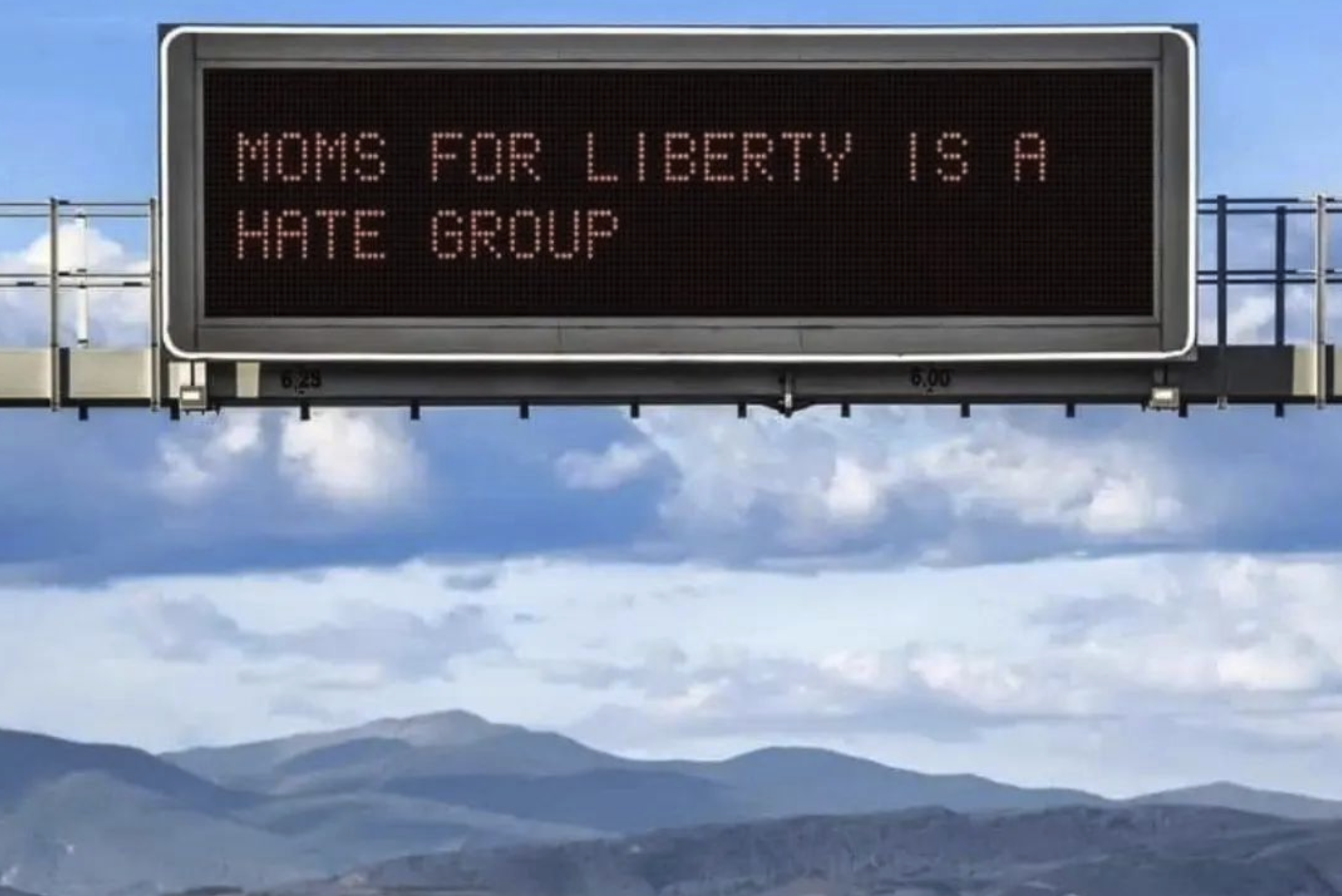
Who’s Afraid of Moms for Liberty?

A growing cadre of angry mothers is taking over school boards and winning influence as GOP kingmakers. Why are they being called a ‘hate group’?

The overture makes it clear that, in this case, The Free Press team is interested in the lives and beliefs of the actual members (think “stakeholders”) of this organization, as opposed to the Republican candidates that court them. Ah, but do these groups overlap?

In a breakout session in a windowless conference room at last weekend’s Moms for Liberty “Joyful Warrior Summit” in Philadelphia, Christian Ziegler, the chairman of the Florida Republican Party and father of three school-aged daughters, is stiffening spines. Dozens of attendees, mostly women, are nodding and taking notes as Ziegler explains how to work with local news media. 

“Your product is parental rights. Your product is protecting children and eliminating indoctrination and the sexualization of children. You’re the grassroots. You’re on the ground. You’re the moms, the grandparents, the families that are impacted. The stories you tell help set a narrative,” Ziegler coaches them.


Please respect our Commenting Policy

Plug-In: Many churches are vanishing, while others are growing. Trends worth covering?

Plug-In: Many churches are vanishing, while others are growing. Trends worth covering?

This newsletter marks the return of Weekend Plug-in after two weeks of vacation. Did you miss me?

I’m still catching up on the headlines I missed while watching a whole lot of Texas Rangers games.

But I know the U.S. Supreme Court ruled on two important religious freedom cases — one on religious accommodation at work and the other involving free speech and free exercise protections for people of faith who are creative professionals.

Click the preceding links, by the way, to read excellent coverage of the decisions by the Washington Times’ Mark A. Kellner.

In more recent news, the gunman who killed 11 people in a Pittsburgh synagogue is eligible for the death penalty, a federal jury announced. The decision clears the way, as The Associated Press’ Peter Smith reports, “for further evidence and testimony on whether he should be sentenced to death or life in prison.”

In case you need a reminder, this is our weekly roundup of the top headlines and best reads in the world of faith. We start with the giant religion trend that should be bigger news.

What To Know: The Big Story

Houses of worship closing: “Everybody is caught up with fighting over sexuality or politics on Twitter — and almost no one is paying attention (to) the collapse of congregational life in America.”

Religion News Service national writer Bob Smietana made that prescient observation on social media this week. Smietana, of course, wrote a book on the subject called “Reorganized Religion: The Reshaping of the American Church and Why It Matters.”

Many churches are shrinking. Then again, some churches are growing. Trends worth covering? What are the patterns here?


Please respect our Commenting Policy

Podcast: Culture Wars 2023 -- As it turns out, traditional Muslims have children too

Podcast: Culture Wars 2023 -- As it turns out, traditional Muslims have children too

Gentle readers, please allow me to start with a short anecdote from about 15 years ago, during the years when I was teaching journalism a few blocks from the U.S. Capitol.

I attended a typical off-the-record think tank forum in which lawyers from church-state groups were talking about rising tensions in public, taxpayer funded, institutions. At one point, someone asked a question that sounded something like this: What should public-schools leaders do when approached by parents who want opt-out choices for their children when faced with class activities that clash with the teachings of their faith?

The question, of course, was linked to tensions between public-school leaders and evangelicals, and maybe traditional Catholics (“traditional” in the FBI meaning of the word).

One lawyer gave an answer that was way ahead of its time: School administrators should look at these people and do everything they can to pretend that these parents are Muslims. In other words, pretend these parents are part of a minority faith that public officials respect (Muslims), as opposed to part of a larger faith group that administrators distrust, fear and possibly even loathe (evangelicals).

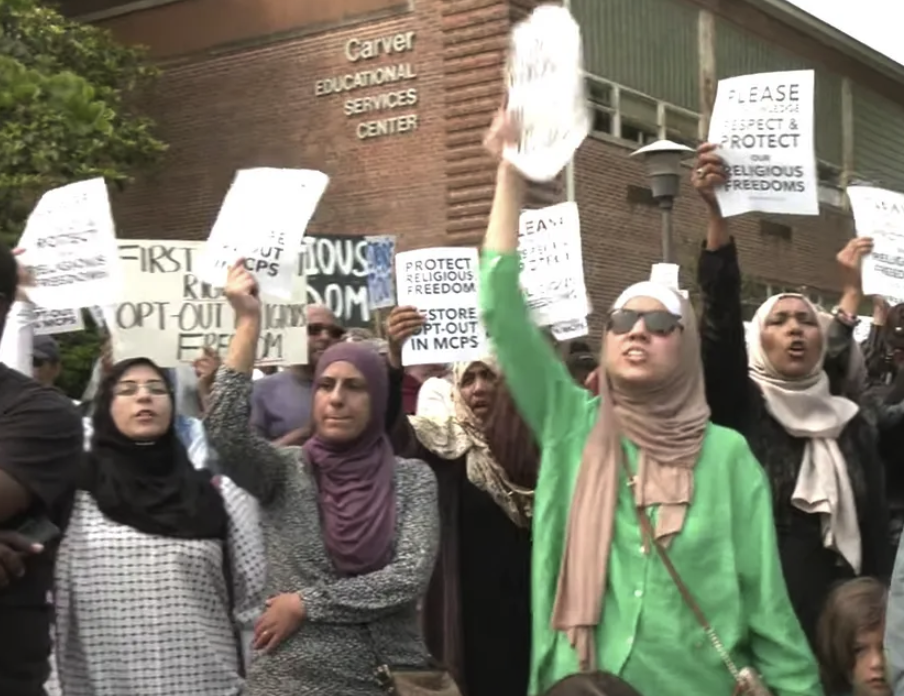
This was one of two Beltway anecdotes I shared during this week’s “Crossroads” podcast (click here to tune that in), which focused on a Washington Post story that I have been thinking about during the past week or two. That headline: “Hundreds of Md. parents protest lessons they say offend their faiths.” The Post team appears to have worked hard to keep the main news hook out of that headline and even the lede.

Hundreds of parents demonstrated outside the Montgomery County Board of Education’s meeting … demanding that Maryland’s largest school district allow them to shield their children from books and lessons that contain LGBTQ+ characters.

Still in the dark, right? Keep reading:

The crowd was filled largely with Muslim and Ethiopian Orthodox parents, who say the school system is violating their religious rights protected under the First Amendment by not providing an opt-out. Three families have filed a lawsuit against the school system.


Please respect our Commenting Policy