Politics

Still news? Media silent on pronouncements from World and National Councils of Churches

Still news? Media silent on pronouncements from World and National Councils of Churches

Who is listening?

Preachers face that question every weekend and it’s vital for strategizing by religious organizations -- or should be. The Religion Guy has lately been pondering a long-running religion-beat puzzle that possibly warrants some analytical articles, or at least reflection on the part of journalists.

Why do U.S. power-brokers, and journalists themselves, pay little or no heed to ardent pronouncements by the World Council of Churches (WCC) and the National Council of the Churches of Christ in the U.S.A. (NCC)? After all, the WCC says it represents 352 church bodies in 120 countries that encompass 580 million Christians. The NCC reports its 37 American member bodies include more than 30 million members in 100,000 congregations.

Last year, a Religion Guy Memo promoted media attention to the WCC’s upcoming global Assembly in Germany at the start of its 75th anniversary year. 

Journalists could not have asked for a stronger news peg. Russia’s bloody invasion of Ukraine was proceeding with hotly disputed blessings from the Moscow leaders of the Russian Orthodox Church, by far the WCC’s largest member body, which created a vast humanitarian crisis for fellow Christians in Ukraine.

(That Memo put special focus on the plight facing Metropolitan Hilarion, the Moscow patriarchate’s well-known ecumenical officer and foreign envoy. There were signals that his views on the invasion were quite different than those of Patriarch Kirill, and was soon abruptly “released from his duties” and reassigned to Hungary. Follow-up, anyone?)

The September Assembly stated that it “denounces this illegal and unjustifiable war” and (without naming Russian Orthodoxy) that delegates “reject any misuse of religious language and authority to justify armed aggression.” The meeting also called for “an immediate ceasefire” and “negotiations to secure a sustainable peace” — though at the time some critics figured that stance would undercut Ukraine’s position.

The situation facing the WCC and its Orthodox members surely counts as news, and still does.

Please respect our Commenting Policy

Americans need moving vans? AP says it's politics, politics, politics, politics, politics, politics, etc.

Americans need moving vans? AP says it's politics, politics, politics, politics, politics, politics, etc.

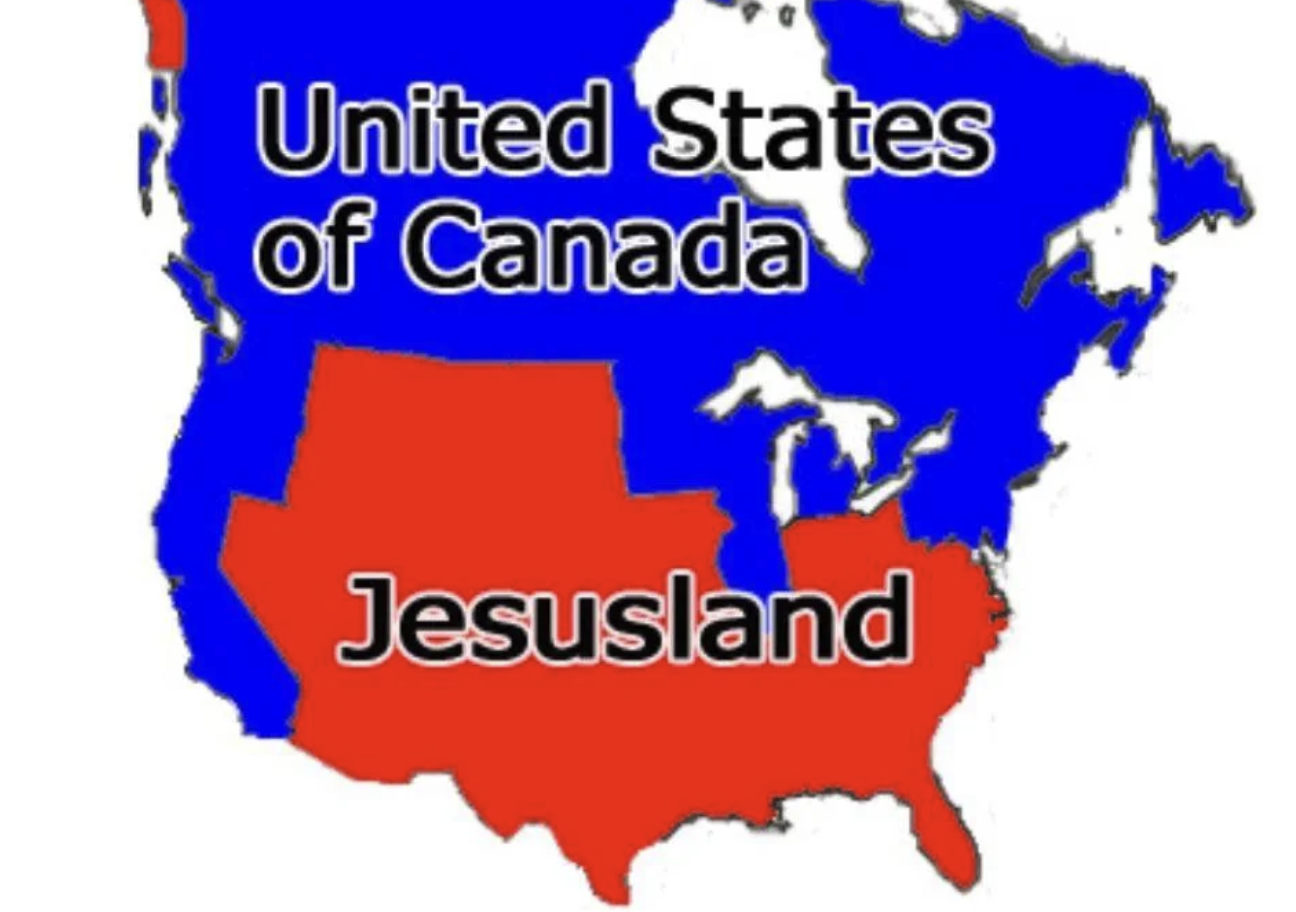
No doubt about it: The rise of the divided states of America is one of the most important news stories of our time, and that has been obvious for several decades now (think red-blue JesusLand cartoons starting in 2000, or thereabouts).

The bottom line: If you don’t own a copy of David French’s 2020 book, “Divided We Fall: America's Secession Threat and How to Restore Our Nation,” then order one right now.

How many times have I quoted that volume’s tense, scary opening sentences? Here’s that passage, again, from my recent red journalism vs. blue journalism piece for the journal Religion & Liberty:

The bottom line: Americans are divided by their choices in news and popular culture, choosing to live in protective silos of digital content. America remains the developing world’s most religious nation, yet its secularized elites occupy one set of zip codes, while most religious believers live in another. These armies share no common standards about “facts,” “accuracy,” or “fairness.”

“It’s time for Americans to wake up to a fundamental reality: the continued unity of the United States cannot be guaranteed,” wrote French. At this moment, “there is not a single important cultural, religious, political, or social force that is pulling Americans together more than it is pulling us apart.”           

The Los Angeles Times published the definitive “This is all about economics, stupid!” piece about this trend, which I discussed in this recent GetReligion post: “Yo, LA Times — Maybe, must maybe, issues of faith, family and culture matter in California?”

The Big Idea in that piece was the truth that, when striving to avoid covering issues of religion and culture, journalists have the option of stressing economic issues, as well as politics, politics, politics. Now, the Associated Press had produced a news feature with a variation on that theme. Headline: “Conservatives go to red states and liberals go to blue as the country grows more polarized.”

This time around, the story does include lots of commentary about “cultural” issues, but culture is defined — quite literally — as politics, politics, politics, politics, politics, politics, politics, politics, politics, politics, politics, politics, politics, politics, politics, politics, politics, politics, politics, politics, politics, politics, politics, politics, politics, politics, politics, politics, politics, politics. Actually, I may have missed one or two variations on the word “politics” in this AP report.

References to “religion”? Zero. “Faith”? Zip. “Morality?” Nada.


Please respect our Commenting Policy

Podcast: Can journalists imagine 'mirror' cases in which 303 Creative protects liberals?

Podcast: Can journalists imagine 'mirror' cases in which 303 Creative protects liberals?

If you follow Robert P. George in social media, you probably know several things about this legal scholar.

(1) He is a political philosopher and professor of jurisprudence at Princeton University.

(2) George is a doctrinally conservative Roman Catholic.

(3) He is a skilled Americana musician (think folk, gospel and bluegrass) who plays the banjo and a 12-fret acoustic guitar (I’m a big fan of the latter).

(4) In the public square, he is relentlessly irenic, seeking ways to view issues through the lens of those with whom he disagrees. This approach has been demonstrated during years of joyful and informative pro-tolerance dialogues with his close friend Cornel West, a liberal’s liberal known for decades of provocative classroom work at Princeton, Harvard and Union Seminary.

From a GetReligion point of view, it’s also important that — based at Princeton — George lives right on the edge of what could be called the Archdiocese of The New York Times and he pays close attention to mainstream news coverage of religion and public life.

This is why George played a key role in this week’s “Crossroads” podcast (click here to tune that in), which was a follow-up to my recent post with this headline: “After 303 Creative: Can readers find Twitter voices (hello David French) that help us think?”

After the latest wave of U.S. Supreme Court decisions, George posted a Mirror of Justice commentary in which he noted that Times editors seemed remarkable unaware of the actual contents of the majority opinions. The headline on the Gray Lady’s initial 303 Creative story was, in GetReligion terms, a classic: “Web Designer Wins Right to Turn Away Gay People.

The problem was that Justice Neil Gorsuch — author of the court’s landmark Bostock decision (.pdf here) backing trans rights — said the opposite of that in his 303 Creative majority opinion (.pdf here).


Please respect our Commenting Policy

Double-thinking about atheists: What's up with their role in America's hot public square?

Double-thinking about atheists: What's up with their role in America's hot public square?

I live in Southern Appalachia, which is in Bible Belt territory on anyone’s map of America.

Then again, I live near the Oak Ridge National Laboratory — a place where the nerdy PhD’s per-square-foot count is the same or higher than, well, the California Institute of Technology or the University of California, Berkeley. In other words, it’s surprisingly easy to run into local atheists and agnostics just about anywhere one engages in conversation (take the gym, for example).

Are these unbelievers hostile? Let’s just say that the real people I meet in this niche religious group (#ducking) are different from those I encounter in cyberspace. Maybe there’s something about the Southern Highlands that attracts friendly atheists-agnostics?

I thought about this phenomenon when I saw this recent Graphs about Religion headline from political scientist (and GetReligion contributor Ryan Burge: “Just How Much Do Americans Dislike Atheists?

This new Burge piece reminded me of his earlier piece: “No One Participates in Politics More than Atheists — Even White Evangelicals.” Remember these reflections on the Cooperative Election Study question: “Have you done any of the following activities in the previous month?”

The group that is most likely to contact a public official? Atheists.

The group that puts up political signs at the highest rates? Atheists.

HALF of atheists report giving to a candidate or campaign in the 2020 presidential election cycle.

And while they don’t lead the pack when it comes to attending a local political meeting, they only trail Hindus by four percentage points.

Anyway, I stashed these Burge URLs in my growing “Thinker piece” file — along with a very interesting (and I would argue, related) Pew Research Center post with this headline: “One-in-six Americans have taken steps to see less of someone on social media due to religious content.”

Let’s try to connect a few dots.


Please respect our Commenting Policy

Notable Muslim angle in that Wall Street Journal survey of religious changes in Africa

Notable Muslim angle in that Wall Street Journal survey of religious changes in Africa

The New York Times “Sunday Opinion” section, a consistent source of valuable news analysis by journalistic pros in its former incarnations, has oddly transmogrified by indulging in off-the-news features, self-absorbed memoirs and random social psychology musings, often running at considerable length.

By contrast, the “Review” section of the weekend edition at The Wall Street Journal’s has maintained its customary serious mix of news analyses, book reviews and snappy little running features.

In particular, the in-depth articles that lead off each Journal section have emerged as must reading. In particular, religion writers and the news consumers that follow the beat should note that the first two pages in the June 24-25 edition offered an important survey under the capitalistic headline “The Competition for Believers in Africa’s Religion Market (yes, this is behind a paywall).”

Much of the Journal scenario in this essay — written, in part, by Vatican correspondent Francis X. Rocca (who frequently covers other religion news and trends — will be familiar to those who closely follow international religion news, but The Guy will spotlight one notable news angle here regarding Islam.

We’re told that the African continent, apart from its Muslim northern tier and south of the Sahara Desert, is “one of the world’s most active and contested religious markets.”

The Guy would amend that to say it’s clearly the single most contested market, one where shrinking indigenous faiths have given way to strong and all-too-often violent religio-political competition between Christians and Muslims.

The experts at the World Religion Database say the region had 7.4 million Christians in 1900 and is projected to have 1.3 billion by 2050, by then making up 38% of the world’s Christians. The team at the Pew Research Center figures that by 2037 the region’s Muslims will outnumber those in their religion’s historic heartland of North Africa and the Mideast.


Please respect our Commenting Policy

Covering the 303 Creative decision: Why do reporters keep ignoring the fine print?

Covering the 303 Creative decision: Why do reporters keep ignoring the fine print?

Judging from the recent coverage on the US Supreme Court’s decision on 303 Creative v. Elenis, you’d think that a pogrom against LGBTQ Americans is in process.

Many of the headlines came out and said that SCOTUS was allowing businesses to turn away gay customers, period. That’s false and that’s clear in the majority opinion. The truth was that you cannot compel people to create and deliver a message demanded by these customers if you don’t agree with that message (in this case for reasons of religious doctrine and practice).

I’ll start with the Denver Post, in whose backyard the whole case developed.

First, a note to the Post editors: Underneath the headline (“Colorado wedding website designer can refuse gay customers, U.S. Supreme Court rules”) the subhead spells Justice Neil Gorsuch’s name wrong. Being that Gorsuch, the writer of the opinion, is very well known by locals — as he was a longtime Colorado resident before ascending to the high court — the Post might want to correct that.

The First Amendment allows a Colorado graphic designer to refuse to make wedding websites for same-sex couples, the U.S. Supreme Court ruled Friday in a decision that could have a sweeping nationwide impact.

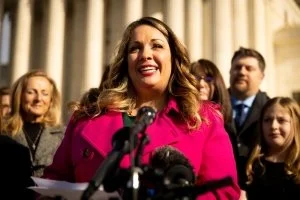
The high court ruled for Littleton graphic artist Lorie Smith, who said her Christian faith prevents her from creating wedding websites for same-sex couples. Smith, who runs the business 303 Creative, wanted to make wedding websites only for straight couples.

I skimmed the article and didn’t see anything about religious beliefs being the reason behind Smith’s decision until well into the piece.

Also, note that — once again, we’re talking about the printed content of the majority decision — declining to do same-sex wedding content is not the same thing as the ability to refuse customers, period.

She challenged Colorado’s public accommodation law, which says that if she offers wedding websites to the public, she must provide them to all customers. Businesses that violate the law can be fined, among other penalties.


Please respect our Commenting Policy

New York City has evolved into a complex, tense 'post-secular' cultural chess board

New York City has evolved into a complex, tense 'post-secular' cultural chess board

Early in his church-planting work in New York City, the Rev. Tim Keller focused on what he called the Center City, which started in lower Manhattan, near Wall Street, and extended past Central Park.

The Presbyterian Church in America seminary professor camped in the old Tramway Diner under the 59th Street Bridge at 2nd Avenue, asking New Yorkers probing questions about their lives. He dug into the socialist Dissent Magazine to learn the city's secular lingo.

But New York was already evolving in 1989, when Redeemer Presbyterian Church opened its doors two weeks after Easter, said Tony Carnes, leader of the "A Journey through NYC Religions" website.

Changes began in the 1970s in the city's boroughs "with more internationals arriving from all over," including Global South cultures in which "no one doubts that faith is an important part of life," he said, reached by telephone. "It took time to see these changes affect Manhattan, but they did."

In 2000, Carnes' team found -- through a face-to-face census with church leaders -- 120 evangelical congregations in the Manhattan Center City. That number reached 197 a decade later, 251 in 2014, 308 in 2019 and are expected to near 370 in 2024.

"We know there are others, because we hear things all the time," said Carnes. "We just haven't found them all -- yet."

For decades, researchers considered New York City a lab for the brand of secularism defined by Harvard Divinity School historian Harvey Cox, author of the influential "The Secular City" in 1965. In a famous quotation, he noted: "Secular Humanism is opposed to other religions; it actively rejects, excludes, and attempts to eliminate traditional theism from meaningful participation in the American culture."

However, at sidewalk level it's obvious that there are "two New Yorks," noted Carnes. While secularism remains dominant in mass media, academia and other parts of the cultural establishment, the reality is more complex in Queens, Brooklyn, the Bronx, Staten Island and now parts of Manhattan.


Please respect our Commenting Policy

Podcast: Can New York City's arts avengers save a tiny, but ultra-valuable, mainline church?

Podcast: Can New York City's arts avengers save a tiny, but ultra-valuable, mainline church?

I was stunned (I kid you not) that editors at The New York Times didn’t find a way to slip the word “hulk” or even “avengers” into the Gray Lady’s latest feature on politics and the wild, wild world of Manhattan real-estate. Oh, and there is some religion news in here, somewhere.

What am I talking about?

Well, this week’s “Crossroads” podcast (click here to tune that in) focused on a story that ran with this dry, wordy, double-decker headline: “Why Mark Ruffalo and Wendell Pierce Are Fighting for a Crumbling Church — Congregants of the West Park Presbyterian Church, a Manhattan landmark, want it torn down and replaced by condos. Celebrities are joining the fight to save it.”

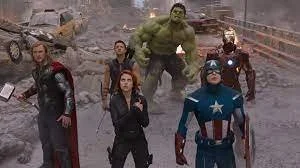
In the sprawling Marvel Comic universe, Ruffalo played that Big Green Guy. But you probably knew that.

Let’s work our way through this story, looking for evidence of the religion-beat story — it appears that zero religion-beat personnel were involved — that is at the heart of this story that the Times prelates see as a conflict about money, politics and, maybe, culture. Religion? Not so much.

In the podcast, I also noted that versions of this story are unfolding in urban areas around America, linked to the catastrophic decline of America’s mainline Protestant and the more Americanized versions of Roman Catholic life. What happens to their strategically located and very valuable urban sanctuaries?

The overture, which builds up to the sermon-esque thesis statement:

For years, a conflict over whether to tear down one of New York City’s historic churches, a 19th-century Romanesque Revival building on the Upper West Side, has been cast in epic terms, as a battle between the little people and big business.

In this case, however, those who see themselves as representing the little people include a growing list of New York celebrities.

And big business? That would be a real estate firm working with the tiny congregation of the West Park Presbyterian Church, which says it cannot afford to fix up the deteriorating building and hopes to sell it to a developer to build new luxury apartments on the site.


Please respect our Commenting Policy

July 4, 2023, thoughts about our divided United States and potential for a 'civil war'

 July 4, 2023, thoughts about our divided United States and potential for a 'civil war'

What ails the United States of America? Why have some serious thinkers even talked about a second “civil war”?

Both journalists and religious leaders should be pondering that on July 4th. Consider some recent media coverage.

To begin, America’s religious center is imploding. Political scientist Ryan Burge (also a GetReligion contributor) calculates that if nine major Protestant denominations — especially the old “mainline” — had only kept pace with national population growth they’d have 21 million more members than they actually do. (Meanwhile, non-denominational independents surge.) And Burge analyzes the significant increase of Americans, and especially Democrats, who never attend worship.

Obituaries remind us how Pat Robertson, alongside fellow Virginia clergyman Jerry Falwell and others, unexpectedly rallied a sector of conservative Christians and upended American politics and religion -- as well as mass-media treatment of religion.

Culture wars envelop Disney, Target and Budweiser, and the Los Angeles Dodgers even honored a group that mocks the Catholic faith (pious Branch Rickey spins in Ohio grave).

One-year anniversary reporting conveys nationwide tumult since the Supreme Court returned abortion policy to Congress and 50 state legislatures.

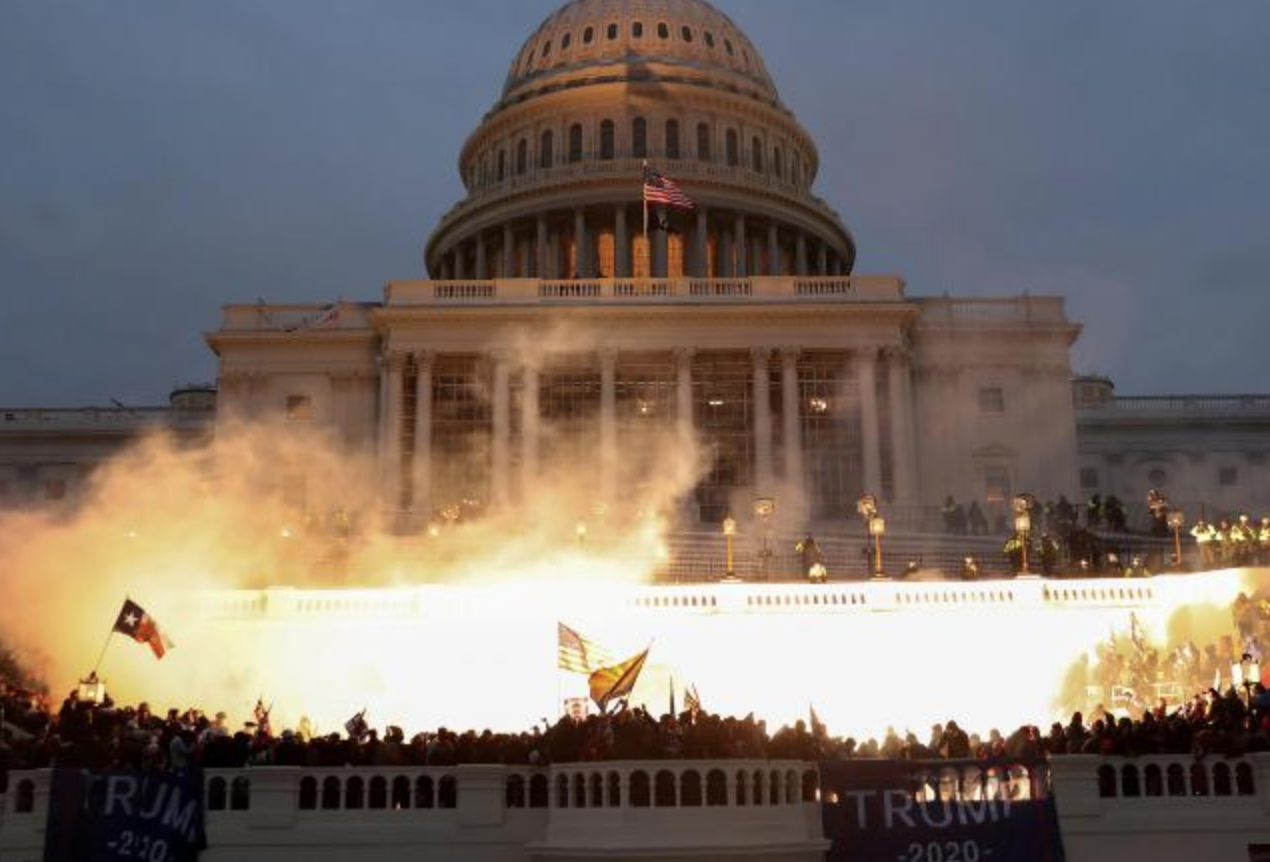
Then consider all the fears and furies over fentanyl deaths, teen suicide, urban crime, border chaos, race and reparations, college admissions, impeachment, gerrymandering, 2020 rehash, January 6, COVID-19 policy, gender transition laws and pronoun wars, LGBTQ+ rights and religious rights, “Christian nationalism,” “cancel culture,” “woke” classrooms, sliding test scores, book-banning, guns and whatever else you’d like to add.


Please respect our Commenting Policy