Politics

Parents, schools and 'LGBTQ themes': Why is the Associated Press being so vague?

Parents, schools and 'LGBTQ themes': Why is the Associated Press being so vague?

Let’s start here: I am a journalist who is married to a librarian. When it comes to First Amendment issues, we are old-school liberals. However, there are times when — in debates involving public schools, tax dollars and parental rights (without “scare quotes”) — there are First Amendment tensions that cannot be denied.

Week after week, I keep reading angry mainstream-press reports covering battles about removing LGBTQ-audience books from the libraries of schools in various red zip codes across America.

I confess that I am confused about what is happening in many of these debates. I assume that the content of proposed legislation is different in various states, but it’s hard to know the details in the news coverage. In particular, it’s hard to know if books are being removed from (a) mandatory classroom assignments, (b) recommended sex-education lists promoted to students or (c) library bookshelves — period.

Also, I am having trouble understanding the specifics of why parents are upset (and these concerns may vary from case to case). Most news reports stress that conservative (read “traditional” religious believers, either Christian, Jewish or Muslim) parents are upset about all LGBTQ content.

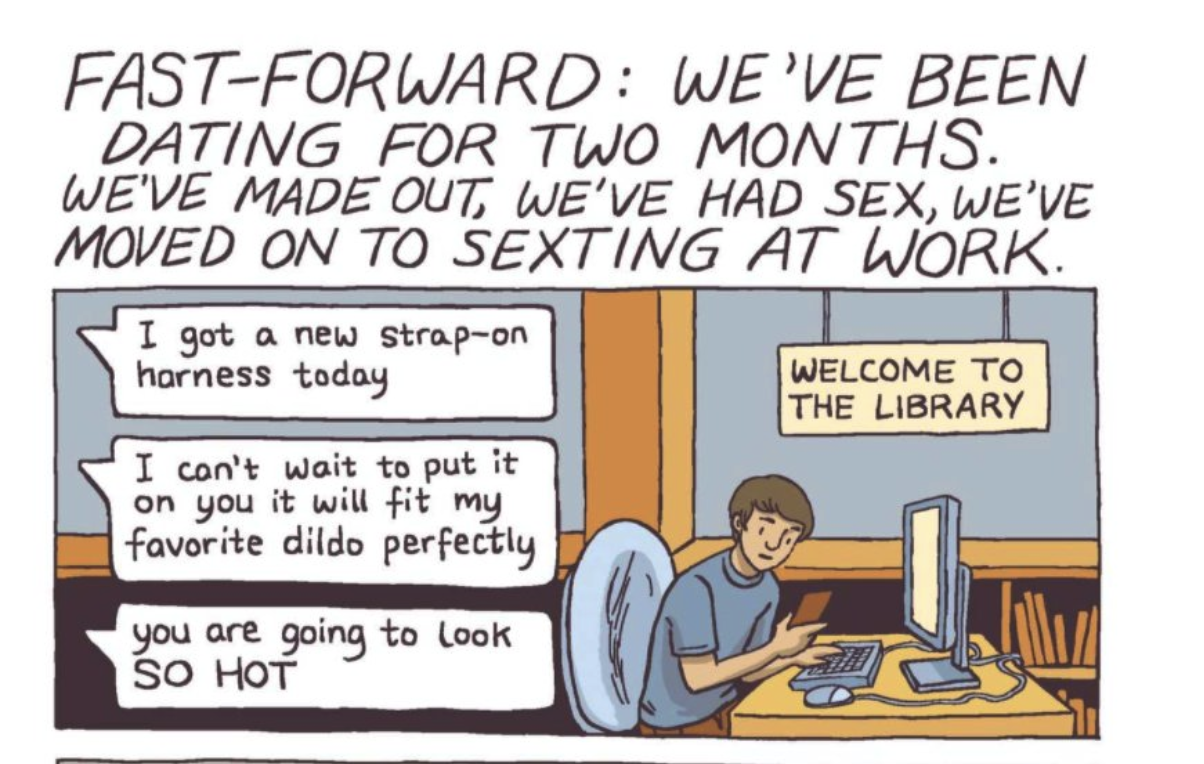
However, if and when journalists deem to quote parents, the parents seem upset about visual images and graphic stories that they consider to be pornographic or not age-appropriate for their children. Are their concerns valid? It’s hard to make judgements about that — since news reports never describe the details of their concerns, perhaps because the content is too strong for publication in newspapers.

With these questions in mind, let’s look at a recent Associated Press report that ran with this headline: “School library book bans are seen as targeting LGBTQ content.” Note that the headline seems to assume that books are banned from library shelves and that’s that. Here is the overture:

DES MOINES, Iowa (AP) — Teri Patrick bristles at the idea she wants to ban books about LGBTQ issues in Iowa schools, arguing her only goal is ridding schools of sexually explicit material.

Sara Hayden Parris says that whatever you want to call it, it’s wrong for some parents to think a book shouldn’t be readily available to any child if it isn’t right for their own child.
Please respect our Commenting Policy

Yes, this is personal: Concerning the New York Times report on The King's College crisis

Yes, this is personal: Concerning the New York Times report on The King's College crisis

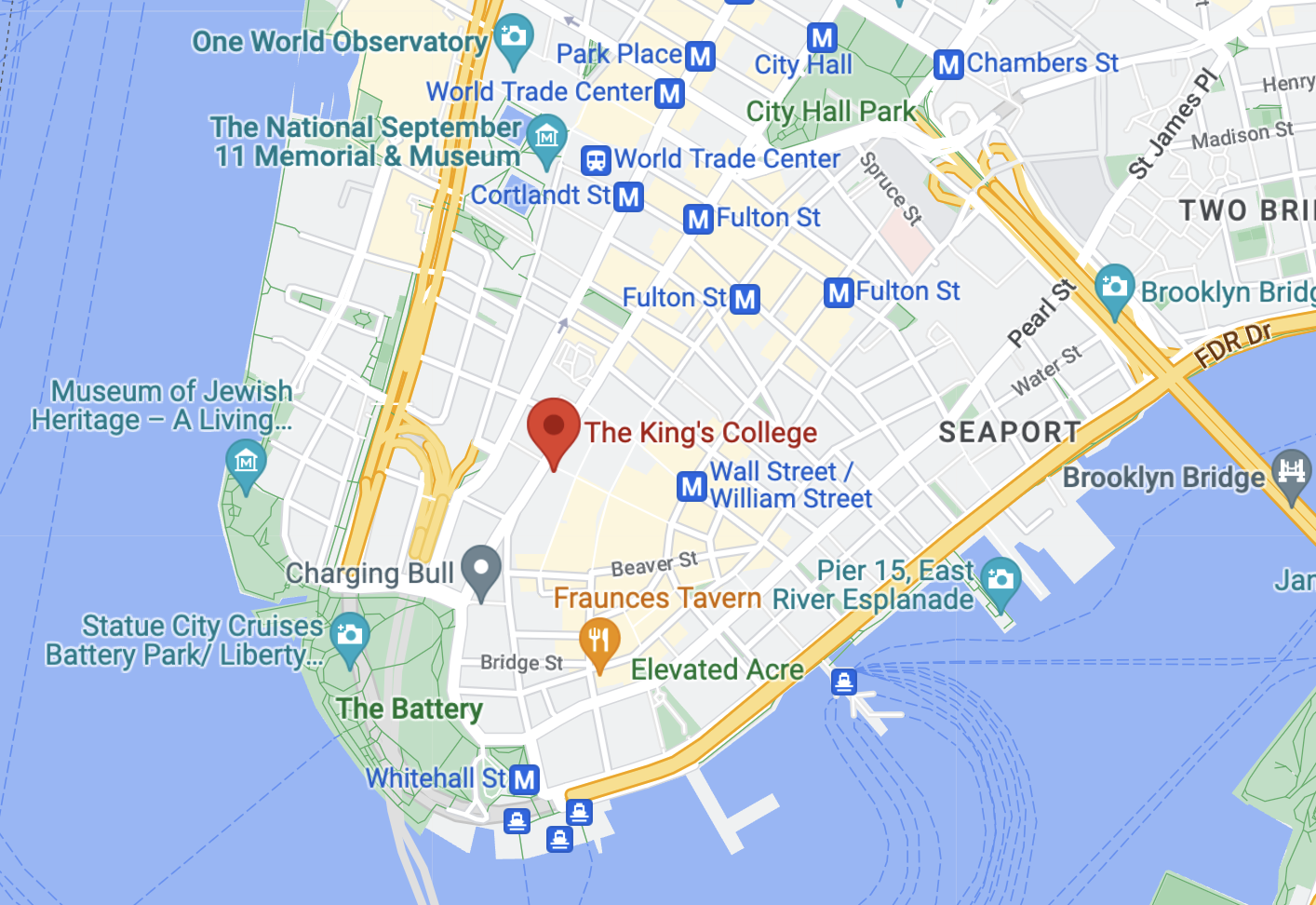
I have been on the road for about 12 days now, visiting family in Kansas after speaking at a journalism conference in Washington, D.C. During that time, I have received quite a few emails asking me to comment on the New York Times story about the crisis at The King’s College in lower Manhattan.

As longtime GetReligion readers know, I taught seminars at The King’s College for five years after the semester-length Washington Journalism Center program moved there in 2014. I have friends and former colleagues at TKC and, thus, writing about this topic is quite personal.

Thus, let me stress that the following is a GetReligion commentary about the Times report — which is an important story and, frankly, quite good. It’s crucial — here’s that GetReligion theme, again — that it was assigned to a religion-desk reporter. However, the story, in my opinion, does have an important “ghost” in it, one that could be spotted by anyone who has dug into the details of recent academic and financial trends in Christian higher education.

Hold that thought. First, here is the double-decker headline on this news feature:

The Second Life of a Christian College in Manhattan Nears Its End

The King’s College, which draws students from around the country to Manhattan, has not been able to recover from enrollment and financial losses.

As is the case with MANY private colleges, before and after the coronavirus pandemic, this small college has fundraising issues, enrollment issues and then budget issues that are directly linked to enrollment issues.

To be blunt, many excellent private educational institutions are overly dependent on tuition dollars and lack the endowment funds to survive severe drops in recruiting numbers. For two decades Christian college leaders have known that they would face severe challenges after the passing of a giant wave of students from the giant Millennial generation.

Thus, Christian college administrations have been asking hard questions about recruiting and fundraising. Here is one way to look at it: The concerns of donors, church leaders and parents are not (#DUH) always the concerns of potential students. However, a Christian college cannot survive without loyal donors, church leaders and parents willing to send their children — the ultimate investment — to a specific college.

The raises a painful question: Should small Christian private schools case a “wide net,” seeking as many students as possible (period), or focus on “mission fit,” seeking students from homes and pews that strongly support a school’s core values and programs?


Please respect our Commenting Policy

How a veteran Catholic congressman evolved into a political heretic

How a veteran Catholic congressman evolved into a political heretic

WASHINGTON — As a veteran Chicago-land Democrat, Rep. Daniel Lipinksi knew what to expect when facing newspaper editors during pre-election endorsement season -- hard questions about his support for centuries of Catholic teachings on abortion.

But the Chicago Sun-Times stressed a different question in 2020 -- same-sex marriage. Lipinski said the Supreme Court had settled that issue, so he didn't expect to face it in Congress. The follow-up was blunt and personal: But do YOU support legalized same-sex marriage?

Lipinski said he supported his church's teachings on marriage and sexuality.

"They didn't just see themselves as newspaper editors interviewing candidates in a political race. ... They saw themselves as inquisitors seeking an admission of heresy," said Lipinski, who lost that close primary race with a rival backed by liberal Democrats.

During his 16 years in Congress, Lipinski voted with his party 90% of the time and his convictions never changed, especially on economic and labor issues. Nevertheless, by 2018 New York magazine had floated this headline: "House Democratic Leaders Rally to Defend Their Illinois Heretic."

By 2020, he had reached "political leper" status, in part because of social-media attacks on his beliefs that bled into mainstream news, he said, addressing the recent "Journalism in a Post-Truth World" conference in Washington, D.C. The event was sponsored by Franciscan University in Steubenville, Ohio, and the Eternal Word Television Network.

The old days of tough questions and bipartisan debate were one thing, said Lipinski. At this point, American politics have stormed past tribalism into bitter sectarianism, with politicos, activists and journalists embracing "partisanship as a fundamentalist pseudo-religion" that strictly defines good and evil.

What is happening? In the past two decades, he noted, researchers have documented a stunning rise in "religiously unaffiliated" Americans. In 2020, Gallup reported that membership in houses of worship sank to 47% -- below the 50% mark for the first time. In 1999, that number was 70%.

It's possible, said Lipinski, that many citizens are now searching for "for meaning, or a mission, or truth, somewhere else," which only raises the stakes in public life.

"Partisanship has become not just a social identity, but a primary identity considered to be more important than any other," he said. "We all identify ourselves as belonging to different groups -- our families, our religions, our favorite sports teams, our professions. But more and more Americans are defining who they are by the political parties that they choose."


Please respect our Commenting Policy

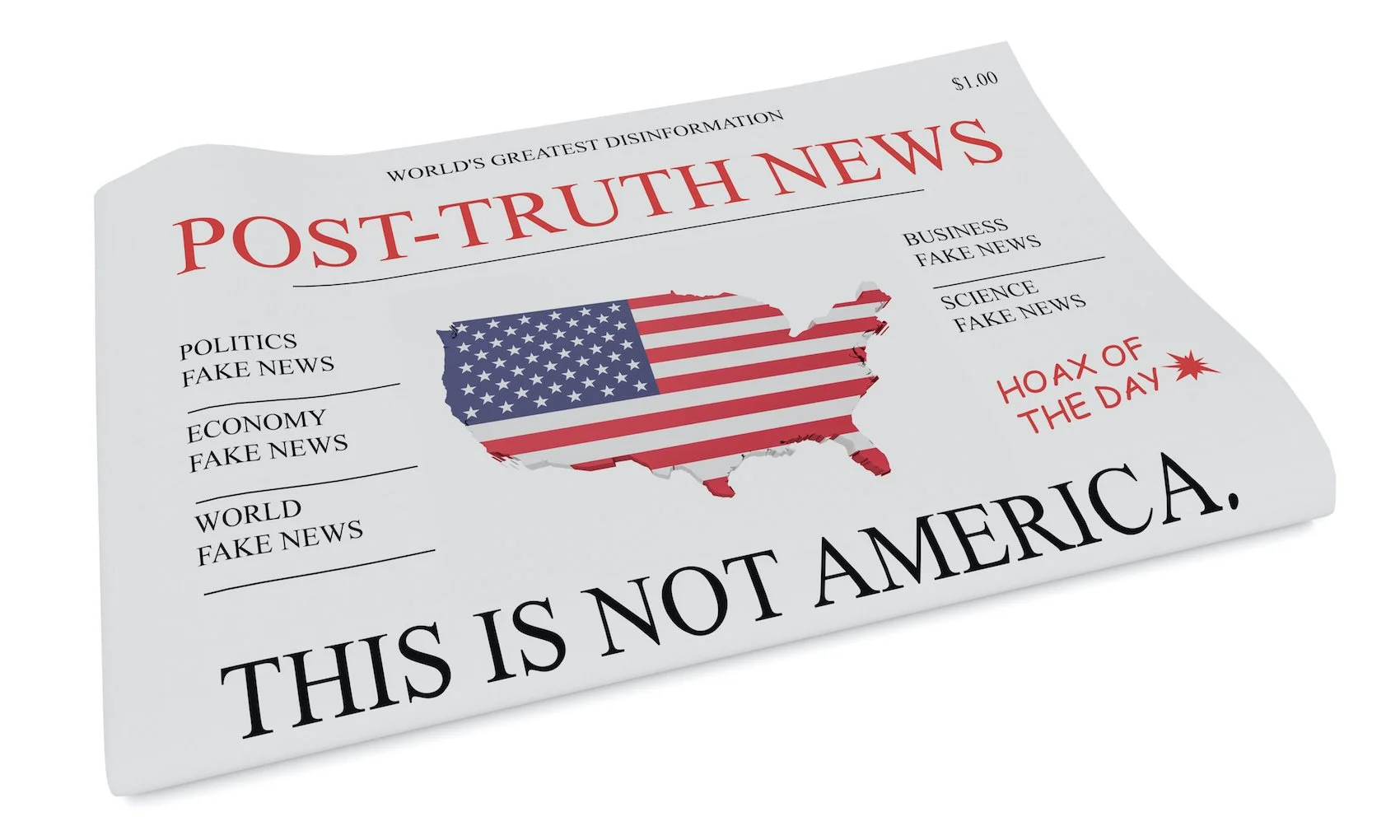
Podcast: Is 'post-truth America' a right-wing or a left-wing term? Please discuss

Podcast: Is 'post-truth America' a right-wing or a left-wing term? Please discuss

Please ponder this pair of true or false questions.

When religious, cultural and political liberals complained about Donald Trump promoting his own “alternative facts” for use in the mainstream press, did they have a valid point? Was it fair game for them to apply the academic term “post-truth” in this case?

When religious, cultural and political conservatives complained about Democrats and their Big Tech-Big Media allies burying coverage of the Hunter Biden laptop scandal, funders of Antifa, origin debates about COVID-19 and Jane’s Revenge attacks on churches and crisis-pregnancy centers, did they have a valid point? Was it fair game for them to apply the academic term “post-truth” in this case?

I would argue that the correct answer is “yes,” in both cases.

Debates about the meaning of the term “post-truth” were at the heart of this week’s “Crossroads” podcast (click here to tune that in). There was a logical reason for that, since Clemente Lisi and I were speakers in a March 10-11 conference in Washington, D.C., with this title: “Journalism in a Post-Truth World.” The conference was sponsored by Franciscan University of Steubenville and the Eternal Word Television Network.

The Franciscan University press release afterwards noted that the participants included journalists from the “National Catholic Register, The Washington Post, OSV News, Fox News, CNN, RealClearPolitics, The Catholic Herald, The Spectator, Washington Examiner, National Review, The Daily Signal, Catholic News Agency, The Daily Caller, and GetReligion.” Well, I had requested that I be identified as a columnist with the Universal press syndicate, but I wear several hats.

That’s a list that clearly leans to newsrooms on the cultural right, but with some solid mainstream voices as well. For example, I was on a panel about Catholic news coverage with the (in my eyes) legendary religion-beat pro Ann Rodgers, best known for several decades with the Pittsburgh Press and Pittsburgh Post-Gazette. Also, click here for a Lisi post at Religion Unplugged about his presentation.

It’s safe to say that someone was there from the National Catholic Reporter, because of this headline in that progressive Catholic publication: “EWTN-sponsored conference on journalism embraces right-wing 'post-truth' narrative.


Please respect our Commenting Policy

Florida evangelicals mull Trump vs. DeSantis and, #behold, AP finds some diversity!

Florida evangelicals mull Trump vs. DeSantis and, #behold, AP finds some diversity!

Brace yourselves, readers, because I am about to praise an Associated Press story about evangelical voters, Florida and the looming clash between Gov. Ron DeSantis and former President Donald Trump.

But before we go there, let’s review two GetReligion themes about these topics.

(1) During the primaries before the 2016 presidential election, a strong army of evangelical voters provided strategic support for Trump. But just as many evangelicals voted for other GOP candidates in a very, very large Republican field. In the general election, white evangelicals — faced with a choice between Trump and Democrat Hillary Clinton — voted overwhelmingly for Trump.

This created the “81% of evangelicals just love Trump” myth, which hid some crucial divisions inside the complex and diverse world of American evangelicalism.

(2) Trump reached the White House — quite literally — because of the crucial votes of Latino evangelicals and Pentecostal believers in Florida. The growing diversity in Latino voting remained a secret hidden in clear sight until press coverage linked to the 2020 and 2022 elections, including the rise of DeSantis, who is Catholic.

This brings us to the new AP report: “Trump vs. DeSantis: Florida pastors mull conservative issues.”

While it contains some familiar mainstream press language on moral and cultural issues — battles about parental rights and sex education are about “politics,” as opposed to beliefs or doctrines — it offers information and input from a strong set of insiders and experts. Also, there is a truly shocking summary statement about evangelicals in Florida. Hold that thought. Here is the overture:

DORAL, Florida (AP) — Several of Florida’s conservative faith leaders have the ear of two early frontrunners for the 2024 Republican presidential nomination — former President Donald Trump, who lives in Palm Beach, and Gov. Ron DeSantis.

The clergy’s top political priorities are thus likely to resonate in the national campaign for the religious vote, even as both men’s agendas are still being weighed from the pulpit.

The faith leaders’ key issues include education, especially about gender and sexuality, and immigration, a particularly relevant matter in Florida, which is a destination for hundreds of thousands of newcomers and home to politically powerful Latino diasporas.

Guess what? Latino clergy have a rather complex stance on immigration, one rather similar to the views I have heard from mainstream evangelicals for a long time.


Please respect our Commenting Policy

Who are America's most influential women in religion? Why do they get so little ink?

Who are America's most influential women in religion? Why do they get so little ink?

International Women’s Day last week led to — naturally — a lot of news features about the female half of the human race.

The Washington Post did a piece on women in Afghanistan (as did the New York Times); Agence France Presse wrote on women who work for the Roman Curia; the Jewish Telegraph Agency covered Orthodox women who get around their religion’s prohibition against women chanting Hebrew scriptures to mixed audiences.

I would have liked to have something more diverse and wider-ranging, such as a list of top women who exert influence not only within their own religions, but who have spoken to needs or issues in the general culture. In effect, they have transcended their faith groups.

In short, who are the most influential women in American religion?

Time magazine asked a similar question about evangelicals and the magazine’s list of America’s 25 most influential evangelicals is still referred to 18 years later. Most of those named were men; if there were women, they were paired with their husbands. The only two women who made the list on their own merits were televangelist Joyce Meyer and the late Diane Knippers, president of the Institute on Religion and Democracy.

I have spent much of my professional career profiling women in religion. The first time I put together such a list was in 2014 when I was so frustrated at how so many gifted evangelical women didn’t get near the top billing in the media that men do. In a post titled “Great Women Who Will Never Be Famous,” I wrote about Miriam Adeney, Nancy Pearcey, Robin Mazyck, Susan Wise Bauer, Sarah Zacharias Davis and Dale Hanson Bourke.

I’ve now updated that list to include other religions. I avoided women who got where they are because of their husbands. I am not denigrating their accomplishments, but simply focusing elsewhere.

I do realize that women in many traditions aren’t allowed into formal religious positions, which is why my list includes activists, bloggers and others who work outside regular boundaries.

It’s a sticky wicket, this list. Should one stick with women who have the largest numbers of books written, most news coverage or most impressive social media standings? How about lesser-known women who represent important constituencies?

For instance, many of you may not know Nailah Dean, 30, a black/Latina California lawyer and Muslim feminist who speaks out on what she calls the “Muslim marriage crisis.”


Please respect our Commenting Policy

Do the Math: Reporters use labels all the time, but religious life is more complex than that

Do the Math: Reporters use labels all the time, but religious life is more complex than that

Everything I do on social media is a trade-off.

That’s the nature of data visualization. You have to take an incredibly complex and often messy social world and distill it into a rather straightforward graph that the average person scrolling Twitter can understand in five seconds or less. Not an easy task.

One of the ways in which social scientists have tried to make the concept of age more palatable is through the use of generations — Boomers, Gen X, Millennials, etc. There have been several pieces published in the last few years that have exhorted social scientists to stop using these concepts because they mean very little from an empirical perspective.

One reason is that they are completely arbitrary. Born in December of 1979 — you are a Gen X. Born just one month later — you’re a Millennial. And consider the fact that you can be born in 1981 or 1995 and are part of the same generation. That’s just nonsensical the more you think about it.

One way around is to use five-year birth cohorts.

Instead of 15 or 20 year spans for generations, a birth cohort can be just those born between 1940 and 1945. This helps to further isolate the impact of age on religious trends. I’ve been making graphs using this cohort strategy for a while now and they can provide a lot of illumination about American religion and politics.


Please respect our Commenting Policy

Mainstream outlets ignore anti-Catholic angles in Merrick Garland's Senate testimony

Mainstream outlets ignore anti-Catholic angles in Merrick Garland's Senate testimony

It’s almost always news when a public official testifies before a congressional committee. Such was the case when Attorney General Merrick Garland faced the Senate Judiciary Committee. 

As expected, it was an important, and often heated, four hours of testimony that was highlighted by the back-and-forth exchanges between Garland and Republican senators on the panel. You can read Garland’s opening remarks on the DOJ website. 

Beyond his prepared remarks, there were plenty of potential storylines tied to religion that surfaced in the hearing. However, depending on which news organizations one follows, these storylines either made it into the news coverage or they were never mentioned. 

The Garland hearing comes at a time of heightened polarization, something made worse by the Supreme Court decision that rolled back the 1973 Roe v. Wade decision that legalized abortion. The aftermath of that decision has resulted in increased vandalism of Catholic churches, pro-life pregnancy centers and even a now-retracted FBI memo that targeted some traditional Catholics

The content of the coverage of the questions asked and the contents of Garland’s responses depended on what reporters, editors and news organizations deemed important. This has been the case for decades, but the shift has changed dramatically in more recent years as news organizations divide themselves into political camps depending on the beliefs of their faithful audiences

Did valid religion angles, especially those involving Catholics, make it into the coverage of national legacy media outlets? 

Here is a hint: Prayers by protestors at abortion facilities appear to be considered much more dangerous, and thus newsworthy, than vandalism, or even arson, at Catholic churches and crisis pregnancy centers. News coverage of this Senate hearing seemed to have been produced by journalists living in parallel universes. Once again, this is the dominant news trend in the Internet age.

Here is the top of the New York Times report on the Garland hearing: 

WASHINGTON — Republicans subjected Attorney General Merrick B. Garland to a four-hour grilling before the Senate Judiciary Committee on Wednesday, a harbinger of the fights that loom ahead as the party targets the Justice Department in the months leading up to the 2024 election. 


Please respect our Commenting Policy

EV charging sites at churches: Which denominational brands will get government $$$?

EV charging sites at churches: Which denominational brands will get government $$$?

Let me open this post with a confession: I am part of a growing flock of folks (some say “cult”) that attracts lots of nasty social-media commentary from a fascinating coalition of left-wingers and right-wingers.

In other words, I drive an electric car.

Wait. Anger from left-wingers? Remember these four words: Elon. Musk. Bought. Twitter.

Anyway, I have spent quite a bit of time reading about efforts to build EV-charging networks. Things were totally bonkers during the year or two that the Joe Biden White House was refusing to utter the word “Tesla” and seemed poised to pour billions of tax dollars exclusively into networks that are infamous for the stunningly high percentage of time their chargers are broken.

Now, what does this inside-baseball discussion have to do with religion-beat news?

Maybe you saw this Religion News Service headline that ran the other day: “Could churches be prime locations for EV charging stations? One company thinks so.

You see, EV charging stations require (#DUH) empty parking spaces, and it helps if these slots are in convenient urban and suburban locations — frequently near a highway exit or two. This leads to the totally logical overture for this timely RNS piece:

As more drivers make the decision to switch from gas-powered cars to electric vehicles, places to power them remain few and far between in large parts of the country. And with the Inflation Reduction Act of 2022 incentivizing clean energy and electric cars, as well as providing investments for green technology, the demand will only increase.

Churches, with their large parking lots that often sit empty during the week, could help provide a solution.

Now, imagine yourself driving through a typical American city. In your mind’s eye, where do you see empty church parking lots?

Basically, you will find two different kinds of lots and they tend to be located in rather different kinds of places. This is where I see a potential news hook or two.


Please respect our Commenting Policy