Politics

Another day, another RNS First Amendment story with zero focus on the First Amendment

Another day, another RNS First Amendment story with zero focus on the First Amendment

Another day, another Religion News Service report about clashes between the First Amendment and the doctrines of the Sexual Revolution.

As is the norm, this news story about a crucial First Amendment issue does not include the term “First Amendment.”

As is the norm, this RNS story does not include material about how many, not all, private faith-based schools — they exist on left and the right — require students, faculty and staff to sign covenants in which they choose to join a community that is defined by a set of core doctrines that members promise to follow or, at the very least, not to attack.

It is always crucial for journalists, when covering these stories, to ask if a private school has a covenant of this kind. If one does not exist, then this radically strengthens the case of students who argue that the school is discriminating against them.

As is the norm, the RNS story includes one tiny bite of information from the bad-religion people, while framing the conflict in the arguments of the good-religion people. In this case, alas, the bad-religion people won. The headline: “Federal court dismisses LGBTQ students’ class-action discrimination lawsuit.

As always, let me stress that there is an important story here. Some Christian schools do a bad job — when recruiting and orienting students — of being honest about their covenants or handbooks. As I said, there are schools that do not have covenants, which means students (and parents) may not know what they are getting into when they choose to enroll at one of these private schools that are“voluntary associations” under the First Amendment. Hold that thought. Here’s the overture:

There is no legal remedy for LGBTQ students who claim they were discriminated against at their religious universities, an Oregon federal district court ruled in a high-profile case late Thursday (Jan. 12).

The judge dismissed the class-action lawsuit filed in March 2021 on behalf of about 40 students and former students at religious schools nationwide. The case, Hunter v. the U.S. Department of Education, claimed that the department failed to protect LGBTQ+ students at religious schools from discrimination.

Please respect our Commenting Policy

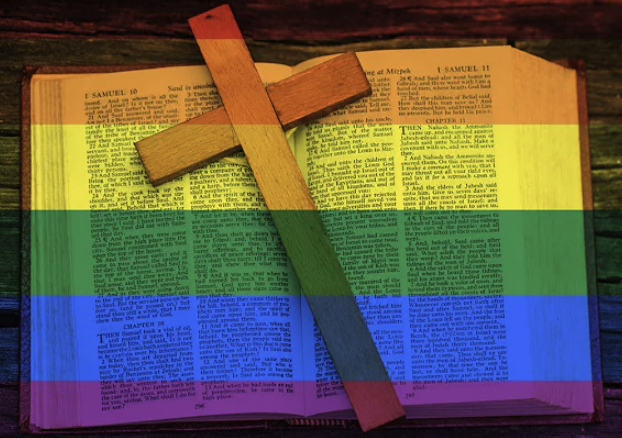
Why do 21st Century Christians favor, or oppose, same-sex marriage? (Clue: doctrine)

Why do 21st Century Christians favor, or oppose, same-sex marriage? (Clue: doctrine)

THE QUESTION:

Why do 21st Century Christians favor, or oppose, same-sex marriage?

THE GUY’S ANSWER:

Just before Christmas, a top Donald Trump-loving conservative on New York City talk radio professed disbelief that some Americans persist in opposing same-sex marriage because of some book (unnamed) written ages ago.

Obviously, The Guy again realizes that journalism has important work to do explaining the basics of centuries of Christian thinking, both con and pro.

The teaching against gay and lesbian sexual relationships stood essentially unquestioned for 2,000 years but now that’s changing.

Still, on the global level some 2 billion people belong to Catholic, Orthodox, conservative Protestant, and Independent indigenous churches where there’s no prospect of any major change, though individual members dissent. (The same for a billion Muslims.)

In the U.S., the traditionalists are on defense with gay and lesbian marriage legalized by the U.S. Supreme Court and now Congress. They seek recognition by courts and government agencies of their conscience claims, hope to avoid penalties, and worry that ostracism from polite society may lie ahead.

Many “mainline” Protestant churches in North America and Western Europe recently enacted historic breaks with tradition, approving same-sex marriages for clergy and parishioners. U.S. landmarks: Change was first formally proposed to Presbyterians in 1968 and the United Methodist Church in 1972. Evangelical Lutheran Church in America Lutherans published four major books advocating change between 1983 and 1999. The Episcopal Church consecrated its first openly gay bishop in 2003, deepening an international divide among Anglicans.

Among resulting walkouts, the biggest may be the United Methodist one that is finally erupting.

Protestant disputes always center on the Bible


Please respect our Commenting Policy

Here we go again: Hollywood doesn't 'get' America, so maybe religion is part of that?

Here we go again: Hollywood doesn't 'get' America, so maybe religion is part of that?

Every decade or so, power players in Hollywood discover that there are millions of Americans who do not mind buying tickets to see movies that contain overtly religious symbols, themes and even characters.

I’ve been covering this story since the 1980s. It’s fascinating how new generations of reporters manage to work up a sense of culture shock about this.

For example, consider that much-discussed Atlantic feature back in 2005 that ran with this headline: “Can Jesus Save Hollywood?

Another five or six years later, the discussion of niche-Christian entertainment was still creating buzz. The conservative interfaith journal First Things ran a provocative piece with this headline: “Is ‘Christian’ the new ‘Gay’?” Sociologist D. Michael Lindsay, at that time the president of Gordon College, responded to a question about that equation:

This comes from a quote that one woman who I interviewed in Hollywood recounted to me a story that she had where the conversation basically was a Hollywood producer telling her that it had become new and interesting for committed Christians to “come out” in Hollywood. And they actually used that language of “coming out” where one publicly identifies in this way. I think what it really reflects is although historically Christianity has been a very powerful force in this country, within the pockets of elite cultural life — in Hollywood, at universities like Harvard and Yale and the rarefied heights of arts and entertainment — being a deeply committed person of faith, whatever that faith tradition may be, is seen as unusual or odd. There’s pressure when you’re in those high positions not to be too public about your faith and certainly not a faith that is evangelistic in approach because that’s seen as overbearing or narrow-minded.

Like I said, this is “old” news. This trend will go on and on — because America is basically a red v. blue puzzle these days and it’s hard to ignore the evidence that “pew gap” statistics play some role in that.

That David French guy — much hated by Trumpian conservatives and lots of illiberal progressives — had a provocative summary of the situation in his must-read book “Divided We Fall: America's Secession Threat and How to Restore Our Nation.” Here is a summary of that French thesis from a new essay I wrote for the journal Religion & Liberty about the death of the old-school American Model of the Press:

The bottom line: Americans are divided by their choices in news and popular culture, choosing to live in protective silos of digital content. America remains the developing world’s most religious nation, yet its secularized elites occupy one set of zip codes, while most religious believers live in another. These armies share no common standards about "facts," "accuracy" or "fairness." 

 “It's time for Americans to wake up to a fundamental reality: the continued unity of the United States cannot be guaranteed,” wrote French. At this moment, “there is not a single important cultural, religious, political, or social force that is pulling Americans together more than it is pulling us apart.”

This brings me to a new City Journal piece with this headline: “Can Capitalism Save Hollywood? The gulf between elites and audiences is eroding profits throughout entertainment and news media — but signs of correction are emerging.”


Please respect our Commenting Policy

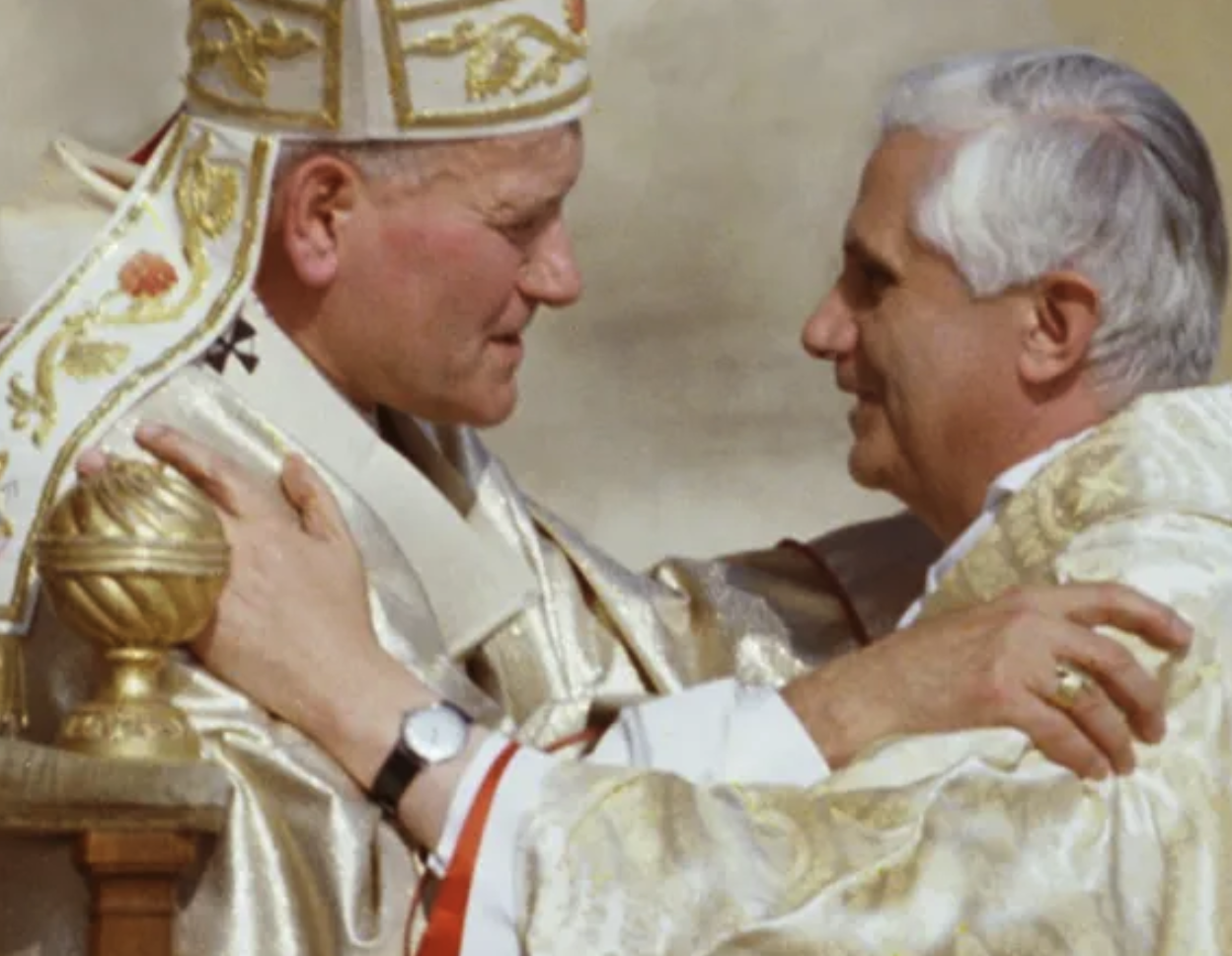
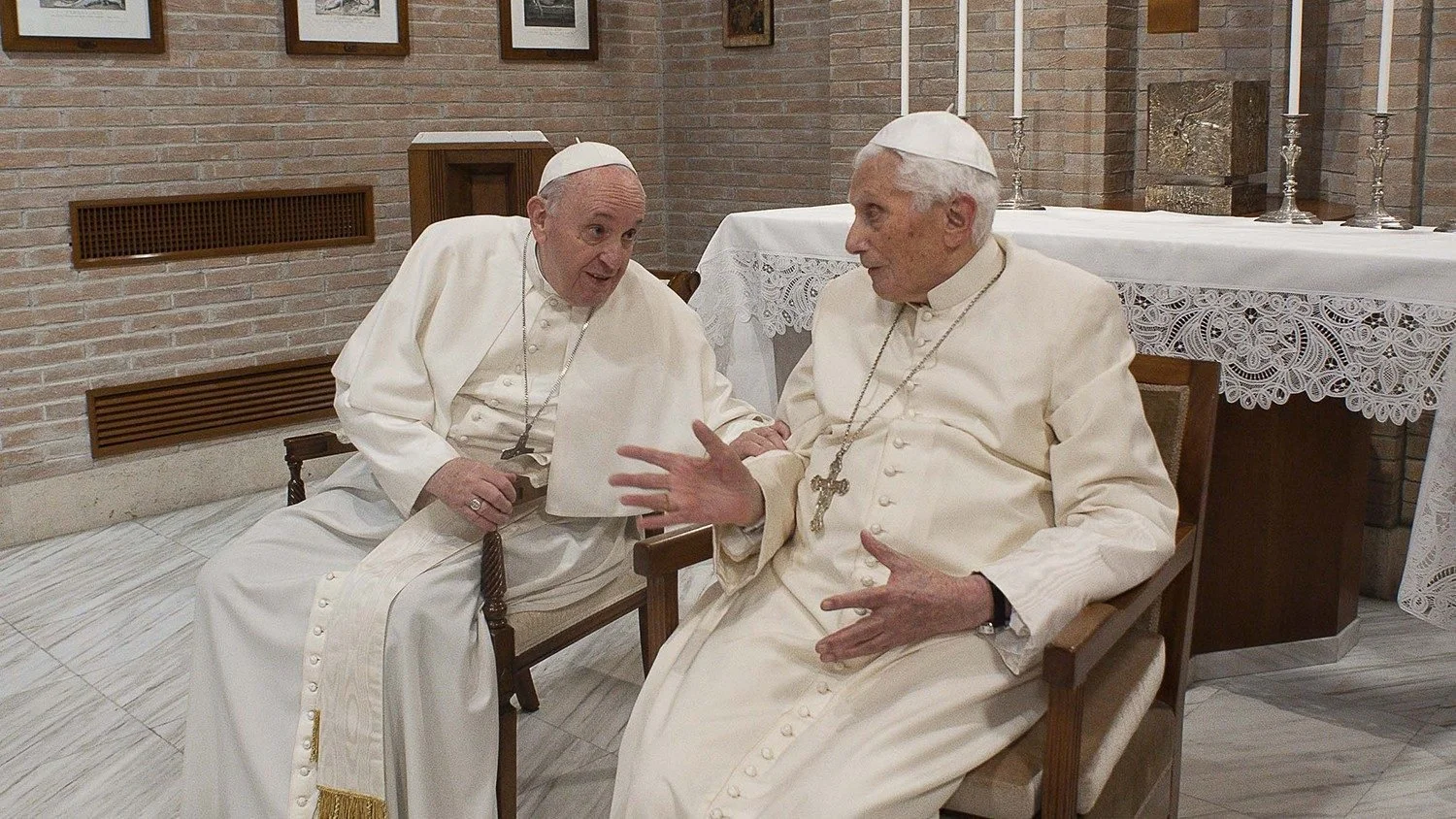
Benedict XVI's death ushers in media speculation on what Pope Francis can (or will) do next

Benedict XVI's death ushers in media speculation on what Pope Francis can (or will) do next

One of my five things to watch for in 2023 included media speculation over Pope Francis’ health and speculation over his possible retirement.

Within three days of that post — and prompted by the death on Dec. 31 of Pope Emeritus Benedict XVI at the age of 95 — speculation increased once again.

This is what I wrote in that Dec. 28 post:

The pope has often praised the decision of his predecessor, now Pope-Emeritus Benedict XVI, to resign because he felt unable to carry the duties of the papacy due to his advanced age.

In 2013, Benedict, who currently lives in a monastery at the Vatican and is seldom seen, became the first pontiff to resign in 600 years, paving the way for Francis’ election. Now his health appears to be failing.

Will there be a new conclave in 2023? There’s no way to know that now. One thing, however, is certain. Speculation will only mount with each passing day. Pope Francis isn’t getting younger.

The election of a new pope is a story journalists love to report. It’s something like a cross between a presidential election and a royal wedding. The bottom line: Journalists see it as a political horse race.

Speculation will certainly mount. Journalists love elections.

Much of the speculation over what Benedict’s death means for Francis, however, cast a shadow over what should have been stories around the legacy of former Cardinal Joseph Ratzinger. Instead, the news coverage quickly shifted to “what happens next” — not an unusual journalism strategy in order to have political-style coverage that looks ahead rather than at the past — and whether Francis would someday step down.


Please respect our Commenting Policy

Plug-In: After the death of Benedict XVI -- questions about his legacy and his funeral

Plug-In: After the death of Benedict XVI -- questions about his legacy and his funeral

I’m your Weekend Plug-in columnist, and I’m excited to launch the fourth year of this newsletter.

Plug-in aims to highlight the best reads and top headlines in the world of faith. In 2023, we’re tweaking our format to make it even smarter and more concise.

Let’s jump right in!

What To Know: The Big Story

Pope Emeritus Benedict XVI died Saturday at age 95. Clementi Lisi recounts the life of the first pope in 600 years to resign.

Pope Francis presided over the funeral Mass for his predecessor, as Lisi reports. But some found fault with Francis’ brief homily for Benedict, according to The New York Times’ Jason Horowitz and Ruth Graham.

For more coverage from the Vatican, follow The Associated Press’ Nicole Winfield, the National Catholic Reporter’s Christopher White, Religion News Service’s Claire Giangravé and the Wall Street Journal’s Francis X. Rocca.

Looking ahead: Francis may have a freer hand after Benedict’s death, Rocca reports. But U.S. bishops’ rift with Francis is unlikely to ease, according to AP’s David Crary. At Crux, Elise Ann Allen explores whether Benedict’s death might open the door to new rules for retired popes.

More: Lisi presents “5 Catholic storylines you need to follow closely in 2023.”

Power Up: The Week’s Best Reads

1. Football and prayer: In America, the phrase “thoughts and prayers” is uttered frequently at painful times, as Poynter.org’s Al Tompkins notes.

But what happens when people actually pray?


Please respect our Commenting Policy

Flashback: The late, great Walter Cronkite did some thinking about religion news

Flashback: The late, great Walter Cronkite did some thinking about religion news

Did you know that the late, great CBS News anchor Walter Cronkite, one of the most important news icons of all kind, once worked as a “church editor” for a mainstream newspaper in Houston (apparently the old Houston Press)?

That was a detail from his life that I missed. I had read, long ago, that he was a “cub reporter” after his college years, yet before he broke into broadcasting. But time as a “church editor”? That’s a journalism title from the old, old days, one that is even more condescending than the more common and inaccurate label “religious editor (as opposed to “religion” editor.

Anyway, a religion-beat friend recently send me a photocopy of a 1994 interview with Cronkite that ran in The Christian Century, the influential mainline Protestant journal. I can’t find it online, although it was quoted by Religion News Service in an a short obit — “And that’s the way he was” — in 2009.

Encountering that “church editor” label reminded me of the old “Lou Grant” show episode that I used as the opening for my graduate project at the University of Illinois in Urbana-Champaign, which ran — in a much condensed form — on the cover of The Quill in 1983. The headline on that journal essay was: “The religion beat: Out of the ghetto, into the mainsheets.

The “ghetto”? That was the “church page.” The overture of that Quill piece is long, but it will provide some context for the Cronkite remarks that I will share here:

As was often the case, Lou Grant was working on two problems at once. At first the problems seemed unrelated.

The Los Angeles Tribune had lost its religion editor. City editor Grant had searched far and wide and, of course, no one was interested in the position. After all, what self-respecting journalist would want to be stuck with the religion beat?

Problem number two was how to get rid of lazy, often-drunk, no-good reporter Mal Cavanaugh. All through this episode of Lou Grant the management of the Trib had been trying to find a way to get Cavanaugh to resign.

Then, a spark of inspiration. The script is simple:

LOU: Congratulations, Mal. You're the Trib's new religion editor.


Please respect our Commenting Policy

Podcast: Benedict XVI protected ancient doctrines, while looking into an ominous future

Podcast: Benedict XVI protected ancient doctrines, while looking into an ominous future

The passing of any pope unleashes waves of news commentary, frequently with supporters clashing with critics in an attempt to help shape the narrative heading into the conclave to pick the next occupant of the Throne of St. Peter.

What about the passing of a pope emeritus? That would make things simpler, since there the current pope was still alive and in charge. Right?

Apparently not. The death of Pope Benedict XVI, if anything, seemed to raise the stakes in many lingering debates in Catholic life. My takeaway is that it represented the final, formal close of the era of St. Pope John Paul II, as well as that of Pope Benedict XVI, who, as Cardinal Ratzinger, had played a crucial theological role in support of John Paul.

Thus, this event — for many on the Catholic right and left — marked the end of the “Veritatis Splendor” era, with John Paul II’s emphasis on the defense of transcendent truths, and the open door into the Synod on Synodality era, with its modern Jesuit emphasis on dialogue and evolving doctrine.

The complex nature of this transition provided the hook for this week’s “Crossroads” podcast (CLICK HERE to tune that in).

How complex? For a glimpse of the sweeping nature of this story, check this post from the Catholic listserv Big Pulpit — which circulates daily lists of URLs to news reports, blog posts, podcasts and other commentary on Catholic affairs.

The January 2 offering include a list of “The Top-10 Most Visited Links” about the death of Pope Benedict XVI. That was followed with the “Next-10 Most Visited Links.” Then there was “Another-10 Most Visited Links” and “The-Next-Another-10 Most Visited Links.” This went on and on for another screen or two, with a total of 80 must-read links for that day.

That’s all. Good luck reading all of that — plus countless other offerings in both the mainstream press and countless Catholic commentary sources.

GetReligion readers will not be shocked to discover that, for many journalists, the death of this orthodox theologian was primarily a political story.


Please respect our Commenting Policy

NYTimes editors ask, 'When does life begin?' and (bravo) include religious and legal responses

NYTimes editors ask, 'When does life begin?' and (bravo) include religious and legal responses

You never know what newsroom professionals will decide is a “holiday” story, of one kind or another.

For example, major publications have through the years run a wide variety of bizarre and even offensive stories that were, somehow, supposed to be linked to Easter. That season is problematic since it is so explicitly Christian, as in the faith’s most important holy day.

Christmas is a different matter, since the season is a cultural steamroller at the level of pop culture, big business and church-state warfare (a drag queens and you are on A1, for sure). Toss in the need for valid year-end features and lots of staff taking vacations and things can get pretty complex for editors.

All of that was an introduction to what I think was a totally valid Christmas-Yearender feature that ran at The New York Times with this big-issue headline: “When does life begin? The question at the heart of America’s abortion debate is the most elemental — and the most complicated.”

Talk about a complex, yet absolutely essential, topic to address after the fall of Roe v. Wade, and it’s absolutely essential that the editors assigned this one to the religion desk. That made sense because it’s impossible to draw a bright red line between the spiritual and legal issues in this debate. As if that isn’t enough, a reporter then has to deal with valid debates on this issue among scientists, and religious leaders (think popes) commenting on those debates.

Thus, this is a story that will draw few cheers from activists on either side of America’s abortion wars. That’s a compliment, with this kind of story. Here is a large chunk of its summary-thesis material:

When does life begin?

In the months since the Supreme Court overturned Roe v. Wade, it has become unavoidable, as activists and politicians try to squeeze concrete answers from an eternal question of human existence.

Lawmakers and judges from Arizona to South Carolina have been reviewing exactly which week of development during pregnancy the procedure should be allowed. Some states draw the line at conception, or six weeks or 15 or around 40. Many others point to viability, the time when a fetus can survive outside the uterus. The implication is that after the determined time, the developing embryo or fetus is a human being with rights worth protecting.

Over the summer, when lawmakers in Indiana fought over passing a law banning most all abortions from conception, Republicans argued at length that a fertilized egg was a human life, at times citing their Christian principles — that “human life begins at conception” and “God our creator says you shall not murder.” A Democrat pointed to another answer found in Title 35-31.5-2-160 of the Indiana code: “‘Human being’ means an individual who has been born and is alive.” A disagreement over abortion policy became a fight over what it means to be human, the tension between conception and birth, church and state.

Like I said, that’s just the start.


Please respect our Commenting Policy

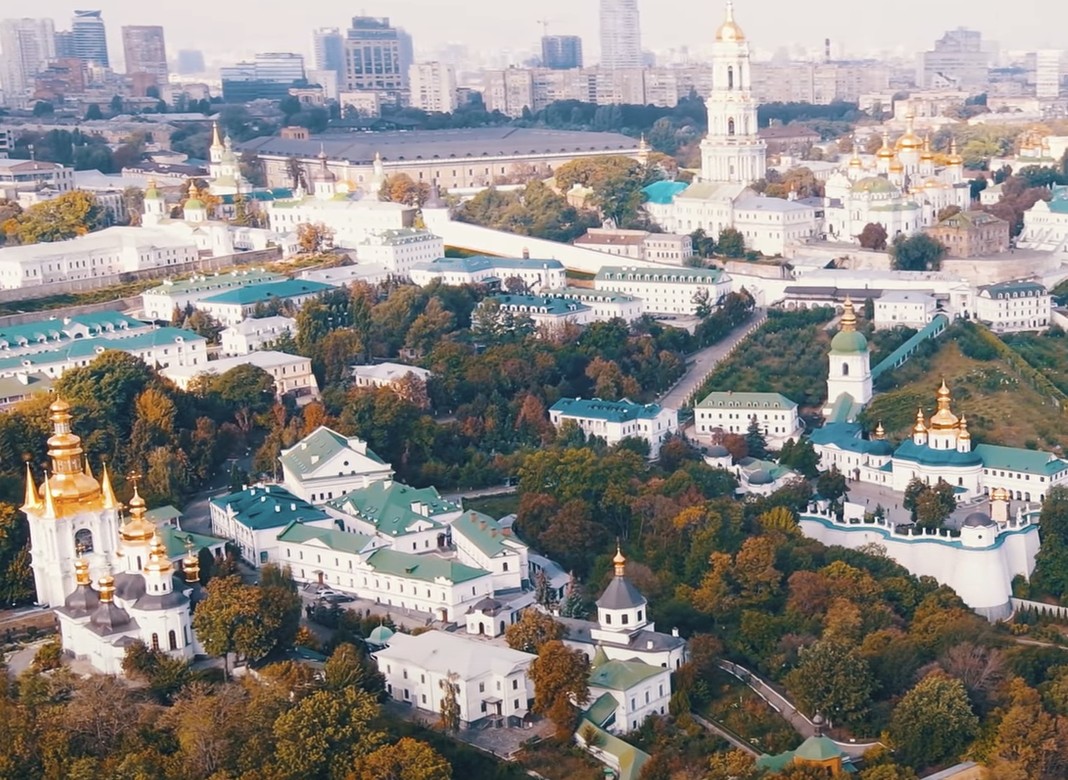
Clergy or spies? Concerning that New York Times update on accusations inside Ukraine

Clergy or spies? Concerning that New York Times update on accusations inside Ukraine

There are many, many facts about Orthodox church life in Ukraine that are hard to verify right now — for obvious reasons.

Civil wars create waves of fog that make it hard for reporters to do their job — if one assumes journalists have some responsibility to attempt to test the fact claims of armies on both sides.

All of this is relevant to that New York Times story that ran the other day with this headline: “Clergymen or Spies? Churches Become Tools of War in Ukraine.” Let me stress that this was an important story about an important topic. It would shocking if there were not divisions among Orthodox clergy and their parishes during a civil war.

Basically, this Times story is a press release built on evidence gathered by Ukrainian officials who want to shut down the historic Ukrainian Orthodox Church (UOC), which has for centuries had canonical ties to the Russian Orthodox Church. That church has done everything possible — under Orthodox polity — to cut its Moscow ties, while waiting for some kind of intervention from the world’s Orthodox patriarchs.

On the other side, the United States, the European Union and the Ecumenical Patriarchate in Istanbul have backed the creation of the new Orthodox Church in Ukraine (OCU) — which is, no surprise, backed by the current government of Ukraine.

So, before we get to the central claims of the Times story, let’s pause and ask a rather important question: How many Orthodox parishes, and clergy, are there in Ukraine these days? Yes, it complicates matters that some have been destroyed, by forces on both sides, and some have been closed or seized. How many parishes have been shut down or seized, and by whom? How many parishes have split? These are the kinds of questions that are hard to answer during a civil war.

Here is some interesting material from a source on the left side of Orthodox life here in the United States, the Orthodox Christian Studies Center at Fordham University in New York City. The headline on this blog post: “Which Orthodox Church in Ukraine is the Largest?” It was written by Thomas Bremer, a retired professor in Eastern Church studies at Münster University, Germany. Let’s walk through some key info:

Regarding parishes, the Ukrainian authorities have very thorough statistics. Every religious community that wants to exist legally in Ukraine has to register … and to provide data regularly about numbers of parishes, clergy, training institutions, etc.


Please respect our Commenting Policy