Politics

Return of the evangelical arguments about morality, character and two-party politics

Return of the evangelical arguments about morality, character and two-party politics

It was totally logical for the Southern Baptist Convention to pass its "Resolution on Moral Character of Public Officials" in 1998.

Consider this "whereas" clause: "Some journalists report that many Americans are willing to excuse or overlook immoral or illegal conduct by unrepentant public officials so long as economic prosperity prevails." This was followed by: "Tolerance of serious wrong by leaders sears the conscience of the culture, spawns unrestrained immorality and lawlessness in the society, and surely results in God's judgment."

Thus, the SBC urged American leaders to "live by the highest standards of morality both in their private actions and in their public duties."

Yes, this resolution passed soon after the infamous claim by President Bill Clinton, a Southern Baptist, that "I did not have sexual relations with that woman."

It was easy to predict who thought Clinton should exit the White House, noted conservative writer Marvin Olasky, who was writing "The American Leadership Tradition: Moral Vision from Washington to Clinton" at that time.

"In poker, you really don't know what cards someone has," said Olasky, reached by telephone. "You can't tell, with certainty, the character of a politician. … In that book, I argued that the state of a man's marriage was a strong tell. If he's faithful in his marriage, he's likely to be faithful to the nation."

Olasky's fellow religious conservatives praised the book. But things changed when he wrote a World magazine essay in 2016 entitled, "Unfit for power," arguing that Donald Trump should step aside as the Republican nominee.

"Clinton had denied having a sexual relationship with Monica Lewinsky, but her stained blue dress bearing Clinton's DNA was proof that he had used his power for adulterous purposes, and then lied about it," wrote Olasky. Then there was the videotape showing "Trump making lewd remarks about groping women's genitals. While many opponents … have criticized Trump's character, the video gave us new information about how Trump views power as a means to gratify himself."

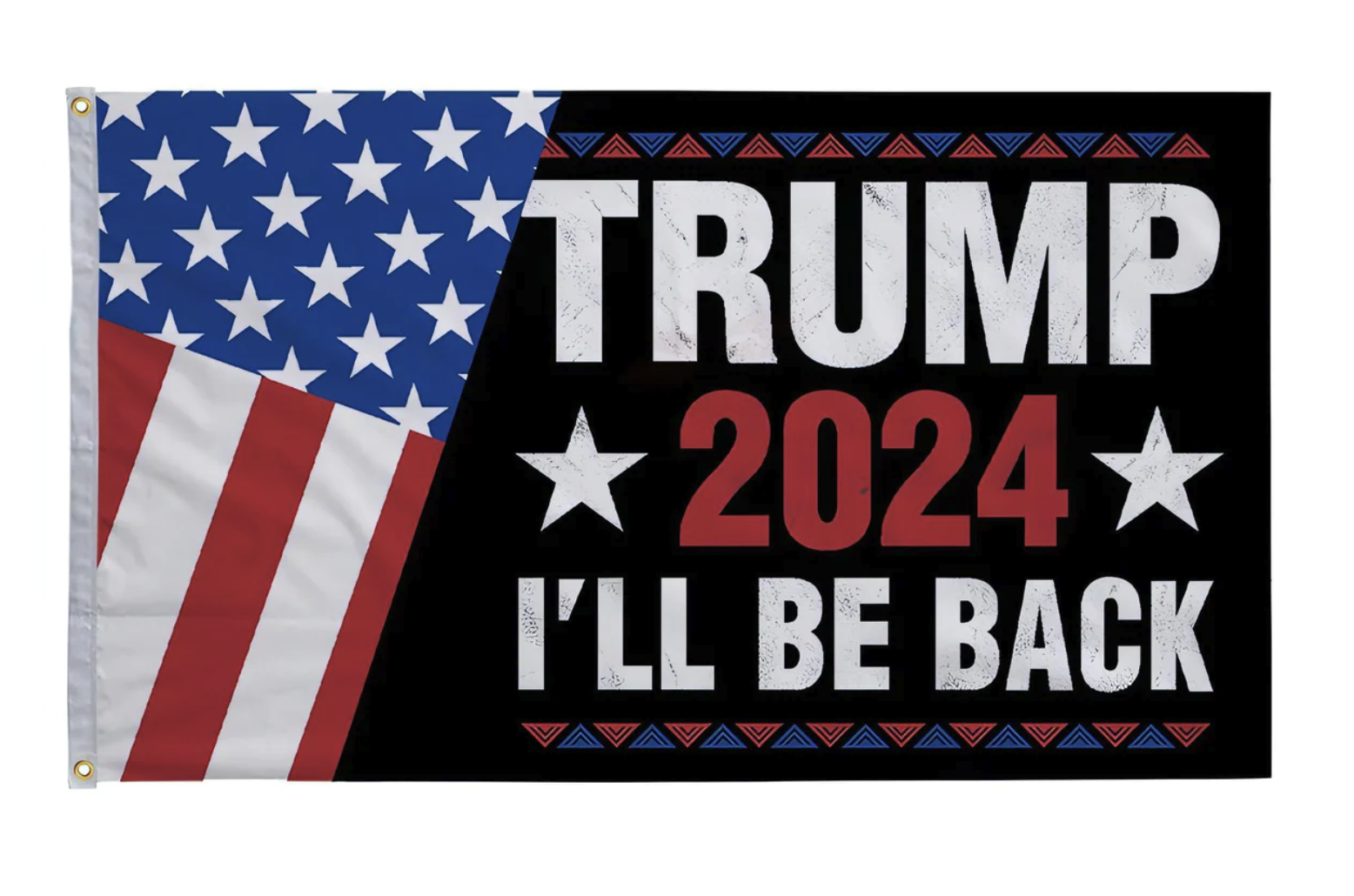
Olasky recirculated this 2016 editorial after Trump's recent announcement that he would seek the presidency once again, igniting renewed social-media warfare among evangelicals about morality, character and the winner-take-all nature of American politics -- especially when Supreme Court seats are vacant.


Please respect our Commenting Policy

Podcast: Is Colorado Springs covered by a 'fundamentalist' blanket of hate?

Podcast: Is Colorado Springs covered by a 'fundamentalist' blanket of hate?

At this point, there are many, many crucial facts that journalists do not know about the horrible Club Q massacre in Colorado Springs.

This lack of facts has done little to shape the coverage. We do not, for example, know if Mx. Anderson Aldrich is sincere when claiming, in case documents, to be nonbinary. It will, in the meantime, be interesting to see if many mainstream newsrooms choose to deadname Aldrich in their coverage, perhaps by striving to avoid pronouns altogether.

We do know that the alleged shooter was raised in a broken home with multiple mental-health and violence issues. Consider, for example, the father — an ex-con MMA fighter turned porn star (and a Republican, of one form or another).

At this point, it does appear that some journalists — while searching for the “why” in the “who, what, when, where, why and how” formula — have decided to place the city of Colorado Springs on trial and, perhaps, the whole state of Colorado. This was the primary topic discussed in this week’s “Crossroads” podcast (CLICK HERE to tune that in).

The key: A return of that dreaded journalism F-word — “fundamentalist.” For more background on this religion-beat disease, please see this GetReligion post by Richard Ostling (“What is 'Fundamentalism'? Name 666 or so examples from recent news coverage”) and this On Religion column (“Define ‘fundamentalist,’ please”) that I wrote in 2011.

Here is the key material from a USA Today story that, in my opinion, goes completely over the top while claiming that, to be blunt, a kind of hate cloud covers Colorado Springs. The headline: “Colorado Springs worked to change its anti-gay image — then its sole LGBTQ nightclub was targeted.”

Most notably, in 1992, religious fundamentalists from Colorado Springs wrote Amendment 2, a measure seeking to amend Colorado's constitution by making it illegal to ban discrimination based on sexual orientation. The measure was approved by Colorado voters that November, earning Colorado the nickname of the "Hate State," according to the Colorado Springs Pioneer Museum. Amendment 2 was ultimately struck down by the U.S. Supreme Court in 1996.

The city is also the headquarters of Focus on the Family, a fundamentalist Protestant organization whose founder James Dobson is known for his stances against gay and trans rights.


Please respect our Commenting Policy

Who is covering this big story? The exodus of the Donald Trump faith advisors

Who is covering this big story? The exodus of the Donald Trump faith advisors

An interesting wrinkle in religion news came up the other day when a bunch of news organizations did some digging and found out that former President Trump’s once loyal religious base had evaporated.

Perhaps one of the most shattering admissions of this loss came from one of his advisors who called the former president a “little elementary school child.”

Clearly a lot has changed on the Trump train faith-team front. Let’s start with this Religion News Service story:

WASHINGTON (RNS) — When Donald Trump launched his 2020 reelection bid in Orlando, Florida, three years ago, the event was riddled with faith-speak. Both Trump and then-Vice President Mike Pence repeatedly referenced God, arguing the Almighty had blessed America. Trump’s closest evangelical adviser, Florida pastor Paula White-Cain, opened up the event with a passionate invocation in which she insisted the “hand of God” would work for Trump.

But when Trump announced yet another White House bid from his Mar-a-Lago resort in Florida on Tuesday (Nov. 15), he did so with a speech devoid of overt religious references. It was unclear if the event included an invocation, and while some of Trump’s stalwart evangelical supporters were seen milling about the resort’s carpeted floors Tuesday evening — namely, conservative commentator Eric Metaxas, pastor Mark Burns and MyPillow CEO Mike Lindell — many of the former president’s longtime religious defenders were nowhere to be seen.

Which brings up a question I’ve been wondering for some months: Where is the Rev. Paula White and was she at this Mar-a-Lago gathering? If not, why not?

Why ask? She has turned over the reins of her Orlando-area church to her son, so she’s not tied down with ecclesiastical responsibilities.

Instead, most have remained silent about his new campaign, while others have hinted at allegiances to other potential 2024 presidential contenders such as Pence and Florida Gov. Ron DeSantis.


Please respect our Commenting Policy

Latter-day Saints back proposed same-sex marriage law, but other flocks remain concerned

Latter-day Saints back proposed same-sex marriage law, but other flocks remain concerned

More than a decade ago, I wrote a piece for Christianity Today headlined, “Should the marriage battleground shift to religious freedom?”

In that article, University of Virginia law professor Douglas Laycock made the case that Christian conservatives who opposed same-sex marriage should shift their focus to fighting for their First Amendment religious-liberty rights.

I was reminded of that discussion when The Church of Jesus Christ of Latter-day Saints — in what the Salt Lake Tribune characterized as “a stunning move” — “gave its support to a proposed federal law that would codify marriages between same-sex couples.”

The story by the Tribune’s Tamarra Kemsley and Peggy Fletcher Stack notes:

The Utah-based faith’s doctrine “related to marriage between a man and a woman is well known and will remain unchanged,” the church stated in a news release. “We are grateful for the continuing efforts of those who work to ensure the Respect for Marriage Act includes appropriate religious freedom protections while respecting the law and preserving the rights of our LGBTQ brothers and sisters.”

At Religion News Service, Bob Smietana traces the Latter-day Saints’ surprise backing of the federal law to the fallout from the church’s 2008 support for Proposition 8. That California ballot measure was aimed at banning same-sex marriage.

Smietana writes:

Voters narrowly approved Proposition 8, but their victory proved short-lived. A California court ruled that any ban on same-sex marriage was unconstitutional.

The church’s public image took a beating, said Benjamin Park, a scholar of Mormonism at Sam Houston State University. “Church leaders recognized the writing on the wall,” said Park.

The defeat led LDS leaders to back the Respect for Marriage Act, a bill that would protect same-sex marriage that Congress is now expected to pass this week with bipartisan support. In Wednesday’s 62-37 vote in the U.S. Senate to end debate on the bill and advance it, Republican Sen. Mitt Romney of Utah was among the yeas.


Please respect our Commenting Policy

Thinking about Olasky's 2016 blast at Donald Trump, as journalists prepare for 2024

Thinking about Olasky's 2016 blast at Donald Trump, as journalists prepare for 2024

So, I heard that former President Donald Trump made some kind of announcement the other day. That means (#SIGH) that we have to think, again, about that whole elite-media thing with 81% of White evangelicals adoring Orange. Man. Bad.

But readers who scan this Google file on that subject will find plenty of reminders that — when White evangelicals had a GOP choice in the 2016 primaries — many provided core support for Trump while just as many voted for other candidates.

With that in mind, consider this National Review headline: “Can DeSantis Win the Evangelical Vote?” That leads to this summary:

… (I)fDeSantis does intend to challenge Trump, he must convince conservative Christians — particularly white Evangelical Protestants, who made up almost half of the GOP electorate in the 2012 and 2016 primaries — to support his cause.

DeSantis would seem well-suited to the task. He has taken a strong stance on many of the social issues that matter most to Evangelicals: This year alone, he stood up against LGBTQ indoctrination in schools and signed a bill banning abortion after 15 weeks of gestation (in a state where 56 percent of adults say abortion should be legal in all or most cases); most recently, at his urging, state medical boards banned puberty blockers and transgender surgery for minors. …

And all of this ignores character. Between his three marriages, his lewd comments about groping women, and his friendship with Hugh Hefner, Trump was always an odd champion for the Moral Majority. DeSantis, on the other hand, has avoided scandal so far and cultivated a family-man public image that Evangelicals might find appealing.

OK, it would be good to take a flashback to a crucial moment in this drama.

As candidate Trump ramped up in 2016, one of America’s most consistent voices on religious, moral and cultural issues — Marvin Olasky — wrote and published a World magazine essay with this headline: “Unfit for power — It’s time for Donald Trump to step aside and make room for another candidate.

Any journalist who wants to cover the next two years of American politics needs to read this essay, which Olasky recently re-upped on Twitter.


Please respect our Commenting Policy

Podcast: New York Times dwells (#surprise) on right-wing politics in the Latin Mass wars

Podcast: New York Times dwells (#surprise) on right-wing politics in the Latin Mass wars

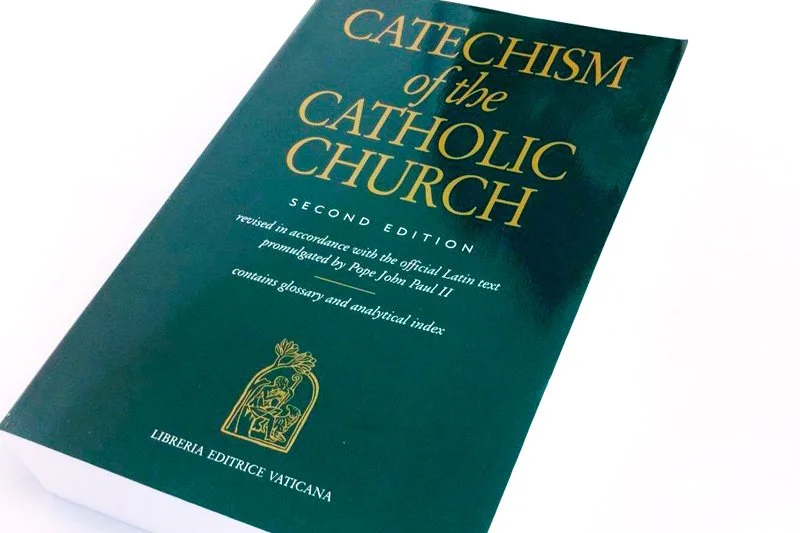
What do you call a Roman Catholic who believes the church’s teachings on centuries of moral theology, as in doctrines stated in great detail in the church’s official, and easily available, Catechism?

For journalists who do not trust the U.S. Conference of Catholic Bishops at this moment in time, here is the Vatican website copy of the Catechism.

According to the New York Times these pro-Catechism Catholics are part of a “rising right-wing strain within American Christianity as a whole” (I added bold text).

Then again, they might simply be “socially conservative and tradition-minded” folks. Or they may be people who support a “brand of new hard-right rhetoric and community” found in nasty corners of the Internet.

Then (yet) again, they may — this is the important part — be Donald Trump supporters.

But one thing they are not is normal Catholics. People who defend the stated teachings of the church are strange Catholics.

I raise this question because of a fascinating recent Times report that gained traction online for some obvious reasons. This feature was the hook for this week’s “Crossroads” podcast (CLICK HERE to tune that in). Here is the double-decker headline on what was, for me, a interesting but at times bipolar story:

Old Latin Mass Finds New American Audience, Despite Pope’s Disapproval

An ancient form of Catholic worship is drawing in young traditionalists and conservatives. But it signals a divide within the church.

What makes this story so strange?

First of all, it offers some interesting information and images about the waves of people — including many, many large young families — who are embracing the ancient Latin Mass. I would, however, note that just as many or more of these believers are choosing Catholic churches that use the modern Novus Ordo rite, but offer services packed with chants, incense, processions, traditional prayers and, yes, even the Latin form of the Vatican II text. Someone should check and see how many people are requesting Eastern Rite Catholic parishes, as well.

In other words, the current campaign by the Vatican and strategic cardinals (in some blue American zip codes, for example) against the Tridentine Mass and, in some cases, other traditional forms of worship, may be part of a broader story.


Please respect our Commenting Policy

Whenever Donald Trump Era ends, what will America's religion landscape look like?

Whenever Donald Trump Era ends, what will America's religion landscape look like?

“Trump is toast.”

So proclaimed National Review’s Andrew McCarthy after the most shocking Republican Party flop since, oh, 1948, which was followed by the least shocking Republican event imaginable, Donald Trump’s Tuesday announcement of a third run for president.

McCarthy joins a significant lineup of conservative pundits and media in blaming the GOP’s embarrassment on Trump and his demands for 2020 election denial with resulting candidate picks. Democrats took the Grand Rapids, Michigan, area by 12.8%, for goodness sake. The former federal prosecutor contends that Trump has not only surrendered his 2024 chances but is certain to face federal indictment.

Well, no matter what such elite conservatives suppose, Trump retains a massive grassroots following. However, the first post-election poll of Republicans and Republican leaners, from YouGov, put Florida Governor Ron DeSantis as the 2024 front-runner with 42% to Trump’s 35%. A month earlier YouGov gave Trump 45% vs. DeSantis’s 35%. A poll of Texas Republicans was similar.

An intriguing Wall Street Journal package recently offered scholars’ speculations on what Russia will look like in the long term whenever Vladimir Putin’s reign ends. The media could borrow the idea to explore what the American religion landscape might look like when Donald Trump no longer rules the Republicans, whether that’s in the primaries or Election Day 2024, or Inauguration Day 2029.

If you grab the theme, also run this one past your sources: Has this secularized, former Mainline Protestant and onetime “reality” TV personality had more impact on American religion than any member of the clergy during these years?

Other assorted post-election musings.

As GetReligion often observes, Catholics are the swing vote to watch, since white evangelicals are locked into lopsided Republican loyalty (this long before the Trump years).


Please respect our Commenting Policy

To cover Qatar World Cup, journalists will have to understand both soccer and Islam

To cover Qatar World Cup, journalists will have to understand both soccer and Islam

The World Cup in Qatar kicks off in less than a week. It is likely to be the most controversial soccer tournament in FIFA’s history, something that has dogged the host nation since being awarded the tournament in 2010.

The controversy is largely tied to the Muslim country’s beliefs and mores. It’s about human rights, welcoming LGBTQ fans, drinking alcohol and modest dress. It’s as much a cultural and societal issue as it is a sporting one. It is also, of course, a religion-news story.

The focus of the news coverage so far has been around what could happen on the field as much as off of it.

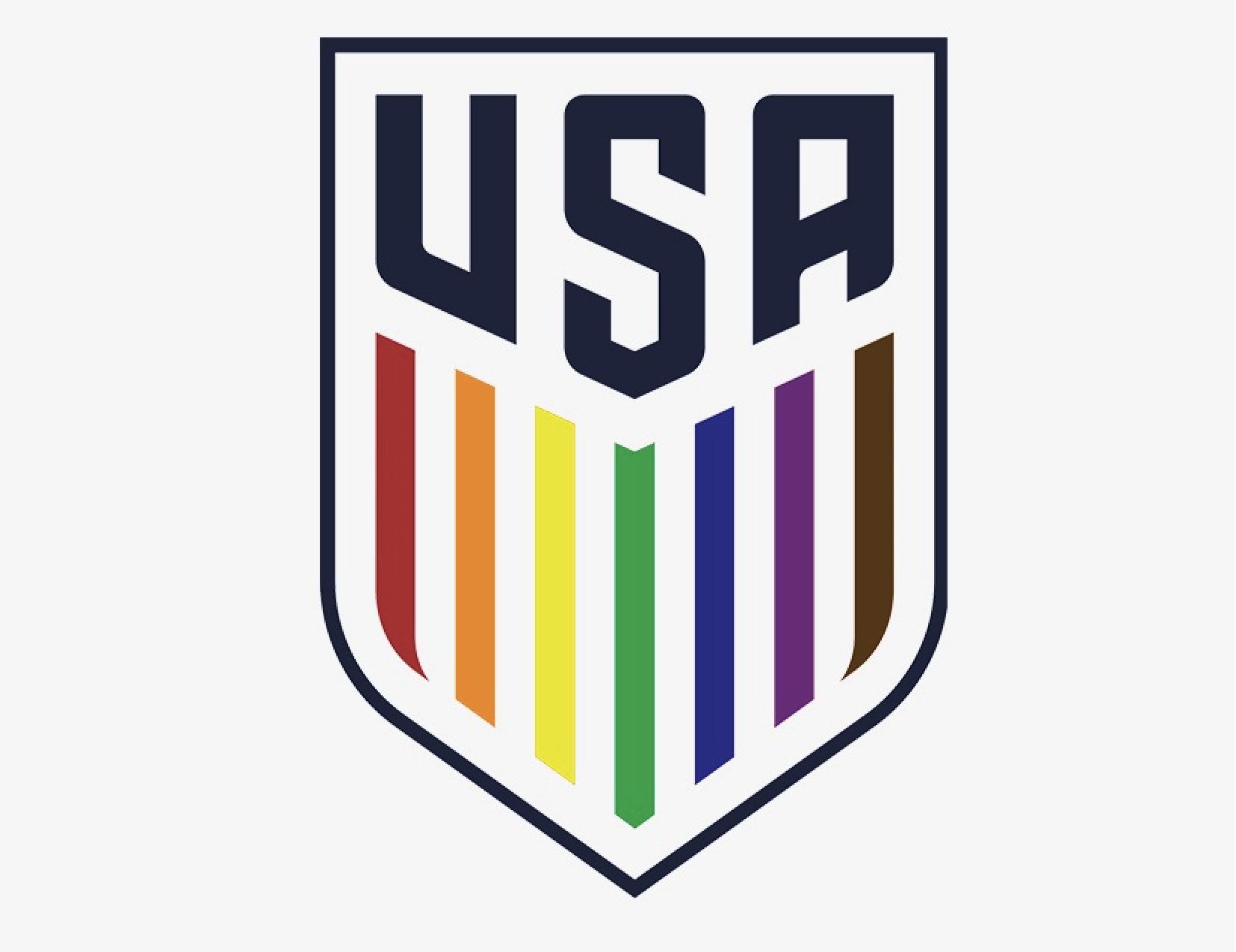
Qatari officials have labeled much of the negative coverage either racist or Islamophobic. Either way, this could be the first global sporting event in history where religion, and understanding it, will be a major part of the overall context of this competition. Even the World Cup’s official mascot is an homage to Islamic garb. And did you notice the Pride logo for the 2022 team USA kit?

I explore many of these themes and issues in my new book on the history of the World Cup. With over a billion followers, Islam is the second-largest religion in the world after Christianity. Muslims are forbidden from drinking alcohol since the Prophet Muhammad, to whom Muslims believe the word of God was revealed in the Quran, spoke against it. This is key for sports editors and journalists to understand when it comes to Qatar 2022 coverage.

For example, Qatari officials have said beer will be sold inside the venues and drinking will be allowed inside designated areas, such as fan zones, hotels and restaurants. I was asked that very question months ago when I was booking my trip to Doha. At the same time, billboards have been put up across the country with quotes from the Prophet Muhammed.

The Associated Press, with bureaus across the globe, put together a great explainer under the headline, “Islam in Qatar explained ahead of FIFA World Cup.” This is a must-read for editors and reporters as well as fans and visitors. Here is how it opens:

Qatar is a Muslim nation, with laws, customs and practices rooted in Islam. The country is neither as liberal as Dubai in the United Arab Emirates nor as conservative as parts of Saudi Arabia. Most of its citizens are Sunni Muslim.


Please respect our Commenting Policy

Plug-In: Who were the religion-politics winners and who were the losers in '22 midterms?

Plug-In: Who were the religion-politics winners and who were the losers in '22 midterms?

America voted.

But you knew that already, so we’ll make this quick.

Big winners included abortion rights proponents and Florida Gov. Ron DeSantis, a potential 2024 GOP presidential contender.

Among the notable losers: a predicted red wave and former President Donald Trump. Alas, Trump is not one to acknowledge electoral defeat. The question becomes: Will the Republicans who’ve enabled him finally do so and move on?

Still to be decided: Georgia’s crucial U.S. Senate race, which is headed to a Dec. 6 runoff between Democratic incumbent Raphael Warnock and Republican challenger Herschel Walker. In the general election campaign, the two offered clashing religious messages, as noted by The Associated Press’ Bill Barrow.

For more insight on Tuesday’s voting, check out these religion stories:

Abortion rights scored the biggest midterm victory (by Yonat Shimron and Jack Jenkins, Religion News Service)

Republicans win on inflation but lose on abortion (by Daniel Silliman, Christianity Today)

After wins at the ballot, abortion rights groups want to ‘put this to the people’ (by Sarah McCammon, NPR)

Catholic leaders say abortion referendum results ‘does not bode well for the future’ (by John Lavenburg, Crux)


Please respect our Commenting Policy