Politics

Podcast: Much to learn in ongoing cases with cannabis church and yet another Christian baker

Podcast: Much to learn in ongoing cases with cannabis church and yet another Christian baker

A cannabis church (It’s California) keeps fighting for freedom of worship.

Another Christian baker wins what may be a temporary (It’s California) First Amendment victory in her fight to stay in business, even though she declined to create a one-of-a-kind, artistic wedding cake for a same-sex couple.

What connects these two stories? That was the topic at the heart of this weeks “Crossover” podcast (CLICK HERE to tune that in), which was recorded this week while I was on grandfather duty. This post is a day late because I’ve been driving back to East Tennessee and it’s really hard to write in a car in cross winds on the High Plains.

The connecting link in the podcast is the Religious Freedom Restoration Act of 1993 — or RFRA for short. This was a crucial piece of liberal (in the old sense of the word) church-state law backed by a stunningly broad coalition of religious and legal groups during the Bill Clinton administration. Try to imagine: There were only three “nay” votes in the U.S. Senate. Would that happen now? Clearly, the answer is “nay.’

These days, many reporters act as if “RFRA” was some kind of dirty, four-letter term that cannot be spoken in elite newsrooms. If you want some additional info on this syndrome, click here (“Covering a so-called 'religious liberty' story? Dig into religious liberty history”) or here (“Religious Left returns to RFRA: Washington Post explores a crucial Florida abortion showdown”).

The key is that RFRA doesn’t guarantee a victory for citizens who claim that their First Amendment rights have been violated. RFRA states that people have a right to argue that case and that — following some guidelines that have developed over the years — courts have to take these arguments seriously.

So let’s start with this Religion News Service headline: “Shuttered cannabis church takes fight to reopen to California Supreme Court.” Here’s the overture:

A cannabis church in Southern California — which was shut down by the county of San Bernardino over accusations it was illegally functioning as a dispensary — is taking its fight to reopen to the state Supreme Court, arguing that it uses cannabis for religious healing.


Please respect our Commenting Policy

Great Britain's first Hindu prime minister inherits a prominent role in Anglicanism

Great Britain's first Hindu prime minister inherits a prominent role in Anglicanism

ry to imagine, say, U.S. President William Howard Taft, who was a Unitarian, involved with choosing bishops who rule the Episcopal Church, or President Joseph Biden, a Catholic, participating in the selection of bishops in the United Methodist Church.

After the historically brief leadership of Britain's Liz Truss, Conservative Party members of Parliament this week agreed on Rishi Sunak to succeed her as prime minister at a moment of severe economic and political turmoil.

Despite sporadic calls for a change in the system, this Hindu believer will have the unique task of proposing each new Church of England bishop for formal action by King Charles III, the church’s Supreme Governour and “Defender of the Faith.” Then again will that be “Defender of Faith” this time around?

The Sunak religious anomaly provides the media a sidebar to the astonishing ascent of this Anglo-Indian as the first “person of color” and first person from ethnic minorities to lead the British government. He’s also the first prime minister who is not at least nominally a Christian.

The Times of India reports Sunak has called himself a “proud Hindu” and regularly attends the temple in his hometown of Southampton. He has sworn his oath of office on the Bhagavad Gita rather than the Bible.

By coincidence, Sunak’s triumph occurred on Diwali, the annual festival of lights celebration when Hindus invoke the goddess Lakshmi for prosperity. The Times article depicts this 42-year-old’s remarkably prosperous corporate career and rapid political rise.


Please respect our Commenting Policy

Tips for reporters covering feds arresting abortion-facility protestors, from Christianity Today

Tips for reporters covering feds arresting abortion-facility protestors, from Christianity Today

Long ago, back in 1980s Denver days, I was out of town covering a national religion-news event when something interesting happened during an Operation Rescue protest at abortion facility.

The protest was going as planned, with peaceful protestors willing to be arrested for blocking the entrance (think civil disobedience) when someone rushed forward and started verbally and physically harassing a client and her escort. This became the big story of the day.

When I heard about what had happened I asked the city desk if anyone had checked to see if the attacker was actually part of the planned protest. There was a possibility, of course, that this was a rogue protestor or even a plant from pro-abortion-rights groups whose goal was to get Operation Rescue shut down.

The key question: Had this person signed the Operation Rescue card to take part in the protest, in which participants promise to do nothing more than pray and sing hymns during the blockade, then allow themselves to be arrested? I had included that tactical detail in my earlier coverage of the protests.

Well, no one asked. To cut to the chase: No one really wanted to ask.

The template for the story had already been created. Factual details about Operation Rescue techniques were irrelevant. Once I was home, I checked. No one knew the identity of this rogue protestor and he had not signed the pledge card. He wasn’t part of the organized protest.

I thought this was a story. My editors just shook their heads.

I bring this up because of an interesting story I read at Christianity Today: “DOJ Steps Up Prosecution of Pro-Life Protestors at Clinics.” GetReligion rarely looks at coverage in religious-market publications, but I thought that this piece included some information that might help MAINSTREAM reporters cover this important trend story. Here is the overture:

In the past month, the Department of Justice (DOJ) has indicted more than a dozenpro-life protestors across the country for obstructing access to abortion clinics.

Such prosecutions have been rare historically, with just a case or two annually for the past decade. But after the US Supreme Court reversed Roe v. Wade this summer, the DOJ announced a task force to pursue more enforcement against anyone obstructing access to abortion clinics. Many of those protestors facing charges are Christian.


Please respect our Commenting Policy

Plug-In: Religion-beat highlights -- Religion News Association presents its annual awards

Plug-In: Religion-beat highlights -- Religion News Association presents its annual awards

What a fun night!

The Religion News Association presented its 2022 Awards for Religion Reporting Excellence in a hybrid ceremony Wednesday at Columbia Journalism School in New York City.

Among the highlights:

Sarah Pulliam Bailey, religion writer for The Washington Post, won for Excellence in Religion News Analysis, including a piece on “Preachers and their $5,000 sneakers.” Even better, Bailey brought her new baby with her to celebrate.

Tom Gjelten, retired religion correspondent for NPR, won for Religion Story of the Year for his piece “An inconvenient genocide: Why we don’t know more about the Uyghurs” for Moment magazine. (Last week’s Plug-in highlighted the other finalists.)

Julia Duin, a veteran religion journalist, including her work here at GetReligion, won for Excellence in Religion Reporting at Online-only News Outlets and placed in two other categories. Duin was honored for stories she wrote for National Geographic, Politico and Newsweek. The headline on that Politico piece: “The Christian Prophets Who Say Trump Is Coming Again.”


Please respect our Commenting Policy

Doctrine and fashion: As Iran protests persist, what women's clothing does Islam require?

Doctrine and fashion: As Iran protests persist, what women's clothing does Islam require?

THE QUESTION:

As Iran protests persist, what women’s clothing does Islam require?

THE RELIGION GUY’S ANSWER:

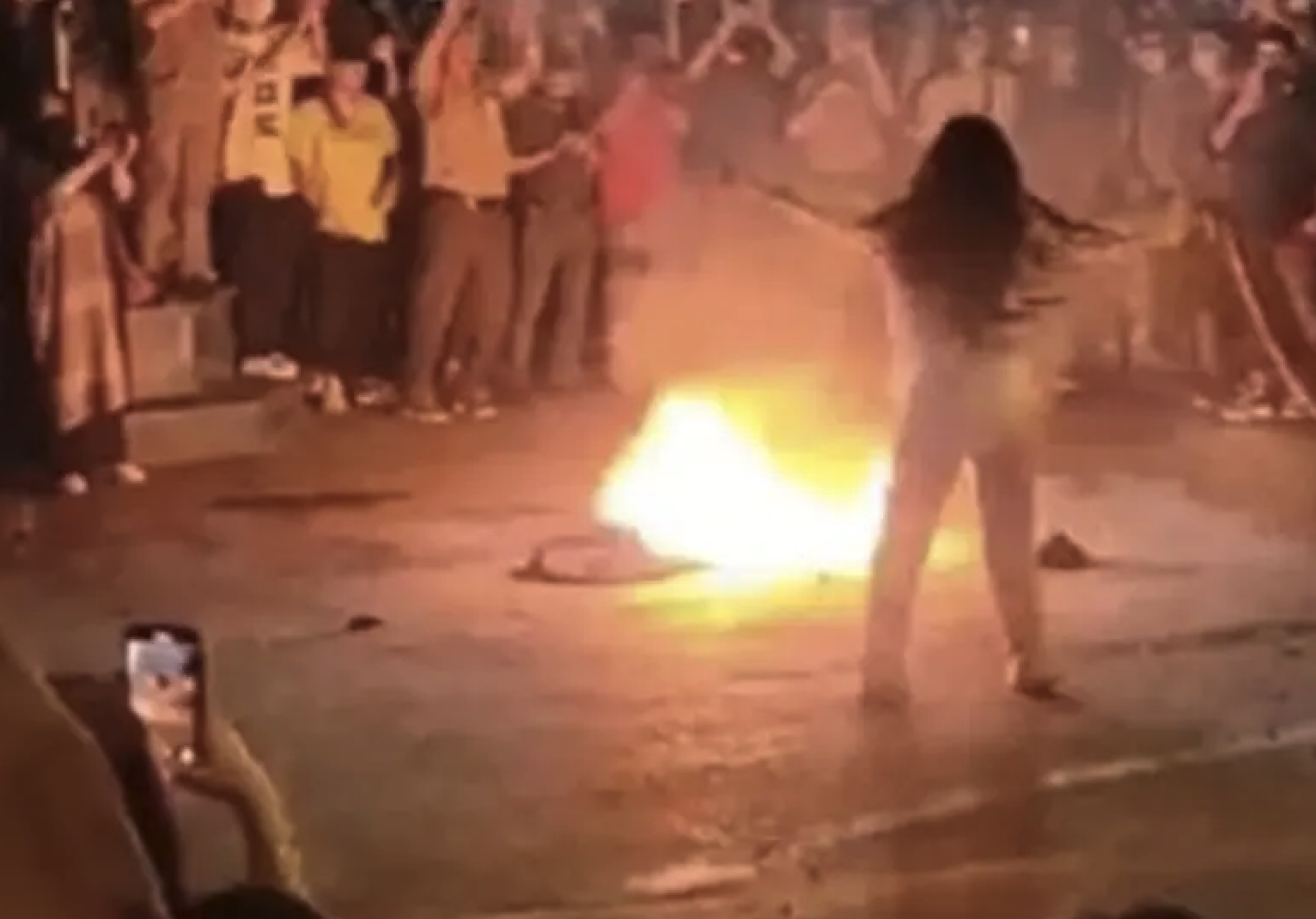
The facts are these. On September 13, Iran’s morality police arrested 22-year-old Mahsa Amini for violating the legally required Muslim dress code for women. She was wearing the mandatory head scarf (hijab), but apparently it did not correctly conceal all of her hair. Three days later, Amini died while still in police custody. The government blames a heart attack, but suspicions that she was abused run rampant.

In the spontaneous uproar that resulted, refusal to wear the hijab became a symbol of resisting oppression as protests across the nation targeted not only restrictions for women but expressed over-all rejection of the harsh theocratic regime that has ruled revolutionary Iran the past 43 years. At this writing, at least 200 Iranians have reportedly been killed and 1,500 demonstrators arrested.

Azadeh Moaveni of New York University wrote in The New York Times that resentment boiled over in part because women in Tehran’s wealthy and politically-connected elite flagrantly ignore the Muslim dress laws without arrest.

There’s always been vigorous discussion of the complexities about exactly what attire is properly modest and thus faithful to Islam.

Responding to events in Iran, Deina Abdelkader at the University of Massachusetts Lowell contends that clothing rules “have nothing to do with Islamic tenets” while Muslim countries have imposed — or forbidden — forms of women’s attire in order to proclaim their ideology, whether secular or scrupulously religious.

Islam’s fundamental concern here is not unique, since religions normally advocate modesty and propriety. In particular, Jewish tradition associates attire as part of a general admonition in the Torah (Deuteronomy 23:15, JPS translation): “Let your camp be holy; let Him [God] not find anything unseemly among you and turn away from you.”


Please respect our Commenting Policy

Podcast: 'Culture Wars' again, as Muslims protest LGBTQ advances in public schools

Podcast: 'Culture Wars' again, as Muslims protest LGBTQ advances in public schools

If you read newspapers or magazines in America, you have heard the term “culture wars.”

If you have read GetReligion for any time at all, then you probably know that, in the work of sociologist James Davison Hunter, the term “culture wars” was given a very specific definition that rarely shows up in news coverage.

In the early 1990s, Hunter published a bestseller entitled, “Culture Wars: The Struggle To Control The Family, Art, Education, Law, And Politics In America.” The term leapt into news jargon and, as often happens, it became totally politicized.

What was Hunter talking about? Hold that thought, because we will come back to it. We will need to apply it to a story that’s in the news right now, a story that many will describe as a “culture wars” fight. We discussed all of this during this week’s “Crossroads” podcast (CLICK HERE to tune that in).

Let’s start with this local headline from the Detroit Free Press: “LGBTQ and faith communities struggle for unity in Dearborn, Hamtramck.” What we have here is one of those stories in which conservative religious parents are making a stand in protest LGBTQ education efforts — and some other gender trends — in their local schools.

Sound familiar? But there’s a twist. This time, the evangelical Protestants have what journalists clearly consider some unlikely parters. Here is the (long) overture to the Detroit story, which went national:

The protest began with a prayer.

On a Sunday afternoon last month in Dearborn, Nagi Almudhegi took the stage to address the crowd gathered outside Henry Ford Centennial Library to demonstrate against some LGBTQ books in Dearborn Public Schools' libraries.

"I'd like to start off first of all with a prayer," Almudhegi said. "And I'm going to read, recite the chapter on Fatiha (opening of Quran) in Arabic and then I will read the English translation."

As he spoke, some in the crowd held up signs denouncing books and educational materials in the public schools that they believe are too explicit for children.


Please respect our Commenting Policy

Bobby Ross, Jr., tweets and tweets and tweets bonus coverage of that new SBC president

Bobby Ross, Jr., tweets and tweets and tweets bonus coverage of that new SBC president

Just a note from tmatt, even though the byline on this piece says Bobby Ross, Jr.

There’s a good reason for that.

The Rev. Bart Barber has certainly been in the news, of late — “Yes, Southern Baptists are talking about '60 Minutes' (while Ryan Burge keeps doing the math)” — and, as it turns out, chart-master Ryan Burge wasn’t the only GetReligionista who has been talking with him or about him.

Bobby wrote a profile piece on Barber the other day for the Associated Press (this has been happening more often, methinks) and, as it turns out, he had material left over from that interview that he put in lots, and lots, and lots of tweets.

A Bobby Ross tweetstorm?

You got it.

All of these short punchy sentences, in Ross style, means it’s time to let the tweet-storm begin.

Roll tweets, in this bonus Ross piece.

Ready?


Please respect our Commenting Policy

Catholic voters and the midterm elections: Mainstream news blitz ignores major voter bloc

Catholic voters and the midterm elections: Mainstream news blitz ignores major voter bloc

We are in the middle of another election season and in full mud-slinging mode.

Elections are an annual occurrence, to one degree or another, but the vote that will dominate this Nov. 8 are known as the midterms. It’s when a majority of seats in both the House and Senate are up for grabs, allowing for the party in the minority (in this case the Republicans in both chambers) to potentially becoming the majority. Midterm elections are also traditionally viewed as referendums on presidents.

This takes us to the Catholic vote and its impact on the outcome. This is a topic that is receiving little or no mainstream press coverage. As we say here at GetReligion: “Hold that thought.”

While inflation and crime will certainly be on the minds of most as they cast ballots, “culture war” issues are very much alive and well. Abortion, especially after this June’s Supreme Court decision that once again made it a state issue after Roe v. Wade was rolled back, will certainly be an issue.

There have been many, many news stories about how the abortion issue will motivate those on the political left to come out and vote following the Dobbs decision. The Washington Post, on Oct. 8, reported on the issue in a news feature that appeared under the headline, “Women powered Democrats in the 2018 midterms. Will they again in 2022?”

After opening with two Colorado women, Robin Kupernik and Elizabeta Stacishin, who had joined forces in 2016 to combat Donald Trump, who was elected to the presidency that year. This is the feature’s thesis:

In the 2018 midterm elections, women like Kupernik and Stacishin were part of a women-led army that changed politics. Women who had never been particularly active politically worked phone banks, wrote postcards and sent text messages to voters. They were repulsed by Trump and determined to do something about it.

They met in small groups, marched in the streets and went door-to-door to encourage people to vote for Democrats. Their passions were palpable. Many of the congressional candidates they were supporting flipped Republican-held seats, all part of a political tide strong enough to flush the GOP from control of the House, dealing Trump a major defeat. The Pew Research Center has estimated that 62 percent of White women with college degrees backed Democrats for the House four years ago.

That has become the major press-coverage storyline of the midterms.


Please respect our Commenting Policy