Politics

'Indulgences' for Russian soldiers killed in Ukraine? Remember that Moscow speaks for Moscow

'Indulgences' for Russian soldiers killed in Ukraine? Remember that Moscow speaks for Moscow

Once again, the thought for the day is this: Eastern Orthodoxy is not the Church of Rome. There is no pope at the top of a unified Orthodox ecclesiastical structure that speaks for everyone.

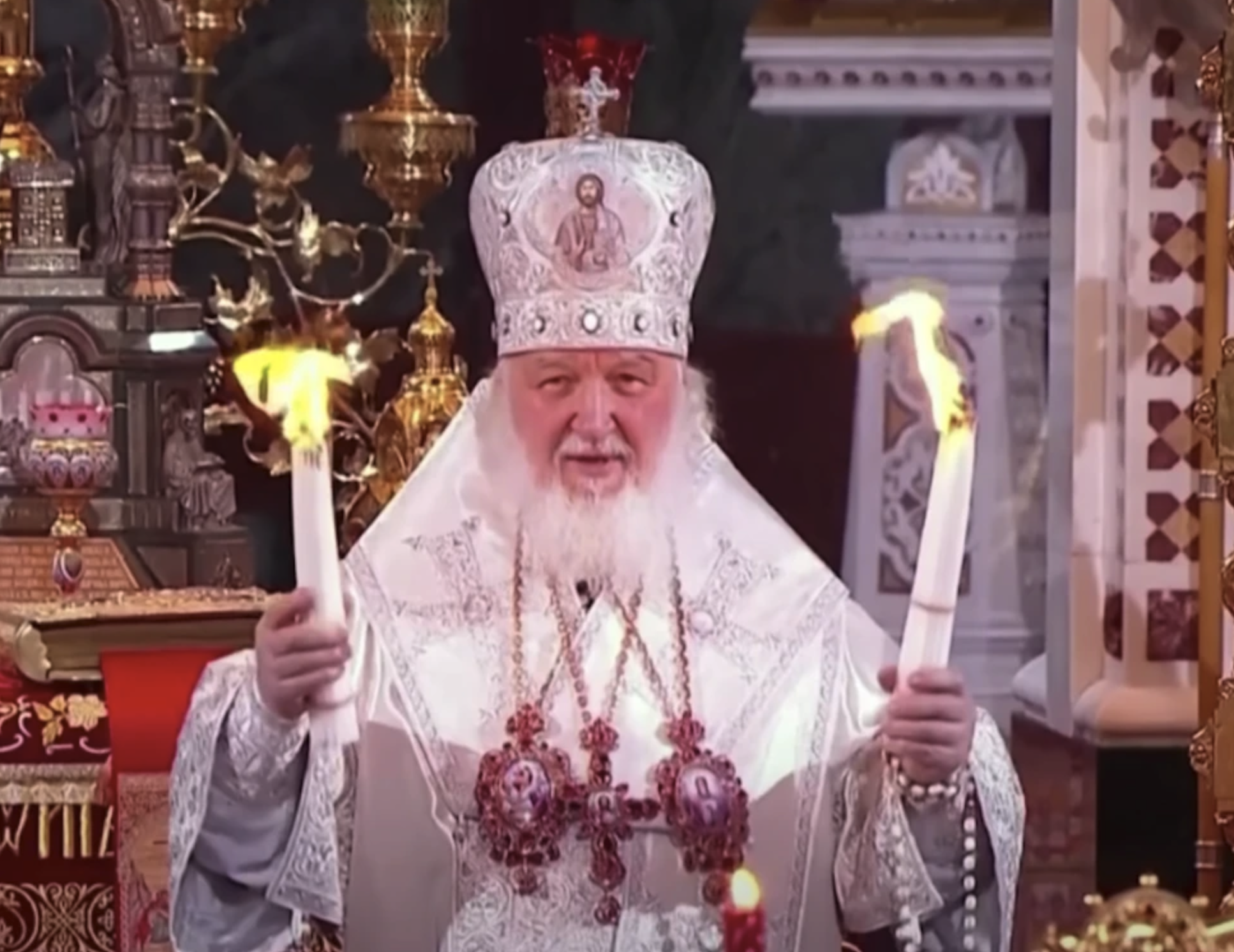
I’m talking, of course, about the most recent controversial — to say the least — comments by the patriarch of Moscow. As one reader asked: “I'm interested to know what the buzz is in the Orthodox world about Patriarch Kirill's recent statements in support of Russia's mobilization. I'm sure you've seen it 100 times.”

I saw it 100 times. But I’ve been traveling for nearly a week, so I apologize for the delay in this post.

What’s up? There was this headline at Reuters, which was typical of several reports: “Orthodox Church leader says Russian soldiers dying in Ukraine will be cleansed of sin.” Here is the top of that:

The head of the Russian Orthodox Church has said that Russian soldiers who die in the war against Ukraine will be cleansed of all their sins, days after President Vladimir Putin ordered the country's first mobilisation since World War Two.

Patriarch Kirill is a key Putin ally and backer of the invasion. He has previously criticised those who oppose the war and called on Russians to rally round the Kremlin.

"Many are dying on the fields of internecine warfare," Kirill, 75, said in his first Sunday address since the mobilisation order. "The Church prays that this battle will end as soon as possible, so that as few brothers as possible will kill each other in this fratricidal war."

"But at the same time, the Church realises that if somebody, driven by a sense of duty and the need to fulfil their oath ... goes to do what their duty calls of them, and if a person dies in the performance of this duty, then they have undoubtedly committed an act equivalent to sacrifice. They will have sacrificed themselves for others. And therefore, we believe that this sacrifice washes away all the sins that a person has committed."

Yes, Patriarch Kirill speaks for Patriarch Kirill and does not speak for all of Eastern Orthodoxy (and may not be speaking for all of his own synod). Meanwhile, the “first among equals” Ecumenical Patriarch in Istanbul does not speak for all Orthodox leaders, even if — at times — it appears that he thinks that he has that authority (such as his intervention in decades of Orthodox divisions in Ukraine).

Will Orthodox leaders speak out against the remarks by Kirill?

Please respect our Commenting Policy

English-language coverage of Italian elections packs lots of Meloni media baloney

English-language coverage of Italian elections packs lots of Meloni media baloney

I have received more texts than usual the past two weeks. Most of them were about a rather unusual subject — Italy’s national elections. I say unusual subject because it’s not every day that this subject is discussed among my American friends.

Many readers of this space may know that I am the son of immigrant parents who moved to the United States from Italy. As a result, I am bilingual (I read Italian news sites almost as voraciously as American ones) and also a dual citizen, meaning I can vote in Italian elections.

But the texts I was getting was coming from a place of fear. They feared that the center-right would win the election (they ultimately did on Sept. 25) and bring Italy back 100 years to an era marked by fascism.

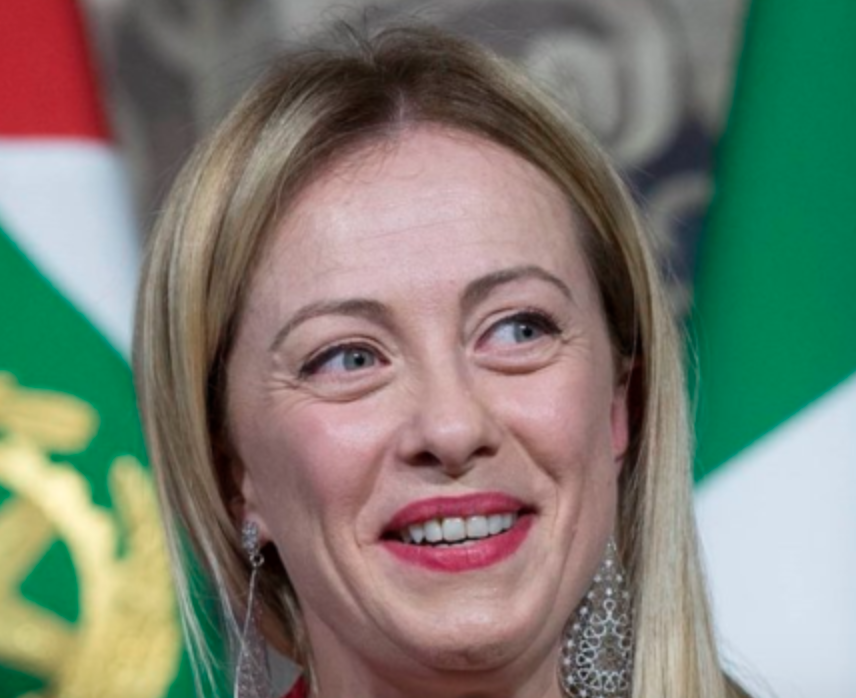
This sentiment came as a result of the English-language press (predominantly the United States and England) that framed the political rise of Giorgia Meloni as threat to democracy. It was this skewed news coverage that got me to write about her twice in pieces for for Religion Unplugged, which included an analysis piece last week on what her election means and the Vatican’s reaction.

Running on a “God, homeland and family” platform, the 45-year-old was labeled a “neo-fascist” and “hard right” by The New York Times largely because of her traditional Catholic views regarding marriage and her anti-abortion views. The Times hailed Meloni’s election this way:

ROME — Italy turned a page of European history on Sunday by electing a hard-right coalition led by Giorgia Meloni, whose long record of bashing the European Union, international bankers and migrants has sown concern about the nation’s reliability in the Western alliance.

Results released early Monday showed that Ms. Meloni, the leader of the nationalist Brothers of Italy, a party descended from the remnants of fascism, had led a right-wing coalition to a majority in Parliament, defeating a fractured left and a resurgent anti-establishment movement.

It will still be weeks before the new Italian Parliament is seated and a new government is formed, leaving plenty of time for political machinations and horse trading in a coalition with major differences. But Ms. Meloni’s strong showing, with about 26 percent of the vote, the highest of any single party, makes her the prohibitive favorite to become the country’s first female prime minister.

The opening of this news story reads more like an opinion piece, loaded with adjectives such as “hard-right coalition.”

This was parroted by other U.S. newspapers as well as major television networks and cable news channels.


Please respect our Commenting Policy

Ryan Burge at RNS: Thinking about the impact of political sermons, on left and right

Ryan Burge at RNS: Thinking about the impact of political sermons, on left and right

Hey churchgoers: How long has it been since you heard a political sermon?

Wait. We need to pause and discuss what a political sermon might sound like. For example, I think everyone would agree that an open endorsement of a political candidate from the pulpit would be “political.”

But what if a congregation or a denomination invited a political leader to speak in a worship service or some other event? This is something that happens on the political left and right. For generations, to name one example, Democrats have accepted warm, strategic invitations to speak — or perhaps simply exchange greetings — in African-American churches. It makes headlines when GOP leaders address major evangelical bodies (think Vice President Mike Pence and the Southern Baptist Convention).

More questions: What if a bishop or a preacher addresses issues that are clearly both doctrinal AND political, such as right-to-life concerns or threats to the environment? What about a conference focusing on ways religious groups can defend First Amendment rights, such as freedom of speech, freedom of association and freedom of religious practice? Is a liberal rally on abortion more “theocratic” than one organized by believers on the doctrinal right?

I ask these questions because of a piece GetReligion contributor Ryan Burge, he of the omnipresent charts and info on Twitter, wrote for Religion News Service. Here’s the newsy headline “When preachers get political, do they change minds? Preachers tend to risk political speech only when they know it will receive a warm reception.” The overture:

One of the most important and difficult questions among those who study religion and politics is just how important a pastor, rabbi, imam or other religious leader is when it comes to shaping the worldviews of their congregation. These figures get a weekly chance to dominate the attention of the people who come to listen to their sermons. They have a nearly unique opportunity to mold their congregants’ view of the theological, social and political world around them.

How often do pastors actually use that opportunity to speak out about the pressing issues of the day? Some new data gives us a look.

A Pew Research Center poll fielded in March of 2021 asked people if they had heard sermons that contained references to the fallout from the 2020 presidential election in the previous month. The survey asked about four topics specifically: the possibility that the 2020 election was rigged, former President Donald Trump’s inaccurate statements about election fraud, as well as support for or opposition to those who stormed the U.S. Capitol on Jan. 6, 2021.

That is certainly a rather Donald Trump-era dominated list, but that reflects several years of headlines. Meanwhile, it’s safe to say that President Joe Biden is in the White House, in large part, because of support from voters in Black churches during several primaries. But I digress.


Please respect our Commenting Policy

Podcast: Are Brigham Young sports controversies about sports, religion or politics?

Podcast: Are Brigham Young sports controversies about sports, religion or politics?

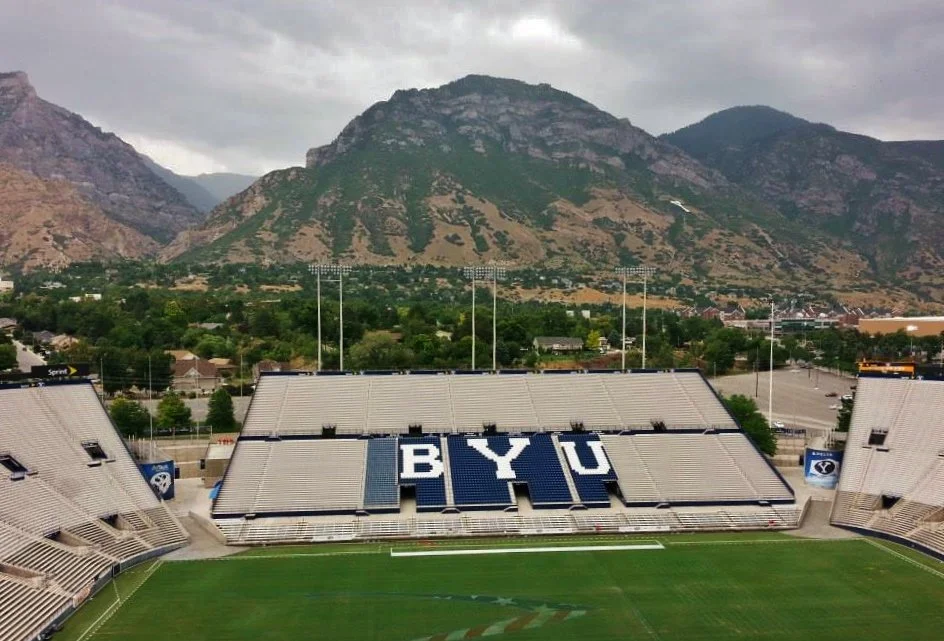
I have a journalism question, one that will require some time travel. Let’s flash back to the 2021 football game between the Brigham Young Cougars and the Baylor Bears, which was played in Waco, Texas, an interesting city known to many as “Jerusalem on the Brazos.”

After the first BYU score, a significant number of Baylor students are heard chanting “F*** the Mormons!” over and over. Or maybe, since we are talking about folks from a Baptist university, the chant is “Convert the Mormons!” The chant doesn’t focus on the “Cougars,” but on BYU’s obvious heritage with the Church of Jesus Christ of Latter-day Saints.

The chants were strong enough to be heard on broadcast media and, within minutes, there are clear audio recordings posted on social media.

My question, a which I asked during this week’s “Crossroads” podcast (CLICK HERE to tune that in): Would this nasty, crude event be considered a valid news story? In national coverage, would the religious ties of the two schools — soon to be rivals in the Big 12 — be discussed? In other words, would this be a religion-news story, as well as a sports story?

I think it’s pretty obvious that the answers would be “yes” and, again, “yes.”

This brings us, of course, to two BYU sports stories from recent weeks — one that received massive national coverage and the other that, well, didn’t get nearly as much ink. I think it’s valid to ask "Why?’ in both cases.

Before I share some links to coverage of the two stories, let’s pause and consider this related Religion News Service report: “Nearly 200 religious colleges deemed ‘unsafe’ for LGBTQ students by Campus Pride.” Here is the overture:

Dozens of religious universities across the country, including Seattle Pacific University in Washington and Brigham Young University in Utah, were listed as unsafe and discriminatory campuses for LGBTQ students by Campus Pride, a national organization advocating for inclusive colleges and universities.

Fewer than 10 of the 193 schools on the list released Thursday (Sept. 8), were not religiously affiliated or did not list a religious affiliation, according to Campus Pride.

The lengthy Campus Pride report on BYU opens with this statement (the shorter Baylor item appears here):

Brigham Young University has qualified for the Worst List because it has an established and well-documented history of anti-LGBTQ discrimination that endangers victims of sexual assault and has resulted in a call for it to not be included as a Big 12 school.

The key word, of course, is “endangers.”


Please respect our Commenting Policy

DeSantis as 'culture warrior' or theocrat: Coverage depends on a newsroom's worldview

DeSantis as 'culture warrior' or theocrat: Coverage depends on a newsroom's worldview

A Republican politician with presidential aspirations visits a Christian college. What happens next, in terms of the way the event is covered by the mainstream press, is predictable — during this era of niche news, with stories written to appeal to the beliefs of specific political flocks.

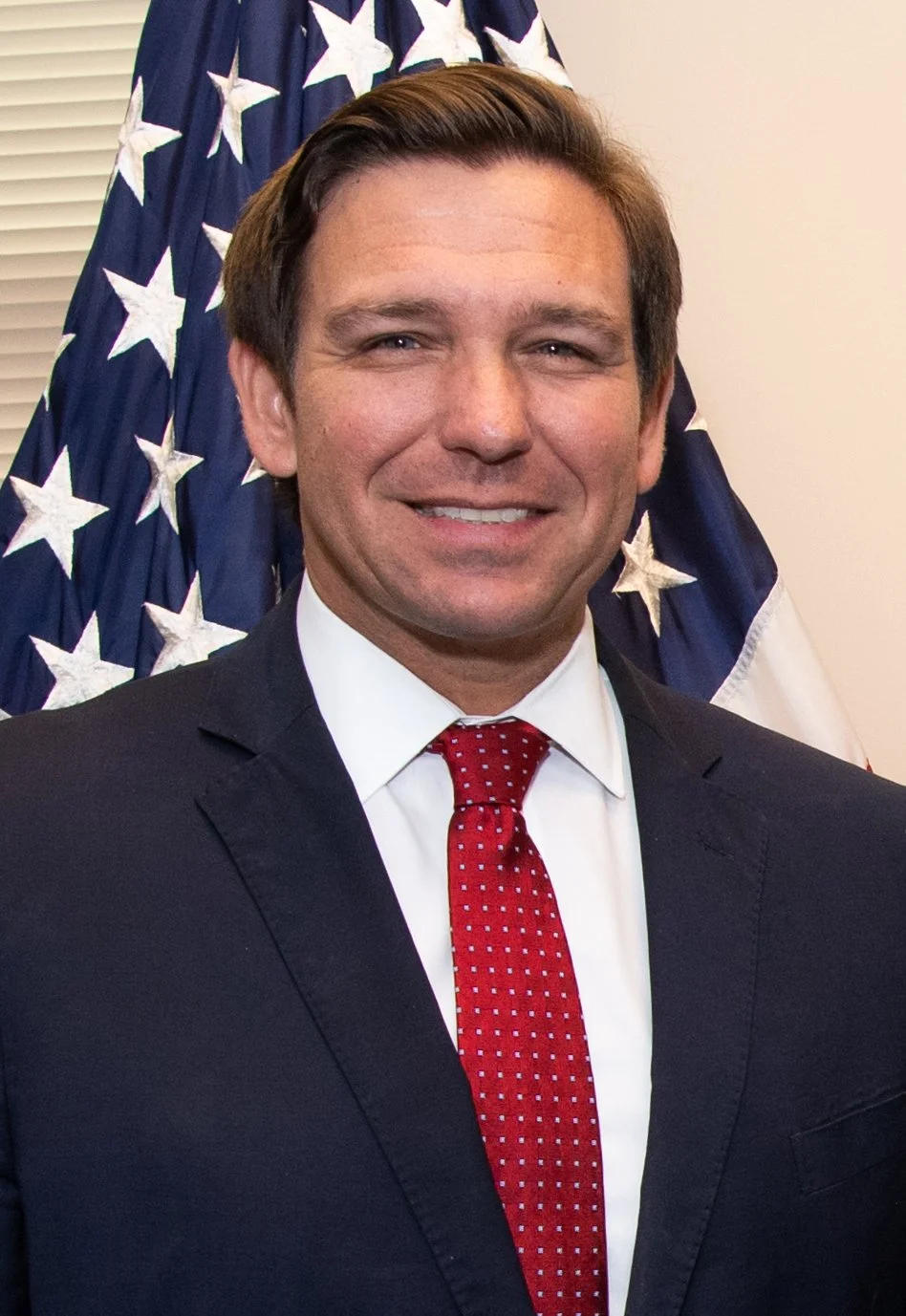
The politician in question is Florida Gov. Ron DeSantis and the school is Hillsdale College in Michigan. The visit took place this past February and was used as an example in a recent Miami Herald article of DeSantis’ mingling of faith and politics.

This is how the paper opens its Sept. 13 piece:

While visiting a private Christian college in southern Michigan that wields influence in national politics, Gov. Ron DeSantis rephrased a biblical passage to deliver a message to conservatives.

“Put on the full armor of God. Stand firm against the left’s schemes. You will face flaming arrows, but if you have the shield of faith, you will overcome them, and in Florida we walk the line here,” DeSantis told the audience at Hillsdale College in February. “And I can tell you this, I have only begun to fight.”

The Republican governor, a strategic politician who is up for reelection in November, is increasingly using biblical references in speeches that cater to those who see policy fights through a morality lens and flirting with those who embrace nationalist ideas that see the true identity of the nation as Christian.

That’s followed by the thesis:

He and other Republicans on the campaign trail are blending elements of Christianity with being American and portraying their battle against their political opponents as one between good and evil. Those dynamics have some political observers and religious leaders worrying that such rhetoric could become dangerous, as it could mobilize fringe groups who could be prone to violence in an attempt to have the government recognize their beliefs.

The article has no problem finding experts who warn of impending danger.


Please respect our Commenting Policy

Podcast: What will Queen Elizabeth II tell the world about her faith with her funeral liturgy?

Podcast: What will Queen Elizabeth II tell the world about her faith with her funeral liturgy?

This week something unexpected happened after I filed my national “On Religion” column, something that I have never seen before in my decades of religion-news work.

What? A retired literature professor responded to my column with a poem.

The topic was easy to predict. Like millions of other people around the world, but especially in Great Britain and the Commonwealth, I have spent many hours watching (primarily on British television) the rites and public drama surrounding the death of Queen Elizabeth II.

I will post the column at GetReligion at the usual time this weekend, after it has run in most newspapers linked to the Universal syndicate. But the podcast team decided to go ahead and use it as the hook for this week’s “Crossroads” (CLICK HERE to tune that in), since so many people are talking about the death of the queen. Here is a short clip from that column:

Throughout her life, Queen Elizabeth II understood the symbolic importance of kneeling, according to former Durham Bishop N.T. Wright. After one Church of England synod, she privately expressed surprise — disappointment, even — that worshippers in Westminster Abbey simply lined up to receive Holy Communion, instead of kneeling.

“Kneeling was important to her,” said the popular author, in a “Premier Christianity” tribute. In his encounters with her, Wright found the queen “very friendly and clearly a very devout, what we would consider ‘old fashioned’ Church of England Christian. I remember thinking during more than one Christmas broadcast, she has just preached the Gospel to the nation in a way that perhaps nobody else could have done.”

In response to the column, a reader raised in Canada — but best known for his work at Baylor University in Texas and at Peking University — wrote a poem and sent it to me.

David Lyle Jeffrey, now a distinguished senior fellow at Baylor’s Institute for Studies in Religion, noted that he has never considered himself a “royalist,” but the queen’s death is certainly a time to explore the “essence of her admirable Christian character and gracious reign.” The former Baylor provost and literature professor entitled the poem “Regina Exemplaris (An exemplary queen).” Here is how it ends:


Please respect our Commenting Policy

Here's a solid religion information source for office, home libraries and (of course) newsrooms

Here's a solid religion information source for office, home libraries and (of course) newsrooms

Here are some interesting facts about war-ravaged Ukraine you might not have heard:

* The nation was 97% Christian in 1900, slumped to 60% when atheistic Soviet Communists held power, and has rebounded to 86%. But in one survey only 20% of Ukrainians said religion is “very important” for them.

* The Orthodox Church historically under the Moscow Patriarchate has 13.5 million members. But even before the current Russian invasion, the young rival Orthodox Church of the independent Kyiv Patriarchate had gained a bigger following of 16 million.

* Evangelical, Pentecostal and Charismatic Protestants, though a small minority, have so thrived since national independence in 1991 that Ukraine is known as Eastern Europe’s “Bible Belt.” Pentecostal believers who once survived in the underground church are now a force in civic affairs.

* Despite electing the first Jewish president, anti-Semitic incidents still occur.

* Regarding morals, “domestic violence is a massive problem,” especially in COVID-19 times, with complaints up 40% in the first half of 2020 compared with 2019.

Why mention these newsworthy pieces of information?

That’s a sampling of the sort of data about each of 233 countries you’ll find in the brand-new “Global Christianity: A Guide to the World’s Largest Religion from Afghanistan to Zimbabwe” (Zondervan Academic, $29.99 paperback). This valuable and inexpensive resource updates key information from the 2019 edition of the invaluable “World Christian Encyclopedia” (Edinburgh University Press, list price $270 with discounts online).

The new book’s editor is Gina Zurlo — https://ginazurlo.com; gzurlo@gordonconwell.edu) — co-editor of the “Encyclopedia” and co-director of the independent agency that produces it, the Center for the Study of Global Christianity at evangelical Gordon-Conwell Theological Seminary.


Please respect our Commenting Policy

Columns from 1991 & 2022: Mysteries surrounding the mind and soul of Mikhail Gorbachev

Columns from 1991 & 2022: Mysteries surrounding the mind and soul of Mikhail Gorbachev

It isn't every day that one of the creators of a political thriller gets to ask its real-life protagonist to evaluate the novel's plot.

But that happened when the late Billy Wireman, president of Queens University in Charlotte, N.C., handed the last Soviet Union leader a copy of "The Secret Diary of Mikhail Gorbachev." The 1990 novel was written by journalist Frye Gaillard, based on a Wireman idea.

The plot: There were spiritual motivations behind "glasnost" and "perestroika," Gorbachev's risky ideas to restructure Soviet life. But furious KGB insiders -- including a would-be assassin -- managed to steal Gorbachev's diary, in which he confessed his Christian faith.

Wireman wrote down Gorbachev's response after hearing the book's premise: "You must have been reading my real diary."

This faith question never vanished, no matter how often Gorbachev reaffirmed his atheism, while also stressing his respect for the beliefs of his Communist father and devout Russian Orthodox mother. His maternal grandparents hid holy icons behind their home's token Vladimir Lenin portraits.

Gorbachev died on August 30 at age 91 and his funeral was held in the Pillar Hall of Russia's House of the Unions, after President Vladimir Putin denied him a state funeral. He was buried next to his wife Raisa, who died in 1999 of cancer, in the cemetery of Moscow's Novodevichy Convent.

"Regardless of the geo-political realities of that era, there was something going on inside Gorbachev," said Gaillard, writer in residence at the University of South Alabama in Mobile and former Southern editor of The Charlotte Observer. He is the author of 30-plus books, including "A Hard Rain: America in the 1960s," which won the 2019 F. Scott Fitzgerald Literary Prize.

"Why did he do it? That's the question that won't go away," Gaillard added. "That's what has fascinated people for decades and it still does. We may never know now that he's gone. … But all that speculation about his beliefs is at the heart of the book."


Please respect our Commenting Policy

Podcast: New York Times talks to a Catholic 'star' and (#triggerwarning) things went OK

Podcast: New York Times talks to a Catholic 'star' and (#triggerwarning) things went OK

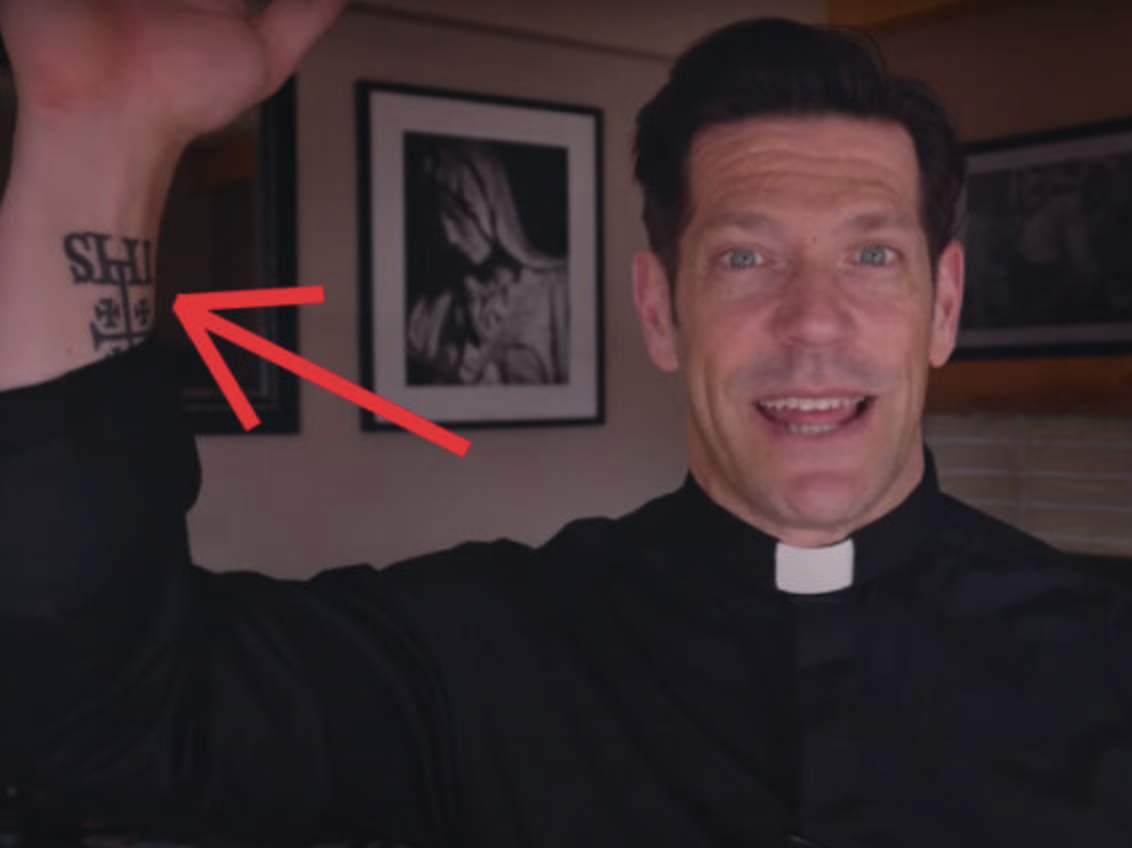
It isn’t everyday that I get emails from Catholic readers, of one tribe or another, praising a New York Times article, especially one in which a Catholic leader is asked tough questions about some controversial points of doctrine.

That’s strange, in a sad kind of way. This phenomena was almost worth a “Crossroads” podcast in and of itself (CLICK HERE to tune that in).

But there are other worthwhile reasons to discuss the New York Times Magazine feature that ran with what was clearly meant to be a grabber headline: “A Catholic Podcasting Star Says Theocracy Is Not the Way.”

Yes, yes, we all know that there are armies of Catholics out there who believe that this diverse and rapidly secularizing nation can be turned into some kind of Catholic or ecumenical Christian theocracy. Try to imagine either of those political options in a culture dominated by Big Tech, Big Academia and Hollywood.

Before we get to the “theocracy” discussion, let’s note the identity and the credentials of the priest featured in this interview. In the end, we want to know: Why was this priest able to emerge relatively unscathed by this dance with the Gray Lady, to the degree that many Catholics were pleased with this encounter? Here is some of the introduction:

Since it was introduced by the Catholic priest Mike Schmitz, who goes by Father Mike, in January 2021, the little-heralded “The Bible in a Year (With Fr. Mike Schmitz)” has been the most popular Apple religion podcast for a majority of 2021 and 2022 and has even, on two occasions, reached the No. 1 spot among all podcasts on Apple’s platform. The show has been downloaded 350 million times and an average of 750,000 times a day.

That’s credibility, in our tech-defined world — even to Times-people. Let’s continue:

Each 20-to-25-minute installment … features two or three short scriptural readings and a pithy reflection by Father Mike, an affable 47-year-old Midwesterner whose upbeat and self-deprecating manner — not to mention regular-guy good looks — exude strong Ted Lasso vibes. The staggering success of the podcast has helped turn its host, whose day job is as a chaplain at the University of Minnesota Duluth and the director of the youth ministry for the Duluth diocese, into a kind of celebrity. He travels the country giving speeches, and some of his YouTube videos have racked up millions of views.

Now, on to the content that provided that click-bait headline for faithful New York Times readers.


Please respect our Commenting Policy