Politics

Plug-In: Faith groups continue to debate solutions to blitz of mass shootings in America

Plug-In: Faith groups continue to debate solutions to blitz of mass shootings in America

God and guns.

After a string of mass shootings nationwide, conversations with people of faith inevitably turn to that subject.

Ken Factor and Lawson Vaughn are friends and fellow Christians. I met both while in Tulsa this past weekend to report on their church mourning the massacre of four people.

I asked Factor and Vaughn about possible solutions following the recent attacks at a Buffalo, New York, supermarket, an Uvalde, Texas, school and a medical office in their own community.

Factor stressed that he has been a registered Republican for nearly 40 years.

But he said, “I think we need some kind of restrictions on guns. I don’t know that the Second Amendment applies to things like me deciding, ‘I’m going to go get an AR-15 today.’”

In Vaughn’s view, though, firearms aren’t the real problem.

“I think there’s something to be said just for the erosion of the home, the family,” he said. “I mean, it starts with raising kids to respect others and having families that go to church.”

As The Associated Press’ Deepa Bharath and Holly Meyer report, the recent shootings have exposed divisions on the gun issue in faith communities and raised this question: “Are you pro-life if you are pro-gun?”

At The Oklahoman, Carla Hinton offers in-depth coverage of religious views on gun control — including a letter signed by more than 50 leaders that was recently delivered to Tennessee’s Republican governor, Bill Lee.


Please respect our Commenting Policy

Just before I hit the road, I did this bonus podcast with veteran evangelical thinker John Fischer

Just before I hit the road, I did this bonus podcast with veteran evangelical thinker John Fischer

Truth be told, I was on the road most of this week and away from my alleged “office” in the Tennessee Hills.

Thus, I took a very rare break from writing the “On Religion” column for the Universal syndicate. I say “rare” because I literally went 20 years before I took a vacation at all. Well, I did miss one week because I was unconscious during a kidney-stone attack. Things happen.

Just before charging up the car and heading out, I did spend some time with veteran evangelical writer and folk musician on his weekly podcast called “The Catch.” Thus, I will offer this bonus podcast as a substitute for the column that normally fills this weekend slot here at GetReligion.org and, a day or so later, at Tmatt.net, even though this is not a media-criticism feature (for the most part).

Listeners can find this episode at Apple podcasts (click here) or at BlogTalkRadio (click here).

The topic? I have known Fischer since the 1980s and I tried to pull him into a flashback chat about music, the late (and great) Mark Heard, acoustic guitars, guitar strings, etc. I did work in a famous Heard lyric about his dilemma in the “Christian marketplace.” That would be: “I’m too sacred for the sinners and the saints wish I would leave.” Preach it.

Fischer had other ideas for the conversation — as in another discussion of how the word “evangelical” turned into a political label, with “evangelical voters” playing a crucial role at the ballot box, especially for GOP folks in heated primaries.

Naturally, old guy that I am, I flashed back to my history as a Jimmy Carter campaign volunteer at Baylor University in the 1970s, back in the era when — to be blunt about it — many evangelicals were culturally conservative Southern Democrats.


Please respect our Commenting Policy

Thinking, with Aaron Renn, about the 'three worlds' shaping American evangelical debates

Thinking, with Aaron Renn, about the 'three worlds' shaping American evangelical debates

f you have been paying much attention to evangelical Twitter in the past year or so, you may have noticed quite a few heated arguments involving the word “elite.”

If you doubt this, run a basic Google search for “Tim Keller,” “evangelical” and “elite.” Then try “David French,” “evangelical” and “elite.”

What you’ll find is more evidence of the relevance of this recent GetReligion “Memo” by religion-beat patriarch Richard Ostling: “Is evangelical Protestantism breaking into five factions in the United States of America?

You may want to click a few of these links if you are planning to read, write or report about the upcoming Southern Baptist Convention, which is June 12-15 in Anaheim, Calif.

There is a very good chance that, at some point, one or more Baptists taking part in speeches or in floor debates will use one or more of these terms — “Positive “World,” “Neutral World” and “Negative World.” Most people will “get” the references being made.

However, I think that it would be good — as a weekend “think piece” — to point to the source of those terms as they were used earlier this year in a First Things essay by social-media scribe Aaron M. Renn. The logical title: “The Three Worlds of Evangelicalism.” Here is the overture:

American evangelicalism is deeply divided.

Some evangelicals have embraced the secular turn toward social justice activism, particularly around race and immigration, accusing others of failing to reckon with the church’s racist past. Others charge evangelical elites with going “woke” and having failed their flocks. Some elites are denounced for abandoning historic Christian teachings on sexuality. Others face claims of hypocrisy for supporting the serial adulterer Donald Trump. Old alliances are dissolving.


Please respect our Commenting Policy

Podcast: So many questions after that symbolic Tampa Bay Rays conflict over 'Pride' logos

Podcast: So many questions after that symbolic Tampa Bay Rays conflict over 'Pride' logos

Symbolism often plays a major role in tense clashes between people with competing religious beliefs (or secular beliefs, for that matter).

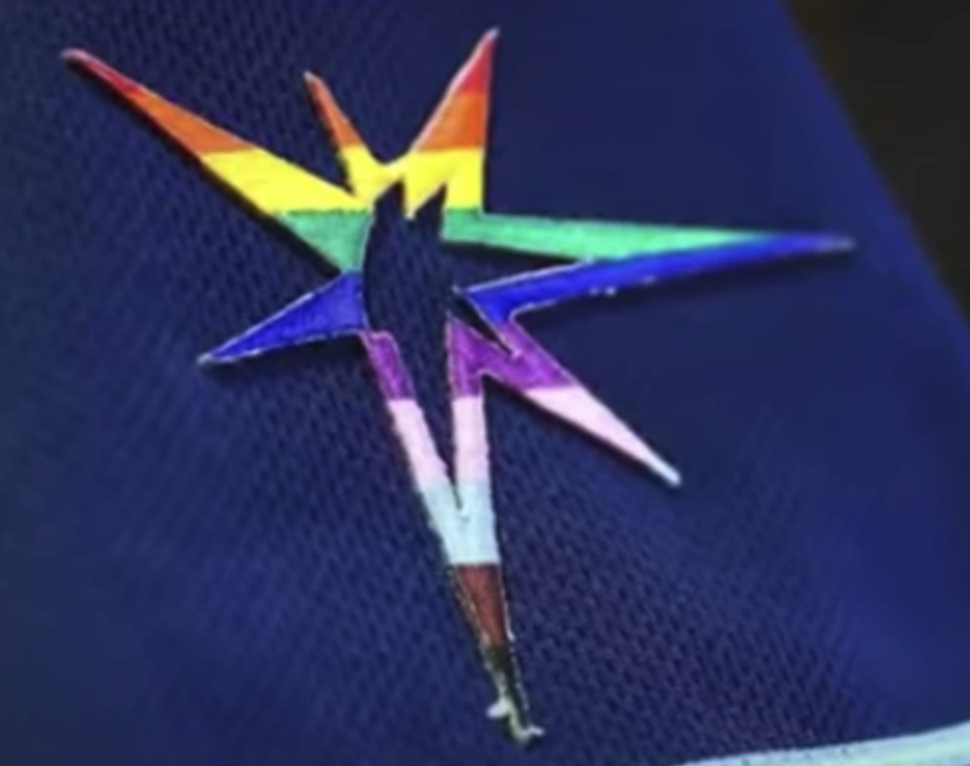
You could see evidence of this fact during and after the recent kerfuffle about a small group of Tampa Bay Rays players who declined to wear special rainbow-logo uniforms during the team’s recent celebration of Pride Month. The media coverage of this clash was the subject of this week’s “Crossroads” podcast (CLICK HERE to tune that in), in part because the stories raised more questions than they answered.

I’ll get to some of those questions, but first let’s look at the Washington Post coverage. Note that this means the Rays conflict was a national story, since the Post doesn’t cover mere regional stories and disputes (see this classic M.Z. Hemingway post about the newspaper’s MIA stance on covering the trial of Philadelphia abortionist Kermit Gosnell).

The headline on this sports-desk story: “Rays players make ‘faith-based decision’ to shun Pride Night logos.” Yes, it’s important to note that there are doubts about the nature of this “faith-based” angle. Let’s look at some important passages in this:

A member of the Tampa Bay Rays said he and several teammates made a “faith-based decision” to not wear rainbow-colored logos on their uniforms during a “Pride Night” home game Saturday that recognized the LGBTQ community.

Most Rays players, per accounts from the game, wore the special uniform designs that had a rainbow pattern over the “TB” on their caps and over a sunburst logo on their right sleeves. The team, which has staged Pride Night for several seasons but had not previously included uniform changes, reportedly gave players the option to display the logos or go with the usual look.

The crucial fact there is that team management decided to allow players some degree of free-will in this case. Hold that thought.

Apparently, team management asked pitcher Jason Adam to make a statement on why he, and four others, elected to wear their usual jerseys for this symbolic event. Thus, he said:

“A lot of it comes down to faith, to like a faith-based decision,” said Adam, a 30-year-old in his fifth major league season.


Please respect our Commenting Policy

Thinking about that 'Define evangelical' thing, with Andrew Walker, Ryan Burge (and Mark Noll)

Thinking about that 'Define evangelical' thing, with Andrew Walker, Ryan Burge (and Mark Noll)

If you search for “define evangelical” in the 18 years worth of material stored here at GetReligion you will find about four screens worth of information. Here’s what that looks like in a Google search.

Believe it or not, this was a hot topic before the advent of Orange Man Bad and the dreaded “81% of White evangelicals” mantra.

Debates about the meaning of the church-history term “evangelical” are so old that I once asked the Rev. Billy Graham for his take. Here’s some information about his answer, drawn from this “On Religion” column: “Define 'evangelical' – please.”

… You might assume that the world's most famous evangelist has an easy answer for this tricky political question: "What does the word 'evangelical' mean?" If you assumed this, you would be wrong. In fact, Graham once bounced that question right back at me.

"Actually, that's a question I'd like to ask somebody, too," he said, during a 1987 interview in his mountainside home office in Montreat, N.C. This oft-abused term has "become blurred. ... You go all the way from the extreme fundamentalists to the extreme liberals and, somewhere in between, there are the evangelicals."

Wait a minute, I said. If Billy Graham doesn't know what "evangelical" means, then who does? Graham agreed that this is a problem for journalists and historians. One man's "evangelical" is another's "fundamentalist."

That leads us to the topic of this quick, and rather rare, Monday “think piece” (I’m traveling right now and rather unplugged, so I wrote this several days ago).

Thus, at the top of this post you will see a video feature from The Gospel Coalition in which two academics — political scientist Ryan Burge ( a GetReligion contributor) and ethicist-apologist Andrew Walker — debate this topic: “Is ‘Evangelical’ a Political or Theological identity?” (Careful readers may have noticed that, a few lines earlier, I called it a “church-history term” and I’m sticking to that.)

I will let Burge and Walker speak for themselves.


Please respect our Commenting Policy

Red hat for San Diego Bishop Robert McElroy: Vatican message to U.S. Catholic bishops?

Red hat for San Diego Bishop Robert McElroy: Vatican message to U.S. Catholic bishops?

Two years before long-standing rumors about Cardinal Theodore McCarrick leapt into headlines worldwide, America's most outspoken activist on clergy sexual abuse met with his local bishop -- San Diego Bishop Robert McElroy.

"It was clear to me during our last meeting in your office, although cordial, that you had no interest in any further personal contact," wrote the late Richard Sipe, a former Benedictine priest who then worked for the Seton Psychiatric Institute in Baltimore. While church officials asked him to report to McElroy, "your office made it clear that you have no time in your schedule either now or 'in the foreseeable future' to have the meeting that they suggested."

Sipe's 2016 letter to the San Diego bishop was later posted online and is frequently cited as an example of a bishop ignoring warnings about the now defrocked McCarrick, who often boasted about his clout as a Vatican kingmaker. Now it will receive more attention because Pope Francis has named McElroy to the Sacred College of Cardinals. This promotes the San Diego bishop over several prominent archbishops -- including Los Angeles Archbishop Jose Gomez, who leads America's largest Catholic archdiocese and is president of the U.S. Conference of Catholic Bishops.

In his hand-delivered report, Sipe told McElroy that his ongoing research indicated that 6% of American priests were guilty of sex with minors. Meanwhile, a "systemic" trend was clear: "At any one time no more than 50% of priests are practicing celibacy."

As for the powerful McCarrick, Sipe noted: "I have interviewed twelve seminarians and priests who attest to propositions, harassment, or sex with McCarrick, who has stated, 'I do not like to sleep alone.' "

Debates about McElroy's elevation have focused on other divisive issues in Catholic life, although decades of sexual-abuse crimes loom in the background. He has, for example, supported the ordination of women to the diaconate, allowing them to preach, perform weddings and serve -- one step from the priesthood -- at Catholic altars.

McElroy has openly clashed with American bishops anxious to address "Eucharistic coherence" as prominent Catholics, especially President Joe Biden and House Speaker Nancy Pelosi, support -- with words and deeds -- abortion and LGBTQ rights.


Please respect our Commenting Policy

Should religion influence U.S. public policy? It always has, on both the left and right

Should religion influence U.S. public policy? It always has, on both the left and right

THE QUESTION:

Should religion influence U.S. public policy? For instance, look at Protestants.

THE RELIGION GUY’S ANSWER:

The media occasionally press this question upon us as, as with a timely May article by Religion News Service columnist Jeffrey Salkin titled “Should religion influence abortion policy?

He thinks not. Salkin acknowledges that “religious ideas are part of the public discourse” but even so “those ideas cannot determine policy. Public policy must be open to rational discourse, with provable data, and not merely rely on beliefs, however sacred their sources.” (Naturally, pro-lifers would reply that they rely on “rational discourse” and “provable data” from biology.)

He continues, “America does not allow you to turn your own religion’s theological ideas into public policy. ... This way lies chaos, and worse — holy wars between religious groups. This way lies a return to the Middle Ages. It is time for all religious people to call: Time out.” For Salkin, this approach is required by freedom of religion — or perhaps should we say freedom from religion?

Salkin champions the pro-choice public policy advocated by this own faith, Reform Judaism, which puts this among 17 causes on the agenda of its Washington lobby.

The pro-lifers believe laws should protect the tiny human life growing in the womb. Faiths such as Reform Judaism oppose such protection, believing that women must exercise unimpeded abortion choice. To a journalist, religious alliances on both sides seek to impose their belief as public policy.

Whether America’s religious groups should try to influence policy, they’ve in fact done so since Plymouth Rock and will continue to under the Bill of Rights. Reminders. As much as anything it was Christian zeal that led to abolition of slavery — and 620,000 Civil War deaths. Similarly with the colonists’ rebellion against Britain, women’s vote and, in a remarkable demonstration of Protestant power now mostly regretted, nationwide alcohol Prohibition written into the Constitution.

Which brings us to very important but oft-neglected history depicted convincingly in the new book “Before the Religious Right: Liberal Protestants, Human Rights, and the Polarization of the United States” (University of Pennsylvania Press) by University at Buffalo historian Gene Zubovich.


Please respect our Commenting Policy

Podcast: Americans have long been divided (and often confused) on abortion issues

Podcast: Americans have long been divided (and often confused) on abortion issues

When people ask me to list some must-read books — if the goal is understanding religion and the news — the first one I mention is “Culture Wars: The Struggle to Define America” by sociologist James Davison Hunter.

Pundits love to toss “culture wars” around as a kind of journalism hand grenade, but few bother to flash back to this 1991 classic and note how Hunter defined that term. In 1998 I wrote a column — “Ten years of reporting on a fault line” — in which I noted Davison’s description of America’s ongoing legal and political wars about religion, morality and culture.

The key: Americans were no longer debating specific religious beliefs or traditions. Instead, he said they were fighting about “something even more basic — the nature of truth and moral authority.”

… America now contains two basic worldviews, which he called "orthodox" and "progressive." The orthodox believe it's possible to follow transcendent, revealed truths. Progressives disagree and put their trust in personal experience, even if that requires them to “resymbolize historic faiths according to the prevailing assumptions of contemporary life."

The book Hunter wrote in 1994, right after “Culture Wars”? It was called “Before the Shooting Begins: Searching for Democracy in America's Culture Wars.” Hold that thought.

All of this brings me to this week’s “Crossroads” podcast (CLICK HERE to tune that in) focusing on a new Lifeway Research study — on behalf of the Land Center for Cultural Engagement at Southwestern Baptist Theological Seminary — probing how religious faith and practice affect what Americans believe about abortion. The survey took place days before the leak of the draft opinion by Justice Samuel Alito indicating that the U.S. Supreme Court is poised to overturn Roe v. Wade.

The survey results are complex and will provide little comfort for those committed to a consistent pro-life stance or. on the other side, the defense of America’s pro-abortion-rights legal structures built on Roe.

In the podcast, I argued that this survey deserves mainstream media coverage — but I sincerely doubt that this will happen. Why?


Please respect our Commenting Policy

Journalists might ask: Did fundamentalists actually win their debate with modernists?

Journalists might ask: Did fundamentalists actually win their debate with modernists?

Countless sermons each weekend may prove inspiring for American churchgoers, but historians “will little note nor long remember” most of them.

One great exception, titled “Shall the Fundamentalists Win?,” was delivered 100 years ago this spring by the Rev. Harry Emerson Fosdick at New York City’s First Presbyterian Church.

Fosdick threw a bright spotlight on the “Fundamentalist-Modernist controversy,” both predicting and demanding that his fellow modernists would win the era’s theological war. The Presbyterian Church had been debating whether to expel biblical liberals since 1892 and in 1910 mandated what later became known as the “five points of Fundamentalism.”

Yes, some of the pioneers of the “fundamentals of the faith” were part of the old Protestant mainline.

Fosdick’s oration attacked three of these beliefs, including the necessity of belief in Jesus Christ’s literal Virgin Birth and Second Coming. But his third target was pivotal, the contention that as the inspired Word of God, the Bible is free of error on history as well as spiritual and moral teachings. Fosdick conveyed the canard that this meant God “dictated” the words to earthly stenographers and then championed “progressive” revelation as promoted by scholarly biblical criticism. (Along the way he remarked that rigid interpretation of the Quran was a similar “millstone about the neck” for Islam.)

A dictionary note is required here. Fosdick defended what he called “evangelical” religion, using the word to broadly signify Protestants of whatever theology. In the 1940s, conservative Protestant foes of the modernists began embracing that same word to distinguish themselves from the unpopular hard-line “fundamentalists.”

Got that? The label has stuck ever since, though some contend it now signifies a Republican political bloc more than a theological movement.


Please respect our Commenting Policy