Politics

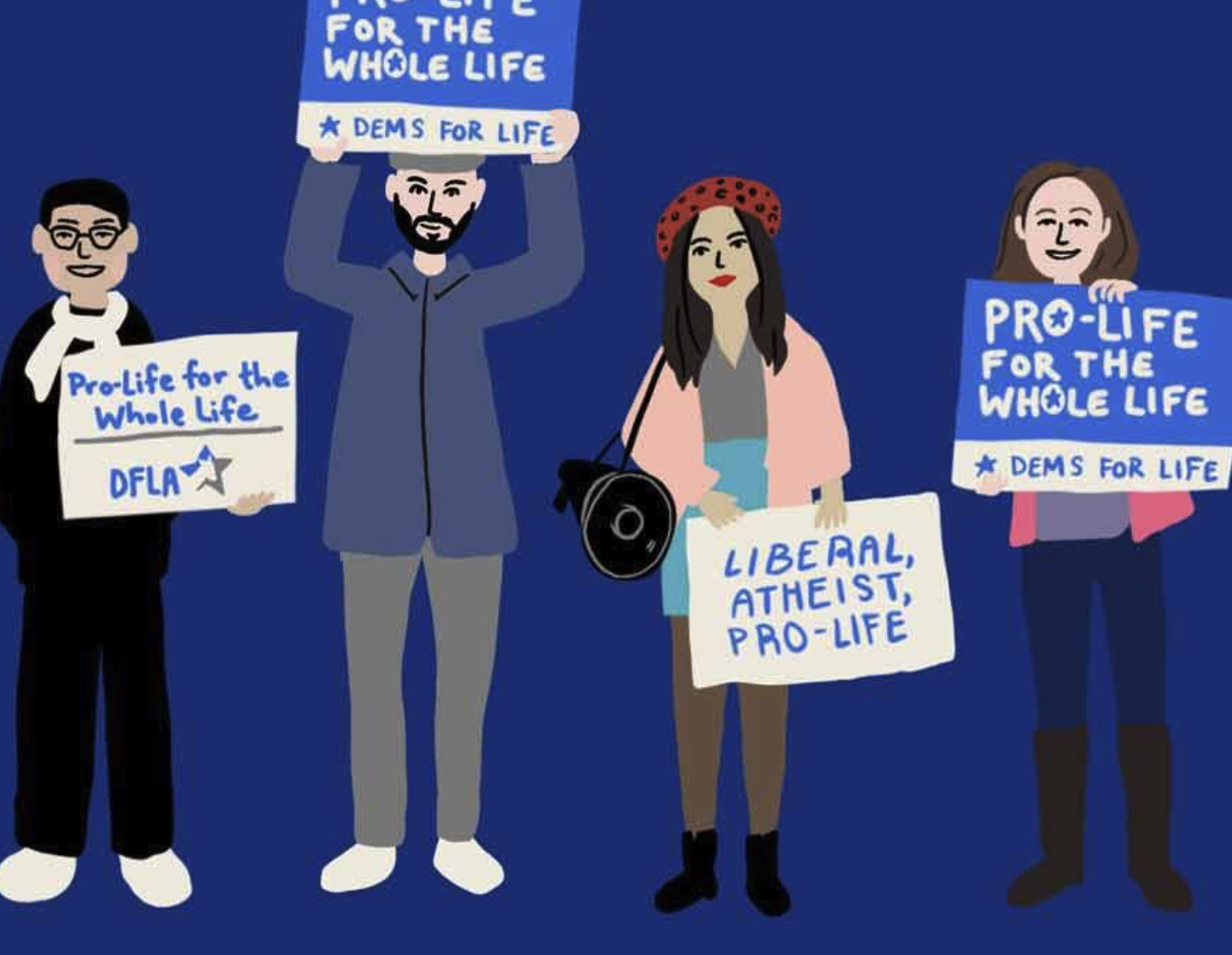
No way around it: Bombshell Roe v. Wade leak was the religion story of the week

No way around it: Bombshell Roe v. Wade leak was the religion story of the week

News that the U.S. Supreme Court’s conservative majority might overturn Roe v. Wade is not overly shocking. We’ve known that for months.

But the timing — and manner — of this week’s leak of Justice Samuel Alito’s draft majority opinion that would strike down the landmark 1973 decision, which legalized abortion nationwide? That counts as a bombshell.

To discuss the big scoop by Politico’s Josh Gerstein and Alexander Ward, ReligionUnplugged.com convened a panel of top religion journalists who have written extensively about the abortion debate. Click here to watch the discussion.

Clemente Lisi and I moderated the panel. Lisi, who teaches journalism at The King’s College in New York, is a ReligionUnplugged.com senior editor and a veteran GetReligion writer who focuses on Catholic news for both websites. The panelists were:

Adelle Banks, Religion News Service production editor and national reporter (see “If Roe goes, Black church leaders expect renewed energy for elections”).

Kelsey Dallas, Deseret News religion reporter and associate national editor (see “As some rallied over Roe v. Wade, these Christians prayed”).

BeLynn Hollers, Dallas Morning News reporter who covers women’s health, politics and religion (see her coverage of Texas’ restrictive abortion law).

• And Kate Shellnutt, Christianity Today senior news editor (see “This is and isn’t the moment pro-life evangelicals have waited for”).

Among the tantalizing questions the panel explored: Is the abortion debate a religion story?

Yes and no, Hollers said.

Yes, Dallas said. “But maybe not for the reasons people might assume,” she quickly added.


Please respect our Commenting Policy

Angels and demons: Orthodox pain woven into this year's Pascha epistles in Ukraine

Angels and demons: Orthodox pain woven into this year's Pascha epistles in Ukraine

With the barrage of horrors from Ukraine, it wasn't hard to distinguish between the messages released by the Eastern Orthodox leaders of Russia and Ukraine to mark Holy Pascha, the feast known as Easter in the West.

The epistle from Russian Orthodox Patriarch Kirill offered hope for this life and the next. But his text contained only one possible reference to the fighting in Ukraine, which the United Nations says has claimed the lives of 3,000 civilians, at the very least.

"In the light of Pascha everything is different," wrote the patriarch of Moscow and All Russia. "We are not afraid of any mundane sorrows, afflictions and worldly troubles, and even difficult circumstances of these troubled times do not seem so important in the perspective of eternity granted unto us."

But the first lines of the message released by Metropolitan Onuphry of Kiev and All Ukraine placed this Pascha in a radically different context -- a clash between good and evil, right now. It was released on April 25th, the day after Orthodox Christians celebrated Pascha according to the ancient Julian calendar.

This letter was especially symbolic since Metropolitan Onuphry leads Ukraine's oldest Orthodox body, one with strong ties to the giant Russian Orthodox Church.

"The Lord has visited us with a special trial and sorrow this year. The forces of evil have gathered over us," he wrote. "But we neither murmur nor despair" because Pascha is "a celebration of the triumph of good over evil, truth over falsehood, light over darkness. The Resurrection of Christ is the eternal Pascha, in which Christ our Savior and Lord translated us from death to life, from hell to Paradise."

The contrast between these messages underlined a complex reality in Orthodox life after Russia's invasion of Ukraine, a land cruelly oppressed by the Soviet Union, but with strong Russian roots through the "Baptism of Rus" in 988. That was when, following the conversion of Prince Vladimir, there was a mass baptism of the people of Kiev -- celebrated for a millennium as the birth of Slavic Christianity.

Metropolitan Onuphry and other Orthodox hierarchs with historic ties to Moscow have openly opposed the Russian invasion, while trying to avoid attacks on the Russian Orthodox Church. The bottom line: Leaders of ancient Orthodox churches will ultimately, at the global level, need to address these conflicts.


Please respect our Commenting Policy

Was Jesus a socialist? Concerning the 'rich young ruler' and modern economics

Was Jesus a socialist? Concerning the 'rich young ruler' and modern economics

THE QUESTION:

Was Jesus a Socialist?

THE RELIGION GUY’S ANSWER:

Well, no. For one thing, that term, as with rival capitalism, pertains to modern industrialized society.

The 1st Century economy consisted mostly of hand-to-mouth subsistence agriculture, along with fishermen, small-time merchants, individual craftsmen and a tiny class of wealthy overlords. But the question above was posed this month by a Wall Street Journal column, so let’s briefly scan a few aspects of Christianity and economics.

Those familiar with the New Testament will immediately think of the incident between Jesus and the “rich young ruler” recorded in three of the four Gospels (here we’ll follow Luke 18:18-27 in the RSV translation).

The ruler asks Jesus, “What shall I do to inherit eternal life?” Jesus recites several of the Ten Commandments that are to be obeyed. The ruler replies that he has done this since his youth. Jesus then tells him “one thing you still lack. Sell all that you have and distribute to the poor, and you will have treasure in heaven; and come, follow me.” The ruler “became sad, for he was very rich.”

Jesus then observes, “How hard it is for those who have riches to enter the kingdom of God! It is easier for a camel to go through the eye of a needle,” but he concludes, “What is impossible with man is possible with God.”

You can have some fun checking out commentaries on this passage online or in your local library. Softening the force of Jesus’ words (a bit too easily?), Bible experts often say this was a unique saying for one individual who was perhaps stingy and had set his heart too much on his wealth while neglecting God’s priority, that He be served through service to his needy people.

Whatever the ruler ended up doing with his wealth, we are familiar with Catholic men’s and women’s orders where those who join take voluntary vows of poverty and keep only minimal personal possessions, and the same in Buddhism.


Please respect our Commenting Policy

Podcast: About post-Roe politics and Biden's evolving doctrines on choosing to 'abort a child'

Podcast: About post-Roe politics and Biden's evolving doctrines on choosing to 'abort a child'

Once upon a time, Sen. Joe Biden was almost a pro-life Catholic Democrat.

This may be the reason — as journalists frequently note — that he seems uncomfortable saying “abortion” in public remarks. Then again, he may also have private polling numbers on the muddled state of public opinion in which millions of Americans, including lots of Democrats, (a) oppose the U.S. Supreme Court overturning Roe vs. Wade, yet (b) are also in favor of European-style restrictions on abortion that have been blocked by U.S. courts because of legal logic built on Roe.

As is so often the case, Americans want it both ways and it’s rare for the mainstream press to note the tensions in that stance, since that would require balanced coverage of debates about Roe.

Back to Biden and a must-read Washington Post political feature that served as the hook for this week’s “Crossroads” podcast (CLICK HERE to tune that in). After spending much of his career somewhere in the middle on abortion, Biden now leads a Democratic Party that has veered so far to the cultural left that it champions third-trimester abortion (and even efforts to save the life of a baby born during a botched abortion).

That stance is hard to square with the Catechism of the Catholic Church, as well as lots of opinion polls, especially in states that will — if what appears to be a 5-3-1 SCOTUS verdict against Roe survives a blitz of elite media scorn — face debates about centrist laws to restrict, but not ban, abortion on demand.

Here is the top of the Post report, and readers are urged to spot a major abortion-talk stumble from Biden:

Joe Biden became a senator in 1973, just 17 days before the Supreme Court decided the landmark abortion rights case Roe v. Wade. Soon after, the young senator, a practicing Catholic, told an interviewer that he disagreed with the decision and that he had views on such matters that made him “about as liberal as your grandmother.”

“I don’t like the Supreme Court decision on abortion. I think it went too far,” he concluded in 1974. “I don’t think that a woman has the sole right to say what should happen to her body.”

Nearly a half-century later, with Biden evolving along with his party on the issue of abortion rights, he again declared the court was moving too far — this time, he argued, in the opposite direction.

“The idea that we’re going to make a judgment that is going to say that no one can make the judgment to choose to abort a child, based on a decision by the Supreme Court, I think, goes way overboard,” Biden said on Tuesday in reaction to a leaked Supreme Court draft opinion proposing to overturn Roe v. Wade.

Note that the Post editors, as opposed to some other elite media sources, used that quote in which Biden spoke words — “abort a child,” as opposed to a “fetus” — long banned in public-relations efforts for a pro-abortion-rights stance. I took that as a sign to keep reading.


Please respect our Commenting Policy

Alongside abortion, don't neglect the Supreme Court's big school prayer ruling

Alongside abortion, don't neglect the Supreme Court's big school prayer ruling

Vastly overshadowed by the uproar over Politico's bombshell report that the Supreme Court may be poised to overturn past abortion rulings, the court actually released religious-liberty ruling written by retiring Justice Stephen Breyer. His Shurtleff v. City of Boston opinion (.pdf here) reasoned that since Boston had permitted 284 city hall flag displays by varied groups, it violated freedom of speech to forbid a Christian flag for fear of violating church-state separation.

Harvard Divinity student Hannah Santos, writing for Americans United, said Christian flag displays would be "disturbing and demoralizing" and evoke the Puritan founders' "cruel" intolerance. But Breyer and the other two liberal justices joined six conservatives in this unanimous — repeat unanimous — decision.

There's likely to be less Court concord on another First Amendment ruling reporters need to prepare for in coming weeks. This dispute crisply demonstrates the culture-war split among American religious groups and between most Democrats and Republicans.

Kennedy v, Bremerton School District [Docket #21-418] involves the firing of Joseph Kennedy, an assistant high school football coach in Washington state. He violated the school's order against his kneeling to utter brief prayers on the 50-yard line after games, with students who wished joining him.

Here, too, Kennedy's freedoms of speech and religion ran up against school fears about violating the Constitution's clause barring government "establishment of religion." Click here for a recent Julia Duin post looking at some of the media coverage of this debate.

In preparing coverage to interpret the forthcoming ruling, keep in mind possible ramifications beyond the gridiron. As Christianity Today reported, hypothetical situations the justices discussed during the two-hour oral argument included teachers or coaches praying silently or aloud or reading the Bible before class, coaches praying on the sidelines perhaps with specific notice that students weren't required to pray or that they cannot pray or a player simply making the sign of the cross.

Also this. A court filing from the Jewish Coalition for Religious Liberty and the Islam team at the Religious Freedom Institute informed the justices that observant Jewish teachers and coaches need to speak brief public blessings before eating or drinking, and that Muslims must join daily prayer times during public school hours or while chaperoning a field trip.


Please respect our Commenting Policy

The pope, Cardinal Becciu and bad real estate deals: Concerning the Vatican 'Trial of the Century'

The pope, Cardinal Becciu and bad real estate deals: Concerning the Vatican 'Trial of the Century'

The news media loves the term “Trial of the Century.”

This phrase gained widespread acceptance and use during the 1935 trial that stemmed from the kidnapping of Charles Lindbergh’s son three year earlier. That was in an era when newspapers and sensationalism went hand in hand.

The moniker came back in a more modern context when O.J. Simpson went on trial for double homicide in 1995 — a salute to the power of celebrity in American life, as well as debates about race. This era included both newspapers and TV (the trial was televised live), along with a nascent Internet that would eventually come to dominate the news landscape a few decades later.

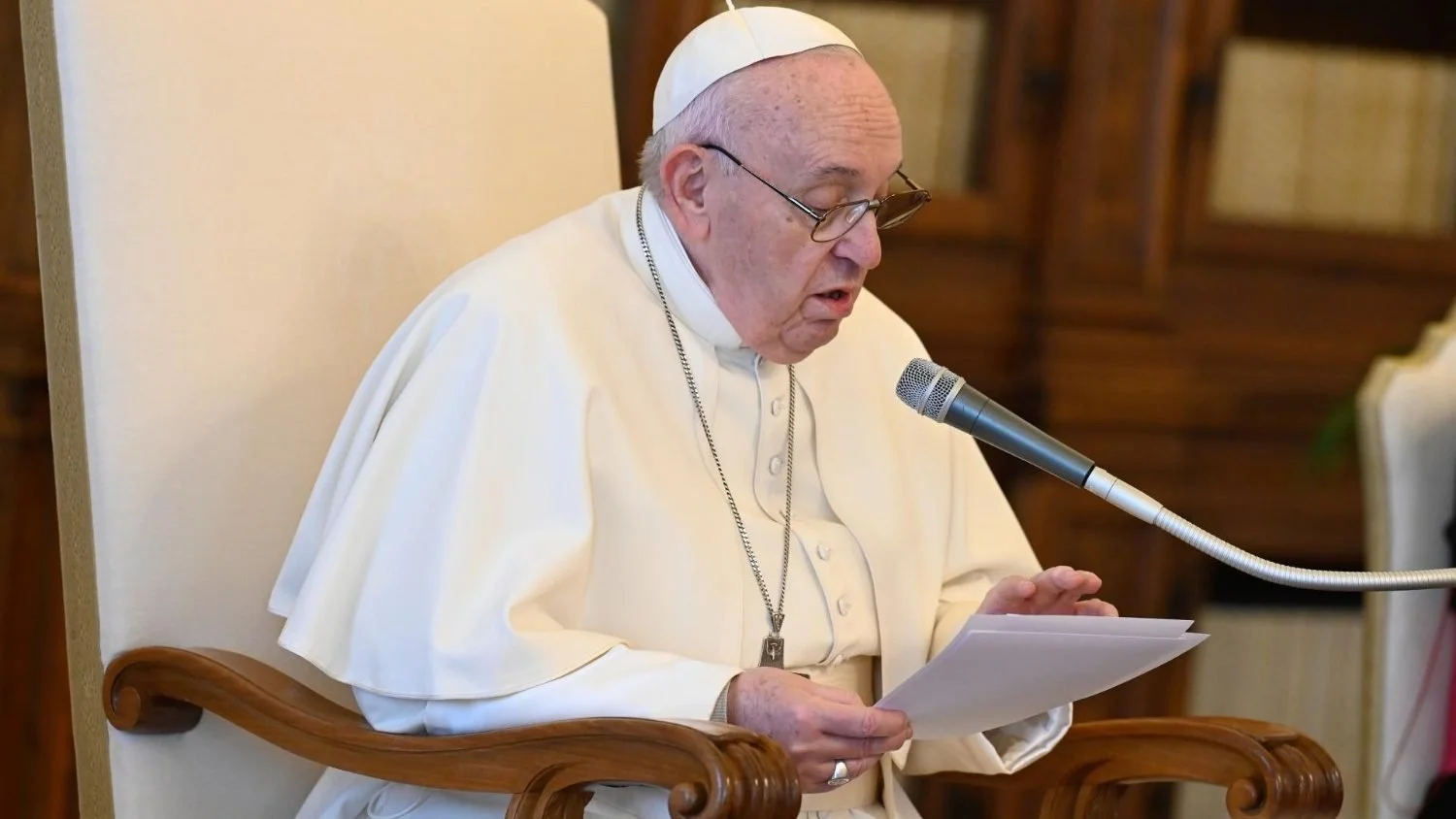
Something akin to a Catholic “Trial of the Century” has gotten underway in Rome and there’s plenty of palace intrigue to go around. The trial involving corruption, bad real estate deals and financial wrongdoing has placed Pope Francis in the center of a controversy that for the first time doesn’t involve doctrine or theology.

Familiar journalism questions leap to mind: What did the pope know and when did he know it? What if a witness implicates Francis? Hold that thought.

Pope Francis may not be on trial, but he might as well be, as news coverage of this trial attempts to cut through all the noise and get readers what’s most important. Catholic media has done a very good job covering the trial, although I expect coverage to expand in the mainstream press should Francis become a central figure during testimony.

It’s moments such as this trial, delayed over the past year by preliminary hearings and COVID-19, that highlight the Vatican as both a religious institution as well as a political one, with all the headaches that come with managing a city state with immense wealth and properties. News coverage of this trial and its lead up has been interesting to dissect — depending on whether you read mainstream media or the Catholic press — and exactly what this latest scandal means for the church.


Please respect our Commenting Policy

Memory eternal: What were the big ideas that drove the work of Chuck Colson?

Memory eternal: What were the big ideas that drove the work of Chuck Colson?

As a D.C. Beltway power player, the late Charles W. Colson worked with a "Thank God it's Monday" attitude that meant his colleagues always knew they could contact him about hot topics and decisions.

But there was one exception -- visits by his autistic grandson Max.

"If Chuck was with Max, his phone was turned off," said Dave Carlson of the Colson Center for Christian Worldview. "Max could stop him in his tracks."

This bond was rooted in a conviction that shaped the Nixon White House strategist's work after his 1973 born-again Christian conversion and guilty plea for Watergate crimes that put him in federal prison, said Carlson, who spent two decades as a Colson aide and editor. This same conviction led Colson to create the global Prison Fellowship ministry in 1976.

"It didn't matter if you were in prison or what kind of crimes put you there. It didn't matter if you were missing a chromosome or were autistic," he said. Colson believed "we are all humans made in the image of God -- Imago Dei. He was passionate about that until the end."

The 80-year-old Colson died on April 21, 2012, felled by a brain hemorrhage moments after a speech about rising threats to religious liberty. His colleagues marked the 10-year anniversary by rebroadcasting that speech during a BreakPoint radio commentary.

"What we're witnessing in our culture … is but the tip of the iceberg. It's the latest visible manifestation of a growing hostility towards Christianity mainly because -- this has always been the case -- government officials feel threatened by the power of the church because we all worship a king higher than the kings of this earth," said Colson.

Cultural issues are bigger than mere politics, he stressed.

"Elections are important. Whoever serves in office, it makes a difference what kind of person that is and what that person believes," he said. "But elections can't solve the problem we've got. The problem we've got is that our culture has been decaying from the inside for 30 or 40 years, and politics is nothing but an expression of culture. So how do you fix the culture?"


Please respect our Commenting Policy

Podcast: AP fails to connect religion dots in latest surge in homeschooling statistics

Podcast: AP fails to connect religion dots in latest surge in homeschooling statistics

If you know anything about the history of homeschooling, you know that battles about parental rights, morality, religious motivations and faith-centered school content have been a big part of this drama since Day 1.

Connect a few dots in almost any trend linked to homeschooling and, sooner and later, you will hit religion.

It doesn’t matter if you are talking about mainstream groups such as the National Home School Association or aggressive activist groups such as the Home School Legal Defence Association. Needless to say, when you see a headline like this one — “The Frightening Power of the Home-Schooling Lobby” — or this one from Europe — “Home education: Court rules against German Christian family “ — you will almost always run into lots of content about religious fundamentalism (of various kinds), big families and other signs of countercultural behavior.

As I noted 20+ years ago in an “On Religion” column about a homeschooling convention inside the D.C. Beltway:

These are not business-as-usual families, cookie-cut into the sizes and shapes on display in shopping malls, mail-order catalogues and, especially, prime-time television. They have unique priorities when they budget their time and money. They have radically different family values that often defy simple political labels.

In a strange way, home-schoolers are creating a new counter-culture outside the American mainstream. It's the Anti-Woodstock Generation.

All of these issues came up for discussion during this week’s “Crossroads” podcast (CLICK HERE to tune that in), which focused on a recent Associated Press feature with this headline: “Homeschooling surge continues despite schools reopening.” Here is the overture for that story:

The coronavirus pandemic ushered in what may be the most rapid rise in homeschooling the U.S. has ever seen. Two years later, even after schools reopened and vaccines became widely available, many parents have chosen to continue directing their children’s educations themselves.

Homeschooling numbers this year dipped from last year’s all-time high, but are still significantly above pre-pandemic levels, according to data obtained and analyzed by The Associated Press.

Families that may have turned to homeschooling as an alternative to hastily assembled remote learning plans have stuck with it — reasons include health concerns, disagreement with school policies and a desire to keep what has worked for their children.

Now, there’s no doubt that what parents saw on Zoom screens during the COVID-tide played a big role in these numbers. But what did they see and hear?


Please respect our Commenting Policy